Experiencing Post-Traumatic Growth while Raising a Child with Disabilities

Experiencing Post-Traumatic Growth while Raising a Child with Disabilities

Experiencing Post-Traumatic Growth while Raising a Child with Disabilities

Experiencing post-traumatic growth (PTG) while raising a child with disabilities may not be on your radar screen when you’re drowning in the stress associated with caregiving. The only growth that concerned me during our son’s medically fragile years was increasing his strength as he fought for his life. Paying attention to the stress I was experiencing while he struggled, and possible growth coming from it, never crossed my mind.

Now, as I reflect on the hot mess I was in 1982 after our son’s birth, I barely recognize the young and very stressed person I was then. The credit for my present lack of hot messiness goes to post-traumatic growth.

By now you may be asking yourself, “What is post traumatic growth, how do I sign up for the class, and how do I know it’s happening in me?”

Let’s start with the first question.

In a research study conducted by Taylor Elam and Kanako Taku, they define PTG as “the positive psychological changes as a result of a struggle with a major life crisis or traumatic event.” The crisis or event is the kind that rocks a person to the core and forces a re-evaluation of beliefs about the world. That sounds a lot like what many parents experience after a child’s diagnosis, doesn’t it?

Now, on to the second question.

The bad news is that I don’t know of classes about PTG. But according to Richard Tedeschi, who has worked extensively with traumatized veterans, you can facilitate and encourage your own growth in 5 powerful ways.

To learn more about experiencing post-traumatic growth while raising a child with disabilities, go to this link at the Key Ministry blog for special needs parents.

Do you like what you see at DifferentDream.com? You can receive more great content by subscribing to the monthly Different Dream newsletter and signing up for the daily RSS feed delivered to your email.

Photo by Elijah Hiett on Unsplash

By

Jolene Philo is the author of several books for the caregiving community. She speaks at parenting and special needs conferences around the country. Sharing Love Abundantly with Special Needs Families: The 5 Love Languages® for Parents Raising Children with Disabilities, which she co-authored with Dr. Gary Chapman, was released in August of 2019 and is available at local bookstores, their bookstore website, and Amazon. See Jane Dance!, the third book in the West River cozy mystery series, which features characters affected by disability, was released in October of 2023.

Author Jolene Philo

Archives

Categories

Subscribe for Updates from Jolene

Related Posts

Mending Broken Hearts

Mending Broken Hearts

Mending Broken Hearts

Mending broken hearts is all too familiar to guest blogger Kelly Denham. She and her husband’s hearts are still mending after a medical mistake left their son TJ irrevocably injured and later resulted in the decision she wrote about in today’s post.

On February 26, 2018, my husband and I stood in TJ’s hospital room and watched as nurses removed our 21-year-old son’s life support. As you can imagine, it had been an agonizing decision. Parents are supposed to protect their children and keep them from harm. We were choosing to remove the very thing our son needed to live.

TJ’s injury was caused by a medical mistake. We had spent five years in and out of hospitals and rehab centers, and we had seen too much. We had learned that we couldn’t always trust medical staff. If you followed TJ’s Caring Bridge or read his story in my book, Trapped Within, you know that God, in His goodness, provided a trustworthy Christian doctor, Dr. P, the last few days of TJ’s life to gently guide and walk with us through that hard decision. 

But what many of you don’t know is that after TJ’s death, guilt and doubt began to creep in. Questions like, “Would his condition have improved if we had waited longer?” began to gnaw at my husband and me.

In the spring of the following year, our adopted grandson Aiden had chosen to play soccer. Watching him play sports is one of the joys of my life. On this Saturday morning, I arrived at the field ready to be his cheering squad. As I sat on the sidelines waiting for the game to begin, I looked up and was surprised to see Dr. P walking toward me. His son was on Aiden’s team!

Dr. P sat down beside me. We exchanged pleasantries and visited for a while. Unable to control myself any longer, I quickly blurted out the question I had been wrestling with for a year. “Did we make the right decision, Dr. P? He was going to die, right? I mean, even if we had kept him on life support, he still would’ve died?”

“Yes,” he answered. “He was going to die. You made the right decision.”

I sighed deeply. It felt like a weight had been lifted off my shoulders. Dr. P’s reassurance was exactly what I needed to hear to begin moving forward and enjoy life again.

Some may believe that Aiden and Dr. P’s son being on the same team was just a coincidence. That’s not what I believe. On the contrary, I believe the meeting was a divine appointment orchestrated by God to mend a mother’s broken heart and save her from being crushed in spirit.

What about you? Are you experiencing affliction? The Lord doesn’t promise to prevent His children from suffering. He doesn’t promise to remove affliction while in the midst of it. He doesn’t even promise to prevent the very worst outcome.

What God does promise us though is that He will answer us when we call on Him. He will be with us in trouble, and He will deliver us and honor us.

We are secure in the Lord’s arms, so call upon the Lord, dear weary one. He’s in the business of mending broken hearts. His presence will give you the strength to endure any affliction.

“The Lord is close to the brokenhearted

and saves those who are crushed in spirit.”

Psalm 34:18

“He will call on me, and I will answer him;

I will be with him in trouble.

I will deliver him and honor him.”

Psalm 91:15


In loving memory of TJ Denham

July 16, 1996 – February 27, 2018

Do you like what you see at DifferentDream.com? You can receive more great content by subscribing to the monthly Different Dream newsletter and signing up for the daily RSS feed delivered to your email.

Photo by frank mckenna on Unsplash

By

Kelly Denham lived through unspeakable tragedy by learning to hold fast to God’s promises and find comfort in His unfailing love. She is an author, speaker, and advocate for the voiceless. Kelly has four daughters, one son, and thirteen grandchildren. She lives in Atlanta, Georgia with her husband and their adopted grandson. She also directs the special needs ministry at First Baptist Atlanta.

Author Jolene Philo

Archives

Categories

Subscribe for Updates from Jolene

Related Posts

Special Needs Mom, How Are You Doing this Mother’s Day?

Special Needs Mom, How Are You Doing this Mother’s Day?

Special Needs Mom, How Are You Doing this Mother’s Day?

Special needs mom, how are you doing this Mother’s Day?

Has anyone asked you that question before? Has anyone acknowledged that your feelings may not match what cards and commercials make them out to be? Have you had the courage to acknowledge, even to yourself, the swirl of emotions that surround you as the second Sunday in May approaches?

Joy.
Loss.
Love.
Grief.
Wonder.
Fear.
Gratitude.
Guilt.

I felt all those emotions as Mother’s Day and our son’s first birthday arrived within weeks of one another in 1983. I was a wreck that May—exhausted, worried, depleted, and unable to think straight. Though our son is now an independent adult, those early emotions tend to resurface each May. As our son got older, I became wiser about how to acknowledge my feelings and celebrate being a mom without letting difficult emotions rule the day. I hope these 5 lessons help you do the same.

Lesson #1: Enjoy your Child

Your child is a wonder, perhaps not the wonder you expected, but wonderful all the same. Take a moment to enjoy who your child is—or who she was if she’s no longer physically present. What about her makes you laugh? How does she surprise you? Why is your world better because of her? What has she taught you about love? Let your answers increase your joy in the wonderful aspects of her life and lighten your heart.

Lesson #2: Make Room for Grief

The joy your child brings is real and so is your grief. This Mother’s Day weekend make room to acknowledge this emotion for what it is—the loss of many dreams. Dreams of what parenting would be like. Dreams of how your child’s development would progress. Dreams of celebrating milestones. Write your thoughts down. Tell God how much your heart hurts. Admit how hard your grief is to bear. God knows a thing or two about loss and heartache. Let him hold you as you grieve.

Click to read the rest of Special Needs Mom, How Are You Doing this Mother’s Day? on the Hope Anew website.

Do you like what you see at DifferentDream.com? You can receive more great content by subscribing to the monthly Different Dream newsletter and signing up for the daily RSS feed delivered to your email.

Photo by Edward Howell on Unsplash

By

Jolene Philo is the author of several books for the caregiving community. She speaks at parenting and special needs conferences around the country. Sharing Love Abundantly with Special Needs Families: The 5 Love Languages® for Parents Raising Children with Disabilities, which she co-authored with Dr. Gary Chapman, was released in August of 2019 and is available at local bookstores, their bookstore website, and Amazon. See Jane Dance!, the third book in the West River cozy mystery series, which features characters affected by disability, was released in October of 2023.

Author Jolene Philo

Archives

Categories

Subscribe for Updates from Jolene

Related Posts

My Favorite Vacation Planning Tips for Special Needs Families

My Favorite Vacation Planning Tips for Special Needs Families

My Favorite Vacation Planning Tips for Special Needs Families

My favorite vacation planning tips for special needs families were put to good use this past January and February. Our original idea was a 3-generation trip to Disney World over spring break. Due to some health issues we weren’t sure would be resolved beforehand and because we wanted maximum enjoyment and may good memories for the grandkids, one of whom lives with autism, anxiety, and ADHD, we decided to vacay closer to home. These 10 planning tips helped us make spring break the happiest place on earth for everyone in our family.

Tip #1

Less is more. Choosing a destination that was a drivable distance meant less money spent on travel and more to spend on fun attractions, as well as more time enjoying them. Less travel time also meant less cranky kids when we arrived at our destination.

Tip #2

Research, research, research. This allowed us to find lodging that best met our family members’ needs and our budget. It also helped us compile a list of kid- and disability-friendly attractions in different possible destinations so we could make the best choice for our family. You can do the same for your family so everyone can participate fully.

Tip #3

Book a rental home instead of a hotel. Rental homes tend to provide family gathering spaces and quiet areas where kids with sensory issues can recharge and avoid meltdowns. Food can be refrigerated and/or prepared for those with special dietary needs. Laundry facilities are often available—a godsend for kids with special toileting needs. Rental homes are often cheaper than hotels, too. A favorite feature in our rental was a clean and airy basement where the kids could go to roughhouse and be as noisy as their hearts desired.

To find the rest of my favorite vacation planning tips for special needs families, visit the Key Ministry Website.

Do you like what you see at DifferentDream.com? You can receive more great content by subscribing to the monthly Different Dream newsletter and signing up for the daily RSS feed delivered to your email.

Photo by Limor Zellermayer on Unsplash

By

Jolene Philo is the author of several books for the caregiving community. She speaks at parenting and special needs conferences around the country. Sharing Love Abundantly with Special Needs Families: The 5 Love Languages® for Parents Raising Children with Disabilities, which she co-authored with Dr. Gary Chapman, was released in August of 2019 and is available at local bookstores, their bookstore website, and Amazon. See Jane Dance!, the third book in the West River cozy mystery series, which features characters affected by disability, was released in October of 2023.

Author Jolene Philo

Archives

Categories

Subscribe for Updates from Jolene

Related Posts

The Weight of Silence as Parents of Kids with Invisible Disabilities

The Weight of Silence as Parents of Kids with Invisible Disabilities

The Weight of Silence as Parents of Kids with Invisible Disabilities

The weight of silence as parents of kids with disabilities is all too familiar to guest blogger Lisa Pelissier. In this post she explains why she and other parents don’t talk about what’s going on with their kids and why they might want to rethink that decision.

The world of special needs parenting is broad and diverse. Some of us are thrust into a world where we’re forced to wear the special needs banner day in and day out.

However, those of us whose children have invisible disorders—high functioning autism, ADHD, mental health issues, and more—have a choice about broadcasting our special need status. Do we choose to stay silent, to blend into the crowd, or do we choose to align ourselves with the special needs population?

3 Reasons We Stay Silent

There can be stigma associated with invisible disorders, especially mental health issues. Historically, people have regarded anxiety and depression as character flaws. They often are subject to comments like ‘If your child wasn’t weak, she wouldn’t be anxious.” Or “If you trusted God more, you wouldn’t be depressed.” There can be shunning that comes along with any invisible disorder. You’re different. You “ride the special bus”—used as a pejorative. As parents, we also receive blame. People say things like, “If your child has anxiety, it’s because you’ve been an abusive parent, or at the very least, a bad one.”

Who needs that? It’s easier to keep our mouths shut.

We don’t want our kids to label and therefore limit themselves. Autism doesn’t mean you can’t have friends. It doesn’t mean you can’t have empathy, we think. If my child wears his diagnosis like a name tag, he may use it as an excuse for why he doesn’t have to reach out to make friends, have to have compassion for others, or excel at his studies.

We want our kids to achieve their full potential. Why shout out diagnosis instead of ignoring it and hoping for the best?

A third reason we stay silent is because of our own denial of our children’s conditions. He’s not autistic, he’s just quirky. She’s not depressed, she’s just hormonal. It’s not ADHD, he’s just disobedient. Accepting a diagnosis comes as a blow to our hopes and dreams for our child.

Like the title of this website states, we have to find a “different dream”—something that can be difficult and painful to do.

2 Reasons We Shouldn’t Stay Silent

Invisible disorders are real. While it’s true that kids can be quirky, hormonal, and disobedient, it’s also true that kids can have real diagnoses of autism, depression, and ADHD, and those conditions can and do affect thinking and behavior. We do our kids a disservice when we deny their reality. Helping them learn about their condition and how it affects their thoughts, feelings, and behavior will give them the power to understand, learn, and grow—and to manage their health rather than pretend there isn’t a problem.

We can help others understand why our kids are different so they can be more accepting.

Many choose silence—until someone else speaks up. Being up front about depression, anxiety, OCD, ADHD, and other invisible disorders gives others permission to speak about their own difficulties. This can be especially true in the case of disorders we in the church may try fervently to hide because of shame and grief, such as in suicidal ideation. When you say, “this is my reality,” you find that others in your circle of acquaintance have been there too, even if they’re not ready to go public with it.

Where you expected to find condemnation and rejection, you find understanding, solidarity, and friendship.

As special needs parents, our burdens are heavy. Keeping them to ourselves not only deprives us of support, of someone to help us bear those burdens, it deprives others of the chance to grow in their own knowledge, understanding, and compassion.

You are not alone if your child is crippled by anxiety.
You are not alone if your child has attempted suicide.
You are not alone if your adult child who can “pass” for neurotypical can’t get their life together.
You are not alone if your child is too depressed to get out of bed in the morning.

But if you keep your troubles hidden, you’ll never know what kind of love and support you’re missing. You’ll never know if by speaking the truth, by freeing yourself from the weight of silence as parents of kids with invisible disabilities, you may give someone else a boost out of their own pit of silent despair.

Do you like what you see at DifferentDream.com? You can receive more great content by subscribing to the monthly Different Dream newsletter and signing up for the daily RSS feed delivered to your email.

Photo by Kristina Flour on Unsplash

By

Lisa Pelissier lives in Oregon where she is a homeschool mom and author of five middle-grade fiction novels, the second-grade Monsters series, and a YA fantasy novel. Lisa owns SneakerBlossom Books, offering Christian, classical homeschool Study Guides and curriculum. She blogs at Eleventh Willow, offering encouragement for Christians parenting the mentally ill. She also works as a freelance copy editor, copy writer, an artist, and a marketing editor. In her spare time Lisa enjoys playing the piano and fretting about things over which she has no control. 

Author Jolene Philo

Archives

Categories

Subscribe for Updates from Jolene

Related Posts

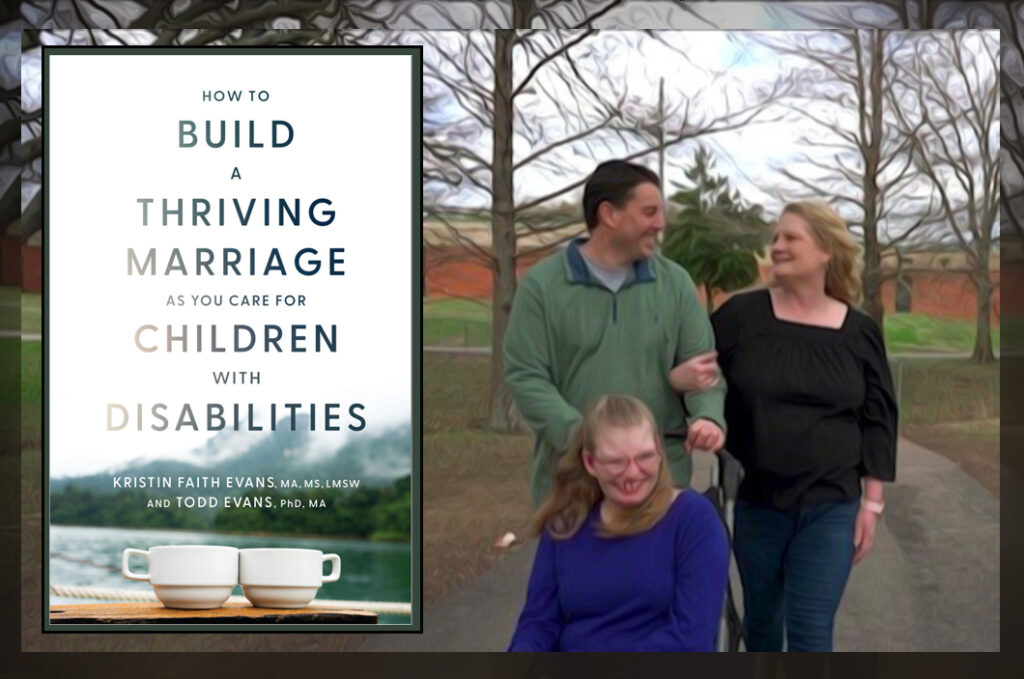
How to Build a Thriving Marriage as You Care for Children with Special Needs

How to Build a Thriving Marriage as You Care for Children with Special Needs

How to Build a Thriving Marriage as You Care for Children with Special Needs

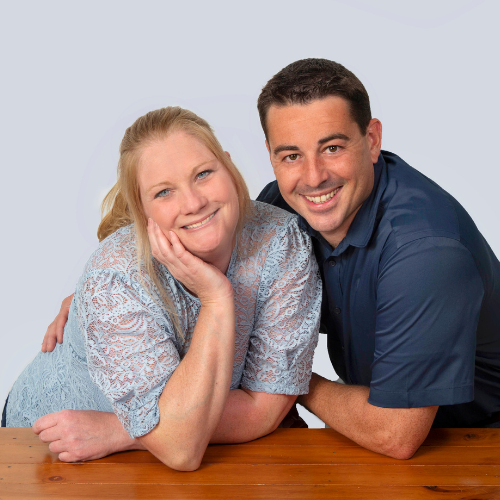
Todd and Kristin Evans know that tending to marriage while raising a child with disabilities can be challenging. About 12 years ago after their medically fragile daughter arrived, they decided to give their marriage one more shot before admitting defeat. In their new book How to Build a Thriving Marriage as You Care for Children with Disabilities, they invite parents to join them on a journey toward wholeness in marriage, parenting, and faith.

Early in our marriage, we discovered building a strong marriage can be difficult. But when our medically complex daughter was born, we began to face even more obstacles to staying connected. We learned the hard way that when special needs parents are not intentional, their marriage may be headed toward disaster. We’re sharing three challenges you may also be experiencing and simple ways you can grow a thriving marriage while parenting your child with special needs.

  1. Commit to a check-in time every day.

As special needs parents, you likely have more to discuss and more serious decisions to make than the average couple. Intense conversations about your child’s needs can easily push out time to engage in more intimate conversations.

Research shows when special needs parents set a consistent ten-minute check-in time every day, their marriages grow stronger. To ensure you have time to connect on a deeper level, agree on a specific time each day that you can set aside all distractions to focus one another. This might be talking on the phone or video chatting over lunch or after the kids are in bed. When you both commit to honoring this time, you will begin to feel more cared for and look forward to those moments. Guard this time and make it a priority.

  1. Regularly manage stress individually and as a couple.

As special needs parents, you likely experience intense daily stress. When your bodies remain in a chronic state of stress, your emotional and mental health can suffer, you can begin to experience physical symptoms, your marriage relationship can become strained, and your physical intimacy may drastically decrease.

In writing our new book, How to Build a Thriving Marriage as You Care for Children with Disabilities (Baker Books), we learned that regularly managing your own stress in healthy ways and supporting your spouse in coping with their stress can greatly improve your marriage. Individually practicing deep breathing, progressive muscle relaxation exercises, and physical activity are very effective ways to reduce your stress levels.

These are some simple ways we destress together that might help you as well:

  • Find a quiet place outdoors to hold hands listening to your surroundings, even if for just five minutes.
  • Go for a walk.
  • Watch a funny show, tickle one another, or swing on a playground.
  • Give your spouse a neck or foot massage.
  • Take a hot, scented bath or shower.
  1. Intentionally build an outside support network.

Caring for your child can easily isolate you and make it difficult to find support and respite. It may feel impossible to find time alone or get out of the house together. Yet, receiving both emotional and practical support can greatly decrease your stress levels and strengthen your marriage. We encourage you to keep searching for different resources. Here are some ideas for finding support:

  • Find local churches with a disability ministry, caregiver support group, or respite program.
  • Contact your state respite coalition
  • Call local college nursing or special education departments for potential caregivers.
  • Talk with other special needs parents about swapping child care

We encourage you to take the first step to strengthening your marriage by choosing one of these ideas and trying it with your spouse today. You’ll find many more ideas in our new book How to Build a Thriving Marriage as You Care for Children with Disabilities, which we hope will help you as well.

Do you like what you see at DifferentDream.com? You can receive more great content by subscribing to the monthly Different Dream newsletter and signing up for the daily RSS feed delivered to your email.

References

Jake Johnson and Fred P. Piercy, “Exploring Partner Intimacy Among Couples Raising Children on the Autism Spectrum: A Grounded Theory Investigation,” Journal of Marital and Family Therapy 43, no. 4 (October 2017): 644-61, https://doi.org/10.1111/jmft.12247.

Linda M. Raffaele Mendez, Karen Berkman, Gary Y. H. Lam, and Charisse Dawkins, “Fostering Resilience Among Couples Coparenting a Young Child with Autism: An Evaluation of Together We are Stronger,” The American Journal of Family Therapy 47, no. 3 (2019): 165-82, doi:https://doi.org/10.1080/01926187.2019.1624225.

By

Kristin Faith Evans, MA, MS, LMSW and Todd Evans, PhD, MA

Dr. Todd and Kristin Evans are award-winning authors, speakers, and parents of two children with complex needs. Their new book, How to Build a Thriving Marriage as You Care for Children with Disabilities releases in May 2024 by Baker Books. They both earned their MA in Christian Formation and Ministries at Wheaton College in Illinois and have served together in full-time ministry in church, camping, and retreat settings. Todd received his PhD from Vanderbilt University’s School of Engineering and currently manages his own business, and Kristin earned her MSW from the University of Tennessee and is a Licensed Master Social Worker experienced in couples, child and family, substance abuse, and crisis counseling. Connect with Todd and Kristin and learn more about their ministry and free resources at www.DisabilityParenting.com.

Author Jolene Philo

Archives

Categories

Subscribe for Updates from Jolene

Related Posts