How Do I Let Go of My Adult EA/TEF Child?

How Do I Let Go of My Adult EA/TEF Child?

How Do I Let Go of My Adult EA/TEF Child?

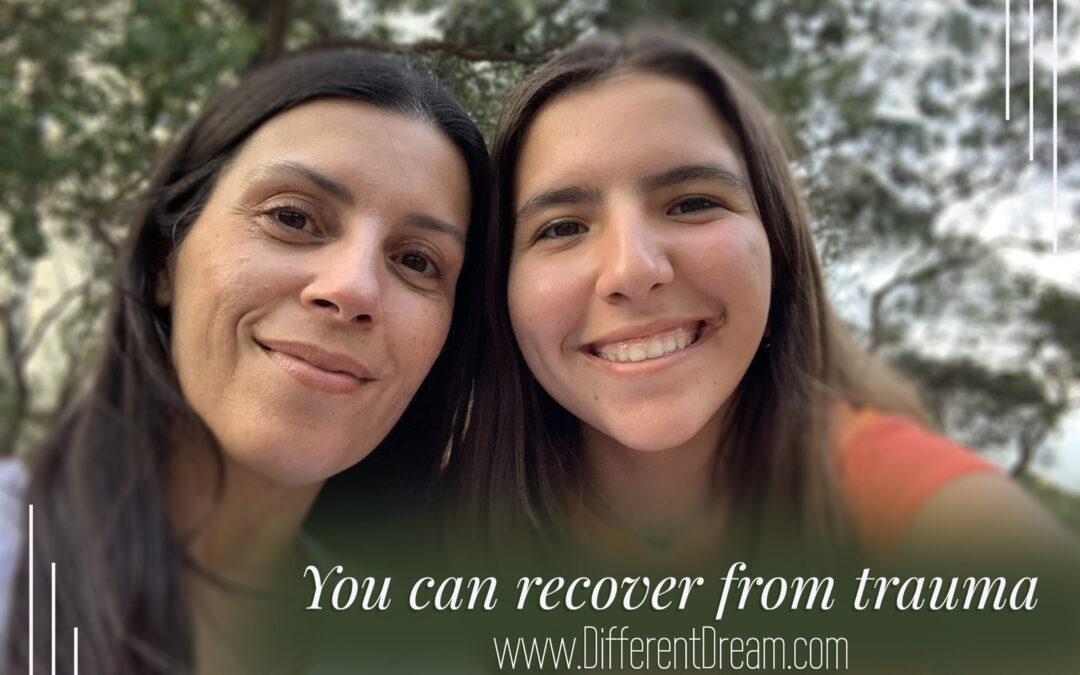
How do I let go of my adult EA/TEF child? That’s the question every parent of a baby born with EA/TEF hope to ask one day in future. That future is now for guest blogger Valeria Conshafter. Her daughter is looking at colleges as she nears adulthood. Today Valeria writes about her struggle to let her daughter go.

My baby girl who was born with EA/TEF, turned 17 this month. It feels like yesterday when we got the news that she couldn’t swallow because of her rare congenital birth defect. It’s the last thing we expected to hear when we welcomed our first (and only) baby into the world. We had no idea what parenthood would look like. The road was bumpy, and fear and faith accompanied us throughout our journey.

Most of the challenges are behind us. Now we are trying to understand and adhere to her plans toward independence in college life. And that means she will soon become an adult and be on her own.

It’s way too soon for me.

I question if I will ever be ready for this. How do I let go of my adult EA/TEF child? Our lives were so different than those of parents with healthy babies. It seems like yesterday when I dropped her off for her first day of kindergarten. I cried for an hour in my car, worried to death and wondering if she would be able to eat her snack safely without me there.

There were many scary moments at home during her feedings and illnesses—too many to count—when I nearly lost her and my sanity. The memories turned into PTSD and years of therapy. The prognosis is uncertain for babies born with EA/TEF. To me that means something can come up at any minute and at any age, so I need to be on the lookout!

I wonder if she knows about the trauma I am still processing and trying to make sense of. That’s why, in my mind, it is too soon to let her go.

She is ready but I am not.

We rarely talk about her condition anymore. The other day she said she forgets about it and doesn’t care she had a tough life when she was younger. She said she is fine—and thank God for that, I guess.

But what about me? How do I let her go?

It all went by too quickly. She needed me beside her 24/7 once, and now she’s ready to leave? I am still in a watchful mode. She had a cold a few weeks ago. Just the thought of her being sick made my body fill with anxiety and fear in an instant.

Breathe. Pause.

I take a step back and think, ā€œHow in the world will I do this when she’s far away? Do I really need to let her go?ā€ All of a sudden, our story is changing, seemingly without a warning or enough time to heal.

But I can’t dwell much on that thought.

I’ve learned to deal with fear many times and my mind knows the answer, even though my heart hides from it. Letting her go is a must, a natural process of life. I should be happy about it. And I am.

Fear and worry might want to stay awhile, but faith is what I hold onto.

God trusted me to care for this child, and I believe that he wants me to trust him and let her go. What stops my overwhelming fear from running my life is remembering this: God has her. He will never let her go. Ever!

And so I change my focus to that.

I put my trust in God’s hands. I see my girl in His hands. Safe anywhere, everywhere—during every bite she takes and every sickness she will endure. She will be away from us sooner than I want, but I trust that God will be always at her side. I must let her go.

God does not and will not.

Do you like what you see at DifferentDream.com? You can receive more great content by subscribing to the monthly Different Dream newsletter and signing up for the daily RSS feed delivered to your email.

Image byĀ Hilke FrommĀ fromĀ Pixabay

By

Valeria Conshafter is a native of Brazil. She has a background in Counseling Psychology and currently works for a women’s organization providing emotional and spiritual support to women all over the country. She loves writing, cooking, and praying for her family and friends. Valeria lives in Houston, Texas, with her husband Todd, their 15-year-old daughter, Sofia, and their two Standard Poodles, Chocolate and Oreo. You can find Valeria onĀ Instagram,Ā Twitter, andĀ Facebook.

Author Jolene Philo

Archives

Categories

Subscribe for Updates from Jolene

Related Posts

The Physical Manifestations of Grief in Caregivers

The Physical Manifestations of Grief in Caregivers

The Physical Manifestations of Grief in Caregivers

The physical manifestations of grief in caregivers are unexpected and pervasive. That, in a nutshell, is what God has been teaching me since the death of my mother on JuneĀ 23,Ā 2023.

Mom’s suffering was great during her final 2 years on this earth. My siblings and I had no desire to prolong her life through medical intervention. We rejoiced when her suffering ended. Her funeral was a celebration, a sharing of memories, a gathering of extended family who loved her and supported us. We wept, we hugged, we said our goodbyes, and my siblings moved on with their lives.

I tried to do the same. A few weeks after Mom’s death, my husband and I packed our new camper and headed west for a much-needed vacation. On the second day, we turned around due to truck trouble and prayed as it limped all 500 miles to our home.

Soon after our return I started limping due to foot pain. The foot pain moved into my leg and then into my hip. During this time my uncle, who was like a second father to me, died. In mid-October, physical pain landed me in bed. From there I limped to the doctor’s office, was diagnosed with a pinched nerve, given a cortisone shot, and started physical therapy.

In an attempt to spare you the details, here’s a pared down timeline of life from then until now:

November and December 2023: Physical therapy, physical therapy, and more physical therapy.

December 2023: Pinched nerve better, bursitis causes by pinched nerve exercises worse.

January 2024: Physical therapy relieves bursitis, but pain from iliotibial band (IT band) increases.

To read the rest of The Physical Manifestations of Grief in Caregivers, visit the Key Ministry website.

Do you like what you see at DifferentDream.com? You can receive more great content by subscribing to the monthly Different Dream newsletter and signing up for the daily RSS feed delivered to your email.

By

Jolene Philo is the author of several books for the caregiving community. She speaks at parenting and special needs conferences around the country.Ā Sharing Love Abundantly with Special Needs Families: The 5 Love LanguagesĀ® for Parents Raising Children with Disabilities, which she co-authored with Dr. Gary Chapman, was released in August of 2019 and is available at local bookstores, their bookstore website, and Amazon.Ā See Jane Dance!, the third book in the West River cozy mystery series, which features characters affected by disability, was released in October of 2023.

Author Jolene Philo

Archives

Categories

Subscribe for Updates from Jolene

Related Posts

Experiencing Post-Traumatic Growth while Raising a Child with Disabilities

Experiencing Post-Traumatic Growth while Raising a Child with Disabilities

Experiencing Post-Traumatic Growth while Raising a Child with Disabilities

Experiencing post-traumatic growth (PTG) while raising a child with disabilities may not be on your radar screen when you’re drowning in the stress associated with caregiving. The only growth that concerned me during our son’s medically fragile years was increasing his strength as he fought for his life. Paying attention to the stress I was experiencing while he struggled, and possible growth coming from it, never crossed my mind.

Now, as I reflect on the hot mess I was in 1982 after our son’s birth, I barely recognize the young and very stressed person I was then. The credit for my present lack of hot messiness goes to post-traumatic growth.

By now you may be asking yourself, ā€œWhat is post traumatic growth, how do I sign up for the class, and how do I know it’s happening in me?ā€

Let’s start with the first question.

In a research study conducted by Taylor Elam and Kanako Taku, they define PTG as ā€œthe positive psychological changes as a result of a struggle with a major life crisis or traumatic event.ā€ The crisis or event is the kind that rocks a person to the core and forces a re-evaluation of beliefs about the world. That sounds a lot like what many parents experience after a child’s diagnosis, doesn’t it?

Now, on to the second question.

The bad news is that I don’t know of classes about PTG. But according to Richard Tedeschi, who has worked extensively with traumatized veterans, you can facilitate and encourage your own growth in 5 powerful ways.

To learn more about experiencing post-traumatic growth while raising a child with disabilities, go to this link at the Key Ministry blog for special needs parents.

Do you like what you see at DifferentDream.com? You can receive more great content by subscribing to the monthly Different Dream newsletter and signing up for the daily RSS feed delivered to your email.

Photo byĀ Elijah HiettĀ onĀ Unsplash

By

Jolene Philo is the author of several books for the caregiving community. She speaks at parenting and special needs conferences around the country. Sharing Love Abundantly with Special Needs Families: The 5 Love LanguagesĀ® for Parents Raising Children with Disabilities, which she co-authored with Dr. Gary Chapman, was released in August of 2019 and is available at local bookstores, their bookstore website, and Amazon. See Jane Dance!, the third book in the West River cozy mystery series, which features characters affected by disability, was released in October of 2023.

Author Jolene Philo

Archives

Categories

Subscribe for Updates from Jolene

Related Posts

Trauma vs. Trust

Trauma vs. Trust

Trauma vs. Trust

Parenting isn’t easy. And it’s even harder when it’s combined with special needs and the trauma that brings. Guest blogger Valeria Conshafter explains how she walks the path of learning to trust in God in the midst of parental PTSD.

Recalling my daughter’s health challenges with Esophageal Atresia/Tracheoesophageal Fistula (EA/TEF) has been a struggle for me. The multiple life-threatening incidents, endless nights pacing around hospital hallways, the sounds of beeping monitors, and the smells the mind will never forget will be forever ingrained in my core.

For years, I kept trying to figure out a way to live with the struggle of PTSD. For many years, I felt lost in my own disoriented thoughts, lacking belief there was an exit, let alone a possible way to live without trauma. My therapist once said that living with trauma is to be constantly in a watchful mode, being trapped and looking at survival through a peephole.

I felt trapped inside a box closed tight above my head. The peephole allowed a glimpse of light that was too intense to look at. I wanted to see what was out there. There were days when I attempted to get out of the box and peeked around until I felt an unexpected desire to step out for a bit. I would step out of the box, pretending I could handle it. I’d stay out for a while. Some days were better than others. But soon enough back I was inside that trap.

Thankfully, after countless sessions of therapy and deep spiritual and emotional work, I found freedom from this trap that is living with trauma and found trust instead. Practically speaking, this is what I have learned when life reminds me of my trauma.

First, I trust God. I keep reminding myself and saying it out loud when I am triggered by random events that I have no control over life’s circumstances. I have no control over my daughter’s health or future. God does. Even when I think that I am in control over all the vitamins I give her, the food choices I give her, choosing all her doctors, and deciding all medical interventions, ultimately what I am doing is just a ā€œprotectiveā€ measure, perhaps for my own sake. But God, above all things, is the one in charge of every sickness, every doctor’s visit, every possible outcome. So, I say this out loud or write it down in my journal—God is in control, not me.

The next thing is that I must trust the process. After I put my trust in God, trusting the process should be easier. Yet life itself can challenge your trust, making you question yourself and your faith! You may ask yourself—Is there something else I should do? Should I really let go and let God? These and other questions will most likely make you doubt the process, and soon enough you are trapped again. Doubts and fear settle in quickly and put you in an anxious and desperate mindset. So I again will say these words out loud or write them down—God is in control, not me. I trust the process.

Finally, I trust her—my daughter! She is 15 now. I must trust her! When she is sick—for example, with a simple cold—and has that horrible, loud, barking cough typical of tracheomalacia babies, I stop, breathe, say my trust phrases, and I look at her. She is fine. There is a lot of self-talk in this part of the process which is helpful to distract my mind. She may be sick and have a bad cough (a trigger for me), but she is breathing. So I look at the facts. She is handling it. She is more mature now and understands the cough, the asthma, the breathing… She is learning to deal with it alone. Because for her this is her future. Her life. The life I entrusted to God’s hand. I then repeat these words or write them down—God is in control, not me. I trust the process. I trust her.

The work is hard. The road to healing is long. But as I watch my daughter grow and go onto her own path of independence, I believe more and more that life after trauma can be fulfilling and happy too.

I want to rejoice from all the blessings I have today. I want to be happy about tomorrow and not so worried. I want to expect the best and not the worst. I want to move on and away from that box that trapped me and prevented me from enjoying life for so long. Trauma is my past and not my future. This is what I have learned and hope it helps you too.

Do you like what you see atĀ DifferentDream.com? You can receive more great content by subscribing to the monthly Different Dream newsletter and signing up for the daily RSS feed delivered to your email.

By

Valeria Conshafter is a native of Brazil. She has a background in Counseling Psychology and currently works for a women’s organization providing emotional and spiritual support to women all over the country. She loves writing, cooking, and praying for her family and friends. Valeria lives in Houston, Texas, with her husband Todd, their 15-year-old daughter, Sofia, and their two Standard Poodles, Chocolate and Oreo. You can find Valeria on Instagram, Twitter, and Facebook.

Author Jolene Philo

Archives

Categories

Subscribe for Updates from Jolene

Related Posts

Flying Near the Sun as a Special Needs Parent

Flying Near the Sun as a Special Needs Parent

Flying Near the Sun as a Special Needs Parent

Flying near the sun as special needs parents? What is guest blogger Lisa Pelissier talking about? In this post, she brings in a little C.S. Lewis, a little Greek mythology, and a little of her own fiction to explain how she deals with a phenomenon that is all too common for parents raising kids with disabilities and special needs.

ā€œStill the thermometer rose. The walls of the ship were too hot to touch. It was obvious that a crisis was approaching. In the next few hours it must kill them or get less.

It got less.ā€

From Out of the Silent Planet by C. S. Lewis

The passage from C. S. Lewis’ Out of the Silent Planet resonates with me as a special needs mom. Although the main character Ransom’s voyage through space was way outside the boundaries of my experience, I repeatedly live through the same kind of stress. Things happen. Then more things. And more things. I’m putting out fires left and right until I stop caring whether I burn up or not. Like Ransom and the others, I am flying near the sun as a special needs parent in a desperate attempt to journey successfully through this life.

As special needs parents, this is our story much of the time. There are too many things to deal with, too many problems to field, too many medical appointments, too much medicine to track, too much angst to soothe, too much sorrow to mop up with our already soggy souls. It’s easy to become overwhelmed, frustrated, and hopeless.

How do I, to mix my metaphors, keep my wings from melting in the sun? How do you emerge from the trials and still have something left to give? Here are some things that help me.

  1. I know this world is not my home. The eighty-three years I plan to spend here in this life (don’t laugh—I’m a planner) are just a speck of dust compared to the eternity of the next world. With that perspective, the trials of this world look more trivial and less all-encompassing. RomansĀ 8:18 says, ā€œFor I consider that the sufferings of this present time are not worthy to be compared with the glory that is to be revealed to us.ā€ Good things are yet to come.
  2. I count my blessings. There are many. I have a lot for which to be thankful. My trials and burdens are great, but looking back over the course of my life, I can see God’s hand faithfully leading me through the darkest places, especially during those times I felt farthest from Him. It helps me remember that though I may not experience the felt presence of God now, He is with me and providing for me.
  3. I work to see what magnificent miracles my children are. They are all delicious human beings. I like being with them. They make me laugh. They are smart and funny. I like the dark, dry humor of my youngest, even if it is born out of depression and anxiety. There’s more to them than what the world might tot up on a checklist of ā€œways to know your children turned out okay.ā€
  4. I take breaks and escape to another world. This will look different for everyone, but for me, I write fiction. I leave this world altogether and immerse myself in the trials of the characters who inhabit Gannoir, the inverted star where my angsty characters fight for what is right (and sometimes go off the rails). They’re so real to me now that I feel like I know them, and despite their difficulties being 100Ā percent my fault, I don’t have to feel guilty. Not everyone will find pleasure in torturing fictional characters, but escaping is vital when stress levels get too high.
  5. I lean on my friends. I have a few who are in the trenches with me, and a good number more who don’t completely understand, but who are always ready to sympathize and offer a listening ear and a helping hand.

I hope that these strategies and my journey are a blessing to you. If you have other methods for coping when you’re flying near the sun as a special needs parent, please post in the comments.

Do you like what you see atĀ DifferentDream.com? You can receive more great content by subscribing to the monthly Different Dream newsletter and signing up for the daily RSS feed delivered to your email.

Image byĀ Dimitris VetsikasĀ fromĀ PixabayĀ 

By

Lisa Pelissier lives in Oregon where she is a homeschooling mother of four (three with disabilities) and author ofĀ four middle-grade fiction novelsĀ as well as aĀ YA fantasy novel. Lisa ownsĀ SneakerBlossom Books, offering Christian, classical homeschool Study Guides and curriculum. She blogs atĀ Eleventh Willow, offering encouragement for Christians parenting the mentally ill. She also works as a freelance copy editor, an artist, and a substitute teacher. In her spare time Lisa enjoys playing the piano and fretting about things over which she has no control.Ā 

Author Jolene Philo

Archives

Categories

Subscribe for Updates from Jolene

Related Posts

When Caregiving Sparks Stress Instead of Joy, What Can You Do?

When Caregiving Sparks Stress Instead of Joy, What Can You Do?

When Caregiving Sparks Stress Instead of Joy, What Can You Do?

When caregiving sparks stress instead of joy, what can you do about it? That’s a question I began mulling over since I posted a survey on my website about stress and compassion fatigue in caregivers way back in 2019.

Within 2 days, the survey had been completed 500 times. Less than a month later, that number had risen to almost 1, 500. This was a full year before COVID and the pandemic reared their ugly heads. Keep that in mind while you read through the statistic below.

  • 98% of the caregivers said their duties cause extra stress in their daily lives.
  • On a scale of 1 to 10, the average stress level of parents was 6.4.
  • 91% said caregiving has affected their mental health.
  • 87% said caregiving has affected their physical health.

Further analysis can be foundĀ the Different Dream website.Ā 

Ā To borrow a phrase from Marie Kondo’s book,Ā The Life-Changing Magic of Tidying Up, the statistics show that caregiving is sparking as much stress as joy in parents raising kids with special needs. Which is why I’ve been pondering the question posed earlier: when caregiving sparks stress instead of joy, what can you do about it?Ā 

Look for Signs of Post-Traumatic Growth

One thing we can do is remember that traumatic and stressful events can lead to positive outcomes. Researchers Richard Tedeschi and Lawrence Calhoun refer to this phenomenon as post traumatic growth.

To read the rest of When Caregiving Sparks Stress Instead of Joy, What Can You Do?, go to the Walk Right In Ministry website.

Do you like what you see atĀ DifferentDream.com? You can receive more great content by subscribing to the monthly Different Dream newsletter and signing up for the daily RSS feed delivered to your email.

By

Jolene Philo is the author of theĀ Different DreamĀ series for parents of kids with special needs. She speaks at parenting and special needs conferences around the country. She’s also the creator and host of theĀ Different Dream website.Ā Sharing Love Abundantly with Special Needs Families: The 5 Love LanguagesĀ® for Parents RaisingĀ Children with Disabilities, which she co-authored with Dr. Gary Chapman, was released in August of 2019 and is available at local bookstores, their bookstore website, andĀ at Amazon. The first book in her cozy mystery series, See Jane Run!, features people with disabilities.

Author Jolene Philo

Archives

Categories

Subscribe for Updates from Jolene

Related Posts