The Weight of Silence as Parents of Kids with Invisible Disabilities

The Weight of Silence as Parents of Kids with Invisible Disabilities

The Weight of Silence as Parents of Kids with Invisible Disabilities

The weight of silence as parents of kids with disabilities is all too familiar to guest blogger Lisa Pelissier. In this post she explains why she and other parents don’t talk about what’s going on with their kids and why they might want to rethink that decision.

The world of special needs parenting is broad and diverse. Some of us are thrust into a world where we’re forced to wear the special needs banner day in and day out.

However, those of us whose children have invisible disorders—high functioning autism, ADHD, mental health issues, and more—have a choice about broadcasting our special need status. Do we choose to stay silent, to blend into the crowd, or do we choose to align ourselves with the special needs population?

3 Reasons We Stay Silent

There can be stigma associated with invisible disorders, especially mental health issues. Historically, people have regarded anxiety and depression as character flaws. They often are subject to comments like ‘If your child wasn’t weak, she wouldn’t be anxious.” Or “If you trusted God more, you wouldn’t be depressed.” There can be shunning that comes along with any invisible disorder. You’re different. You “ride the special bus”—used as a pejorative. As parents, we also receive blame. People say things like, “If your child has anxiety, it’s because you’ve been an abusive parent, or at the very least, a bad one.”

Who needs that? It’s easier to keep our mouths shut.

We don’t want our kids to label and therefore limit themselves. Autism doesn’t mean you can’t have friends. It doesn’t mean you can’t have empathy, we think. If my child wears his diagnosis like a name tag, he may use it as an excuse for why he doesn’t have to reach out to make friends, have to have compassion for others, or excel at his studies.

We want our kids to achieve their full potential. Why shout out diagnosis instead of ignoring it and hoping for the best?

A third reason we stay silent is because of our own denial of our children’s conditions. He’s not autistic, he’s just quirky. She’s not depressed, she’s just hormonal. It’s not ADHD, he’s just disobedient. Accepting a diagnosis comes as a blow to our hopes and dreams for our child.

Like the title of this website states, we have to find a “different dream”—something that can be difficult and painful to do.

2 Reasons We Shouldn’t Stay Silent

Invisible disorders are real. While it’s true that kids can be quirky, hormonal, and disobedient, it’s also true that kids can have real diagnoses of autism, depression, and ADHD, and those conditions can and do affect thinking and behavior. We do our kids a disservice when we deny their reality. Helping them learn about their condition and how it affects their thoughts, feelings, and behavior will give them the power to understand, learn, and grow—and to manage their health rather than pretend there isn’t a problem.

We can help others understand why our kids are different so they can be more accepting.

Many choose silence—until someone else speaks up. Being up front about depression, anxiety, OCD, ADHD, and other invisible disorders gives others permission to speak about their own difficulties. This can be especially true in the case of disorders we in the church may try fervently to hide because of shame and grief, such as in suicidal ideation. When you say, “this is my reality,” you find that others in your circle of acquaintance have been there too, even if they’re not ready to go public with it.

Where you expected to find condemnation and rejection, you find understanding, solidarity, and friendship.

As special needs parents, our burdens are heavy. Keeping them to ourselves not only deprives us of support, of someone to help us bear those burdens, it deprives others of the chance to grow in their own knowledge, understanding, and compassion.

You are not alone if your child is crippled by anxiety.
You are not alone if your child has attempted suicide.
You are not alone if your adult child who can “pass” for neurotypical can’t get their life together.
You are not alone if your child is too depressed to get out of bed in the morning.

But if you keep your troubles hidden, you’ll never know what kind of love and support you’re missing. You’ll never know if by speaking the truth, by freeing yourself from the weight of silence as parents of kids with invisible disabilities, you may give someone else a boost out of their own pit of silent despair.

Do you like what you see at DifferentDream.com? You can receive more great content by subscribing to the monthly Different Dream newsletter and signing up for the daily RSS feed delivered to your email.

Photo by Kristina Flour on Unsplash
By

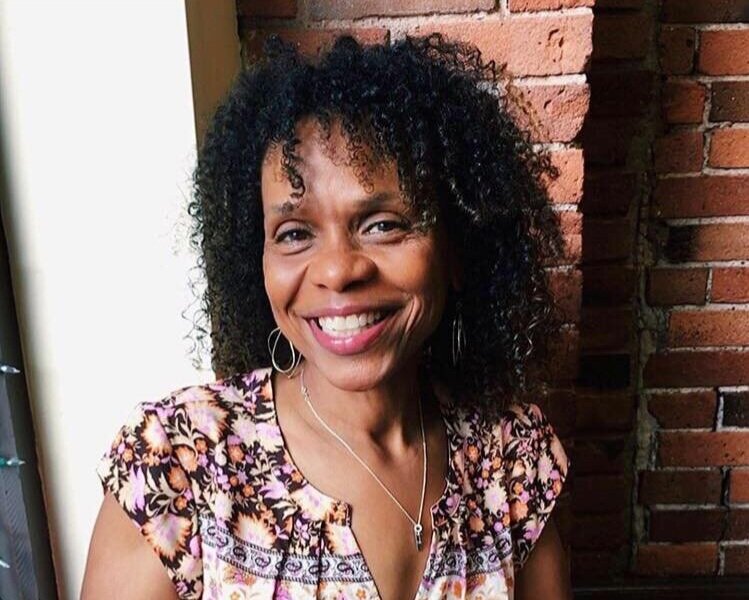
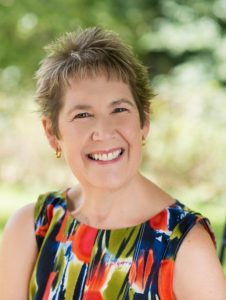
Lisa Pelissier lives in Oregon where she is a homeschool mom and author of five middle-grade fiction novels, the second-grade Monsters series, and a YA fantasy novel. Lisa owns SneakerBlossom Books, offering Christian, classical homeschool Study Guides and curriculum. She blogs at Eleventh Willow, offering encouragement for Christians parenting the mentally ill. She also works as a freelance copy editor, copy writer, an artist, and a marketing editor. In her spare time Lisa enjoys playing the piano and fretting about things over which she has no control. 

Author Jolene Philo
Archives

Categories

Subscribe for Updates from Jolene

Related Posts

Choosing Acceptance and Advocacy as Parents of Kids with Disabilities

Choosing Acceptance and Advocacy as Parents of Kids with Disabilities

Choosing Acceptance and Advocacy as Parents of Kids with Disabilities

Choosing acceptance and advocacy as parents of kids with disabilities takes time. Today’s guest blogger, who wishes to remain anonymous, talks about making that choice as a parent many years ago and using what she learned to assist parents of her students who are struggling to make that choice today.

There’s nothing to worry about.

This ordinary statement, from the lips of the pediatrician, a few hours after my daughter’s silent birth, cut my life into two halves.

Before, I was an unsuspecting mother to be with an I-can-handle-it approach to life. A happy-go-lucky Christian woman who somehow thought faith was a shield to protect her from the worst life has to offer.

But as I absorbed this statement, somehow, in my core I knew that this pediatrician was mistaken, and so was my worldview. There definitely was something to worry about. My precious daughter was fighting for her life, and I had better start fighting for it too.

The events that transpired are another long story, but in a nutshell, our daughter was correctly re-diagnosed with EA/TEF in another hospital. Then, at three days old, she underwent a successful repair operation.

We could finally breathe again.

However, her struggles did not disappear. The months and years after her birth saw her back in hospital again and again with alarming frequency, as she coped with pneumonia, chest infections, and food blockages. Meanwhile, she struggled to swallow on a daily basis. My preconceived ideas of family life were turned upside down and inside out as I just struggled to feed her and stagger from one round of antibiotics to the next.*

So that pediatrician’s statement had well and truly thrown me into the second, more sober half of my life. 

I don’t hold any hard feelings towards him. After that surgery, I went back to the first hospital to find him. I explained the diagnosis, I hope, kindly. He had not read my medical notes which stated I had polyhydramnios (too much amniotic fluid) during my pregnancy. I later learned this was a warning sign of EA/TEF.

Fast forward 19 years and here I am, an Early Years Teacher. Sometimes this job entails the unenviable task of conveying difficult messages to parents.

  • Have you noticed anything unusual about your son’s development in comparison to that of his brother?
  • Have you considered a hearing test?
  • I would like to suggest you consider an assessment for your child.

These words, even when delivered with as much sensitivity as a teacher can muster, can be met with resistance and even anger. I have experienced more than once that, as the teacher, I can be the target of the anger.

I understand this.

Our daughter’s diagnosis meant that acceptance was thrust upon us in that moment. EA/TEF is a physical issue making swallowing impossible without surgery. Despite the challenges, we were able to move on towards coping with the situation by first accepting it. Other diagnoses can be more nuanced, more open to interpretation. Acceptance can sometimes be put off for a while.

Author Jocelyn Soriano says, “Acceptance is the shortest route to peace.”

  • Accepting that your child might be neurodivergent.
  • Accepting that your child might have extra physical challenges.
  • Accepting that we sometimes need, as Jolene has shown us, a different dream for our child.

Professionals might not always be sensitive or even right. But some of us do know the weight of our words. We know they have the power to cut a life into two halves. We do not speak for the fun of it. We speak out of necessity and in the best cases, with compassion.

These words are an uncomfortable but essential invitation to acceptance. 

So, if you are struggling with something a doctor or teacher has told you, don’t waste time or energy focusing on what the professional said or did. Choosing acceptance and advocacy as parents of kids with disabilities will help your family move forward. Your child needs your focus and energy to be on them. So be courageous. Find out the truth, accept it, and fight for your child.

*Everyone’s journey is different, but for us, life didn’t stay in that dark place forever. With the help of Christian friends and family, we slowly came through it. We are thankful that now our daughter is now an independent woman who lives a full life and can’t remember the last time she was on antibiotics.

Do you like what you see at DifferentDream.com? You can receive more great content by subscribing to the monthly Different Dream newsletter and signing up for the daily RSS feed delivered to your email.

Photo by Bekah Russom on Unsplash

By

The author of this post wishes to remain anonymous.

Author Jolene Philo

Archives

Categories

Subscribe for Updates from Jolene

Related Posts

Hello! Means the World to Those with Disabilities and Special Needs

Hello! Means the World to Those with Disabilities and Special Needs

Hello! Means the World to Those with Disabilities and Special Needs

Hello means the world to those with disabilities and special needs. In this post, guest blogger Mark Arnold describes what a greeting reveals about the person who’s saying hello.

You can tell a lot about a place and its people from the way they greet a child or young person with a disability or special needs. I’ve visited lots of children’s and youth groups over the years, and one thing I’ve always looked for is the response of the leaders when a child or young person with additional needs arrives. Their reactions typically fall into one of two categories:

Angry face

1. Something between dejection and horror: Leaders see the person arrive and look at each other, their expressions communicating disappointment. They tend not to approach or welcome the child, ignoring them instead. There may be audible comments that reinforce their sense of regret.


Smiling faces

2. Something between encouragement and delight: Leaders see the person arrive, smile and head towards them to greet them They refer to them by name, ask how they are, and say they’re pleased to see them. They guide the child to join in an activity, or to a designated leader who can support them.

The child usually understands which response they receive, and that determines how they will respond to the leaders for the rest of the session.

There are many reasons why leaders fall into one of the two categories. Let’s look at some of them.

Negative responses often come from a lack of understanding, little or no training, a lack of volunteers, and inflexibility to change. Changing these responses is the responsibility of church leaders and the church community as a whole. If the most vulnerable and marginalized in our society are unwelcome, then the church has deeper issues to grapple with. Frazzled children’s or youth workers might be the ones who look bad, but behind them are church leaders who won’t adequately invest in children’s and youth ministries.

Positive response often comes from well supported and equipped team members who have been trained and have enough staff and volunteers to provide the level of support needed by a child with additional needs. Behind these teams there is usually a supportive church leader or leadership team that value children and youth ministry. They invest in finances, people, and prayer. They broadcast the message that everyone belongs there, which the gospels show is what Jesus had in mind.

In this short video clip, Philippa, who was born blind, shares some of her experiences in church and the power of saying hello. https://www.youtube.com/watch?v=gJcUpczxCp0

Which of the two responses resonates most closely with the reality of your church? If it is the negative one, work to bring about positive change so that every child and young person is welcomed and fully included. If it is the positive one, think about how you can reach out to struggling churches to help them.

Welcome heart

As Will Rogers once said, “You never get a second chance to make a first impression.”

Churches only get one shot, one opportunity to show those with disabilities and special needs how valued and loved they are. Let’s not blow our chance. Instead let’s do all we can to be the difference for children and young adults who journey with us.

A friendly hello means the world to those with disabilities and special needs, so let’s start there.

Do you like what you see at DifferentDream.com? You can receive more great content by subscribing to the monthly Different Dream newsletter and signing up for the daily RSS feed delivered to your email.

Header image © Photo by Vladislav Klapin on Unsplash; Yellow smiley faces © Photo by Tim Mossholder on Unsplash
Angry face © Photo by Andre Hunter on Unsplash; Red heart © Photo by Nick Fewings on Unsplash

By

Mark Arnold is the Additional Needs Ministry Director at Urban Saints, a leading national Christian children’s and youth organization. He is co-founder of the Additional Needs Alliance, a national and international advocate for children and young people with additional needs or disabilities. Mark is a Churches for All and Living Fully Network partner, a member of the Council for Disabled Children and the European Disability Network. He writes an additional needs column for Premier Youth and Children’s Work (YCW) magazine and blogs at The Additional Needs Blogfather. He is father to James, who has autism spectrum condition, associated learning disability, and epilepsy. To find out more about how Mark’s work can help you, contact him at: marnold@urbansaints.org or @Mark_J_Arnold

Author Jolene Philo

Archives

Categories

Subscribe for Updates from Jolene

Related Posts

Setting Goals for Adult Children with Disabilities Matters

Setting Goals for Adult Children with Disabilities Matters

Setting Goals for Adult Children with Disabilities Matters

Setting goals for adult children with disabilities matters to Sandy Ramsey-Trayvick. When she and her husband approached the program director who works with their son Myles about setting goals for 2023, the coordinator was excited. In this post she explains why goal-setting matters to her, her husband, the support coordinator, and God.

When my son was a child, we relied on the special education system to provide the opportunities and resources for his continued growth and development. By law, this system required that measurable goals be developed annually, and that the goods and services needed to meet those goals also be supplied. As imperfect as that system may have been, I could be assured that my son’s progress was front and center for everyone on his team.

I was surprised and disappointed to learn that, after the age of 21, that goal-directed system is replaced by one in which progress is no longer required or objectively measured for adults with intellectual or developmental disabilities. According to my son’s support coordinator, the belief is that, after age 25, adults with intellectual or developmental disabilities have maxed out their ability to learn.

I couldn’t disagree more.

I believe God has a plan for my son, just like He has for all of us. And as a progressive God, I believe His plan for each of us includes His intention that we continue to grow into the best version of ourselves, whatever that may be.

God confirmed this with me recently.

He reminded both my husband and me that He has plans for Myles. Plans that were bigger than what we currently had in place or envisioned for the future. We felt convicted by this challenge from the Lord to think bigger for our son, to develop with God a vision for Myles’ life. We felt compelled to set bigger goals, both short and long term.

In a meeting with Myles’ support coordinator and the director of his day habilitation program, my husband and I shared some of our dreams for Myles as well as the role we hoped the day program would play in partnering with us for Myles’ continued growth. Much to our surprise, the director of the program was excited about our mindset and request. He revealed to us his belief that far too many parents were disengaged––having neither goals nor a vision for their adult children with disabilities. Many were merely looking for others to decide what their children’s futures would look like. They don’t yet know that setting goals for adult children with disabilities can make a difference.

Fortunately, for those of us who are followers of Christ, that doesn’t have to be the case. We have God’s promise for our kids that He has good plan for each of them and we have the wisdom of the Holy Spirit and the grace of God to help us help our kids continue to grow.

My husband and I want Myles to fulfill God’s plan for His life.

We want to partner with God, utilizing the resources and wisdom He provides, to help Myles continue to develop into the best version of himself. To continue becoming who God has called him to be, doing the things God has planned for him. That means that, as the new year approaches, I’ll be seeking God for His 2023 goals for my son.

Do you like what you see at DifferentDream.com? You can receive more great content by subscribing to the monthly Different Dream newsletter and signing up for the daily RSS feed delivered to your email.

By

Sandy and her husband are parents to three young adult children. Their son was diagnosed with multiple disabilities 21 years ago after a devastating illness as a toddler. Following her son’s diagnosis, Sandy quit her job to become his full-time caregiver and advocate.

Sandy is currently a Certified Professional Coach. Her focus is to come alongside other special needs parents, helping them to recognize choices that will enable them to reclaim freedom, renew purpose, and reactivate joy.

You can learn more about Sandy, her work and her blog at www.UNDisabledLIVES.org. You can also reach her at Sandy@UNDisabledLIVES.org.

Author Jolene Philo

Archives

Categories

Subscribe for Updates from Jolene

Related Posts

How Parents Can Stay Strong When Advocacy Efforts Seem to Fall Short

How Parents Can Stay Strong When Advocacy Efforts Seem to Fall Short

How Parents Can Stay Strong When Advocacy Efforts Seem to Fall Short

How parents can stay strong when advocacy efforts seem to fall short at every turn is something Catherine Boyle knows about. She struggled with that question repeatedly while raising her children and advocating for their best good. Today she shares 3 things for parents to remember when all their efforts feel fruitless.

“It won’t work. My specialty is ADHD, and the supplement won’t help.”

The familiar rush of fear, anxiety, and humiliation swept through my insides. “I didn’t know you were an ADHD specialist,” I stammered, after a few awkward seconds.

The psychologist’s tone softened slightly; the phone call ended shortly thereafter. In the midst of the shame I felt, merely asking about emerging treatment options for my child who was still struggling, in spite of taking prescribed medication for years, I knew I couldn’t trust this doctor.

Eight years later I unexpectedly learned that not all doctors agree on treatment options. As I sat across the desk from the newest doctor for the as yet-to-be correctly diagnosed condition with my now young adult child, she handed me an information sheet about an important supplement for individuals with the same struggles as my child.

It was the very same supplement I asked about all those years earlier. This time it came with the hearty recommendation of a similarly board-certified physician.

My focus words for this year are transformational, truth, and two (as in “Part 2.”) These words most definitely apply to the situation I described above, when you know you didn’t do anything wrong advocating for your child or other loved one.

Whether you are enduring judgmental relatives, physicians who do not listen to your child’s needs, or a church environment that communicates disdain for your parenting skills, hear me loud and clear: if you didn’t do anything wrong in God’s eyes, you didn’t do anything wrong. Period. End of story.

It’s much easier to read this than live it out when you find yourself unsupported by those who don’t see your sleepless nights or hear your fervent prayers or read your endless research. If that’s your situation, remember these three things when you wonder how parents can stay strong when advocacy efforts seem to fall short.

God sees, and He rewards things done with integrity (Psalm 101:2).

No one else fully knows your heart. No one else knows the effort you’ve put into being the best parent or caregiver. No matter what struggles your family encounters, God sees and is present, even when it doesn’t feel like it.

Our family went through several years of difficult struggles. In the middle of that time, God gave me a peek behind the curtain of what He had been doing for decades, things so improbable that I will spend the rest of my life pondering how vast is His work in the lives of ordinary people.

I’m nobody special. I promise, He is doing similar things in your life, with your family, right now. I pray He gives you eyes to see a little of what He is doing to refresh and encourage you.

Beauty comes from ashes, but the ashes come first. Its okay to lament the ashes (Isaiah 61:3).

If you’re getting no support from friends, family, church, and doctors, you may be in a period of ashes. Job lived in ashes for a long season, but he didn’t stay there. In the ashes he lamented, which is a healthy way to hash out things that cause you pain. Find a trusted pastor, counselor, or friend who will listen and encourage you as you lament.

When we were ‘living in ashes’, I reached out to the wise Christian therapist I had seen off and on for several years. I trusted her to listen and challenge me when my reactions to our struggles did not align with who God is. Several years pre-pandemic, she allowed me to meet over the phone instead of traveling to meet with her in-person. More than once I interrupted errands to pour out my heart to her and sob in the car in a parking lot.

God makes everything beautiful in its time (Ecclesiastes 3:11).

We recently experienced the “part two” of a seven-year season. Part one was all difficulty: misunderstood behaviors, school struggles, dreams laid down. We had been very fearful about suicidal leanings in things our child did and said.

The other bookend was the exact opposite: success, understanding based on proper diagnosis, dreams come true. It wasn’t what we envisioned, but the challenges made this “Part 2” so much sweeter.

Going through challenges dispels the illusion that life will go according to your plans. But challenges give you the opportunity to see that your life hasn’t deviated from His plans. I pray this year allows you to get a vision of your “Part 2,” and that truths learned within your challenges will transform your relationship with Christ.

Do you like what you see at DifferentDream.com? You can receive more great content by subscribing to the monthly Different Dream newsletter and signing up for the daily RSS feed delivered to your email.

By

Catherine Boyle is Mental Health Ministry Director and Social Media Manager for Key Ministry. Connect with Catherine at Key Ministry, her website catherineboyle.com, or on her social media links on Facebook, Twitter, Instagram, and YouTube.

Author Jolene Philo

Archives

Categories

Subscribe for Updates from Jolene

Related Posts

Professional Bullying Is Not Okay

Professional Bullying Is Not Okay

Professional Bullying Is Not Okay

Professional bullying is not okay. Guest blogger Trish Shaeffer has come to recognize this tactic–not from every care professional who works with her son, of course–and to advocate on his behalf. Today she encourages you to do the same.

Professional bullying is not okay. I’m not talking about semi-professional, resident, schoolyard bullies. I’m talking about the bullying by care professionals. From teachers, doctors, surgeons, therapists, nurses, principals, and others. 

I’m sure at one time on another we have felt bullied to make a decision for our kids with special needs. To feel pushed in one direction or another. Being beaten over the head by their opinion or advice. Over and over again until our head spins. 

Then the parenting guilt kicks in with it. We start asking ourselves if we are doing the right thing? Maybe we were wrong? Maybe they know best? Maybe our gut or heart is wrong? We second guess ourselves.

I’ve been a victim of bullying and guilt in this way. It made me feel lower than low. It made me at one point feel like I was a bad parent. How could I know best when I’m being told the care I want for my son is not the best? 

We feel bullied into agreeing with their opinions because they are the professionals, right?

This is where we need to pause. 
Take a deep breath. Stand our ground. 
Follow our gut and our heart because professional bullying is not okay. 

It’s someone’s opinion. Their best guess. Nothing more. They don’t know your child like you do, so be firm.  Too many times I see this and dealt with it myself. Sometimes it ends up in more heartache than where you started. 

I wish it was different. I wish more professionals accepted a parents or guardians wishes and concerns. Yes, they went to college and became professionals. But a degree is not the be all and end all be. Who knows the patient or student best matters when discussing what a child’s care should look like. 

It took a few go arounds for me as a care giver to finally stand up, disagree with the professionals opinions, to say “No!” and not back down! I’m sure at this point I’m deemed to be a handful or a difficult parent by some professionals. I don’t care as much as I used to. 

Who else will look out for my son if I don’t?
Who else will be his cheerleader? 

The word “no” is powerful. 

It can inspire change.
Acceptance.
Defiance.
Strength.
Teamwork.
Self-worth. 
And much more.

You have a voice. Your opinion matters. Remember that. I wish someone told me this a long time ago, which is why I’m sharing it now.

Saying “No!” is okay.
Use it whenever you feel you need to.
Stand up and speak and expect to be heard.
You have the power.

Professional bullying is not okay.

Do you like what you see at DifferentDream.com? You can receive more great content by subscribing to the monthly Different Dream newsletter and signing up for the daily RSS feed delivered to your email inbox. You can sign up for the first in the pop up box and the second at the bottom of this page.

By

Trish Shaeffer is the mom of 3 active boys, 2 of whom have special needs. She’s a peer supporter for Parent to Parent and volunteers with the United Cerebral Palsy Network, Special Olympics, and the United Way. She’s also an equine volunteer at Leg Up Farm. She’s married to her best friend and biggest supporter, Chris Schaeffer.

Author Jolene Philo

Archives

Categories

Subscribe for Updates from Jolene

Related Posts