How to Build a Thriving Marriage as You Care for Children with Special Needs

How to Build a Thriving Marriage as You Care for Children with Special Needs

How to Build a Thriving Marriage as You Care for Children with Special Needs

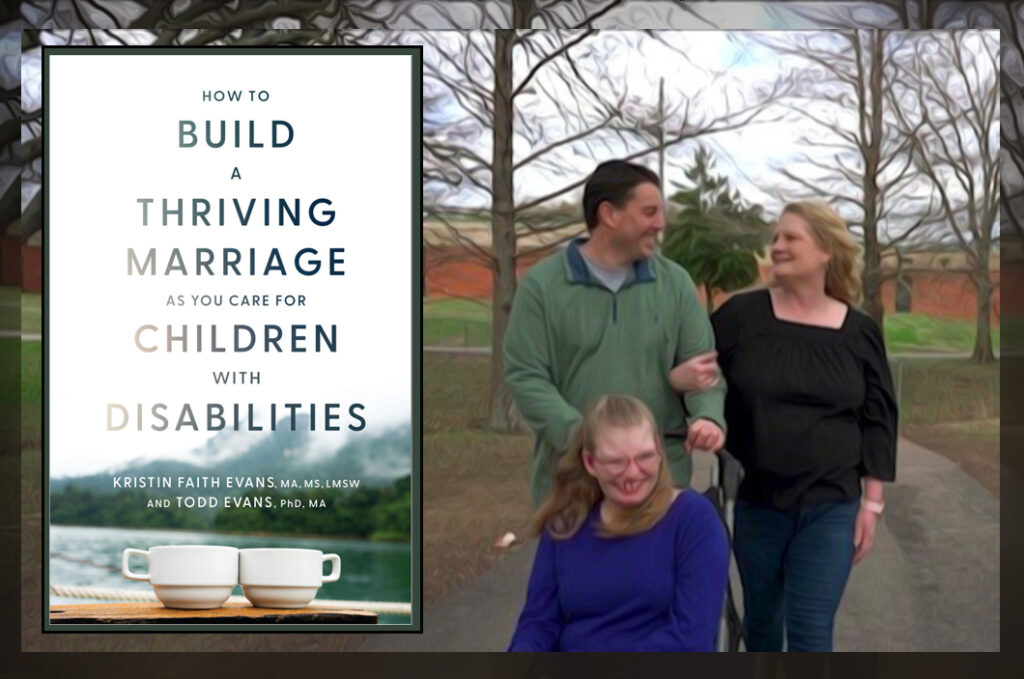
Todd and Kristin Evans know that tending to marriage while raising a child with disabilities can be challenging. About 12 years ago after their medically fragile daughter arrived, they decided to give their marriage one more shot before admitting defeat. In their new book How to Build a Thriving Marriage as You Care for Children with Disabilities, they invite parents to join them on a journey toward wholeness in marriage, parenting, and faith.

Early in our marriage, we discovered building a strong marriage can be difficult. But when our medically complex daughter was born, we began to face even more obstacles to staying connected. We learned the hard way that when special needs parents are not intentional, their marriage may be headed toward disaster. We’re sharing three challenges you may also be experiencing and simple ways you can grow a thriving marriage while parenting your child with special needs.

  1. Commit to a check-in time every day.

As special needs parents, you likely have more to discuss and more serious decisions to make than the average couple. Intense conversations about your child’s needs can easily push out time to engage in more intimate conversations.

Research shows when special needs parents set a consistent ten-minute check-in time every day, their marriages grow stronger. To ensure you have time to connect on a deeper level, agree on a specific time each day that you can set aside all distractions to focus one another. This might be talking on the phone or video chatting over lunch or after the kids are in bed. When you both commit to honoring this time, you will begin to feel more cared for and look forward to those moments. Guard this time and make it a priority.

  1. Regularly manage stress individually and as a couple.

As special needs parents, you likely experience intense daily stress. When your bodies remain in a chronic state of stress, your emotional and mental health can suffer, you can begin to experience physical symptoms, your marriage relationship can become strained, and your physical intimacy may drastically decrease.

In writing our new book, How to Build a Thriving Marriage as You Care for Children with Disabilities (Baker Books), we learned that regularly managing your own stress in healthy ways and supporting your spouse in coping with their stress can greatly improve your marriage. Individually practicing deep breathing, progressive muscle relaxation exercises, and physical activity are very effective ways to reduce your stress levels.

These are some simple ways we destress together that might help you as well:

  • Find a quiet place outdoors to hold hands listening to your surroundings, even if for just five minutes.
  • Go for a walk.
  • Watch a funny show, tickle one another, or swing on a playground.
  • Give your spouse a neck or foot massage.
  • Take a hot, scented bath or shower.
  1. Intentionally build an outside support network.

Caring for your child can easily isolate you and make it difficult to find support and respite. It may feel impossible to find time alone or get out of the house together. Yet, receiving both emotional and practical support can greatly decrease your stress levels and strengthen your marriage. We encourage you to keep searching for different resources. Here are some ideas for finding support:

  • Find local churches with a disability ministry, caregiver support group, or respite program.
  • Contact yourĀ state respite coalition
  • Call local college nursing or special education departments for potential caregivers.
  • Talk with other special needs parents about swapping child care

We encourage you to take the first step to strengthening your marriage by choosing one of these ideas and trying it with your spouse today. You’ll find many more ideas in our new book How to Build a Thriving Marriage as You Care for Children with Disabilities, which we hope will help you as well.
Do you like what you see at DifferentDream.com? You can receive more great content by subscribing to the monthly Different Dream newsletter and signing up for the daily RSS feed delivered to your email.

References

Jake Johnson and Fred P. Piercy, “Exploring Partner Intimacy Among Couples Raising Children on the Autism Spectrum: A Grounded Theory Investigation,” Journal of Marital and Family TherapyĀ 43, no.Ā 4 (October 2017): 644-61, https://doi.org/10.1111/jmft.12247.

Linda M. Raffaele Mendez, Karen Berkman, Gary Y. H. Lam, and Charisse Dawkins, “Fostering Resilience Among Couples Coparenting a Young Child with Autism: An Evaluation of Together We are Stronger,”Ā The American Journal of Family TherapyĀ 47, no.Ā 3 (2019):Ā 165-82, doi:https://doi.org/10.1080/01926187.2019.1624225.
By

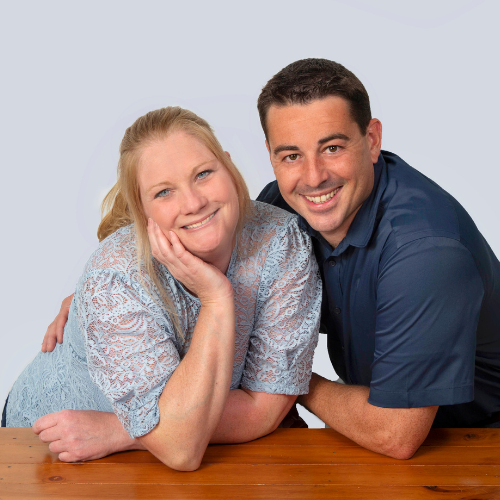
Kristin Faith Evans, MA, MS, LMSW and Todd Evans, PhD, MA

Dr. Todd and Kristin Evans are award-winning authors, speakers, and parents of two children with complex needs. Their new book, How to Build a Thriving Marriage as You Care for Children with Disabilities releases in May 2024 by Baker Books. They both earned their MA in Christian Formation and Ministries at Wheaton College in Illinois and have served together in full-time ministry in church, camping, and retreat settings. Todd received his PhD from Vanderbilt University’s School of Engineering and currently manages his own business, and Kristin earned her MSW from the University of Tennessee and is a Licensed Master Social Worker experienced in couples, child and family, substance abuse, and crisis counseling. Connect with Todd and Kristin and learn more about their ministry and free resources at www.DisabilityParenting.com.

Author Jolene Philo
Archives

Categories

Subscribe for Updates from Jolene

Related Posts

The Sharing Love Abundantly Online Study is Coming Your Way

The Sharing Love Abundantly Online Study is Coming Your Way

The Sharing Love Abundantly Online Study is Coming Your Way

The Sharing Love Abundantly online study for caregiving families is set to kick off January 2021 with a bang! Registration for this free, 4 week study is already underway with the help of my friends at Key Ministry.

We’ll meet on Zoom for an hour every Thursday in January at 11 AM Central Standard Time.

During the first half of each session we’ll dig into the book, discussing ways to use the love languages with every person in a caregiving family–spouses, kids with special needs, typical siblings. We’ll also examine how the love languages can help extended family members, medical professionals, and educators support our families effectively.

Each week special guests will join us for the second half of each meeting. The guests are family members who shared their experiences in Sharing Love Abundantly in Special Needs Families. Here’s who will be joining us:

January 7: Joe and Cindi Ferrini
January 14: Matt and Ginny Mooney
January 21: Colleen Swindoll-Thompson
January 28: Stephen ā€œDocā€ Hunsley

I can’t wait for you to meet these friends, listen to their wisdom, ask your questions, laugh together, and maybe even cry together.

The study is free, but you will need a copy of Sharing Love Abundantly in Special Needs Families to participate fully. You also need to register beforehand by visiting this link. After you register, you’ll receive an email with more details.

If you have any questions about the Sharing Love Abundantly online study, you can leave a comment below or click the contact link at the top of the page. I’ll get back to you as soon as possible.

Do you like what you see at DifferentDream.com? You can receive more great content by subscribing to the monthly Different Dream newsletter and signing up for the daily RSS feed delivered to your email inbox. You can sign up for the first in the pop up box and the second at the bottom of this page.

By

Jolene Philo is the author of theĀ Different DreamĀ series for parents of kids with special needs. She speaks at parenting and special needs conferences around the country. She’s also the creator and host of theĀ Different Dream website.Ā Sharing Love Abundantly With Special Needs Families: The 5 Love LanguagesĀ® for Parents RaisingĀ Children with Disabilities, which she co-authored with Dr. Gary Chapman, was released in August of 2019 and is available at local bookstores, their bookstore website, andĀ at Amazon.

Author Jolene Philo

Archives

Categories

Related Posts

The Dads Band

The Dads Band

The Dads Band

In this post, guest blogger Rachel Olstad introduces readers to the members of The Dads Band and describes their exciting new CD, The Waiting Room.Ā 

Four musicians. Four fathers of children with severe disabilities. Years of playing together at Joni and Friends Family Retreat. Now performing their own music, the music that flows from their experiences of genuine faith lived in the middle of suffering, sorrow, and joyful hope. They areĀ The Dads Band.

These four dads met years ago at a Joni and Friends Family Retreat for families affected by disability in the Santa Cruz mountains. Sean, Bart, Brent and Jim each have a child affected by disability – autism, Dandy-Walker syndrome, spina bifida, ataxia telangiectasia. Drawn together through disability, they soon discovered that they all were musicians and involved in ministry. Bonding over this triple crown of commonalities was a cinch.

They began leading worship at Family Retreat and affectionately became known as The Dad Band. They soon started to see each other throughout the year at other ministry events and sometimes even just for fun. People who heard them play kept asking, ā€œWhen’s the CD coming out?ā€

This past January, they finally came together for four days to record a CD. Each guy brought in three tunes he’d written or arranged out of his experience of being special needs father.

In Love is Silent Sean expresses his desire to communicate with his son who is nonverbal.
Bart’s tune, On Gold Street, celebrates everyone dancing in heaven one day.
The Waiting Room is Brent’s take on learning to wait in the shelter of God’s wings.
Grab a tissue for Jim’s song, She Likes to Dance, which will break your heart and make you smile at the same time.

In creating this album, The Dads Band hopes to encourage everyone, but especially fathers who have children with disabilities. Band members want to offer God’s hope to those who are struggling with their child’s diagnosis, to those who are struggling with the loss of dreams and expectations for their child’s future, to those who are struggling in their marriages because the caregiving is sometimes just so hard. And they want to show that there is joy and love and laughter to be found on the path of disability journey.

You can listen to the tunes by downloaded them individually or as a full album on Amazon.

Do you like what you see at DifferentDream.com? You can receive more great content by subscribing to the quarterly Different Dream newsletter and signing up for the daily RSS feed delivered to your email inbox. You can sign up for the first in the pop up box and the second at the bottom of this page

By

Rachel Olstad began her journey into the world of disabilities in 1990 when her oldest child was born with spina bifida and subsequently diagnosed with autism. She volunteers with Joni and Friends Southern Oregon, helping to meet the physical, emotional and spiritual needs of individuals and families affected by disability and encouraging churches to include all people. She was a contributing writer for both Special Needs Smart Pages and Nursery Smart Pages (Gospel Light), has been published in the Journal for Religion, Disabilities & Health, and was an assistant editor on Beyond Suffering: A Christian View on Disability Ministry. (Christian Institute on Disability)

Author Jolene Philo

Archives

Categories

Subscribe for Updates from Jolene

Related Posts

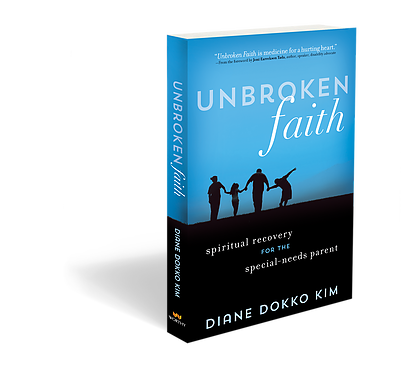
Why Diane Dokko Kim Wrote Unbroken Faith

Why Diane Dokko Kim Wrote Unbroken Faith

Why Diane Dokko Kim Wrote Unbroken Faith

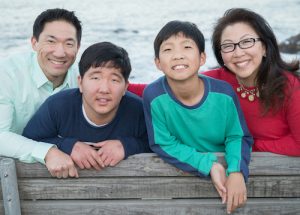
Different Dream welcomes guest blogger, Diane Dokko Kim, for the second in her three-part series. Today, Diane talks about about her family, and the encouragement found in her new book, Unbroken Faith: Spiritual Recovery for the Special Needs Parent.

Would you tell Different Dream readers a little bit about yourself and your family?

My husband Eddie and I have been married since 1999. We’ve served together in local church ministry for over 25 years, while working in tech in Silicon Valley. Our entry into the world of disability began in 2004, after our family returned from serving abroad on missions. At the time, our 18-month-old son, Jeremy, wasn’t talking. We thought he might be confused over all the languages he’d heard, so we had him checked out for a speech delay. Several months –and evaluations—later, we were devastated when he was diagnosed with autism instead. Since then, we’ve added additional diagnoses –and another son ☺ – to the family. God has also redeemed that initial wounding, and repurposed it into a desire to comfort other struggling families, with the comfort we received from Christ.

How would you summarize Unbroken Faith?

Unbroken Faith is the book I wish had been available during our season of grief, immediately post-diagnosis. I was destroyed. My child was cognitively disabled, and I found myself spiritually crippled. I struggled for years: How did God let this happen? Why us? Was He going to fix this? How was the Bible was relevant? How dare God claim He understands everything we go through? How could I trust Him again? Unbroken Faith details how Word of God settled those core questions for me. The very thing I thought would destroy my faith, God used to draw me closer to Him, and to understanding His heart in a deeper way.

As the parent of a child with special needs, what’s your number one piece of advice for other parents raising kids with disabilities and special needs?

Give yourself permission and time to grieve. It’s okay – necessary, actually—to grieve the loss of expectations for our children’s futures and for our family. InĀ Psalms, God devotes a significant amount of ā€œreal estateā€ to validate human grief, angst and doubt. Our grief matters to God because if we don’t grieve, we can’t heal properly. If we can’t heal, we’ll remain stuck in bitterness and resentment, unable to move forward in hope or anticipation of the new blessings – the different dreams – God desires to give.

WhatĀ doĀ youĀ wantĀ readersĀ toĀ takeĀ awayĀ fromĀ UnbrokenĀ Faith?Ā 

We are not alone!Ā God understands how we feel, because He grieved the loss of expectations for His children, too. Despite preparing perfection for them in the Garden of Eden, His children didn’t turn out as planned, and His heart was filled with pain. God gets us in a way no one else can. And He is not done yet! God is a redeemer. What the enemy intended for harm, God can redeem and repurpose into a blessing. I pray that readers would come away with a deeper understanding of God’s heart. He suffers with us, and for us. He has also has plans and purposes for us that are immeasurably more than we can ask or imagine.

I also hope and pray that readers will see how the Bible has everything to do with the unique challenges we face as families living with disability. The Word of God is timeless and powerfully relevant to the gritty realities of special-needs parenting. The Bible has power to transform, heal, and bind up that which has been broken. God will restore and heal bodies, either in this lifetime of the next. But He canĀ heal our hearts and restore our hope… now.

Part 1
Part 3

Diane Dokko Kim

Do you like what you see at DifferentDream.com? You can receive more great content by subscribing to the quarterly Different Dream newsletter and signing up for the daily RSS feed delivered to your email inbox. You can sign up for the first in the pop up box and the second at the bottom of this page.

By

Diane Dokko Kim is the mother of a child with multiple disabilities including autism and ADHD. Since 2008, she has served as a special needs ministry consultant, partnering with Joni and Friends as a national speaker, trainer and ministry ambassador. Author of Unbroken Faith: Spiritual Recovery for the Special Needs Parent (Worthy, April 2018), her work has been featured in Orange’sĀ Parent Cue,Ā ParentingĀ Magazine,Ā Dandelion Magazine, andĀ Not Alone. Diane’s passion is to encourage weary parents and empower them to experience the timeless relevance of God’s Word applied to the gritty realities of special needs family life. She and her husband, Eddie, live in the heart of Silicon Valley with their two sons. Connect with her on Facebook or www.dianedokkokim.com where she blogs on being wrecked, redeemed and repurposed.

Author Jolene Philo

Archives

Categories

Subscribe for Updates from Jolene

Related Posts

Showing Kids with Special Needs How to Pray: Jesus, Let’s Talk

Showing Kids with Special Needs How to Pray: Jesus, Let’s Talk

Showing Kids with Special Needs How to Pray: Jesus, Let’s Talk

Showing kids with special needs how to pray. That’s a lesson guest blogger, Lisa Jamieson, learned from her daughter Carly, who lives with Angelman Syndrome. That lesson led to Lisa’s new children’s book, Jesus, Let’s Talk, which contains pictures showing kids with special needs how to pray. She’s at Different Dream today to talk about her new book.

Would you tell Different Dream readers a little bit about yourself and your family?

My husband, Larry, and I have three adult daughters and live in Minnesota with our youngest, Carly, who is 19 years old and has Angelman Syndrome. She loves water, music and riding anything that goes fast! Much of my time is spent caring for our household but I also write, speak and serve in ministry as an advocate for caregivers of all generations. Larry works for a men’s discipleship ministry and does business consulting. We are excited to celebrate 30 years of marriage this summer.

Ā As the parent of a child with special needs, what’s your number one piece of advice for other parents raising kids with disabilities and special needs?

The advice I have to give myself every day is—slow down! There are so many interesting things competing for our attention along with cultural and internal pressures to do more than our mental bandwidth can bear. In a special needs family, we add the constant possibility that our routines will be interrupted by something unexpected and urgent. The reality is that our relationships matter so much more than our activities, projects and causes. I feel most satisfied, effective and rested when I slow down to appreciate things, spend intentional time with our children, commit to weekly date nights with Larry, and maintain adequate self-care.Ā 

Why did you write Jesus, Let’s Talk?

God taught me a lesson late one night when Carly was having trouble sleeping and seemed to be in pain. In tearful frustration, I called out, ā€œJesus, help!ā€ while simultaneously signing ā€œhelpā€ for Carly to see. Suddenly it occurred to me that we had not explained to her about asking God for help. Although we had been teaching Carly ā€œthank youā€ and ā€œI love youā€ prayers around meal time and bedtime, I realized most other prayers happened inside my head, between me and God. I began teaching Carly a broader range of prayers and a representative gesture or American Sign Language with each scenario. Since I had made Carly photo scrapbooks to model new skills over the years, I began envisioning one pairing basic prayers with key signs. It seemed like a book that could help others but I found nothing like it on the market. I asked my friend, Ann, to pray about the project with me. Ann travels internationally for missions work, is a professional photographer, and shares my passion to help people of all ages connect with Jesus. We sensed God putting us in partnership with a special vision and quickly set a plan. We had so much fun creating Jesus, Let’s Talk and working with all the beautiful young people who modeled with us!

Who is the audience for the book?

While I hope lots of children all around the world will enjoy Jesus, Let’s Talk, I wrote it with young people like my daughter and their caregivers at the top of my mind.

What message do you want readers to hear from the book?

Most of all, I want readers to be encouraged in the truth that God loves them, considers them exceedingly precious and wants to have relationship with them. I want children to grow up knowing God is easy to talk with and that He has the power to meet their needs. Whether they are happy or hurting, feeling sad or alone, needing help or hope, it’s been my prayer that readers will start talking to God about everything that matters to them.

Where will readers find the book?

Jesus, Let’s Talk is currently available at Amazon. Larger orders (10 or more) can be placed directly through the publisher at www.WalkRightIn.org.Ā 

What other writing projects do you have in the works?

I’m very excited to be working on a new book with our adult daughters, Alex and Erin. I’ve also been invited to blog about parenting typical children who have a sibling(s) with special needs. These special siblings have unique needs and perspectives so I’m hoping to help give voice to these unsung heroes.


Do you like what you see at DifferentDream.com? You can receive more great content by subscribing to the quarterly Different Dream newsletter and signing up for the daily RSS feed delivered to your email inbox. You can sign up for the first in the pop up box and the second at the bottom of this page.

By

Lisa JamiesonĀ is an author and speaker who advocates for families affected by disability and caregivers. She leads the Minnesota Disability Ministry Connection and serves as executive director of Walk Right In Ministries. Lisa co-wroteĀ Finding Glory in the ThornsĀ and its companion Bible study guide with her husband, Larry. Her children’s book,Ā Jesus, Let’s Talk, features delightful photography of young people from around the world, many with developmental differences. Lisa and Larry have three grown daughters and are excited to celebrate 30 years of marriage this summer. Their daughter, Carly, has Angelman Syndrome and lives happily at home with them in Minnesota.

Author Jolene Philo

Archives

Categories

Subscribe for Updates from Jolene

Related Posts

Discovering a New Normal after a Special Needs Diagnosis

Discovering a New Normal after a Special Needs Diagnosis

Discovering a New Normal after a Special Needs Diagnosis

Discovering a new normal after a special needs diagnosis. Guest blogger Kathy McClelland’s addresses that aspect of special needs parenting, along with many others, in her new book, Beauty in Broken Dreams: A Hopeful Handbook for the Early Years as a Special Needs Parent. Today, she’s graciously sharing an excerpt from the book with Different Dream readers. Enjoy!

Discovering a New Normal After a Special Needs Diagnosis

After my second son was born with severe disabilities I knew my life would never be the same. I expected to have another perfectly typical child, but when he was born I quickly learned that our life would never be “normal.” This process involved grieving the life I was expecting and all the dreams I was imagining. My life, and my son’s life, had to be re-imagined into something more beautiful than I saw at the outset of his diagnosis.

Discovering a New Normal One Day at a Time

Accepting a new normal doesn’t happen quickly, at least it didn’t for me. Once I realized that I didn’t need to accept everything about my son’s disabilities immediately, I felt more free. I didn’t want my fear of the future to rob me of sweet moments with my baby. After all, you can’t get that first year back. So I tried to adopt a ā€œone day at a timeā€ mentality. Enjoying today. Doing what I needed to do to make it through today and trusting God for what I needed in the future.

This has been something I’ve had to preach to myself over and over again. I tend to live in the future. I’m constantly trying to plan and prepare for what’s to come. For me to live in the moment and deal with the present is much harder. And honestly, I didn’t think there was much good that could come from a baby with special needs, especially as he got older and I envisioned all of the extra effort and resources he would require. I realized if I didn’t stay in the moment, then life was going to pass right by before I could even enjoy what I was preparing for.

During that first year of Nathan’s life I reconnected with a friend of mine who had a child with Down syndrome. I wanted to tap into all of her knowledge and experience and emotions that come with having a child with special needs. Shortly after we reconnected, she got a devastating diagnosis. Breast cancer. The worst kind. Her diagnosis hit me especially hard. Not just because she was my friend whom I loved, but also because it enforced a truth I already knew, but didn’t want to believe. That is, there is no cap on the amount of hard things that you may have to endure during your lifetime. You don’t reach a quota and then you stop dealing with hard things.

The Fear of the Future is Often Worse Than the Experience Itself

Once again it put me in that place of fearing the future and not engaging the moment. However, in the midst of her illness she said some things I will remember forever. One is that ā€œthe fear of the future is often worse than the experience itself.ā€ This is true because we can build something up to be such a monster in our heads. It’s awful and terrible and scary. And God is not there in that imaginative nightmare we’ve created. Psalm 42 says that God is an everĀ presentĀ help in trouble. He’s in the moment you’re living presently. He’s gone before you too but you are not omnipresent like God. You are able to only live in one place at a time. And that’s right now.

Are you looking for a new normal since your child's special needs diagnosis? Kathy McClelland's new handbook was written to help parents in your situation.

There is an Upside to Every Circumstance

The second thing she told me that has stuck is ā€œthere is an upside to every circumstance.ā€ After her chemotherapy, she said, ā€œI’d rather have hair, but there are upsides to not having hair.ā€ And I’ve translated that to ā€œI’d rather have my child eat by mouth, but there are upsides to a g-tube.ā€ He can eat in the car. I can feed him overnight. I can easily hand him over to someone else to hold since I’m not nursing him. I don’t have to cook elaborate baby foods or cut up food into super small pieces. There are upsides.

Things that aren’t normal eventually become normal to you because you do them over and over again. You master them and incorporate them into your life and routine. And it works for your family. If you can get past the stares and the judgments of other people, then you can embrace the beauty of different and see God’s blessings in your new normal.

You make known to me the path of life:
you will fill me with joy in your presence,
with eternal pleasures at your right hand.
Psalm 16:11 (NIV)

Ā 


Do you like what you see at DifferentDream.com? You can receive more great content by subscribing to the quarterly Different Dream newsletter and signing up for the daily RSS feed delivered to your email inbox. You can sign up for the first in the pop up box and the second at the bottom of this page.

By

Kathy McClelland is the author of Beauty in Broken Dreams: A Hopeful Handbook for the Early Years as a Special Needs Parent. Her second son was born with a rare (1 in 50,000 births) chromosomal disorder which catapulted her into the world of special needs parenting. A former marketing manager, she is a regular contributor to PreemieBabies101.com and has published on TheMighty.com andĀ EllenStumbo.com. She lives with her husband and sons in Austin, Texas. You can find her on Facebook at Kathy McClelland and on Instagram at kathy_allthingsbeautiful.

Author Jolene Philo

Archives

Categories

Subscribe for Updates from Jolene

Related Posts