Trauma vs. Trust

Trauma vs. Trust

Trauma vs. Trust

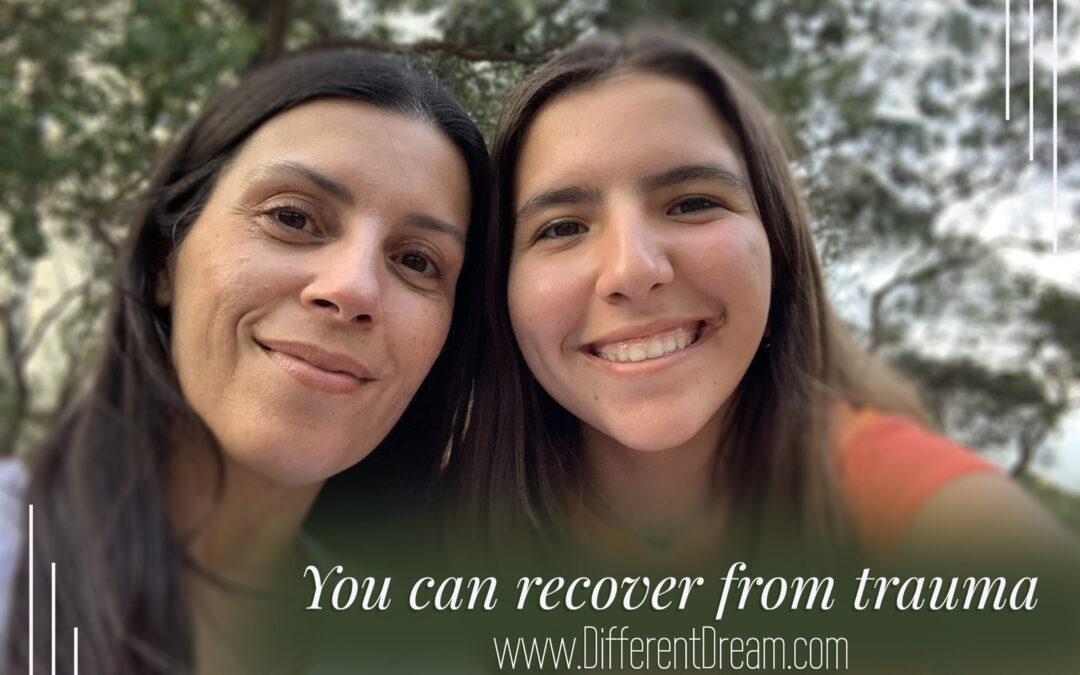
Parenting isn’t easy. And it’s even harder when it’s combined with special needs and the trauma that brings. Guest blogger Valeria Conshafter explains how she walks the path of learning to trust in God in the midst of parental PTSD.

Recalling my daughter’s health challenges with Esophageal Atresia/Tracheoesophageal Fistula (EA/TEF) has been a struggle for me. The multiple life-threatening incidents, endless nights pacing around hospital hallways, the sounds of beeping monitors, and the smells the mind will never forget will be forever ingrained in my core.

For years, I kept trying to figure out a way to live with the struggle of PTSD. For many years, I felt lost in my own disoriented thoughts, lacking belief there was an exit, let alone a possible way to live without trauma. My therapist once said that living with trauma is to be constantly in a watchful mode, being trapped and looking at survival through a peephole.

I felt trapped inside a box closed tight above my head. The peephole allowed a glimpse of light that was too intense to look at. I wanted to see what was out there. There were days when I attempted to get out of the box and peeked around until I felt an unexpected desire to step out for a bit. I would step out of the box, pretending I could handle it. I’d stay out for a while. Some days were better than others. But soon enough back I was inside that trap.

Thankfully, after countless sessions of therapy and deep spiritual and emotional work, I found freedom from this trap that is living with trauma and found trust instead. Practically speaking, this is what I have learned when life reminds me of my trauma.

First, I trust God. I keep reminding myself and saying it out loud when I am triggered by random events that I have no control over life’s circumstances. I have no control over my daughter’s health or future. God does. Even when I think that I am in control over all the vitamins I give her, the food choices I give her, choosing all her doctors, and deciding all medical interventions, ultimately what I am doing is just a “protective” measure, perhaps for my own sake. But God, above all things, is the one in charge of every sickness, every doctor’s visit, every possible outcome. So, I say this out loud or write it down in my journal—God is in control, not me.

The next thing is that I must trust the process. After I put my trust in God, trusting the process should be easier. Yet life itself can challenge your trust, making you question yourself and your faith! You may ask yourself—Is there something else I should do? Should I really let go and let God? These and other questions will most likely make you doubt the process, and soon enough you are trapped again. Doubts and fear settle in quickly and put you in an anxious and desperate mindset. So I again will say these words out loud or write them down—God is in control, not me. I trust the process.

Finally, I trust her—my daughter! She is 15 now. I must trust her! When she is sick—for example, with a simple cold—and has that horrible, loud, barking cough typical of tracheomalacia babies, I stop, breathe, say my trust phrases, and I look at her. She is fine. There is a lot of self-talk in this part of the process which is helpful to distract my mind. She may be sick and have a bad cough (a trigger for me), but she is breathing. So I look at the facts. She is handling it. She is more mature now and understands the cough, the asthma, the breathing… She is learning to deal with it alone. Because for her this is her future. Her life. The life I entrusted to God’s hand. I then repeat these words or write them down—God is in control, not me. I trust the process. I trust her.

The work is hard. The road to healing is long. But as I watch my daughter grow and go onto her own path of independence, I believe more and more that life after trauma can be fulfilling and happy too.

I want to rejoice from all the blessings I have today. I want to be happy about tomorrow and not so worried. I want to expect the best and not the worst. I want to move on and away from that box that trapped me and prevented me from enjoying life for so long. Trauma is my past and not my future. This is what I have learned and hope it helps you too.

Do you like what you see at DifferentDream.com? You can receive more great content by subscribing to the monthly Different Dream newsletter and signing up for the daily RSS feed delivered to your email.
By

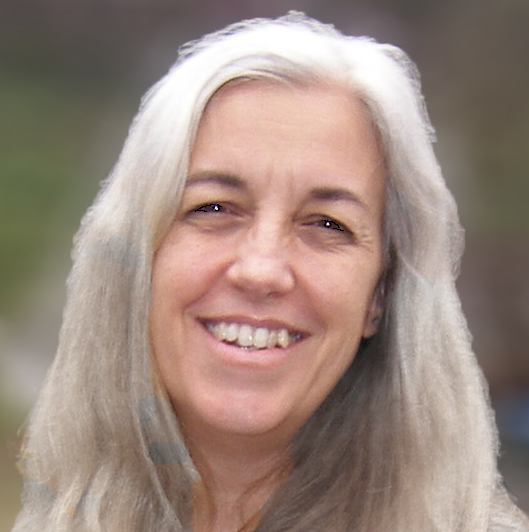
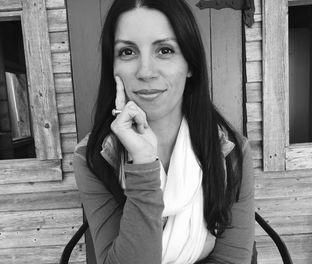
Valeria Conshafter is a native of Brazil. She has a background in Counseling Psychology and currently works for a women’s organization providing emotional and spiritual support to women all over the country. She loves writing, cooking, and praying for her family and friends. Valeria lives in Houston, Texas, with her husband Todd, their 15-year-old daughter, Sofia, and their two Standard Poodles, Chocolate and Oreo. You can find Valeria on Instagram, Twitter, and Facebook.

Author Jolene Philo
Archives

Categories

Subscribe for Updates from Jolene

Related Posts

How to Connect with Other Special Needs Parents

How to Connect with Other Special Needs Parents

How to Connect with Other Special Needs Parents

As a special needs parent, feeling alone is par for the course. Breaking through life’s busyness to build relationships can be hard. Today, guest blogger Kristin Faith Evans provides suggestions and resources for special needs parents so that you can find the support you need.

Our compassionate God “comforts us in all our troubles, so that we can comfort those in any trouble with the comfort we ourselves receive from God” (2 Corinthians 1:3-4, NIV).

Caring for a child with a chronic illness or disability often isolates special needs parents. Yet, social support is a critical factor in helping disability parents thrive. Sometimes it takes energy, courage, and creativity, but there are many ways that special needs parents can connect.

Barriers to Connection

Possibly two of the biggest hurdles to spending time with other special needs parents are the constant caregiving demands and maybe even the medical fragility of your child. You may feel exhausted just thinking about lining up caregiving, planning for your child’s needs, or packing up all their gear to go somewhere. These can be difficult barriers to overcome. But it’s not impossible.

You might also wonder, “What’s the point? No one can understand what I’m going through.” I felt this way when my medically complex daughter, Bethany Grace, was little. Every caregiving parent has their own unique story. However, though your experiences may not be exactly the same, there are other parents who can relate to what you’re going through and empathize with you.

Benefits of Support:

Social isolation can increase mental health symptoms, strain relationships, and impede adapting, but special needs parents who do find social support:

Become more resilient

Lower their stress levels

Improve their mental health

Strengthen their relationships

Cope and adapt better

Find new perspective

Support Groups

If you aren’t already, I encourage you to attend a support group. Ideally, you could attend in person, but sometimes that’s just not feasible, or there may not be a group in your area. If this is the case, there are also live online groups. By attending a support group, you can:

Feel understood and encouraged

Receive grief support

Process faith questions and struggles

Learn tips and discover resources

Help encourage other parents

Build new friendships

These are some possible places to find a support group in your area:

  • Churches with disability ministries (find a church at Key Ministry)
  • Local children’s hospitals
  • Pediatric therapy centers
  • Local Facebook groups
  • Your child’s syndrome organization regional chapter

Other ways to connect:

  • Strike up a conversation during your child’s therapy session
  • Meet other parents at your child’s school
  • Enroll your child in Special Olympics to talk on the sidelines
  • Go to a special needs family camp or retreat

I hope that you’re able to connect with other special needs parents in more meaningful ways.

What’s one way you find support from other parents? Please share your idea in the comments.

Blessings,

Kristin


Additional Resources:

Parent to Parent USA

Rising Above Ministries

Walk Right In Ministries

Joni & Friends

Wonderfully Made Family Camp

Especially for Dads (since there are fewer resources):

The Special Fathers Network

The Dad’s Fire Circle

Dads on Special Assignment (DOSA)

Dad to Dad FB Group

Special Needs and Disabilities Life of Dad FB Group

Do you like what you see at DifferentDream.com? You can receive more great content by subscribing to the monthly Different Dream newsletter and signing up for the daily RSS feed delivered to your email.

Photo by Clay Banks on Unsplash

By

Kristin lives with her husband, Todd, and their two children in the Nashville, TN area. She is an author, speaker, mental health counselor, and a mom of two children with rare genetic disorders and complex needs. Her greatest passion is teaming up with her husband to empower other parents of children with disabilities, mental health disorders, and medical complications. She hopes that you may find encouragement and support on their website www.DisabilityParenting.com.

Author Jolene Philo

Archives

Categories

Subscribe for Updates from Jolene

Related Posts

God Loves You and has a Wonderful Plan for your Life

God Loves You and has a Wonderful Plan for your Life

God Loves You and has a Wonderful Plan for your Life

Have you ever asked yourself what God is doing with your life? Why did the things happen to you that did? Guest blogger Lisa Pelissier is here with a reminder that God never promised an easy road.

It was a popular Christian saying during my college years. The Four Spiritual Laws. The presentation of the gospel was always supposed to start with the phrase “God loves you and has a wonderful plan for your life.” The implication was, if a person would accept Jesus into their heart, then their life would be full of goodness and light.

For most of us, if not all, this has not been the case. Life has been full of pain. Gut-wrenching pain. For me, in the context of parenting my mentally ill children, life has been full of hardship. It’s been full of ruined lives, hearts turning from God in confusion, and darkness instead of light.

Does God promise believers happy lives?

Those repeating the cliché will cite verses like Psalm 37:4 “Delight yourself in the Lord; and He will give you the desires of your heart.” Or Jeremiah 29:11 “For I know the plans that I have for you,’ declares the Lord, ‘plans for welfare and not for calamity to give you a future and a hope.’ ”

They ignore verses like I Peter 4:12-13 “Beloved, do not be surprised at the fiery ordeal among you, which comes upon you for your testing, as though some strange thing were happening to you; but to the degree that you share the sufferings of Christ, keep on rejoicing, so that also at the revelation of His glory you may rejoice with exultation.” Or the beginning of Romans 5 where the Bible indicates that suffering is the source of good character. Or II Corinthians 12:10 “Therefore I am well content with weaknesses, with insults, with distresses, with persecutions, with difficulties, for Christ’s sake; for when I am weak, then I am strong.” Verses that point forward to continual suffering will not be good selling points for Christianity.

But they are as true as the others.

I’ve seen hardship and suffering ruin lives. My brother has not been able to have a family. He cannot work. He spends a lot of time just being still due to schizophrenia and the effects of the medications. My husband is in constant pain, mentally and physically. My son has similar issues. So does my daughter. Where is the “wonderful plan” for their lives?

Truth be told, the “wonderful plan” schtick is not Biblical. The Bible does not promise us happy lives. It does not promise us easy lives. It does promise trouble, sorrow, suffering, and grief.

In my grumpy, sinful heart, I wonder how so many people seem to escape pain and trouble. They are able to work. Their children are healthy, married, having families of their own. Why them and not me? Why is my family sick and not theirs? Where is God in my life? Why isn’t He blessing me and my family?

Here are the things I try to remember when I fall into such despair.

1) I am not the center of God’s plan

God may not have a pain-free plan for my life, but God does have a wonderful plan, and He will use me to accomplish it. He will use my pain and suffering to bless others, to bring hope to others, to bring word of His salvation to others.

2) God did not promise to prevent suffering. He did promise to walk through suffering with me.

Psalm 23:4 says “Even though I walk through the valley of the shadow of death, I fear no evil, for You are with me.” The valley of the shadow of death is inevitable. But so is the presence of God. Romans 8:38-39 says “For I am convinced that neither death, nor life, nor angels, nor principalities, nor things present, nor things to come, nor powers, nor height, nor depth, nor any other created thing, will be able to separate us from the love of God, which is in Christ Jesus our Lord.” Trials and trouble, yes. But God is with me. Even the verse “Jesus wept,” (John 11:35) testifies to the presence of God in times of trouble. Jesus did not prevent Lazarus from dying, but he wept with the mourners. God is with me. God is with you.

3) This world is not my home.

God does promise us good things in His Word. These good things, however, are not primarily obtained in this lifetime. The world to come will be the fulfillment of His promises toward His people. Philippians 3:20 says, “For our citizenship is in heaven, from which also we eagerly wait for a Savior, the Lord Jesus Christ.” In Revelation 21:4, John describes his vision of Heaven: “He will wipe away every tear from their eyes; and there will no longer be any death; there will no longer be any mourning, or crying, or pain; the first things have passed away.” It is this view I must cling to.

And there is purpose even in my pain. I am called to use it to bless others. II Corinthians 1:3-4 says, “Blessed be the God and Father of our Lord Jesus Christ, the Father of mercies and God of all comfort, who comforts us in all our affliction so that we will be able to comfort those who are in any affliction with the comfort with which we ourselves are comforted by God.” I can bring whatever God gives me, and offer it up to someone else, a testimony to the faithfulness of God.

God is merciful. He gave us Himself and He gave us each other.

Do you like what you see at DifferentDream.com? You can receive more great content by subscribing to the monthly Different Dream newsletter and signing up for the daily RSS feed delivered to your email.

Photo by ROB WILSON on Unsplash

Lisa Pelissier

By

Lisa Pelissier lives in Oregon where she is a homeschooling mother of four (three with disabilities) and author of four middle-grade fiction novels as well as a YA fantasy novel. Lisa owns SneakerBlossom Books, offering Christian, classical homeschool Study Guides and curriculum. She blogs at Eleventh Willow, offering encouragement for Christians parenting the mentally ill. She also works as a freelance copy editor, an artist, and a substitute teacher. In her spare time Lisa enjoys playing the piano and fretting about things over which she has no control. 

Author Jolene Philo

Archives

Categories

Subscribe for Updates from Jolene

Related Posts

Empowering Kids with Disabilities, Part Five: Fun!

Empowering Kids with Disabilities, Part Five: Fun!

Empowering Kids with Disabilities, Part Five: Fun!

Empowering kids with disabilities isn’t always a serious business. The previous posts in this series about meeting our kids’ basic needs (Part 1: Survival, Part 2: Love and Belonging, Part 3: Power and Self-Worth, and Part 4: Freedom) may have led you to believe so. This post takes a look at the fifth basic human need in psychiatrist William Glasser’s choice theory, which is fun.

That’s right. Fun!

The Glasser Institute website says the need for fun “encompasses pleasure, play, humor, relaxation and relevant learning.”

So how do parents make space for fun between all the serious stuff like medical and therapy appointments, hospital stays, school, special classes, and more without feeling guilty? The answer is simple.

Give kids opportunities for play.

Renowned child psychologist Jean Piaget said, “Play is the work of childhood.”

The even more renowned Fred Rogers said this: “Play is often talked about as if it were a relief from serious learning. But for children, play is serious learning.”

I wholeheartedly agree with these two guys.

The most effective and least painful way I found to get the kids in my life on board with whatever they needed to learn—be it content or a process, acceptable behavior or a skill—was to make it fun. Making things fun turned what my students, children, and grandchildren perceived to be work into play, which as Jean and Fred said, is the work of childhood.

Here are a few of the easiest ways I found to make work fun for kids:

To read the rest of Empowering Kids with Disabilities, Part 5, go to the Key Ministry blog for special needs parents.

Do you like what you see at DifferentDream.com? You can receive more great content by subscribing to the monthly Different Dream newsletter and signing up for the daily RSS feed delivered to your email.

Photo by kazuend on Unsplash

By

Jolene Philo is the author of several books for the caregiving community. She speaks at parenting and special needs conferences around the country. Sharing Love Abundantly With Special Needs Families: The 5 Love Languages® for Parents Raising Children with Disabilities, which she co-authored with Dr. Gary Chapman, was released in August of 2019 and is available at local bookstores, their bookstore website, and Amazon. See Jane Sing!, the second book in the West River cozy mystery series, which features characters affected by disability, was released in November of 2022.

Author Jolene Philo

Archives

Categories

Subscribe for Updates from Jolene

Related Posts

What Does a Happy Birthday Look Like?

What Does a Happy Birthday Look Like?

What Does a Happy Birthday Look Like?

What does it look like for a child or adult with a disability or special need? Guest blogger Mark Arnold answers that question today in this story about how he and his family created a happy birthday for their son, Mark. He hopes it will spur on families who want to keep their loved one with additional needs at the center of the birthday celebration.

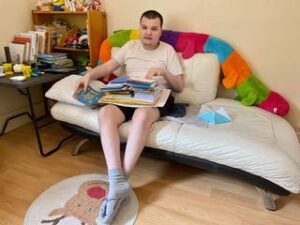
James’ birthday was the other day. Birthdays are an occasion to look forward to for most people, but it’s not a day he particularly recognizes. Due to his additional needs, James doesn’t really get birthdays. But that didn’t mean that we would let the day just slip by unnoticed!

We planned a day for James to remember
A day filled with his favorite things.
A day that would bring him joy and delight, thrills and excitement.
A special day.
The happiest of days.
The best of birthdays.
And the plan worked!

So what does a happy birthday look like? For Mark it looked like this:

Operation Birthday Card

One of James’ favorite things when his birthday comes around is receiving and opening lots of cards. Last year we appealed to social media and received over 80 birthday cards through the post. This year our target was 100 cards, and we smashed it! Over 150 cards came from across the world with contributions from Brownie and Guide groups too! James was thrilled and spent a happy birthday morning opening cards, looking at each one, and giving instructions as to where they were to be placed!

Farm Shop Trip

James’ favorite place in the whole world is Pamphill Farm Shop near Wimborne in Dorset. He loves to shop there, and the staff members are inclusive. They remember his name and accommodate his needs, like his need to line up the entire stock of iced gingerbread!

James had a lovely time there on the afternoon of his birthday. We followed it up with a visit to the café at Compton Abbas airfield, a little grass airstrip near Shaftestbury, Dorset. Two of James’ favorite places in one day!

Birthday Tea and Cake!
A trip out to James’ favorite places usually ends with a visit to the fish and chip shop on the way home. James has several ‘favorites’ to choose from, sometimes fish cakes, but on this day chicken nuggets and chips.

A birthday must have cake, and as James likes chocolate it had to be a full-on chocolate fest cake—with a candle to blow out of course!

Time to Relax

After such a busy day, it was time to chill out and relax on the sofa to watch TV and think about what a wonderful birthday it had been. Even though James didn’t know it was his birthday, we couldn’t treat it like any other day. We wanted James to have great memories, to experience our love, to know we care enough to make his day extra special. It worked. On this very best of birthdays, James smiled the whole day through.

So what does a happy birthday look like for people with disabilities and special needs? It looks like being surrounded by whom and what they love best.

Do you like what you see at DifferentDream.com? You can receive more great content by subscribing to the monthly Different Dream newsletter and signing up for the daily RSS feed delivered to your email.

Image by Pexels from Pixabay

By

Mark Arnold is the Additional Needs Ministry Director at Urban Saints, a leading national Christian children’s and youth organization. He is co-founder of the Additional Needs Alliance, a national and international advocate for children and young people with additional needs or disabilities. Mark is a Churches for All and Living Fully Network partner, a member of the Council for Disabled Children and the European Disability Network. He writes an additional needs column for Premier Youth and Children’s Work (YCW) magazine and blogs at The Additional Needs Blogfather. He is father to James, who has autism spectrum condition, associated learning disability, and epilepsy. To find out more about how Mark’s work can help you, contact him at: marnold@urbansaints.org or @Mark_J_Arnold

Author Jolene Philo

Archives

Categories

Subscribe for Updates from Jolene

Related Posts

Be Encouraged, Special Needs Parent. God has a Word for You.

Be Encouraged, Special Needs Parent. God has a Word for You.

Be Encouraged, Special Needs Parent. God has a Word for You.

Be encouraged, special needs parent! Guest blogger and special needs parent Sandy Ramsey-Trayvick is here again. In this post she shares words God has used to encourage her as she cares for her son with special needs.

Over the past few months, I’ve spoken with a number of special needs moms who’ve been struggling a lot lately—some feeling overwhelmed and questioning whether they have what it takes to parent their child, others feeling unsure as they walk with their child through a challenging transition, some wondering where God is in their suffering, and many feeling misunderstood and alone in their special needs journey.

As I listen to their stories, I often find myself searching for the exact right words to say to restore their hope and ease their suffering. But I realize that my words alone don’t possess that kind of power. I know that the only words that can consistently give us the strength and hope we need to navigate this journey come from the mouth of God. His words alone provide the promises, comfort, and practical wisdom that can empower us to keep moving forward and enable us to experience joy in the process.

I thought I’d share some of the scriptures that have become my go-tos as I navigate my special needs life. Be encouraged special needs parents, for God wrote them for you also.

“But He said to me, ‘My grace is sufficient for you, for My power is made perfect in weakness.'”—2 Corinthians 12:9 NIV

This verse has been a lifeline for me during the toughest parts of my journey. It came to life for me early on when I hit a wall emotionally trying to do everything on my own. When I admitted to the Lord that I had reached my limit, I actually felt His grace as He strengthened me. I realize now that God never expected me to walk this journey in my own strength. So now I ask for His grace.

“Trust in the LORD with all your heart and lean not on your own understanding; in all your ways submit to Him, and He will make your paths straight.”—Proverbs 3:5-6 NIV

This has become my life verse. I realize that there’s so much I don’t know when it comes to making decisions for my child with special needs. And often, I don’t know what I don’t know. So I seek the Lord—Who is the Knower of all things—and trust Him to lead me along the best pathway forward. He knows my son better than I ever could, and He knows the plans He has for my son’s life.

“And we know that in all things God works for the good of those who love Him, who have been called according to His purpose.”—Romans 8:28 NIV

This verse reminds me that God is faithful, and that He is ALWAYS for me, my son, and my family. Even when things are going sideways, or we’re facing setbacks or challenges, I’m reminded that God is still working. For. Our. Good. So I trust Him and wait for—look for—the good.

“Bear one another’s burdens, and so fulfill the law of Christ.”—Galatians 6:2 ESV

To be honest, it wasn’t until recently that I realized the importance of having a special needs community. I had done without one for most of my special needs life. It was during COVID that the Lord urged me to not isolate myself. So I sought ways to connect with other special needs moms online and it has been life changing for me. To be able to join with other moms who get it, and who can offer support, encouragement, and empathy has become an essential part of my life. I hope you will also be encouraged, special needs parents, as God speaks to you through his words and other special needs parents.

Do you like what you see at DifferentDream.com? You can receive more great content by subscribing to the monthly Different Dream newsletter and signing up for the daily RSS feed delivered to your email.

By

Sandy and her husband are parents to three young adult children. Their son was diagnosed with multiple disabilities 21 years ago after a devastating illness as a toddler. Following her son’s diagnosis, Sandy quit her job to become his full-time caregiver and advocate.

Sandy is currently a Certified Professional Coach. Her focus is to come alongside other special needs parents, helping them to recognize choices that will enable them to reclaim freedom, renew purpose, and reactivate joy.

You can learn more about Sandy, her work and her blog at www.UNDisabledLIVES.org. You can also reach her at Sandy@UNDisabledLIVES.org.

Author Jolene Philo

Archives

Categories

Subscribe for Updates from Jolene

Related Posts