Raising Babies with EA/TEF or Other Feeding Issues

Raising Babies with EA/TEF or Other Feeding Issues

Raising Babies with EA/TEF or Other Feeding Issues

Raising babies with EA/TEF includes many feeding challenges. Finding tips about how to deal with those challenges can be hard to find. Thankfully a growing number of parents, like today’s guest blogger Kelly Simpson, are sharing what they have learned through trial and error. If you are raising a baby with oral feeding challenges of any kind, this post offers both practical tips and spiritual encouragement.

Raising babies with EA/TEF or other feeding issues can be extremely challenging. From diagnosis and surgeries to feeding issues and, in some cases, speech development, the adventure of parenting your newborn isn’t quite the path you foresaw. The roller coaster of emotions and seeking help for your child is exhausting and stressful. I would like to share some tips I have learned along the way.

Tip #1: Before an Esophageal Dilation

  • For bottle fed babies: Control your baby’s bottle intake at least 4 days before the dilation. Allow three sucks and then remove the bottle from the child’s mouth. This allows time for the liquid to drain down the esophagus. Then allow for 2-3 more sucks and another removal. Repeat until all the milk or formula is gone. When feedings are controlled, larger amounts of milk have enough time to drain through the smallest part of the esophagus. Controlling the feedings allows the liquid to funnel down the esophagus and not overflow to the trachea and into the lungs. Always consult with your child’s doctor about your plan.
  • For solid food children: Cut food up really small and control the feedings as suggested above. Let your child drink after every bite or couple bites (whatever seems to help your child). Limit very solid or hard foods. Softer foods such as apple sauce, mashed potatoes, Jell-O, or yogurt could be easier for the child to swallow. Another suggestion is to make a smoothie or puree with fruits or vegetables. Try to blend proteins in as well. Again, be sure to consult with your doctor as you plan.

Tip #2: Do Not Compare Your Child to Another Child

Avoid comparing your child to another EA/TEF child or to a child with a different condition that causes feeding issues. Also avoid comparing your child to kids without any feeding problems. Instead, welcome and hold tight to friendships with other parents raising kids with EA/TEF or other special needs. 

Some children with feeding challenges have swallowing issues, trouble gaining weight, or loss of appetite due to taking a drink after every couple bites. Researching natural remedies to deal with reflux or for speech therapy to remediate speech delays are other adventures. Your child may need help in all areas.

Every child is different, so try not to compare your child to the next. It is healthy to do research and ask other parents about their path. Your child could need four esophageal dilations, while the next child may need ten. My son has not had any issues with gaining weight or growth delays. However, I am very aware that another child could have this problem and that it can be very discouraging for their parents. I celebrate my son’s achievements, but also have a delicate heart for those who haven’t experienced that particular achievement yet. I appreciate those parents who comfort me or offer advice when their child has reached a goal that my son has not yet.

Tip #3: Embrace that Your Child’s Journey is Different

Embrace the fact that your child’s journey is different from that of a typical child. Parents of typical kids probably will not understand your walk, and that is okay. I remember when I would go to the grocery with my son when he was under four months old. Due to his tracheomalacia, he sounded like a goose when he laughed or cried. Man, did I get some funny looks! People had no clue what was going on. I’m sure they thought I was crazy for bringing him out to get basic necessities or that I was neglecting to take him to the doctor. I did not allow their different walk—and lack of knowledge about mine—to affect my own walk. I also did not give in to envy, wishing my child was healthy like theirs.

Instead, I embraced my own child. He is a gift from God. I was entrusted with him. I will stand by his side through everything. Were his first couple of years hard? Yes! Some months were extremely difficult, especially since my husband was deployed at the time. I did not have time to stop and compare, but I did have time to embrace my baby as he was.

My hope is that my experience can aid in raising babies with EA/TEF or other feeding issues. Always remember to consult with your child’s doctor about their specific needs and care plan because as I said before, every child is different!

Do you like what you see at DifferentDream.com? You can receive more great content by subscribing to the monthly Different Dream newsletter and signing up for the daily RSS feed delivered to your email.

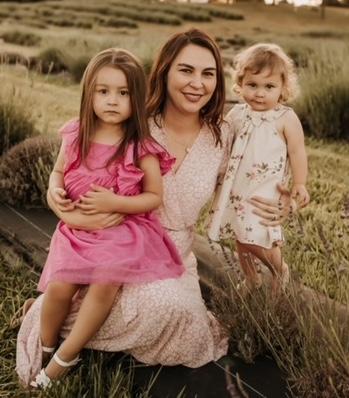
Photo by Juli Moreira on Unsplash
By

Kelly has lived her whole life in Kentucky. She and her husband, Jeremy, have an almost-four-year-old son, who, born during a deployment, was diagnosed with tracheoesophageal fistula (EA/TEF). She has always felt a calling to serve others and is living the dream as an Army wife, middle school teacher, and now, as an encourager to those who are living a dream different than they had planned.

Author Jolene Philo
Archives

Categories

Subscribe for Updates from Jolene

Related Posts
Empowering Kids with Disabilities, Part Four: Freedom

Empowering Kids with Disabilities, Part Four: Freedom

Empowering Kids with Disabilities, Part Four: Freedom

Empowering kids with disabilities, as the previous posts in this series have suggested, can be a challenge for caregivers. We have to make a paradigm shift from meeting all of our kids’ basic needs to equipping them to meet their own basic needs to the best of their ability.

This post explores freedom, the fourth of the basic needs identified by psychologist William Glasser in his Choice Theory. Before delving into Glasser’s definition of freedom, you may want to check out the previous posts in the series.

Part 1: Survival
Part 2: Love and Belonging
Part 3: Power and Self-Worth

This post will make more sense once you’ve read the others, so go ahead. Take your time. I’ll be here when you’re ready to go on.

You’re back. Great!

Let’s start with William Glasser’s definition of freedom. Bruce Davenport created a video series about Glasser, the choice theory he proposed, and the five basic human needs he identified. Davenport says that freedom can be defined as “the need for independence, autonomy, to have choices and to be able to take control of the direction of one’s life.”

If you’re a parent or work with kids in any capacity, you have witnessed children expressing their need for freedom. For instance…

We’ve heard two-year-olds stamp their feet and say, “I do it myself.”
We’ve heard tweens say, “Let me figure it out by myself.”
We’ve heard teenagers say, “Leave me alone. I can make my own decisions!”

I could go on, but you get the drift.

Click here to read the rest of Empowering Kids with Disabilities, Part Four: Freedom at the Key Ministry blog for parents.

Do you like what you see at DifferentDream.com? You can receive more great content by subscribing to the monthly Different Dream newsletter and signing up for the daily RSS feed delivered to your email.

Photo by Johnny McClung on Unsplash

By

Jolene Philo is the author of several books for the caregiving community. She speaks at parenting and special needs conferences around the country. Sharing Love Abundantly With Special Needs Families: The 5 Love Languages® for Parents Raising Children with Disabilities, which she co-authored with Dr. Gary Chapman, was released in August of 2019 and is available at local bookstores, their bookstore website, and Amazon. See Jane Sing!, the second book in the West River cozy mystery series, which features characters affected by disability, was released in November of 2022.

Author Jolene Philo

Archives

Categories

Subscribe for Updates from Jolene

Related Posts

Help for Parents of Kids Who Experience Food Delays

Help for Parents of Kids Who Experience Food Delays

Help for Parents of Kids Who Experience Food Delays

 Help for kids who experience food delays such as EA/TEF was nonexistent when our son was born in 1982. Imagine my surprise when I read Jennifer Forman’s guest post and discovered that, all these years later, not much has changed. At least not until Jennifer used her professional and personal experiences and a whole lot of research to create the chart below. It is the help parents of kids with food delays caused by EA/TEF and other birth conditions such as cerebral palsy that necessitate a feeding tube are going to love.

When a parent hears the words “food delay” in reference to their child, questions start swirling around in their head. As a parent you will do anything in your power to help your child to overcome this challenge. My daughter was born with esophageal atresia and a tracheoesophageal fistula (EA/TEF) type C, with her primary surgical repair done on day 2 of her life. Feeding delays are common and almost expected of children born with this condition.

When our daughter was 6 months old, our pediatrician gave us the “all clear” to introduce solid foods. While this was a terrific milestone, I was terrified. I asked countless questions and called her surgeon to see if we should proactively do a swallow study to make sure it was okay.

I met with a GI specialist, and occupational therapist to discuss the best way to approach the progression and what food would be best to start with for an EA/TEF child. To my surprise, there wasn’t much information to help EA/TEF parents. I am sharing how I approached introducing solid foods as one way form of help for parents of kids who experience food delays, including EA/TEF and many others.

Steps

TEF Age range

Examples

Thin baby food cereals & purees

6-7 months

-Rice cereal, oatmeal mixed with milk

-Pureed fruits/vegetables

*Thin soup/chicken broth consistency

Thicker baby food cereals & purees

7-8 months

-Rice cereal, oatmeal mixed with milk

-Pureed fruits/vegetables

*Chunky stew consistency

Mashed table foods 

8-9 months

-Avocados, bananas, peaches, pears, squash, cooked carrots, cooked potatoes

*Easily mashed with a fork

Meltable foods

9-9.5 months

-Puffs, Towne Crackers, Graham Crackers, thawed frozen pancakes/waffles, Fruit Loops, baby cookies

*Foods that dissolve with spit only

Soft Cubes

10 months

-Avocado, cooked squash, cooked potatoes, vegetable soup ingredients without broth, peas, bananas 

*Foods that turn into puree with munching only

Soft foods

12 months

-Fruit breads, muffins, soft canned vegetables, soft pretzels, scrambled eggs, muffins, pastas, cubed lunch meat

*Foods that break apart in the mouth easily*

Soft chewier foods

15-18 months

Mac and cheese, chicken nuggets, French fries, spaghetti, lasagna, thin lunch meats, fish sticks

Crunchy foods

18-24 months

cheerios, pretzels, Ritz Crackers, Saltine Crackers, cookies, chips, raw fruit/vegetables


*Please always consult with your child’s physician regarding appropriate food serving sizes and if this approach would be appropriate to introduce solid foods to your child*

While this schedule worked well for our daughter, it’s important for parents to understand that feeding is not a one size fits all approach. You can have a feeding roadmap that you feel good about, but setbacks are common, and they become a stressful, frustrating, deflating, and sometimes scary endeavor.

Go slow with progression and have a low threshold for reaching out to your medical team if you need guidance. Sometimes when you transition to a new step, it uncovers the need for an esophageal dilation or another procedure, which can hinder progress. When you see other children your child’s age are able to eat whatever they want, it can be difficult to maintain perspective. Help for parents of kids who experience food delays need to take their cues from their kids. Always remember that your child will dictate the timeline and that is okay.

Do you like what you see at DifferentDream.com? You can receive more great content by subscribing to the monthly Different Dream newsletter and signing up for the daily RSS feed delivered to your email.

Photo by hui sang on Unsplash

By

Jennifer Forman lives in Michigan with her husband Mike and two children, Leila and Abby. Jennifer is a medical professional who has dedicated her career to oncology patients and anticancer treatments. She is an advocate for her EA/TEF daughter who has been her inspiration.

Author Jolene Philo

Archives

Categories

Subscribe for Updates from Jolene

Related Posts

It’s Going to Be a Different Kind of Mother’s Day

It’s Going to Be a Different Kind of Mother’s Day

It’s Going to Be a Different Kind of Mother’s Day

It’s going to be a different kind of Mother’s Day for you this year.

God whispered those words to me as I waddled into the doctor’s office in early May of 1982. Never mind that my husband and I wouldn’t see our first child until May 23. My husband and I had felt our baby’s kicks for months. God’s whisper assured me that I was already a mother.

What I didn’t realize when God spoke to me was that He was preparing me for what only He knew was coming. Our baby would be born with a serious birth condition. It would make every Mother’s Day for several more years very different from what I expected.

Some would be spent in the hospital with our medically fragile baby.

Some would be spent debating whether or not we should rush him to the hospital.

Some would be spent rejoicing that our miracle baby had become a healthy adult.

All would be spent realizing that had our boy been born in a different day and age, we would have had him with us for only a few days.

As the second Sunday in May approaches this year, I hear God whispering to me once again.

It’s going to be a different kind of Mother’s Day for you this year, Jolene.

This time, God’s not referring to our son. He’s doing well. This time God is talking about my mother.

To read the rest of It’s Going to Be a Different Kind of Mother’s Day, visit the Hope Anew website.

Do you like what you see at DifferentDream.com? You can receive more great content by subscribing to the monthly Different Dream newsletter and signing up for the daily RSS feed delivered to your email.

Image by Jill Wellington from Pixabay 

By

Jolene Philo is the author of several books for the caregiving community. She speaks at parenting and special needs conferences around the country. Sharing Love Abundantly With Special Needs Families: The 5 Love Languages® for Parents Raising Children with Disabilities, which she co-authored with Dr. Gary Chapman, was released in August of 2019 and is available at local bookstores, their bookstore website, and Amazon. See Jane Sing!, the second book in the West River cozy mystery series, which features characters affected by disability, was released in November of 2022.

Author Jolene Philo

Archives

Categories

Subscribe for Updates from Jolene

Related Posts

I Am the Best Mom in The World

I Am the Best Mom in The World

I Am the Best Mom in The World

“I am the best mom in the world,” asserts guest blogger Valeria Conshafter. In today’s post she explains why she’s the best mom in the world for her daughter who was born with a life-threatening birth condition. As Mother’s Day approaches, Valeria wants you to repeat after her, “I am the best mom in the world,” too.

I’ve been called crazy.
I’ve been called weird.
I’ve been called over the top.
I’ve been called overly committed.
I’ve been called paranoid. Strict. Obsessed.
Occasionally, I have even been called amazing, but not in a praiseworthy way.

Being a mom who makes her daughter’s health and nutrition a priority is not as beautiful as it sounds.

You pay a price for everything you do as a mom.
If you are too relaxed, you are a slacker of a parent.
If you are too strict, you’re a control freak.
If you are in between, you need to make up your mind already.

Enough is enough, y’all.

Parenting is hard. Period.

Parenting a special needs child is hard. No question!

I don’t care if you have one or five children.
I don’t care if they are healthy or not.

Parenting is a pretty tough job.

It comes with lots of rewards and joys, of course.
It may be the best job you will ever have.
All differences aside, we all know parenting is simply hard.

However, in taking on your task as the parent of your child, I believe you are doing the best you can.

I am doing the best I can.

To be quite honest, I think I am doing a pretty good job. It’s a job I love and am proud of, as a matter of fact. On top of that, I am pretty busy with this mom job, whether I am cooking, cleaning, playing with her, researching nutrition, or taking a nap.

I have learned the hard way that whatever I do or how I run my mom business, it is up to me, and it is okay. I am busy being a mom and have no time to pay attention to the names I’m being called. Not anymore!

What others think is not up to me. In fact, it has nothing to do with me!

Here is what does matter:

  • When I get the best doctors’ report ever about how much healthier my child is and her specialist decreases her medication intake and supplements.
  • When I realize a full year has gone by without major sickness or hospital stays. Praise God!
  • When I compare notes from this year’s journal to past ones where all I wrote about was sorrow and fear.

Then I see how all the work I am doing at my mom job matters. I tell myself, “Good job, Valeria!”

There is nothing better than that!

I’ve lost friends.
I’ve made new great ones.
I’ve been criticized.
I’ve been left out. Uninvited. Excluded. Not mentioned. Looked down upon.
I’ve been labeled, judged, tagged.
I’ve been called so many things that could have destroyed my efforts to being a good mom.

But they didn’t.

Why? Because I understand that I have received the biggest call ever!
I’ve been called by God by my own name, to be my special daughter’s mother.
He trusted me to care for her and nurture her.

Me!

In His eyes, I am the best mom in the world for her.

It hasn’t been easy.
It has not been always great.
But that’s what I was called to do.
For that reason I will continue to do the best job I can.
You will too.

Call yourself whatever you want, but I hope you call yourself the best mom in the world.

She is clothed in strength & dignity, and she laughs without fear of the future.
Proverbs 31:25

Do you like what you see at DifferentDream.com? You can receive more great content by subscribing to the monthly Different Dream newsletter and signing up for the daily RSS feed delivered to your email.


By

Valeria Conshafter is native of Brazil. She has a background in Counseling Psychology and currently works for a women’s organization providing emotional and spiritual support to women all over the country. She loves writing, cooking, and praying for her family and friends. Valeria lives in Houston, Texas, with her husband, Todd, their 15-year-old daughter, Sofia, and their two Standard Poodles, Chocolate and Oreo. You can reach Valeria on Facebook, on Instagram, and on Twitter.

Author Jolene Philo

Archives

Categories

Subscribe for Updates from Jolene

Related Posts

Empowering Kids with Disabilities, Part 3: Power and Self-Worth

Empowering Kids with Disabilities, Part 3: Power and Self-Worth

Empowering Kids with Disabilities, Part 3: Power and Self-Worth

Empowering kids with disabilities doesn’t come naturally to most parents. Most of us spend a considerable time adjusting to unexpected parenting duties after our children are diagnosed. We struggle with our roles as long-term advocates and caregivers. We fight hard to meet our kids’ needs and access the services they need.

Empowering ourselves to be our children’s champions can be a hard-fought, continual battle. Once we finally become empowered and effective caregivers, relinquishing our role and empowering our kids with disabilities to advocate and speak for themselves can be difficult.

And yet our job as parents is to raise our children, whatever their level of disability or special needs, to become as independent as they can be. To give them agency. To teach them to use their voices to complete the purposes God created them to make.

The challenge, of course, is how best to accomplish that task.

During my life as a parent, teacher, and now grandparent, I have found the 5 basic needs of humans described by psychiatrist William Glasser to be a useful tool. I’m writing this five-part series to show how meeting those needs helps empower our kids who have disabilities and special needs. The first post in the series dealt with the basic need of survival. The second examined love and belonging. In this post we move on to the basic human need for power.

The William Glasser Institute website describes this basic need by saying, “We are hard-wired to learn, appreciate feelings of competence, value, and power. We feel good when we see the fruits of our effort and a continual failure to succeed in turn leads to dis-empowerment.”

Ouch.

To read the rest of Empowering Kids with Disabilities, Part Three visit the Key Ministry website.

Do you like what you see at DifferentDream.com? You can receive more great content by subscribing to the monthly Different Dream newsletter and signing up for the daily RSS feed delivered to your email.

Photo by Will Francis on Unsplash

By

Jolene Philo is the author of several books for the caregiving community. She speaks at parenting and special needs conferences around the country. Sharing Love Abundantly With Special Needs Families: The 5 Love Languages® for Parents Raising Children with Disabilities, which she co-authored with Dr. Gary Chapman, was released in August of 2019 and is available at local bookstores, their bookstore website, and Amazon. See Jane Sing!, the second book in the West River cozy mystery series, which features characters affected by disability, was released in November of 2022.

Author Jolene Philo

Archives

Categories

Subscribe for Updates from Jolene

Related Posts