Small Things Are Saving Me This Winter

Small Things Are Saving Me This Winter

Small Things Are Saving Me This Winter

Small things are saving me this winter. Just like they did last February when I wrote about how small acts of mothering and fathering add up to create a big thing—a caregiver’s sacrificial life.

The small things saving me this year are more mundane, but no less crucial, as the pandemic has not allowed life to return to what the rest of the world hoped it would be by now. Once the pandemic does wane, the lives of many parents raising kids with disabilities and special needs will still be marked by health concerns, sacrificial caregiving, and constant stress. We will still need to identify the small things that spark gratitude and help us persevere.

I created such a list to remind myself that God is at work in the small things of my life. Written in no particular order, it’s obvious that the small things are saving me, and that many of them are very small indeed.

  1. My Yeti thermos. I like my hot beverages really hot. My Yeti keeps my tea or coffee hot for a really, really long time. That means I can sip whatever’s in the thermos for an hour or more, something I also love.
  2. Libraries. Reading is my favorite leisure time activity, and libraries allow me to read in whatever format I want—hardcover, Kindle, or audio—without spending a penny. I also check out books and movies to share with our multigenerational family and take my 3-year-old granddaughter to library story time every week, also for free.
  3. Our Instant Pot. My daughter and I purchased one on Black Friday. I still have a lot to learn about it, but already enjoy throwing ingredients in the pot an hour before supper and serving up soup that tastes like it’s been simmering all day.

To read the rest of Small Things Are Saving Me, visit Key Ministry’s blog for special needs parents.

By

Jolene Philo is the author of the Different Dream series for parents of kids with special needs. She speaks at parenting and special needs conferences around the country. She’s also the creator and host of the Different Dream websiteSharing Love Abundantly With Special Needs Families: The 5 Love Languages® for Parents Raising Children with Disabilities, which she co-authored with Dr. Gary Chapman, was released in August of 2019 and is available at local bookstores, their bookstore website, and at Amazon. The first book in her cozy mystery series, See Jane Run!, features people with disabilities and will be released in June of 2022.

Author Jolene Philo

Archives

Categories

Subscribe for Updates from Jolene

Related Posts
The Importance of Self-Care for Caregivers, Part 1

The Importance of Self-Care for Caregivers, Part 1

The Importance of Self-Care for Caregivers, Part 1

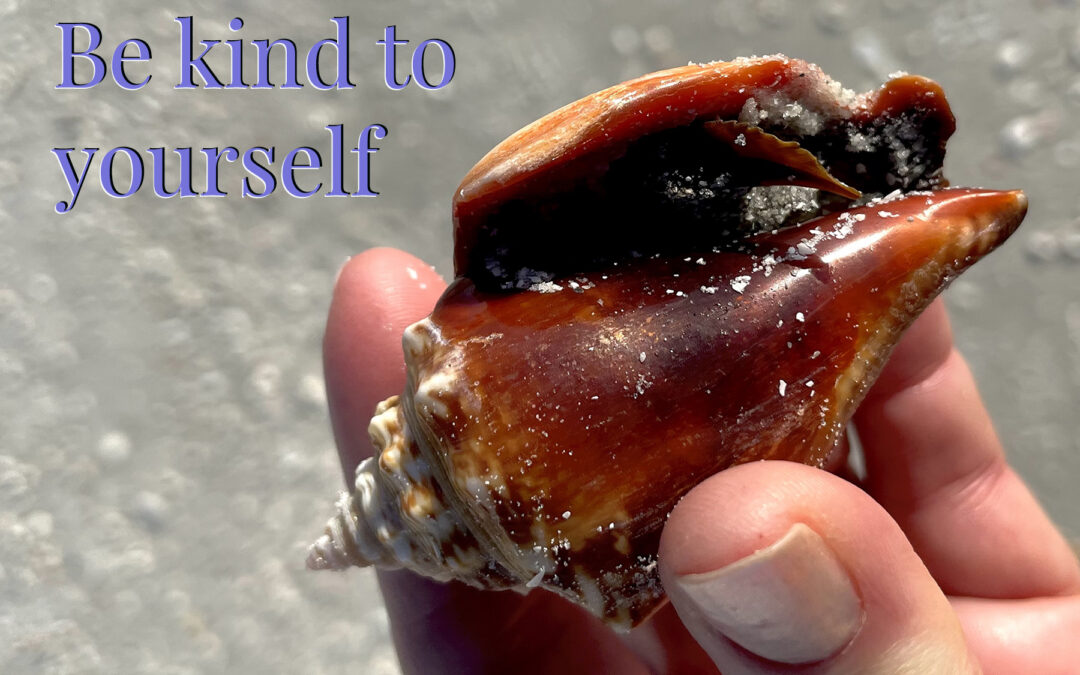
The importance of self-care for caregivers is a reality Heather Johnson lives with. In this post she tells how her efforts to save fighting conchs on the beach reminded her of the importance of self-care for caregivers.

As I walked along Marco Island’s shore, I saw hundreds of fighting conchs brought in by the tide with life inside their shells. I knew I couldn’t save them all, but I scooped up all my hands could hold. All had special needs.

You see, fighting conchs try their best to survive being beached. Sometimes they try to claw themselves closer to the water where high tide will take them home. But sometimes they are washed up with their shell openings facing up. Only a sweep of high tide might save. Or someone might notice and help.

Had I simply thrown the fighting conchs back into the sea, they would mostly likely have died from the impact. Fighting conchs are fragile creatures despite their hard exteriors. They must be placed gently onto their soft seabed to recover their strength.

Cradling them in my cupped hands, I stepped into the salty water, past the surf’s pushing and pulling, and placed them where they would not just survive but thrive.

After turning and walking back to the beach, I thought about the three children my husband and I scooped up in our arms and carried gently to their new home far from the Russian orphanage near the Bay of Finland’s shore.

Our quarter-century family journey has had its ebbs and flows, its crashing and calm as I’m sure all families have. Within a couple years, however, our family had files full of testing reports with numerous diagnoses—all three kids had invisible, permanent disabilities stemming from fetal alcohol exposure. Specialists and therapies became a permanent part of our family. Many still help us today, now that our kids are adults.

But our kids aren’t the only ones with special needs. Trying my best to take care of our kids, I neglected my own needs and developed my own disability—debilitating depression with agonizing anxiety. My brain defied me. I felt washed up, desperate, and vulnerable as a fighting conch unable to claw its way back to sea. I’m thankful for the compassionate care of family and friends along with medication and therapy that brought me gently back to health. And I learned the importance of prioritizing self-care so I’m able to offer the best care long-term to those I love.

Where are you today with self-care? Swimming along just fine, living well with the stress of life? Or are you washed up, in desperate need of compassionate care from yourself and others? If you’re anything like me, sometimes it’s hard to let people see beyond your shiny shell to care for your sometimes fragile soul. Might I gently encourage you to take care of you?

Be kind to yourself by taking care of yourself. Seek health in all forms—mental, physical, and relational. You work so hard at helping others. Do them the best favor by giving yourself the same compassionate care.

For tips on specific ways to improve self-care mentally, physically, and relationally, see The Importance of Self-Care for Caregivers, Part 2.

Do you like what you see at DifferentDream.com? You can receive more great content by subscribing to the monthly Different Dream newsletter and signing up for the daily RSS feed delivered to your email.

By

Heather MacLaren Johnson and her husband have three kids, all five and under when adopted from Russia. Now young adults, all need regular help with their multiple, permanent, invisible disabilities stemming from prenatal exposure to alcohol (FASD).

Heather has B.S. in Education and a doctorate in Clinical Psychology. She is the author of Grace, Truth, & Time: Facilitating Small Groups That Thrive and has published personal essays in The Wonder Years: 40 Women Over 40 on Aging, Faith, Beauty, and Strength (Kregel Publications) and Your Story Matters: Finding, Writing, and Living the Truth of Your Life (NavPress). She’s writing a memoir about her family’s journey through hidden disabilities and mental illness to encourage others to greater intimacy with God and each other through times of desolation and lament.

Heather and her husband of 27 years live with two horses, two dogs, two barn cats, and a bunch of silk plants she just dusts. Heather writes and photographs at www.truelifewithgod.com.

Author Jolene Philo

Archives

Categories

Subscribe for Updates from Jolene

Related Posts

A Visit to a Special Needs Dentist Proves the Tooth Fairy Is Real

A Visit to a Special Needs Dentist Proves the Tooth Fairy Is Real

A Visit to a Special Needs Dentist Proves the Tooth Fairy Is Real

A visit to a special needs dentist for adults was another change for Mark Arnold’s son James following his nineteenth birthday. This visit showed James and his family that the tooth fairy is real, and her name is Sarah.

A lot of things have changed for James over the past six months. His nineteenth birthday was in June. Since then he has been transitioning from children’s services to adult services. Different teams, different styles, different locations, lots of changes.

On Tuesday the ch-ch-changes train pulled in at the dentist station. Armed with visuals of the dentist, James’ toothbrush, his sensory chew, and much prayer, we told James it was time to go the new dentist. James needed time to process the new information and gather courage to go somewhere new. We reassured him that we were with him and that he would be okay.

When we got to the dentist, much was new for James. He was very unsure about it. We tried to encourage him to go into the building, but it was a step too far. Too much change to cope with in one go.

My wife Clare stayed with James, and I trotted off to the reception desk. I wasn’t sure what to expect. Would I be told to book another appointment? Would there be a cancellation fee for missing this one?

I needn’t have worried. The team was magnificent. They started planning how to see James in the car park. A few minutes later, one of the dentists, Sarah, and her assistant Jay-Jay accompanied me to the car to meet James.

They provided wonderful, gentle care. They crouched down at James’ level, so that they didn’t look intimidating. They spoke softly. They used his own toothbrush to explore his mouth. Also, using a plastic-coated dentist’s mirror that didn’t ‘chink’ on his teeth, Sarah managed a good look around, assessing almost all of James’ teeth and confirming that they were okay.

They suggested seeing him again in three-months’ time to build his confidence and familiarity with the location and team. They suggested driving by in the meantime and popping in with James so he could look around, sit in the dentist’s chair, and say hello to Sarah and her colleagues.

The visit exceeded my expectations. The team at The Browning Centre deserves high praise.

They provided lessons that can be easily transferred to school, church, clubs, and other medical or social care appointments.

  • Prepare in advance. We helped James understand a little about the visit before we got there.
  • Go at the child, young person, or adults pace. James showed us how much he could manage and when he had reached his limit for the visit.
  • Be flexible. The team at the dentist met James’ needs where he was.
  • Go gently. Sarah positioned herself at James’ level. She spoke softly, took things one step at a time, used the tools James brought, and let him tell her when he’d had enough.
  • Build confidence. This visit is a starting point. A pop in visit will help grow James’ confidence. Planning another appointment in three-month’s time will do the same.
  • Add a nice surprise. James didn’t know we were taking him to the McDonald’s drive-thru and to the New Forest afterwards. The surprise added to the good memories of this visit to the dentist.
  • Believe that there are kind and caring people out there. Our visit to a special needs dentist proves that the Tooth Fairy is real. For our family, her name is Sarah!

Do you like what you see at DifferentDream.com? You can receive more great content by subscribing to the monthly Different Dream newsletter and signing up for the daily RSS feed delivered to your email.

By

Mark Arnold is the Additional Needs Ministry Director at Urban Saints, a leading national Christian children’s and youth organization. He is co-founder of the Additional Needs Alliance, a national and international advocate for children and young people with additional needs or disabilities. Mark is a Churches for All and Living Fully Network partner, a member of the Council for Disabled Children and the European Disability Network. He writes an additional needs column for Premier Youth and Children’s Work (YCW) magazine and blogs at The Additional Needs Blogfather. He is father to James, who has autism spectrum condition, associated learning disability, and epilepsy. To find out more about how Mark’s work can help you, contact him at: marnold@urbansaints.org or @Mark_J_Arnold

Author Jolene Philo

Archives

Categories

Subscribe for Updates from Jolene

Related Posts

Determining Where to Start as Your Child with Special Needs Nears Adulthood

Determining Where to Start as Your Child with Special Needs Nears Adulthood

Determining Where to Start as Your Child with Special Needs Nears Adulthood

Determining Where to Start as Your Child with Special Needs Nears Adulthood

Determining where to start as your child with special needs nears adulthood is no easy task. There are legal matters to address such as special needs trusts and guardianship, advocacy strategies to pass on to kids, and many more. The list is full of important things to address. Because your child’s eighteenth birthday is not yet imminent, they may be ignored.

You know what I’m talking about, right?

I’d like to give you a hand in determining where to start as your child with special needs nears adulthood. So today I’m sharing three—count ’em—just three ideas. Whether your child is five or fifteen or somewhere in-between, completing these three steps can help you jumpstart the process.

#1: Obtain Hard Copies of Your Child’s Medical Records

Electronic medical records are a great invention. They can also be very hard to access when hospitals and clinics update their computer systems. Who knows what will be in place when your child reaches adulthood? It’s wise to obtain paper copies by contacting the practices of the doctors and therapists who treat your child. They can tell you how their process works and what costs may be involved. Most likely you will be sent an electronic file to download and print out. If your child’s medical history is complex and ongoing, you may want to request records every year or two to update your paper files.

#2: Write Down Your Memories of Your Child’s Medical History

To read the rest of Determining Where to Start as Your Child with Special Needs Nears Adulthood, visit the Hope Anew blog

Do you like what you see at DifferentDream.com? You can receive more great content by subscribing to the monthly Different Dream newsletter and signing up for the daily RSS feed delivered to your email.

By

Jolene Philo is the author of the Different Dream series for parents of kids with special needs. She speaks at parenting and special needs conferences around the country. She’s also the creator and host of the Different Dream website. Sharing Love Abundantly With Special Needs Families: The 5 Love Languages® for Parents Raising Children with Disabilities, which she co-authored with Dr. Gary Chapman, was released in August of 2019 and is available at local bookstores, their bookstore website, and at Amazon. The first book in her cozy mystery series, See Jane Run!, features people with disabilities and will be released in June of 2022.

Author Jolene Philo

Archives

Categories

Subscribe for Updates from Jolene

Related Posts

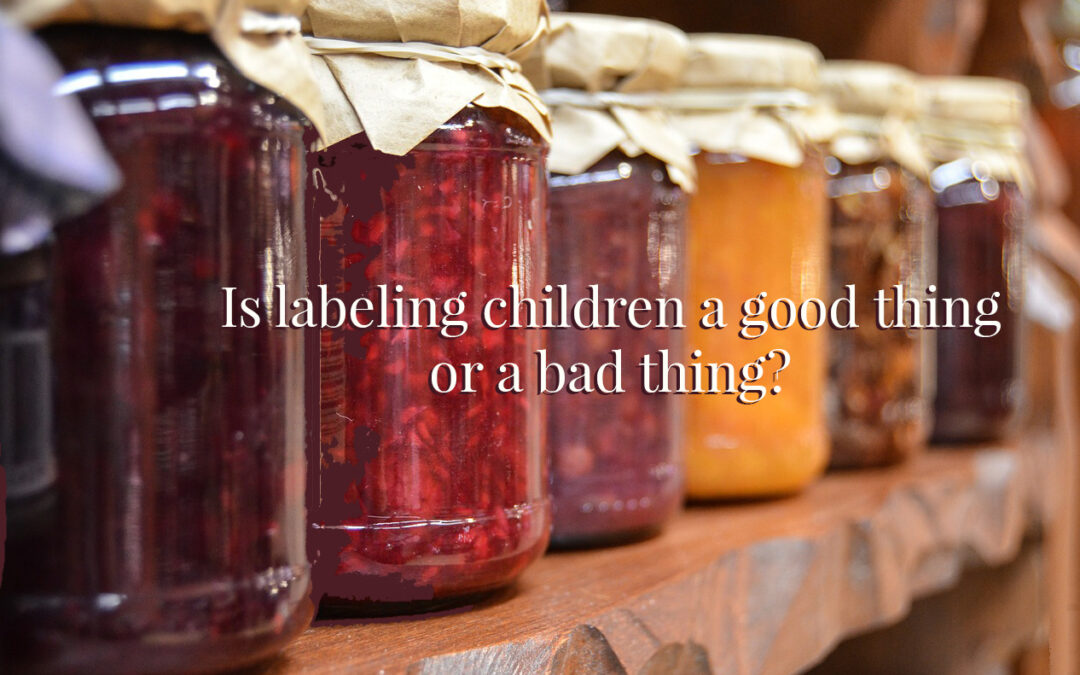
To Label or Not To Label Kids with Special Needs

To Label or Not To Label Kids with Special Needs

To Label or Not To Label Kids with Special Needs

To label or not to label kids with special needs is a dilemma for many parents. Guest blogger Lisa Pelissier takes readers through the pros and cons of labeling, and her son provides a wise and unique perspective regarding the subject.

As the mother of three children with (mostly) invisible disorders, sometimes I wonder if I’ve done the right thing by labeling them: autistic, OCD, selectively mute, bipolar, PANS. The list goes on. I have known people who have shunned labels, trying to avoid the stigma and make their children feel more “normal”. Labels are limits, they say regarding the decision to label or not to label kids with special needs. Who is right?

What are the pros and cons of labeling?

Pros:
1) Labeling is the key to getting services. Without a label, you can’t get the therapy and accommodations your child needs.

2) Labeling helps teachers and others in authority understand why a child is behaving the way they are. It helps them know how to work with the child instead of insisting on a one-size-fits-all behavior policy.

3) Labeling helps neurodivergent children find their peers. For my son, knowing he is autistic has helped him find others who think the way he does.

4) Labeling can be a relief for the child. They already know they’re different. A label can help them understand why and can help them understand that their differences are not personal failings, but medical diagnoses.

5) Labeling arranges kids in larger groups: the autistic, the mentally ill, etc., and larger groups get things like funding, accommodations, and scientific studies.

Cons:
1) A label could limit expectations. If someone has an idea that “autistic people can’t…” then there are some traits they will never be able to see in your child.

2) A label could narrow your view of your child so that the label is the first thing you see. Instead of understanding that your child’s problems may be caused by sin, by personality, or by outside factors, it’s easy to write off misbehavior or other quirks as “just the autism” or “just the anxiety”. (Been there, done that.)

3) Labels focus on deficiencies, not strengths. They point to a child and say, “This is what the problem is.”

4) Some disabilities are stigmatized, especially mental illness. When you mention that your child has depression or anxiety, people assume things—your child lacks faith or they’re not trying hard enough to conquer their problems. And they assume things about your parenting—maybe you’re abusive or neglectful.

I had a long conversation with my autistic son (he does not prefer the person-first language of “my son with autism”) about autism and whether it’s right to label or not to label kids with special needs. His take on it was perfect. He reminded me that there is no such thing as a “label”.

“It’s a diagnosis, Mom. A medical diagnosis.”

Pretending someone doesn’t need a medical diagnosis when there is a problem is the heart of stigmatization. You wouldn’t ignore a label for a child with diabetes or a child with arthritis. Diagnoses of mental illness or neurological problems are the same. The stigma against neurological and mental health conditions relies on the idea that these conditions are character flaws or spiritual deficits, rather than differences in brain chemistry. “Autism,” he said, “isn’t really a problem for me. Neurotypical people who expect me to be just like they are… that’s the problem.”

By

Lisa Pelissier lives in Oregon where she is a homeschooling mother of four (three with disabilities) and author of three middle-grade fiction novels. Lisa owns SneakerBlossom Books, offering Christian, classical homeschool Study Guides and curriculum. She also works as a freelance copy editor, an artist, and a tutor. In her spare time Lisa enjoys playing the piano and fretting about things over which she has no control. Email Lisa at sneakerblossom@yahoo.com or connect on Facebook.

Author Jolene Philo

Archives

Categories

Subscribe for Updates from Jolene

Related Posts

A Sword Will Pierce Your Soul

A Sword Will Pierce Your Soul

A Sword Will Pierce Your Soul

“A sword will pierce your soul.” Our adult Sunday school teacher quoted Luke 2:35 and glanced around the room. “Have your children ever pierced your soul?”

I nodded emphatically. The teacher gave me a quizzical look. Could he sense that the sword that pierced my soul after our baby boy was born was piercing it once again? That I was once again hearing the doctor describe a condition I hadn’t know existed until then?

“Your baby has a tracheoesophageal fistula,” the doctor said. “He needs immediate surgery or he will die.”

Diagnosis was the first of many swords to pierce my soul in the years to come. Some had everything to do with his medical condition:

  • Complications requiring more surgeries
  • Feeding issues
  • One GI issue after another
  • Frequent viruses and bacterial infections
  • PTSD as a result of early, invasive medical procedures and treatments

Some had nothing to do with his health issues at all:

  • Children being mean on the playground
  • The call after he was in a car accident
  • Girlfriends we weren’t crazy about
  • Life choices that seemed at odds with our values
  • A tenuous relationship during his young adult years

“A sword will pierce your soul,” the Sunday school teacher repeated. “If parenting pierced the soul of Mary, who raised a child who was fully human and fully divine, then we know that it will pierce our souls too.”

The teacher mentioned other instances when raising Jesus caused his parents pain:

To read the rest of A Sword Will Pierce Your Soul, visit Key Ministry’s blog for special needs parents.

Do you like what you see at DifferentDream.com? You can receive more great content by subscribing to the monthly Different Dream newsletter and signing up for the daily RSS feed delivered to your email.

By

Jolene Philo is the author of the Different Dream series for parents of kids with special needs. She speaks at parenting and special needs conferences around the country. She’s also the creator and host of the Different Dream website. Sharing Love Abundantly With Special Needs Families: The 5 Love Languages® for Parents Raising Children with Disabilities, which she co-authored with Dr. Gary Chapman, was released in August of 2019 and is available at local bookstores, their bookstore website, and at Amazon.

Author Jolene Philo

Archives

Categories

Subscribe for Updates from Jolene

Related Posts