How Parents Can Stay Strong When Advocacy Efforts Seem to Fall Short

How Parents Can Stay Strong When Advocacy Efforts Seem to Fall Short

How Parents Can Stay Strong When Advocacy Efforts Seem to Fall Short

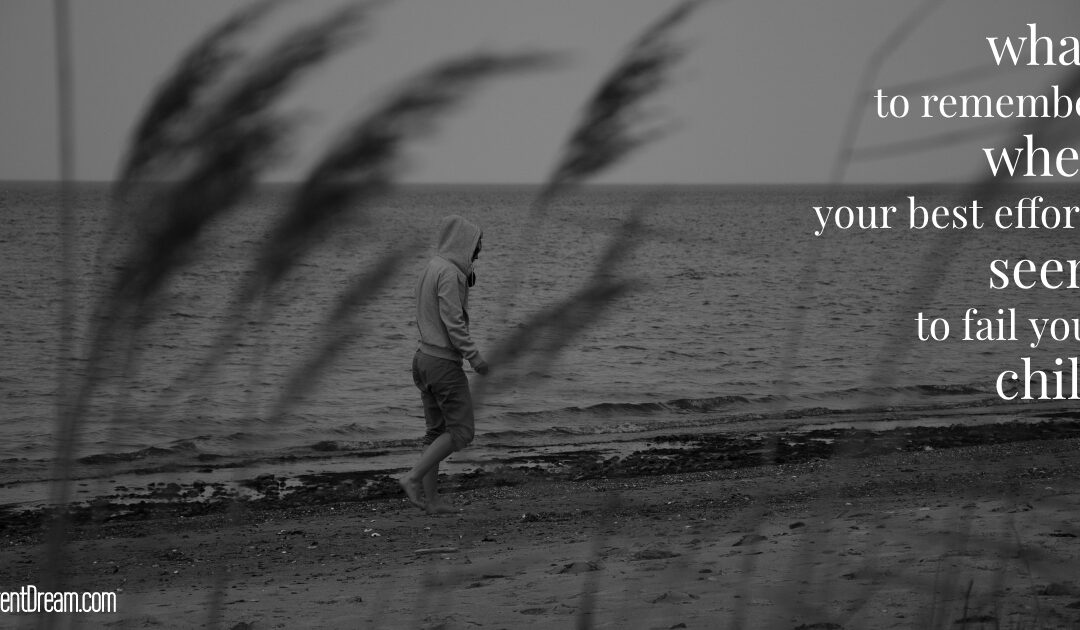
How parents can stay strong when advocacy efforts seem to fall short at every turn is something Catherine Boyle knows about. She struggled with that question repeatedly while raising her children and advocating for their best good. Today she shares 3 things for parents to remember when all their efforts feel fruitless.

“It won’t work. My specialty is ADHD, and the supplement won’t help.”

The familiar rush of fear, anxiety, and humiliation swept through my insides. “I didn’t know you were an ADHD specialist,” I stammered, after a few awkward seconds.

The psychologist’s tone softened slightly; the phone call ended shortly thereafter. In the midst of the shame I felt, merely asking about emerging treatment options for my child who was still struggling, in spite of taking prescribed medication for years, I knew I couldn’t trust this doctor.

Eight years later I unexpectedly learned that not all doctors agree on treatment options. As I sat across the desk from the newest doctor for the as yet-to-be correctly diagnosed condition with my now young adult child, she handed me an information sheet about an important supplement for individuals with the same struggles as my child.

It was the very same supplement I asked about all those years earlier. This time it came with the hearty recommendation of a similarly board-certified physician.

My focus words for this year are transformational, truth, and two (as in “Part 2.”) These words most definitely apply to the situation I described above, when you know you didn’t do anything wrong advocating for your child or other loved one.

Whether you are enduring judgmental relatives, physicians who do not listen to your child’s needs, or a church environment that communicates disdain for your parenting skills, hear me loud and clear: if you didn’t do anything wrong in God’s eyes, you didn’t do anything wrong. Period. End of story.

It’s much easier to read this than live it out when you find yourself unsupported by those who don’t see your sleepless nights or hear your fervent prayers or read your endless research. If that’s your situation, remember these three things when you wonder how parents can stay strong when advocacy efforts seem to fall short.

God sees, and He rewards things done with integrity (Psalm 101:2).

No one else fully knows your heart. No one else knows the effort you’ve put into being the best parent or caregiver. No matter what struggles your family encounters, God sees and is present, even when it doesn’t feel like it.

Our family went through several years of difficult struggles. In the middle of that time, God gave me a peek behind the curtain of what He had been doing for decades, things so improbable that I will spend the rest of my life pondering how vast is His work in the lives of ordinary people.

I’m nobody special. I promise, He is doing similar things in your life, with your family, right now. I pray He gives you eyes to see a little of what He is doing to refresh and encourage you.

Beauty comes from ashes, but the ashes come first. Its okay to lament the ashes (Isaiah 61:3).

If you’re getting no support from friends, family, church, and doctors, you may be in a period of ashes. Job lived in ashes for a long season, but he didn’t stay there. In the ashes he lamented, which is a healthy way to hash out things that cause you pain. Find a trusted pastor, counselor, or friend who will listen and encourage you as you lament.

When we were ‘living in ashes’, I reached out to the wise Christian therapist I had seen off and on for several years. I trusted her to listen and challenge me when my reactions to our struggles did not align with who God is. Several years pre-pandemic, she allowed me to meet over the phone instead of traveling to meet with her in-person. More than once I interrupted errands to pour out my heart to her and sob in the car in a parking lot.

God makes everything beautiful in its time (Ecclesiastes 3:11).

We recently experienced the “part two” of a seven-year season. Part one was all difficulty: misunderstood behaviors, school struggles, dreams laid down. We had been very fearful about suicidal leanings in things our child did and said.

The other bookend was the exact opposite: success, understanding based on proper diagnosis, dreams come true. It wasn’t what we envisioned, but the challenges made this “Part 2” so much sweeter.

Going through challenges dispels the illusion that life will go according to your plans. But challenges give you the opportunity to see that your life hasn’t deviated from His plans. I pray this year allows you to get a vision of your “Part 2,” and that truths learned within your challenges will transform your relationship with Christ.

Do you like what you see at DifferentDream.com? You can receive more great content by subscribing to the monthly Different Dream newsletter and signing up for the daily RSS feed delivered to your email.
By

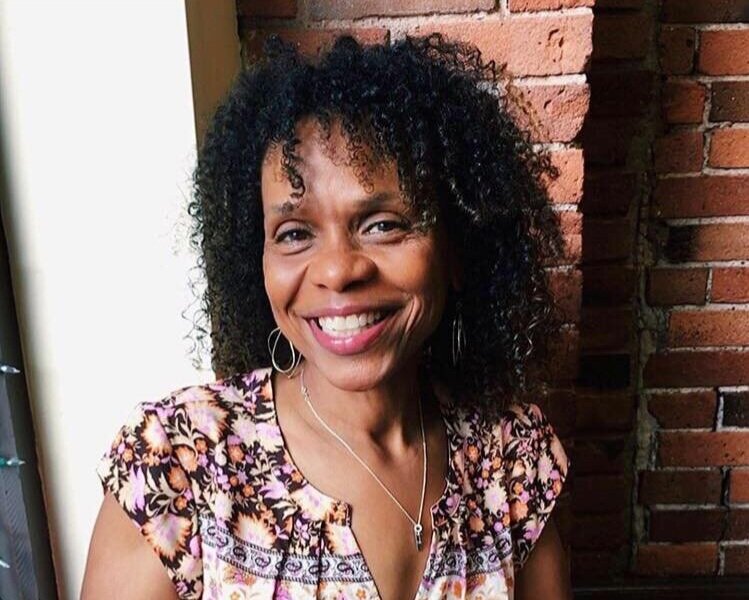
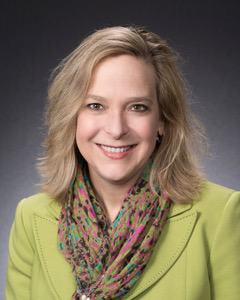
Catherine Boyle is Mental Health Ministry Director and Social Media Manager for Key Ministry. Connect with Catherine at Key Ministry, her website catherineboyle.com, or on her social media links on Facebook, Twitter, Instagram, and YouTube.

Author Jolene Philo

Archives

Categories

Subscribe for Updates from Jolene

Related Posts

Who Do You Say Jesus Is?

Who Do You Say Jesus Is?

Who Do You Say Jesus Is?

Who do you say Jesus is? Seems like an easy question at first glance. Guest blogger Sandy Ramsey-Trayvick found assurance when Jesus showed her who He is while her son with special needs dealt with major medical challenges.

In Mark 8:27- 29, we find Jesus questioning His disciples:  

On the way, He asked His disciples,

“Who do people say I am?”

They replied, “Some say John the Baptist,

some say Elijah

and others say Youre one of the prophets.

Then Jesus turned to them and asked them,

But what about you? Who do you say I am?”

Peter answered, “You are the Messiah.”

During the Christmas season it was pretty easy for those of us who follow Christ to answer Jesus’ question. As we celebrated His birth, it was easy to say that Jesus is the Son of God, Savior of the world.

But what about on other days when you dont have a holiday to remind you, who do you say that Jesus is then?

As special needs parents, we have plenty of circumstances that might cause us to question who Jesus is to us. Although we know from Scripture that He is the same yesterday, today, and forever;” our circumstances, if we let them, can steal our focus and make us think that somehow–in our current hardship–He has changed. We can end up doubting His goodness and faithfulness and begin pulling away from Him–sometimes without even realizing it.

In Matthew 16:13-15, we find this same scene of Jesus questioning His disciples. But in Matthew’s account of the story, Jesus responds to Peter, calling him blessed” because His Father in Heaven” had revealed the truth of Jesus’ identity to Peter.

And our Father in Heaven has revealed this same truth to us in His Word. When our circumstances ask us, Who do you say Jesus is now?,” His Word helps us to know and say whats true.

I took the opportunity recently, after my son experienced an unexpected health crisis, to consider who Jesus had been to me and my family during this challenge. If He were to ask me, ”Who do you say that I am?,” how would I respond?

Looking back, Id say He was:

  • A Safe Harbor and Comforter: As I struggled with fear and confusion over my sons declining health, the Lord invited me to share my honest concerns with Him–with the safety of no condemnation. He heard my heart and offered the promise of His comfort.
  • A Warrior: As I prayed about my sons health, the Lord assured me that He would fight for him. (Exodus 14:14)
  • An Ever-Present Protector: I asked the Lord to protect my son from fear as he underwent major surgery. The Lord responded that He had gone before Myles and would never leave him. Therefore, he need not fear. (Deuteronomy 31:8)
  • Healer: The Lord provided a new kidney for Myles.
  • The Way: He provided a way forward that exceeded our expectations.
  • Awesome: Throughout our journey, the Lord demonstrated His great love, His power, and that His plans are for our good.

That would be my answer.

What about you? If the Lord wants to know who you say Jesus is, how would you respond?

Do you like what you see at DifferentDream.com? You can receive more great content by subscribing to the monthly Different Dream newsletter and signing up for the daily RSS feed delivered to your email.


By

Sandy and her husband of 31 years are parents to three young adult children.  Their son was diagnosed with multiple disabilities 21 years ago after a devastating illness as a toddler.  Following her son’s diagnosis, Sandy quit her job to become his full-time caregiver and advocate.
Sandy works now as a Certified Professional Coach with a focus on coming alongside other special needs parents – empowering them and their families to recognize choices that will enable them to reclaim freedom, renew purpose and reactivate joy on their unique special needs journey.
You can learn more about Sandy, her work and her blog at www.UNDisabledLIVES.org.  You can also reach her at Sandy@UNDisabledLIVES.org.

Author Jolene Philo

Archives

Categories

Subscribe for Updates from Jolene

Related Posts

Unhappy New Year

Unhappy New Year

Unhappy New Year


Guest blogger Kimberly Drew brings perspective and help for weary caregivers. 

This new year is not ringing in so well for me. I would tell you about everything that has made this an unhappy new year thus far, but it would use up my whole article! I can pretty much sum up my spirit as weary. I’m weary.

I’m so very weary of COVID and it’s losses.

I’m weary of caregiving,

of major changes in our church where my husband is youth pastor,

weary of social media speculations and complaints,

weary of uncertainty and battles with anxiety,

weary of working through forgiveness in relationships where I felt wronged and was spoken wrongly of,

weary of watching others suffer.

There have been other seasons of life where this word described me, but I can’t quite recall how I managed to shake it. However, I can look back over my 42 years and recall the goodness and faithfulness of God.

I decided to take a walk down memory lane with the attitude of Psalm 77. Please take the time to read the entire psalm, though only verses 10-12 are quoted here.

Then I thought, “To this I will appeal:

the years when the Most High stretched out his right hand.

I will remember the deeds of the LORD;

yes, I will remember your miracles of long ago.

I will consider all your works

and meditate on your mighty deeds.”

I would love to share a few of these deeds and miracles with you from our life. I tried to type them all out, but can only fit a few. The list just keeps going and going. Here are some highlights from recent years that are helping me combat weariness in this unhappy new year:

  • Our first daughter survived a traumatic birth and our church provided gas, hotel stays, and food money for the long month ahead in NICU.
  • An on-call pediatrician pulled up a rocking chair to her bedside and was there each time she went into cardiac arrest. He saved her life.
  • My A-team of 11 people was assembled. It included multiple therapists, a pediatrician, an IEP team at school, and several specialists to give her the greatest life possible. She defied the MRI that said she should be in a vegetative state and never walk. Hers was the biggest smile in the room that she walked into all on her own.
  • The Lord changed my heart on some very important issues. He broke my pride, tore out my selfishness, and continues to rebuild me. He’s still working on it.
  • My husband was given a job out of his career field in a time when we needed to heal from the hurts of the church we had worked in. His call to youth ministry was affirmed, confirmed, and he is in his 13th year at our current church.
  • The Lord himself restored my joy and protected me from depression after delivering a stillborn son.
  • We sold our house in faith hoping for something with 2 bathrooms so we could dedicate one of them to our daughter’s toileting needs. A friend sent an anonymous check for $5,000 toward our new house. Another took care of major septic needs. We were able to purchase a house in foreclosure that doubled our square footage, came with 3 bathrooms, and a lower mortgage payment than previously.

I won’t say that I’m less weary, but the exercise of recalling the Lord’s hand in my life encourages me as no quick fix could. That’s why I encourage you to make your own list if you are experiencing an unhappy new year, too.

I will praise you Lord, for you are good!

Do you like what you see at DifferentDream.com? You can receive more great content by subscribing to the monthly Different Dream newsletter and signing up for the daily RSS feed delivered to your email.

By

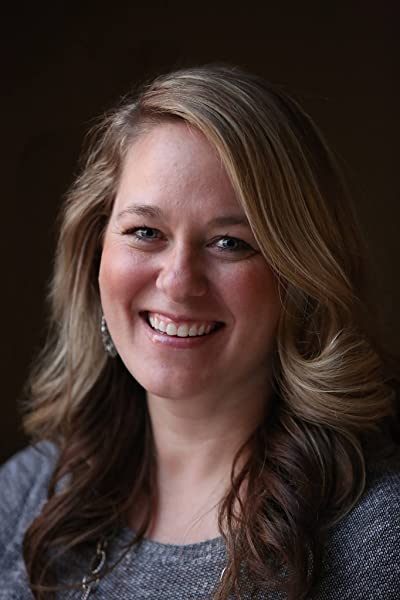
Kimberly grew up and went to college in the small town of Upland, IN. She graduated from Taylor University with a degree in Elementary Education in 2002. While at TU, she married her college sweetheart and so began their adventure! Ryan and Kimberly have four amazing kids on earth (Abigail, Jayden, Ellie, and Cooper), and a baby boy waiting for them in heaven. Their daughter Abigail (Abbey) has multiple disabilities including cerebral palsy, a seizure disorder, hearing loss, microcephaly, and oral dysphagia. She is the inspiration behind Kimberly’s desire to write. In addition to being a stay-at-home mom, Kimberly has been serving alongside her husband in full time youth ministry for almost fourteen years. She enjoys working with the senior high girls, scrapbooking, reading, and music. You can visit Kimberly at her website, Promises and Perspective.

Author Jolene Philo

Archives

Categories

Subscribe for Updates from Jolene

Related Posts

EA/TEF Awareness Day 2022 is Here!

EA/TEF Awareness Day 2022 is Here!

EA/TEF Awareness Day 2022 is Here!

EA/TEF Awareness Day 2022 has arrived. Usually Different Dream devotes all of January to EA/TEF Awareness Month. For over ten years, I have issued invitations on Facebook for parents and survivors to share their stories. In the past, responses came so thick and fast, the monthly calendar filled up quickly.

This year there was plenty of initial interest after the invitations were sent. Follow-through was a different matter. I don’t know if sick kids or pandemic burnout or bad timing or holiday demands was the culprit. Whatever the reason, my Plan A resulted in a January blogging calendar that is as bare as Old Mother Hubbard’s cupboard.

Moving on to Plan B, I hereby declare that EA/TEF Awareness Day for 2022 is here! In honor of this special day, this post features some of my favorite EA/TEF posts from past years. I hope you enjoy them and pass them along to raise awareness about a condition that affects 1 in every 3,000 babies born around the world.

#1

My First EA/TEF Memories: Mary Monahan wrote this post as a 61-year-old EA/TEF survivor. In it she shares her earliest hospital memories and what she calls the “dark ages of this condition’s treatment.” This post will make new parents grateful for treatment advances since then!

#2

My Special Needs Mom Worries Never End: I wrote this post a few years back when my EA/TEF survivor son was in his mid-30s. He is not a fan of me obsessing about his health, so I wrote this post to quit doing so. Maybe it will help you, too.

#3

Our Bittersweet EA/TEF Symphony: Not many people consider EA/TEF to be music to their ears, but mom and musician Janae Copeland does. In this post she shares what she’s learned while conducting the symphony of her daughter’s life.

#4

So You’re a NICU Parent: If you’re the parent of an EA/TEF baby, you are also a NICU parent. Brianna Lennon was a NICU parent in 2015 after the birth of her son Ryan. With humor and grace, she explains several parenting skills unique to our particular breed of NICU kids.

#5

When a Kid with EA/TEF Finds Courage…: We know that our EA/TEF kids are among the bravest people in the world. Our kids have to discover that truth for themselves. In this article, Lori McGahan tells readers how her son Brandon discovered how courageous he is.

#6

6 EA TEF Warnings Hidden from New Parents: Nanette Lerner relates 6 warning signs she watches for while raising her son. These warnings allow parents to be proactive rather than reactive as they care for their kids.

#7

EA/TEF Repair Is One Chapter in Your Child’s Life: This post by Cori Welch puts EA/TEF repair surgeries into perspective. Cori also shares 5 things she wishes she’d known before her baby was born in 2018.

#9

Why EA/TEF Awareness Month Is Grace Awareness Month: When our son was born in 1982, I could only see the pain and the worry and the challenges surrounding his condition. As he grew, I began to see the grace surrounding it too.

This list is just a smattering of the Different Dream guest posts about EA/TEF. You can make EA/TEF Awareness Day last a little longer by typing “EA/TEF” in the search bar to find more great stories.

Do you like what you see at DifferentDream.com? You can receive more great content by subscribing to the monthly Different Dream newsletter and signing up for the daily RSS feed delivered to your email.

By

Jolene Philo is the author of the Different Dream series for parents of kids with special needs. She speaks at parenting and special needs conferences around the country. She’s also the creator and host of the Different Dream website. Sharing Love Abundantly With Special Needs Families: The 5 Love Languages® for Parents Raising Children with Disabilities, which she co-authored with Dr. Gary Chapman, was released in August of 2019 and is available at local bookstores, their bookstore website, and at Amazon.

Author Jolene Philo

Archives

Categories

Subscribe for Updates from Jolene

Related Posts

When the Unexpected Becomes the Norm for the Caregiver

When the Unexpected Becomes the Norm for the Caregiver

When the Unexpected Becomes the Norm for the Caregiver

When the unexpected becomes the norm for the caregiver, as was the case for many in 2021, it knocks us off balance. At least, that’s what one unexpected hit after hit did to me over the past year. 

I didn’t realize why my brain felt fuzzy and my energy level had dropped when I paused to write down 2021’s most impactful unexpected events. Then I discovered there were 8 of them. 

First on the list was our house construction and remodeling project. It was 20 months of living in constant flux and mess before the contractors were done.

Next up was the rapid decline of my mother’s health that began last spring just as my siblings and I were able to go into her memory care/assisted living facility for the first time since the pandemic shut down began. Because of her increased care needs, we moved her to a long term care facility in June.

In conjunction with Mom’s health decline came the necessity to advocate on her behalf while she was still in the memory care unit. The pandemic led to rapid staff turn over that greatly complicated my attempts to advocate for her. Snafus with her long term care insurance required numerous phone conversations to solve. The importance of keeping good records and logging conversations was repeatedly reinforced. Had I not done that, Mom’s health might have been compromised.

To read the rest of When the Unexpected Becomes the Norm for the Caregiver, click over to Key Ministry’s blog for Special Needs Parents.

Do you like what you see at DifferentDream.com? You can receive more great content by subscribing to the monthly Different Dream newsletter and signing up for the daily RSS feed delivered to your email.

By

Jolene Philo is the author of the Different Dream series for parents of kids with special needs. She speaks at parenting and special needs conferences around the country. She’s also the creator and host of the Different Dream websiteSharing Love Abundantly With Special Needs Families: The 5 Love Languages® for Parents Raising Children with Disabilities, which she co-authored with Dr. Gary Chapman, was released in August of 2019 and is available at local bookstores, their bookstore website, and at Amazon. See Jane Run!, the first book in the West River cozy mystery series will be released in June of 2022.

Author Jolene Philo

Archives

Categories

Subscribe for Updates from Jolene

Related Posts

Non-Verbal Kids Can Communicate Clearly if We Learn their Language

Non-Verbal Kids Can Communicate Clearly if We Learn their Language

Non-Verbal Kids Can Communicate Clearly if We Learn their Language

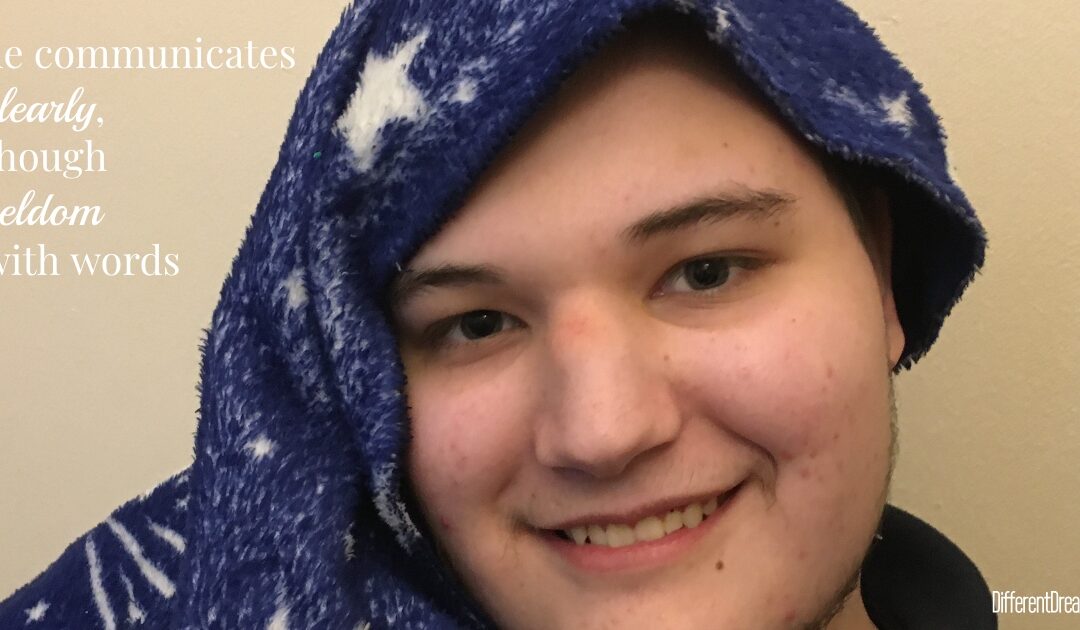
Non-verbal kids can communicate. In fact, they communicate all the time. Guest blogger Mark Arnold continues to learn more about how non-verbal kids can communicate from his son James. Today, Mark shares what James has been teaching him lately.

There is a perception that children who are labelled or identified as nonverbal are unable to communicate. Many believe that kids who have less speech than other children (or no perceived speech at all) can’t share how their feelings, needs, or desires that humans communicate with each other every day.

This perception creates anxiety both for children and their families. Speaking like everyone else becomes a mountain to climb at all costs. This goal overlooks and diminishes the other wonderful ways children subtly and clearly communicate with us.

Those who study non-verbal communication say that perhaps 60-70% of communication doesn’t rely on words. This means that non-verbal kids can communicate using eye contact, facial expressions, gestures, posture and other body language, their mood, sounds, loudness, pitch, rhythm, and tone to communicate. So why do we put so much energy into trying to force non-verbal children to communicate through words instead of focusing on their communication skills? It’s like teaching Japanese to a child without understanding or using their first language.

My son, James, has a limited range of verbal communication, maybe 20 words (one of them is “beerbut that’s another story!), but he communicates fluently. He makes it abundantly clear how he is feeling, what he wants or needs, and what he wants to do. We need to tune in to his communication and understand it. It takes time to learn his form of communication. Sometimes we don’t pick up on something straight away. This can cause frustration, but patience and practice helps!

One of James’ words is “appy!(happy). He often uses it to communicate how he is feeling, whether he is happy or not. If James uses “appywhile he’s frowning, his eyes are downcast, his tone is abrupt and low, he’s is scrunched on the sofa with his legs pulled up, he is telling us how he is feeling in many ways. The word “appy!is his general catch-all phrase for feelings.

Similarly, if James is enjoying his food at the dinner table and wants another portion he might say “more.” He might also say “p-ease(please) and point at what he wants. He will look at it, then us, then back at what he wants again.

If he is feeling unwell, he will lie on his sofa and look suitably miserable. He will also place our hands on whatever hurts–his stomach or head. His communication gives us a better understanding of what might be happening so we can help him.

Non-verbal communication is complex. It can take more decoding than verbal communication, but if we are willing to learn it, it is rich, expressive, and as beautiful as speech. If your child is labelled or identified as non-verbal, remember that non-verbal kids can communicate. Your job is to learn that language and explore ways to develop their speech. It’s just as beautiful!

Do you like what you see at DifferentDream.com? You can receive more great content by subscribing to the monthly Different Dream newsletter and signing up for the daily RSS feed delivered to your email.

By

Mark Arnold is the Additional Needs Ministry Director at Urban Saints, a leading national Christian children’s and youth organization. He is co-founder of the Additional Needs Alliance, a national and international advocate for children and young people with additional needs or disabilities. Mark is a Churches for All and Living Fully Network partner, a member of the Council for Disabled Children and the European Disability Network. He writes an additional needs column for Premier Youth and Children’s Work (YCW) magazine and blogs at The Additional Needs Blogfather. He is father to James, who has autism spectrum condition, associated learning disability, and epilepsy. To find out more about how Mark’s work can help you, contact him at: marnold@urbansaints.org or @Mark_J_Arnold

Author Jolene Philo

Archives

Categories

Subscribe for Updates from Jolene

Related Posts