Transitioning Kids with Disabilities to Adulthood

Transitioning Kids with Disabilities to Adulthood

Transitioning Kids with Disabilities to Adulthood

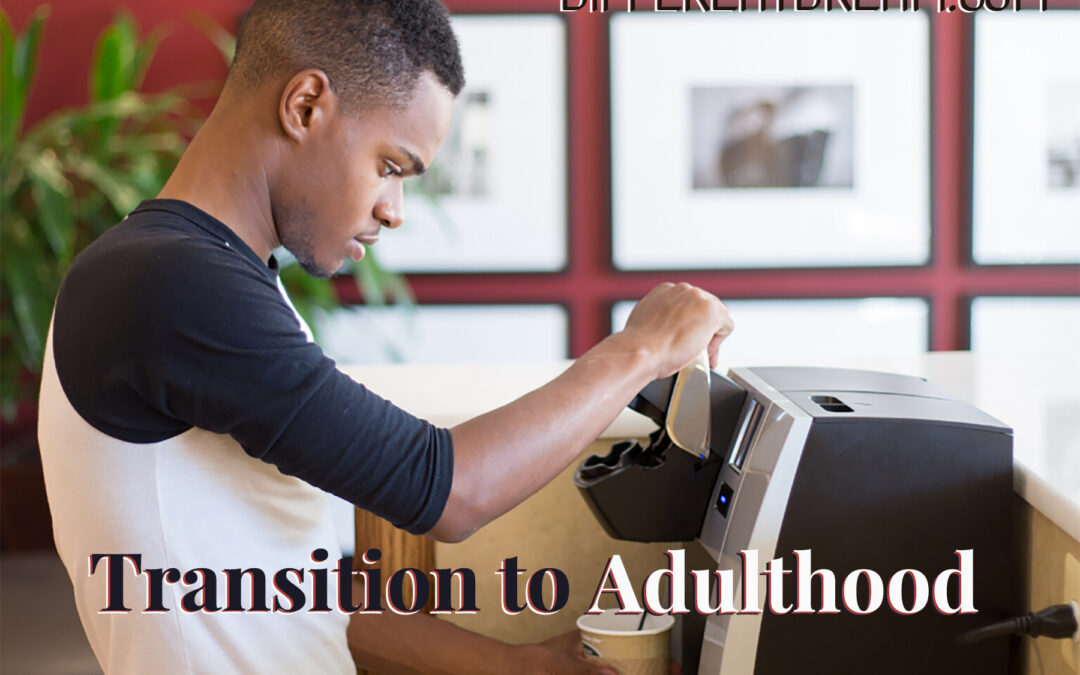
Transitioning kids with disabilities to adulthood is a process that often begins before parents are ready for it. That’s how Sandy Ramsey-Trayvick felt when transitioning became part of her son’s IEP while in middle school. Today she shares 5 tips that made the process easier for her family. She hopes they can do the same for you too.

When the focus of my son’s IEP became about transitioning him to adulthood, it seemed premature. He was in middle school. It seemed too soon to be working on things like vocational skill development, potential job placement, and independent living skills. But as premature as it seemed at 14, as he was nearing 21, it seemed like there hadn’t been enough time to prepare him—or me.

My son is 23 now. Looking back, here are some things I learned that may help in your child’s transition process.

1. Think and pray about your childs future.

    • What are your dreams for your child’s next chapter? What interests do they have that you want to build on?
    • Where will they live? Where will they find community as an adult?
    • Will they work? Go to college? What skills do they need to develop or strengthen?
    • How will siblings be involved in their lives?
    • What kind of support will they need?

2. Do your homework.

    • What is your school district’s process for transitioning students to adulthood?
    • What is the timeline for making the transition so that your child is set up for success?
    • What resources do your district and local agencies provide to help in the transition?
    • What resources will you need to find on your own? In my case, I had to find a transition coordinator for my son because the school district didn’t willingly provide that resource to children with profound special needs.
    • How is funding determined? For my son, the NJCAT assessment was used to determine government funding levels. Based on responses to questions about my son’s needs, level of independence in different settings, communication skills, behavioral issues, medical issues, etc., a funding tier was assigned.

3. Do your own research.

    • What post-school options exist in your area (e.g. day habilitation, college/trade school, employment, group homes, community based supports, etc.)?
    • Which are best suited to your child’s needs and abilities?
    • Prepare to visit a lot of programs. If possible, take your child’s teacher and case manager with you. Don’t rely on brochures for this. Nothing is as good as it seems on paper.
    • You’ll also need to research and interview support coordination agencies to replace the case manager. Speak with other parents about their experiences.

4. Review medical needs.

    • Have you found adult specialists to replace pediatric providers?
    • If you haven’t already, now is the time to organize your child’s medical history and current medical needs: conditions, doctors, medications, etc.

5. Think through changes to be made at home.

    • How can you help your child to become more independent? How can you help generalize skills from school to home? In what ways can you pull back to give your child a chance to grow his/her skills?
    • Will you need additional support at home?

Theres a lot to think about and do when transitioning kids with disabilities to adulthood. It can feel intimidating, but creating a plan with your childs teacher and case manager can make the process much smoother.

Do you like what you see at DifferentDream.com? You can receive more great content by subscribing to the monthly Different Dream newsletter and signing up for the daily RSS feed delivered to your email.

By

Sandy and her husband are parents to three young adult children. Their son was diagnosed with multiple disabilities 21 years ago after a devastating illness as a toddler. Following her son’s diagnosis, Sandy quit her job to become his full-time caregiver and advocate.

Sandy is currently a Certified Professional Coach. Her focus is to come alongside other special needs parents, helping them to recognize choices that will enable them to reclaim freedom, renew purpose, and reactivate joy.

You can learn more about Sandy, her work and her blog at www.UNDisabledLIVES.org. You can also reach her at Sandy@UNDisabledLIVES.org.

Author Jolene Philo

Archives

Categories

Subscribe for Updates from Jolene

Related Posts

The Importance of Self-Care for Caregivers, Part 2

The Importance of Self-Care for Caregivers, Part 2

The Importance of Self-Care for Caregivers, Part 2

The importance of self-care for caregivers is a reality Heather Johnson has learned to deal with in her own life. She shared that story In Part 1 of this series. Today she finishes the series with specific, practical ideas for caregivers like you and me.

In February, I wrote about a lesson learned from fighting conchs washed up on the shore, desperate for compassionate, gentle care. As caregivers for family with special needs, it’s easy to neglect our own mental, physical, and relational needs—something that is detrimental for all.

Over the twenty-five years of raising three kids with invisible disabilities, I’ve learned the importance of self-care for caregivers. These mental, physical, and relational self-care practices are helpful to me. I hope they can help you too.

Mental Health

  • Challenge your thoughts. Is what you’re saying to yourself or another true? Regardless of feelings, focus on truth because truth sets us free.
  • Be gentle with self-talk. Perhaps thoughts or actions need adjustment, but judgment is not only unnecessary, it’s unhealthy for us and others.
  • Avoid the poison of comparison. Everyone has their own path, and every life is precious.
  • If you need help, get help. Self-advocacy for mental health is a sign of strength, not weakness. Depression and anxiety have many root causes. There’s no need to feel shame. (You can use my motto, if it’ll help: Others’ opinions of me are none of my business.) It’s true!
  • Practice gratitude. Focus on what you do have more than on what you don’t

Physical Health

  • Eat healthy. Eat whole foods as much as possible. Minimize refined sugar, processed foods, and ingredients that cause stress on our systems.
  • Exercise daily in ways you love. Regular exercise offers positive mental health benefits.
  • Go outside. Fresh air in your lungs and sunshine on your face are good for you.
  • Practice gratitude. Yes, gratitude has positive effects on physical health too.

Relational Health

  • Spend time with someone you trust. Someone who can empathize, someone who can listen without offering advice. Sometimes having a shoulder to cry on and an ear to hear is the best self-care of all.
  • Treat others as you would want to be treated. You are precious and have a combination of strengths and weaknesses. So does everyone else. If you want others to treat you gently without judgment, offer others the same. Even if they don’t respond well, your mental and physical health will benefit and the possibility of others’ hard shells softening increases substantially.
  • Practice gratitude. Everyone can annoy us at times. But we are free to focus on annoyances or something positive about every person. What we feed our minds about others affects our relationships with others, both positively and negatively. Find and focus on the good and you will gain.

All life is precious and deserves compassionate care. If we recognize the importance of self-care for caregivers and practice it in simple ways every day, we are able to offer our loved ones the best care. What do you do to practice self-care? Let us know in the comments below. We can all benefit by learning from each other.

The Importance of Self-Care for Caregivers, Part 1

Do you like what you see at DifferentDream.com? You can receive more great content by subscribing to the monthly Different Dream newsletter and signing up for the daily RSS feed delivered to your email.

By

Heather MacLaren Johnson and her husband have three kids, all five and under when adopted from Russia. Now young adults, all need regular help with their multiple, permanent, invisible disabilities stemming from prenatal exposure to alcohol (FASD).

Heather has B.S. in Education and a doctorate in Clinical Psychology. She is the author of Grace, Truth, & Time: Facilitating Small Groups That Thrive and has published personal essays in The Wonder Years: 40 Women Over 40 on Aging, Faith, Beauty, and Strength (Kregel Publications) and Your Story Matters: Finding, Writing, and Living the Truth of Your Life (NavPress). She’s writing a memoir about her family’s journey through hidden disabilities and mental illness to encourage others to greater intimacy with God and each other through times of desolation and lament.

Heather and her husband of 27 years live with two horses, two dogs, two barn cats, and a bunch of silk plants she just dusts. Heather writes and photographs at www.truelifewithgod.com.

Author Jolene Philo

Archives

Categories

Subscribe for Updates from Jolene

Related Posts

What Caregiving Is Teaching Me about Writing Fiction

What Caregiving Is Teaching Me about Writing Fiction

What Caregiving Is Teaching Me about Writing Fiction

What caregiving is teaching me about writing fiction could fill a book. If someone had tried to tell me, when I was a kid emptying my dad’s urinal and operating his Hoyer Lift, that caregiving and writing have a lot in common, I wouldn’t have believed it. Nor would I have believed it as a young mom caring for our medically-fragile baby. But as my mother’s health continues to decline and deadlines for my mystery series are looming, I can’t ignore the similarities between the two.

Writing may or may not be part of God’s plan for your future. However, I know he has something in store for your future, and he’s using your life as a caregiver to prepare you for it. Maybe he’ll also use these four lessons caregiving is teaching me about writing fiction to prepare you for whatever lies ahead in your life.

#1: Planning Is Important

As caregivers, we devote portions of our days to planning. We schedule appointments, check to see that the car is gassed up, and investigate special needs trusts long before our kids turn 18. Had this skill been put to use when I began working on my first mystery novel, maybe it wouldn’t have taken me 10 years to finish it. Thanks to my daughter, who showed me a method she created for plot planning, the second mystery was done in a year.

#2: Surprises Happen Despite our Plans

Caregivers can plan and plan and plan, and things will still surprise us, right?

To read the rest of What Caregiving Is Teaching Me about Writing Fiction, visit the Key Ministry website.

Do you like what you see at DifferentDream.com? You can receive more great content by subscribing to the monthly Different Dream newsletter and signing up for the daily RSS feed delivered to your email.

By

Jolene Philo is the author of the Different Dream series for parents of kids with special needs. She speaks at parenting and special needs conferences around the country. She’s also the creator and host of the Different Dream website. Sharing Love Abundantly With Special Needs Families: The 5 Love Languages® for Parents Raising Children with Disabilities, which she co-authored with Dr. Gary Chapman, was released in August of 2019 and is available at local bookstores, their bookstore website, and at Amazon. The first book in her cozy mystery series, See Jane Run!, features people with disabilities and will be released in June of 2022.

Author Jolene Philo

Archives

Categories

Subscribe for Updates from Jolene

Related Posts

10 Ways Families Impacted by Disabilities and Special Needs Can Enjoy Spring

10 Ways Families Impacted by Disabilities and Special Needs Can Enjoy Spring

10 Ways Families Impacted by Disabilities and Special Needs Can Enjoy Spring

These 10 ways families impacted by disabilities and special needs can enjoy spring was compiled by guest blogger Mark Arnold. His family, like yours, is ready for better weather whenever it comes.

If you find yourself being stuck indoors in the winter, then you might be as excited as I am to see spring coming. Little by little the days are getting longer, maybe even warmer. Snowdrops and crocuses are dazzling us with their beauty. After a couple hard years, we need a bit of cheering up and hope that life can return to normal in many ways.

Our children feel the same way too, and we know that a bit of sunshine, fresh air, and natural beauty can lift all of our spirits. These 10 ways families impacted by disabilities and special needs can enjoy spring can get your children out into nature again!

  1. Find nature everywhere.

You don’t have to live in the country to get close to nature. Look for your local park. Visit someone with a garden. Even a window box can be packed with beauty and life.

  1. What can you see?

Keep track of the different flowers and birds you can see. What else can you count? Insects? Clouds? Take photos of what you see.

  1. Embrace the mud!

Accept that it’s going to be messy when kids are in nature. Dress them in boots and old clothes so getting mucky doesn’t matter. Give them the freedom to explore without worrying about them getting filthy. Encourage them to splash in the puddles.

  1. Exercise you all can.

Depending on your child’s abilities, get some exercise outside. Go the play area in your local park. Kick or throw a ball. Walk or roll around the paths.

  1. Breathe!

While your children are exploring, stop to take in a lungful of fresh air and slowly let it out. The stresses and strains of the winter will diminish as you focus on your breathing.

  1. Look forward.

What are you looking forward to this spring? While you are enjoying the fresh air and your mood is lifted, think about what you might change this year? As you see the flowers opening up, let opportunities open inside of you too. Commit to making this a great year for you and your family.

  1. Bring a little spring indoors.

If you have snowdrops, crocuses, or other flowers in the garden, pick some with your kids. Bring them indoors to brighten up your living space. Picking the flowers may encourage the plant to produce more!

  1. Create a natural fiddles box

Collect items from nature to make a spring fiddles or fidget box. Try adapting ideas from this article, How To Make an Autumn Fidget Box, for spring.

  1. Make Memories

Take photos of what you do and see. On a showery day when you’re stuck indoors again, look at the pictures. Then get paints or coloring pens out. Have your children paint or draw what they did when you went out. It may get them excited about going out again.

  1. Have adventures outdoors with friends.

If you had fun exploring outdoors as a family, why not meet up with some friends next time? Go somewhere new that you haven’t explored yet and find new adventures together.

I hope these 10 ways families impacted by disabilities and special needs can enjoy spring puts a spring in your step!

Do you like what you see at DifferentDream.com? You can receive more great content by subscribing to the monthly Different Dream newsletter and signing up for the daily RSS feed delivered to your email.

By

Mark Arnold is the Additional Needs Ministry Director at Urban Saints, a leading national Christian children’s and youth organization. He is co-founder of the Additional Needs Alliance, a national and international advocate for children and young people with additional needs or disabilities. Mark is a Churches for All and Living Fully Network partner, a member of the Council for Disabled Children and the European Disability Network. He writes an additional needs column for Premier Youth and Children’s Work (YCW) magazine and blogs at The Additional Needs Blogfather. He is father to James, who has autism spectrum condition, associated learning disability, and epilepsy. To find out more about how Mark’s work can help you, contact him at: marnold@urbansaints.org or @Mark_J_Arnold

Author Jolene Philo

Archives

Categories

Subscribe for Updates from Jolene

Related Posts

Empathy and Autism

Empathy and Autism

Empathy and Autism

Empathy and autism are not mutually exclusive. Guest blogger Lisa Pelissier explains how she discovered how to unlock her autistic son’s capacity to be empathetic and shares tips with other parents.

When my son was a toddler, I distinctly remember asking the pediatrician whether he was a sociopath. He was violent with other children with absolutely no provocation. None. They would be minding their own business and he would go over and hit them over the head with a toy or kick them. He would rake his fingernails down his newborn brother’s face, drawing blood. Something was wrong. The pediatrician laughed and told me all mothers of toddlers felt that way, that my son was perfectly normal, and that he would be fine.

I believed him for a little while.

It was the coldblooded aspect of the whole thing that bothered me. If my son were angry with another child and reached out to slap or kick him, I could understand it. I could explain to him how to deal with his anger in a better way. But without understanding his motives, it was hard to figure out how to prevent the attacks. It seemed to me that he was motivated by pure scientific curiosity. What happens when I hit someone? he seemed to be asking himself. How about a scratch? Kick? Somewhere in his mind he was recording the answers methodically, perhaps.

We didn’t have a diagnosis of high-functioning autism until he was nine, although I suspected autism was the answer much earlier than that. In the meantime, I had learned that he couldn’t perceive other people’s feelings unless the other person was projecting them at full force. Blazing outrage he could feel. Sorrow accompanied by sobbing was hit and miss, depending on the volume. Joy rarely got through, nor did the love I had for him. When he was about six I remember him telling me over and over again, “Mommy, I can’t feel your love.”

Want some Mommy-guilt? There it is on a silver platter.

I found I could make him understand other people’s feelings, but only with a lot of drama on my part. Once he understood that he had made someone else sad, he was genuinely remorseful. It was like he had this huge capacity for empathy inside him, but there was almost no way to get the information through to him so that he could use it.

In my mind I think of the disconnect between empathy and autism as a learning disability. Having a learning disability does not mean a person is unintelligent, just that they need different ways to get the information into their head. Being deaf doesn’t mean a person can’t understand words. Being blind doesn’t mean a person can’t read. Having autism doesn’t mean a person can’t empathize.

My son is 21 now and he has discovered a network of autistic people online who help him understand his autism better. Not only that, he has a close friend with a similar diagnosis. They understand each other perfectly. He says that for autistic people it’s not a matter of having no empathy, but in the cues that lead to empathy being different. It is easier for him to read the body language of another autistic person than it is for him to read the body language of a neurotypical person.

You may find these tips for handling your child’s learning disability for perceiving empathy helpful:

1) Emote loudly. If you’re feeling something, your autistic child may not pick up on it like a neurotypical child would. Let your child see the full force of your joy or sadness (but not so much that it is distressing for them).

2) Use words. Explain to your child how their behavior makes the other person feel, even if it feels like it should be obvious. To a great extent, they truly don’t understand that when they perpetuate various forms of torture, it’s not as much fun for the victim as it is for them.

3) Study faces. There are resources to help autistic children read facial expressions. While we never used any particular resource, my son had a great interest in cartooning as a child, and he worked hard to get each facial expression just right. It was an activity that I believe helped him to interpret expressions.

4) Engage with animals. My son’s ability to sense the needs of our pets is much better than his ability to do the same for the humans in our family. Help your child learn to associate the empathy they have for animals with the empathy they might be able to have for other humans.

What other tips have you found that work regarding empathy and autism? Share them in the comment box below.

Do you like what you see at DifferentDream.com? You can receive more great content by subscribing to the monthly Different Dream newsletter and signing up for the daily RSS feed delivered to your email.

By

Lisa Pelissier lives in Oregon where she is a homeschooling mother of four (three with disabilities) and author of three middle-grade fiction novels. Lisa owns SneakerBlossom Books, offering Christian, classical homeschool Study Guides and curriculum. She also works as a freelance copy editor, an artist, and a tutor. In her spare time Lisa enjoys playing the piano and fretting about things over which she has no control. Email Lisa at sneakerblossom@yahoo.com or connect on Facebook.

Author Jolene Philo

Archives

Categories

Subscribe for Updates from Jolene

Related Posts

Tips for Families Traveling with Disabilities and Special Needs

Tips for Families Traveling with Disabilities and Special Needs

Tips for Families Traveling with Disabilities and Special Needs

Tips for families traveling with disabilities and special needs proliferate online as spring break and good weather draw near. Guest blogger Kristin Faith Evans and her family actually experience this type of travel whenever they go on vacation. Today she shares her best tips with Different Dream readers.

Our family enjoys vacationing together. But traveling with our daughter’s disabilities and medical needs can create a lot of stress for everyone. Over the years, we’ve discovered ways to make our trips go more smoothly. We hope these tips for families traveling with disabilities and special needs help make your vacation the best ever.

  1. Research Disability Accommodations

Request assistance in advance when making reservations. Ask for a room on the ground level to avoid the extra challenges of elevators and stairs. When flying, request disability assistance and pre-boarding when you book your flight.

Study destinations before you go and stop at guest services when you first arrive. Most theme parks offer special services including shortened wait times and sensory calm down areas. Ask if your stroller needs a special tag so you can take it in the lines.

Bring documentation of your child’s developmental and medical diagnoses including required accommodations, medications, and emergency instructions. You may need this letter at the airport, amusement parks, and customs.

  1. Plan in Extra Time

Approach the trip with realistic expectations and flexibility. Plan out your schedule, then cut out some of the activities to allow for some down time. Build in extra time so you don’t feel rushed. This will lower your stress level and your child’s.

  1. Type Up a Packing List

Gather special items, medications, and medical supplies. Forgetting the toy could equal meltdowns. Use a list to make packing less stressful and to ensure that you don’t forget anything. And begin packing early. Take extra of everything, especially medications.

If you’re flying, divide the list into sections—carry-on suitcases, personal bags, and checked bags. Split up important supplies between suitcases. Organize for going through security by packing all liquid medications, formula, and special drinks together in the same bag to easily pull out. Take noise reduction headphones and lollipops to prevent earaches.

  1. Create Visual Supports

Social stories, a picture schedule, a first-then board, and/or a token board can help your child’s emotional regulation and behavior. Use a timer to prepare everyone for transitions. If flying, check to see if a mock flight program is available in your area.

  1. Bring a Surprise Bag

Little treats and activities can go a long way in entertaining and improving your child’s mood and behavior. Pull out new sensory toys, chewy toys, movies or apps, and fidgets. If appropriate, use a token board for your child to earn small prizes.

  1. Plan for the Beach

Choose a beach with ramps and free beach wheelchair rentals. There are also usually stores that rent wheelchairs for a daily fee. Consider investing in a beach wagon as well.

Make applying sunscreen fun by allowing your child to:

    • Draw in the lotion
    • Dab with a makeup sponge
    • Sing a silly song
    • Get a massage
    • Earn a reward
    • Play on their tablet

Create a Safe Zone for your family. Mark off an area with cones, rope, or by drawing lines in the sand. This visual will help your child know the boundaries and allow everyone to relax more.

What tips for families traveling with disabilities and special needs have you discovered? Please share them in the comment box.

Do you like what you see at DifferentDream.com? You can receive more great content by subscribing to the monthly Different Dream newsletter and signing up for the daily RSS feed delivered to your email.

By

Kristin lives with her husband, Todd, and their two children in the Nashville, TN area. As an author and mental health therapist, her greatest passion is walking with others on their journey to deeper emotional, psychological, and spiritual wholeness. As both her children have rare genetic disorders, Kristin especially loves supporting other parents of children with special needs. She hopes that you may find encouragement and support through her two websites and blogs, www.KristinFaithEvans.com and www.SpecialNeedsMomsBlog.com.

Author Jolene Philo

Archives

Categories

Subscribe for Updates from Jolene

Related Posts