Why Did this Happen to My Child?

Why Did this Happen to My Child?

Why Did this Happen to My Child?

“Why did this happen to my child?” is one of the first questions that comes to mind when hard things happen to our kids. Guest blogger Kelly Simpson explains what she has learned from posing that question as the parent of a child with a serious medical condition.

Cancer, a prognosis, a different doctor, a tragic accident, another surgery, a job loss, another round of chemo, another week spent at a specialized clinic, lost hope, feeling as though you will never see the end of this terrible season you are in right now, longing for a “normal life” or “normal child.” These are all are “no good” things.  In fact, I’m sure no one would ever freely choose hardship.

But there is hope, peace, and joy in all circumstances. God withholds no good thing from His people. We ask why did I or my child, friend, or family member receive this diagnosis? Why did this happen to my child, to me, to other people I love? All are good questions, and the Lord does not shoo us from seeking His heart and ways.

1 Peter 5:7 says, “Cast all your anxieties on him, because he cares for you.” I like the word “cast.” It makes me feel free to ask God about all the things I have on my mind or weigh heavy on my heart, give him my concerns, and honestly ask Him all my why questions.

He wants me to come to the foot of the cross and lay down my burdens. I also can’t help but think that He wants me to realize His ways are not my ways. “For my thoughts are not your thoughts, neither are your ways my ways.” Isaiah 55:8-9

What I think is good and what the Lord thinks is good can be very different things. When He gives, it is good. This “thing” may not be what I want or think I need, but that does not stop it from being or becoming something good from God.

It may not be what I want, BUT it can still be good. It can be good, even when things do not go my way.

I need to cling to Psalm 84:11 which says, “The Lord is our protector… He withholds no good thing from those who do what is right.”

When I have a relationship with the Lord and live for Him, it doesn’t matter what will come my way. I can expect His goodness because He will not withhold it from me!

He has planned for good to come from my season and circumstances.

    • Goodness will come from my child’s health condition. My peace and my child’s is found with God.
    • Goodness will come from my singleness—I am ministering and serving with my spare time.
    • Goodness will come from my anxiety—I have learned to hand all my worries over to Him.
    • Goodness will come from a job loss—The Lord will provide a way to make ends meet.
    • Goodness will come from not being chosen—The Lord has a divine plan for my life.
    • Goodness will come from the many doctor visits—Jesus is my ultimate healer.

These are the truths I remember when I ask God, “Why did this happen to my child, to me, or to those I dearly love?”

Do you like what you see at DifferentDream.com? You can receive more great content by subscribing to the monthly Different Dream newsletter and signing up for the daily RSS feed delivered to your email.

Photo by Nick Fewings on Unsplash
By

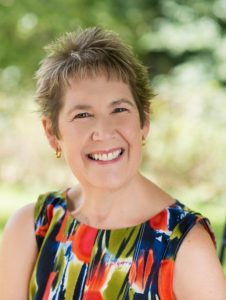
Kelly has lived her whole life in Kentucky. She and her husband, Jeremy, have an almost-four-year-old son, who, born during a deployment, was diagnosed with tracheoesophageal fistula (EA/TEF). She has always felt a calling to serve others and is living the dream as an Army wife, middle school teacher, and now, as an encourager to those who are living a dream different than they had planned.

Author Jolene Philo
Archives

Categories

Subscribe for Updates from Jolene

Related Posts

Fighting Weariness at the Start of the School Year

Fighting Weariness at the Start of the School Year

Fighting Weariness at the Start of the School Year

Fighting weariness as a new special needs homeschool year begins makes the whole endeavor feel impossible. That sensation is dragging down guest blogger Lisa Pelissier as she helps her daughters deal with unexpected mental health challenges. Read on to discover how she’s finding the strength to keep going.

I have not been looking forward to homeschooling this year because last year was hard. I was working a lot. My girls were sick with depression, fatigue, stomachaches, anxiety, and whatever else they had. I had homeschooled four kids simultaneously for years. Now, two have graduated—the one with autism and the one with dyslexia and PANS. The hard part was supposed to be over. These were supposed to be the easy years.

But they aren’t.

As soon as my son with dyslexia and PANS graduated, the girls got sick with mental health conditions and fatigue—probably long covid, but there’s no way to prove it. Instead of looking forward to teaching, it feels like I’m going to war.

I know I’m not alone.

Other parents are facing the same sorts of battles and fighting weariness as a new special needs homeschool year begins. How do you teach complicated subjects to students who have difficulty focusing? How do you get your child excited about ancient history when their stomach hurts and they’re too tired to get up? How do you infuse them with your own enthusiasm when you… don’t have any?

Here’s my plan to get me through this tough season:

1) Remember the goal. The goal is not “finish algebra” or “make sure they know all the state capitals.” The goal is to raise adults who love God, love others, act with integrity, and work hard. If all we accomplish this year is facing adversity in a steadfast manner, trusting God to provide and protect, then they’ll have learned a more valuable lesson than they would if they just memorized the periodic table.

2) Enjoy them. Even when illness or disability seems to loom large, it’s never bigger than who my daughters are. They are delightful people. I can love them and love being with them, even when trying to make school stick in their brains is too much.

3) Tick off the right boxes. I don’t remember much of what I learned in high school. I don’t think most people do. The things my daughters will remember are the friendships they make, the special times when something touches their hearts and changes their outlook, and the lessons God imparts to them over the years.

4) Remain hopeful. My son who suffered from PANS was very sick for over four years. Today, he is healthy and is doing wonderfully well. My son with autism has struggled with the transition to adulthood, but he’s a good man and a hard worker. He will get there. And so will the girls. God is good, and His plans will be accomplished—even if they don’t look like the future we dreamed of having.

Isaiah 40:28-31 says this:

Have you not known? Have you not heard?
The Lord is the everlasting God,
the Creator of the ends of the earth.
He does not faint or grow weary;
his understanding is unsearchable.
He gives power to the faint,
and to him who has no might he increases strength.
Even youths shall faint and be weary,
and young men shall fall exhausted;
but they who wait for the Lord shall renew their strength;
they shall mount up with wings like eagles;
they shall run and not be weary;
they shall walk and not faint. (ESV)

I am weary. I am exhausted. But God is not. He is my strength.

Do you like what you see at DifferentDream.com? You can receive more great content by subscribing to the monthly Different Dream newsletter and signing up for the daily RSS feed delivered to your email.

Photo by Alex Beholder on Unsplash

Lisa Pelissier

By

Lisa Pelissier lives in Oregon where she is a homeschool mom and author of four middle-grade fiction novels as well as a YA fantasy novel. Lisa owns SneakerBlossom Books, offering Christian, classical homeschool Study Guides and curriculum. She blogs at Eleventh Willow, offering encouragement for Christians parenting the mentally ill. She also works as a freelance copy editor, an artist, and a marketing editor. In her spare time Lisa enjoys playing the piano and fretting about things over which she has no control. 

Author Jolene Philo

Archives

Categories

Subscribe for Updates from Jolene

Related Posts

Hello! Means the World to Those with Disabilities and Special Needs

Hello! Means the World to Those with Disabilities and Special Needs

Hello! Means the World to Those with Disabilities and Special Needs

Hello means the world to those with disabilities and special needs. In this post, guest blogger Mark Arnold describes what a greeting reveals about the person who’s saying hello.

You can tell a lot about a place and its people from the way they greet a child or young person with a disability or special needs. I’ve visited lots of children’s and youth groups over the years, and one thing I’ve always looked for is the response of the leaders when a child or young person with additional needs arrives. Their reactions typically fall into one of two categories:

Angry face

1. Something between dejection and horror: Leaders see the person arrive and look at each other, their expressions communicating disappointment. They tend not to approach or welcome the child, ignoring them instead. There may be audible comments that reinforce their sense of regret.


Smiling faces

2. Something between encouragement and delight: Leaders see the person arrive, smile and head towards them to greet them They refer to them by name, ask how they are, and say they’re pleased to see them. They guide the child to join in an activity, or to a designated leader who can support them.

The child usually understands which response they receive, and that determines how they will respond to the leaders for the rest of the session.

There are many reasons why leaders fall into one of the two categories. Let’s look at some of them.

Negative responses often come from a lack of understanding, little or no training, a lack of volunteers, and inflexibility to change. Changing these responses is the responsibility of church leaders and the church community as a whole. If the most vulnerable and marginalized in our society are unwelcome, then the church has deeper issues to grapple with. Frazzled children’s or youth workers might be the ones who look bad, but behind them are church leaders who won’t adequately invest in children’s and youth ministries.

Positive response often comes from well supported and equipped team members who have been trained and have enough staff and volunteers to provide the level of support needed by a child with additional needs. Behind these teams there is usually a supportive church leader or leadership team that value children and youth ministry. They invest in finances, people, and prayer. They broadcast the message that everyone belongs there, which the gospels show is what Jesus had in mind.

In this short video clip, Philippa, who was born blind, shares some of her experiences in church and the power of saying hello. https://www.youtube.com/watch?v=gJcUpczxCp0

Which of the two responses resonates most closely with the reality of your church? If it is the negative one, work to bring about positive change so that every child and young person is welcomed and fully included. If it is the positive one, think about how you can reach out to struggling churches to help them.

Welcome heart

As Will Rogers once said, “You never get a second chance to make a first impression.”

Churches only get one shot, one opportunity to show those with disabilities and special needs how valued and loved they are. Let’s not blow our chance. Instead let’s do all we can to be the difference for children and young adults who journey with us.

A friendly hello means the world to those with disabilities and special needs, so let’s start there.

Do you like what you see at DifferentDream.com? You can receive more great content by subscribing to the monthly Different Dream newsletter and signing up for the daily RSS feed delivered to your email.

Header image © Photo by Vladislav Klapin on Unsplash; Yellow smiley faces © Photo by Tim Mossholder on Unsplash
Angry face © Photo by Andre Hunter on Unsplash; Red heart © Photo by Nick Fewings on Unsplash

By

Mark Arnold is the Additional Needs Ministry Director at Urban Saints, a leading national Christian children’s and youth organization. He is co-founder of the Additional Needs Alliance, a national and international advocate for children and young people with additional needs or disabilities. Mark is a Churches for All and Living Fully Network partner, a member of the Council for Disabled Children and the European Disability Network. He writes an additional needs column for Premier Youth and Children’s Work (YCW) magazine and blogs at The Additional Needs Blogfather. He is father to James, who has autism spectrum condition, associated learning disability, and epilepsy. To find out more about how Mark’s work can help you, contact him at: marnold@urbansaints.org or @Mark_J_Arnold

Author Jolene Philo

Archives

Categories

Subscribe for Updates from Jolene

Related Posts

Looking for Lessons after Hard Times

Looking for Lessons after Hard Times

Looking for Lessons after Hard Times

Looking for lessons after hard times is not what blogger Janae Copeland thought she would be doing this summer. Not after the increasingly good health her daughter Clark had been enjoying for several years. Yet, Janae has found much to be grateful for and to pass along to her daughter and you.

A year ago, I composed a post for the Different Dream blog entitled What a Difference a Decade Makes. In it, I outlined all the differences in the life of our daughter, Clark (and our whole family) since the early years of her life with EA/TEF. That version of me was in a place of reflection. My distanced recollections were a little blurry around the edges, not nearly as piercing as they had been ten years earlier. Little did that version of me know that in less than a year I would be thrust so forcefully back into that reality that it would take a few days to (literally) get my feet back under me again.

Let me explain…

Although Clark always had continued difficulties with eating and recurrent respiratory infections, we were eventually convinced by her doctors—and began to believe ourselves—that this was her baseline, the best she would be. We were told to be patient, that improvement would come with growth, and that things would eventually level out. And most of the time, that was true.

Except when it wasn’t.

In January and February of 2023, it REALLY wasn’t! Those months were some of the darkest days we’ve had in a while. Round 2 of COVID, which had been of little consequence the first time, was quickly followed by pneumonia that just wouldn’t give up. Now living in a new city, we commenced our journey anew, prepared to recite the facts of her early diagnoses, procedures, struggles, and histories to new doctors. Fortunately, every medical professional we encountered did all the things we so desperately needed them to do. They believed, they listened, and they looked at her from all angles with fresh eyes. By mid-May, we had an answer. Clark had another tracheoesophageal fistula.

No biggie, you might be thinking. TEF kids have recurrences often, They’re not terribly out of the norm. But hers wasn’t a recurrence. It was congenital. It had been there from the beginning and had never been detected, presumably because of location, position, and size. When we got the results, I couldn’t find my physical balance for a few days. But I had to quickly transition to action mode, and I did. Within days, Clark was scheduled for surgery at a hospital four states away.

As I write, Clark is now officially TEF-free for the first time in her life. We’ve had to adjust to our new reality. As her mom, I have had to rewrite her story. Until a few months ago, my spiel was “Clark was born with EA/TEF Type C, repaired at Day 2”. Now, the truth is a bit more complex. She’s an EA/TEF Type D, repaired at Day 4,089.

Even Clark is having a bit of an identity crisis. A month after the surgeries she began saying things like, “I can’t make my dragon sound anymore, Mom” and “I don’t really know how to cough now.”

As in the past, I am looking for lessons after hard times. Admittedly, this time was the hardest for me yet. Before, I took comfort in the fact that we bore the brunt of Clark’s early medical procedures for her, that her young age would protect her from the trauma and memories. Now, we were processing them with her instead of for her. I couldn’t take the burden from her again. So what have I learned?

  • Clark still lives up to her name. She is our Supergirl—brave, aware, and even on her hardest days, still looking out for everyone else.
  • God’s provisions are ever present and sufficient. As we had seen before, there were gifts and graces at every turn.
  • I have to give myself grace instead of beating myself up for not pushing harder when I suspected that there was more going on, when pushing could have saved her from years of needless suffering.
  • Only God knows the plans he has for Clark, plans that will help and not harm her, plans for a prosperous future.
  • Perhaps this time the lessons were as much for Clark as they were for us. My hope is that she will be able to look back one day and know how this journey was designed to bring her toward her purpose. That this is just a small part of what makes her special. That with God’s grace and the support of everyone that loves her, she can continue to grow into the brave and unique soul she was born to be. And that looking for lessons after hard times will bring her closer to her creator.

Do you like what you see at DifferentDream.com? You can receive more great content by subscribing to the monthly Different Dream newsletter and signing up for the daily RSS feed delivered to your email.

Photo by Diego PH on Unsplash

Janae Copeland

By

Janae Copeland is a wife and mother of 3 daughters. She lives in Jacksonville, NC where she is a K-5 music educator. She became a Different Dream mom when her oldest daughter, Jayda, was born in 2002 with hydrocephalus and cerebral palsy. Nine years later, her daughter Clark was born with EA/TEF and right microtia/atresia. Janae is grateful to have been entrusted with the care all 3 of her special daughters and seeks out opportunities to help other young mothers who may need support as they begin these same journeys with their own blessings from God.

Author Jolene Philo

Archives

Categories

Subscribe for Updates from Jolene

Related Posts

Trauma vs. Trust

Trauma vs. Trust

Trauma vs. Trust

Parenting isn’t easy. And it’s even harder when it’s combined with special needs and the trauma that brings. Guest blogger Valeria Conshafter explains how she walks the path of learning to trust in God in the midst of parental PTSD.

Recalling my daughter’s health challenges with Esophageal Atresia/Tracheoesophageal Fistula (EA/TEF) has been a struggle for me. The multiple life-threatening incidents, endless nights pacing around hospital hallways, the sounds of beeping monitors, and the smells the mind will never forget will be forever ingrained in my core.

For years, I kept trying to figure out a way to live with the struggle of PTSD. For many years, I felt lost in my own disoriented thoughts, lacking belief there was an exit, let alone a possible way to live without trauma. My therapist once said that living with trauma is to be constantly in a watchful mode, being trapped and looking at survival through a peephole.

I felt trapped inside a box closed tight above my head. The peephole allowed a glimpse of light that was too intense to look at. I wanted to see what was out there. There were days when I attempted to get out of the box and peeked around until I felt an unexpected desire to step out for a bit. I would step out of the box, pretending I could handle it. I’d stay out for a while. Some days were better than others. But soon enough back I was inside that trap.

Thankfully, after countless sessions of therapy and deep spiritual and emotional work, I found freedom from this trap that is living with trauma and found trust instead. Practically speaking, this is what I have learned when life reminds me of my trauma.

First, I trust God. I keep reminding myself and saying it out loud when I am triggered by random events that I have no control over life’s circumstances. I have no control over my daughter’s health or future. God does. Even when I think that I am in control over all the vitamins I give her, the food choices I give her, choosing all her doctors, and deciding all medical interventions, ultimately what I am doing is just a “protective” measure, perhaps for my own sake. But God, above all things, is the one in charge of every sickness, every doctor’s visit, every possible outcome. So, I say this out loud or write it down in my journal—God is in control, not me.

The next thing is that I must trust the process. After I put my trust in God, trusting the process should be easier. Yet life itself can challenge your trust, making you question yourself and your faith! You may ask yourself—Is there something else I should do? Should I really let go and let God? These and other questions will most likely make you doubt the process, and soon enough you are trapped again. Doubts and fear settle in quickly and put you in an anxious and desperate mindset. So I again will say these words out loud or write them down—God is in control, not me. I trust the process.

Finally, I trust her—my daughter! She is 15 now. I must trust her! When she is sick—for example, with a simple cold—and has that horrible, loud, barking cough typical of tracheomalacia babies, I stop, breathe, say my trust phrases, and I look at her. She is fine. There is a lot of self-talk in this part of the process which is helpful to distract my mind. She may be sick and have a bad cough (a trigger for me), but she is breathing. So I look at the facts. She is handling it. She is more mature now and understands the cough, the asthma, the breathing… She is learning to deal with it alone. Because for her this is her future. Her life. The life I entrusted to God’s hand. I then repeat these words or write them down—God is in control, not me. I trust the process. I trust her.

The work is hard. The road to healing is long. But as I watch my daughter grow and go onto her own path of independence, I believe more and more that life after trauma can be fulfilling and happy too.

I want to rejoice from all the blessings I have today. I want to be happy about tomorrow and not so worried. I want to expect the best and not the worst. I want to move on and away from that box that trapped me and prevented me from enjoying life for so long. Trauma is my past and not my future. This is what I have learned and hope it helps you too.

Do you like what you see at DifferentDream.com? You can receive more great content by subscribing to the monthly Different Dream newsletter and signing up for the daily RSS feed delivered to your email.

By

Valeria Conshafter is a native of Brazil. She has a background in Counseling Psychology and currently works for a women’s organization providing emotional and spiritual support to women all over the country. She loves writing, cooking, and praying for her family and friends. Valeria lives in Houston, Texas, with her husband Todd, their 15-year-old daughter, Sofia, and their two Standard Poodles, Chocolate and Oreo. You can find Valeria on Instagram, Twitter, and Facebook.

Author Jolene Philo

Archives

Categories

Subscribe for Updates from Jolene

Related Posts

God Loves You and has a Wonderful Plan for your Life

God Loves You and has a Wonderful Plan for your Life

God Loves You and has a Wonderful Plan for your Life

Have you ever asked yourself what God is doing with your life? Why did the things happen to you that did? Guest blogger Lisa Pelissier is here with a reminder that God never promised an easy road.

It was a popular Christian saying during my college years. The Four Spiritual Laws. The presentation of the gospel was always supposed to start with the phrase “God loves you and has a wonderful plan for your life.” The implication was, if a person would accept Jesus into their heart, then their life would be full of goodness and light.

For most of us, if not all, this has not been the case. Life has been full of pain. Gut-wrenching pain. For me, in the context of parenting my mentally ill children, life has been full of hardship. It’s been full of ruined lives, hearts turning from God in confusion, and darkness instead of light.

Does God promise believers happy lives?

Those repeating the cliché will cite verses like Psalm 37:4 “Delight yourself in the Lord; and He will give you the desires of your heart.” Or Jeremiah 29:11 “For I know the plans that I have for you,’ declares the Lord, ‘plans for welfare and not for calamity to give you a future and a hope.’ ”

They ignore verses like I Peter 4:12-13 “Beloved, do not be surprised at the fiery ordeal among you, which comes upon you for your testing, as though some strange thing were happening to you; but to the degree that you share the sufferings of Christ, keep on rejoicing, so that also at the revelation of His glory you may rejoice with exultation.” Or the beginning of Romans 5 where the Bible indicates that suffering is the source of good character. Or II Corinthians 12:10 “Therefore I am well content with weaknesses, with insults, with distresses, with persecutions, with difficulties, for Christ’s sake; for when I am weak, then I am strong.” Verses that point forward to continual suffering will not be good selling points for Christianity.

But they are as true as the others.

I’ve seen hardship and suffering ruin lives. My brother has not been able to have a family. He cannot work. He spends a lot of time just being still due to schizophrenia and the effects of the medications. My husband is in constant pain, mentally and physically. My son has similar issues. So does my daughter. Where is the “wonderful plan” for their lives?

Truth be told, the “wonderful plan” schtick is not Biblical. The Bible does not promise us happy lives. It does not promise us easy lives. It does promise trouble, sorrow, suffering, and grief.

In my grumpy, sinful heart, I wonder how so many people seem to escape pain and trouble. They are able to work. Their children are healthy, married, having families of their own. Why them and not me? Why is my family sick and not theirs? Where is God in my life? Why isn’t He blessing me and my family?

Here are the things I try to remember when I fall into such despair.

1) I am not the center of God’s plan

God may not have a pain-free plan for my life, but God does have a wonderful plan, and He will use me to accomplish it. He will use my pain and suffering to bless others, to bring hope to others, to bring word of His salvation to others.

2) God did not promise to prevent suffering. He did promise to walk through suffering with me.

Psalm 23:4 says “Even though I walk through the valley of the shadow of death, I fear no evil, for You are with me.” The valley of the shadow of death is inevitable. But so is the presence of God. Romans 8:38-39 says “For I am convinced that neither death, nor life, nor angels, nor principalities, nor things present, nor things to come, nor powers, nor height, nor depth, nor any other created thing, will be able to separate us from the love of God, which is in Christ Jesus our Lord.” Trials and trouble, yes. But God is with me. Even the verse “Jesus wept,” (John 11:35) testifies to the presence of God in times of trouble. Jesus did not prevent Lazarus from dying, but he wept with the mourners. God is with me. God is with you.

3) This world is not my home.

God does promise us good things in His Word. These good things, however, are not primarily obtained in this lifetime. The world to come will be the fulfillment of His promises toward His people. Philippians 3:20 says, “For our citizenship is in heaven, from which also we eagerly wait for a Savior, the Lord Jesus Christ.” In Revelation 21:4, John describes his vision of Heaven: “He will wipe away every tear from their eyes; and there will no longer be any death; there will no longer be any mourning, or crying, or pain; the first things have passed away.” It is this view I must cling to.

And there is purpose even in my pain. I am called to use it to bless others. II Corinthians 1:3-4 says, “Blessed be the God and Father of our Lord Jesus Christ, the Father of mercies and God of all comfort, who comforts us in all our affliction so that we will be able to comfort those who are in any affliction with the comfort with which we ourselves are comforted by God.” I can bring whatever God gives me, and offer it up to someone else, a testimony to the faithfulness of God.

God is merciful. He gave us Himself and He gave us each other.

Do you like what you see at DifferentDream.com? You can receive more great content by subscribing to the monthly Different Dream newsletter and signing up for the daily RSS feed delivered to your email.

Photo by ROB WILSON on Unsplash

Lisa Pelissier

By

Lisa Pelissier lives in Oregon where she is a homeschooling mother of four (three with disabilities) and author of four middle-grade fiction novels as well as a YA fantasy novel. Lisa owns SneakerBlossom Books, offering Christian, classical homeschool Study Guides and curriculum. She blogs at Eleventh Willow, offering encouragement for Christians parenting the mentally ill. She also works as a freelance copy editor, an artist, and a substitute teacher. In her spare time Lisa enjoys playing the piano and fretting about things over which she has no control. 

Author Jolene Philo

Archives

Categories

Subscribe for Updates from Jolene

Related Posts