How Can an EA/TEF Parent’s Anxiety Be Held in Check Before their Child Starts School?

How Can an EA/TEF Parent’s Anxiety Be Held in Check Before their Child Starts School?

How Can an EA/TEF Parent’s Anxiety Be Held in Check Before their Child Starts School?

How can an EA/TEF parent’s anxiety be held in check before their child starts school? Karena Skibinski began asking herself that question several months before her son started preschool. In today’s post, which is part of Different Dream’s ongoing series for EA/TEF Awareness Month, Karena writes about six actions that helped her the most. She hopes they will help you too.

Three years ago, we were still in the thick of our NICU stay with our son, Lincoln. Shortly after he was born, he was rushed to the nearest children’s hospital (which, turns out, is one of the best in the nation) and was then diagnosed with Esophageal Atresia (EA), Type C. Two major surgeries, one G-tube, and 87 days later, he was discharged. His first 18 months were a blur and were filled with various doctor appointments, dilations, scopes, and various therapies.

Fast forward to now. He turned 3 this past October, and things have been going well. Instead of all of those appointments, our days are filled with nature walks, Lego, potty training, playing with his big brother, and trying new foods. Lincoln reached a big milestone in August. He started preschool. He attends the same preschool as his big brother, so he was somewhat familiar with the building, some of the teachers, and the general morning/pickup/drop off routine.

I was a different story. Aside from when Lincoln was discharged from the NICU, his starting preschool was what I was most anxious about. This would be the first time he’d be in the care of someone else, as we made it work for me to stay home with him those first few years. I had so many questions. How would he adjust? How could the teachers keep an eye on him with so many other kiddos in the classroom? What about the sickness that inevitably comes along with starting school? All of these questions—and about 100 more—were swirling around in my mind at least a few months before the first day.

Here are 6 things that made the transition to preschool easier for our family.

  1. Therapy for myself: I’ve been in therapy for several years now, and it’s been one of the best things for my overall well-being. I am a huge advocate for therapy! It’s truly wonderful to have a scheduled space with a trusted therapist to continue processing the trauma related to Lincoln’s birth and the fears that go along with raising a medically complex child.
  2. Implementing a solid general routine: This is foundational for any kiddo, and there is lots of research supporting the efficacy of a good routine. It builds predictability, which in turn builds confidence and space to learn, explore, and grow.
  3. Meeting with the teachers beforehand, and ongoing open communication: Our school gave us the opportunity to meet with Lincoln’s teachers a couple weeks before school started. We also filled out paperwork related to general topics about Lincoln (e.g. what he likes, what he doesn’t like, etc.) as well as about his medical background, and a general mealtime plan that we went over face-to-face. This gave me peace of mind!
  4. Getting a copy of the breakfast/lunch/snack menu and being in touch with the school chef: We went through the menu and identified foods that Lincoln may need modified or substituted (e.g. carrots, grapes). This is kept in the kitchen.
  5. Providing a copy of this informational handout as well as a document that contained all of Lincoln’s medical background/medications: I found an outline similar to this in one of the EA/TEF Facebook groups that I am in. I emailed the completed document to the school about 4 months prior to Lincoln starting school. It was a way to get communication started about his condition. I’ve provided a short, one-page document with Lincoln’s medical background and medications. It is kept in his file at school. Should EMS ever need to be involved, the document provides them with quick information related to his medical needs.
  6. Providing “just-in-case” items: I’ve heard some families provide yogurt for their EA/TEF kiddo to have during lunch time, but we’ve only provided a small can of Coke for the teachers in case of a “stuckie.” Coca Cola has been most beneficial for Lincoln in that situation.

Lincoln’s been in half-day preschool 4 days a week for one whole semester now, and things have been better than I could’ve imagined. Luckily we have had no issues, and going to school has had a positive impact on his overall development and our family dynamics as well!

Do you like what you see at DifferentDream.com? You can receive more great content by subscribing to the monthly Different Dream newsletter and signing up for the daily RSS feed delivered to your email.

Photo by Mourizal Zativa on Unsplash

By

Karena Skibinski is a mother and occupational therapist. After taking a few years off to be home with her children, she recently returned to working weekends in a hospital setting. It’s been such a blessing to her and her family. When she’s not busy running around with her two boys (Lennox is 5 and Lincoln is 3) or working, you can find her in the kitchen trying new recipes, going on long walks with her two pups, or taking an afternoon nap. Through her work, her mission is to bring more awareness to EA/TEF and to provide reassurance to EA/TEF families that they aren’t alone.

Author Jolene Philo

Archives

Categories

Subscribe for Updates from Jolene

Related Posts

Special Needs Homeschooling: The Ups and Downs

Special Needs Homeschooling: The Ups and Downs

Special Needs Homeschooling: The Ups and Downs

Special needs homeschooling is full of ups…and downs. Guest blogger Lisa Pelissier knows this from experience. In this post she describes her adventures in homeschooling, which began long before she discovered she had joined the special needs homeschooling tribe.

I wanted to homeschool before I even had children. I didn’t even need to make a list and check it twice to weigh one side against the other.

I wanted to raise my kids to love God.
I wanted to spend time with them and have them spend time with each other.
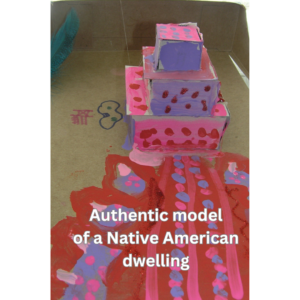
I wanted to do all the fun things you can do with little kids, like growing bean seeds, dressing up like Ancient Romans, and making Native American huts out of hot glue and cardboard for authenticity, of course. (See image below—lol).

I dove in, not without some fear because I didn’t know what I was doing or how it was going to turn out.

When we began homeschooling, I was a mom of two little boys, then almost five years old and eighteen months. It didn’t take me too long to figure out that homeschooling was harder than it looked. Entertaining a baby while trying to teach Latin and Greek to a disinterested four-year-old (I was ambitious in those days) kept me on my toes.

But there was something else going on, too. Every subject was a battle. Once my son got used to addition, then came subtraction. It was something new, and therefore something that must be rejected with howls of misery and a tantrum on the floor.

When I tried to teach him to spell, he told me he didn’t really care how other people spelled things. He was going to do it his way. It took me five years of struggle before I convinced him that it might be nice if other people could read what he wrote.

When he was nine—and I had a baby girl and another on the way, we got his autism diagnosis. My construct of a happy homeschooling family fell apart. Nothing had changed. But, if my son had anything to say about it, nothing ever would. He was going to protest every new thing I taught him. He was going to be difficult. And he was. He’s a lovely human being. But he’s a pain in the butt to teach.

When my second boy was twelve, he got sick with PANS (see my previous post here for more information). My world fell apart for a second time. By the time he graduated from high school, he was on his way to good health, at last. Then my girls got sick. In the midst of their difficulties came the divorce. It’s not been an easy road for any of us.

But through all the illnesses, both neurological and physical—depression, anxiety, dyslexia, dysgraphia, dyscalculia, OCD, autism, PANs, and more—homeschooling has been a blessing. I’ve been able to tailor our studies to accommodate my kids’ disabilities.

One of them needed everything read aloud—and I mean everything—to him all the way through school. So we read aloud.

One needs to travel the schooling path more slowly and more independently, so I’m able to scale back.

It doesn’t matter if they graduate on schedule or much later than their same-age peers. It matters that they’re still making progress. And they are.

Has it been hard on me? Absolutely. Would I change it? Uh… some days I want to move to Italy and never look back. But the rest of the time, I’m grateful for the journey we’ve had, as I get to know my kids better, to understand their struggles, and to understand myself as we continue to navigate the ups and downs of special needs homeschooling.

Do you like what you see at DifferentDream.com? You can receive more great content by subscribing to the monthly Different Dream newsletter and signing up for the daily RSS feed delivered to your email.

Photo by Aaron Burden on Unsplash


By

Lisa Pelissier lives in Oregon where she is a homeschool mom and author of five middle-grade fiction novels, the second-grade Monsters series, and a YA fantasy novel. Lisa owns SneakerBlossom Books, offering Christian, classical homeschool Study Guides and curriculum. She blogs at Eleventh Willow, offering encouragement for Christians parenting the mentally ill. She also works as a freelance copy editor, copy writer, and a marketing editor. In her spare time Lisa enjoys playing the piano and writing books.

Author Jolene Philo

Archives

Categories

Subscribe for Updates from Jolene

Related Posts

Fighting Weariness at the Start of the School Year

Fighting Weariness at the Start of the School Year

Fighting Weariness at the Start of the School Year

Fighting weariness as a new special needs homeschool year begins makes the whole endeavor feel impossible. That sensation is dragging down guest blogger Lisa Pelissier as she helps her daughters deal with unexpected mental health challenges. Read on to discover how she’s finding the strength to keep going.

I have not been looking forward to homeschooling this year because last year was hard. I was working a lot. My girls were sick with depression, fatigue, stomachaches, anxiety, and whatever else they had. I had homeschooled four kids simultaneously for years. Now, two have graduated—the one with autism and the one with dyslexia and PANS. The hard part was supposed to be over. These were supposed to be the easy years.

But they aren’t.

As soon as my son with dyslexia and PANS graduated, the girls got sick with mental health conditions and fatigue—probably long covid, but there’s no way to prove it. Instead of looking forward to teaching, it feels like I’m going to war.

I know I’m not alone.

Other parents are facing the same sorts of battles and fighting weariness as a new special needs homeschool year begins. How do you teach complicated subjects to students who have difficulty focusing? How do you get your child excited about ancient history when their stomach hurts and they’re too tired to get up? How do you infuse them with your own enthusiasm when you… don’t have any?

Here’s my plan to get me through this tough season:

1) Remember the goal. The goal is not “finish algebra” or “make sure they know all the state capitals.” The goal is to raise adults who love God, love others, act with integrity, and work hard. If all we accomplish this year is facing adversity in a steadfast manner, trusting God to provide and protect, then they’ll have learned a more valuable lesson than they would if they just memorized the periodic table.

2) Enjoy them. Even when illness or disability seems to loom large, it’s never bigger than who my daughters are. They are delightful people. I can love them and love being with them, even when trying to make school stick in their brains is too much.

3) Tick off the right boxes. I don’t remember much of what I learned in high school. I don’t think most people do. The things my daughters will remember are the friendships they make, the special times when something touches their hearts and changes their outlook, and the lessons God imparts to them over the years.

4) Remain hopeful. My son who suffered from PANS was very sick for over four years. Today, he is healthy and is doing wonderfully well. My son with autism has struggled with the transition to adulthood, but he’s a good man and a hard worker. He will get there. And so will the girls. God is good, and His plans will be accomplished—even if they don’t look like the future we dreamed of having.

Isaiah 40:28-31 says this:

Have you not known? Have you not heard?
The Lord is the everlasting God,
the Creator of the ends of the earth.
He does not faint or grow weary;
his understanding is unsearchable.
He gives power to the faint,
and to him who has no might he increases strength.
Even youths shall faint and be weary,
and young men shall fall exhausted;
but they who wait for the Lord shall renew their strength;
they shall mount up with wings like eagles;
they shall run and not be weary;
they shall walk and not faint. (ESV)

I am weary. I am exhausted. But God is not. He is my strength.

Do you like what you see at DifferentDream.com? You can receive more great content by subscribing to the monthly Different Dream newsletter and signing up for the daily RSS feed delivered to your email.

Photo by Alex Beholder on Unsplash

Lisa Pelissier

By

Lisa Pelissier lives in Oregon where she is a homeschool mom and author of four middle-grade fiction novels as well as a YA fantasy novel. Lisa owns SneakerBlossom Books, offering Christian, classical homeschool Study Guides and curriculum. She blogs at Eleventh Willow, offering encouragement for Christians parenting the mentally ill. She also works as a freelance copy editor, an artist, and a marketing editor. In her spare time Lisa enjoys playing the piano and fretting about things over which she has no control. 

Author Jolene Philo

Archives

Categories

Subscribe for Updates from Jolene

Related Posts

Managing Mixed Emotions When Our Kids with Disabilities Go Back to School

Managing Mixed Emotions When Our Kids with Disabilities Go Back to School

Managing Mixed Emotions When Our Kids with Disabilities Go Back to School

Managing mixed emotions when our kids with mixed emotions go back to school can be, well, emotional. Guest blogger Kristin Faith Evans is experiencing a wide gambit of those emotions this August and is here to share her best feelings-management techniques with you today.

Sending our children with special needs back to school can raise different emotions in us. Some of these emotions can cause pain, stress, or guilt. Let’s examine some emotions commonly experienced by disability parents and how to process them in healthy ways.

Grief: As a special needs parent, you will likely experience a special kind of chronic grief throughout your child’s life, and the start of the school year can trigger a wave of sorrow. With this new milestone, you may be sad that your child is developmentally behind other children, is not as independent, or has difficulty making friends.

Fear: As special needs parents, we are sometimes afraid that other kids will treat our children meanly or take advantage of them. We might fear that our children will have a medical emergency or become injured, and heaven forbid, that they might be mistreated by their teachers or other school professionals. It makes sense that you might be experiencing some anxiety and feeling overprotective as your child begins a new school year.

Jealousy: Watching other parents drop off their typically developing, seemingly healthy children might spark some envy, maybe even anger in your heart. To be honest, attending the open house night and watching all the other thirteen-year-old girls huddle together sent a pang of jealousy throughout my body. We might even fantasize about having a “normal life” at times.

Managing Your Hard Emotions

Parents caring for children with special needs experience those hard emotions. It’s normal to feel this way. Yet, becoming stuck in them can become unhealthy. These steps can help you process your feelings:

  1. Reflect on the past couple of days. Look for reasons why you might be feeling this way. Sometimes there’s a specific event that prompts our emotions, other times it’s difficult to identify the trigger.
  2. Allow yourself to feel and grieve. Have a good cry. Observe yourself experiencing your difficult emotions. Let yourself just be for a bit. Be tender, supportive, and accepting of your painful emotions.
  3. Reframe your situation. Is there a way to look at your circumstances differently or more hopefully? If not, that’s okay too.
  4. Return to now. Come back to the present. Focus fully on your day, one moment at a time.

Managing Positive Emotions

Sometimes even positive emotions can be scary, but I encourage you to let go of the fear of positive emotions even as you honor your hard ones.

Hope: Choose an optimistic outlook, expecting a good year, and focus on how your child will grow.

Joy and Gratitude: Celebrate your child’s season and express thankfulness for their life. List out your child’s amazing qualities and all the ways that they’ve made progress so far.

I pray blessings on your children as they begin a new school year, and blessings on you as you begin managing mixed emotions when our kids go back to school. You’re invited to use the comment box to share what you’re experiencing as your child goes back to school.

Do you like what you see at DifferentDream.com? You can receive more great content by subscribing to the monthly Different Dream newsletter and signing up for the daily RSS feed delivered to your email.

Photo by Tengyart on Unsplash

By

Kristin lives with her husband, Todd, and their two children in the Nashville, TN area. She is an author, speaker, mental health counselor, and a mom of two children with rare genetic disorders and complex needs. Her greatest passion is teaming up with her husband to empower other parents of children with disabilities, mental health disorders, and medical complications. She hopes that you may find encouragement and support on their website www.DisabilityParenting.com

Author Jolene Philo

Archives

Categories

Subscribe for Updates from Jolene

Related Posts

How Much Is Too Much to Tell Teachers about my Child’s Disability?

How Much Is Too Much to Tell Teachers about my Child’s Disability?

How Much Is Too Much to Tell Teachers about my Child’s Disability?

How much is too much to tell teachers about my child’s disability? Maggie Gale, today’s guest blogger and mom to a daughter with medical special needs, asked that question at the start of every school year. Even though she was a teacher herself, she spent much time and energy trying to answer that question. Eventually, she came up with 3 guidelines. Today she’s sharing them with you.

And I said to the man who stood at the gate of the year:
“Give me a light that I may tread safely into the unknown.”
Minnie Louise Haskins, 1908

Some things haven’t changed since 1908. When we stand on the brink of the new and unknown, it’s human nature to feel fearful and crave more light to help us move forward.

For parents with children in school, or those who, like me, work in a school themselves, the year has two gates. The first one is in January, as the Christmas decorations gradually lose their luster. We go through another gate in August or September, as summer vacation painfully draws to a close and the new school year unfolds.

Here we are again, edging towards that gate. The structure-free days of vacation can be a time of niggling worries as we anticipate the future, whatever the angle we’re approaching it from.

Children are wondering, “Will I make new friends?”

Parents are questioning, “What will my child’s teacher be like?”

Teachers are thinking, “How will my class be this year?”

For parents of children with special needs, there can be deeper, more complicated questions:

Am I doing the right thing, sending my child there?

Will the teacher understand what I’m saying?

Is my child safe?

My daughter was born with EA/TEF resulting in severe swallowing difficulties. New teachers, new classes, and new schools called for letters detailing her medical condition. Sometimes I felt I was writing into a void—Was my letter stored away in a file somewhere, or had it been read and understood?

  • How could I raise these issues with busy teachers without coming across as overprotective?
  • How could I be really sure that the non-medical teacher grasped the concept that when food was stuck in her esophagus, it meant a complete blockage—no eating or drinking at all, until it was removed, surgically if necessary?
  • How much is too much to tell teachers about my child’s disability?

After I became a teacher, I realized how important it is to communicate with the school with transparency and honesty but not with too much information. I also realized how helpful it is when a parent appreciates how many issues teachers juggle on a daily basis along with the specific needs of the child with special needs. Now, with 19 years of teaching experience, I suggest these guidelines:

  • Keep it open. Explain the issue by sending a leaflet or a website that explains your child’s specific problems. In this way, you will take the mystery out of it and answer unspoken questions lurking in the minds of children or teachers: Can I catch this? Will it ever get better? Why was he or she born this way?
  • Keep it matter of fact. Emotion is understandable but it can distract. We need all the focus to be on the child’s success.
  • Keep it succinct. You might be an expert on your child’s specific case, but what does the teacher actually need to know? Appreciate that teachers are balancing 101 issues on a daily basis, so try to support them by sharing only what they need to know. This will help build the strong team of school and family that your child needs.

Minnie Louise Haskins continued the poem quoted above with these lines:

“Go out into the darkness and put your hand into the Hand of God.
That shall be to you better than light and safer than a known way.”
So I went forth, and finding the Hand of God, trod gladly into the night.
And He led me towards the hills and the breaking of day in the lone East.

Sending my daughter, with her specific medical condition, to a new school, new teacher, new class felt like treading into the dark unknown. Somehow or other, I found that Hand to hold onto. Despite the ups and downs of swallowing problems and esophagitis, my daughter made it successfully through her school life and emerged on the other side as a strong, independent young woman who can manage her challenges.

As your child goes through the school gate this fall, don’t forget that Hand holding yours and your child’s is better than light and safer than a known way.

Do you like what you see at DifferentDream.com? You can receive more great content by subscribing to the monthly Different Dream newsletter and signing up for the daily RSS feed delivered to your email.

Photo by Thomas Vogel on Unsplash

By

Maggi is a wife and mother of two daughters. She is a primary school teacher, having worked in Africa for 14 years before moving to the Middle East. Her passions are her animals and art. Her youngest daughter was born with tracheoesophageal fistula (TEF). This birth condition was to be the start of an arduous journey, impacting the whole family for several years. Through writing, she hopes to turn her experiences into encouragement for others on similar paths.

Author Jolene Philo

Archives

Categories

Subscribe for Updates from Jolene

Related Posts

Parenting in Light of Neurodiversity

Parenting in Light of Neurodiversity

Parenting in Light of Neurodiversity

Parenting in light of neurodiversity often occurs through trial and error. Today, Lisa Pelissier describes tips she’s learned while trial-and-error parenting her son who has high functioning autism.

My son has high functioning autism. He can pass. He seems “normal” to people who don’t know him well. But his thoughts are organized very differently. This was a challenge for both of us as we homeschooled. Traditional schooling methods had to be tweaked, adjusted, or thrown out altogether. Here are some differences that autistic people can encounter, and tips for dealing with them.

Difference #1: No Subterfuge

My son has no filters. He says what he thinks and he says it in plain words, with no underlying meaning behind them. What he says is what he means. And he expects others to do the same. This means he can miss out on the various subtexts of a conversation. Sometimes people convey a need for secrecy, a plea for help, a threat, or a promise with body language or with a subtle shift in the pacing and tone of their words. This is, for the most part, lost on my son.

Tip: Always say what you mean, and say it explicitly with words. Be clear and precise. Tell your child with words what you are feeling, especially if your feeling is directed toward your child—whether you’re proud of them, angry with them, pleased with them, or disappointed with them, don’t assume they understood your feelings from your tone and expression. If you notice others hinting at something, pick an opportune time to explain to your child what was going on.

Difference #2: Hyperfocus on One Thing to the Exclusion of All Else

When my son was about six, he woke up in a state of complete anger and frustration. It turns out he had dreamed about Care Bears. I understood, I told him, that Care Bears were not his ideal topic for dreamland, but why did that make him so angry? “Because I’m supposed to dream about trains!” Turns out, he dreamed about trains every single night. He felt betrayed by his mind’s brief excursion into another topic against his will. For the first ten years of my son’s life, all he thought about was trains.

Tip: If you can’t beat ‘em, join ‘em. Does he have to work on math? Math can be about trains. Does he need to write a composition? Trains again. Draw a picture? Trains. Learn some science? Have him research the differences between steam, diesel, and electrical power for trains. And a special interest can segue into other things. Trains evolved into a love of roller coasters, amusement parks, local history, and geography.

Difference #3: Processing Takes More Time

I usually ended my son’s school years in frustration. He hadn’t learned the math. He hadn’t learned the Latin. I would take the summer off and by the time the new school year started, he had grasped the concepts I’d been teaching him before the break. It took him that long to process what he’d been taught. My instruction hadn’t been in vain—it had just seemed like it.

Tip: Stop worrying. Give your child time to rest and reflect. Just because your child doesn’t understand something now, doesn’t mean it’s not in their head somewhere being processed. Relax. Wait.

Difference #4: Eye Contact Is Difficult

If eye contact is difficult, try conversing in the car. Side-by-side you can talk without having to worry about your eyes meeting. Volunteer to drive carpool for events with other children. Your child may be able to engage with friends more easily while everyone is strapped into a seat facing forward. Let your child have sleepovers with their friends. There is no eye contact in the dark.

People with autism aren’t deficient. They are just different. Parenting in light of neurodiversity gets easier when you learn to engage in ways that meet your child where he or she is at. You’ve got this.

Do you like what you see at DifferentDream.com? You can receive more great content by subscribing to the monthly Different Dream newsletter and signing up for the daily RSS feed delivered to your email.

By

Lisa Pelissier lives in Oregon where she is a homeschooling mother of four (three with disabilities) and author of three middle-grade fiction novels. Lisa owns SneakerBlossom Books, offering Christian, classical homeschool Study Guides and curriculum. She also works as a freelance copy editor, an artist, a substitute teacher, and a tutor. In her spare time Lisa enjoys playing the piano and fretting about things over which she has no control. Email Lisa at sneakerblossom@yahoo.com or connect on Facebook.

Author Jolene Philo

Archives

Categories

Subscribe for Updates from Jolene

Related Posts