Can Churches Help Families Raising Children with Disabilities Stay Together?

Can Churches Help Families Raising Children with Disabilities Stay Together?

Can Churches Help Families Raising Children with Disabilities Stay Together?

Can churches help families raising children with disabilities stay together? Guest blogger Mark Arnold, who hails from the United Kingdom, answers that question by telling the story of how the church stepped in to support a family whose respite care ended during summer vacation when they needed it most.

Psychology Today reports that ā€œthe rate of divorce in families with a child with disabilities may be as high as 87%. The divorce rate in families with a child with autism is about 80%.ā€ While these alarming figures are at the top end of those cited in the article, the general consensus seems to be that the rates are considerably higher for families of children with special needs than for the rest of the population.

The pressures of parenting a child with special needs of any age are very real. A significant decrease in government support offered to families in United Kingdom during the last few years, largely as a result of covid, means that families have to cope on their own without much help. Many couples have found it to be too much.

So is there hope? Is there a role for the church in filling some of the gaps that have been left as secular services have stopped? Can churches help families raising children with disabilities stay together? I believe the answer to these questions is yes.

A family I know found themselves beginning the summer holidays with no respite provision available. Their two children with conditions that require constant care and supervision so they asked their church if it could help. It stepped up magnificently. Here are some of the things they did.

  1. Food. Church members started doing what churches do in a crisis. They cooked! Lots of food was brought round to the family so that they didn’t have to think about preparing meals all the time.
  2. Childcare. A couple of people came at least once a week to look after the children. The parents used the break go out for a walk, get a coffee, watch a movie together.
  3. Respite breaks. The same team also occasionally took the children out to a theme park for the day. The parents were able to plan day long adventures out or to catch up on sleep—whatever they preferred.
  4. Home-improvement workday. The pressures of work, daily household chores, and caring for children meant the house and yard had been uncared for. The church arranged a workday, coinciding with the children’s trip to a theme park and the parents’ day out. During that day the church work crew decorated the house, completed a few outstanding repair jobs, tidied up the yard, and more.
  5. Small group fellowship. The parents were given support so they could attend their church small group and be spiritually nourished and to socialize, knowing their children were well cared for at home.

What the church did showed the family they were not forgotten, that they were loved and valued, that their church family cared about them and wanted to serve them. It made a huge difference to this family. Other churches can follow their example and respond in love to bless families that are struggling. By doing so, churches will play a part in reversing some of the divorce figures related to families caring for children with special needs.

So can churches help families raising children with disabilities stay together? My answer is yes!

Do you like what you see at DifferentDream.com? You can receive more great content by subscribing to the monthly Different Dream newsletter and signing up for the daily RSS feed delivered to your email.

Image credit: Zoriana Stakhniv via Unsplash

By

Mark Arnold is the Additional Needs Ministry Director at Urban Saints, a leading national Christian children’s and youth organization. He is co-founder of the Additional Needs Alliance, a national and international advocate for children and young people with additional needs or disabilities. Mark is a Churches for All and Living Fully Network partner, a member of the Council for Disabled Children and the European Disability Network. He writes an additional needs column for Premier Youth and Children’s Work (YCW) magazine and blogs atĀ The Additional Needs Blogfather.Ā He is father to James, who has autism spectrum condition, associated learning disability, and epilepsy. To find out more about how Mark’s work can help you, contact him at:Ā marnold@urbansaints.orgĀ orĀ @Mark_J_Arnold

Author Jolene Philo

Archives

Categories

Subscribe for Updates from Jolene

Related Posts

How Do I Teach my Kids to Interact with People Who Have Disabilities?

How Do I Teach my Kids to Interact with People Who Have Disabilities?

How Do I Teach my Kids to Interact with People Who Have Disabilities?

ā€œHow do I teach my kids to interact with people who have disabilities?ā€

The question came during an interview with the hosts of the Music for the Soul podcast. While I composed an answer in my head before speaking, I also thought to myself, ā€œWhat a great topic for a blog post.ā€

Once the interview was over, I jotted down what I’d said and added more tips as they came to mind. The tips below are geared for kids, but they can be adapted for adults who act uncomfortable around anyone with disabilities and special needs—kids, adults, and senior citizens.

  1. Model disability etiquette to your children and others. In addition to watching how you employ the tips listed below as you interact with people who have disabilities and special needs, they hear how you speak. They notice your inflection and tone of voice. They can see if you are at ease or uncomfortable, patronizing or respectful, so try to be a good role model.
  2. Talk to the person with the disability rather than to their caretaker or interpreter even if they give the answer. Doing so shows the person that you value them and want to hear from them.
  3. Start by having your child introduce herself. Once again, this conveys respect for your child’s voice and helps the person she’s talking to know who to speak with.
  4. Allow your child to ask the person about his disability. Kids are curious and uninhibited. They will bring up the disability elephant in the room that adults are too ā€œpoliteā€ to mention.

To read the rest of How Do I Teach my Kids to Interact with People Who Have Disabilities?, go to the Key Ministry website.

Do you like what you see at DifferentDream.com? You can receive more great content by subscribing to the monthly Different Dream newsletter and signing up for the daily RSS feed delivered to your email.

Photo byĀ Ability MinistryĀ onĀ Disability Is Beautiful

By

Jolene Philo is the author of several books for the caregiving community. She speaks at parenting and special needs conferences around the country. Sharing Love Abundantly with Special Needs Families: The 5 Love LanguagesĀ® for Parents Raising Children with Disabilities, which she co-authored with Dr. Gary Chapman, was released in August of 2019 and is available at local bookstores, their bookstore website, and Amazon. See Jane Dance!, the third book in the West River cozy mystery series, which features characters affected by disability, was released in October of 2023.

Author Jolene Philo

Archives

Categories

Subscribe for Updates from Jolene

Related Posts

Disability Ministry Goes After the One

Disability Ministry Goes After the One

Disability Ministry Goes After the One

Disability ministry goes after the one according to guest blogger Mark Arnold. In this post he explains how we can be like Jesus and do it too.

Sometimes I get asked why churches should make an effort to reach those with special or additional needs, when it means balancing their needs against those of the rest of the group. I always say the same thing.

Jesus told us to go after the one.

In the parable of the Good Shepherd, Jesus told of a shepherd leaving 99 sheep to find the one that was lost. Here’s the version from LukeĀ 15:4-7.

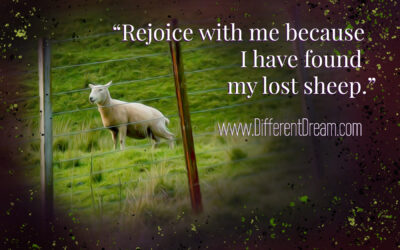
ā€œIf a man has a hundred sheep and one of them gets lost, what will he do? Won’t he leave the ninety-nine others in the wilderness and go to search for the one that is lost until he finds it? And when he has found it, he will joyfully carry it home on his shoulders. When he arrives, he will call together his friends and neighbors, saying, ā€˜Rejoice with me because I have found my lost sheep.ā€™Ā ā€ (New Living Translation)

Jesus uses this parable to explain how heaven rejoices more over one person who repents and comes to faith than for ninety-nine people who have never strayed. I like to think it can represent some children and young people with special or additional needs too.

They can sometimes be marginalized, overlooked, and ā€œlostā€ to the rest of the church. They are sometimes sent away and excluded by the very people who should love them and care for them. I’ve heard stories of children with special or additional needs being told not to come back next week, or their parents told ā€œthis is not a special needs churchā€. I’ve even heard of children being excluded because ā€œthey might be a health and safety risk.ā€

But Jesus said to go after the one.

Disability ministry goes after the one by valuing the one: Too often, children and young people with special or additional needs are looked down on as of little value in our churches. The Good Shepherd valued the one sheep that had wandered off. In a way he valued the one more than the ninety-nine because he left them to search for the one. We need to value them, prioritize them, love them as Jesus does.

Jesus said to go after the one.

Disability ministry goes after the one by investing time and effort: The Good Shepherd scoured the wilderness looking for the one. We need to invest the time and effort needed to reach the children and young people we are journeying with. We can’t expect them to adapt, to change, to find the way themselves. The lost sheep needed the Good Shepherd to find it where it was and bring it home. Children and young people with special or additional needs require their leaders to do that too.

Jesus said to go after the one.

Disability ministry goes after the one by rejoicing in and with them: The Good Shepherd brought the lost sheep home and rejoiced because it had been saved. All too frequently, we don’t think about the spiritual welfare of children with special or additional needs. Their time in our groups becomes babysitting. But heaven rejoices for each person who is saved. We should do all we can to bring children and young people into God’s presence to show them their spiritual home and rejoice with them when they make little steps of faith.

Jesus said to go after the one. Will you?

Do you like what you see at DifferentDream.com? You can receive more great content by subscribing to the monthly Different Dream newsletter and signing up for the daily RSS feed delivered to your email.

Photo byĀ Hiu Yan Chelsia ChoiĀ onĀ Unsplash.

By

Mark Arnold is the Additional Needs Ministry Director at Urban Saints, a leading national Christian children’s and youth organization. He is co-founder of the Additional Needs Alliance, a national and international advocate for children and young people with additional needs or disabilities. Mark is a Churches for All and Living Fully Network partner, a member of the Council for Disabled Children and the European Disability Network. He writes an additional needs column for Premier Youth and Children’s Work (YCW) magazine and blogs atĀ The Additional Needs Blogfather.Ā He is father to James, who has autism spectrum condition, associated learning disability, and epilepsy. To find out more about how Mark’s work can help you, contact him at:Ā marnold@urbansaints.orgĀ orĀ @Mark_J_Arnold

Author Jolene Philo

Archives

Categories

Subscribe for Updates from Jolene

Related Posts

4 Ways Disability Families Can Heal after Being Hurt by a Church

4 Ways Disability Families Can Heal after Being Hurt by a Church

4 Ways Disability Families Can Heal after Being Hurt by a Church

4 ways disability families can heal after being hurt by a church? What? you may be thinking, only 4? Our family could use at least a gazillion! Trust me when I say that guest blogger Kristin Faith Evans knows where you’re coming from. In this post, she shares 4 effective strategies she and her family have used to heal after being hurt by a church and hold tight to their faith.

Many families have difficulty finding a church home or continuing to attend their home congregation due to their child’s special needs. They may have felt misunderstood, unsupported, or rejected. Some were even asked to leave because of their child’s behaviors or needs. In fact, almost 1/3 of special needs families have reported that they have left at least one church because their child was not included or welcomed. If you’ve been hurt by the church, consider taking these steps toward healing.

#1:Ā Tell the Leadership How You Feel

In some cases, speaking to the leaders may cause you further emotional harm. If you believe this might be true, skip this step. But if you haven’t already and you feel comfortable, share how the situation has hurt your family. It’s possible they didn’t realize, understand, or know how to respond. Bringing it to their attention might also help prevent another family from feeling the same way in the future. Perhaps the situation can even be resolved, and the church can support your family in staying. Or it may be the healthiest decision for your family to find a new congregation. But you can leave knowing that you have communicated and attempted to reconcile.

#2:Ā Talk to Someone You Trust

When we’ve been hurt, our natural instinct is to isolate. Being emotionally harmed by a church can be traumatic and keep us from forming new relationships. It may be hard, but reach out and talk to someone you know will be objective and supportive. It can be a family member, friend, another Christian outside that church, a support group member, or a counselor. A critical piece of your healing will be processing your experience with others.

#3:Ā Forgive Those Who Hurt You

Anger and resentment can be toxic and keep you from healing and moving forward. Forgiving may not be easy and can take time. Talk to God in prayer about your emotions and desire to forgive those who hurt you. Receive his comfort, healing, and counsel. Forgiving does not mean that you agree with what they did or that it was right. It means that you are no longer going to hold bitterness in your heart and that you are giving your pain to God so you can move on and heal. Scripture teaches us to: ā€œMake allowance for each other’s faults, and forgive anyone who offends you. Remember, the Lord forgave you, so you must forgive othersā€ (ColossiansĀ 3:13, NLT).

#4:Ā Don’t Give Up on Church

Visiting a new church as a special needs family can be scary, especially after a bad experience. But remember—how that church treated your family doesn’t represent all Christians or how Jesus feels about your child and your family. Belonging to a healthy church will bring you strength, hope, spiritual growth, connection, and joy. Ask around and visit churches that have disability ministries, respite programs, or support groups. And take your time. Pray that God will lead you to the right church where your family can flourish.

What do you think of these 4 ways disability families can heal after being hurt by a church? What would you add to the list? Leave your suggestions below.

Do you like what you see atĀ DifferentDream.com? You can receive more great content by subscribing to the monthly Different Dream newsletter and signing up for the daily RSS feed delivered to your email.

Photo byĀ Josh ApplegateĀ onĀ Unsplash

By

Kristin lives with her husband, Todd, and their two children in the Nashville, TN area. She is an author, speaker, mental health counselor, and a mom of two children with rare genetic disorders and complex needs. Her greatest passion is teaming up with her husband to empower other parents of children with disabilities, mental health disorders, and medical complications. She hopes that you may find encouragement and support on their websiteĀ www.DisabilityParenting.com

Author Jolene Philo

Archives

Categories

Subscribe for Updates from Jolene

Related Posts

Hello! Means the WorldĀ to Those with Disabilities and Special Needs

Hello! Means the WorldĀ to Those with Disabilities and Special Needs

Hello! Means the WorldĀ to Those with Disabilities and Special Needs

Hello means the world to those with disabilities and special needs. In this post, guest blogger Mark Arnold describes what a greeting reveals about the person who’s saying hello.

You can tell a lot about a place and its people from the way they greet a child or young person with a disability or special needs. I’ve visited lots of children’s and youth groups over the years, and one thing I’ve always looked for is the response of the leaders when a child or young person with additional needs arrives. Their reactions typically fall into one of two categories:

Angry face

1. Something between dejection and horror: Leaders see the person arrive and look at each other, their expressions communicating disappointment. They tend not to approach or welcome the child, ignoring them instead. There may be audible comments that reinforce their sense of regret.


Smiling faces

2. Something between encouragement and delight: Leaders see the person arrive, smile and head towards them to greet them They refer to them by name, ask how they are, and say they’re pleased to see them. They guide the child to join in an activity, or to a designated leader who can support them.

The child usually understands which response they receive, and that determines how they will respond to the leaders for the rest of the session.

There are many reasons why leaders fall into one of the two categories. Let’s look at some of them.

Negative responses often come from a lack of understanding, little or no training, a lack of volunteers, and inflexibility to change. Changing these responses is the responsibility of church leaders and the church community as a whole. If the most vulnerable and marginalized in our society are unwelcome, then the church has deeper issues to grapple with. Frazzled children’s or youth workers might be the ones who look bad, but behind them are church leaders who won’t adequately invest in children’s and youth ministries.

Positive response often comes from well supported and equipped team members who have been trained and have enough staff and volunteers to provide the level of support needed by a child with additional needs. Behind these teams there is usually a supportive church leader or leadership team that value children and youth ministry. They invest in finances, people, and prayer. They broadcast the message that everyone belongs there, which the gospels show is what Jesus had in mind.

In this short video clip, Philippa, who was born blind, shares some of her experiences in church and the power of saying hello. https://www.youtube.com/watch?v=gJcUpczxCp0

Which of the two responses resonates most closely with the reality of your church? If it is the negative one, work to bring about positive change so that every child and young person is welcomed and fully included. If it is the positive one, think about how you can reach out to struggling churches to help them.

Welcome heart

As Will Rogers once said, ā€œYou never get a second chance to make a first impression.ā€

Churches only get one shot, one opportunity to show those with disabilities and special needs how valued and loved they are. Let’s not blow our chance. Instead let’s do all we can to be the difference for children and young adults who journey with us.

A friendly hello means the world to those with disabilities and special needs, so let’s start there.

Do you like what you see atĀ DifferentDream.com? You can receive more great content by subscribing to the monthly Different Dream newsletter and signing up for the daily RSS feed delivered to your email.

Header image Ā© Photo byĀ VladislavĀ KlapinĀ onĀ Unsplash; Yellow smiley faces Ā© Photo by TimĀ MossholderĀ onĀ Unsplash
Angry face Ā© Photo by Andre HunterĀ onĀ Unsplash; Red heart Ā© Photo by Nick FewingsĀ onĀ Unsplash

By

Mark Arnold is the Additional Needs Ministry Director at Urban Saints, a leading national Christian children’s and youth organization. He is co-founder of the Additional Needs Alliance, a national and international advocate for children and young people with additional needs or disabilities. Mark is a Churches for All and Living Fully Network partner, a member of the Council for Disabled Children and the European Disability Network. He writes an additional needs column for Premier Youth and Children’s Work (YCW) magazine and blogs atĀ The Additional Needs Blogfather.Ā He is father to James, who has autism spectrum condition, associated learning disability, and epilepsy. To find out more about how Mark’s work can help you, contact him at:Ā marnold@urbansaints.orgĀ orĀ @Mark_J_Arnold

Author Jolene Philo

Archives

Categories

Subscribe for Updates from Jolene

Related Posts

Church Family Means No One Gets Left Behind

Church Family Means No One Gets Left Behind

Church Family Means No One Gets Left Behind

Church family means no one gets left behind. Guest blogger Mark Arnold tweaks and applies the famous Lilo & Stitch to churches. He offers tips to children and youth ministry workers who want to be sure that children and youth with disabilities and special needs aren’t left behind as in person activities resume.

Like many children’s and youth workers, I love a good Disney movie. A well-known quote from Lilo & Stitch keeps coming to mind whenever I think about the return to in-building children’s and youth work.

ā€œOhana means family. Family means no one gets left behind or forgotten.ā€

So often, families of children with special needs or disabilities find themselves forgotten, overlooked, or not considered when plans are made. It is unsurprising that many church leaders and children’s and youth teams are excitedly opening the church doors again. Personally, I’ve been saddened to people posting on social media about how thrilled they are to no longer run Zoom sessions. For families who cannot, for all kinds of reasons, attend in-building activities, this attitude is harmful. It’s another form of exclusion.

As the pandemic eases, let’s not choose between in the building or online children’s and youth work. Let’s not create exclusion by cutting off families who were able to connect to church like never before during COVID. Instead, let’s make sure that church family means no one gets left behind or forgotten.

These 5 Cs can help with this:

1. Communicate

Ask families what they prefer, what they are able to access, what resources they need to join in. Make sure you are including them as you plan, remembering the truth of a phrase used by the disabled community: Nothing about us without us.

2. Community

Recognise that your community includes families that come to the building and families that connect from home. Structure your activities in ways that link both parts of this community together so that they can enjoy being involved wherever they are.

3. Camera

A hybrid or blended offering isn’t about providing an in-building program and broadcasting it via a static camera at the back of the room. It’s about interaction, giving families at home a chance to contribute, share and lead. It’s about having the camera moving around to see what is happening in the building. It’s about broadcasting what’s happening at home on a screen with a sound system, making it a truly interactive experience for everyone.

4. Creativity

Are you doing something crafty or creative? Drop off a bag of resources to families joining from home so that they have everything those in the church building. The resources could include craft supplies, a program, or a timetable. For those with special needs, make these items visual by including symbols and photos.

5. Check-in and Dismissal

Chatting with families as they drop off and collect their children from in-building sessions is common. Why not do the same for families connecting online? Pick up the phone or pop round for a chat rather than always dropping them an email. Ask them how the session went for them, what worked and what didn’t, what they need from you next time, how they would like to take part next time.

These tips and ideas can help you as churches open and plan for a new normal. Make sure to remember that church family means no one gets left behind or forgotten. Let’s Only then can churches ensure that families involved in the building or at participating from home feel connected and experience a sense of community.

Do you like what you see at DifferentDream.com? You can receive more great content by subscribing to the monthly Different Dream newsletter and signing up for the daily RSS feed delivered to your email inbox. You can sign up for the first in the pop up box and the second at the bottom of this page.

By

Mark Arnold is the Additional Needs Ministry Director at Urban Saints, a leading national Christian children’s and youth organization. He is co-founder of the Additional Needs Alliance, a national and international advocate for children and young people with additional needs or disabilities. Mark is a Churches for All and Living Fully Network partner, a member of the Council for Disabled Children and the European Disability Network. He writes an additional needs column for Premier Youth and Children’s Work (YCW) magazine and blogs atĀ The Additional Needs Blogfather.Ā He is father to James, who has autism spectrum condition, associated learning disability, and epilepsy. To find out more about how Mark’s work can help you, contact him at: marnold@urbansaints.org or @Mark_J_Arnold

Author Jolene Philo
Archives

Categories

Subscribe for Updates from Jolene

Related Posts