How To Cope During a Rough Caregiving Season

How To Cope During a Rough Caregiving Season

How To Cope During a Rough Caregiving Season

How to cope during a rough caregiving season. What? Who wants to write about that topic when doing so usually comes from hard experience? That’s the case for guest blogger Lisa Pelissier who describes what’s been happening at her house and what’s helping her cope these days.

It’s been a rough season.

My husband’s health has collapsed and he can’t work more than a few hours a week.

My son with high-functioning autism can’t sleep and has been depressed and anxious.

We had Covid this summer, but not all at once. First the girls succumbed, which meant 2+ weeks of quarantine. A month later I got it. Another 2 weeks of quarantine.

And my youngest got diagnosed with autism. Which really doesn’t change anything. She’s still exactly who she was before the diagnosis. The only difference is that I feel more tired.

Just what I needed.

People ask me how I’m coping, and it’s easy to answer that question with a “Hanging in there,” or “Doing okay.” But that focuses on the Im part of the question. I think a more helpful question for me to ask myself pertains to the how part.

How do you hold it together when things are falling apart?
How do you cope when everything seems to go wrong all at once?

Here are my answers about how to cope during a rough caregiving season:

Cry when you need to. It’s not a bad thing. Instead of stuffing grief under a sleek layer of artificiality, just cry. You’ll feel better.

Regain perspective. This isn’t the first time things have been this bad. We got through it before and we’ll get through it this time. It’s only hard because we’re looking at it from the midst of it. Looking back, we may decide this wasn’t so bad after all

Identify Blessings. It’s not all bad. The A/C works, my favorite blessing of the summer. The cars are holding up for the time being. Our kid with PANS seems to be in remission and doing well. We have a loving church family and a great homeschool group. And the neighbors have 23 cats, so we can always find something soft to snuggle. Identify the blessings in your life and enjoy them.

Maintain Friendships. I have several friends who are also in the midst of rough seasons. While I wouldn’t wish their troubles on them, it’s helpful that God decreed their troubles to occur at the same time as my own. We can’t solve one another’s problems, but we can commiserate and even joke together in the trenches.

Trust God’s Providence. There is a temptation to ask, “Why is God doing this to me?” Don’t give in to it. A few years ago I was suffering an excruciating pain disorder. But the clear comfort of God enfolded me. I never doubted for a moment that God was doing something for me, not to me. And He is the same now. His refining hand is like a sculptor carving a stone into something beautiful. It stinks when He’s lobbing off huge chunks of rock to get what He wants out of the raw material that is you, but you can trust Him. He has a plan and a purpose.

Consider it all joy, my brethren, when you encounter various trials,
knowing that the testing of your faith produces endurance.
And let endurance have its perfect result,
so that you may be perfect and complete, lacking in nothing.”
James 1:2-4

Do you like what you see at DifferentDream.com? You can receive more great content by subscribing to the monthly Different Dream newsletter and signing up for the daily RSS feed delivered to your email.

By

Lisa Pelissier lives in Oregon where she is a homeschooling mother of four (three with disabilities) and author of three middle-grade fiction novels as well as a YA fantasy novel. Lisa owns SneakerBlossom Books, offering Christian, classical homeschool Study Guides and curriculum. She also works as a freelance copy editor, an artist, a substitute teacher, and a tutor. In her spare time Lisa enjoys playing the piano and fretting about things over which she has no control. Email Lisa at sneakerblossom@yahoo.com or connect on Facebook.

Author Jolene Philo

Archives

Categories

Subscribe for Updates from Jolene

Related Posts

The Beauty of Disability

The Beauty of Disability

The Beauty of Disability

Our pastor was introducing a new sermon series about beauty when these four words, which I had never strung together before, which I did not want to string together, took up residence in my brain. My response was swift and prickly.

The beauty of disability? Why would I consider such a thing?

Several images flashed by in rapid succession:

  • My father lying in a hospital bed, his once strong body ravaged by multiple sclerosis.
  • My 2-day-old son splayed in a NICU isolette, his abdomen marred by post-surgical incisions.
  • My elderly mother leaning sideways in her recliner at the long-term care facility where she lives.

My eyes welled with tears. My heart ached for the pain and loss experienced by people I love dearly. Where was the beauty in their disabilities?

I fought for control and turned my attention back to the pastor as he read Genesis 1:27.

And God created man in His own image, in the image of God He created him; male and female He created them. (NASB)

The pastor explained how God revealed his beauty in the act of creation. Also, because all humans are created in God’s image, we bear the image of His beauty even as our hearts long for the fullness of it.

Wait a minute!

I believe that God’s creation reveals his beauty.
I believe that all humans are made in God’s image.
I believe that all humans includes those with disabilities.
I believe that those with disabilities reveal God’s beauty.

Click here to read the rest of The Beauty of Disability at the Key Ministry website.


Do you like what you see at DifferentDream.com? You can receive more great content by subscribing to the monthly Different Dream newsletter and signing up for the daily RSS feed delivered to your email.

By

Jolene Philo is the author of the Different Dream series for parents of kids with special needs. She speaks at parenting and special needs conferences around the country. She’s also the creator and host of the Different Dream website. Sharing Love Abundantly with Special Needs Families: The 5 Love Languages® for Parents Raising Children with Disabilities, which she co-authored with Dr. Gary Chapman, was released in August of 2019 and is available at local bookstores, their bookstore website, and at Amazon. The first book in her cozy mystery series, See Jane Run!, features people with disabilities.

Author Jolene Philo

Archives

Categories

Subscribe for Updates from Jolene

Related Posts

A Course on Self-Compassion Showed Me that I Am Enough

A Course on Self-Compassion Showed Me that I Am Enough

A Course on Self-Compassion Showed Me that I Am Enough

A course on self-compassion showed guest blogger Laura Spiegel that she was doing enough for her daughter who lives with special needs. In this post, she describes how the course helped her come to that conclusion.

I recently finished a course on self-compassion. Pioneered by Dr. Kristin Neff nearly twenty years ago, self-compassion is the practice of giving ourselves the same kindness and care we’d give to a good friend. If you’re like me, it’s not overly difficult to extend a hug or words of empathy and understanding to a friend who is struggling. But to extend that same olive branch to myself? That’s sometimes asking too much.

I’m not big on meditation. My mind wanders and I get overly focused on my loud breathing. Same thing with verbalized mantras. I’ll start with one and then flit to another and then wonder what everyone else is thinking about. Before I know it, I’ve made myself a giant dish of ice cream while stalking Facebook. Something tells me I’m doing it wrong . . .

Not long ago, a new practice took me by surprise. The course instructor told us to break out a pencil and paper and write a few sentences from the viewpoint of the “compassionate self.” In other words, if I were to speak to myself as I would a good friend, what would I say? Twenty minutes later, I didn’t want to stop!

Here are a few snippets from my first letter to myself:

Youve been feeling the last couple of days like you arent doing enough. Being enough. I wish you could see what I see!

I see a woman who is carving a path for herself. A woman who is present for her children and an advocate for them.

I see a woman who is learning to care for herself. Who is exploring new joys and learning new things, but also backing away when they dont spark joy.

I see a woman who has maintained an exercise routine for almost a year. Did you ever think you could do that? Your body is stronger and your mind clearer because of it. Keep it up!

I know you worry about not doing enough with your time. Thats a distraction from whats important—and from the path you know you need to be on. Say goodbye” to those worries. Picture them as a dandelion and blow them away.

Finally, just know that only good mothers worry that theyre not good mothers. All of your friends struggle with this too. The anger, the yelling, the vacillation between leniency and strictness, friendship, respect, tenderness, and lesson-teaching . . . Listen to your intuition. It will tell you what you need to do. How you need to be.

Think about what you ultimately want to instill in your kids. Confidence. The ability to navigate stressful situations and solve problems. Kindness for themselves and for others. And full-on knowledge that they are loved. Lead with these goals in mind, and the right words and actions will come to you.

Where in the world did these words come from? When I first put the pencil to the page, I didn’t plan to write about my worries that I’m not enough. But clearly, they were surrounding me. Suffocating me. And I needed a good friend to extend some words of empathy.

After I wrote that first letter, I treated myself to a pretty sketchbook. These days, I try to spend early mornings on the porch with a cup of coffee and my writing. Some letters are little more than a few affirmations that I am doing my best—and that women and mothers everywhere are struggling with many of the same things that I am. Other days, I veer all over the place. I try not to think about my words too much. I just let them flow.

Occasionally, if I need a pick-me-up during the day, I flip to a random page and read a few sentences I wrote during the course on self-compassion. And I know with the deepest sense of certainty that I am loved.

Do you like what you see at DifferentDream.com? You can receive more great content by subscribing to the monthly Different Dream newsletter and signing up for the daily RSS feed delivered to your email.

By

Laura Spiegel spent 12 years at the world’s largest biotech company, partnering with professionals and care teams to help people with special needs and disabilities lead full and happy lives. In 2013 her daughter was diagnosed with cystic fibrosis. Laura now hosts Paint Her in Color, a website that offers emotional support to parents of children with special medical, developmental, or behavioral health care needs. When she isn’t reading, writing, or soaking up time with her husband and kids, Laura can be reached at Paint Her in Color, by email at laura@paintherincolor.com, and on Facebook and Twitter.

Author Jolene Philo

Archives

Categories

Subscribe for Updates from Jolene

Related Posts

Parenting a Child with Disabilities Isn’t the Grief Olympics

Parenting a Child with Disabilities Isn’t the Grief Olympics

Parenting a Child with Disabilities Isn’t the Grief Olympics

Parenting a child with disabilities isn’t the grief Olympics as guest blogger Laura Spiegel knows. However, as is true for many other caregiving parents, she struggles to find a balance between validating her own grief and cultivating a healthy perspective.

It’s Saturday morning, and I’m at a cafe devouring a giant sandwich and eavesdropping on a conversation at a nearby table. Egg and cheese drip down my hands. As I contemplate grabbing a truckload of napkins or maybe just a fork, I overhear the bad news.

Someone walked into a fellow diner’s open garage and stole a high-end power washer. Her table mates tut with sympathy and promise prayers.

I roll my eyes. Don’t these people have real problems?

I wish my judgement was limited to strangers, but alas. There are times when a family member or a friend will describe a piece of personal news while I silently pass judgment.

A tournament lost,
a D+ earned,
the foundation of a house detached by a deranged mole,
a promotion foregone,
a pet husky passed,
a root canal performed with questionable accuracy.

These are setbacks for sure, and some of them are real doozies. But if devastation is on display when casual disappointment would suffice, I reach for my robe and gavel.

My penchant for judgment kicked into high gear after my daughter was diagnosed with cystic fibrosis. One day, I was freaking out about work along with everyone else. The next, a physician was citing statistics that would change the entire way our family thought, felt, and operated.

Any other moms out there relate?

Your kid has to wear a mask to school? Get over it. My kid has cancer.

Drop the mic.

If my inner comparisons have taught me anything, it’s that somebody else has it worse.

I hate that COVID is still floating about, but my kids have good teachers who are trying their best.
What about those girls in Afghanistan whose dreams of education have crumbled?

My mom has cancer and time is finite, but she has lived 80 years of laughter and love.
What about the local teens killed by a drunk driver?

My daughter lives with cystic fibrosis, but she reads like a boss and flies down the track with glee.
What about the friend who lost her child? Or the friend who would give anything to have one?

Thinking in this way can cultivate perspective. But here’s the thing. When taken too far, it can also rob us of the opportunity to sit with our own emotions.

Frustration
Rage
Devastation.
Grief

All are valid feelings, and all have a place in our lives. If we can’t acknowledge and accept these emotions when they arise, how can we begin to process them?  

This kind of thinking can also distance us emotionally from others. When I silently weigh a loved one’s troubles against my own, I’m dismissing the common humanity associated with suffering and failing to listen with compassion and empathy. I’m robbing myself—and my loved one—of the opportunity to connect authentically with another human being.

There is no established standard for sadness. What knocks me down may be a bump in the road for you. My hiccups may burn you alive.

But who cares? Sometimes, we just need to hear, “That sounds hard, and I’m here for you.”

I’m working on retiring my scale, on remembering that parenting a child with disabilities isn’t the grief Olympics. When someone shares a hardship with me, I’m trying to take a moment to acknowledge the thoughts that immediately flit into my brain. Some are reasonable; some aren’t. There’s usually an It-could-be-worse in there somewhere.

That’s okay. The more I recognize my rush to judge and compare, the more I can begin to loosen their hold over me, and the faster I can get back to doing what matters most:

loving myself,
loving others,
and accepting love in return.

Do you like what you see at DifferentDream.com? You can receive more great content by subscribing to the monthly Different Dream newsletter and signing up for the daily RSS feed delivered to your email.
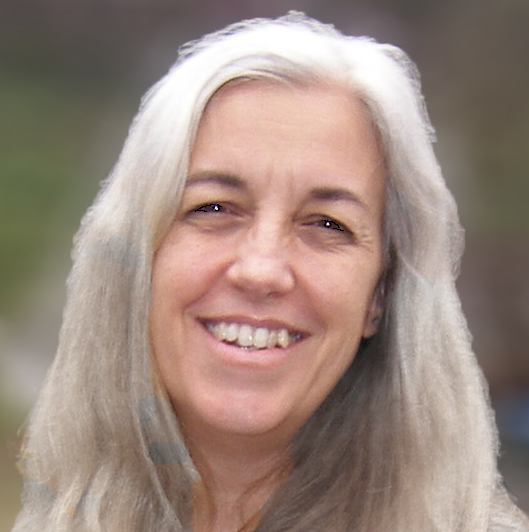
By

Laura Spiegel spent 12 years at the world’s largest biotech company, partnering with professionals and care teams to help people with special needs and disabilities lead full and happy lives. In 2013 her daughter was diagnosed with cystic fibrosis. Laura now hosts Paint Her in Color, a website that offers emotional support to parents of children with special medical, developmental, or behavioral health care needs. When she isn’t reading, writing, or soaking up time with her husband and kids, Laura can be reached at Paint Her in Color, by email at laura@paintherincolor.com, and on Facebook and Twitter.

Author Jolene Philo

Archives

Categories

Subscribe for Updates from Jolene

Related Posts

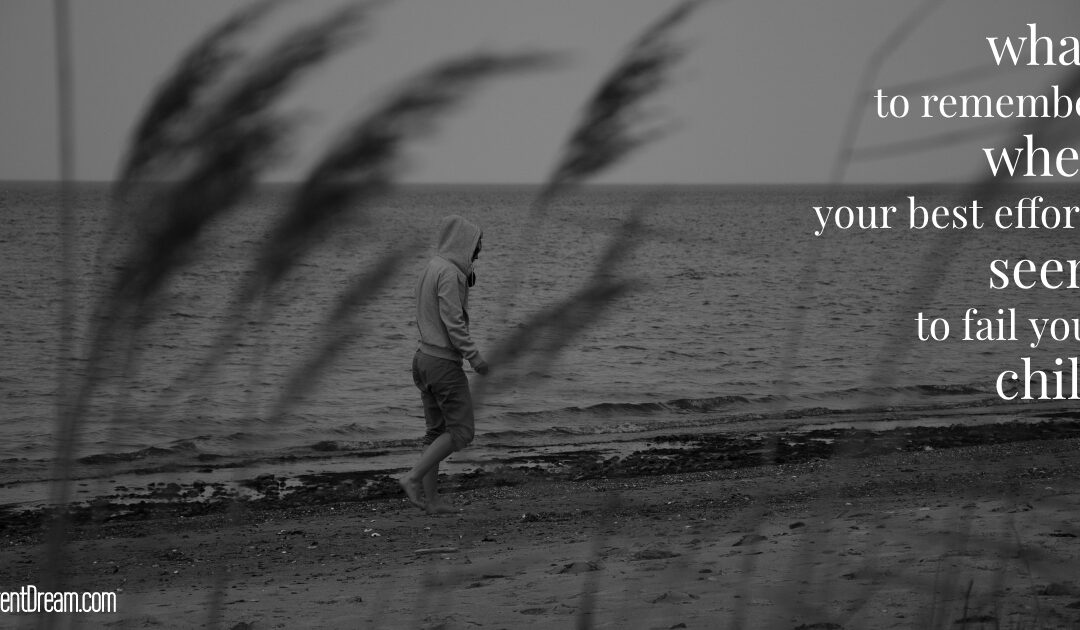
How Parents Can Stay Strong When Advocacy Efforts Seem to Fall Short

How Parents Can Stay Strong When Advocacy Efforts Seem to Fall Short

How Parents Can Stay Strong When Advocacy Efforts Seem to Fall Short

How parents can stay strong when advocacy efforts seem to fall short at every turn is something Catherine Boyle knows about. She struggled with that question repeatedly while raising her children and advocating for their best good. Today she shares 3 things for parents to remember when all their efforts feel fruitless.

“It won’t work. My specialty is ADHD, and the supplement won’t help.”

The familiar rush of fear, anxiety, and humiliation swept through my insides. “I didn’t know you were an ADHD specialist,” I stammered, after a few awkward seconds.

The psychologist’s tone softened slightly; the phone call ended shortly thereafter. In the midst of the shame I felt, merely asking about emerging treatment options for my child who was still struggling, in spite of taking prescribed medication for years, I knew I couldn’t trust this doctor.

Eight years later I unexpectedly learned that not all doctors agree on treatment options. As I sat across the desk from the newest doctor for the as yet-to-be correctly diagnosed condition with my now young adult child, she handed me an information sheet about an important supplement for individuals with the same struggles as my child.

It was the very same supplement I asked about all those years earlier. This time it came with the hearty recommendation of a similarly board-certified physician.

My focus words for this year are transformational, truth, and two (as in “Part 2.”) These words most definitely apply to the situation I described above, when you know you didn’t do anything wrong advocating for your child or other loved one.

Whether you are enduring judgmental relatives, physicians who do not listen to your child’s needs, or a church environment that communicates disdain for your parenting skills, hear me loud and clear: if you didn’t do anything wrong in God’s eyes, you didn’t do anything wrong. Period. End of story.

It’s much easier to read this than live it out when you find yourself unsupported by those who don’t see your sleepless nights or hear your fervent prayers or read your endless research. If that’s your situation, remember these three things when you wonder how parents can stay strong when advocacy efforts seem to fall short.

God sees, and He rewards things done with integrity (Psalm 101:2).

No one else fully knows your heart. No one else knows the effort you’ve put into being the best parent or caregiver. No matter what struggles your family encounters, God sees and is present, even when it doesn’t feel like it.

Our family went through several years of difficult struggles. In the middle of that time, God gave me a peek behind the curtain of what He had been doing for decades, things so improbable that I will spend the rest of my life pondering how vast is His work in the lives of ordinary people.

I’m nobody special. I promise, He is doing similar things in your life, with your family, right now. I pray He gives you eyes to see a little of what He is doing to refresh and encourage you.

Beauty comes from ashes, but the ashes come first. Its okay to lament the ashes (Isaiah 61:3).

If you’re getting no support from friends, family, church, and doctors, you may be in a period of ashes. Job lived in ashes for a long season, but he didn’t stay there. In the ashes he lamented, which is a healthy way to hash out things that cause you pain. Find a trusted pastor, counselor, or friend who will listen and encourage you as you lament.

When we were ‘living in ashes’, I reached out to the wise Christian therapist I had seen off and on for several years. I trusted her to listen and challenge me when my reactions to our struggles did not align with who God is. Several years pre-pandemic, she allowed me to meet over the phone instead of traveling to meet with her in-person. More than once I interrupted errands to pour out my heart to her and sob in the car in a parking lot.

God makes everything beautiful in its time (Ecclesiastes 3:11).

We recently experienced the “part two” of a seven-year season. Part one was all difficulty: misunderstood behaviors, school struggles, dreams laid down. We had been very fearful about suicidal leanings in things our child did and said.

The other bookend was the exact opposite: success, understanding based on proper diagnosis, dreams come true. It wasn’t what we envisioned, but the challenges made this “Part 2” so much sweeter.

Going through challenges dispels the illusion that life will go according to your plans. But challenges give you the opportunity to see that your life hasn’t deviated from His plans. I pray this year allows you to get a vision of your “Part 2,” and that truths learned within your challenges will transform your relationship with Christ.

Do you like what you see at DifferentDream.com? You can receive more great content by subscribing to the monthly Different Dream newsletter and signing up for the daily RSS feed delivered to your email.

By

Catherine Boyle is Mental Health Ministry Director and Social Media Manager for Key Ministry. Connect with Catherine at Key Ministry, her website catherineboyle.com, or on her social media links on Facebook, Twitter, Instagram, and YouTube.

Author Jolene Philo

Archives

Categories

Subscribe for Updates from Jolene

Related Posts

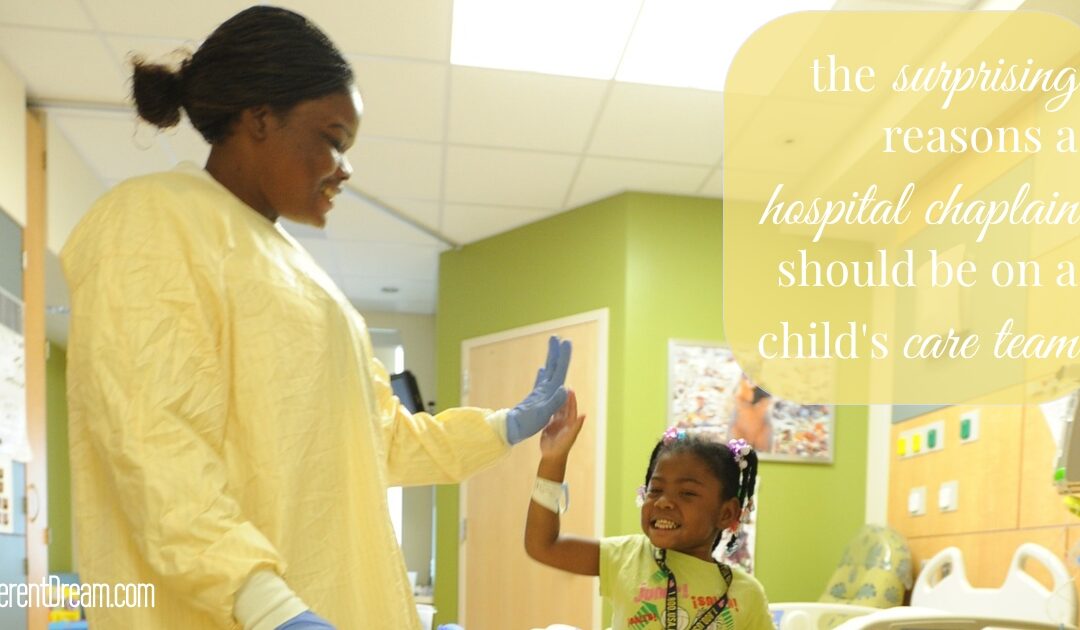
Hospital Chaplains: Who Knew They Can Do So Much?

Hospital Chaplains: Who Knew They Can Do So Much?

Hospital Chaplains: Who Knew They Can Do So Much?

Hospital chaplains provide valuable support when loved ones are dying. Guest blogger Laura Spiegel recently learned they can do much more.

When you think of hospital chaplains, what comes to mind? A bearer of bad news? An imminent turn for the worse? A symbol of death and dying? That’s what I used to think. Chaplains showed up in end-of-life situations, and I never wanted to encounter one.

I couldn’t have been more wrong.

Last week, I had the privilege of listening to a chaplain at my local children’s hospital as he “demystified” spiritual care and chaplaincy. It turns out that hospital chaplains offer interfaith care, but their role in hospitals is not confined to death and dying. In fact, a big part of the chaplain role is supporting families emotionally as we navigate changes, struggles, or tipping points that occur throughout our lives.

Hospital chaplains help us identify our own resources and strengths so that we can better cope with situations that are causing distress. For some, these situations are indeed life threatening. But for many, they are merely tipping points on a longer journey.

A new diagnosis.
A first hospitalization.
A significant change in treatment plan.

Throughout these tipping points, chaplains can help us explore shifts in identity, roles, and meaning. This often includes grieving the future “story” we’ve envisioned and beginning the process of rewriting a new narrative for our children and our families.

While many chaplains are focused on in-patient hospital encounters, some are expanding their role into outpatient centers. I can’t tell you how excited this makes me!

When my daughter was diagnosed with cystic fibrosis eight years ago, I was shaken to the core. I had naively envisioned a life for my daughter where health could be taken for granted. Where doctor’s appointments were limited to annual check-ups and benign bouts of strep. Where I could swat down stress with the knowledge that this was my second child, and this time around, I knew what I was doing.

With my daughter’s diagnosis, my identity as a woman and mother shifted. My roles as a spouse, daughter, friend, businesswoman, and caregiver collided in messy, unexpected ways. I began to question where I spent my time and with whom I spent it. I mourned the loss of the “future” I had envisioned for my family — and slowly but surely began to write a new one.

Over the years, I have been fortunate enough to partner with care teams that recognize the importance of physical and emotional health. My daughter’s quarterly appointments have allowed the space and time to explore both her and my emotional well-being. But what if a chaplain was included on the care team with the sole role of offering emotional support?

I would latch onto that in a heartbeat.

Our children’s hospital hopes to expand the role of hospital chaplains into more outpatient centers over time. When this resource hits the CF center, I can tell you this: I’m gonna come a-runnin’.

Do you like the idea of a chaplain joining your care team? Ask your doctor how hospital chaplains work in your hospital — and how you can access chaplaincy support!  

Do you like what you see at DifferentDream.com? You can receive more great content by subscribing to the monthly Different Dream newsletter and signing up for the daily RSS feed delivered to your email.

By

Laura Spiegel spent 12 years at the world’s largest biotech company, partnering with professionals and care teams to help people with special needs and disabilities lead full and happy lives. In 2013 her daughter was diagnosed with cystic fibrosis. Laura now hosts Paint Her in Color, a website that offers emotional support to parents of children with special medical, developmental, or behavioral health care needs. When she isn’t reading, writing, or soaking up time with her husband and kids, Laura can be reached at Paint Her in Color, by email at laura@paintherincolor.com, and on Facebook and Twitter.

Author Jolene Philo

Archives

Categories

Subscribe for Updates from Jolene

Related Posts