The Days Are Long, but the Years Are Short

The Days Are Long, but the Years Are Short

The Days Are Long, but the Years Are Short

“The days are long, but the years are short.”

I repeat this phrase while I sit on the couch listening to my 7-year-old grandson read for a half hour every evening.

Each time he turns a page, he says something like, “Wow, Grammy! What do you think that is?” or “I wonder what will happen next?” He ignores the words on the page and launches into several winding, imaginative explanations.

My grandson really, really likes to talk. And use his imagination. As for the reading part? Not so much.

Which is why I eventually have to suggest, “Read the page and find out.”

He follows my suggestion—he can read more fluently than he believes—and finds out. Then he turns the page and begins the same process all over again.

To contain my impatience, I whisper to myself, “The days are long, but the years are short.”

One evening as we read, my mind wandered back to when our son was young and medically fragile. When complications arose—maybe he had a fever, refused to eat because of an oral aversion, or vomited his food because of an esophageal blockage—our days were very, very long.

Should we wait to see if he got better? Or worse?

Could we wait until morning to go to the doctor? Or call him right now?

Should we race to the emergency room in our car? Or should we call the ambulance?

Not only were the days long, but also the nights.

When our son turned four, I told my mother, “The years since he was born feel like a lifetime. Maybe it’s because we haven’t gotten a complete night of sleep since he was born.”

Mom smiled and said, “The days are long, but the years are short.”

To read the rest of The Days Are Long, but the Years Are Short, visit the Hope Anew website.

Do you like what you see at DifferentDream.com? You can receive more great content by subscribing to the monthly Different Dream newsletter and signing up for the daily RSS feed delivered to your email.

Image by Donnie0102 from Pixabay 

By

Jolene Philo is the author of several books for the caregiving community. She speaks at parenting and special needs conferences around the country. Sharing Love Abundantly With Special Needs Families: The 5 Love Languages® for Parents Raising Children with Disabilities, which she co-authored with Dr. Gary Chapman, was released in August of 2019 and is available at local bookstores, their bookstore website, and Amazon. See Jane Sing!, the second book in the West River cozy mystery series, which features characters affected by disability, was released in November of 2022.

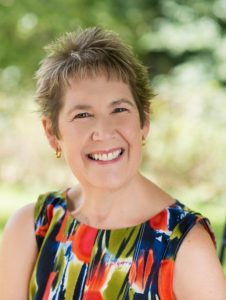
Author Jolene Philo
Archives

Categories

Subscribe for Updates from Jolene

Related Posts

Raising a Child with Special Needs is Like Writing a Book

Raising a Child with Special Needs is Like Writing a Book

Raising a Child with Special Needs is Like Writing a Book

“Raising a child with special needs is like writing a book,” I thought after emailing my completed manuscript to my editor recently. “During my pregnancy I had a vague outline of what parenthood would be like. And I prepared a plot outline before writing this story. But in the beginning, the details of the birth and the book were foggy and surprising.”

The first surprise regarding our son came twelve hours after his birth. He was diagnosed with a tracheoesophageal fistula, also known as EA/TEF, and flown to a hospital far, far away for corrective surgery.

Boom! My husband and I became supporting characters in our son’s adventure story. It was full of unexpected setbacks, victories, sorrow, and joy.

We went places we never imagined.
We made decisions we felt unprepared to make.
We met people who helped us along the way.
We discovered we were stronger than we knew.
We found the source of that strength in God’s faithful presence throughout the story.

Our son is forty now. At my aunt’s funeral a few months ago, he put his arm around me while I cried. He gives my husband and me advice. His story is ongoing. As we age, he will play a role in our stories, too.

Every day I see that raising a child with special needs is like writing a book.

Forty years after our son’s story began and a few days after sending that manuscript to the editor, I am once again in a situation similar to my son’s early days.

To read the rest of Raising a Child with Special Needs is Like Writing a Book, please visit the Key Ministry website.

Do you like what you see at DifferentDream.com? You can receive more great content by subscribing to the monthly Different Dream newsletter and signing up for the daily RSS feed delivered to your email.

By

Jolene Philo is the author of several books for the caregiving community. She speaks at parenting and special needs conferences around the country. Sharing Love Abundantly With Special Needs Families: The 5 Love Languages® for Parents Raising Children with Disabilities, which she co-authored with Dr. Gary Chapman, was released in August of 2019 and is available at local bookstores, their bookstore website, and Amazon. See Jane Sing!, the second book in the West River cozy mystery series, which features characters affected by disability, was released in November of 2022.

Author Jolene Philo

Archives

Categories

Subscribe for Updates from Jolene

Related Posts

Jesus is FOR Caregiving Parents

Jesus is FOR Caregiving Parents

Jesus is FOR Caregiving Parents

Jesus is FOR caregiving parents, but when parenting gets rough it’s easy to forget that truth. In the fifth and final post of Heather Braucher’s FOR series, she talks about how she finds assurance of Jesus’ presence when the lows of parenting drag her down.

High highs and low lows is the phrase we have used this year when others ask how our family is doing. To be honest, I have been tempted to view life through the lens of dread, fearing hope because I have gotten so used to the other shoe dropping.

It feels easier to protect myself from the pain and disappointment that the unexpected can bring when I forgo hope and choose to remain jaded, skeptical, sarcastic, and cynical. It’s too risky to choose hopefulness.

Hope is like a balloon that wants to fly high in the sky and float. Hope says, “I don’t know what I will encounter, but right now, I feel joy and I want to embrace it and move forward.” Hope knows that fear is real and the unexpected might happen, but even in the face of that risk, it chooses to be brave in order to embrace joy.

Fear is like the weight that keeps the balloon from flying away. It keeps hope locked in the ground. Fear tells you to give up, stop trying, stop fighting the good fight and let sorrow win.

I had been struggling with this internal battle, feeling like I should let my balloon fly, but keeping it tethered for fear of future heartache. One day, in the midst of carrying the weight of it all—

  • The heaviness and intensity of having 2 boys with special needs,
  • The reality of a loved one’s suffering and limited time,
  • The consistent financial tension that living on a one-income ministry salary can bring,
  • and anything else unexpected that we just don’t have any margin for,

—I cried out to the Lord in surrender.

I cried out, completely overcome with it all, with no rest in sight, and completely devoid of hope that Jesus is for caregiving parents like us.

And in His great mercy, God answered and I saw our high highs and low lows from a new perspective.

I had been battling the great weight of those lows that kept piling up. I had been angry and frustrated because as soon as I would experience a win––be it good news, positive feedback, or a day with no phone calls from the school––something bad would happen within hours, even minutes of embracing joy.

When He answered the prayers of my heart, He reminded me that my struggle was not unseen by my God.

He gave me eyes to see, and I finally saw Him above everything else. I saw that

  • He kept showing up.
  • For every victory overcast by another trial, another victory would come.
  • He never stopped bringing joy.
  • He never stopped providing.
  • He never stopped healing.
  • He never withheld recovery.
  • We were never forsaken.

The high highs are proof that God keeps showing up. As often as pain comes, so does He. He even tells us in John 16:33 that we will have pain but need not fear because “I have overcome the world.”

We are reminded of this again in the book of Revelation. As believers in Christ, we know how this story ends. And it’s not on a low!

Jesus is for caregiving parents. Never forget that.

Part 1: We are FOR Parents and Children
Part 2: Mothers are FOR their Children with Disabilities and Special Needs
Part 3: Caregiving Spouses are FOR Each Other
Part 4: Caregiving Moms are FOR Other Caregiving Moms
Part 5: Jesus is FOR Caregiving Parents

Do you like what you see at DifferentDream.com? You can receive more great content by subscribing to the monthly Different Dream newsletter and signing up for the daily RSS feed delivered to your email.

Image by Rudy and Peter Skitterians from Pixabay 

By

Heather Braucher is a member of the “Braucher Bunch” aka her energetic family of 5. The bunch includes her husband and their three children, all of whom are dominant and extroverted and are going to change the world (if she can keep them alive!) She has always held a passion for writing, but motherhood has given her a reason to share her experiences, heartaches, and victories with others. In her writing you will hear stories of hope as well as grief, as her family has navigated life in ministry in the US and overseas, all while discovering that 2 of her children have special needs. Her desire is to provide others with connection, understanding, encouragement and laughter, all washed with the love of Christ.

Author Jolene Philo

Archives

Categories

Subscribe for Updates from Jolene

Related Posts

How Can I Be Grateful for Disability

How Can I Be Grateful for Disability

How Can I Be Grateful for Disability

How can I be grateful for disability? The question seems ludicrous, even unfeeling, when I consider what my father, son, and now my mother experienced due to disability.

So how is it, on this day after Christmas, I am grateful for the disabilities that continue to bring sorrow, pain, and loss to our family? The more I reflect upon this question, the more I see that the answer can be found in the smiles of my father, my son, and now my mother. Let me explain.

My father was bedridden for almost 3 decades. My mom was his primary caregiver with my sister, brother, and me playing supporting roles. He was completely dependent on us. We fed him, washed him, dealt with his bodily needs, and kept him company. When we entered Dad’s bedroom, he lit up. Not because of what he wanted us to do for him, but because we were with him.

Our infant son was similarly dependent upon my husband and me. Our baby’s first year was a revolving door of painful surgeries, invasive tests, and illness. Nevertheless, he smiled at us early. When we entered his room in the middle of the night to change his diaper, he smiled. When we talked and cuddled with him during his tube feedings, he smiled. When he was in the hospital and we sat beside his crib, he smiled. Not because we could take away his pain, but because we were with him.

To read the rest of How Can I Be Grateful for Disability, click here to visit the Key Ministry website for special needs parents.

Do you like what you see at DifferentDream.com? You can receive more great content by subscribing to the monthly Different Dream newsletter and signing up for the daily RSS feed delivered to your email.

Image by Grae Dickason from Pixabay 

By

Jolene Philo is the author of several books for the caregiving community. She speaks at parenting and special needs conferences around the country. Sharing Love Abundantly With Special Needs Families: The 5 Love Languages® for Parents Raising Children with Disabilities, which she co-authored with Dr. Gary Chapman, was released in August of 2019 and is available at local bookstores, their bookstore website, and Amazon. See Jane Sing!, the second book in the West River cozy mystery series, which features characters affected by disability, was released in November of 2022.

Author Jolene Philo

Archives

Categories

Subscribe for Updates from Jolene

Related Posts

The Grief of Disability Caregiving

The Grief of Disability Caregiving

The Grief of Disability Caregiving

The grief of disability caregiving almost overwhelmed me this autumn. First my Aunt Donna, an oasis of security and love during my childhood, died. Grief over Donna’s death was accompanied by grief for my mother. She’s the elder sister by six years, has lived with dementia since 2008, and longs to join loved ones who died before her: our dad, her parents, and her seven siblings.

“Why do I have to live so long?” Mom asked when she learned of Donna’s death. Her look of despair broke my heart.

A few weeks later, Mom’s long term care facility called to report a fall. A few days later, she fell again. No broken bones. No bruises. However she was livid about the change of routine due to measures instituted to keep her safe.

“They’re trying to take over my body. No one should have to live like this,” she tells me often. And my heart breaks every time.

My brother and I asked Hospice to evaluate Mom. When the hospice nurse reported that she’s not even close to qualifying, my heart broke wide open. I cried for my mother who has months, perhaps years, of diminishing life ahead.

How will she endure it?
How will I endure it?

I cried for myself as well. The grief of disability caregiving, the enormity of what lies ahead, overwhelmed and threatened to break me as it had broken my heart. None of the truths that had sustained me in my previous caregiving roles––daughter of a disabled father, mother of a medically fragile baby––assuaged my grief.

To read the rest of The Grief of Disability Caregiving, visit the Key Ministry’s blog for special needs parents.

Do you like what you see at DifferentDream.com? You can receive more great content by subscribing to the monthly Different Dream newsletter and signing up for the daily RSS feed delivered to your email.

By

Jolene Philo is the author of several books for the caregiving community. She speaks at parenting and special needs conferences around the country. Sharing Love Abundantly With Special Needs Families: The 5 Love Languages® for Parents Raising Children with Disabilities, which she co-authored with Dr. Gary Chapman, was released in August of 2019 and is available at local bookstores, their bookstore website, and Amazon. See Jane Sing!, the second book in the West River cozy mystery series, which features characters affected by disability, will be released in November of 2022.

Author Jolene Philo

Archives

Categories

Subscribe for Updates from Jolene

Related Posts

When Special Needs Parenting Guilt Tries to Steal Your Joy

When Special Needs Parenting Guilt Tries to Steal Your Joy

When Special Needs Parenting Guilt Tries to Steal Your Joy

When special needs parenting guilt tries to steal your joy, how do you react? New guest blogger Lisa Brown is here with a story of what her teenage son has been teaching her about how to answer that question.

I pushed for more until my son finally pushed back.

Over the years, I have often wondered if other parents raising a child with a disability battle guilt like I do. I find that when it comes to setting expectations for my son, it subsequently leads to questioning myself with: just how much is enough . . . or too little? Throw in the stress of balancing everything in life between work, countless doctor appointments, therapies, IEP meetings, prescriptions, surgeries, & hospitalizations (whether planned or completely unexpected).

Expectations can be a slippery slope. Both parents have to compromise when goal-setting for their child. One parent pushes too hard in certain situations while the other seems lenient, and vice versa as they change.

Where’s the balance? Am I a bad parent for expecting too much, or for not expecting enough? My brain tells me one thing: we need to push so that they meet their fullest potential, even when it’s hard. The responsibility is on our shoulders. Yet, in some situations my heart tells me I am asking too much, and I don’t want to push him to a breaking point where he is miserable.

Last year when my son started high school, we knew it would be a challenging year. He had been in all mainstream classes throughout elementary, under special education qualifications for Other Health Impairments: Apert Syndrome, ADHD, and learning disabilities. (You can read more about our family and our journey here.) He had all the accommodations in place, but into the second six weeks he complained of how hard everything was and would say “I can’t do it.”

When I hear those words, my go-to fix-it is to tackle it with relentless encouragement, accompanied with the phrase,Yes, it’s hard but you have to try.”

His teenage rebuttal was, “You don’t understand. You’re not the one dealing with it.”

For the record, the fact that he was 15 loomed in my head. Was this just an attitude because he is 15? Was it just because this was the first year of high school, and he was dealing with adjustment? Is it really time to change his placement in classes? He had some good knowledge, so what if we made the wrong choice, all because he was being a little oppositional?

By the end of the second six weeks, an unexpected medical event happened, and he had his first clonic-tonic seizure in the car after I had picked him up from school at dismissal. After a three-day stay at the hospital, a previous MRI showed scarring tissue on his brain from one of his numerous surgeries, so he started seizure medication. This was a curveball we didnt expect.

After everything settled down, we met with the school and decided that his two core classes, Algebra and ELA, were too fast-paced for him to keep up, even with accommodations in place. After my husband and I had long discussions and agreed that he needed more help, he began Resource classes for the two subjects. I am happy to say that things improved.

Its easy to get wrapped up in trying to look ahead when thinking of your child’s future. Are we doing enough? Getting enough therapies? What if I miss something? What will his/her life look like in 3 days, 3 months, or 3 years?

Theres nothing wrong with looking toward the big picture so you can set goals for your child. But what I found calming and reassuring was to reflect. I took note of the little accomplishments, which were truly monumental, and the hard times that God led us through. I allowed myself to celebrate them without feeling like I was being complacent. Re-evaluating and accepting the fact that goals may have to change can be a reprieve for the whole family. Expectations may change from currently working on, to this year, to . . . not yet, or maybe, not ever—let’s shift our focus to a different goal.

Our children encompass resilience. We can learn from them just as much as they learn from us.

When special needs parenting guilt tries to steal your joy, the struggle can be consuming.

But the battle isnt ours.

Releasing control at the feet of Jesus and trusting His will can be freeing. Proverbs 3:5-6 (ESV) can help you do so.

Trust in the Lord with all your heart,

and do not lean on your understanding.

In all your ways acknowledge him,

and he will make straight your paths.

Give yourself some grace, Mamma.

Give yourself some grace, Dad.

Give your child some grace, too.

Don’t let self-blame or guilt steal your joy. Instead . . .

Rejoice always, pray without ceasing,

give thanks in all circumstances;

for this is the will of God in Christ Jesus for you.

I Thessalonians 5:16-18 (ESV)

I believe that we are the lucky ones by getting a peek at God’s unconditional love so that we can share it with the world. When special needs parenting guilt tries to steal your joy, celebrate those baby steps. If I completed a marathon, I know I certainly would!

Do you like what you see at DifferentDream.com? You can receive more great content by subscribing to the monthly Different Dream newsletter and signing up for the daily RSS feed delivered to your email.

Photo by Max Bender on Unsplash

By

Lisa D. Brown, author of Changing Faces – A Journey of Hope and Perseverance, is a native of Texas, where she lives with her husband, two sons, three dogs, and ten chickens. She taught elementary special education for sixteen years and now works part time in accounting. Lisa began blogging to share progress with family and friends after her oldest son’s multiple surgeries. She extended her writing focus to encourage and inspire other families raising children with disabilities. Besides writing, Lisa serves as a ladies’ ministry leader and disciple maker in her church. She enjoys reading, gardening, crocheting, and watching true crime docuseries.  

Author Jolene Philo

Archives

Categories

Subscribe for Updates from Jolene

Related Posts