A Special Needs Dad’s Wish for His Son

A Special Needs Dad’s Wish for His Son

A Special Needs Dad’s Wish for His Son

Today’s post comes from a special needs dad. This special needs dad speaks for Joel, his son who can’t always communicate his emotions. He also speaks of his love for his son and the journey they have walked together for almost 42 years. Do you have a tissue box with you? No? You’ll want to get one.

My Name Is Joel

My name is Joel. I love, accept, respect, forgive, and honor myself. The labels professionals and others have given me are: behavior disorder, moderate mental retardation, ventricular septa defect, hypotonic, bilateral gynecomastia, mild facial abnormalities, pervasive developmental disorder, autism, hyper-anxiety, obsessive compulsive disorder and perhaps others. An added trait in actuality is I struggle with expressing my feelings, understanding my environment and all communications. My communication skills are not those others believe I have.

My childhood was great as I had loving parents, accepting and supporting siblings and a friendly environment with freedom to grow and learn in. My mother pursued for me many opportunities in preschool, involvement in church classes for youngsters, Special Olympics and other events. I had great grade school teachers.

My world began to change in middle school with more isolation and less understanding teachers. I learned about the time out room and its isolation. With my parents and siblings assistance I learned spelling, math, and reading as these were long homework assignments each evening my family helped me with. At the final staffing of middle school, the adviser of the high school said that I would not make it at my high school. My parents didn’t believe that.

High school was different. I liked homeroom but was moved to a more restricted closed room with a ratio of one teacher, one aid to four students. I struggled in that kind of classroom. I began to realize the “fight or flight” aspects of living. I was growing tall. Communication and understanding was very difficult–still is. I began to see that others would back away at certain times. The teacher used to count, even video, my trips to the bathroom each school day. They told my parents I would go to the bathroom 50 or more times a day. I graduated from high school with my last several years learning at home and at our county developmental center.

Today I’m struggling and working toward maturing with the gifts I already have and many yet to surface. I love, respect, accept, forgive, and honor myself. I am a good person.

Deep within me is an accumulation of emotions, memories, and thoughts resulting from experiences received from grabbing, throwing me to the ground, tie downs, verbal and other physical abuses, and isolation. Since I left my parents home 16 years ago, there have been over 250 caregivers which have been with me for varying lengths of time at 6 different residences.

I know in spite of the labels given me, even though I have autism, anxiety, and fears I am searching for acceptance, trust, understanding, and an improvement of communication skills from me to others and others to me. I really know I can add to the gifts I do have of a calm, gentleness, kindness, and understanding. There are those moments of confusion and or pain perhaps from not being able to communicate or from physical pain as a result of my surgeries in the year 2007.

In spite of my physical problems due to changes in my body, how to live fully with those changes and the medications prescribed for me, I am to be a person made in the image and likeness of our Creator.

Others have received my moments of kindness, calmness, and cooperation. Some have experience my grabbing, kicking, hair-pulling, and other physical accounts. They were wounded emotionally causing heart pain and tears. I ask forgiveness to those I have hurt in any way.

Even if all of this is in my background, I’m not those negative emotions, memories, and experiences. I, Joel, must have a way to learn, explore, and reach for understanding, acceptance, and forgiveness, especially forgiveness of myself and love.

I, Joel, have a life. My only possession. My life to live fully, even with the influence of autism, OCD, and anxiety. My life would be fuller if only I could communicate my feelings and words and understand words of others who can guide, support, encourage, and bear with me as I seek maturity, seeking to be the person so as to reflect the goodness and love of our heavenly Father.

Even though I have all the labels, those both written and verbalized, I love myself, accept myself, respect myself, forgive myself, and honor myself. I am not the emotions and memories of the past. I’m like a cocoon ready to emerge out into the world as a beautiful butterfly to be.

Written by Joel’s Dad
–waiting for the butterfly to emerge–
letting all the life-giving and more life-giving moments
of the past 36 years of Joel’s life evaporate,
looking and yearning for the butterfly.

Father’s Day 2008

Your Special Needs Dad Wishes?

This special needs dad desires for his son to love, respect, accept, forgive and honor himself as created in the image of God. What does the special needs dad in your life wish for your children. You’re invited to share them in the comment box.

Do you like what you see at DifferentDream.com? You can receive more great content by subscribing to the quarterly Different Dream newsletter and signing up for the daily RSS feed delivered to your email inbox. You can sign up for the first in the pop up box and the second at the bottom of this page.

By

Author Jolene Philo

Archives

Categories

Subscribe for Updates from Jolene

Related Posts

5 Special Needs Tips for a Happy Holiday

5 Special Needs Tips for a Happy Holiday

5 Special Needs Tips for a Happy Holiday

Guest blogger Sylvia Phillips knows that happy holidays aren’t a given for special needs families. In this post she shares 5 special needs tips for a happy holiday she has used successfully with her daughter, Bethany. They are yours to tweak so your Christmas season is as happy and blessed as it can possibly be.

5 Special Needs Tips for a Happy Holiday

Many families with special needs members dread the coming of the holiday season. Changes in routine, traveling, large and crowded family gatherings, noisy celebrations, and even unfamiliar smells coming from the kitchen or other people can all wreak havoc on our kid’s sensitive systems triggering extreme sensory overload and major meltdowns.

My special needs daughter Bethany, is an extreme creature of habit and a total control freak! She wants her routine to always be the same, and she wants every person in her life to always be in the place that she has designated to be theirs.

Changes in routines–hers and everyone else’s can throw her into an anxious, angry, and aggressive tailspin. She can barely stand it when her sisters have to go to work. In her mind they should be up in their rooms studying. All. The. Time. When her brother is not sitting in his usual place playing games on his computer she goes looking for him. She even tries to control where the cat can and can’t roam!

By now you’ve probably guessed that celebrating holidays is hard Bethany and even harder on the rest of us. If it was just Bethany, my husband, and I, we might resign ourselves to having a quiet holiday at home with the most minimal of changes changes to our routine. But since we have eight other kids and one absolutely adorable grandson to consider, we can’t, nor would we ever even want to exclude them from our holiday festivities just for the sake of avoiding a difficult day. That would be just too darn sad for all of us.

Over the years we’ve tried different coping strategies in our attempt to keep holiday anxiety and meltdowns to a minimum. Without a doubt these are my greatest tried and true, Bethany-approved, special needs happy holiday tips.

Tip #1: Stay home for the holidays. Bethany is most comfortable in her own home so staying home affords us the best chance of having the happiest holiday possible.

Tip #2: Prepare ahead for the big day with a personalized holiday social story. A couple of weeks before the big day write a social story using pictures or words (if your child is a reader) describing what will happen on the holiday. Go over the story with your special someone at least once a day. Be sure to include any changes in routine that may happen and who holiday visitors will be. We want to eliminate as many surprises for our kids as possible.

Tip #3: Plan ahead to eliminate potential meltdowns. Designate an area of the house as a “calm down” spot where your special needs loved one can retreat to in case the celebration proves to be more than they can handle. Be sure to inform holiday visitors ahead of time what area of the house will be off limits and explain why so they won’t be offended.

Tip #4: Declare some items off limits. Does your special child have a favorite toy or other item that he might be anxious about visiting kids getting a hold of? Make this day one time that he or she will not be required to share and let visiting families know ahead of time what items will be off limits. Again, explain why so they understand and hopefully will not be offended.

Tip #5: Decide upon a reward or incentive. Lastly, together with your special needs loved one decide upon a reward of some sort as an incentive to try their very best to successfully tolerate, endure, and dare I say, even enjoy the holidays without having an anxiety attack or major meltdown!

Your Special Needs Tips for a Happy Holiday?

Do these special needs tips for a happy holiday work for you? Or have you discovered others that make your holidays much happier? Share your ideas in the comment box.

Do you like what you see at DifferentDream.com? You can receive more great content by subscribing to the quarterly Different Dream newsletter and signing up for the daily RSS feed delivered to your email inbox. You can sign up for the first in the pop up box and the second at the bottom of this page.


By


Author Jolene Philo

Archives

Categories

Subscribe for Updates from Jolene

Related Posts

Special Needs Acceptance, Not Judgement

Special Needs Acceptance, Not Judgement

Special Needs Acceptance, Not Judgement

Special needs acceptance isn’t always easy to come by, as parents of kids with special needs know. Guest blogger Maggi Gale is here to describe her epic fail at offering special needs acceptance to a mother she glimpsed during her daughter’s hospital visit.

Special Needs Acceptance, Not Judgement

I noticed her as we entered the hospital. It was her determined cheerfulness that struck me, merrily chatting to her son as they paraded down the corridor. Then I spotted that he was on a tricycle. It had a tall flag attached by which she guided him. My first thought – although I’m ashamed of it now–was that he was indulged. Why allow your son to ride a tricycle inside the hospital? After all he looked to be about 4 years old.

I was new to this world of special needs parenting.

It happened when we were called into a room for my daughter’s height and weight to be checked at the same time as the lady. Behind averted eyes I couldn’t help but notice as she carefully lifted her son out of his tricycle. To my shock I saw he was unable to walk or stand.

How quick I had been to judge, to privately label this boy as “indulged.” With people like me around, no wonder the lady had developed her attitude of determined cheerfulness and deliberate focus on her son, seemingly blocking out the rest of the world.

Although I never saw her again, I was to think of this lady many times over the coming years. What had she experienced? Could it be that the purposeful attitude had become her suit of armor from misunderstandings and insensitive remarks?

My daughter’s condition was to be misunderstood on many occasions. Since EA/TEF affects only one in 3500 babies, most people we knew were unaware of it. And some of the comments we were to receive over the next years would shoot like darts to my heart until it bled.

They ranged from well-meant but foolish medical advice, through rude comments about her distinctive cough, to judgmental statements about her swallowing difficulties. There were also the looks between other mothers which said, “Is this a case of Munchausen syndrome by proxy?” when my explanations weren’t accepted.

Was it actually my responsibility to prove that Lois had EA/TEF?
If people didn’t understand, did it matter?
How could I be thick skinned enough to shrug off the ignorant comment, without shrugging off the person who made the comment?

And why did these darts hit me at the most unexpected times? At a farewell party in front of 20 of my husband’s colleagues, at a children’s birthday party, by the beach…so many casual but insensitive remarks brought me to tears.

So I developed my own suit of armor, my own purposeful attitude and deliberate focus. My armor was knowledge about my daughter’s condition, and faith that God would somehow get us through this. The armor wasn’t without its holes. It’s hard to wear armor when you haven’t slept. And sometimes you don’t put it on when you don’t think you’ll need it.

But when I did wear it, it made world of difference.

How Do You Show Special Needs Acceptance Instead of Judgement?

Have you experienced special needs unacceptance? Have you ever caught yourself judging rather than showing special needs acceptance? Share your true confessions and lessons in the comment box.

Do you like what you see at DifferentDream.com? You can receive more great content by subscribing to the quarterly Different Dream newsletter and signing up for the daily RSS feed delivered to your email inbox. You can sign up for the first in the pop up box and the second at the bottom of this page.

By

Maggi is a wife and mother of two daughters. She is a primary school teacher, having worked in Africa for 14 years before moving to the Middle East. Her passions are her animals and art. Her youngest daughter was born with tracheoesophageal fistula (TEF). This birth condition was to be the start of an arduous journey, impacting the whole family for several years. Through writing, she hopes to turn her experiences into encouragement for others on similar paths.

Author Jolene Philo

Archives

Categories

Subscribe for Updates from Jolene

Related Posts

Special Needs Confidence Boosters

Special Needs Confidence Boosters

Special Needs Confidence Boosters

 Photo Credit: www.freedigitalphotos.net

Kids need confidence boosters now and then. Guest blogger Anna Rodriguez is here with 6 confidence boosters tailored to the needs of kids with special needs.

In order to help some kids with special needs boost their confidence, parents, educators, and communities need strategies and techniques. We need to empower them by focusing on their strengths so that they’ll become less shy and their confidence will grow. Here are 6 tips that will help you to improve a child’s confidence for better interaction.

Confidence Booster #1: Heal with Positive Affirmations

Confidence Booster 1

Photo courtesy of dee-tales via Pinterest

Positive words of affirmations are great confidence boosters for children. They feel that they are loved, appreciated and cared for whenever they hear affirming words from their parents, teachers, and from their peers. Kids copy what you say, so make sure that every word that comes from you is something good. A simple affirmation can even empower shy kids to come out of their shell and enjoy the day. Start the day by telling your children are loved and capable. Be genuine in stating these words so kids to believe them.

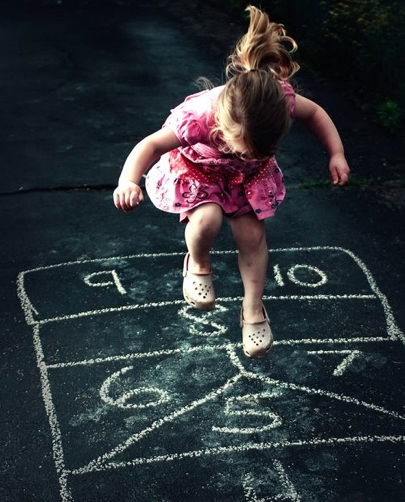
Confidence Booster #2: Leave Time for Play

Confidence Booster 2

Photo courtesy of perpetual-inspiration via Pinterest

Kids play to learn, enjoy, exercise, and explore the world. So provide a balance to a child’s life by allowing them to have their regular physical activity to relieve their stress and clear their minds. Only 1 in 3 children engage in physical activities each day, as shown by an interesting infographic about shy kids by PlaygroundEquipment.com. Therefore it is important to allow them to have their regular playtime in order to combat other effects of having less physical and social activities, such as obesity.

Nowadays, a playground also caters to kids with special needs. Accessible playground equipment offers all children the opportunity to have sensory play and exploratory play. Be able to identify those play activities that he enjoys and join him for regular parent-child bonding moment. These play activities can also help children interact and relate with other kids.

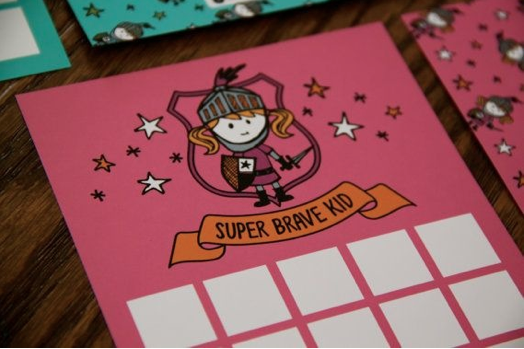
Confidence Booster #3: Have an Activity-Based Reward System

Confidence Booster 3

Photo courtesy of Etsy via Pinterest

One creative confidence booster is a reward system by using stickers. Have a board that lists daily tasks and allow your child to put the sticker on the board whenever the task is done. You can even give a reward that allows him to do a specific activity as a reward for accomplishing a specific task.

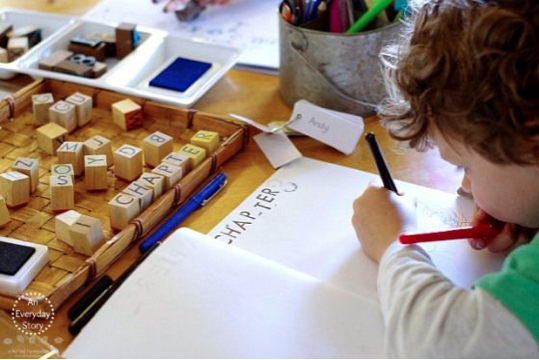
Confidence Booster #4: Build Confidence Through a Strength Book

Confidence Booster 4

Photo courtesy of An Everyday Story via Pinterest

Help develop a child’s personal interests, talents and strengths by creating a strengths book. The Raising Children Network suggests that the book can include things such as what your child enjoys doing, strength activities, dreams, daily learnings, and important people. Use the book before bedtime to remind your child of strengths and aspirations in life.

Confidence Booster #5: Provide a Loving Home Environment

Confidence Booster 5

Photo courtesy of stephynow via Pinterest

Children need a safe and loving environment. If they don’t feel safe and welcomed at home, they can suffer the effects of having a low confidence. In the presence of parents who fight, they can develop negative feelings, depression and withdraw. Therefore, be sure to establish a happy and loving environment everyday for your children.

Confidence Booster #6: A Sense of Belonging

Confidence Booster 6

Photo courtesy of Click it Up a Notch via Pinterest

When children feel like an important part of the family, community, class, group of friends, church, and neighborhood, their confidence grows. Provide different opportunities where kids can contribute to groups. Shy children may need to brush up on certain social activities and play ideas to help them interact with others.

Kids with special needs should be affirmed to grow more confident. By helping them build their self-esteem and self-confidence, you are effectively expressing your love and concern and this can empower them to do more things with their strengths and capabilities.

What Are Your Confidence Boosters?

How do you build confidence in your children with special needs? Share them in the comment box.

Do you like what you see at DifferentDream.com? You can receive more great content by subscribing to the quarterly Different Dream newsletter and signing up for the daily RSS feed delivered to your email inbox. You can sign up for the first in the pop up box and the second at the bottom of this page.

By

Anna Rodriguez is the author of HomeyGuide.com. She writes about family, business and health. Follow her @annrodriguez021

Author Jolene Philo

Archives

Categories

Subscribe for Updates from Jolene

Related Posts

Holiday Stress Relievers for Moms of Kids with Special Needs

Holiday Stress Relievers for Moms of Kids with Special Needs

Holiday Stress Relievers for Moms of Kids with Special Needs

Kids with special needs aren’t the only people who need holiday stress relievers. Moms of kids with special needs could use a few, too. Guest blogger Liz Matheis offers 3 holiday stress relievers for busy moms and other caregivers, too.

I know you know that the holidays are coming. You know that the holidays are coming. The holidays are great, but…. It throws off everybody’s schedule, including yours, which means higher stress, lower frustration tolerance, less sleep, and an unhappy holiday season. Not good.

This time around, you’re not going to hear about how to make the season manageable for your children. Rather, this time, it’s about you, the parent! So, let me offer a few strategies to help you get through the season, and maybe even enjoy it!

Holiday Stress Reliever #1: Wrap It Up Early

Nobody ever meant for this season to be so hectic and unenjoyable. Unfortunately, we dread the intense shopping and running around so much that we tend to put it off. But, what if you started early?

You can make this season easy by creating a list of who you have to shop for. Next, take a look for these items on-line and/or in store. Then, put it on your agenda to shop for 2-3 items or 1-2 people every 2 weeks starting now. For teachers, encourage class parents to collect money from each student and offer one class present instead of having to buy your child’s teacher a little something that takes you out of your way. The other moms will thank you also.

As you buy it, wrap it, and put it away. By the time it’s time, you will be ready.

Holiday Stress Reliever #2: Stick to Your Routine

You have a routine that you know your child with special needs thrives on. No need to change it just because it’s holiday season. If there are going to be deviations to the schedule, put it on the calendar and let your child know that things will return to business as usual the next day.

If you have holiday parties to attend, hire a babysitter and let your child continue on with the evening’s schedule so you are not trying to anticipate needs, meltdowns, and entertainment for your child. This also gives you the opportunity to enjoy a holiday party, and actually enjoy the season!

Holiday Stress Reliever #3: Work It Out

Trying to balance the holiday season with your job may be another part-time position. If you know that a big deadline or project is coming up, anticipate ahead (just as you did for the shopping list), and start working on your project in small chunks early. Gather the information you need, create a template, work on small parts of it each day so that you are not working late nights or starting super early.

These three strategies will help keep your stress level down which means that your family will not likely feed off of your anxiety and become increasingly anxious as well. Keep it slow and steady. That’s how you’ll make it through the holiday season!

What Are Your Holiday Stress Relievers?

What do you do to avoid, reduce, and relieve stress during the holiday season? Leave your ideas in the comment box…but only if it doesn’t stress you out!

Do you like what you see at DifferentDream.com? You can receive more great content by subscribing to the quarterly Different Dream newsletter and signing up for the daily RSS feed delivered to your email inbox. You can sign up for the first in the pop up box and the second at the bottom of this page.

By

Dr. Liz Matheis is a clinical psychologist and school psychologist in Parsippany, NJ. She offers support, assessments, and advocacy for children who are managing Autism Spectrum Disorders, ADHD, learning disabilities, and behavioral difficulties, as well as their families. She is also a contributor to several popular magazines. Visit www.psychedconsult.com for more information.

Author Jolene Philo

Archives

Categories

Subscribe for Updates from Jolene

Related Posts

No More Vacant Special Needs Dads

No More Vacant Special Needs Dads

No More Vacant Special Needs Dads

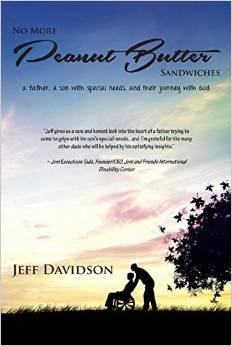
Vacant special needs dads are an unwanted reality for many families kids with disabilities. Today’s guest blogger and author Jeff Davidson was in danger of becoming a vacant dad after the birth of his son who has profound special needs. Today, Jeff shares the story of the grace that rescued him and his family and eventually led to his newly released book, No More Peanut Butter Sandwiches

No More Vacant Special Needs Dads

“My coping mechanism, like so many other dads of children with special needs, was to live in denial. I convinced myself that this was temporary and he would eventually catch up developmentally. For years I would not even utter the word autism out loud. I would say my son was on the autism spectrum, but not autistic. I would declare he had sensory processing issues but it wasn’t autism. I acted as if as long as I didn’t acknowledge it verbally, it didn’t exist. I was convinced he would just grow out of it someday. I would retreat at night to my home office and pour myself into my work, sitting at my desk until everyone else in the house was in bed.

“That’s what most of us do when we are in denial or just don’t know what to do. We retreat to something we are good at, or can master, and we throw ourselves into that instead. That’s our coping mechanism. So I dug in passionately at work and masked what was going on in my private life.”

Special Needs Dads and Moms Need to Grieve

“Coming to grips with the realization that you have a child with special needs is very much like many other life-altering moments in life. Everyone has to grieve. Everyone has to go through the grief process. What no one tells you is that you and your spouse will grieve differently and not be at the same stage or place in your grief at the same time.

“Men, for example, tend to get all tangled up in the denial and anger stages of grief. We can linger there for years and, for many dads, it’s unrecoverable. They never come to terms with it and it destroys them. Some dads choose to live forever in anger or denial. Often, dads check out within just a few years of receiving a diagnosis. Many will just walk away and leave the family fatherless.”

Why Special Needs Dads Become Vacant Dads

“For too many others, though, they just become what I call the ‘vacant dad.’ The vacant dad stays in the marriage, but he is pretty much there in body only. He doesn’t care, he doesn’t get engaged, and he doesn’t get involved. He’s checked out in every way except physically. I don’t know which is worse, the dad who leaves or the vacant dad. But I didn’t want to be either one.

“We have an epidemic of vacant dads in the special-needs community these days. We are losing too many dads within two or three years after diagnosis. As a result too many children with special needs are being predominantly raised by single female caregivers.”

Why I Write for Special Needs Dads

Those words are excerpted from my new book for parents of children with special needs, No More Peanut Butter Sandwiches: a father, a son with special needs, and their journey with God.

I began using the phrase “vacant dad” a couple of years ago after noticing the lack of engagement and involvement so many fathers have within their special-needs families. As a father of a son with profound special needs myself, I cannot imagine missing out on the blessings, joys, and cherished experiences I have had through my interactions with my own son.

As I like to say, “God sent a broken child into a broken world to a broken father, so that together they could find God in their brokenness.” That’s why I have become so passionate about starting a movement to reach more dads of children with special needs. That’s why I wrote my book from a father’s perspective to help other fathers along the journey.

How to Join the No More Vacant Dads Community

At risingaboveministries.org, fathers and mothers of children with special need can network, find support, participate in discussion forums, and link up with dad’s groups and activities across the country.

Unknown

Do you like what you see at DifferentDream.com? You can receive more great content by subscribing to the quarterly Different Dream newsletter and signing up for the daily RSS feed delivered to your email inbox. You can sign up for the first in the pop up box and the second at the bottom of this page.


By

Jeff Davidson and his wife Becky founded Rising Above Ministries to help support and encourage special needs families. Jeff passed away in 2017.

Author Jolene Philo

Archives

Categories

Subscribe for Updates from Jolene

Related Posts