Everything You Want to Know About EA/TEF, But Are Afraid to Ask

Everything You Want to Know About EA/TEF, But Are Afraid to Ask

Everything You Want to Know About EA/TEF, But Are Afraid to Ask

2015’s EA/TEF Awareness Month is drawing to a close, so this post is the season’s last hurrah. Consider it a filling in of any gaps left by this month’s EA/TEF guest bloggers—Ami, Jolene, and Maggi—who shared their stories and wisdom gleaned as parents of kids with the same congenital esophageal anomaly – an abnormality none of us had heard of before our children’s diagnoses. And since EA/TEF occurs in only 1 of every 2,500–3,500 births, few people in the general public have heard of it either.

Therefore, today’s EA/TEF Awareness Month wrap up is a collection of links to previous Different Dream EA/TEF posts about the condition–some humorous, some informational, and some that will tug at your heartstrings. Are you ready?

Heartstring Tugger EA/TEF Posts

To start things off, here’s a list of tug-at-your-heartstrings posts written by moms of kids with EA/TEF:

Informational EA/TEF Articles

Now that your emotions are engaged, check out these links filled with informational brain food:

Humorous EA/TEF Pieces

And finally, to leave you laughing, here is a tickle-your-funny-bones offering:

What EA/TEF Links Would You Add?

Have you written or read a something about EA/TEF that should be added to this collection? Tell about it it and its author in the comment box below. And please leave the link, so others can benefit from it, too. Thanks!

Do you like what you see at DifferentDream.com? You can receive more great content by subscribing to the quarterly Different Dream newsletter and signing up for the daily RSS feed delivered to your email inbox. You can sign up for the first in the pop up box and the second at the bottom of this page.

By

Jolene Philo is the author of the Different Dream series for parents of kids with special needs. She speaks at parenting and special needs conferences around the country. She’s also the creator and host of the Different Dream website. Sharing Love Abundantly With Special Needs Families: The 5 Love Languages® for Parents Raising Children with Disabilities, which she co-authored with Dr. Gary Chapman, was released in August of 2019 and is available at local bookstores, their bookstore website, and at Amazon.

Author Jolene Philo

Archives

Categories

Subscribe for Updates from Jolene

Related Posts
EA/TEF Awareness Month: Call Me a Romantic

EA/TEF Awareness Month: Call Me a Romantic

EA/TEF Awareness Month: Call Me a Romantic

If you’ve visited DifferentDream.com lately, you know January is EA/TEF Awareness Month. Once again, the parent of a child with this condition will share her family’s story. Guest blogger Maggi Gale’s story is one of global proportions as you will soon see.

EA/TEF Awareness Month: Call Me a Romantic

Call me a romantic, but I had pictured the scene months before the baby had arrived. My mental picture was based on our sunny, Saturday afternoon visit of the maternity ward in the East African Government hospital. I would sit in the corner of the room in a low chair, cradling the baby. Then her dad and sister would arrive. Phoebe would hold her little sibling for the first time.

Being well acquainted with life in Africa, it seemed natural to stay for the birth, rather than uprooting our family to stay with family or friends back in the United Kingdom. Sure, the hospital wasn’t exactly state of the art, but this wasn’t my first baby and I’m made of fairly tough stuff. So my line of thinking went.

Ah, yes, the scene I visualized was sweet and cozy.

EA/TEF Awareness Means Facing What Really Happened

So what really happened? Reality was a far cry from my daydream. After a long labor, my daughter Lois was born without a cry. She was whisked away as I lay waiting for stitches. But why did I detect a determined, rather fixed smile on the midwife’s face?

And what was the pediatrician doing in the room? “There’s nothing to worry about, Mrs. Gale,” he began.

Instinctively I knew that he was wrong, and my world had changed forever.

That evening, a doctor friend had come to visit. Although she didn’t tell us, she wasn’t comfortable with the diagnosis. After seeing Lois, she went home to do research. The next morning she came back to chat with the pediatrician, explaining she was a doctor with pediatric experience.

From that point on, we were on a roller coaster. The doctor wasted no time in advising us. “You need to leave the country. Go to South Africa or the United Kingdom.” I walked out of the hospital on automatic and caught a taxi home to pack. As my husband decided on the UK, organized flights, accommodations, and an ambulance, I mechanically seized the scissors and cut the sleeve off baby gowns so that Lois could wear them with her drip in her arm. Despite my stitches, I flung suitcases around and packed for us all.

EA/TEF Awareness Means Letting Go of Preconceived Ideas

The only question on my mind, the only question that mattered was, “Will she make it?” We had arrived at the bottom line, oh so suddenly, oh so unexpectedly. All emotions were suspended as my spirit continually cried, “Please God, just let her live.”

I wrestled with my preconceived ideas. It wasn’t supposed to happen this way. We were the blessed ones, the ones God showered his grace upon. So what was this? Where had we come to? I didn’t know this scary place.

Back in the UK just 48 hours after her birth, our surreal experience began to be given names, forms, and explanations. The surgeon sat down with us and explained that Lois had been born with tracheoesophageal fistula (TEF), a condition which affects one in 3500 babies. For some unknown reason, her esophagus had not been properly formed. The top part stopped short of her stomach. The bottom part, came from her stomach was somehow attached to her windpipe. Consequently, she was totally unable to swallow or make any sound.

Surgery was absolutely essential, but the full extent of her problem couldn’t be known until she was opened up. There were many variations of TEF. Some requiring a single operation. Others requiring multiple surgeries. No guarantee of success was offered, either.

EA/TEF Awareness Means Dangling in Space

So, on the afternoon of May 26th, 2003, we perched on our friends’ settee, but  we were not really there. Emotionally, we were dangling in space. Waiting hour after long hour for a call from the hospital to tell us if the operation was a success. That call eventually came. Words can’t convey the feeling of relief that swept over us, that allowed us to breathe again, feel our bodies again, and slowly begin to come out of automatic mode and to process what had happened, emotionally and mentally.

EA/TEF Awareness Means a World Changed Forever

Yes, my world changed forever, when my daughter was born. Along with my visual image of those first few days being shattered, some of my preconceived ideas were also shattered. What had gone wrong?

It took me some time to understand that it nothing had gone wrong. It had just gone differently. My preconceived ideas had been wrong. My assumptions of what God, in His grace, allows His children to experience had been wrong. The remarkable thing was that He is with us in it, as He demonstrated in the coming weeks, months and years of our EA/TEF experience.
But that’s another story. Or, perhaps, more than one.

Questions about EA/TEF Awareness Month for Maggi?

Do you have questions for Maggi about EA/TEF or their family’s experience? Leave them in the comment box.

Do you like what you see at DifferentDream.com? You can receive more great content by subscribing to the quarterly Different Dream newsletter and signing up for the daily RSS feed delivered to your email inbox. You can sign up for the first in the pop up box and the second at the bottom of this page.

By

Maggi is British, but currently lives with her family in the Middle East where she is an art teacher.  She is wife to Russell, and mother to Phoebe and Lois.  She has spent many years in Africa, and it was there that EA/TEF baby Lois was born.  Many life lessons were learned through the experience of bringing up Lois in a beautiful but often challenging environment.  Over the past few years, Maggi feels she has come up for air and rediscovered some balance in life.  However, she is vividly aware of the path others are still treading.  Therefore, she longs to encourage others through the challenging circumstances of raising chronically ill children. 

Author Jolene Philo

Archives

Categories

Subscribe for Updates from Jolene

Related Posts

Why EA/TEF Awareness Month Is Grace Awareness Month

Why EA/TEF Awareness Month Is Grace Awareness Month

Why EA/TEF Awareness Month Is Grace Awareness Month

Photo Source

January is EA/TEF Awareness Month. If you have no idea what EA/TEF is, don’t feel bad. I didn’t have a clue it existed until 11:00 AM (Mountain Time) on May 23, 1982.

I was impeccably dressed in a fetching hospital gown when a nurse wheeled me from my room to the nurses’ station to take a phone call. Back in the olden days, cell phones hadn’t been invented yet, and small hospitals like the one where our son was born didn’t run landlines into patient rooms.

I would mention that the term landline hadn’t been invented yet either, but that would detract from EA/TEF awareness, so I won’t mention it.

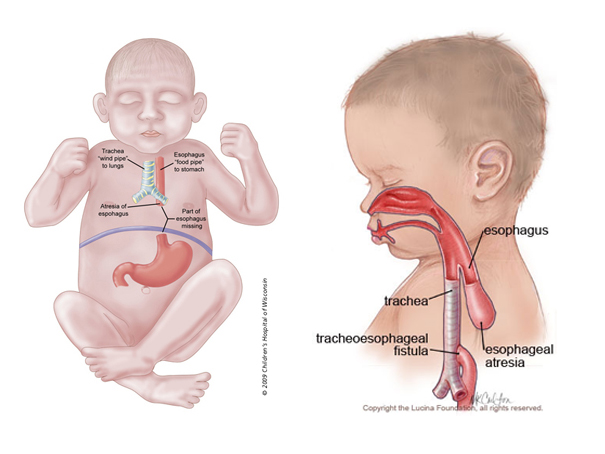
The pediatrician on the other end of the phone line explained that our baby, who’d been transferred to a larger regional hospital for tests, had a tracheoesophageal fistula, TE fistula for short. His esophagus, the doctor explained, came down from his throat and formed a blind pouch. It came up from his stomach and hooked into his trachea.

That was what doctors called it in the olden days. These days, they call it EA/TEF. Esophageal Atresia (EA) for the pouch at the top and tracheoesophageal fistula (TEF) for the hook into the trachea at the bottom.

Our son had surgery the day he was born. 5 years and 6 surgeries later, our boy could eat normally. But several decades passed before my husband and I met other parents of babies born with the same condition, or with one of its variations. We didn’t meet them or learn other EA/TEF variations existed until we joined Facebook.

Because the internet and Facebook weren’t invented until our son was an adult either. Boy, do I feel old.

Thanks to Facebook, I’ve become friends with young parents who know more about EA/TEF than I ever will. One mom, who’s writing a guest post for EA/TEF Awareness Month at www.DifferentDream.com, recently sent this update about the progress of her article.

The rest of this post can be found at Not Alone’s website for parents of children with special needs.

Do you like what you see at DifferentDream.com? You can receive more great content by subscribing to the quarterly Different Dream newsletter and signing up for the daily RSS feed delivered to your email inbox. You can sign up for the first in the pop up box and the second at the bottom of this page.

By

Jolene Philo is the author of the Different Dream series for parents of kids with special needs. She speaks at parenting and special needs conferences around the country. She’s also the creator and host of the Different Dream website. Sharing Love Abundantly With Special Needs Families: The 5 Love Languages® for Parents Raising Children with Disabilities, which she co-authored with Dr. Gary Chapman, was released in August of 2019 and is available at local bookstores, their bookstore website, and at Amazon.

Author Jolene Philo

Archives

Categories

Subscribe for Updates from Jolene

Related Posts

How Weighted Blankets Benefit Kids with Special Needs

How Weighted Blankets Benefit Kids with Special Needs

How Weighted Blankets Benefit Kids with Special Needs

Today’s guest post comes from the people at Special Needs Essentials, a website that specializes in products and resources for special needs families. Today’s post explains how weighted blankets benefit kids with special needs. 

How Weighted Blankets Benefit Kids with Special Needs

Have you ever heard of weighted blankets? These revolutionary tools provide pressure and sensory input, similar to a good hug. They are made of plastic pellets, evenly distributed in a quilted pattern in order to provide a widespread sensation of pressure. Studies have proven that the pressure provided by hugs or weighted tools enables the release of serotonin, a hormone that calms and relaxes the body. It also stimulates oxytocin, a hormone that promotes feeling of contentment and willingness of social bonding, among others.

This sensation is particularly valuable for individuals affected by autism and other sensory seeking individuals. They can use weighted blankets as a calming tool or simply as a regular blanket at night. During the day, you can try using it when you feel anxious, aggressive or just want to be comfortable. Sit and wrap yourself in your blanket or lay down and stay there a few minutes to hours, as long as you feel the benefits. At night, weighted blankets used in place of regular blankets will help your child go to sleep faster and stay asleep better.

Pay attention to buy a washable blanket made with non-toxic materials, as it is not always the case. As for the color, your child may appreciate the calming effect of solid blue. Some blankets have the ability to be warmed in your dryer or cooled in your freezer, thus providing the additional benefit of adapting to your child’s favorite temperature. Fringes can provide additional sensory input too, enabling the person to run their fingers around and play with them. The suggested blanket weight is 10% of your weight plus 1 pound, but it is best to check with your physician or therapist.

                 weighted blanket turtle       weighted blanket 2       weighted blanket washable

Weighted vests and weighted lap pads are also on the market, providing a different kind of pressure for sensory seeking individuals. Find your favorite weighted tool today!

Weighted blankets Special Needs Essentials Logo (Company)Special Needs Essentials is dedicated to offering essential materials that can enhance the quality of life for people with special needs, their families, and their support communities. SNE specializes in educational, therapeutic, play to learn, living aids, and sensory products. The intent of these skill-builders varies and includes providing sensory input, improving motor function, increasing cognitive development, and providing daily living assistance. Overall, SNE intends to enhance developmental skills in individuals of all abilities.

Your Take on Weighted Blankets?

Has your family had experience with weighted blankets? What do you think of them? Leave a comment in the box below. 

Read more about the research behind weighted blankets at these links:

Calming Effects of Deep Touch Pressure in Patients with Autistic Disorder, College Students, and Animals
Serotonin and Prefrontal Cortex Function: Neurons, Networks, and Circuits Molecular Neurobiology

Do you like what you see at DifferentDream.com? You can receive more great content by subscribing to the quarterly Different Dream newsletter and signing up for the daily RSS feed delivered to your email inbox. You can sign up for the first in the pop up box and the second at the bottom of this page.

By

Jolene Philo is the author of the Different Dream series for parents of kids with special needs. She speaks at parenting and special needs conferences around the country. She’s also the creator and host of the Different Dream website. Sharing Love Abundantly With Special Needs Families: The 5 Love Languages® for Parents Raising Children with Disabilities, which she co-authored with Dr. Gary Chapman, was released in August of 2019 and is available at local bookstores, their bookstore website, and at Amazon.

Author Jolene Philo

Archives

Categories

Subscribe for Updates from Jolene

Related Posts

How to Create a Realistic Caregiving Routine

How to Create a Realistic Caregiving Routine

How to Create a Realistic Caregiving Routine

Are you caring for a new baby, a child with special needs, a spouse with disabilities, or an aging parent? How would you describe your caregiving routine?

Stuck in a rut?
Anything to get by?
Fly by the seat of your pants?
One step above total chaos?
All of the above?

Yeah, I know how you feel. Because that’s what my routine felt like when my aging mother stayed with us for a month recently. One day, my normal, writing routine was there. The next day, Mom’s needs pulled the rug out from under that routine. She didn’t get her meds on schedule. Meals were late. Appointments were missed. My writing output dwindled to nothing. By the end of the first week, I was a basket case and our home felt one step away from total chaos. Things stayed that way until I created a routine to meet both our needs.

How To Create a Realistic Caregiving Routine

How did that routine come to be? Basically, by asking these questions:

  1. What does Mom need?
  2. What do I need?
  3. What has to get done?
  4. What can be abandoned?
  5. What requires help to be accomplished?
  6. Who can help accomplish it?

The answers to those questions provided a way to reorder my priorities and time use. It wasn’t easy…in fact, it was hard to say good-bye to some of the month’s writing goals. And it took a while before my husband truly understood how he could support the new routine and how much help Mom needed from both of us.

What’s Your Caregiving Routine?

Do you have a caregiving routine? How did it come into being? What would you like to change about your routine? What caregiving resources have you found useful? Share your wisdom in the comment box.

Do you like what you see at DifferentDream.com? You can receive more great content by subscribing to the quarterly Different Dream newsletter and signing up for the daily RSS feed delivered to your email inbox. You can sign up for the first in the pop up box and the second at the bottom of this page.

By

Jolene Philo is the author of the Different Dream series for parents of kids with special needs. She speaks at parenting and special needs conferences around the country. She’s also the creator and host of the Different Dream website. Sharing Love Abundantly With Special Needs Families: The 5 Love Languages® for Parents Raising Children with Disabilities, which she co-authored with Dr. Gary Chapman, was released in August of 2019 and is available at local bookstores, their bookstore website, and at Amazon.

Author Jolene Philo

Archives

Categories

Subscribe for Updates from Jolene

Related Posts

6 Special Needs Tax Deductions for Families

6 Special Needs Tax Deductions for Families

6 Special Needs Tax Deductions for Families

Tax season is here, and special needs tax deductions make a difference for families when every penny counts. That’s why Different Dream is passing along special needs tax deductions tips recently posted at the Military One Source website. Many of them are plain old common sense, but common sense can be easy to overlook when chasing down receipts and pay stubs. Some of them highlight some surprising deductions that you may not know exist. See what you think!

6 Special Needs Tax Deductions

  • Claim all eligible dependents 
  • Explore adoption credit
  • Recoup child and dependent care expenses
  • Check Out the Earned Income Tax Credit
  • Ditto for Credits for the Elderly or the Disabled
  • Claim medical and dental expenses when possible


Where to Find More Information about Special Needs Tax Deductions

Each of the 6 deductions is explained in full at Military One Source. The article explains age restrictions, what family members are and aren’t eligible, the percentages of expenses that can be deducted, and more. The original post even has links to specific IRS publications that explain each of the 6 special needs tax deductions. Of course, you should ask your accountant to investigate all the possible deductions to be sure they apply to your situation.

What Special Needs Tax Deductions Do You Use?

Has your accountant successfully applied any of the deductions in this article? Do you have tips about how to make them work? Are there other special needs tax deductions you can recommend? You can tell all about them in the comment box. Thanks!

Do you like what you see at DifferentDream.com? You can receive more great content by subscribing to the quarterly Different Dream newsletter and signing up for the daily RSS feed delivered to your email inbox. You can sign up for the first in the pop up box and the second at the bottom of this page.

By

Jolene Philo is the author of the Different Dream series for parents of kids with special needs. She speaks at parenting and special needs conferences around the country. She’s also the creator and host of the Different Dream website. Sharing Love Abundantly With Special Needs Families: The 5 Love Languages® for Parents Raising Children with Disabilities, which she co-authored with Dr. Gary Chapman, was released in August of 2019 and is available at local bookstores, their bookstore website, and at Amazon.

Author Jolene Philo

Archives

Categories

Subscribe for Updates from Jolene

Related Posts