A Grandmother’s Prayers for a Grandchild with Special Needs

A Grandmother’s Prayers for a Grandchild with Special Needs

A Grandmother’s Prayers for a Grandchild with Special Needs

Different Dream welcomes new guest blogger, Liz Schultz, today. She’s here with the story of the power of a grandmother’s relationship with and her prayers for a grandchild with special needs. What an example for all of us!

A Grandmother’s Prayers for a Grandchild with Special Needs

“Wait, Grandma! Stop the movie! Stop it right there!”

Helen fumbled for the remote and punched the pause button. “What is it, Austin?”

“I want Jesus in my heart,” Austin answered, responding to the gospel message in the Veggie Tales movie now frozen on the screen. Helen prayed with him, “Jesus, come into my heart. I want you to live in me.”

“I don’t know if it sunk into his mind,” Helen explains when she remembers that day and considers the effects of prayer on her grandson’s growing faith, “but I know that seed of faith got into his heart, and my greatest prayer is that what is sown in Austin’s heart will manifest in his life.”

Helen prays that what she teaches about God will grow in Austin’s understanding and be displayed in his behavior. She knows the summer vacations and Christmas breaks that Austin spends with her are times to share her faith and cover him with prayers for his protection and future.

“When Austin is here, it’s seed time,” Helen says. “The greatest thing I can do for him is to sow that seed in his heart and pray for the fruition.”

One effect of Austin’s pervasive development disorder is that he struggles to understand and control his emotions. Helen is teaching Austin to pray to God for his assistance.

“When he becomes angry or aggressive, I say, ‘Let’s ask Jesus to help you,’” Helen says. “’ Let’s ask Jesus to help you when you’re mad. Let’s ask him to help your heart be happy,’ and Austin will reply, ‘Okay, Grandma, I’ll ask Jesus to help.’ When he shares or is polite, I tell him that makes Jesus happy, and Austin understands.”

They often pray together asking Jesus to help Austin make good choices.

“I pray that Austin will make a difference,” Helen explains, describing her hopes for her grandson to live a fruitful and productive future. “I pray that he lives to the full potential God created in him.”

“He is so full of love,” Helen continues. “He’s very aware of and sensitive to other people’s feelings. I pray that he always cares about others, and gives to others. I want him to seek to meet the needs of others, and know that he makes a difference in their lives.”

While Helen prays for Austin’s growing faith, she encourages parents who are struggling with a child’s disability to pray to God and trust in him.

“God knows and loves every child conceived on this earth. Jeremiah 29:11 says that God has a purpose and a plan. Those plans are for good and not evil, for a future and a hope. Never, never give up hope. When I feel weighed down by worries and what-if’s, I remember that God is bigger than my fear.”

“Hey, Grandma, what’s up?” Austin beams as he climbs the front steps, arriving for another visit at Helen’s house.

“There’s my Austin!” Helen greets him, welcoming another opportunity to pray with him and share her faith.

Your Prayers for a Grandchild with Special Needs?

Are you a praying grandparent? Feel free to share about your prayers for a grandchild with special needs in the comment box.


Do you like what you see at DifferentDream.com? You can receive more great content by subscribing to the quarterly Different Dream newsletter and signing up for the daily RSS feed delivered to your email inbox. You can sign up for the first in the pop up box and the second at the bottom of this page.

By

Liz Schultz draws on her experience as a single mother to write encouragement to other single parents. She contributes guest posts at desmoines.citymomsblog.com. Liz also volunteers with a ministry serving teen parents in the Des Moines area, and is completing a book about how her single mom experience led her to faith in God. In her spare time, Liz deconstructs pajama pants to create warm and comforting quilts. Her daughter married last year, so Liz and her husband are now eagerly awaiting the arrival of grandchildren.

Author Jolene Philo

Archives

Categories

Subscribe for Updates from Jolene

Related Posts

4 Tricks to Make Halloween a Treat for Your Child with Special Needs

4 Tricks to Make Halloween a Treat for Your Child with Special Needs

4 Tricks to Make Halloween a Treat for Your Child with Special Needs

Are you looking for tricks to make Halloween a treat for your kids with special needs? Guest blogger Trish Shaeffer offers these 4 tips to make costumes, the atmosphere, treats, and words fun for your child this Halloween.

4 Tricks to Make Halloween a Treat for Your Child with Special Needs

Most kids can’t wait to try on Halloween costumes and make their way through the neighborhood trick-or-treating. But for children with special needs, Halloween can bring new challenges. Their choices of costume or candy may be restricted so that Halloween is not always such a treat.

Though children may have limited mobility, a sensory processing disorder, a cognitive problem or a food allergy, they still can enjoy Halloween. Try these tricks to make the haunted holiday the right kind of scary.

  1. Make costumes work for your child. The traditional boo won’t do if your child’s costume includes a wheelchair, or your kids hate the feel of scratchy material, makeup, and masks. But never fear, you can make it work! Many online stores have costumes for kids with special needs or can even give you ideas on how to make your own. If your child uses crutches, a walker or a wheelchair, get creative! Even crutches can complement a costume. Just be sure the costume doesn’t  interfere with your child’s mobility.
  2. Prepare the senses. For kids with sensory processing disorder, candy, nippy fall air, running around after dark, costumes, or even the noises in the dark can be a challenge. To make sure your child can handle the night, try one of these tricks: Let your child stay at home and hand out treats. Or create a comfortable costume and practice wearing it beforehand. You should even practice the steps of what to say during trick-or-treating to prepare them for the night.
  3. Take the scare out of treats. If you’re terrified of trusting others to understand your child’s food restrictions, add a warning sticker, a shirt, or a print out to your child’s costume. You can find many ideas online at sites like Star Allergy Alerts. If you child has food sensitivities or allergies, you can also plan ahead to suggest alternatives like toys or all-natural candy. When in doubt, look for the teal pumpkins when going door to door. These pumpkins signify safe treats for children with food allergies. Look for local events that also offer trick-or-treating opportunities for kids with allergies.
    4. Provide wise words. For children with developmental or speech delays, you can make cards to hand out when they go door-to-door. These cards explain the issue to others so they can understand your child’s needs and offer a friendly hello even without a word from your child. There are many great ideas online for these cards.

I hope these tricks make Halloween a treat for your child. Have a Boo-tiful day and a happy Halloween. And feel free to leave your Halloween tips in the comment box, too.


Do you like what you see at DifferentDream.com? You can receive more great content by subscribing to the quarterly Different Dream newsletter and signing up for the daily RSS feed delivered to your email inbox. You can sign up for the first in the pop up box and the second at the bottom of this page.

By

Trish Shaeffer mom of 3 active boys, a 9-year-old and 5-year-old twins who were born 2 months early and have special needs. She’s a peer supporter for Parent to Parent and volunteers with the United Cerebral Palsy Network, Special Olympics, and the United Way. She’s also an equine volunteer at Leg Up Farm. She’s married to her best friend and biggest supporter, Chris Shaeffer.

Author Jolene Philo

Archives

Categories

Subscribe for Updates from Jolene

Related Posts

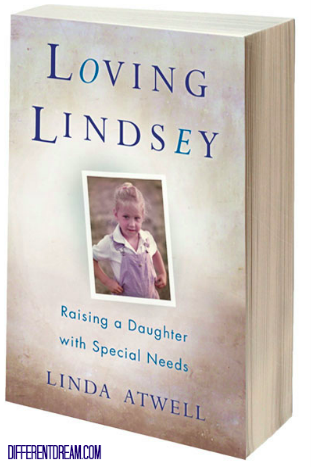
Why I Wrote Loving Lindsey: An Interview with Linda Atwell

Why I Wrote Loving Lindsey: An Interview with Linda Atwell

Why I Wrote Loving Lindsey: An Interview with Linda Atwell

Different Dream is pleased to welcome Linda Atwell as today’s guest blogger. Linda is here to talk about and answer our questions about her new book, Loving Lindsey: Raising a Daughter with Special Needs. We hope you enjoy getting to know Linda as much as we did and that, perhaps, you’ll purchase her new book.

Why Linda Atwell Wrote Loving Lindsey: An Interview with the Author


Question 1: Did you know immediately after birth that your daughter would have special needs?

When I was pregnant, the only baby my mind ever visualized was a healthy one, and when my daughter was born, I thought my dearest dream had been granted. Lindsey had impressive Apgar scores—the evaluations taken right after a baby is born that tells doctors and nurses how well your infant did coming into the world, then five minutes later to find out how she was adjusting to her new environment. Lindsey scored eight and nine—out of ten. Then she excelled in her early development. Based upon the developmental milestones, she rolled over, crawled, talked, and even walked on time.

Question 2: So, when did things change?

At 16 months, my inquisitive, beautiful toddler suffered a grand mal seizure and developed essential tremors. Although she’d had no visible problems with gross motor skills, fine motor skills confounded her. She could not coordinate the small muscle movements in her fingers, hands, or eyes. She wasn’t making friends or keeping up with her peers in school. In the 1980s, when Lindsey was 6, doctors at Oregon Health Science University diagnosed her as “mildly mentally retarded” (a term I despise and rarely use)—from an unidentified syndrome, but most likely from an undiagnosed birth defect. They told me that when she became an adult, she would likely live in a group home.

Question 3: What lifestyle did you hope for your daughter’s future?

After coming to terms with my daughter’s diagnosis, I learned that what I wanted more than anything (just like the mother of a typical kid), was for my girl—despite her intellectual disabilities—to live an independent life, to have purpose, and to find love. Fortunately, Lindsey wanted those things for herself. In fact, she demanded them. But with such goals, there are also challenges.

Question 4: How did Lindsey handle independence?

Lindsey plunged into adulthood and experimented with sex, decided to have a tubal ligation, then ran away with a man more than twice her age to live in a house with tinfoil taped over the windows. As she grew closer to Emmett, she withdrew from us. But because she was twenty, and it was not illegal in Oregon to pick a bad partner, law enforcement could not help us. It took 4 1/2 years to bring our daughter home.

Question 5: Why did you write Loving Lindsey?

Initially, I felt the need to get our story down on paper. But as I wrote, I wondered if our story might have turned out differently if I’d been aware of Lindsey’s rights as an adult, or the traits of people who prey on our most vulnerable young adults—whether or not they have a mental disability. So by sharing, I hoped it would help others.

Question 6: What do you hope the reader learns from your book?

Our story includes moments of love and pride, as well as the times our family struggled. It shares the successes people with special needs can achieve when offered parental, educational, and community support. Although the challenges for independent living will vary from child to child, and family to family, kids with special needs often have more abilities than we might initially think. Our daughter continues to surprise us all the time. And, truth be told, that is the story I really wanted to tell.


Do you have questions for Linda or about her book, Loving Lindsey? Leave them in the comment box if you like!


Do you like what you see at DifferentDream.com? You can receive more great content by subscribing to the quarterly Different Dream newsletter and signing up for the daily RSS feed delivered to your email inbox. You can sign up for the first in the pop up box and the second at the bottom of this page.


Linda Atwell earned her BA from George Fox College. She owned a successful home décor business for ten years before switching to adjusting catastrophe insurance claims and climbing roofs for a living. Now she writes award-winning work that has appeared in print and online magazines. Her first book, Loving Lindsey: Raising a Daughter with Special Needs was recently released by She Writes Press. Linda irregularly writes a blog about her daughter with special needs. She hopes to get 50 stamps in her passport before it expires. Linda and her husband John live in Silverton, Oregon. They have 2 incredible adult children.

 

By

Jolene Philo is the author of the Different Dream series for parents of kids with special needs. She speaks at parenting and special needs conferences around the country. She’s also the creator and host of the Different Dream website. Sharing Love Abundantly With Special Needs Families: The 5 Love Languages® for Parents Raising Children with Disabilities, which she co-authored with Dr. Gary Chapman, was released in August of 2019 and is available at local bookstores, their bookstore website, and at Amazon.

Author Jolene Philo

Archives

Categories

Subscribe for Updates from Jolene

Related Posts

5 More Ways to Build Positive Parent-Teacher Relationships

5 More Ways to Build Positive Parent-Teacher Relationships

5 More Ways to Build Positive Parent-Teacher Relationships

Are you looking for ways to build positive parent-teacher relationships as the new school year begins? This blog series is based on what I, Jolene, learned during 25 years as an elementary teacher. My classroom was inclusive, with about 1/3 of the students receiving resource room services as specified in their IEPs and 2/3 of the students without IEPs. Last week’s post looked at 5 tested tips that can build positive parent-teacher relationships. This week’s list contains 5 more.

5 More Ways to Build Positive Parent-Teacher Relationships

Tip #6: Write a Thank You Note

Sometimes teachers or other educator in the school make a spectacular difference in a child’s life. Whether that person creates a special bond with your child, advocates for more services, or creates an environment that school a safe and happy place, send a thank you note. This strategy not only gives the teacher the praise due her, but also builds good will between parent and teacher. From experience, I can say that a sincere thank you note can bring tears to a teacher’s eyes when she needs encouragement.

Tip #7: Teach Your Child to Give

Does your child get enough to eat, have clean clothes to wear, and a comfortable place to come home to each day? If your answer is yes, your child is richly blessed. But children who want for very little can begin to feel entitled rather than grateful for their blessings. One way to boost their gratitude quotient is to teach children to give. Have them sort through toys for nice ones to give away. Encourage to give some of their allowance to church. Choose a family service project or raise money for worthy causes. Children who learn to give bring that attitude to school. They help create compassion in their classroom and in their friendships. Their kindness also builds positive parent-teacher relationships.

Tip #8: Promote Independence

When children are small or not developing as quickly as their peers, it’s often easier to do things for them than to teach them to do things for themselves. But it’s crucial for parents to teach kids age- or ability-appropriate skills that lead to greater independence as soon as they’re able to learn them. Children with skills that make them more independent feel empowered and more confident. They are more likely wait to ask for help until they need it and less likely to develop an attitude of entitlement. Like children who learn to give, these children bring their healthy attitudes to school and change the climate in their classroom. Educators respect and think positively about parents who encourage age- or ability-appropriate independence in their children.

Tip #9: Offer Solutions

When problems arise at school, try to think of them as opportunities to build better and more positive parent-teacher relationships. Ask questions to find out what the problem is and about how it could be fixed. Think about the solutions offered, and you agree with them, that’s great. The problem can be solved. But if the solutions aren’t adequate, offer some of your own. This can feel intimidating, but it can be done. You are part of your child’s education team, and you are the expert on your child. Present your solutions calmly, rationally, humbly, and with a willingness to listen to the opinions of others. Working together to solve problems on behalf of the child can create positive parent-teacher relationships.

Tip #10: Follow the Biblical Model

If your best efforts at solving a problem fail and the conflict can’t be resolved, you must advocate for your child. The Bible provides a model for conflict resolution. First, go to the teacher involved about the problem one-to-one. If that is unsuccessful, ask for a meeting with the teacher and whoever is directly over that teacher–probably the building administrator or a special education administrator–and try to resolve the problem there. If that doesn’t work, ask for a meeting with the administrator at the following level. Advocate and continue until resolution is reached. To learn more about legal rights of children with special needs at school, visit WrightsLaw.com. It contains a wealth of information.

There you have them. 5 more ways to build positive parent-teacher relationships for a new school year. To check out the first 5 tips, check out Part 1 of the series. Also, leave your best tips in the comment box so readers can learn from you, too.


Do you like what you see at DifferentDream.com? You can receive more great content by subscribing to the monthly Different Dream newsletter and signing up for the daily RSS feed delivered to your email.

By

Jolene Philo is a published author, speaker, wife, and mother of a son with special needs.

Author Jolene Philo

Archives

Categories

Subscribe for Updates from Jolene

Related Posts

5 Ways to Build Positive Parent-Teacher Relationships

5 Ways to Build Positive Parent-Teacher Relationships

5 Ways to Build Positive Parent-Teacher Relationships

The other day I dashed into Walmart for deodorant, took a wrong turn, and ended up in the school supply aisle. It was teeming with moms and kids intent on filling their back-to-school lists. A little boy thrust his wrist, decorated with a slap bracelet cum 12″ ruler, under my nose and said, “See what I’m getting for school?”

Immediately my heart went out to the boy’s teacher who, if she knew what she was doing, would tell the child to put the bracelet into his backpack and take it home. My heart also went out to the boy, whose dreams of dazzling classmates with the dual purpose ruler were shortly to be dashed.

I wanted to curse the manufacturer of the bracelet for creating stupid junk that wastes parents’ money, distracts students from learning, and makes every teacher’s job harder. Instead I decided to write this blog series, based on 25 years of classroom experience, about how to build positive parent-teacher relationships as a new school year begins. These tips work well for parents of kids with special needs and for typical siblings, too. We’ll look at 5 tips today and 5 more next week.

5 Ways to Build Positive Parent-Teacher Relationships

Tip #1: Stick to the Shopping List

You’ll do your child and the teacher a great service by purchasing only what’s on the official back-to-school shopping list. Yes, your child will beg for a bigger box of crayons, the folder with the year’s hottest super hero or princess on the cover, and the slap bracelet cum ruler. Don’t give in to their begging. There are reasons those items aren’t on the shopping list: your child doesn’t need them, the teacher doesn’t want them, and your budget won’t survive if you keep giving in.

Tip #2: Watch What You Say in Front of the Kids

Your kids listen when you talk to friends and family about school. When you’re positive about your child’s teacher and school, your child is more likely to be positive, too. But if you speak negatively about those things, your child will definitely absorb what you say. Even before your child arrives at school, she’ll have a negative bias about the school year. That’s not fair to your child or the teacher. They’re the ones who’ll be working together for 6 hours a day, 5 days a week for the next 9 months. By watching what you say, you can increase the chances of a good school experience for your kids.

Tip #3: Count to Ten

Because your child is a child, he will inevitably come home with stories about things that happened at school. When those stories make you hot under the collar, step back and count to ten. Counting to ten will help you calm down and remember that you’re hearing only one side of the story. It will give you time to pray and decide if the matter is worth pursuing. If you do need to pursue it, counting to ten gives you time to frame questions to ask your child and who to contact to hear the rest of the story.

Tip #4: Check Your Attitude

Very often what someone says about school reflects their attitude about school. If your thoughts about school are generally more negative than positive, stop and think for a few minutes. Is the negativity rooted in your child’s school experiences or in your experience with school when you were a child? If the second is the root of your attitude, perhaps you are you letting your past negative experiences color your child’s present ones. If that’s the case, now is the time for you to deal with those experiences and get over them so they don’t weigh your child down.

Tip #5: Be Grateful

One way to free yourself of negative attitudes rooted in the past is to be grateful for what you have in the here and now. So make a list of things your family is grateful for as the school year begins. Did school supplies cost less than what you budgeted? Write it on the list. Do you have lunches planned and prepared for the first week? Write it down. Did your dad agree to pick up the kids after school so you don’t have to? Write it down. Is your child and his best friend in the same class? Write it down. Once you start looking for reasons to be grateful, you’ll become more grateful and much less negative.

Did you notice that the first 5 tips about how to build positive parent-teacher relationships are things you have the power to change? Isn’t that the way it is? Come back next week for 5 more tips that have the power to make this school year a great one for your child.

Do you like what you see at DifferentDream.com? You can receive more great content by subscribing to the quarterly Different Dream newsletter and signing up for the daily RSS feed delivered to your email inbox. You can sign up for the first in the pop up box and the second at the bottom of this page.

By

Jolene Philo is a published author, speaker, wife, and mother of a son with special needs.

Author Jolene Philo

Archives

Categories

Subscribe for Updates from Jolene

Related Posts

3 Ways to Take a Piece of Summer into the School Year

3 Ways to Take a Piece of Summer into the School Year

3 Ways to Take a Piece of Summer into the School Year

Guest blogger Liz Matheis wants to take a piece of summer into the school year. In fact, she’s devised a few strategies that take summer into the start of the school year and beyond.

3 Ways to Take a Piece of Summer into the School Year

I want to take a piece of summer into the school year. If you’re anything like me, you’re dreading the rush, rush, rush that happens when school starts. I love summer nights not driven by activities, homework, and the intensity that takes over once the school year begins. As I gear up for the new school year, I’m thinking about to hold onto a piece of summer breeziness in the midst of the insanity that takes over our houses and families.

Shut It Down

Designate a time of the evening that all members of the family will end the day and settle down for the night. The time may vary from night to night, but when the hour comes, ask your children to put their backpacks in their designated areas, take out clothing for the next day, prepare tomorrow’s lunch, and jump into pajamas. Once these tasks are completed, engage in electronic-free leisure time. Play a game, read a book, color, draw, or stare at the wall. The whole point is to build an end time into the day’s activities and tasks so you can wind down as a family.

Avoid Overscheduling

As I listen to parents speak about their children’s’ activity schedules, I become overwhelmed. Children and adolescents are overloaded with multiple activities and therapies. The rule at my home is one activity or therapy per child per season. I stick to this rule because as much as I want my children to have the experiences, I also want them to find balance between work and play.

By limiting children to activity or therapy, they can truly enjoy or invest their energy in it without the pressure of having multiple events each week. It also means that family dinner may be a possibility two-three times per week… at the table and with utensils!

Keep Weekends Sacred

I have always loved the weekend. For me, its a time to stay in my pajamas and slow down the pace. Use your weekends for catch up, but build in family or social time so that the weekend is not just catching up on errands. Use weekends to catch up with your family or friends. Plan movie nights, game nights, preparing dinner together, or whatever else makes you feel rested before Monday hits again.

With summer coming to an end, try not to get crazed with the upcoming business Rather build in respite so that you have time as a parent and as a family to become rested and refill your tank. That way you can take a piece of summer into the school year. If you have a way to take a piece of summer into the school year, share it in the comment box to give readers something to think about. Thanks!


Do you like what you see at DifferentDream.com? You can receive more great content by subscribing to the monthly Different Dream newsletter and signing up for the daily RSS feed delivered to your email.

By

Dr. Liz Matheis is a clinical psychologist and school psychologist in Parsippany, NJ. She offers support, assessments, and advocacy for children who are managing Autism Spectrum Disorders, ADHD, learning disabilities, and behavioral difficulties, as well as their families. She is also a contributor to several popular magazines. Visit www.psychedconsult.com for more information.

Author Jolene Philo

Archives

Categories

Subscribe for Updates from Jolene

Related Posts