The Importance of Community for Parents of Kids with Complex Medical Needs, Pt. 2

The Importance of Community for Parents of Kids with Complex Medical Needs, Pt. 2

The Importance of Community for Parents of Kids with Complex Medical Needs, Pt. 2

Jill Seaney is rounding out her series on the importance of community for parents of kids with complex medical needs, which she began last spring, with information about how to find the special needs community best able to support and encourage you.

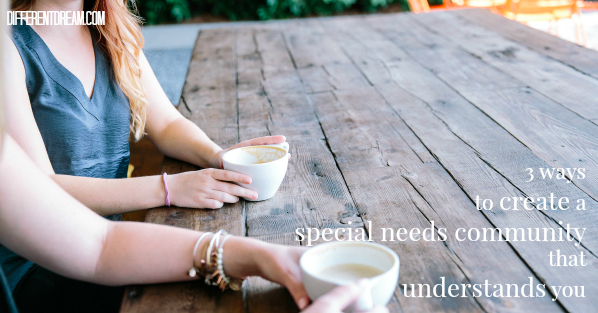
3 Ways to Build a Community for Parents of Kids with Complex Medical Needs

One of the most important things I can recommend to parents starting out with a child with special needs is to build a strong support network or community. In Part 1 of The Importance of Community for Parents of Kids with Complex Medical Needs, I talked about how no one can understand and support you like another parent of a child with a similar diagnosis. But during this emotionally and physically difficult time, how do you find these people and build your own community?

There are many ways you can find other parents. We are so blessed to live in a time when we can connect with people all over the world with a few quick clicks. There are probably more ways to find your people other than what is in this post, but these examples are how I found my community.

Facebook

Facebook is the quickest and easiest way to find other parents as there are groups for just about everything. Try a couple different searches in Facebook, read through the groups’ descriptions, and if it looks like the right fit, click on the “join” button. Typically there is one or two moderators who will approve your request. Some groups ask a couple questions first to make sure it makes sense for you to be added and that you aren’t a spammer. Most of these groups are private so only the people in the groups can read personal questions or information about a child and to build a mutual level of trust. I have found many new friends in Facebook groups and don’t know how I would have made it through the first year of my son’s life without these support groups.

Blogs

I kept a very detailed blog about my pregnancy, my son’s birth story and diagnosis, his  initial surgery and NICU stay, and subsequent surgeries and hospitalizations. The blog is public and searchable through Google key word searches. Several moms have reached out to me because they found my blog while searching topics related to their children. I have done keyword searches on different blogging sites and met some really amazing moms this way as well.

Local Communities

Although I met a lot of moms online, I still wished I knew someone locally. I searched online for local support groups and found a local special needs parents’ group. But none of the local moms had a child with the same medical complexities who was close in age to my child. I decided to ask my son’s surgeon and some of his specialists. I knew they wouldn’t give me other families’ names and contact information because of confidentiality. But they agreed to give my name and phone number out since I had given permission. My first text from a mom with a NICU baby arrived a year ago. We have become friends, share our ups and downs, and support each other. There is a special camaraderie we share with each other.

As I was preparing to be a new mom, I never imagined the challenges and struggles I have faced. It’s a world that I was shoved into without a manual about how to feel, react, or live day to day. In addition to my faith and my husband, the community of mom friends I have built since our son’s birth has gotten me through some difficult days. Our children unite us when one mom is struggling. We lift each other up and remind each other that its okay to be upset and to cry, but we also push each other to keep going. No matter how difficult this journey is, our community supports us. Therefore, I challenge parents of children with medical complexities or special needs to reach out to other parents and build their own community.

Part 1 

Do you like what you see at DifferentDream.com? You can receive more great content by subscribing to the quarterly Different Dream newsletter and signing up for the daily RSS feed delivered to your email inbox. You can sign up for the first in the pop up box and the second at the bottom of this page.

By

Jill lives in Tucson, AZ with her husband Jeff and their son Blake. She worked in Human Resources up until 2014 when her son was born with VACTERL Syndrome which included EA/TEF. Jill resigned to care for her son full time. Later he was also diagnosed with a Congenital Diaphragmatic Hernia and Eosinophilic Esophagitis. Jill’s personal blog (Beloved Blake) documents his surgeries and health challenges, their family struggles, and Blake’s milestones. Jill loves writing and teaching others about what it’s like raising a child with complex medical needs. She wants to be a blessing to other parents just starting on this journey.

Author Jolene Philo
Archives

Categories

Subscribe for Updates from Jolene

Related Posts

Special Education by the Numbers May Surprise You

Special Education by the Numbers May Surprise You

Special Education by the Numbers May Surprise You

Special education is a much discussed–or as my father used to say, “cussed and discussed”– topic of conversation for parents raising kids with special needs. During my teaching years, I assumed everyone had the same understanding of what special education was, how students qualified for assistance, what individualized education plans (IEPs) are, and how annual reviews work.

Special Education by the Numbers

But when I left education in 2003 after 25 years, I realized not everyone had access to education’s inside track. Since then, I’ve tried to explain special education teaching and law to curious parents, without great success. So I was very pleased to receive an email from the University of California’s USC’s Rossier Masters of Teaching Online. They wrote with information about their updated graphic, Special Education by the Numbers: A Look into Today’s Schools.

The infographic provides a highly readable overview of the special needs served by special education services in the public schools, as well as the numbers of students served. 13% of the public school population is served by special education, which translates into 6.6 million students between the ages of 3 and 21. That’s a staggering number by any measure, and potent proof that parents must advocate on behalf of their children lest they be lost in the system.

Pass the Information Along!

The number quoted above is just one of many provided in the chart. You can study it in depth at Special Education by the Numbers: A Look into Today’s Schools and pass the information along to anyone you think should know. And, if you know a special education teacher, para-professional or anyone working with your child who deserves positive recognition, give that person a shout out in the comment box below.

Do you like what you see at DifferentDream.com? You can receive more great content by subscribing to the quarterly Different Dream newsletter and signing up for the daily RSS feed delivered to your email inbox. You can sign up for the first in the pop up box and the second at the bottom of this page.

By

Jolene Philo is a published author, speaker, wife, and mother of a son with special needs.

Author Jolene Philo

Archives

Categories

Subscribe for Updates from Jolene

Related Posts

Nasty Little Whispers and the Truths Caregivers Can Use to Silence Them

Nasty Little Whispers and the Truths Caregivers Can Use to Silence Them

Nasty Little Whispers and the Truths Caregivers Can Use to Silence Them

Nasty little whispers had a way of burrowing into my thoughts while my husband and I cared for our very sick baby in the early 1980s. Those whispers, also known as lies, set up camp in my head, and drained me of the joy and purpose that keeps a caregiver going. Combatting those lies was nearly as big a struggle as keeping our son alive during the first 4 years of his life. Frankly, the nasty little whispers often beat me down battles during my days as a sleep-deprived, isolated, anxious young mom.

Our very sick baby is now a healthy man, and I have time to minister to caregivers. We connect rapidly and profoundly because despite our differing circumstances, we have much in common, including those nasty little whispers. As we talk, I often share 3 truths to silence 3 very common lies.

Lie #1: This Caregiving Season Is Forever

My father was diagnosed with multiple sclerosis as a young man, when my siblings and I were very young. Our mother was his primary caregiver for 38 years, but we kids were part of his caregiving team throughout our childhoods and into young adulthood. More than once, we nearly bought into the lie that we would care for Dad forever.

Truth #1: This Caregiving Season Is Not Forever

Dad’s death dispelled the lie. Mom was 67, my sister, myself, and my brother were 44, 41, and 38. Suddenly, the forever of caregiving ended, and we had to move on. Caregivers who know this season will end–when their loved one recovers, when others share the caregiving duties, or with the death of the loved one or the caregiver–are more likely to handle this difficult transition in a healthy manner.

To read the rest of this post visit Heather Johnson’s website, True Life with God.

Do you like what you see at DifferentDream.com? You can receive more great content by subscribing to the quarterly Different Dream newsletter and signing up for the daily RSS feed delivered to your email inbox. You can sign up for the first in the pop up box and the second at the bottom of this page.

By

Jolene Philo is a published author, speaker, wife, and mother of a son with special needs.

Author Jolene Philo

Archives

Categories

Subscribe for Updates from Jolene

Related Posts

9 Characteristics of Parents Raising Kids with Special Needs

9 Characteristics of Parents Raising Kids with Special Needs

9 Characteristics of Parents Raising Kids with Special Needs

At the beginning of June, I spent a long weekend at camp with 40 sets of parents, their kids with special needs, and their typically-developing children, too. During 3 days of observing and interacting with families and interacting, I noticed several common characteristics common. Whatever their children’s ages or diagnoses, these 9 characteristics of parents raising kids with special needs rang true for every family I met.

  1. They are isolated. Not by choice, but by circumstances that make getting out of the house difficult. Such as lack of understanding by the general public, hard to manage behaviors, medical conditions that require oodles of equipment, obstacles due to mobility, and financial hardships.
  2. They are problem-solvers. Even though the camp was handicapped accessible and every child with special needs had a one-on-one buddy, challenges popped up now and then. But dads and moms found creative ways to overcome them. Even better, other parents stepped in and brainstormed solutions with them.
  3. They are sleep-deprived. Many of their kids sleep poorly or need medical monitoring, so parents haven’t had an uninterrupted night of sleep in years. Somehow they keep going, but I came away from the weekend thinking that a perfect Christmas present would be for someone to volunteer for night duty so they could sleep nonstop for 12 hours.
  4. They are hopeful. Not Pollyanna hopeful, but realistically so. They believe their kids have a valuable and necessary purpose in this world. They may not know what the purpose is yet, but they believe it exists. And they parent their children in the sure and certain hope that the world is a better place because their kids are in it.
  5. They are grieving. During the morning speaker sessions, grief was defined as the space between what we think life will be like and what life is really like. Heads nodded vigorously at this statement as each parent in the room realized that they will always live in that space. Tears were shed, and plenty of them, but the mood of the room was not one of despair. Rather it was one of shared understanding and compassion.
  6. They are persistent. These parents do not quit. Ever. They keep looking for a way forward. They keep looking for resources. They do not stop. They do not give up.
  7. They are effective advocates. Partly because they are persistent (see #6), but mostly because they love their children. Their love is fierce and unending, sacrificial and holy. They know they are their children’s voices and that their children deserve to be heard.
  8. They are transformed. Over and over parents said they have been transformed by their children with special needs. They said they were stronger, sadder, more resourceful, more grateful for the small things, and more compassionate toward others who struggle in life.
  9. They are living the gospel. No one said that in so many words. But by their constant acts of service for their children, they were being the hands and feet of Christ. Their hope, perseverance, joy in suffering, and sacrificial love for their children testifies of the Holy Spirit at work within them and of the world yet to come when all things will be made right. Now, I wonder, how can I be the hands and feet of Christ to them?

Do you like what you see at DifferentDream.com? You can receive more great content by subscribing to the quarterly Different Dream newsletter and signing up for the daily RSS feed delivered to your email inbox. You can sign up for the first in the pop up box and the second at the bottom of this page.

By

Jolene Philo is a published author, speaker, wife, and mother of a son with special needs.

Author Jolene Philo

Archives

Categories

Subscribe for Updates from Jolene

Related Posts

Sensory Friendly Fourth of July Tips

Sensory Friendly Fourth of July Tips

Sensory Friendly Fourth of July Tips

Sensory friendly Fourth of July tips seem like a tall order to fill. But they are par for the course for Trish Shaeffer, mom of 3 boys with special needs and sensory issues. Today, she shares her best sensory friends Fourth of July strategies so you can implement them during your holiday celebration.

Fourth of July is almost here!

It’s time for backyard barbecues, fireworks, and swimming pools, with the smell of hot dogs and charcoal are in the air.

But what if you have a child with sensory issues? They make the holidays a little more challenging, but you can have fun by taking some of these sensory friendly Fourth of July tips with you as you go out on your Independence Day outing.

  • Prepare your child for the day, making sure your child knows what to expect. Explain that there will be a lot of people and noise.
  • If you child does not like loud noises, bring noise-canceling headphones, especially for viewing fireworks.
  • Bring favorite and familiar items like a blanket or stuffed animal when watching fireworks.
  • Remember pool safety and water safety. Children with autism may wander from your side and water may be a potential danger.
  • If your child cannot swim or does not like deeper water, try a Slip and Slide, to give your child a sensory input activity while keeping cool.
  • Need more sensory input or activities? Try bubbles or sand.
  • If you child won’t sit still for you to apply sunblock, try the spray kind. Make sure to read each product’s label for specific directions for proper use.
  • Bring a blanket or small tent and put it in the shade so your child can go there when he needs somewhere to go to cool down or decompress.
  • Make a getaway plan for when things get too much for your child. Don’t overdo it! Bow out of some engagements or outings with family as needed.

Hopefully these tips and tricks will help make your Fourth of July a more enjoyable one. You may be even able to sneak in some sensory play along the way. Have a safe and happy holiday!


Do you like what you see at DifferentDream.com? You can receive more great content by subscribing to the quarterly Different Dream newsletter and signing up for the daily RSS feed delivered to your email inbox. You can sign up for the first in the pop up box and the second at the bottom of this page.

By

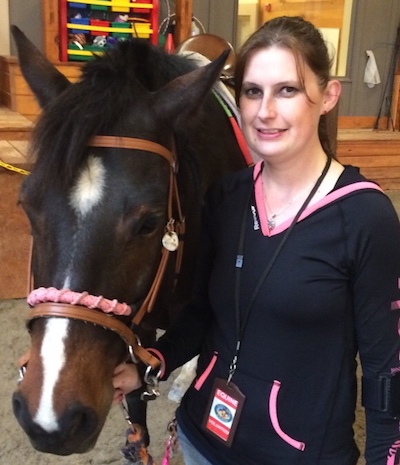
Trish Shaeffer is the mom of 3 active boys with special needs. She’s a peer supporter for Parent to Parent and volunteers with the United Cerebral Palsy Network, Special Olympics, and the United Way. She’s also an equine volunteer at Leg Up Farm. She’s married to her best friend and biggest supporter, Chris Shaeffer.

Author Jolene Philo

Archives

Categories

Subscribe for Updates from Jolene

Related Posts

When Universal Design Fits into God’s Design

When Universal Design Fits into God’s Design

When Universal Design Fits into God’s Design

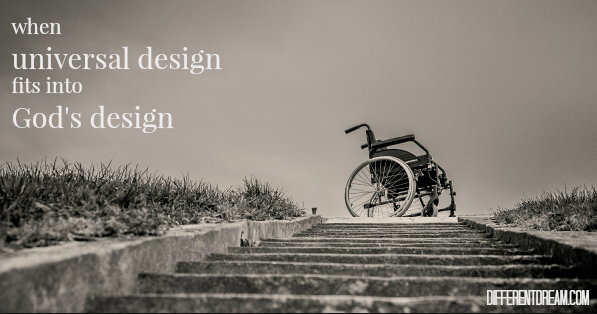
Universal design became part of my life in 1965, the year my parents moved into the only house designed for someone in a wheelchair in our small town of 8,500 people. Because of it’s universal design, Dad could wheel anywhere in our home without assistance. More importantly, he could wheel outside in good weather, park in the driveway, and engage in conversation with anyone who came along.

“Hello,” he boomed to pedestrians on our street. “Grab a lawn chair from the garage and sit with me for a spell.” More often than not, they did. Many came back the next day and the next, throughout the summer, until Dad had converted strangers into friends. All because our home’s universal design afforded him a rare freedom in a day and age when every church, library, school, store, and governmental building in town was closed to him and many others unable to navigate curbs, climb stairs, or enter narrow doorways.

By the time I left my parents’ home in 1978, Dad was too weak to visit my husband and me. A small blessing since he couldn’t have entered any of the homes we lived in unassisted. That undeniable fact niggled at me for decades. “If Dad could still travel,” I told my husband, “he wouldn’t be able to enter our house. He couldn’t use the bathroom or stay over night.”

My husband would nod at my proclamations. We knew that lack of universal design was excluding friends, family members, or church family with mobility issues from our home. Lack of universal design was also thwarting God’s design for His church, excluding the very people Jesus actively ministered to. But lack of funds kept us from making modifications to change the situation, a reality that made me feel sad, frustrated, and guilty in turn.

In 2017 when we moved into the home where we live now. A home we chose in part because it could easily incorporate universal design, something we could finally afford to do. As soon as we were settled, we hired a concrete contractor to pour an accessible porch and ramp in front of our house. It required investments of time and money to find a contractor able to create a ramp with the right incline and the porch we envisioned.

“It’s going to be expensive,” my husband warned, well aware of my penny-pinching mentality.

I opened the checkbook without complaint for two overriding reasons. First, our commitment to universal design was an obedient response to God’s command. Second, making our home accessible to the entire body of Christ and to the lost we are called to love was an act of good stewardship.

With the new ramp in place, my elderly mother can more easily and safely enter our home with her walker. Meetings for a ministry board whose members include a woman in a wheelchair can be held at our home. I’m less anxious about transporting my husband after he has hip replacement surgery in the near future. We can welcome families of children with special needs and anyone with mobility issues into our home without hesitation.

As so often happens in God’s economy, this act of obedience and love produced more good than expected. The new porch is a favorite place to sit in the cool of the morning. Our 3-year-old grandson loves to send toy cars racing down the ramp and careening into the flowerbeds on either side. “Stay on the porch,” we say when he wants to play outside but we don’t, it’s edges creating a visual boundary he understands.

My husband and I have more modifications in mind as we can afford them. “Which one comes first?” he asked with a twinkle in his eye. “The bedroom addition to accommodate wheelchairs and a handicapped bathroom with a walk in shower for when we’re older? The ramp from the house into the garage or the kitchen remodel?”

“Whichever we can afford the soonest,” I answer, smiling as we admire the porch and ramp. I imagine how pleased my father would have been to navigate the entrance on his own.

“Let’s sit on the porch,” I can hear him saying, “and ask the neighbors to sit a spell when they walk by.”

In the same moment, I sense my heavenly Father’s pleasure in our act of obedience and stewardship, something I could not have imagined or conceived had universal design not been part of God’s design for my father’s disability and my parents move into a their home in 1965.

Do you like what you see at DifferentDream.com? You can receive more great content by subscribing to the quarterly Different Dream newsletter and signing up for the daily RSS feed delivered to your email inbox. You can sign up for the first in the pop up box and the second at the bottom of this page.

By

Jolene Philo is a published author, speaker, wife, and mother of a son with special needs.

Author Jolene Philo

Archives

Categories

Subscribe for Updates from Jolene

Related Posts