Stop Making Self-Care for Caregivers a Dirty Word

Stop Making Self-Care for Caregivers a Dirty Word

Stop Making Self-Care for Caregivers a Dirty Word

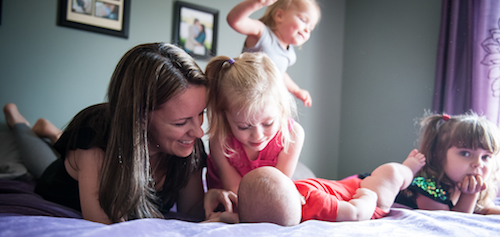
Can we please stop making self-care for caregivers a dirty word? I’m talking about the long, negative threads made in response to articles that encourage self-care. Mostly comments from overwhelmed parents of kids with special needs or time-pinched adult children looking after elderly parents. I understand where caregivers are coming from because I’ve been there, too.

For the same reason I also know self-care is essential.
Even when time is short.
Especially when caregivers are overwhelmed.

We have to stop making self-care for caregivers a dirty word. It’s not an easy task, to be sure. But these 4 strategies can help caregivers shift from blasting self-care to practicing it.

Strategy #1: Carve Out Realistic Time and Space for Self-Care

The key word here is realistic. As in a small amount of time. Perhaps only 5 minutes a day. Or 30 minutes once a week. Whatever fits into your schedule. An easily accessible place could be a corner of your bedroom or the kitchen table. Or, and I mean this sincerely, on the toilet. Which was once the only place I could get away from my very sick baby while my husband held him.

Strategy #2: Practice Self-Care that Will Feed Your Soul

Because schedules are tight and time is short, select self-care activities carefully. Stick with those that feed your soul. In other words, engage in self-care that is life-giving for you. Choose activities that give you energy and stay away from those that leave you depleted.

To read the rest of this post visit Heather Johnson’s blog, www.truelifewithgod.com.

Do you like what you see at DifferentDream.com? You can receive more great content by subscribing to the quarterly Different Dream newsletter and signing up for the daily RSS feed delivered to your email inbox. You can sign up for the first in the pop up box and the second at the bottom of this page.


By

Jolene Philo is a published author, speaker, wife, and mother of a son with special needs.

Author Jolene Philo

Archives

Categories

Subscribe for Updates from Jolene

Related Posts

To My Son Before They Label You with Autism

To My Son Before They Label You with Autism

To My Son Before They Label You with Autism

Before they label you with autism.Ā No parent wants to pen a letter to a child before that happens. But this post is an example for parents of what to say and how to say it. Thank you, guest blogger Amy Felix, forĀ saying what many parents need to hear.

My Son,

The doctors tell me that you have autism. That, though you’re not quite old enough for them to make an official diagnosis, all of the signs are there. Soon, the world will label you. Many will see you through the lens of disability. Life will change. Before it does, I wanted to write to you. To tell you what I see in you. To tell you what will remain the same…

You’re strong, brilliant, and hand-crafted in the image of God. Look no further than His Word for the truth of who you are. No label can define you. Never let anyone convince you you’re anything less than priceless.

I love you fiercely. Nothing can separate you from my love. Nothing. No words can express the depth of it. No label, diagnosis, or struggle could ever change it. My love for you is endless.

We are a team. Your battles are my battles. When you hurt, I hurt. When you struggle, I struggle. I will fight for what’s best for you, fight for all that you deserve, until the day I die. I will push you to reach your goals and I will lead you in running this race with endurance. You may encounter many hardships, but you’ll never face them alone.

God’s purpose and plan for your life is bigger than you could ever imagine. Never let the world drag you down. Don’t lose sight of your mission.

You are worthy of respect. People may not always give it to you; sometimes you’ll need to work hard to earn it. You need to be respectful. God created that person who’s tearing you down; because He loves them, you are called to as well. Don’t be afraid to stand up for what you deserve, but choose your words carefully.

I’m proud of you. Not just because I’m your mother, but because I see your determination to achieve…because when you fall, as we all do, you always get back up and try again.

I believe in you. Always will. I’ll be here to guide you in truth and compassion as you reach for your dreams and beyond. Never underestimate yourself. Through Christ, you can do all things. Even when you find yourself feeling lost, remember that God can use any situation for good.

You are a gift. I have never, not for a single moment, wanted a different child. I’ve never wanted to change you. I never will. You are exactly who you are meant to be and who you are is amazing. I am privileged and honored to be your mama.

Lastly, if I could give you anything, I’d give you the passion to live out 1 Corinthians 16:13-14.Ā Be on guard. Stand firm in the faith. Be courageous. Be strong. And do everything with love.

By Your Side,
Mom

Do you like what you see at DifferentDream.com? You can receive more great content by subscribing to the quarterly Different Dream newsletter and signing up for the daily RSS feed delivered to your email inbox. You can sign up for the first in the pop up box and the second at the bottom of this page.
By

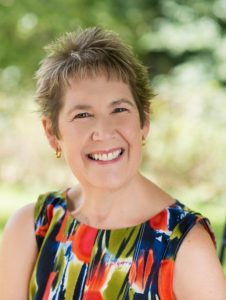
My name is Amy Felix. I’ve been married for 10 years to a guy who’s totally out of my league. I’m a homeschooling mom to 4 kids, ranging in age from 9 to 2 years. That’s really enough work on it’s own but, because I love it, I’m a photographer as well. And, in my spare time, I write. My faith isĀ the driving force behind my special needs blog: Appointed To Hope. I’m a firm believer in being real, transparent, and using the gifts of this journey as a way to relate to others in their joy as well as their sorrow. To read more about my adventures in special needs parenting, visit my website at www.appointedtohope.com.

Author Jolene Philo

Archives

Categories

Subscribe for Updates from Jolene

Related Posts

Autism and the Church: A Success Story

Autism and the Church: A Success Story

Autism and the Church: A Success Story

Autism and the church are not always a winning combination. Different Dream welcomes guest blogger Laurie McLean today who writes about her family’s autism and the church success story. She also provides resources and ideas to aid families who want to make autism and the church a combination as successful as peanut butter and jelly.

Autism and the Church: A Success Story

Parenting a special needs child can often feel like a battle. We constantly fight for services, support, understanding, tolerance, acceptance, connection, and the list goes on.

Early on, when our son was little and newly diagnosed, we had a negative experience with autism and the church not being very compatible with one another.

It was a traumatic experience of not feeling like we belonged and that our son was not welcome.

As a result, we did not feel very confident about finding a new place that our family could worship.

We wanted our son to be accepted. We prayed he would be included. But our earlier experience left us doubtful.

We knew that we could not just walk through the doors of a new church and blend right in. We would have to work to ensure a smooth transition.

It took some time, and some effort on our part, but we were able to find a new church that accepted our family with open arms.

Here are the three best tips that helped us blend autism and church into a story of inclusion and love.

Be proactive about communication

Before we simply dropped our son off at Sunday School, we took the time to speak with the teachers. We modeled our communication on the summary sheet we have used in school as part of his IEP.

To that end, we shared concrete examples of strategies that have worked as well as tips for how to interact with him and get him to comply.

In addition to the direct, frequent communication with the child workers, we also initiated larger conversations with the Youth Director to ensure there was an understanding of the big picture.

Be open to questions

It is easy to feel defensive as a special needs parent. Often we feel like we need to explain our child’s behavior or make excuses. Special needs parents may carry a lot of guilt.

However, it is helpful if we can remain open to questions. In fact, if someone is asking questions, then the chances are they care enough to want to hear the answer so they can help.

At first, I had mixed feelings if anyone asked me anything about my son’s diagnosis or how to best work with him. I wanted them to treat him like any other child.

But, that wasn’t fair. It wasn’t fair to him, to me or to the person asking. I learned to welcome questions and answer them openly and gladly.

I saw them as people who wanted to provide my son with love and care in the best way possible for him.

Focus on the child’s gifts

Yes, my son has autism. But he also has a lot of gifts. He knew how to read at three years old. He could memorize Bible verses and knew all of the books of the Bible (in order) at a very young age.

He is honest and loyal. He wants to please and do the right thing. There are many gifts that accompany his autism.

Our church family recognized those gifts and made use of them. His preschool Sunday School teachers permitted him to read aloud from the Bible to his preschool class of four and five year olds. It kept him engaged.

He was able to earn candy for reciting Bible verses. Our church family loves him and cares for him. And not only do they include him, they value him and the gifts he possesses.

Parenting a special needs child is a daily reminder that we are all beautifully and wonderfully made. We all have unique gifts to share.

Making autism and the church work took some extra effort. But it was well worth it as it led to deeper connections, both personally and spiritually.


Do you like what you see at DifferentDream.com? You can receive more great content by subscribing to the quarterly Different Dream newsletter and signing up for the daily RSS feed delivered to your email inbox. You can sign up for the first in the pop up box and the second at the bottom of this page.

By

Laurie McLeanĀ is a blogger, special needs parent, coffee fiend, dog lover, education advocate and recovering perfectionist interested in balance, humor and self-care. She helps women learn to give themselves grace while they simplify their lives and make the most of their motherhood journey, no matter what unexpected things may come their way. You can visit Laurie’s blog at www.lifewithasideoftheunexpected.com or on FacebookĀ or Pinterest.

Author Jolene Philo

Archives

Categories

Subscribe for Updates from Jolene

Related Posts

5 Strategies for Staying Connected to the Real World

5 Strategies for Staying Connected to the Real World

5 Strategies for Staying Connected to the Real World

In the last four weeks, our family was hit by a series of health whammies. My husband’s hip replacement surgery was expected, but the others–Mom’s accelerated decline, painful back and neck issues for me, and the virus hitting my daughter and her kids–were not.

IĀ was tempted to lay in bed and binge watch my favorite television show, Parks and Recreation, even after my back and neck recovered. Thanks to my parents,Ā I knew the importance of keeping a family connected to the real world, even while battling health issues. Their involvement in the community, even after multiple sclerosis robbed Dad of his ability to walk when I was a child, is a powerful model of how to stay engaged when it’s easier to stay home and stare at screens all day. Maybe the strategies they taught me will help you and your child with special needs stay connected to the real world, too.

Strategy #1: Sit Outside

Engagement doesn’t get much easier than this. Sit on your porch, in the driveway (my dad’s preferred option), or on the front step. Wave to people walking or driving by. Invite neighbors to come over for a chat.

Strategy #2: Go Shopping

Since shopping has to be done, think of it as an opportunity to connect your child with the outside world. It takes extra work. I remember Mom putting Dad’s wheelchair in the trunk, hauling it out downtown, and putting it back in the trunk when the shopping was done. But I also remember how people said hello and stopped to chat. That wouldn’t have happened without the extra effort required.

Strategy #3: Go to the Library

Take your child to story hour and check out books afterwards. If time is of the essences for your child put items on hold a day or two beforehand so they can be quickly checked out. Either way, library trips show your child how to use books to explore the wider world. And it’s free. What could be better?

Strategy #4: Eat Out

Money was tight at our house, but Dad set aside money from his small civil service pension to eat out once a month. Mom didn’t have to cook, though she did have to haul Dad, his wheelchair, and 3 kids there and back. More important, our family was a visible reminder of Dad’s existence, and his being there prompted people to stop and visit.

Strategy #5: Attend Sports Events

Mom supported our family as an elementary school teacher. Though she must have been tired by the end of the week, but she frequently took us to home games. She drove the car to the edge of the football field and a steady stream of friends stopped to visit as the night progressed. She wheeled him into the gym during basketball season, and he positioned his chair beside the bleachers where the most people passed by. Whatever the score, every game was a win in Dad’s eyes as he connected with the real world.

Begin by putting one of these ways in place and adding others as circumstances allow. Staying connected with the real world requires more effort than clicking a remote or swiping a tablet. But the rewards are more satisfying and create a much richer environment for a child with special needs and the whole family. What more could a parent want?

Do you like what you see at DifferentDream.com? You can receive more great content by subscribing to the quarterly Different Dream newsletter and signing up for the daily RSS feed delivered to your email inbox. You can sign up for the first in the pop up box and the second at the bottom of this page.
By

Jolene Philo is a published author, speaker, wife, and mother of a son with special needs.

Author Jolene Philo

Archives

Categories

Subscribe for Updates from Jolene

Related Posts

I Didn’t Want a Different Dream

I Didn’t Want a Different Dream

I Didn’t Want a Different Dream

I didn’t want a different dream. How many of us have uttered those words after a child has been diagnosed with special needs and disabilities. Guest blogger Heather Johnson openly shares how she came to accept and embrace the different dream of her children’s lives.

I Didn’t Want a Different Dream

I didn’t want a different dream. I wanted my dream. Who, I wondered, finds themselves pregnant and hopes for a child born with brain damage or some other disability?Ā  Not me.

So when the question on the adoption form asked, ā€œWould you consider a special needs child?ā€Ā 

I checked the ā€œNOā€ box.

No. Absolutely not. Special needs wasn’t my dream. Special needs wasn’t my calling. I was quite certain.

I sent the videos of all three kids to the national expert in Fetal Alcohol Spectrum Disorders. He viewed them and shared his opinion that none of our kids had FASD—a concern of parents adopting children from Russia where there’s a high incidence of prenatal exposure to alcohol.

Our adoptions finalized, first in Russia and later in the U.S., we knew our three kids (Anna, Zach, and Nick, then six, four, and nineteen months) would have developmental delays. No child can spend time in an orphanage and not have some sort of delay. My husband and I were prepared. I was a clinical psychologist and a former elementary educator who knew how to help the developmentally delayed catch up. No problem. All within my wheelhouse.

But then, I began noticing things that didn’t look like just delays. They looked like possible brain damage. Getting lost in the house, over and over, despite repeated teaching. Learning numbers and letters in preschool, then suddenly looking at those same numbers and letters like she’d never seen them before. Then there were features so subtle that a video from many feet away wouldn’t show:Ā  small head circumference, thin upper lip, no upper lip groove, lower set ears, wandering eye, neurosensory hearing loss (no auditory nerve), heart defect, fine motor problems, gross motor problems, speech & language problems, emotional problems, behavioral problems and more.

The multiple diagnoses painted a new picture than the one I had hoped for our family. Multiple therapies by multiple professionals over the next 20 years and perhaps for the rest of their lives would be our life. The hard reality? All three of our kids had ā€œspecial needsā€ā€”multiple, permanent, invisible disabilities stemming from prenatal exposure to alcohol.

I didn’t sign up for this. God bless those who do—those who check the ā€œYESā€ box of willingness when it comes to special needs. But me?

I knew I had a predisposition for depression and anxiety, inherited from my mother and her mother and who knows how far back. With healthy lifestyle choices and managing my stress, I lived a life free of medications. Then I found myself in a situation of no turning back. The unremittent stress of caring for three kids with so many special needs broke me.

One day, I found myself sitting on the kitchen floor hoping the hum of the running dishwasher would remove the ache from my head and my heart. All I felt was numb. When my husband came down from our bedroom and saw me sitting there, he asked me what was wrong. Without even thinking, I uttered two words.

ā€œI’m depressed.ā€

Not the blues. Not the occasional bad day. But the overwhelming feeling that life is no longer worth living. Like you want to go to sleep and never, ever wake up. Like if you tried to walk you’d feel like your feet had been plunged into large buckets of wet cement and, once dried, you’d drag yourself around day after day. The gravitational pull of depression had done me in.

ā€œTake me to the doctor. I can’t even drive,ā€ I told him. He did. I needed him to physically support me as we walked into the office. I had no strength to support my own weight. Once in the examining room, the doctor came in and took one look at me. She knew. My countenance didn’t lie.

Thankfully, after two weeks on a prescribed antidepressant, I was able to mother again, to smile again. My normal effervescence and zeal had returned. But I was still bewildered. Why would God want me to mother not one, not two, but three kids—all with invisible disabilities that would require eleven different specialists, multiple surgeries, expensive medications? Why me, one with depression?

I don’t know the answers exactly. But I do know that sometimes our dreams need to shatter so new dreams can form. Sometimes our dreams of what we think is best is really just a glimmer of the better.

I can’t speak for you or for anyone else. We all walk our own walk and are trying to find our own way. But for me, coming to the end of myself and what I thought I could do with all my God-given gifts and capabilities taught me some things I might not have learned any other way.

I don’t have to have it all together to give love.

I don’t have to have it all together to receive love.

Embracing those with ā€œspecial needsā€ helps us discover and embrace our own ā€œspecial needsā€.

Giving grace helps us accept grace.

We all need grace, don’t we?

We all need love.Ā  Especially all our broken bits we try so hard to hold together.

Now I know, when I checked that ā€œNOā€ box over two decades ago, that I needed exactly what I thought I didn’t want. How many other things, or people, come into our lives as blessings in disguise?Ā 

Today, I’m not so quick to say ā€œNOā€ to possibilities because even in the pain of disability, I’ve found greater love and meaning in life than I ever thought possible. And I have three amazing, grown kids who have a special place in their hearts for all who will let their special needs show.


Do you like what you see at DifferentDream.com? You can receive more great content by subscribing to the quarterly Different Dream newsletter and signing up for the daily RSS feed delivered to your email inbox. You can sign up for the first in the pop up box and the second at the bottom of this page.

By

Heather MacLaren Johnson lives near Wisconsin’s Lake Michigan shore with her husband of 25 years, 3 horses, 2 dogs, 2 barn cats, and a fish. She earned her B.S. in Education and her doctorate in Clinical Psychology before adopting 3 amazing kids from Russia, all now in their 20’s, all with life-long challenges stemming from prenatal exposure to alcohol (FASD). She is completing a memoir about her mother/daughter journey through hidden disabilities and mental illness.Ā Heather’s essay about learning to ride horses at age 44 is included in Leslie Leyland Field’s The Wonder Years: 40 Women Over 40 on Aging, Faith, Beauty, and Strength(Kregel Publications). She has published devotional pieces for The Seed Company (Wycliffe Bible Translators Affiliate) You can learn more about Heather at her website www.truelifewithgod.com.


Author Jolene Philo

Archives

Categories

Subscribe for Updates from Jolene

Related Posts

9 Sleep Tips for Parents of Kids with Special Needs

9 Sleep Tips for Parents of Kids with Special Needs

9 Sleep Tips for Parents of Kids with Special Needs

These sleep tips for parents of kids with special needs come from 2 similar and challenging Ā personal experiences. The first was the four years my husband and I put in after our son with complex medical needs was born in 1982. The second was a week of 24/7 grandma duty with our 3-year-old grandson who is not a good sleeper in 2018. These 9 sleep tips for parents will, I hope, keep you from total exhaustion.

Tip #1: Tag Team

Alternate nights for spouses to handle feedings, diaper changes, bathroom breaks, night terrors, and whatever else disturbs sleep. Or have one spouse take the first four hours of the night, with the other spouse taking the last four.

Tip #2: Train Others

You know the good friends and family members who say they want to help out? Offer to train several of them for night duty. If they say yes, train them thoroughly, tidy the guest bedroom, create a schedule, and get a good night’s sleep while they care for your child.

Tip #3: Establish a Routine

Predictable routines make kids feel safe. Therefore, do your best to establish a consistent evening routine for kids with special needs and their typical siblings. The sense of safety will lead to fewer sleep disturbances and sounder sleep for all.

Tip #4: Limit Caffeine

If you can’t cut out caffeine, limit how much you consume in beverages like tea, coffee, and soft drinks. Also limit chocolate. It’s a bummer, but so is lack of sleep.

Tip #5: Use Earplugs

Foam earplugs are cheap and effective. Buy a bunch and use them whenever you are not on night duty. What you can’t hear won’t wake you, and you don’t need to hear everything when someone trustworthy is caring for your child.

Tip #6: Invest in White Noise

Create a white noise play list, purchase a white noise CD, or create it the old-fashioned way by turning on a fan. White noise combined with earplugs will keep night noises far, far from your slumber.

Tip #7: Keep the Bathroom Light Off

When you get up in the night to do your business, leave the bathroom light off so your body won’t start waking up. Trust me, this works.

Tip #9: Turn Off the Screen

A screen’s blue glow messes with the hormones that prepare our bodies for sleep. That’s why sleep experts suggest adults and kids turn off screens 1 to 2 hours before bedtime. What to do during that time instead? Read a book.

Tip #8: Pray

When you are awakened in the night and can’t fall back to sleep, start praying. Ask God to guide your thoughts to what’s good, lovely, excellent, and sleep-inducing. If that doesn’t work, pray for family members, friends, and whoever comes to mind.

What are your best sleep tips? Leave them in the comment box.

Do you like what you see at DifferentDream.com? You can receive more great content by subscribing to the quarterly Different Dream newsletter and signing up for the daily RSS feed delivered to your email inbox. You can sign up for the first in the pop up box and the second at the bottom of this page.

By

Jolene Philo is a published author, speaker, wife, and mother of a son with special needs.

Author Jolene Philo

Archives

Categories

Subscribe for Updates from Jolene

Related Posts