French Fries in the Park: Encouraging Understanding, Acceptance, and Love

French Fries in the Park: Encouraging Understanding, Acceptance, and Love

French Fries in the Park: Encouraging Understanding, Acceptance, and Love

JM Sheridan is the author of the children’s book French Fries in the Park. Please welcome her and enjoy her guest post about the story behind French Fries in the Park.

The scene in the kitchen was heart-wrenching. My beautiful girl, tears streaming down her red cheeks, shaking from her distress. Next to her was my husband, Kevin, with his head in hands.

“I don’t know what is wrong,” he said wearily, “and she cannot tell me.”

Brianna was three and she was not speaking, save for a handful of words.

I looked down at the breakfast in front of her, and I knew. I don’t know how, but I did. As her cries continued, I quickly made a piece of toast, buttered it and cut it diagonally. I placed the warm bread in front of her and repeated, “Look toast.” I touched her softly until she opened her eyes to see the plate. Her sobs quelled as she reached out for the new toast and smiled.

I met Kevin’s questioning eyes. “I always cut her toast on a diagonal.”

That was eleven years ago. I have learned so much from Brianna: patience and understanding, acceptance, but more importantly she opened my mind to see the world from a different perspective. She has always been my muse. She inspires me in so many ways. Brianna was actually thrilled to be one of the main characters in the Brianna & Mrs. Moomoo series. The original Mrs. Moomoo is a small beanie baby cow that my good friend Mina gave Brianna when she was about one. Now that Mrs. Moomoo is a celebrity, she sits on a bookshelf in Brianna’s room guarded by other stuffed animals.

Throughout the years, Kevin and I have faced a number of challenges – most of which were derived from inexperience, unawareness, and prejudices. I wrote French Fries in the Park to be used as a source for discussion, whether in a classroom setting or at home, to help children understand what autism is and how it affects some kids. This story encourages them to be mindful and patient of the differences children with autism have, but also to recognize the similar wants and likes these children have that are the very same as their own.

In French Fries in the Park I carefully selected specific behavioral differences a child around the age of six would recognize and identify with. For example, no eye contact, being non-verbal, stimming, and parallel play rather than interactive play. Not only does Brianna notice each of these behaviors throughout the book, she gains a better understanding of them with the help of the boy’s father. She accepts this boy and his differences by continuing to stay with him in the park and play right alongside him.

In addition to discussions at home, I recommend that all preschool and elementary teachers and personnel be educated in the autism spectrum disorders, and that the administrators and education systems support this training. Knowledge is the key to a better understanding and a more accepting community.


Do you like what you see at DifferentDream.com? You can receive more great content by subscribing to the monthly Different Dream newsletter and signing up for the daily RSS feed delivered to your email.

By

JM Sheridan lives in New England with her husband, Kevin, her daughter, Brianna, and four very mischievous kitties Sheridan attended the Institute of Children’s Literature in Connecticut, as well as numerous children’s book writing workshops, seminars, and classes. She is currently a member of the Association of Rhode Island Authors (ARIA) and Society of Children’s Book Writers and Illustrators. Dragonfly Magic and French Fries in the Park are the first books in the Brianna and Mrs. Moomoo series of books designed to educate and inspire children, as well as support our New England communities. You can learn more about her and her books at www.jmsheridan.com.

Author Jolene Philo

Archives

Categories

Subscribe for Updates from Jolene

Related Posts

A Dad’s Perspective

A Dad’s Perspective

A Dad’s Perspective

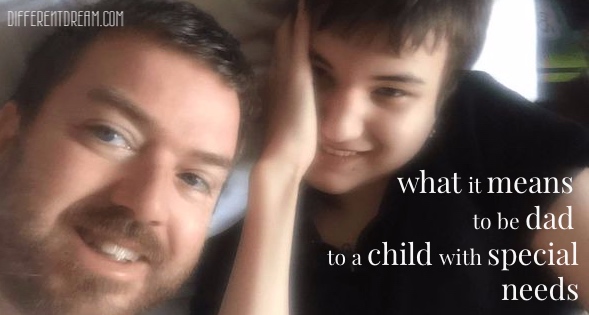
Mark Arnold is Different Dream’s guest blogger this week. Please join us in welcoming Mark as he shares a dad’s perspective of parenting a child with special needs.

A Dad’s Perspective

Yesterday evening, I lay on the bed next to my son for a while. James’ autism affects him significantly, he is mostly non-verbal, although he does have a few words including nomore, please, and rather embarrassingly beer–a long story for another blog! As we lay next to each other, James vocalized sounds and I repeated them. He loves this, touching my lips or teeth with his finger as I repeat his repertoire of sounds.

Time slipped by as we repeated this simple activity together, with James clearly delighting in the son/dad time we were able to spend together. His beaming face, his raucous belly laugh, his enthusiastic demands for more–thankfully, not for beer–love shining from his eyes, all mirrored in me too. I wouldn’t have missed it for the world.

I meet lots of dads of children with special needs in the work I do; dads who are all at different points on the journey with their children. Some are bewildered by what is happening to their world, trying to make sense of it all and looking for answers. Some are in denial, trying to ignore the reality that their child is different from what they expected. Some respond by putting all their energy into trying to fix their children, looking for solutions in the same way they might try to repair a car. Others simply love their children for who they are, accepting that things are different, but celebrating the differences and loving them through it all.

One thing that often unites these dads, however, happens when a group of them come together. When this happens, I’ve seen men share their stories in ways that they have never been able to before, especially with their partner.  Once these guys start releasing what’s been stored up in them for so long, while they have often been trying to keep it all together or be the strong one, all their emotions and feelings come flowing out. Sharing with other guys who understand how they feel, who are on the same journey, releases something powerful within them, sometimes allowing guys to grieve for the first time the loss of the future they expected for their children. The tears flow, there are hugs of comfort and understanding. It’s wonderful to see, and often a surprise to their partners when they are reunited afterwards.

Of course, this comes too late for some dads. Dads who for a million reasons couldn’t be a part of the family any longer and have already gone. My heart breaks for what they have lost. I cannot judge them as I don’t know their stories, but my heart goes out to them and to the families that are left behind.

What these dads have taught me is that bottling things up, trying to keep it all together, not talking or sharing about it, doesn’t help. Releasing all of that and then just living in the moment where I’m laying next to James, delighting in being with him, sharing in a simple activity, showing love to each other, that’s what being a dad to a child with special needs is all about. That’s what my son and my family need most from me.

Do you like what you see at DifferentDream.com? You can receive more great content by subscribing to the monthly Different Dream newsletter and signing up for the daily RSS feed delivered to your email.

By

Mark Arnold is the Additional Needs Ministry Director at Urban Saints, a leading national Christian children’s and youth organization. He is co-founder of the Additional Needs Alliance, a national and international advocate for children and young people with additional (special) needs or disabilities and is passionate about enabling everyone engaging with them to be inspired, trained and well-resourced. Mark is a Churches for All and Living Fully Network partner, a member of the Council for Disabled Children and the European Disability Network. He writes an additional needs column for Premier Youth and Children’s Work (YCW) magazine and blogs at The Additional Needs Blogfather, He is father to James, who has autism spectrum condition, associated learning disability, and epilepsy. To find out more about how Mark’s work can help you, contact him at: marnold@urbansaints.org or @Mark_J_Arnold.


Author Jolene Philo

Archives

Categories

Subscribe for Updates from Jolene

Related Posts

A Reluctant Caregiver

A Reluctant Caregiver

A Reluctant Caregiver

I’ve been a reluctant caregiver most of my life, but didn’t realize it was a problem until after the birth of our first child. He was medically fragile for the first four years of his life, but his special needs weren’t the cause of my reluctance. In truth, I rose to the challenge whenever a health crisis arose. But after his recovery from each surgery or hospital stay, when life returned to the norm of putting our baby’s daily needs above my desire for creative and intellectual pursuits, I became a reluctant caregiver.

I discovered I wasn’t a baby person.
Or a toddler person.
Not even a preschool person.

I loved our son and then our daughter fiercely from the day each one was born. But, I didn’t lay down the mantle of a reluctant caregiver until our children reached age 5 or so. Only then did caregiving cease to consist of marking time until they went down for naps or to bed for the night. Only then did our hours together become a fascinating time of introducing them to God’s fascinating creation.

I was ashamed of my reluctance.
I kept the secret buried deep.
I convinced myself that I’d outgrown it.
I almost forgot about it.

To read the rest of this post, visit the Key Ministry blog for special needs parents.

Do you like what you see at DifferentDream.com? You can receive more great content by subscribing to the quarterly Different Dream newsletter and signing up for the daily RSS feed delivered to your email inbox. You can sign up for the first in the pop up box and the second at the bottom of this page.

By

Jolene Philo is a published author, speaker, wife, and mother of a son with special needs.

Author Jolene Philo

Archives

Categories

Subscribe for Updates from Jolene

Related Posts

Unexpected Blessings: An Interview with the Author

Unexpected Blessings: An Interview with the Author

Unexpected Blessings: An Interview with the Author

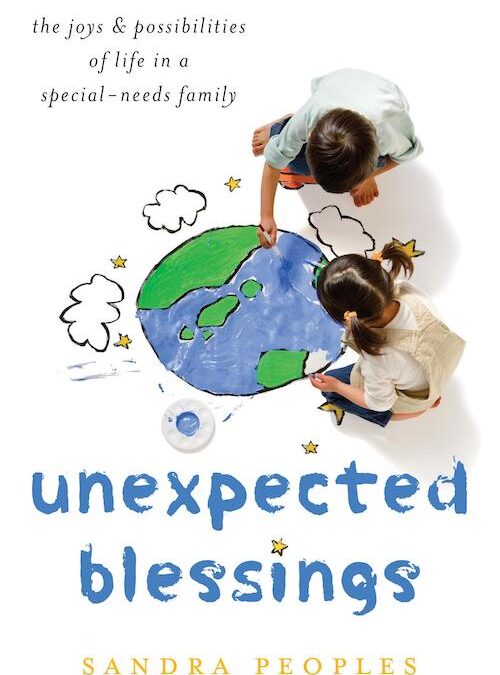
Sandra Peoples is the author of the book, Unexpected Blessings: The Joys and Possibilities of Life in a Special-Needs Family. She’s joining us today to answer a few questions about her experiences as a special-needs sibling and mom.

1. Hearing a diagnosis for a child can be a scary experience for any family. How did you and your husband react to first hearing your son’s autism diagnosis, and what advice do you have for parents who are going through this process with their children?

Diagnoses come at different times for different disabilities. Some parents hear them when they are still pregnant. Some at birth. Some read a list in adoption papers. For us, it came when James was three years old. We were finally honest with the pediatrician about the ways James was falling behind what was expected. And we were honest with ourselves about what that might mean. I reacted with relief because there was a name for all that was different about him and that meant we could get help. My husband reacted first with doubt and fear. It took us a couple months to adjust to our new normal and feel like a team. My advice is to be patient with each other. Do your best to support each other and not pressure the other person for grieving or adjusting at a different rate than you do. Reach out to your pastor and ask for counseling recommendations if you feel that would be helpful.

2. What harmful messages do new parents hear from friends, family members, and even other Christians that hurt more than they help? (examples: your child’s disabilities are because of your sin, if you pray hard enough he will be healed, and God won’t give you more than you can handle)

In addition to the ones listed, one I didn’t like was “God knew what He was doing when He gave James to you!” It is supposed to be a compliment, implying we have what it takes to get James everything he needs to thrive. But at the time, I could think of a lot of other people who deserved the hardship I felt like we were going through! I quickly learned that I was being extra sensitive because of our pain and needed to give people more grace. Because at least they were trying to say something. Saying nothing is worse than saying the wrong thing. I do try to encourage others to lead with empathy instead of answers in times like this. They can point friends to the hope we have in Christ when it feels appropriate, but the first step is to validate whatever they are feeling as legitimate. Romans 15:15 says “Be joyful in hope, patient in affliction, faithful in prayer.” We often pray for suffering to be over as quickly as possible, but Scripture tells us to be patient and hold on to hope.

3. Most parents feel like they are going down a detour they didn’t plan when they get a diagnosis for their child. But you believe their Plan B is God’s Plan A. How do you help parents see this huge change in their lives as a positive change, to see their unexpected circumstances as unexpected blessings?

After we got James’s diagnosis I called a friend of my mom’s who had an adult son with autism and she shared this verse: “Those who sow with tears will reap with songs of joy” (Psalm 126:5). She assured me that what felt hard today would get easier. Even if our circumstances didn’t actually get easier, our strength would grow. Our faith would deepen. His autism wasn’t a surprise to God, it wasn’t a punishment for me or James. It just was our new normal. There isn’t a person in Scripture who didn’t suffer in some way, and all of their circumstances were part of God’s plan for their lives. So we too can see the detour as our new road, and be ready for the unexpected blessings God will bring our way.

4. Because you have a sister with Down syndrome, the special-needs world isn’t new to you. How do your experiences as a sibling help you as a parent?

I saw the community my parents had around them when we were young. In our small town in Oklahoma, the parents of kids with disabilities supported and encouraged each other. I try to create support communities like that as well. Even online communalities like Facebook groups are a huge blessing to families like mine. It also encourages me to look at the long game and not just the struggles of today. I put less pressure on myself and on James because I see that my sister is happy and living a fulfilled life. Meeting every therapy goal when she was James’s age isn’t as important as making sure she feels supported, safe, and loved.

5. You’re in the unique position of having empathy for your older son as he goes through life as a special-needs sibling. What advice can you offer to parents who want to support and encourage the typical kids in their families?

One thing my parents did right that I learned from was that they never shamed me for how I felt. If my sister embarrassed me, they didn’t rush to say I needed to get over it. If I was angry at her, they understood that was a normal response to a challenging situation. I want to tell David “James can’t help his behavior, but you can help yours,” but that isn’t helpful in the moment. David needs his feelings validated as well. In our situation, David is like an only child in many ways. James isn’t a playmate to him. So my husband and I have to fill that gap. We also encourage him to peruse his interests. Right now that is acting. He recently turned thirteen and has already been in almost twenty plays and musicals. It gives him an identity beyond being “James’s brother,” like he’s often known as at school and church.

6. Rumor is the divorce rate for parents of kids with disabilities is higher than the typical rate. Why do you believe that’s not true, and how do you and your husband stay strong in the midst of the challenges you face?

When I looked for actual studies and facts about the divorce rate for special-needs parents, I couldn’t find anything that supported the idea that it’s dramatically higher. The stress level can be higher. There was a study done that said parents of teens with autism have the stress levels of a solider in active combat. If that’s normal for you and your spouse, you have to work hard to support each other. Lee and I have developed routines that help us know what to expect. At night, I stay awake until James falls asleep, but Lee gets up with him early the next morning. We have learned to step in when the stress is too high. For example, I hate making phone calls, especially to set up appointments with the doctor or talk to insurance. I don’t mind going to appointments, I just don’t like the phone call. So Lee makes the calls. I get him all the information he needs, and he handles it. Then I handle the actual doctor or therapy appointment. There have been times we’ve needed extra help, and we’ve seen therapists to help us work through seasons that felt more difficult. We pray we can keep moving toward each other through our circumstances, and not drift apart.

We appreciate Sandra taking time to answer these questions so we can get to know her better. If you’re interested in learning more about her new book, check out unexpectedblessingsbook.com


Do you like what you see at DifferentDream.com? You can receive more great content by subscribing to the quarterly Different Dream newsletter and signing up for the daily RSS feed delivered to your email inbox. You can sign up for the first in the pop up box and the second at the bottom of this page.

By

Sandra Peoples, M Div, is a leading voice in the disability community as an encourager to special-needs parents. She has been a member of a special-needs family since the day she was born. Her older sister has Down syndrome, and in 2010 her son James was diagnosed with autism. She is the executive editor for Key Ministry and Not Alone (on Patheos). Sandra, her husband, and their two boys live outside of Houston. Connect with her at sandrapeoples.com.

Author Jolene Philo

Archives

Categories

Subscribe for Updates from Jolene

Related Posts

Special Needs Parenting Time Suckers and How To Avoid Them

Special Needs Parenting Time Suckers and How To Avoid Them

Special Needs Parenting Time Suckers and How To Avoid Them

Special needs parenting time suckers can drain caregivers of energy, motivation, and time with typically developing children. Guest blogger Kimberly Drew is here with 6 strategies she uses to neutralize them so she can spend her time building relationships with all the children in her family.

Special Needs Parenting Time Suckers and How To Avoid Them

Special needs parenting time suckers are one of the greatest challenges in my life as a caregiver. For instance, my daughter’s diaper leaked all over the floor this evening. When I was supposed to be helping my son with homework I spent twenty minutes cleaning the mess and bathing my daughter. More distressing are medical emergencies and illnesses, but all of them are exhausting and unwelcome interruptions that start to add up.

The time required to physically, intellectually, and emotionally to care for a child—going to appointments, financial planning for medical expenses, bathing, feeding, and managing a child’s emotions if the disability has a behavioral component—is a huge challenge. My life has become one of service to my daughters with special needs. This is no small calling requiring an enormous amount of time to do it well. Without my care my daughters would die. Even so, there must be a healthy balance between caring for a disabled child and caring for typically-developing children. Each child entrusted to us is a gift from God and deserves our time. Here are 6 strategies I keep in mind to avoid falling into the trap of special needs parenting time suckers that take away time from my other children.

Strategy #1

A promise is a promise, so avoid making promises to spend time with a child and then cancel because daily routines are making you tired. A medical emergency falls into a different category that requires your family to be flexible, but normal routines aren’t an excuse to bail.

Strategy #2

Make arrangements for someone else to care for your child with special needs so you can have one on one time with your typically-developing children. An hour here and there can create memories that mean something.

Strategy #3

Make sure at least one parent is at your children’s sporting or hobby events. We don’t want our kids to look back and say, “Mom never came to my basketball games because she was always with my brother.” Sharing the load with your spouse or another close family member makes a difference.

Strategy #4

Don’t allow gifts, money, or anything else become a substitute for your presence in a child’s life.  A child’s character is shaped by the challenges that accompany having a sibling with disabilities. Don’t compromise the shaping of character by throwing gifts at a child, and don’t sabotage it through neglect. 

Strategy #5

Quality time may not require equal time. The quality of time spent with typical siblings may not add up to the same number of hours spent with a child who has disabilities. But it may feel like the same amount of time to both children, and that’s what matters.

Strategy #6

Parents make intentional plans for their child with disabilities–meds, appointments, baths, transportation, and more. Plan intentionally for typical children too. Make sure to put their names and activities on your calendar.

Do you like what you see at DifferentDream.com? You can receive more great content by subscribing to the quarterly Different Dream newsletter and signing up for the daily RSS feed delivered to your email inbox. You can sign up for the first in the pop up box and the second at the bottom of this page.

By

Kimberly grew up and went to college in the small town of Upland, IN. She graduated from Taylor University with a degree in Elementary Education in 2002. While at TU, she married her college sweetheart and so began their adventure! Ryan and Kimberly have three amazing kids on earth (Abigail, Jayden, and Cooper), and a baby boy waiting for them in heaven. Their daughter Abigail (Abbey) has multiple disabilities including cerebral palsy, a seizure disorder, hearing loss, microcephaly, and oral dysphagia. She is the inspiration behind Kimberly’s  desire to write. In addition to being a stay at home mom, Kimberly has been serving alongside her husband in full time youth ministry for almost fourteen years. She enjoys working with the senior high girls, scrapbooking, reading, and music. You can visit Kimberly at her website, Promises and Perspective.

Author Jolene Philo

Archives

Categories

Subscribe for Updates from Jolene

Related Posts

5 More Strategies for Staying Connected with the Real World

5 More Strategies for Staying Connected with the Real World

5 More Strategies for Staying Connected with the Real World

Staying connected to the real world can be a challenge for caregivers, whether the loved one being cared for is a new baby, a child with special needs, a disabled spouse, or an elderly parent. I’ve been  primary caregiver in all those relationships and know the effort required to avoid becoming isolated. Along the way, other caregivers have shared their top strategies for staying connected to the real world. Five of those strategies can be found in a previous post, and I’m passing along the final five below.

Strategy #6: Go to the Park

We moved to a new town a few years ago, and I discovered a good way to meet people is to take my young grandson to the park. It’s easy to strike up a conversation with grandparents or parents while pushing a swing or keeping an eye on kids. Our small central Iowa town has several parks with accessible playground equipment. You can research what’s available in your area by calling the local parks department. If your community lacks accessible parks, your phone call proves the need for them and could be a catalyst for change.

Strategy #7: Partner with Teachers

When I taught school, many of my students had special needs: physical disabilities, illnesses like diabetes, behavioral issues, and learning disabilities. I discovered that by partnering with parents of kids with special needs early in the school year, we could teach typical kids about their classmate’s special needs and how to interact so the child was usually embraced and included at school. If I didn’t do so, the typical kids came up with their own explanations about their classmate, and it usually wasn’t good. Rather than go into detail in this post about how parents and teachers can partner, I promise to do it later.

Strategy #8: Join a Real World Support Group

Online support groups are great, and I belong so several. But connecting with the real world requires real world connections rather than virtual ones. Parents of kids with rare conditions may not find a local group dedicated solely to a specific diagnosis, but they can usually find one for parents of kids with any type of special needs. To find a group, check with a social worker or child life specialist at a children’s hospital in your area. Or call a church in your area with a special needs ministry. Many of them sponsor ecumenical support groups for parents. You might also check with the special education coordinator in your school district. Finally, this blog post explains how the mom of a child with a rare medical condition created her own local support group with help from her son’s doctor.

Strategy #9: Take a Walk

Taking a walk with a child with special needs may have some challenges, but compared to the previous two strategies, it’s fairly easy. Even a short walk, perhaps around the block or down to the corner and back, increases your loved one’s visibility. It creates an opportunity for conversation with others. Bringing your dog on the walk makes it more likely someone will will stop to chat.

Strategy #10: Go to Church

Many churches want to support caregiving families. Not just the families who believe in Jesus, but all families. Some of those churches have formal special needs ministries, while others are more informal. Or they may have a care and compassion ministry. To find welcoming churches, call and ask if they have such ministries, either formal or informal. Ask other parents or your child’s teachers if they know of such churches. If you believe in the power of prayer, ask God to guide you to a welcoming church. A church willing to support you and your family can provide a real world connection like none other.

Do you like what you see at DifferentDream.com? You can receive more great content by subscribing to the quarterly Different Dream newsletter and signing up for the daily RSS feed delivered to your email inbox. You can sign up for the first in the pop up box and the second at the bottom of this page.

By

Jolene Philo is a published author, speaker, wife, and mother of a son with special needs.

Author Jolene Philo

Archives

Categories

Subscribe for Updates from Jolene

Related Posts