New Blog for Christians Parenting the Mentally Ill

New Blog for Christians Parenting the Mentally Ill

New Blog for Christians Parenting the Mentally Ill

Christians parenting the mentally ill need other believers to support them. Today Lisa Pelissier is here to introduce Different Dream readers to a new blog designed to support Christian families impacted by mental illness and to equip extended family and friends to encourage them.

Statistics show that one in five adults in the United States suffer from mental illness. The numbers are even more sobering among young adults. Almost ten percent of people aged 18-25 find their life limited by mental health conditions. Sadly, these conditions tend to be hereditary, and many of us find ourselves dealing with more than one family member who is suffering.

Often, the church is unprepared for families suffering from these harrowing, invisible disorders. Because Christianity deals with the invisible facets of people’s lives, the lines between spiritual matters and mental health issues can become blurred. Misunderstandings abound, even amid good intentions.

As a wife, daughter, sister, and mother of people with mental illness, I know first-hand that it can be difficult to find support from other believers. Most of the time people are sympathetic, but to a great degree, they have no idea what it’s like to live in a world where you must walk on eggshells, fight for medical care, or figure how to discipline someone who can’t respond appropriately.

With this thought in mind, Amber Healy, Georgia Mathison, and I have started a blog, Eleventh Willow, to support Christians parenting the mentally ill. We hope to eventually cover a broad range of topics stemming from our own experiences in parenting our mentally ill children. A private Facebook group is also available to those who would like to connect on a more personal level.

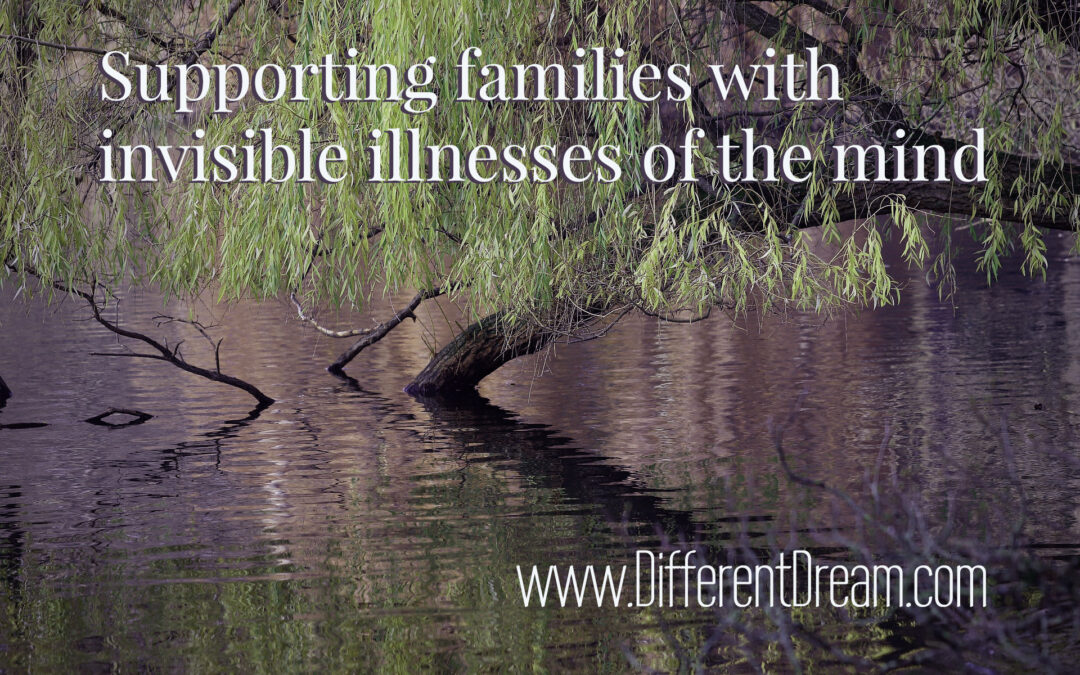
Why ā€œEleventh Willowā€? The willow is one of the most resilient trees. It symbolizes flexibility and adaptability, qualities necessary to parenting in general and to parenting in light of mental illness specifically. The willow tree is a survivor, but is also associated with grief and mourning—the weeping willow. In the Bible, the willow tree symbolizes rebirth (Ezekiel 17:5), loss and hope (Psalm 137), and celebration (Leviticus 23:40).

ā€œEleventhā€ comes from the eleventh hour—the last opportunity before it is too late. As parents of children with mental illness, we all feel that urgent desire for our child’s healing. Any hour could be the eleventh one—the moment our children are destroyed by their disease.

Our first five blog posts went live this month and deal with issues we have experienced in parenting our children with mental illness.

Amber, Georgia, and I—the Eleventh Willow bloggers—don’t have all the answers, but we are all seasoned mothers of mentally ill children and young adults. We hope to encourage, to inform, to love others on their similar journeys, and most of all, to provide that very needed support to those whose experiences with the church or with Christians have been less than ideal.

Image byĀ Annette MeyerĀ fromĀ PixabayĀ 

By

Lisa Pelissier lives in Oregon where she is a homeschooling mother of four (three with disabilities) and author ofĀ three middle-grade fiction novelsĀ as well as aĀ YA fantasy novel. Lisa ownsĀ SneakerBlossom Books, offering Christian, classical homeschool Study Guides and curriculum. She blogs at Eleventh Willow, offering encouragement for Christians parenting the mentally ill. She also works as a freelance copy editor, an artist, a substitute teacher, and a tutor. In her spare time Lisa enjoys playing the piano and fretting about things over which she has no control.Ā 

Author Jolene Philo

Archives

Categories

Subscribe for Updates from Jolene

Related Posts

How To Fund a Special Needs Trust: A Guide for Parents

How To Fund a Special Needs Trust: A Guide for Parents

How To Fund a Special Needs Trust: A Guide for Parents

A special needs trust can contribute to the future well being of adult children with disabilities. In this post, certified financial planner and special needs consultant Minoti Rajput points to details parents should address as they create a special needs trust.

If you have a child with special needs, you may have or perhaps are in the process of planning for the future of your child. Special needs planning entails both financial and legal planning. The quality of life of a person with special needs is often dependent on the funds/ income available from a special needs trust.

When parents start the planning process for a child with special needs, they usually work under the perception that if they create a special needs trust, the child will be taken care of and the needs will be met. Unfortunately, the creation of a trust alone does not ensure that the child will be taken care of and funding the trust is just as important as creating it. In addition, parents always have to be educated that their own financial planning is extremely important in the entire process of funding a special needs trust.

Parents are recommended to keep a record of how much they spend on their child now and project what will be the child’s expenses in the future. It is equally important to weigh in on what expenses the child will have that will not be covered by the government. Parents should keep in mind how the aging process of the child and the potential insufficient government resources might impact the quality of life of the person with a disability. These exercises will help determine the child’s needs and the amount of money needed to fund the special needs trust.Ā InĀ the end however, planning for a special needs trust funding should be done based on the parent’s ability to pay for it.Ā  Ā 

Most special needs trusts are planned to be funded upon both parents passing with a portion of their remaining assets. Parents may need their savings and investments for their own retirement and health care. It is possible that they may exhaust their assets from living long or due to long term care needs. In such cases, there may not be enough assets to fund the special needs trust. A very large number of families plan to fund the special needs trust by acquiring permanent life insurance on the parents or sometimes on the grandparents of the child with disability and name the special needs trust as a beneficiary.Ā Life insurance death proceeds are income tax free and use leverage to create a larger asset. Ā  Ā 

In addition to the above information, there are a couple of other elements to think about when it comes to planning for a child with special needs. First, parents with large retirement assets may be able to leave them for the special needs trust. However, the document has to have specific language to hold the IRA on a tax-favored basis. Lastly, once the trust is funded, the trust becomes irrevocable upon both parents’ death. Irrevocable trusts have compact taxation requiring tax efficient investment strategies.

Special needs planning is complex and challenging. It is best to have a team of legal and financial professionals experienced in this area to guide the families.*

*Because tax laws vary from state to state, parents should work with a special needs trust professional in their state of residence. Use the special needs professional locator to help you find someone from your area.

Do you like what you see at DifferentDream.com? You can receive more great content by subscribing to the quarterly Different Dream newsletter and signing up for the daily RSS feed delivered to your email inbox. You can sign up for the first in the pop up box and the second at the bottom of this page.

By

Minoti Rajput, a Certified Financial Planner and Special Needs Consultant, has served as the founding president of Secure Planning Strategies for nearly three decades. Rajput, born and raised in India, studied finance and worked in banking before her arrival to the United States in 1980. She formed her firm offering comprehensive wealth planning with a subspecialty of life planning to families of special needs children. Her firm has counseled more than 1,500 families. Minoti can be contacted at her website, www.secureplanningstrategies.com. Her book, Beyond a Parent’s Love: Lessons Learned in Life-Planning for Special Needs Children, is available on Amazon.

Author Jolene Philo

Archives

Categories

Subscribe for Updates from Jolene

Related Posts

Fun Toys for Kids with Special Needs

Fun Toys for Kids with Special Needs

Fun Toys for Kids with Special Needs

Summertime fun gets a little harder to manufacture as the calendar inches toward mid-July. So today’s post is dedicated to two companies that make fantastic, fun toys for kids with special needs. These recommendations come from my friend Katie Wetherbee who blogs about special needs at Diving for Pearls. Katie’s background is in special education, so she’s always on the lookout for products that are both fun and therapeutic. Let’s take a look at two of her favorite sources for special needs resources.

DISCLOSURE : Blog posts and advertisements seen on this site may contain affiliate links to products that I recommend, which means that at no additional cost to you, if you make a purchase from these links, I will receive a small commission that helps to support my family and this website. Ā You are under no obligation or requirement to make a purchase.

Fat Brain Toys

Fat Brain Toys is a family-owned business. Their retail store is based in Elkhorn, Nebraska. But they also do a brisk internet business with quality, open-ended toys, games, and gifts that entertain and educate. They choose games from around the world and have the largest selection of American-made toys found anywhere.

They also gather feedback from customers about how their products are used by children with special needs. They maintain a directory where caregivers can find information about appropriate toys for individuals with many different types of special needs listed below (click any of the below to view Fat Brain Toys for that category):

You can explore their very information website at www.fatbraintoys.com.

Therapy Shoppe

The second company Katie recommends is The Therapy Shoppe. It is an occupational therapist owned company that’s been in business for 19 years. Products are selected by pediatric therapists. And they are kid, parent, and/or teacher-tested and approved. They carry:

  • Sensory products
  • Therapy tools for learning and play
  • Self-regulation tools
  • Sensory integration products
  • Handwriting helps (Um, remember this is summer…wait until school starts for these)
  • Motor skill development items
  • And much more

Check out their website at www.TherapyShoppe.com.

What Do You Recommend?

Okay, Katie’s given her recommendations. So now it’s your turn. Where do you find toys that are both fun and therapeutic for your kids? Leave your rec’s in the comment box. Thanks!

Do you like what you see at DifferentDream.com? You can receive more great content by subscribing to the quarterly Different Dream newsletter and signing up for the daily RSS feed delivered to your email inbox. You can sign up for both in the upper right column on this page.

By

Katie Wetherbee is an educator with over 25 years of experience helping students with disabilities thrive at home, school, and in the community.

Author Jolene Philo

Archives

Categories

Subscribe for Updates from Jolene

Related Posts