Cerebral Palsy Means No Empty Nest

Cerebral Palsy Means No Empty Nest

Cerebral Palsy Means No Empty Nest

Cerebral palsy means no empty nest for parents like Trish Shaeffer, today’s guest blogger. March was Cerebral Palsy Awareness Month, which led to some soul-searching for Trish.

Cerebral Palsy Awareness Month led me to a realization that is in many of our minds as caregivers and parents. Cerebral palsy means no empty nest, a reality that worries and scares us to the core somedays. A reality we sometimes face when we look at our child Alex. I wanted to be honest and and open book and share my thoughts about what I personally deal with.

I see my oldest son being accepted into dental school courses. Alex’s twin became class president and is working on his violin solos. Watching them, I am reminded that cerebral palsy means no empty nest for us.

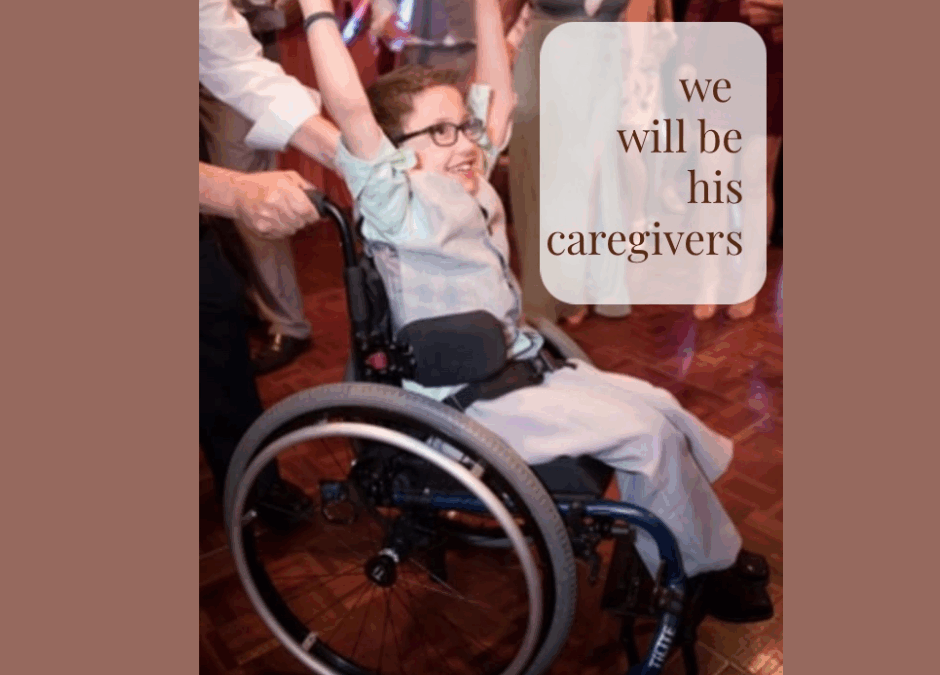
Cerebral palsy comes in many forms. For Alex it’s severe spastic quad cerebral palsy. This means his body is fully affected and he is in a wheelchair. He also has epilepsy and an intellectual disability. Walking and standing are very hard for him and he needs someone to hold on to him when he uses his walker for short transfers. 

He cannot do many simple tasks that we take for granted. Such as taking a bath, or brushing his teeth. Some days he has seizures. And he has a baclofen pump in his body that has to be refiled every few months. He has a lot of medical conditions, such as asthma and heart issues, that need to constantly be monitored.

He also has trouble writing and reading. Even talking sometimes is a challenge. A lot of times, he can not even communicate when he hurts or is ill. Its sometimes a guessing game.

All this comes with the sad reality that Alex may never be fully independent and on his own. We hope that he will be. We want nothing more than him to be out on his own. We want him to be happy.

But a crushing reality stares us down everyday. While our other two children grow older and more independent, we are left with the nagging thought of Alex always needing us. 

He can do some things on his own and in his own way. Like dressing himself and wheeling himself around. But, there are many things Alex may not be able to do. Like balance a checkbook, drive, or cook. Someone has to lift him and help him transfer in and out of things such as a car and his chair. He will probably always need someone there at all times to help him, whether it’s us or a nurse. So we talk often about how we will care for Alex in the future and set him up in life.

Cerebral palsy means no empty nest, but not all is negative.

I’ll always have a buddy and partner in crime. We plan to get an RV and travel with Alex all over the United States once our other two are grown. We are setting up funding so Alex will get the help and care he needs once he is 18.

We also have a tight-knit community, with people just like Alex to guide us into the future. To talk to. To share our stories with.

And we have his two brothers that care for and love Alex. They enjoy helping him with whatever he needs. For ten years Alex has been working on skills in therapy, at school, and at home to become more independent. Such as using an iPad to write, learning to snap and zip his jacket, using adaptive equipment such as an auto access seat to get out of his handicap van and transfer to his wheelchair, using a stair lift to get himself up and down stairs, and so much more.

We choose to focus on our future RV travels when we get sad or defeated when reality comes knocking. We focus on the positive steps Alex is taking to be come more independent.

Because it’s all about perception.

Some days are harder than others. We don’t know what the future holds. But we do know that Alex is a fighter, and he has a fire in his soul.

We will be his caregivers, cheerleaders, and biggest supporters. Despite not being empty nesters. Despite the challenges he faces. ?

Do you like what you see at DifferentDream.com? You can receive more great content by subscribing to the monthly Different Dream newsletter and signing up for the daily RSS feed delivered to your email inbox. You can sign up for the first in the pop up box and the second at the bottom of this page.

By

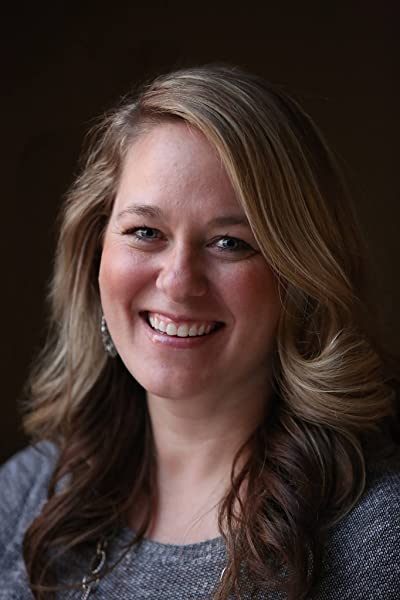
Trish Shaeffer is the mom of 3 active boys with special needs. She’s a peer supporter for Parent to Parent and volunteers with the United Cerebral Palsy Network, Special Olympics, and the United Way. She’s also an equine volunteer at Leg Up Farm. She’s married to her best friend and biggest supporter, Chris Schaeffer.

Author Jolene Philo

Archives

Categories

Related Posts

My Child Is Different, but We Have More in Common Than You Think

My Child Is Different, but We Have More in Common Than You Think

My Child Is Different, but We Have More in Common Than You Think

My child is different, says guest blogger Amy Felix, and yet. And yet, Amy knows that parents of typical kids and parents of kids with special needs have much in common. That commonality, she also believes, is what will help us raise a new generation of compassionate and kind adults.

When she was younger, you thought it was cute. The way she jumped up and down excitedly and repeated everything I said. Her big, green eyes and sweet, round angel face were the first things you’d notice when she entered the room. Her meltdowns were, in your mind, toddler tantrums and you gave me that “I’ve been there, too” smile to relieve the tension you could tell I was feeling. We were the same back then. You and I were just parents, and we understood each other without having to say a word.

Then she got older.

My little girl isn’t so little anymore and, suddenly, there’s a great divide. Now my child is different. You still give me that polite parent-to-parent smile when we enter the room, but when she gets excited or upset–we’re no longer the same, you and me.

Now you’re staring.

As she flaps her hands and talks loudly when she’s feeling joy, or paces back and forth with her hands over her ears when she’s upset. Her differences are becoming more and more obvious to you. You look from her to me, sizing me up. When you realize I’ve noticed it, you look away and avoid me. We no longer have an understanding, and it hurts.

We are strangers to one another.

I know that you have no way of knowing that my child has autism. Not all disabilities are visible. Just as I have no way of knowing anything about your child or your life. So, let’s take a step back for a moment, beyond just us. Beyond this situation we’re finding ourselves in.

Our children are here, at this birthday party or that playground, together.

They are taking it all in and, despite what so many articles may say, bullying is not just something that naturally develops as a part of childhood. Bullying starts with us. You and me. Moms and dads. Staring at one another in the presence of our children who, though they are busy eating cake or playing catch, are also busy watching. Those little sponges are absorbing every moment of uncomfortable silence between us. They haven’t treated each other differently yet. Our children haven’t begun to place each other on a scale of differing values.

But they will because my child is different.

Unless we change this judgmental way of interacting. Unless you look at my situation, unless I look at yours, and try to see the positive; try to embrace the differences as special and not strange. Unless we can be more like our children, our children will all-too-soon be more like us–the us that stands divided. The us that doesn’t take the time to try and understand. The us that we’d rather not acknowledge. The window of time is closing in which we still stand a chance to raise a generation of compassionate, open-minded people. So, from one parent to another, this is my plea.

My child is different. So is yours.

They all are, and that’s what makes them breathtakingly beautiful. Please, let’s not take that truth from them and twist it into the lie that they all need to fit into the same mold. If you see my child doing something that you don’t understand, ask me about it! I’d love to explain what makes her unique and I’d love to hear about what makes your child special, too.

As a parent, I’m different.

I have to be, because my children are not your children. Each of these little people have different personalities and need different things from us as moms and dads. Can we please leave the judgmental stares and awkward silence at the door and just support each other? We may be on very different parenting journeys, but we have one thing in common.

We love our children.

There’s nothing we wouldn’t do for them. When we’re faced with differences that feel too great and we don’t know how to relate to one another, let’s just start there. Chances are, we have more in common than you think.

Do you like what you see at DifferentDream.com? You can receive more great content by subscribing to the monthly Different Dream newsletter and signing up for the daily RSS feed delivered to your email inbox. You can sign up for both at the bottom of this page.

By

My name is Amy Felix. I’ve been married for 10 years to a guy who’s totally out of my league. I’m a homeschooling mom to 4 kids, ranging in age from 9 to 2 years. That’s really enough work on it’s own but, because I love it, I’m a photographer as well. And, in my spare time, I write. My faith is the driving force behind my special needs blog: Appointed To Hope. I’m a firm believer in being real, transparent, and using the gifts of this journey as a way to relate to others in their joy as well as their sorrow. To read more about my adventures in special needs parenting, visit my website at www.appointedtohope.com.

Author Jolene Philo

Archives

Categories

Subscribe for Updates from Jolene

Related Posts

Coronavirus and Kids with Special Needs

Coronavirus and Kids with Special Needs

Coronavirus and Kids with Special Needs

Coronavirus and kids with special needs sounds like a combination worthy of panic. With all the information and misinformation swirling about, it’s easy for caregiving parents to be confused and stressed about how to best protect their kids. Where’s a parent to go to find accurate, truthful information? And what should they do to keep their kids safe and healthy, both physically and mentally, as the situation unfolds? Here are five sources that provide information in a thoughtful, careful manner.

  1. The Center for Disease Control and Prevention (CDC). This site is updated daily as new cases of the coronavirus are identified and scientific advancements are made. You’ll find a state-by-state breakdown of cases and map, a page about the coronavirus in kids that should ease your mind, and a list of measures to slow the spread of the virus and avoid contracting it.
  2. The World Health Organization (WHO). This website is similar to the CDC’s but with a global, rather than national, focus. Their prevention page has much of the same information as the CDC. I especially like their graphic about how help kids cope with stress during the outbreak. What’s the big message for parents worried about the coronavirus and kids with special needs? Stay calm and manage your own stress so your kids don’t get stressed!
  3. AARP. It sounds weird, I know. But the AARP’s article about what senior citizens should know about the coronavirus can be generalized to the coronavirus and kids with special needs. Also, the article answers some questions the CDC and WHO don’t mention.
  4. My husband. He’s a nurse at a regional hospital, and they receive updates and preparedness information. He and the three sources listed above say the same things. Hand washing is the single most effective measure to slow the transmission of the coronavirus.

Based on everything I’ve read and the advice of my husband who’s been a hospital nurse for more than 30 years, the best way to keep the coronavirus and kids with special needs away from one another is to wash your hands. With soap. Several times a day. For at least 20 seconds. You would be wise to institute the other measures recommended by the CDC and WHO. They may seem simplistic and low tech, but research proves they work. Now if you will excuse me, I’m off to wash my hands. Again. 

Do you like what you see at DifferentDream.com? You can receive more great content by subscribing to the monthly Different Dream newsletter and signing up for the daily RSS feed delivered to your email inbox. You can sign up for both at the bottom of this page.

By

Jolene Philo is a published author, speaker, wife, and mother of a son with special needs.

Author Jolene Philo

Archives

Categories

Subscribe for Updates from Jolene

Related Posts

Medically-Fragile Kids with the Flu: 3 Tips to Keep Them Out of the Hospital

Medically-Fragile Kids with the Flu: 3 Tips to Keep Them Out of the Hospital

Medically-Fragile Kids with the Flu: 3 Tips to Keep Them Out of the Hospital

Medically-fragile kids with the flu is a scary combination as guest blogger Kimberly Drew knows. Today she shares 3 tips that kept her children with compromised immune systems home after they contracted influenza. If the flu hits at your house, they might do the same for you.

Despite our efforts to avoid it, our house was hit with the flu this winter. It caught us unprepared and we scrambled to get by while doing our best to care for one another. With two children with significant special needs and another child with asthma, it was a difficult time. Here are some things that helped us stay out of the hospital with our vulnerable few.

Tip #1 for Medically-Fragile Kids with the Flu

Hydration. Both our daughters with cerebral palsy (CP) find it difficult to eat and drink on regular days. If you add in illness of any kind, hydration can become a monumental challenge. Pedialyte has what’s needed but tastes terrible. I have found that alternating juice and water does the job just as well. The trick is consistency because dehydration can lead to vomiting, and you have to stay ahead of it. If the girls are refusing to eat or drink, I simply give them fluids from a 10 ML syringe every twenty minutes and increase the amount as they tolerate it. I place the syringe back by the molars and somewhat in the cheek and push in a little at a time like when giving liquid meds. The trick is to keep at it every 15 to 20 minutes until they will use a cup or straw. I set an alarm on my phone to remind me and keep the liquids in a cup nearby.

Tip #2 for Medically-Fragile Kids with the Flu

Help. As soon as I go into constant care mode, I call someone to bring a meal or order us a pizza. Our church has a great network for this. If you don’t have that kind of support system, I strongly encourage you to set one up for yourself. Find five family members or friends ready be on “meal duty” when you need it. This simple act takes a big chunk of time and energy off you so that you can care for your children. There are a thousand ways an extra set of hands can come in handy: someone to sit with your other children so you can get your medically-fragile kids with the flu into a steamy bathroom, or to pick up a prescription to name a few. So don’t be too shy to ask for help.

Tip #3 for Medically-Fragile Kids with the Flu

Honesty. We can all agree that having your children hospitalized is rarely good, so call the after-hours line for your pediatrician or specialist if you’re not sure what to do. Our kids’ physicians are more than happy to offer extra tips to keep them home. Our son with asthma had some very difficult nights these last few weeks, but the on-call pulmonologist helped keep me calm and on top of what he needed. While we can’t control everything, the second set of eyes on situation can really make a difference, especially when we parents are tired and worried!

I hope you don’t find yourself in need of these tips this winter. But if you do, I want to tell you that you can do this! Before you know it, spring will be here and these flu germs will be a bad memory! Stay strong and keep pushing forward.

Do you like what you see at DifferentDream.com? You can receive more great content by subscribing to the monthly Different Dream newsletter and signing up for the daily RSS feed delivered to your email inbox. You can sign up for both at the bottom of this page

By

Kimberly grew up and went to college in the small town of Upland, IN. She graduated from Taylor University with a degree in Elementary Education in 2002. While at TU, she married her college sweetheart and so began their adventure! Ryan and Kimberly have three amazing kids on earth (Abigail, Jayden, and Cooper), and a baby boy waiting for them in heaven. Their daughter Abigail (Abbey) has multiple disabilities including cerebral palsy, a seizure disorder, hearing loss, microcephaly, and oral dysphagia. She is the inspiration behind Kimberly’s  desire to write. In addition to being a stay at home mom, Kimberly has been serving alongside her husband in full time youth ministry for almost fourteen years. She enjoys working with the senior high girls, scrapbooking, reading, and music. You can visit Kimberly at her website, Promises and Perspective.

Author Jolene Philo

Archives

Categories

Subscribe for Updates from Jolene

Related Posts

Christy’s Courage: An EA/TEF Success Story

Christy’s Courage: An EA/TEF Success Story

Christy’s Courage: An EA/TEF Success Story

Christy’s Courage is a the brainchild of Christy Cook, an EA/TEF survivor. As part of EA/TEF Awareness Month, 2020 she is sharing her fascinating story and her vision for supporting EA/TEF kids and their families.

My name is Christy Cook. I was born an EA/TEF baby in Baltimore, Maryland in 1963 and my “long gap type C” journey began. The first surgery at attempting to correct my unusual birth defect was performed on the very first day of my life at Sinai Hospital by Dr. Jack Handlesman and his team of doctors. Since the gap at the esophagus was too long, the connection was not successful. Therefore, a gastrostomy tube (g-tube) was very carefully inserted into my small stomach. This g-tube became my life line the next 4 years. The doctor’s goal was to attempt another corrective surgery when I weighed 25 pounds.

When I reached this goal weight sometime during the year of my second birthday, the doctors began contemplating another method for corrective surgery. During this time, I was in and out of Sinai Hospital numerous times for various medical issues relating to EA/TEF. At one time, all my available veins for injecting fluids were depleted. The doctor told my parents that only a miracle could save my life.

A miracle did happen!

The doctor performed an extraordinary surgery to find a deep vein in my groin through which I could receive lifesaving fluids. Also, there were times when fluids were simply injected under the skin to help sustain my life. When I was around 2 years of age, Dr. Handelsman performed a colonic interposition in my chest cavity to try to make a connection to my stomach. Unfortunately the transplant did not succeed because it scarred and died in my chest.

For the next few years, my life consisted of gastrostomy feedings and hospital visits. When I was around 3, my family decided to move back to North Carolina, their home state. After having my medical records sent to the Chapel Hill Hospital at the University of North Carolina, we made contact with a renowned surgeon Dr. Colin Thomas. Dr. Thomas decided to transplant a second colon section outside the chest cavity just under the skin or subcutaneously. His thinking was that this colon transplant could be surgically put into the chest cavity at a later date.

Eureka, a successful connection was made!

This type of corrective surgery has been an unusual restorative procedure that serves me well. Therefore I chose not to risk having the transplant placed into my chest since everything its working If I get a “sticky,” I help the peristalsis motion by massaging my esophagus.

Voilà, no more “sticky!”

This triumphant procedure has served me well for more than 50 years. I have been able to enjoy eating by mouth since I was 4, and I have no other serious birth abnormalities. My corrective surgeries have been written up in medical journals and medical students have studied and learned from my medical history. Thankfully, there are medical professionals who continue to do research and are finding better ways to treat, repair, and surgically help these precious babies who are born with this rare and unfamiliar birth defect.

My goal is to use my life experience to make a difference for EA/TEF patients by supporting them on their journey to navigate this diagnosis and live a successful life. For that reason, Christy’s Courage was established in 2012 when I started to write a book about my life. The book turned into a non-profit when I, along with Pi Kappa Alphas at Western Carolina University, raised money to gift an adjustable bed to an EA child. Since then have held many different fund raisers to raise awareness for EA and to gift adjustable beds, wedge pillows, monetary gifts, Farrell bag covers, airfare to hospitals, and anything else we can handle. We have a scholarship fund for EA young adults to help with their college needs.

Because EA is so rare, it is a challenge to get people engaged to attend our events and make monetary donations. So, if you are reading this educate someone about EA, please refer them to Christy’s Courage so we can make an impact for the EA community!

Do you like what you see at DifferentDream.com? You can receive more great content by subscribing to the monthly Different Dream newsletter and signing up for the daily RSS feed delivered to your email inbox. You can sign up at the bottom of this page.

By

My name is Christy Cook and I am a survivor. Living with Esophageal Atresia (EA) has been a courageous, but difficult journey. Through all the twist and turns of EA, I graduated high school, was a debutante, attended college for 3 years, became a member of Delta Zeta sorority, and after college I work full time as a food broker. (Ironic, don’t you think?) I have been married for 32 years to a wonderful man. Our fur babies are 2 Shih Tzu’s (Bunni Rose and Moonpie) and 6 cats (Amelia, Caramia, Kitta, Panther, Rusty & Zeek). In my spare time I enjoy concerts, hanging with friends and trips to the ocean.

Author Jolene Philo

Archives

Categories

Subscribe for Updates from Jolene

Related Posts

EA/TEF Awareness Month, 2020

EA/TEF Awareness Month, 2020

EA/TEF Awareness Month, 2020

EA/TEF Awareness Month has been my favorite way to usher in January for a decade, and 2020 is no exception. As in past years, Different Dream will feature posts from parents raising children born with some variation of the condition. This year, for the first time, at least one post will be partially written by an adult born with EA/TEF.

If you’re wondering why Different Dream devotes an entire month to raising awareness, 2 reasons come to mind right off the bat. First, our first child was born in 1982 with Type C, the most common kind of EA/TEF. So I have a vested interest in making the general public more aware of this birth anomaly. Second, the condition is quite rare, occurring once in every 3,000-5,000 newborns. 60% of babies born with EA/TEF have at least one other birth anomaly, though our son did not. That means there’s a lot of awareness raising to be done, and since January is cold and snowy where I live, it’s the perfect time to talk about EA/TEF on social media. Indoors. Where it’s warm and cozy.

To whet your appetite for what’s to come, check out this 2019 post, which is a compilation of favorite EA/TEF Awareness Month posts over the years. You’ll be blown away by the cuteness of these EA/TEF kids and by the wisdom their parents share. EA/TEF Awareness Month for 2020 will feature 2 posts every week, so stop by often for more cuteness and wisdom.

If you’re an EA/TEF survivor or are raising one, you’re also invited to share your story in the comment section below. I would love to hear your story and so would Different Dream readers around the globe!

Do you like what you see at DifferentDream.com? You can receive more great content by subscribing to the monthly Different Dream newsletter and signing up for the daily RSS feed delivered to your email inbox. You can sign up at the bottom of this page.

By

Jolene Philo is a published author, speaker, wife, and mother of a son with special needs.

Author Jolene Philo

Archives

Categories

Subscribe for Updates from Jolene

Related Posts