How Do I Teach my Kids to Interact with People Who Have Disabilities?

How Do I Teach my Kids to Interact with People Who Have Disabilities?

How Do I Teach my Kids to Interact with People Who Have Disabilities?

“How do I teach my kids to interact with people who have disabilities?”

The question came during an interview with the hosts of the Music for the Soul podcast. While I composed an answer in my head before speaking, I also thought to myself, “What a great topic for a blog post.”

Once the interview was over, I jotted down what I’d said and added more tips as they came to mind. The tips below are geared for kids, but they can be adapted for adults who act uncomfortable around anyone with disabilities and special needs—kids, adults, and senior citizens.

  1. Model disability etiquette to your children and others. In addition to watching how you employ the tips listed below as you interact with people who have disabilities and special needs, they hear how you speak. They notice your inflection and tone of voice. They can see if you are at ease or uncomfortable, patronizing or respectful, so try to be a good role model.
  2. Talk to the person with the disability rather than to their caretaker or interpreter even if they give the answer. Doing so shows the person that you value them and want to hear from them.
  3. Start by having your child introduce herself. Once again, this conveys respect for your child’s voice and helps the person she’s talking to know who to speak with.
  4. Allow your child to ask the person about his disability. Kids are curious and uninhibited. They will bring up the disability elephant in the room that adults are too “polite” to mention.

To read the rest of How Do I Teach my Kids to Interact with People Who Have Disabilities?, go to the Key Ministry website.

Do you like what you see at DifferentDream.com? You can receive more great content by subscribing to the monthly Different Dream newsletter and signing up for the daily RSS feed delivered to your email.

Photo by Ability Ministry on Disability Is Beautiful

By

Jolene Philo is the author of several books for the caregiving community. She speaks at parenting and special needs conferences around the country. Sharing Love Abundantly with Special Needs Families: The 5 Love Languages® for Parents Raising Children with Disabilities, which she co-authored with Dr. Gary Chapman, was released in August of 2019 and is available at local bookstores, their bookstore website, and Amazon. See Jane Dance!, the third book in the West River cozy mystery series, which features characters affected by disability, was released in October of 2023.

Author Jolene Philo

Archives

Categories

Subscribe for Updates from Jolene

Related Posts

Making an Autumn Sensory Fidget Box

Making an Autumn Sensory Fidget Box

Making an Autumn Sensory Fidget Box

Making an autumn sensory fidget box is easier than it may sound. Guest blogger Mark Arnold is here with ideas, pictures, and step-by-step guidance to help you and your kids create a delightful activity for this beautiful season of the year.

Autumn is a fabulous time of the year, with its many changes and many treasures to look for and find! Our family has been making a sensory fidget box, and I thought you would like to make one too.

There are loads of nature items things to add to your fidget box. I’ll show you what we’ve put in ours so far, as well as some ‘extras’ that we included.

Pinecones: We live near some pine woods so we’ve gathered these lovely cones for our box. They are wonderful to feel and explore with our fingers.

Wooden Batons: We cut these tactile, wooden batons from fallen branches in the woods. They are smooth with little rough bits too!

Conkers (also known as Buckeyes): We walked an avenue of horse chestnut trees. It was worth it to get these smooth conkers. They are great to hold and rotate in the palm of the hand! Be sure to supervise their use as they can be a choke hazard.

Feathers: There are plenty of pheasant feathers near where we live, and lots of others to find too. We washed them first so they are nice and clean. They are great sensory items to stroke with.

Shells: We also live near the sea (we’re very lucky), so we picked up some nice seashells to add to the fidget box. Again, we washed them first. Shells are tactile and sensory, very calming to feel.

Pebbles and Stones: The weight of pebbles and stones can be sensory. The experience can be enhanced by popping them in the fridge to cool down!

Scrunchy Autumn Leaves: Fallen autumn leaves are beautiful to look at and scrunchy to feel! If you like, stick them to a piece of paper to keep them longer.

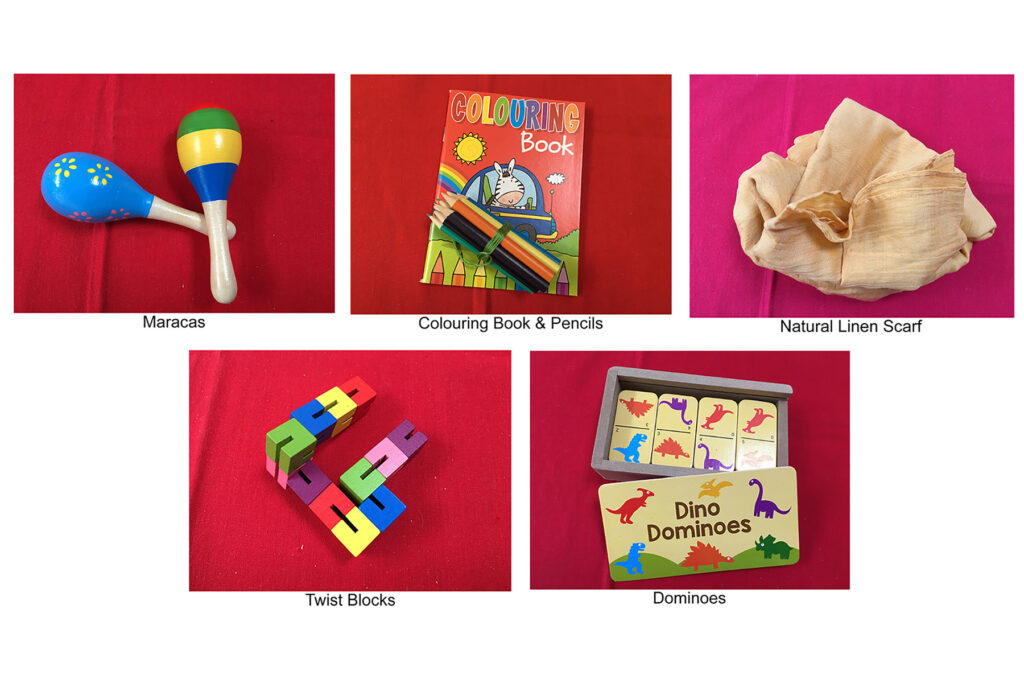
Purchased Items: We bought a few items for our fidget box that are in keeping with the natural feel. For us, that means no plastic. Here are some of them:

Finally, you need a nice wooden box to put everything in. We found one to paint and decorate to make it look special.

Creating your own autumn sensory fidget box is lots of fun. You’ll enjoy exploring and collecting, putting it together, and using the fidget box throughout the winter…until you can make one for spring!

© Mark Arnold/The Additional Needs Blogfather

Do you like what you see at DifferentDream.com? You can receive more great content by subscribing to the monthly Different Dream newsletter and signing up for the daily RSS feed delivered to your email.

Images courtesy of Mark Arnold


By

Mark Arnold is the Additional Needs Ministry Director at Urban Saints, a leading national Christian children’s and youth organization. He is co-founder of the Additional Needs Alliance, a national and international advocate for children and young people with additional needs or disabilities. Mark is a Churches for All and Living Fully Network partner, a member of the Council for Disabled Children and the European Disability Network. He writes an additional needs column for Premier Youth and Children’s Work (YCW) magazine and blogs at The Additional Needs Blogfather. He is father to James, who has autism spectrum condition, associated learning disability, and epilepsy. To find out more about how Mark’s work can help you, contact him at: marnold@urbansaints.org or @Mark_J_Arnold

Author Jolene Philo

Archives

Categories

Subscribe for Updates from Jolene

Related Posts

4 Ways Disability Families Can Heal after Being Hurt by a Church

4 Ways Disability Families Can Heal after Being Hurt by a Church

4 Ways Disability Families Can Heal after Being Hurt by a Church

4 ways disability families can heal after being hurt by a church? What? you may be thinking, only 4? Our family could use at least a gazillion! Trust me when I say that guest blogger Kristin Faith Evans knows where you’re coming from. In this post, she shares 4 effective strategies she and her family have used to heal after being hurt by a church and hold tight to their faith.

Many families have difficulty finding a church home or continuing to attend their home congregation due to their child’s special needs. They may have felt misunderstood, unsupported, or rejected. Some were even asked to leave because of their child’s behaviors or needs. In fact, almost 1/3 of special needs families have reported that they have left at least one church because their child was not included or welcomed. If you’ve been hurt by the church, consider taking these steps toward healing.

#1: Tell the Leadership How You Feel

In some cases, speaking to the leaders may cause you further emotional harm. If you believe this might be true, skip this step. But if you haven’t already and you feel comfortable, share how the situation has hurt your family. It’s possible they didn’t realize, understand, or know how to respond. Bringing it to their attention might also help prevent another family from feeling the same way in the future. Perhaps the situation can even be resolved, and the church can support your family in staying. Or it may be the healthiest decision for your family to find a new congregation. But you can leave knowing that you have communicated and attempted to reconcile.

#2: Talk to Someone You Trust

When we’ve been hurt, our natural instinct is to isolate. Being emotionally harmed by a church can be traumatic and keep us from forming new relationships. It may be hard, but reach out and talk to someone you know will be objective and supportive. It can be a family member, friend, another Christian outside that church, a support group member, or a counselor. A critical piece of your healing will be processing your experience with others.

#3: Forgive Those Who Hurt You

Anger and resentment can be toxic and keep you from healing and moving forward. Forgiving may not be easy and can take time. Talk to God in prayer about your emotions and desire to forgive those who hurt you. Receive his comfort, healing, and counsel. Forgiving does not mean that you agree with what they did or that it was right. It means that you are no longer going to hold bitterness in your heart and that you are giving your pain to God so you can move on and heal. Scripture teaches us to: “Make allowance for each other’s faults, and forgive anyone who offends you. Remember, the Lord forgave you, so you must forgive others” (Colossians 3:13, NLT).

#4: Don’t Give Up on Church

Visiting a new church as a special needs family can be scary, especially after a bad experience. But remember—how that church treated your family doesn’t represent all Christians or how Jesus feels about your child and your family. Belonging to a healthy church will bring you strength, hope, spiritual growth, connection, and joy. Ask around and visit churches that have disability ministries, respite programs, or support groups. And take your time. Pray that God will lead you to the right church where your family can flourish.

What do you think of these 4 ways disability families can heal after being hurt by a church? What would you add to the list? Leave your suggestions below.

Do you like what you see at DifferentDream.com? You can receive more great content by subscribing to the monthly Different Dream newsletter and signing up for the daily RSS feed delivered to your email.

Photo by Josh Applegate on Unsplash

By

Kristin lives with her husband, Todd, and their two children in the Nashville, TN area. She is an author, speaker, mental health counselor, and a mom of two children with rare genetic disorders and complex needs. Her greatest passion is teaming up with her husband to empower other parents of children with disabilities, mental health disorders, and medical complications. She hopes that you may find encouragement and support on their website www.DisabilityParenting.com

Author Jolene Philo

Archives

Categories

Subscribe for Updates from Jolene

Related Posts

Managing Mixed Emotions When Our Kids with Disabilities Go Back to School

Managing Mixed Emotions When Our Kids with Disabilities Go Back to School

Managing Mixed Emotions When Our Kids with Disabilities Go Back to School

Managing mixed emotions when our kids with mixed emotions go back to school can be, well, emotional. Guest blogger Kristin Faith Evans is experiencing a wide gambit of those emotions this August and is here to share her best feelings-management techniques with you today.

Sending our children with special needs back to school can raise different emotions in us. Some of these emotions can cause pain, stress, or guilt. Let’s examine some emotions commonly experienced by disability parents and how to process them in healthy ways.

Grief: As a special needs parent, you will likely experience a special kind of chronic grief throughout your child’s life, and the start of the school year can trigger a wave of sorrow. With this new milestone, you may be sad that your child is developmentally behind other children, is not as independent, or has difficulty making friends.

Fear: As special needs parents, we are sometimes afraid that other kids will treat our children meanly or take advantage of them. We might fear that our children will have a medical emergency or become injured, and heaven forbid, that they might be mistreated by their teachers or other school professionals. It makes sense that you might be experiencing some anxiety and feeling overprotective as your child begins a new school year.

Jealousy: Watching other parents drop off their typically developing, seemingly healthy children might spark some envy, maybe even anger in your heart. To be honest, attending the open house night and watching all the other thirteen-year-old girls huddle together sent a pang of jealousy throughout my body. We might even fantasize about having a “normal life” at times.

Managing Your Hard Emotions

Parents caring for children with special needs experience those hard emotions. It’s normal to feel this way. Yet, becoming stuck in them can become unhealthy. These steps can help you process your feelings:

  1. Reflect on the past couple of days. Look for reasons why you might be feeling this way. Sometimes there’s a specific event that prompts our emotions, other times it’s difficult to identify the trigger.
  2. Allow yourself to feel and grieve. Have a good cry. Observe yourself experiencing your difficult emotions. Let yourself just be for a bit. Be tender, supportive, and accepting of your painful emotions.
  3. Reframe your situation. Is there a way to look at your circumstances differently or more hopefully? If not, that’s okay too.
  4. Return to now. Come back to the present. Focus fully on your day, one moment at a time.

Managing Positive Emotions

Sometimes even positive emotions can be scary, but I encourage you to let go of the fear of positive emotions even as you honor your hard ones.

Hope: Choose an optimistic outlook, expecting a good year, and focus on how your child will grow.

Joy and Gratitude: Celebrate your child’s season and express thankfulness for their life. List out your child’s amazing qualities and all the ways that they’ve made progress so far.

I pray blessings on your children as they begin a new school year, and blessings on you as you begin managing mixed emotions when our kids go back to school. You’re invited to use the comment box to share what you’re experiencing as your child goes back to school.

Do you like what you see at DifferentDream.com? You can receive more great content by subscribing to the monthly Different Dream newsletter and signing up for the daily RSS feed delivered to your email.

Photo by Tengyart on Unsplash

By

Kristin lives with her husband, Todd, and their two children in the Nashville, TN area. She is an author, speaker, mental health counselor, and a mom of two children with rare genetic disorders and complex needs. Her greatest passion is teaming up with her husband to empower other parents of children with disabilities, mental health disorders, and medical complications. She hopes that you may find encouragement and support on their website www.DisabilityParenting.com

Author Jolene Philo

Archives

Categories

Subscribe for Updates from Jolene

Related Posts

How Much Is Too Much to Tell Teachers about my Child’s Disability?

How Much Is Too Much to Tell Teachers about my Child’s Disability?

How Much Is Too Much to Tell Teachers about my Child’s Disability?

How much is too much to tell teachers about my child’s disability? Maggie Gale, today’s guest blogger and mom to a daughter with medical special needs, asked that question at the start of every school year. Even though she was a teacher herself, she spent much time and energy trying to answer that question. Eventually, she came up with 3 guidelines. Today she’s sharing them with you.

And I said to the man who stood at the gate of the year:
“Give me a light that I may tread safely into the unknown.”
Minnie Louise Haskins, 1908

Some things haven’t changed since 1908. When we stand on the brink of the new and unknown, it’s human nature to feel fearful and crave more light to help us move forward.

For parents with children in school, or those who, like me, work in a school themselves, the year has two gates. The first one is in January, as the Christmas decorations gradually lose their luster. We go through another gate in August or September, as summer vacation painfully draws to a close and the new school year unfolds.

Here we are again, edging towards that gate. The structure-free days of vacation can be a time of niggling worries as we anticipate the future, whatever the angle we’re approaching it from.

Children are wondering, “Will I make new friends?”

Parents are questioning, “What will my child’s teacher be like?”

Teachers are thinking, “How will my class be this year?”

For parents of children with special needs, there can be deeper, more complicated questions:

Am I doing the right thing, sending my child there?

Will the teacher understand what I’m saying?

Is my child safe?

My daughter was born with EA/TEF resulting in severe swallowing difficulties. New teachers, new classes, and new schools called for letters detailing her medical condition. Sometimes I felt I was writing into a void—Was my letter stored away in a file somewhere, or had it been read and understood?

  • How could I raise these issues with busy teachers without coming across as overprotective?
  • How could I be really sure that the non-medical teacher grasped the concept that when food was stuck in her esophagus, it meant a complete blockage—no eating or drinking at all, until it was removed, surgically if necessary?
  • How much is too much to tell teachers about my child’s disability?

After I became a teacher, I realized how important it is to communicate with the school with transparency and honesty but not with too much information. I also realized how helpful it is when a parent appreciates how many issues teachers juggle on a daily basis along with the specific needs of the child with special needs. Now, with 19 years of teaching experience, I suggest these guidelines:

  • Keep it open. Explain the issue by sending a leaflet or a website that explains your child’s specific problems. In this way, you will take the mystery out of it and answer unspoken questions lurking in the minds of children or teachers: Can I catch this? Will it ever get better? Why was he or she born this way?
  • Keep it matter of fact. Emotion is understandable but it can distract. We need all the focus to be on the child’s success.
  • Keep it succinct. You might be an expert on your child’s specific case, but what does the teacher actually need to know? Appreciate that teachers are balancing 101 issues on a daily basis, so try to support them by sharing only what they need to know. This will help build the strong team of school and family that your child needs.

Minnie Louise Haskins continued the poem quoted above with these lines:

“Go out into the darkness and put your hand into the Hand of God.
That shall be to you better than light and safer than a known way.”
So I went forth, and finding the Hand of God, trod gladly into the night.
And He led me towards the hills and the breaking of day in the lone East.

Sending my daughter, with her specific medical condition, to a new school, new teacher, new class felt like treading into the dark unknown. Somehow or other, I found that Hand to hold onto. Despite the ups and downs of swallowing problems and esophagitis, my daughter made it successfully through her school life and emerged on the other side as a strong, independent young woman who can manage her challenges.

As your child goes through the school gate this fall, don’t forget that Hand holding yours and your child’s is better than light and safer than a known way.

Do you like what you see at DifferentDream.com? You can receive more great content by subscribing to the monthly Different Dream newsletter and signing up for the daily RSS feed delivered to your email.

Photo by Thomas Vogel on Unsplash

By

Maggi is a wife and mother of two daughters. She is a primary school teacher, having worked in Africa for 14 years before moving to the Middle East. Her passions are her animals and art. Her youngest daughter was born with tracheoesophageal fistula (TEF). This birth condition was to be the start of an arduous journey, impacting the whole family for several years. Through writing, she hopes to turn her experiences into encouragement for others on similar paths.

Author Jolene Philo

Archives

Categories

Subscribe for Updates from Jolene

Related Posts

The Invasion of the Red Dye 40 Brain Snatchers

The Invasion of the Red Dye 40 Brain Snatchers

The Invasion of the Red Dye 40 Brain Snatchers

The invasion of the Red Dye 40 brain snatchers wreaked havoc at Lisa Pelissier’s house not too long ago. In this post, written after she snatched her brain back, she shares how artificial dyes can affect children with certain disabilities and special needs. She also offers tips on how to lessen the problems these dyes cause.

My brain has been off for the last couple weeks. I’ve been depressed. Anxious. Paranoid. I’ve been having panic attacks. I blamed it on overeating when my in-laws were in town. (They took us out to dinner several times and it was delicious!) I blamed it on eating sugar—I don’t usually eat much of it, but we had ice cream in the house… and the rest is history. I blamed it on chocolate, which I usually only eat once a week, but had splurged and eaten it for three days.

Then I figured it out.

I read the label on the back of some potato chips that I had been doling out to myself in small portions for the past two weeks. My pale yellow potato chips had Red 40 in them.

Our family had fallen victim to the invasion of the Red Dye 40 brain snatchers.

I do not react well to Red 40. If I eat it, I get really angry. It usually happens the day after I eat the exquisite, mouthwatering, scrumptious Nacho Cheese Doritos. When I eat that fine ambrosia, symptoms ensue. Usually I’m careful, but not this time. After all, who would think there was Red 40 in sour cream and onion chips? I had eaten them every day for two weeks.

According to the Cleveland Clinic, side effects from Red 40 can include hyperactivity and other ADHD symptoms, irritability, depression, hives, asthma, sneezing and other allergy symptoms, skin irritation, and migraines. The New York Post says that Red 40 can be a factor in gut diseases as well. My daughter who has ADHD gets worsening symptoms, including restless leg syndrome, if she eats it.

In fact, Red 40 is banned in most of Europe.

Other food dyes can potentially be harmful as well, including Red 3, Yellow 5 & 6, Blue 1, and others. A study from 2012 reveals that many food dyes are potential carcinogens or contain them. The authors of the study recommend that “all of the currently used dyes should be removed from the food supply and replaced, if at all, by safer colorings.”

It is difficult to say no to processed foods, especially in a culture where food is used as for celebration, reward, and comfort. How do you say no when your child’s team wins, and the reward is a sugary treat full of food dyes? How do you say no when your child is at a birthday party and there is a pink cake? How do you say no when…. Nacho Cheese Doritos? I mean, come on!

But then I consider the alternative.

My kids live with autism, ADHD, and mental health disorders, so saying no is important.

Is pink cake worth more than a quiet, calm state of mind?
Is that sugary reward worth more than a good night’s sleep?
Are Nacho Cheese Doritos (sob!) worth more than feeling peaceful instead of paranoid?

Saying no is important. But there are other ways to respond than with a hard, dictatorial “No!” Here are my tips for avoiding the invasion of the Red Dye 40 brain snatchers.

1) Make sure nothing you put in your pantry on a regular basis includes Red 40 or other artificial food dyes. This includes medications, to the degree that you are able. This way, you avoid accidentally exacerbating any symptoms your child already has.

2) Be mindful of what your child is consuming at parties and celebrations. Keep portions under control. Have one red-velvet cupcake, not one red-velvet cupcake, a cup of red fruit punch, and some red licorice. Thoughtful consumption can still feel like a celebration without ingesting too much of a harmful chemical.

3) Watch for symptoms after consumption of foods containing Red 40 and other artificial food dyes. If symptoms are mild, manageable, and fade quickly, then maybe the splurge was worth it. If symptoms are extreme, out of control, or persist for days, you might want to avoid Red 40 altogether.

4) Look for food options with natural food colorings. Companies, even mainstream manufacturers, have been moving toward using natural food colorings instead of artificial dyes. You can even purchase food coloring made from natural ingredients. The colors are not as vibrant as those made with artificial dyes, but the switch is worth it.

How does Red 40 affect your children? What replacements have you found for popular red foods and drinks? Post in the comments below.

Do you like what you see at DifferentDream.com? You can receive more great content by subscribing to the monthly Different Dream newsletter and signing up for the daily RSS feed delivered to your email.

Photo by Fernanda Rodríguez on Unsplash

Lisa Pelissier

By

Lisa Pelissier lives in Oregon where she is a homeschooling mother of four (three with disabilities) and author of four middle-grade fiction novels as well as a YA fantasy novel. Lisa owns SneakerBlossom Books, offering Christian, classical homeschool Study Guides and curriculum. She blogs at Eleventh Willow, offering encouragement for Christians parenting the mentally ill. She also works as a freelance copy editor, an artist, and a substitute teacher. In her spare time Lisa enjoys playing the piano and fretting about things over which she has no control. 

Author Jolene Philo

Archives

Categories

Subscribe for Updates from Jolene

Related Posts