We Need Community while Parenting Kids with Disabilities and Special Needs

We Need Community while Parenting Kids with Disabilities and Special Needs

We Need Community while Parenting Kids with Disabilities and Special Needs

We need community while parenting kids with disabilities and special needs. Sandy Ramsey-Trayvick describes how the Holy Spirit nudged her to seek out other moms, how being in community helps her, and how you can find a community of moms, too.

“Don’t isolate yourself.” The Lord spoke those words to me at the very beginning of the COVID-19 pandemic. I wasn’t feeling particularly isolated. I wasn’t alone or lonely—I was with my family—but I assumed God knew what I would need or would later be facing better than I did. So I decided to look online for Christian groups for moms of kids with special needs. I’m not sure why I decided to look for special needs groups as a way to stay connected. I’d never really belonged to a special needs community before.

Fast forward to today: I still belong to the same special needs community I found online four years ago and it has become such an important part of my life:

  • It has filled a need that I didn’t even know I had—to belong to a group of moms who share my faith AND who understand this special needs journey. I’d grown so accustomed to living much of my life as a Christian special needs mom by myself. I knew a couple of the moms from my son’s class over the years, but no real connection ever formed. I had settled into and made peace with the reality that I’d be alone on this journey.
  • It has given me the opportunity to serve other moms like me—I’ve led a community group for years and have enjoyed getting to know moms from all over the United States—moms of different ages, at different stages on their special needs journey, and dealing with a variety of diagnoses. I have the privilege of providing a weekly online space for them to connect with other moms while they receive encouragement from the Word and each other.
  • It has helped me put my own journey into a clearer perspective as I learn about the experiences of these other moms. I’m inspired, blessed and humbled by their stories.

For anyone reading this who is considering whether you need a community, I’d say it’s so worth it. Or if you desire a community but have yet to find a special needs or caregiver community to connect with, I would say, don’t give up. I believe that the Lord recognizes our need for community—for belonging—and that He’ll help us to find one (or start one) if we ask. Here are some things to consider:

  • Look online for local groups or online forums. They abound these days, unlike when my son got sick over 20 years ago. Post-COVID, there are online opportunities for just about everything. You may have to search a little bit, but my experience proves the outcome can be well worth the effort.
  • If your child has a medical diagnosis, you can ask your child’s doctor or check local hospitals for support groups. After my son’s first kidney transplant, I briefly joined a support group for parents where post-transplant care, and the fears associated with it were discussed.
  • Even if a group doesn’t seem like a perfect fit at first, give it a try. If you end up leaving the group, at least you’ll have met some other moms or caregivers who may prove to be valuable resources or connections for the future.
  • When you find a group you like, attend. Don’t let excuses steal this opportunity to connect.

Believe me when I say we need community while parenting kids with disabilities and special needs. God has given us a great calling, and he wants to surround us with good people while we fulfill it.

Do you like what you see at DifferentDream.com? You can receive more great content by subscribing to the monthly Different Dream newsletter and signing up for the daily RSS feed delivered to your email.

Background Photo by Pawel Czerwinski on Unsplash
By

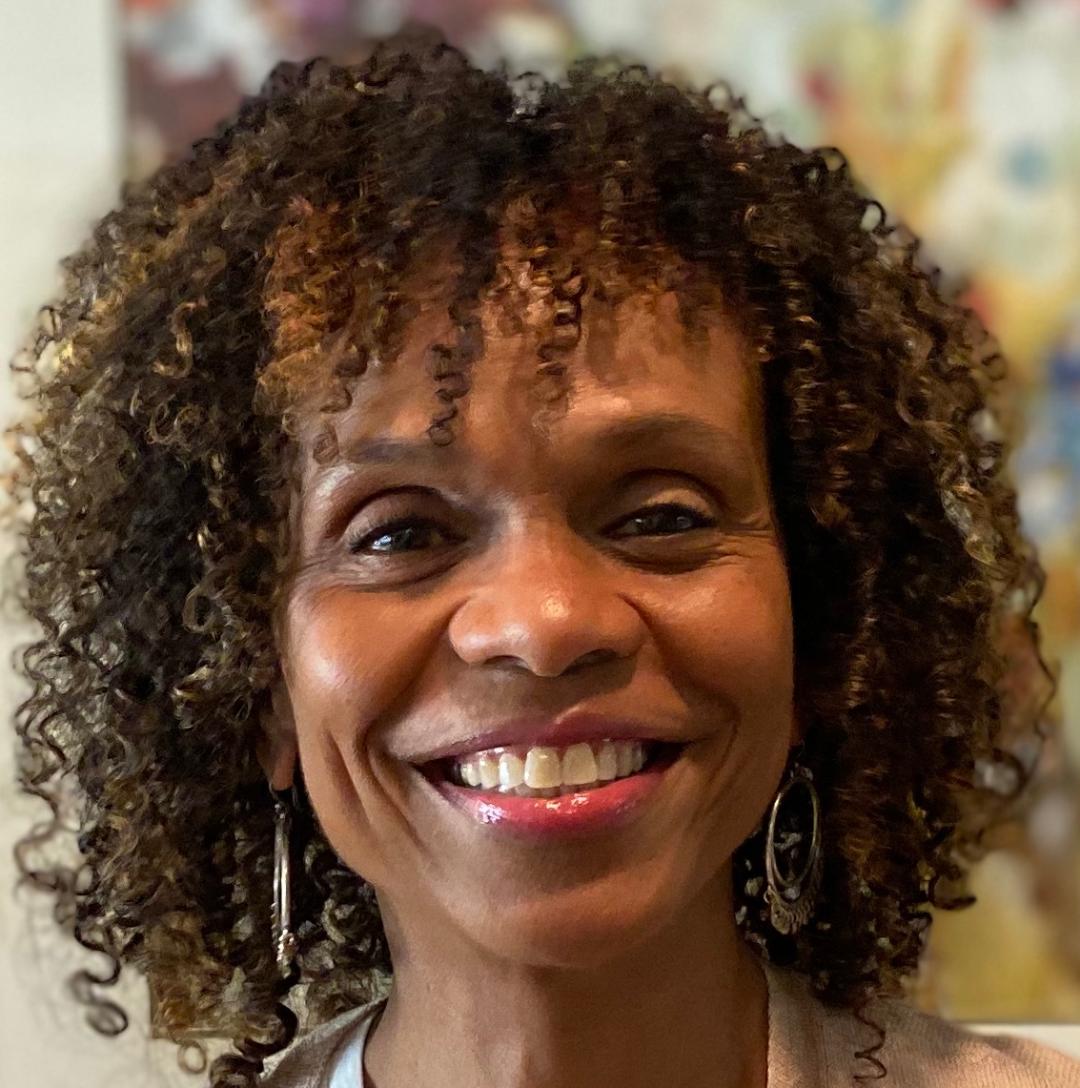
Sandy and her husband of 33 years live in NJ and have 3 young adult children. She became a special needs mom, caregiver, and advocate 24 years ago, after a childhood illness left her son multiply disabled.

Sandy works now as a Certified Professional Coach with a desire is to help other special needs parents discover the powerful story that God wants to write through their family’s unique special needs journey.

Sandy is also a writer and speaker, a community group leader for other special needs moms, and a frequent podcast guest. She has just released her first book, When Dreams Are Disrupted—A Story of God’s Faithfulness.

You can learn more about Sandy, her work and her blog on her website: www.UNDisabledLIVES.org and on IG (@undisabled_lives).

Author Jolene Philo
Archives

Categories

Subscribe for Updates from Jolene

Related Posts

The Impact our Words May Have on the Children We Serve

The Impact our Words May Have on the Children We Serve

The Impact our Words May Have on the Children We Serve

The impact our words may have on the children we serve in whatever capacity—as their parents, caregivers, grandparents, teachers, neighbors, business owners, and more—often goes unseen. We know our words make a difference because we remember how the adults in our lives impacted our childhoods, for good or ill.

My fiftieth class reunion was this summer, and many of us who gathered there reminisced about our favorite teachers way back in the 1960s when we were in elementary school.

“Who was your second-grade teacher?” a former classmate asked me.

“Mrs. Eggleston,” I replied.

“I don’t remember much about being in her classroom,” he said, “but I loved being there.”

“Me too,” I agreed. “I don’t know what she did, but she made me feel seen and loved.”

Another classmate caught my eye and said, “Jolene, your mom was my third-grade teacher.”

My mom, known as Mrs. Stratton to her students, had a reputation among adults of holding high standards of behavior. Translate that into kid talk and it comes out, “Mrs. Stratton is mean.”

“Uh-oh,” I thought to myself as he came over. “This could be awkward.”

“Your mom,” he began, “was the first teacher who made me work up to my potential. What I remember most is one day when we lined up after recess. After she brought us in and we were sitting at our desks, she said, ‘I counted how many of you boys took your hats off when you entered the building. Do you know how many of you did that?’

We all shook our heads.

To read the rest of The Impact our Words May Have on the Children, visit the Key Ministry’s blog for parents.

Do you like what you see at DifferentDream.com? You can receive more great content by subscribing to the monthly Different Dream newsletter and signing up for the daily RSS feed delivered to your email.

Photo by Kelli Tungay on Unsplash

By

Jolene Philo is the author of several books for the caregiving community. She speaks at parenting and special needs conferences around the country. Sharing Love Abundantly with Special Needs Families: The 5 Love Languages® for Parents Raising Children with Disabilities, which she co-authored with Dr. Gary Chapman, was released in August of 2019 and is available at local bookstores, their bookstore website, and Amazon. See Jane Dance!, the third book in the West River cozy mystery series, which features characters affected by disability, was released in October of 2023.

Author Jolene Philo

Archives

Categories

Subscribe for Updates from Jolene

Related Posts

Why Did God Make Me this Way?

Why Did God Make Me this Way?

Why Did God Make Me this Way?

“Why did God make me this way?” It’s a question our children with disabilities and special needs are bound to ask us. Guest blogger Steve Siler knew the question was coming and thought about what he would say. Read on to find out what he said and to listen to a song he wrote to express his thoughts.

“Why did God make me this way?”

I knew the question would eventually come and I’d prayed about how I would answer it. When my seven-year-old son with Spina Bifida finally asked me that question one evening as I was helping him in the bathroom I gave him the only answer I could think of that was not a lie.

“I don’t know son.”

Of course, I could’ve gone into some theological rationalization and told him all about how God was going to use his infirmity to bless others; how truthfully, in fact, he already had—as hundreds prayed for Henry for the weeks and months leading up to his birth and through the four years of surgeries that had followed.

Somehow, though, I didn’t think that would bring him much comfort.

So I decided to sit with him in the question. I decided not to minimize his pain. I decided not to explain away his disease by making it some part of a gigantic cosmic puzzle that God was working.

I’ve come to believe that we who call ourselves Christians are too quick to come up with explanations at times like these. I’ve come to believe that we do not place enough value in the ministry of presence: Our own or God’s.

To read the rest of Why Did God Make Me This Way?, visit Steve’s website, Music for the Soul.

Do you like what you see at DifferentDream.com? You can receive more great content by subscribing to the monthly Different Dream newsletter and signing up for the daily RSS feed delivered to your email.

Image by Gerd Altmann from Pixabay

By

Steve Siler is founder and director of Music for the Soul a multi-award-winning not-for-profit ministry using songs and stories to bring the healing and hope of Jesus to people in deep pain. Siler is a Dove Award winning songwriter, music producer, author, and speaker. He is co-host of the Music for the Soul Podcast: Where Music, Hope, and Healing Come Together! He and his wife Meredith have two children and three grandchildren.

Author Jolene Philo

Archives

Categories

Subscribe for Updates from Jolene

Related Posts

Can Churches Help Families Raising Children with Disabilities Stay Together?

Can Churches Help Families Raising Children with Disabilities Stay Together?

Can Churches Help Families Raising Children with Disabilities Stay Together?

Can churches help families raising children with disabilities stay together? Guest blogger Mark Arnold, who hails from the United Kingdom, answers that question by telling the story of how the church stepped in to support a family whose respite care ended during summer vacation when they needed it most.

Psychology Today reports that “the rate of divorce in families with a child with disabilities may be as high as 87%. The divorce rate in families with a child with autism is about 80%.” While these alarming figures are at the top end of those cited in the article, the general consensus seems to be that the rates are considerably higher for families of children with special needs than for the rest of the population.

The pressures of parenting a child with special needs of any age are very real. A significant decrease in government support offered to families in United Kingdom during the last few years, largely as a result of covid, means that families have to cope on their own without much help. Many couples have found it to be too much.

So is there hope? Is there a role for the church in filling some of the gaps that have been left as secular services have stopped? Can churches help families raising children with disabilities stay together? I believe the answer to these questions is yes.

A family I know found themselves beginning the summer holidays with no respite provision available. Their two children with conditions that require constant care and supervision so they asked their church if it could help. It stepped up magnificently. Here are some of the things they did.

  1. Food. Church members started doing what churches do in a crisis. They cooked! Lots of food was brought round to the family so that they didn’t have to think about preparing meals all the time.
  2. Childcare. A couple of people came at least once a week to look after the children. The parents used the break go out for a walk, get a coffee, watch a movie together.
  3. Respite breaks. The same team also occasionally took the children out to a theme park for the day. The parents were able to plan day long adventures out or to catch up on sleep—whatever they preferred.
  4. Home-improvement workday. The pressures of work, daily household chores, and caring for children meant the house and yard had been uncared for. The church arranged a workday, coinciding with the children’s trip to a theme park and the parents’ day out. During that day the church work crew decorated the house, completed a few outstanding repair jobs, tidied up the yard, and more.
  5. Small group fellowship. The parents were given support so they could attend their church small group and be spiritually nourished and to socialize, knowing their children were well cared for at home.

What the church did showed the family they were not forgotten, that they were loved and valued, that their church family cared about them and wanted to serve them. It made a huge difference to this family. Other churches can follow their example and respond in love to bless families that are struggling. By doing so, churches will play a part in reversing some of the divorce figures related to families caring for children with special needs.

So can churches help families raising children with disabilities stay together? My answer is yes!

Do you like what you see at DifferentDream.com? You can receive more great content by subscribing to the monthly Different Dream newsletter and signing up for the daily RSS feed delivered to your email.

Image credit: Zoriana Stakhniv via Unsplash

By

Mark Arnold is the Additional Needs Ministry Director at Urban Saints, a leading national Christian children’s and youth organization. He is co-founder of the Additional Needs Alliance, a national and international advocate for children and young people with additional needs or disabilities. Mark is a Churches for All and Living Fully Network partner, a member of the Council for Disabled Children and the European Disability Network. He writes an additional needs column for Premier Youth and Children’s Work (YCW) magazine and blogs at The Additional Needs Blogfather. He is father to James, who has autism spectrum condition, associated learning disability, and epilepsy. To find out more about how Mark’s work can help you, contact him at: marnold@urbansaints.org or @Mark_J_Arnold

Author Jolene Philo

Archives

Categories

Subscribe for Updates from Jolene

Related Posts

The Physical Manifestations of Grief in Caregivers

The Physical Manifestations of Grief in Caregivers

The Physical Manifestations of Grief in Caregivers

The physical manifestations of grief in caregivers are unexpected and pervasive. That, in a nutshell, is what God has been teaching me since the death of my mother on June 23, 2023.

Mom’s suffering was great during her final 2 years on this earth. My siblings and I had no desire to prolong her life through medical intervention. We rejoiced when her suffering ended. Her funeral was a celebration, a sharing of memories, a gathering of extended family who loved her and supported us. We wept, we hugged, we said our goodbyes, and my siblings moved on with their lives.

I tried to do the same. A few weeks after Mom’s death, my husband and I packed our new camper and headed west for a much-needed vacation. On the second day, we turned around due to truck trouble and prayed as it limped all 500 miles to our home.

Soon after our return I started limping due to foot pain. The foot pain moved into my leg and then into my hip. During this time my uncle, who was like a second father to me, died. In mid-October, physical pain landed me in bed. From there I limped to the doctor’s office, was diagnosed with a pinched nerve, given a cortisone shot, and started physical therapy.

In an attempt to spare you the details, here’s a pared down timeline of life from then until now:

November and December 2023: Physical therapy, physical therapy, and more physical therapy.

December 2023: Pinched nerve better, bursitis causes by pinched nerve exercises worse.

January 2024: Physical therapy relieves bursitis, but pain from iliotibial band (IT band) increases.

To read the rest of The Physical Manifestations of Grief in Caregivers, visit the Key Ministry website.

Do you like what you see at DifferentDream.com? You can receive more great content by subscribing to the monthly Different Dream newsletter and signing up for the daily RSS feed delivered to your email.

By

Jolene Philo is the author of several books for the caregiving community. She speaks at parenting and special needs conferences around the country. Sharing Love Abundantly with Special Needs Families: The 5 Love Languages® for Parents Raising Children with Disabilities, which she co-authored with Dr. Gary Chapman, was released in August of 2019 and is available at local bookstores, their bookstore website, and Amazon. See Jane Dance!, the third book in the West River cozy mystery series, which features characters affected by disability, was released in October of 2023.

Author Jolene Philo

Archives

Categories

Subscribe for Updates from Jolene

Related Posts

A Little Boy, a Little Wheelchair, and a Big Lesson about Servanthood

A Little Boy, a Little Wheelchair, and a Big Lesson about Servanthood

A Little Boy, a Little Wheelchair, and a Big Lesson about Servanthood

A Little Boy, a Little Wheelchair, and a Big Lesson about Servanthood by guest blogger Steve Harris addresses the servanthood aspect of caring for children with disabilities and special needs with honesty and compassion. May it bring honor to servant-hearted dads as Father’s Day approaches.

I’ll never forget the day my son, Matthew, then about three, got his first wheelchair. Shiny new and sparkling candy-apple red, it looked, well, so “cute.” Like a toy, actually. It wasn’t, of course. My little boy was paralyzed from the waist down since birth by spina bifida. This wheelchair was going to get him places! My wife and I would no longer have to carry him everywhere. He was excited. We were excited. I loved that chair!

Until I didn’t.

Over the next years, Matthew got a ton of use out of that little wheelchair. We took it everywhere—on countless walks, to his school, the mall, local playgrounds, church. That chair became a huge part of his life—and ours.

What wasn’t to love?

It wasn’t easy to lug it around, for one thing. Our car trunk was roomy but we still had to break it down to transport it. Remove the wheels, footrests, and head cushion. Every time. Multiple times each trip. If we faced stairs, it meant carrying Matthew and the chair for short distances. Needed maintenance was another thing. Flat tires. Worn breaks.

None of that was cute.

I’ll be honest. I got tired of that chair. I knew it was an indispensable part of my son’s life. It wasn’t going away. (Over the next four decades of his life it would only get replaced by bigger—and heavier—chairs.) But I struggled with all of that. Selfish? Yes. Human? I think so.

What we’re dealing with here is caregiving.

Coming in all shapes and sizes, it’s a daily reality for millions of people. (Recent stats say about 1 in every 5 adults in our country is a caregiver). Caregiving is hard, demanding, draining, and physically difficult. Caregiving as a parent of a child who is disabled and has special needs is unique to say the least.

What we’re really talking about is servanthood.

Choosing to meet the needs of others at the expense of our own. Servanthood is also very hard. It goes against our nature. Faced with a choice between selfishness or servanthood, servanthood often loses.

Following Jesus, the Ultimate Servant, means saying “yes” to servanthood!

Matthew 20:28 tells us He came “…not…to be served, but to serve.” Philippians 2:7 says that He took “the very nature of a servant.” To follow His example—and our only hope to do that is by connecting to His Spirit and power—takes us on a completely different path than the world offers.

Servanthood won’t be easy.

A little boy, a big chair, and a big lesson about servanthood taught me that. It won’t make your “wheelchairs” any lighter either. Why do it? Because servanthood is a choice worth making and a path worth taking, bringing us to places of personal peace and fulfillment the world can’t touch.

Let’s give it a try.

Do you like what you see at DifferentDream.com? You can receive more great content by subscribing to the monthly Different Dream newsletter and signing up for the daily RSS feed delivered to your email.

Steve Harris and sons

By

Steve Harris—www.steveharrisauthor.com—recently published “Dads Like Us: A Survival Guide for Fathers Raising a Child with Disabilities.” He lives with his wife, Sue, in Lanesboro, Minnesota. Reach him at steveharrisDLU@gmail.com.

Author Jolene Philo

Archives

Categories

Subscribe for Updates from Jolene

Related Posts