We’re Proud of our Kids with Special Needs!

We’re Proud of our Kids with Special Needs!

We’re Proud of our Kids with Special Needs!

We’re proud of our kids with special needs, right? Guest blogger Steve Harris is proud of his two sons with disabilities. In today’s post he explains why he believes parents of kids with special needs and disabilities often struggle to express that pride in today’s culture.

At the Democratic National Convention last month in Chicago, TV viewers got a glimpse of something special. That moment got noticed, talked about, analyzed, even criticized. (Let’s not get into politics.) What people witnessed was a flash of spontaneous interaction between a parent and child. But not just any child. A child with special needs.

What I’m talking about happened during the acceptance speech of Minnesota Governor Tim Walz. As the cheering crowd welcomed Walz to the podium, there was suddenly a TV screen shot of his 17-year-old son Gus, who we later learned has a nonverbal learning disorder. The young man was laughing, beaming, clapping, and pointing.

“That’s my dad!” Gus exclaimed in a moment of over-the-top, joyous pride.

Walz was asked later what he had felt in that moment. “I am so proud of my son,” he said.

All parents feel pride for their kids or certainly want to. In my book Dads Like Us, I included a chapter about this because families with children who are disabled actually struggle with this. We’re proud of our kids with special needs, but our pride doesn’t fit in normal boxes like academic or athletic achievement. We don’t quite know what to do with the pride we feel or how to express it. We keep it hidden pretty deep.

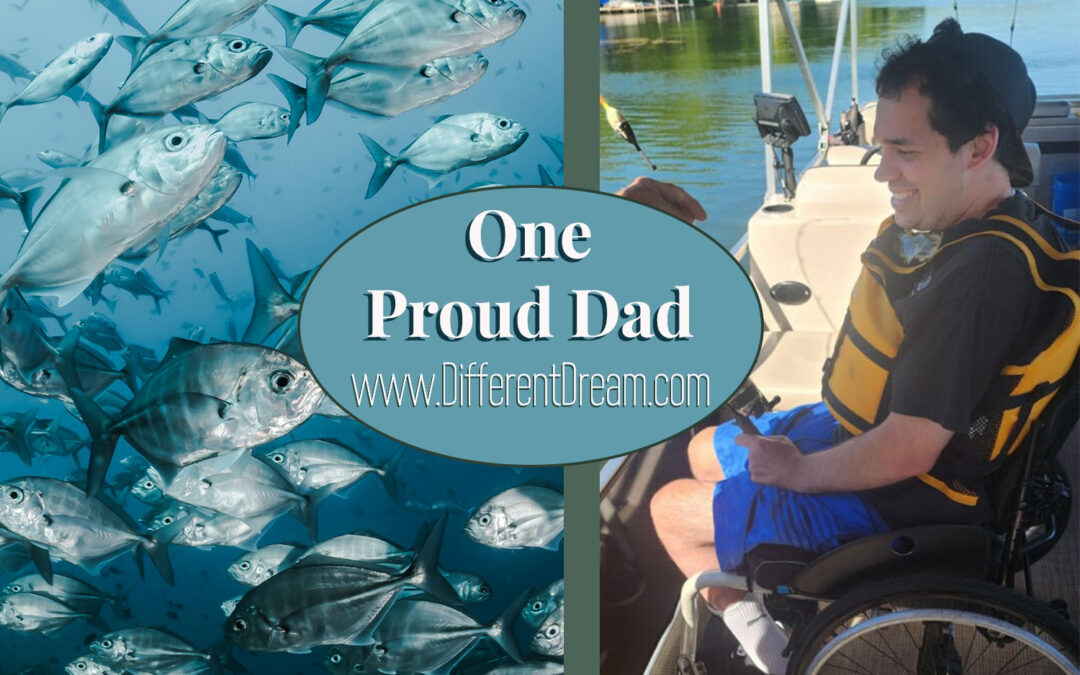
I am proud of my two sons, both disabled.

They won’t get good grades or attend prestigious colleges. They won’t win football trophies or make big money in successful careers. But, wow, the things they can do! Both have smiles that melt hearts, they show kindness to others, they’ve lived through pain without bitterness or complaint. They aren’t perfect. I’m even proud of their humanness.

Big picture, I am one proud dad.

Maybe this pride thing works best when we look at life through the new glasses of 1 Samuel 16:7.

“…The Lord does not look at the things people look at.
People look at the outward appearance,
but the Lord looks at the heart.” (NIV)

Tim Walz also encouraged parents to hug their kids. We do that with love. We can also say that we’re proud of our kids with special needs and disabilities. They deserve it!

Thanks, Gus, for showing your pride in your dad and for helping us celebrate how proud we are of you and our kids with special needs.

Do you like what you see at DifferentDream.com? You can receive more great content by subscribing to the monthly Different Dream newsletter and signing up for the daily RSS feed delivered to your email.

Photo on the right courtesy of Steve Harris, “My son, Andrew, feeling pretty proud about the fish he just caught!”
Fish Photo by Sebastian Pena Lambarri on Unsplash
By

Steve Harris—www.steveharrisauthor.com—recently published “Dads Like Us: A Survival Guide for Fathers Raising a Child with Disabilities.” He lives with his wife, Sue, in Lanesboro, Minnesota. Reach him at steveharrisDLU@gmail.com.

Author Jolene Philo

Archives

Categories

Subscribe for Updates from Jolene

Related Posts

A Song for Encouragement

A Song for Encouragement

A Song for Encouragement


Encouraging families impacted by disabilities is one reason this blog exists. Since 2008, Different Dream has published hundreds of articles to encourage and equip parents caring for children with special needs.

Today’s post provides encouragement in the form of a music video created by Steve Siler, an award-winning songwriter. You may have read his Different Dream post, Whole in the Sight of God, which he contributed a few months ago.

When asked why he wrote the song and then produced this video, he said, “I wrote this song after learning my son would be born with spina bifida. The recording engineer and string arranger who worked on this song with me also have families touched by disability. I pray this new video will encourage and bless all those who are loving a child with a disability.”

I hope the music video “Whole in the Sight of God” touches your heart as it did mine.

Thank you, Steve, for once again encouraging families impacted by disabilities.

Do you like what you see at DifferentDream.com? You can receive more great content by subscribing to the monthly Different Dream newsletter and signing up for the daily RSS feed delivered to your email.

Three Photos by Ryan Wolfe, One Photo by Jason Morrison—on Disability Is Beautiful

By

Steve Siler is founder and director of Music for the Soul a multi-award-winning not-for-profit ministry using songs and stories to bring the healing and hope of Jesus to people in deep pain. Siler is a Dove Award winning songwriter, music producer, author, and speaker. He is co-host of the Music for the Soul Podcast: Where Music, Hope, and Healing Come Together! He and his wife Meredith have two children and three grandchildren.

Author Jolene Philo

Archives

Categories

Subscribe for Updates from Jolene

Related Posts

When Pets, Bracelets, and Autism Come Together

When Pets, Bracelets, and Autism Come Together

When Pets, Bracelets, and Autism Come Together

When pets, bracelets, and autism come together, good things happen. In today’s post, guest blogger Heather Braucher explains how her family experienced the convergence of those three things in a truly remarkable and faith-building way.

My kids have been asking for pets of their own.

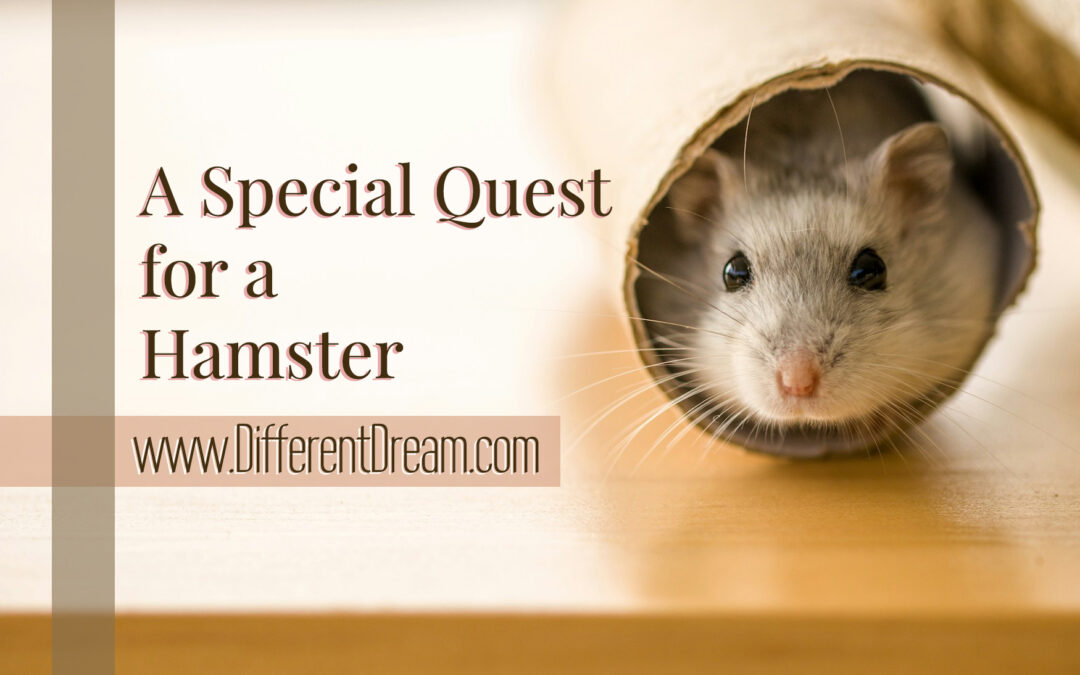
My daughter’s argument was that she wanted something that was just hers, specifically a cute little hamster she could bond with. She is the older sister to two brothers with “extra” needs, which brings with it a level of hardship beyond the challenge of having two younger brothers.

Her youngest brother’s argument for getting a pet was, “If I had a pet, I would never be bored.”

My middle son really wasn’t interested in anything except getting a dog. If it wasn’t a dog, the idea of a pet didn’t really grab him.

We originally set out to get a dog for therapeutic support purposes. We applied with an organization and had made it through two interviews before we were denied. The reasoning—“For the safety of the dogs.”

That was a tough one to hear. I thought my boys, one on the spectrum and the other with hearing loss, could benefit from a therapy dog in social and safety situations, but this organization felt that the ages, needs, and behaviors of my boys would put their dogs in danger.

Humbling, to say the least.

We decided to get a dog with hopes of getting it trained. Little did we know, Josie, our dear goldendoodle, would come with her own “extra” needs. There were many sweet moments with Josie, but it became apparent that our youngest son’s unpredictable behaviors were causing her increased anxiety. Then we discovered she had multiple digestive issues and early signs of hip dysplasia. Her needs and the medical expenses for both her and the kids were too great for us. She’s been re-homed with an incredible family and is thriving, but we miss her.

Getting a pet is not as easy as it sounds.

When my sweet daughter, my firstborn, has an idea, it does not die easily. She fans that flame. She not only wrote us a research paper explaining everything she learned about hamsters, but also presented the ways that she would care for her hamster. She created a summer reading challenge with the reward being—getting a hamster. She raised money over the summer to cover as many of the hamster’s costs as she could. She hoped we would cover the difference, because she had completed the reading challenge.

She set out to sell lemonade, provide pet-sitting services, and even sell homemade jewelry.

As the summer approached its end, she was anxious that she had not gotten a hamster yet. In one last effort she said, I’m going to make a stand and sell my handmade loom bracelets for a dollar each.

I helped make a poster, baked cookies to sweeten the deal, and a set up a bracelet sale stand to support my daughter—multiple times since we kept getting rain. I was frustrated. This was not how I wanted to spend my day. I felt uncertain about the “pets”—she had gotten her brothers into it too—we were getting after the sale.

The most amazing thing happened while we were setting the stand up in our garage since the rain would not let up. A man walked up and asked, “How many can you make for twenty dollars?” He said he would be back with the cash and they could try to make as many as they could. They were so excited and got right to work!

But the story gets better!

When he returned, he upped the ante. He said, “Actually, I would like to ask you if you could make 150 bracelets.” He shared that he runs a non-profit organization called Hope on the Spectrum, and his annual golf tournament fundraiser was approaching. He wanted the bracelets to be made with the colors that represent autism to give them out at the event.

As my daughter and my son, who is on the spectrum, listened, their jaws dropped.

The man shared his personal experiences with his son with autism. Because of early intervention and support, his son is thriving in high school against all predictions. He created his organization because of his passion to support others.

I could see it in the eyes of my children.

Their bracelet stand had turned into something bigger than raising money for their pets. That something was very relative to both my daughter and my son’s lives in different ways.

I will never forget that look, the days they dedicated to making bracelets to support other families with children on the spectrum, and the feelings I experienced.

We are seen.
Our lives and the struggles we navigate are not lost.
They matter.

Nothing is wasted.

God is going to use them for the good of others and His Glory.

We are now the proud owners of a hamster, a gerbil and a scooter—my middle son’s non-pet choice. They love their pets, and I think the pets are doing well too.

This verse speaks truth about the feeling we can experience when pets, bracelets, and autism come together.

Praise be to the God and Father of our Lord Jesus Christ,
the Father of compassion and the God of all comfort,
who comforts us in all our troubles,
so that we can comfort those in any trouble
with the comfort we ourselves receive from God.
2 Corinthians 1:3-4 (NIV)

Do you like what you see at DifferentDream.com? You can receive more great content by subscribing to the monthly Different Dream newsletter and signing up for the daily RSS feed delivered to your email.

Photo by Henry Lai on Unsplash

By

Heather Braucher is a member of the “Braucher Bunch” aka her energetic family of 5. The bunch includes her husband and their three children, all of whom are dominant and extroverted and are going to change the world (if she can keep them alive!) She has always held a passion for writing, but motherhood has given her a reason to share her experiences, heartaches, and victories with others. In her writing you will hear stories of hope as well as grief, as her family has navigated life in ministry in the US and overseas, all while discovering that 2 of her children have special needs. Her desire is to provide others with connection, understanding, encouragement and laughter, all washed with the love of Christ.

Author Jolene Philo

Archives

Categories

Subscribe for Updates from Jolene

Related Posts

Did I Trust God’s Plan for the Life of My Child with Disabilities?

Did I Trust God’s Plan for the Life of My Child with Disabilities?

Did I Trust God’s Plan for the Life of My Child with Disabilities?

Did I trust God’s plan for the life of my child with disabilities?

That’s a question I’ve been mulling over since our South Dakota camping vacation ended with a surprising twist. The twist being that my husband Hiram testing positive for Covid two days before we were to head home with our camper in tow.

We were almost 700 miles from home.
Hiram had chills, a fever, body aches, congestion, extreme fatigue, and brain fog.

My towing-a-camper-behind-a-big-truck skills were abysmal.

The forecast was for 100+ temperatures on the way home.

My chances of contracting Covid were high. Very high. Very, very high.

It wasn’t safe for me to drive home under those conditions.

My MO in stressful situations is to freak out. This time I didn’t. Instead, I listened to the still small voice in my head.

“You are not alone,” it said.
“I have prepared a way to get you home.”

“You tend to what you can do, while I do the other stuff.”

What did I tend to?

First, I called our daughter Anne and her husband Kailen—we live in an intergenerational home with them—about our dilemma. Next, I went to the drugstore and bought N-95 masks and a big bottle of hand sanitizer. After that, I located a nearby Urgent Care Clinic so my husband and I could arrive there early the next morning.

Then my daughter called and said, “Kailen will get you home. We’ll figure it out. You take care of Dad.”

To read the rest of Did I Trust God’s Plan for the Life of My Child with Disabilities?, visit the Key Ministry website.

Do you like what you see at DifferentDream.com? You can receive more great content by subscribing to the monthly Different Dream newsletter and signing up for the daily RSS feed delivered to your email.

Photo by Jacob Kiesow on Unsplash

By

Jolene Philo is the author of several books for the caregiving community. She speaks at parenting and special needs conferences around the country. Sharing Love Abundantly with Special Needs Families: The 5 Love Languages® for Parents Raising Children with Disabilities, which she co-authored with Dr. Gary Chapman, was released in August of 2019 and is available at local bookstores, their bookstore website, and Amazon. See Jane Dance!, the third book in the West River cozy mystery series, which features characters affected by disability, was released in October of 2023.

Author Jolene Philo

Archives

Categories

Subscribe for Updates from Jolene

Related Posts

Two Coping Skills for Families with Disabilities

Two Coping Skills for Families with Disabilities

Two Coping Skills for Families with Disabilities

Kristin Faith Evans understands first-hand the stresses of special needs parenting. In this post, she explains coping strategies she’s used to keep her focused and calm in the middle of the storms of life.

Soon after my daughter with complex needs came home from the hospital, I began struggling to cope with her care needs. I learned that parents of children with special needs must use additional coping strategies more often than parents of children without disabilities. Research shows two skills in particular can help parent caregivers better manage the added stress.

1. Mindfulness

Mindfulness is simply fully participating in the present moment. For example, if you’re washing dishes, slow down and feel the warm water on your skin, focus on scrubbing the dish, smell the soap, and notice your feet on the floor. If your mind wanders to your to-do list, simply come back to your present task.

By being fully present in doing one thing at a time, your anxiety about the future and your painful emotions about the past can lower in intensity. Regularly practicing mindfulness can actually effectively rewire the neural networks in your brain and reduce the negative effects of stress. Practicing mindfulness also contributes to decreased depression and anxiety, improved long-term physical and mental health, higher quality of life, and an easier time adapting. Parenting mindfully can improve your interactions with your child and their development and even reduce your child’s problematic, aggressive, or self-injurious behaviors.

Try this:

Take three minutes today to stop and simply be in the present moment. Notice what you hear, smell, feel, and see. Observe your breathing. Take a slow, deep breath then return to your day.

Here are some free mindfulness apps you can try:

Smiling Mind
UCLA Mindful app
Mindfulness Coach by the U.S. Department of Veterans Affairs

2. Gratitude

I discovered it can become easy to feel stuck and overwhelmed by the stress, making it difficult to see past my challenges. About five years ago, I began making a list of Scriptures about thankfulness. I posted the verses on my bathroom mirror and recorded them in a journal. I now stop during the day, take a slow deep breath, and thank God for the blessings I’m grateful for that day. This brings a smile to my face and gives me new perspective.

Practicing gratitude can improve our physical and mental health, lower our stress levels, and make us more resilient as disability parents. Expressing thankfulness to God can give us new hope and joy and help us see our circumstances in a new light.

These are two easy ways to practice gratitude:

Meditate on Scriptures

Try focusing on memorizing one verse or reading the verse out loud. Here are some sample verses: Psalm 9:1, Psalm 107:1, 1 Corinthians 15:57, 1 Thessalonians 5:18

Start a gratitude journal

Write down one thing for which you are thankful each day or write out your prayers thanking God. On days you feel discouraged, go back and read through your list.

I hope these two coping skills for families with disabilities help lower your stress levels and bring you more joy.

Do you like what you see at DifferentDream.com? You can receive more great content by subscribing to the monthly Different Dream newsletter and signing up for the daily RSS feed delivered to your email.

Photo by Scott Umstattd on Unsplash

By

Kristin lives with her husband, Todd, and their two children in the Nashville, TN area. She is an author, speaker, mental health counselor, and a mom of two children with rare genetic disorders and complex needs. Her greatest passion is teaming up with her husband to empower other parents of children with disabilities, mental health disorders, and medical complications. She hopes that you may find encouragement and support on their website www.DisabilityParenting.com

Author Jolene Philo

Archives

Categories

Subscribe for Updates from Jolene

Related Posts

Special Needs Homeschooling: The Ups and Downs

Special Needs Homeschooling: The Ups and Downs

Special Needs Homeschooling: The Ups and Downs

Special needs homeschooling is full of ups…and downs. Guest blogger Lisa Pelissier knows this from experience. In this post she describes her adventures in homeschooling, which began long before she discovered she had joined the special needs homeschooling tribe.

I wanted to homeschool before I even had children. I didn’t even need to make a list and check it twice to weigh one side against the other.

I wanted to raise my kids to love God.
I wanted to spend time with them and have them spend time with each other.
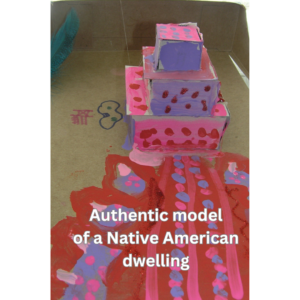
I wanted to do all the fun things you can do with little kids, like growing bean seeds, dressing up like Ancient Romans, and making Native American huts out of hot glue and cardboard for authenticity, of course. (See image below—lol).

I dove in, not without some fear because I didn’t know what I was doing or how it was going to turn out.

When we began homeschooling, I was a mom of two little boys, then almost five years old and eighteen months. It didn’t take me too long to figure out that homeschooling was harder than it looked. Entertaining a baby while trying to teach Latin and Greek to a disinterested four-year-old (I was ambitious in those days) kept me on my toes.

But there was something else going on, too. Every subject was a battle. Once my son got used to addition, then came subtraction. It was something new, and therefore something that must be rejected with howls of misery and a tantrum on the floor.

When I tried to teach him to spell, he told me he didn’t really care how other people spelled things. He was going to do it his way. It took me five years of struggle before I convinced him that it might be nice if other people could read what he wrote.

When he was nine—and I had a baby girl and another on the way, we got his autism diagnosis. My construct of a happy homeschooling family fell apart. Nothing had changed. But, if my son had anything to say about it, nothing ever would. He was going to protest every new thing I taught him. He was going to be difficult. And he was. He’s a lovely human being. But he’s a pain in the butt to teach.

When my second boy was twelve, he got sick with PANS (see my previous post here for more information). My world fell apart for a second time. By the time he graduated from high school, he was on his way to good health, at last. Then my girls got sick. In the midst of their difficulties came the divorce. It’s not been an easy road for any of us.

But through all the illnesses, both neurological and physical—depression, anxiety, dyslexia, dysgraphia, dyscalculia, OCD, autism, PANs, and more—homeschooling has been a blessing. I’ve been able to tailor our studies to accommodate my kids’ disabilities.

One of them needed everything read aloud—and I mean everything—to him all the way through school. So we read aloud.

One needs to travel the schooling path more slowly and more independently, so I’m able to scale back.

It doesn’t matter if they graduate on schedule or much later than their same-age peers. It matters that they’re still making progress. And they are.

Has it been hard on me? Absolutely. Would I change it? Uh… some days I want to move to Italy and never look back. But the rest of the time, I’m grateful for the journey we’ve had, as I get to know my kids better, to understand their struggles, and to understand myself as we continue to navigate the ups and downs of special needs homeschooling.

Do you like what you see at DifferentDream.com? You can receive more great content by subscribing to the monthly Different Dream newsletter and signing up for the daily RSS feed delivered to your email.

Photo by Aaron Burden on Unsplash


By

Lisa Pelissier lives in Oregon where she is a homeschool mom and author of five middle-grade fiction novels, the second-grade Monsters series, and a YA fantasy novel. Lisa owns SneakerBlossom Books, offering Christian, classical homeschool Study Guides and curriculum. She blogs at Eleventh Willow, offering encouragement for Christians parenting the mentally ill. She also works as a freelance copy editor, copy writer, and a marketing editor. In her spare time Lisa enjoys playing the piano and writing books.

Author Jolene Philo

Archives

Categories

Subscribe for Updates from Jolene

Related Posts