To the Mama Whose Child Is Diagnosed with a Chronic Disease

To the Mama Whose Child Is Diagnosed with a Chronic Disease

To the Mama Whose Child Is Diagnosed with a Chronic Disease

To the mama whose child was diagnosed with a chronic disease life changes. Guest blogger Laura Spiegel, whose daughter has such a diagnosis, shares her experience with readers with gentleness, encouragement, and wisdom.

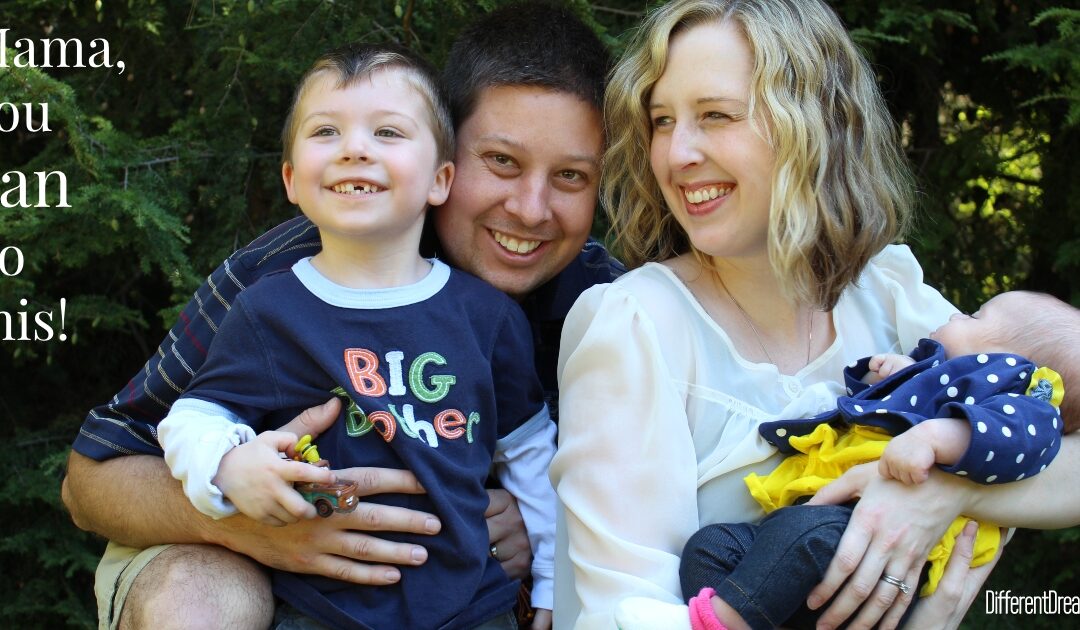
Oh, Mama. Today you became a member of the one club you never really wanted to join. You found out that your child has a chronic disease. If you’re like me, you’re wondering if life will be forever separated into “before” and “after.” Maybe it will be. Maybe not. Either way, my heart hurts for you because I’m guessing that despite your brave face or your stoicism or your smile, you are overwhelmed.

I know I was. On August 12, 2013, my five-week-old daughter was diagnosed with cystic fibrosis. I acutely recall the moment I heard this surprising news and feeling that everything had changed. I’d worked in healthcare in the field of chronic disease for almost a decade. And yet, it had never occurred to me that this would one day be me. 

Is that bad? It sounds so callous and arrogant looking back, but I just never really thought about it. Other people’s kids might be sick. But not mine.

Not my baby. 

I remember our first day in the cystic fibrosis clinic like it was yesterday. I cried in the hospital’s parking garage and did my best to nurse my daughter in the waiting room.

And then it happened. That moment that is forever etched in my mind. Our pediatric pulmonologist took my shaking hands, looked me squarely in the eye, and said “Your daughter is going to live a long and full life.” She went on to say that it was her job as a physician and our role as parents was to help enable this. 

I have carried these words in my heart every day for the past seven years. There is hope for my daughter. It is not always an easy road, but it is our road. And alongside the battles, we have most definitely had our blessings.

Above all, I have tried to hold myself and the friends and family that surround us to one key principle. My daughter has cystic fibrosis, but that alone does not define her. Defining her exclusively by her health–or attempting to center our family entirely around it–seems so limiting. Like capturing black and white alone in a world full of color. My daughter loves Minnie Mouse, dancing, looking for ladybugs, and telling stories. She also has cystic fibrosis.

And me? I’m going to paint her in color.

To the mama whose child is diagnosed with a chronic disease, know that you can paint your child in color too. It might not happen overnight, but most works of art rarely do.

Every time you embrace the belief that your child can lead a full life, you add a brush stroke or two.
When you refuse to define your child solely by his or her health, you add another hue.
As you learn how to balance daily care with the unexpected messiness and vibrancy of childhood, nurture the blessings that come alongside the battles, and treat yourself with kindness, you may notice your painting taking shape. 

One day, perhaps when you least expect it, you will realize that little by little–with every temple kissed and tear shed and smiling ache of the heart–you have done it. You have painted your child in color.

On that day, you will smile.

To the mama whose child is diagnosed with a chronic disease, know this. You are not alone. There is a community of other club members out here waiting to wrap our arms around you. And while it may not feel like it now, take it from a mom who has been there.

You can do this, Mama.

Do you like what you see at DifferentDream.com? You can receive more great content by subscribing to the monthly Different Dream newsletter and signing up for the daily RSS feed delivered to your email inbox. You can sign up for the first in the pop up box and the second at the bottom of this page.
By

Laura Spiegel spent 12 years at the world’s largest biotech company, partnering with professionals and care teams to help people with special needs and disabilities lead full and happy lives. In 2013 her daughter was diagnosed with cystic fibrosis. Laura now hosts Paint Her in Color, a website that offers emotional support to parents of children with special medical, developmental, or behavioral health care needs. When she isn’t reading, writing, or soaking up time with her husband and kids, Laura can be reached at Paint Her in Color, by email at laura@paintherincolor.com, and on Facebook and Twitter.

Author Jolene Philo
Archives

Categories

Related Posts

Can a Child with Disabilities Have a Faith?

Can a Child with Disabilities Have a Faith?

Can a Child with Disabilities Have a Faith?

Can a child with disabilities have a faith? That’s the question guest blogger Mark Arnold addresses in today’s post. His thoughts offer an abundance of biblical assurance and common sense that breeds hope.

Many Christian parents of a child with additional needs or a disability ask this question: Can a child with disabilities have a faith? It can be hard to answer, especially when a child has limited communication. But perhaps there are clues to piece together—things that Jesus did, understanding how our child responds to God—that can stretch and grow our faith too.

In a previous guest series Different Dream, we examined how a boy described as having an unclean spirit was healed by Jesus and how he raised Jairus’ daughter from the dead.  This same Jesus who healed and raise people from the dead, and who rose from the dead, can reach into the hearts and minds of anyone to bring them to faith.

To suggest that a child is unable to be reached by Jesus is to ignore scripture and to put limits on the power of the Holy Spirit. Everyone is able to be reached and to come to faith.

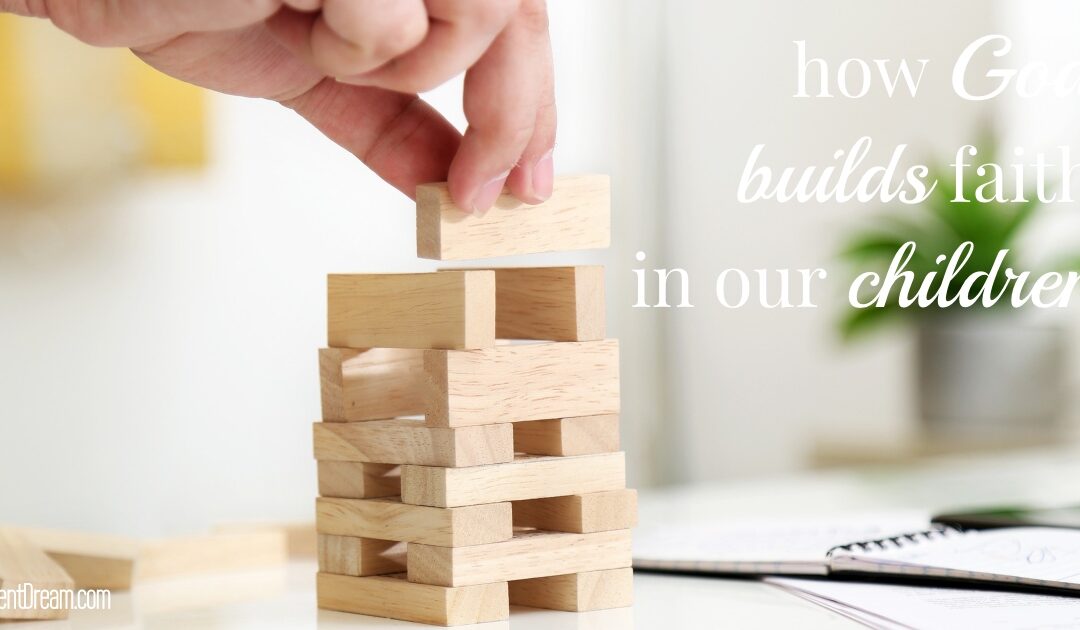
A little boy named Jack is a modern example of this truth. He was about eight when I met him at an Easter festival. While overseeing the inclusion provision, I learned he had autism. He doesn’t communicate verbally, but does in other ways. He prefers not to be in a large, noisy group and finds contact with someone he doesn’t know difficult. I watched him build a tower out of Jenga blocks and saw a lot of my own son James in him. I got on the floor and help him, as he’d been struggling to build alone.

We built the tower, watched if fall, and built it again many times; each time it fell Jack laughed—a wonderful joy filled belly laugh of pleasure—and glanced at me to start again. It was great fun. Eventually I had to leave Jack to carry on alone. He seemed weak and small again. He got the tower to six or seven blocks high, and it all fell down. No joy filled belly laugh anymore. He just started over again. My heart broke.

I wondered whether Jack had been impacted by any of the spiritual programs in his session at our Easter festival. Or had he just been child-minded, busying himself with Jenga blocks? A few weeks later, I got the answer. His family had got in touch with the festival organizers to say what had happened on their way home. Jack, who is almost entirely non-verbal, had been singing, yes singing, a line from the song Cornerstone which the worship band had played during in his sessions.

Weak made strong, weak made strong, weak made strong!

His eyes shone as he sang.

My heart broke for Jack again, but this time with joy that his heart had been touched by this song. That through it he had indeed encountered the Savior’s love. I can no longer sing that song without remembering Jack, without thinking of him, without crying tears of joy that he is loved by his Savior.

Can a child with disabilities have a faith? Jack taught me that there is hope for every child. He taught me that Jesus Christ can reach everyone, everyone, with his love through the power of the Holy Spirit. No matter how profoundly the impact of additional needs or disabilities, the love of Christ can and does reach our children. As Paul wrote, it’s all about grace:

My grace is sufficient for you, for my power is made perfect in weakness.”
Therefore I will boast all the more gladly about my weaknesses,
so that Christ’s power may rest on me.
That is why, for Christ’s sake, I delight in weaknesses,
in insults, in hardships, in persecutions, in difficulties. For when I am weak, then I am strong.
2 Corinthians 12:9-10 New International Version (NIV)

Our children can indeed be reached by the love of Jesus and the power of the Holy Spirit. They can respond in faith, and our own faith and understanding can grow and be strengthened too.

Do you like what you see at DifferentDream.com? You can receive more great content by subscribing to the monthly Different Dream newsletter and signing up for the daily RSS feed delivered to your email inbox. You can sign up for the first in the pop up box and the second at the bottom of this page.

By

Mark Arnold is the Additional Needs Ministry Director at Urban Saints, a leading national Christian children’s and youth organization. He is co-founder of the Additional Needs Alliance, a national and international advocate for children and young people with additional needs or disabilities. Mark is a Churches for All and Living Fully Network partner, a member of the Council for Disabled Children and the European Disability Network. He writes an additional needs column for Premier Youth and Children’s Work (YCW) magazine and blogs at The Additional Needs Blogfather. He is father to James, who has autism spectrum condition, associated learning disability, and epilepsy. To find out more about how Mark’s work can help you, contact him at: marnold@urbansaints.org or @Mark_J_Arnold.

Author Jolene Philo

Archives

Categories

Related Posts

School Options for Special Needs Students in 2020-21

School Options for Special Needs Students in 2020-21

School Options for Special Needs Students in 2020-21

School options for special needs students have to be examined and addressed as the pandemic continues. Guest blogger Marnie Witters describes school options for special needs students that have worked for her family.

In March of 2020, our high school sons went from attending a brick and mortar school with friends and teachers to writing essays at our kitchen table, exercising in our family room, and fixing their own lunches. As the pandemic drags on, parents of special needs students have to look at the pros and cons of both digital and in-person offerings to see which is a better fit for their children with Individual Education Plans (IEPs). This post highlights a few school options for special needs families like ours. Hopefully, they will help you navigate through the 2020-21 school year.

Virtual School

For families who are at high-risk or have medically fragile children, online learning can be a life saver. I recently became a writing teacher for a new virtual school in the Atlanta area. I have researched schools for more than 10 years and have never found one quite like The Academy Virtual. It offers a multi-sensory curriculum for children with dyslexia, processing disorders, ADHD, ASD, typical students who had a bad experience in school, and children with various learning challenges. All classes are taught 100% online with structured literacy, math, writing, and phonics for students in grades 3-6. The school’s goal is to encourage students so they know how amazing, unique, and smart they are.

Public School

Because of our sons’ needs, we’ve done public school (in-person and virtual), private school, and homeschool. Each option has its pros and cons and each served a specific purpose at certain times in our sons’ lives.

This year our oldest, who is 16, is doing public school digital learning. He started the year in a smaller, private in-person school, but felt like he was missing something. He said he missed his friends, likes online learning, and wants to learn software coding. His school offers support with his IEP. He has speech therapy again and can connect with friends.

Private School

For families seeking smaller class sizes, a Christian curriculum, and less distractions, private schools might be a good fit. Some offer online courses for digital learners. Socializing and interacting with others is important for these students, which an in-person option can provide. Tangible locations like classrooms, cafeterias, and media centers are familiar and what students associate learning with, so learning and interacting might come easier for these types of students. Private schools are not bound to individual education plans (IEP’s), so parents should verify if the school can support their child.

Homeschool

Homeschool is a great option for families looking to cater the curriculum to their child’s specific needs and learning style. Homeschool offerings have expanded over the past 10 years. There are homeschool co-ops for every class and every grade. Choosing curriculum can be overwhelming because there are so many offerings including digital ones.

Homeschooling offers the flexibility to be mobile and learn anywhere. We took our classroom to the park, on vacation, and to their grandparents’ house. Our boys received the one-on-one, individualized teaching they needed when they were younger. It’s why they’ve grown in their faith and can advocate for themselves. My oldest cooks and my youngest cleans–life skills can be a huge part of homeschool curriculum.

While navigating 2020 and the school options for special needs students, try to remember to seek the Lord, to stop and breathe, to be with family, to create new traditions, and to be grateful.

Because, as my late pop used to say, “This too shall pass.”

Do you like what you see at DifferentDream.com? You can receive more great content by subscribing to the quarterly Different Dream newsletter and signing up for the daily RSS feed delivered to your email inbox. You can sign up for the first in the pop up box and the second at the bottom of this page.

By

Marnie Witters was a technical writer and editor for more than 20 years until she resigned to homeschool her sons when they were young. When they went back to public school, she began to write. Recently she began teaching writing for a virtual school in the Atlanta, Georgia area. She’s been married for 20 years, serves in an amazing church, loves to garden, and enjoys spending time with her family. 

Author Jolene Philo

Archives

Categories

Related Posts

The Special Needs Roller Coaster

The Special Needs Roller Coaster

The Special Needs Roller Coaster

The special needs roller coaster wasn’t guest blogger Katie Espinoza’s ride of choice. But she, her husband, and their baby climbed on in October of 2017. Katie’s found a way to make the ride easier for other parents too. I hope you enjoy this story from one of my former fourth grade students!

As a mother you only ever hope the best for your children. You never hope for a special needs roller coaster. My ride began when I was 27-years-old and in the military. I was the only woman in the Best Warrior Competition, placing 7th out of 15. About a week after this, I found out I was going to be a mom for the first time. My husband-to-be and I weren’t expecting this bundle of joy, but we embraced every bit of it. At our 20 week ultrasound we were excited to see if we were going to have a boy or girl. After my ultrasound they took us into a room and said the doctor wanted to talk to us. She told us our son would be born with a heart condition called Hypoplastic Left Heart Syndrome.

Our lives stood still. We left the doctor’s office with tears running down our faces. I felt as though I was on a roller coaster. The wind whipping through my hair, twirling and flicking as I climbed higher and higher. I reached the top, and my fears emerge as I looked over the edge knowing that was no going back now. My stomach flipped and soared high inside of you until gravity lunges it back down. I was jolting every which way. Should I scream? Should I laugh? Should I cry?

My husband and I took the remainder of that day off and rode the special needs roller coaster.  We cried into each other’s arms until no more tears could leave our bodies. 

A few days later the cardiologist told us that this defect meant that our son would only have half of his heart. Our baby boy would be taken from us immediately after he was born to be hooked up to tubes and monitors. He gave us the choice of terminating the pregnancy. My first thought was to yell at him. Once I calmed down a bit, the rational side of me understood why he would offer that option to people. And then like the whiplash of the special needs roller coaster hit me all over again. It dawned on me that God planned all of this. He chose us to be parents to a special needs child. Some parents aren’t able to. Not because they aren’t capable, just where their lives are at that time. I am not saying we agree with termination, but once you are hit with news of a special needs child, all of that judgement goes away.

We were blessed in our journey to be able to take care of Elijah when he was born in October of 2017. So far, he’s overcome 3 open heart surgeries with 1 more down the road and a heart transplant at some point is likely. Our life has been full of monitors, beeps, alarms, checking breathing in the night, checking pulse ox and capillary refills. It has also been full of laughter, fun, swings and slides, dirt piles and vacations.

We promised Elijah from day one that heart defect or not we would not make him live in a bubble, even though he is susceptible to illness. We want him to see the world and live as normally as possible. He’ss doing well and is the orneriest spitfire you will ever meet. We say his stubborn side is what has kept him alive so far. His third birthday is in October and we can’t wait to celebrate it and many more with him. 

Along this journey we came across a Mended Heart Bear© to be exact. It was made by a company called Bummer Bears©. Elijah loves this bear, because it has a zipper with a heart that is stitched in the middle. I kept up with their website and Facebook page throughout the next year or two. Next thing we saw was that Bummer Bears was going into hibernation. I knew immediately that I had to purchase the business. A year later, I became the proud owner of Bummer Bears© to help other children and families on the special needs roller coaster.

Do you like what you see at DifferentDream.com? You can receive more great content by subscribing to the monthly Different Dream newsletter and signing up for the daily RSS feed delivered to your email inbox. You can sign up for the first in the pop up box and the second at the bottom of this page.

By

Hi, my name is Katie Espinoza. I wear many hats in life: I’m a chef, a chauffeur aka “Mom Taxi”, a kisser of boo boos, a cheerleader in the stands, a maid, a laundromat, a master of the French braid, a dishwasher, a sippy cup filler, the general contractor on any project at our house, a veteran, a business owner, a military wife to a supportive husband, and the best thing in the world…. a mother to 3 beautiful stepdaughters, Elijah, and his little sister. 

Author Jolene Philo

Archives

Categories

Related Posts

I Won’t Forget Your Faithfulness

I Won’t Forget Your Faithfulness

I Won’t Forget Your Faithfulness

I won’t forget your faithfulness. God used the lyrics of a song to prepare guest blogger Sandy Ramsey-Trayvick for what she didn’t know was coming. In this post she explains how they can help us as special needs parents respond differently when our children are hurting.

I woke up with song lyrics running through my mind on repeat:  

Great is Your faithfulness … I won’t forget, how great Your faithfulness…

I recognized the song as one from my worship playlist that I hadn’t listened to in awhile. I sang it that morning as part of my devotions. As I read Scripture that same morning, my eyes fell on 2 Thessalonians 3:3.

“But the Lord is faithful;
He will strengthen you and guard you from the evil one.” 

The Lord was going out of His way, it seemed, to remind me of His faithfulness. For the remainder of the morning and into the afternoon, I sensed the Lord wanting me to rehearse–over and over–the lyrics:  

I won’t forget Your great faithfulness.

Because of the strength and persistence of the exhortation, I began to suspect that the Lord was preparing me for something to come. So I obeyed His promptings and thanked Him throughout the day, promising Him, 

I won’t forget Your faithfulness.

That evening when I called my family to dinner, one of my daughters yelled back that something was wrong with my son. My husband and I ran upstairs to find him lying on our bedroom floor—awake but unresponsive. We surmised that he’d had a seizure. He’d had them before but he’d been seizure free for months so this one had caught us off guard. Because of COVID, we were reluctant to take him to the ER, or even to call for paramedics. However, as we cared for him ourselves, he had another seizure. His breathing ceased and his lips began turning blue. We called 911.

Later that night, after our son was stabilized and resting, my husband and I reflected back on the Lord’s words to me earlier in the day—and we thanked Him for His faithfulness. I’d been in situations before when my son’s health took a sudden negative turn. In my distress and confusion, I had questioned God.

Why are you allowing this to happen…again?  

But this time, the Lord Himself had prepared me to respond differently. Because He had whispered those song lyrics in my ear, I did not forget His faithfulness.

I’m guessing there are many reading this post who’ve found themselves, in times of confusion or pain, questioning God. While I won’t pretend to understand why He allows certain things, I’m convinced that He knows and understands our suffering–and stands ready to help us through it. As He reminded me of His faithfulness this time, I was reminded of the countless other times that He’d been faithful—to protect, to heal, to provide, to counsel, to empower, to restore, to comfort—the list goes on. How, then, had I allowed myself to forget?

I lift my eyes; I won’t forget,
How great Your faithfulness.

Do you like what you see at DifferentDream.com? You can receive more great content by subscribing to the monthly Different Dream newsletter and signing up for the daily RSS feed delivered to your email.

By

Sandy is wife to Terry, mom to 3 young adult children, a Bible study teacher, an encourager to those who are weary, a fitness enthusiast, a lover of books, and a certified professional coach. She and her husband are also marriage mentors. Twenty years ago, after her son was diagnosed with multiple disabilities, Sandy became his full time caregiver and advocate. She knows that living in the world of special needs or disabilities can lead to a “disabled life” mindset that focuses on limitations and settles for less life, less joy, less fulfillment. She coaches parents of children with special needs to help them see their circumstances from a perspective of hope, purpose, and opportunity. She helps them choose actions that create a life for themselves and their families that is joyful, fulfilling and fruitful. You can learn more about Sandy, her work, and her blog at www.UNDisabledLIVES.org.

Author Jolene Philo

Archives

Categories

Related Posts

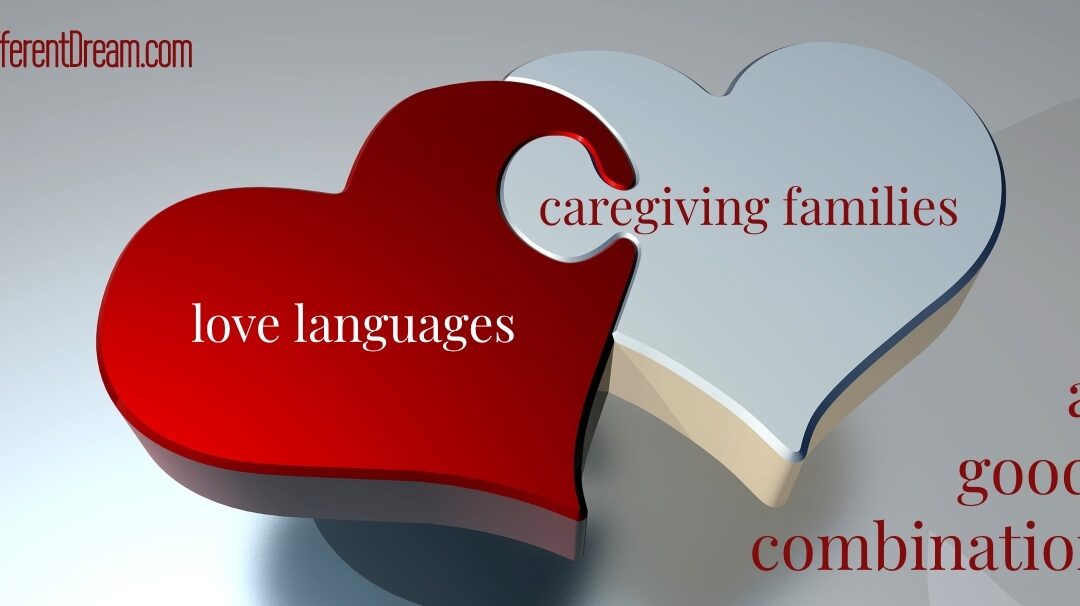
The Love Languages and Special Needs Families: A Good Combination

The Love Languages and Special Needs Families: A Good Combination

The Love Languages and Special Needs Families: A Good Combination

The love languages and special needs families are a really good idea. Such a good idea that the love languages guy, Dr. Chapman, and I collaborated on a book called Sharing Love Abundantly in Special Needs Families: the 5 Love Languages® for Parents Raising Children with Disabilities.

It was released in August of 2019. Caregiving families responded to it enthusiastically. They began sending emails and direct messages about how they were implementing its ideas for adapting the love languages for their unique circumstances. Disability support groups formed book studies about it.

Then COVID happened.

It’s been seven months since the pandemic first complicated our lives. Since then several things have become increasingly clear.

  • The pandemic is going to be with us a while longer.
  • Caregiving families need support and resources to survive and even thrive during the pandemic.
  • The easiest ways for families affected by disability to find resources is online.

This once-a-month series featuring ideas from Sharing Love Abundantly is my way of reaching caregivers and their families. My way of passing along information from the forty families who, by trial and error, devised amazing love language strategies while raising their own children with a wide variety of special needs and disabilities.

Here’s an overview of what’s to come in the next few months.

  • A guide to the love languages and how to determine them.
  • How the love languages counteract seven threats to caregiving marriages.
  • Speaking love to your caregiving spouse.
  • The unique needs of children affected by disability.
  • Speaking love to children with disabilities and special needs.
  • Speaking love to typical siblings.
  • Ways extended family and friends can speak love to caregiving families.
  • How to communicate love language information to professionals.
  • Wisdom from experienced caregivers.

I hope the strategies you’ll learn in the next few months convince you that the love languages and special needs families are a good combination. I hope they help you and every member of your family survive and thrive during this pandemic and long after it fades away.

Other posts in this series:
Basic Love Language Concepts to Ease Stress and Increase Joy in Caregiving Families

Threats to Caregiving Marriages and How to Fight Them

Fostering Communication and Connection Between Caregiving Parents

Love Is a Child’s First Language

Determining the Love Language of a Child with Special Needs or a Disability 

Ways to Speak Words of Affirmation and Quality Time to Kids with Special Needs

Speaking Healthy Physical Touch to Kids with Special Needs

Using the Love Languages with Siblings of Kids with Special Needs and Disabilities 

Extended Family Members Can Use the Love Languages to Encourage Caregiving Parents

Communicating Your Child’s Love Language to Medical Professionals

Communicating Your Child’s Love Language to Educators 

Do you like what you see at DifferentDream.com? You can receive more great content by subscribing to the monthly Different Dream newsletter and signing up for the daily RSS feed delivered to your email inbox. You can sign up for the first in the pop up box and the second at the bottom of this page.

By

Jolene Philo is the author of the Different Dream series for parents of kids with special needs. She speaks at parenting and special needs conferences around the country. She’s also the creator and host of the Different Dream websiteSharing Love Abundantly With Special Needs Families: The 5 Love Languages® for Parents Raising Children with Disabilities, which she co-authored with Dr. Gary Chapman, was released in August of 2019 and is available at local bookstores, their bookstore website, and at Amazon.

Author Jolene Philo

Archives

Categories

Related Posts