I Want to Live with the Confidence of a Five-Year-Old

I Want to Live with the Confidence of a Five-Year-Old

I Want to Live with the Confidence of a Five-Year-Old

I want to live with the confidence of a five-year-old.

That thought flitted through my mind while my grandson hauled out his art supplies the day before Halloween.

“I’m turning the kitchen into a haunted house because I just learned how to draw cats,“ he informed me as held up a picture. “I can draw them really good.”

The picture above this post is one his cats. At first glance, I thought it was a sheep.

He was so confident in his drawing ability, he took a break from creating masterpieces and gave his little sister a tutorial in how to make them.

She was awestruck by his skill. “Your pictures are beautiful,” she breathed.

I was awestruck by his confidence. “How did he develop such self-assurance?” I wondered.

He drew picture after picture, blazing through paper and tape as he hung them from every available space. I could see how the love his parents speak into him every day is building him up.

Tell us how that made you feel.

We love you because you are our little boy.

You’re a good problem solver. You keep trying until you figure it out.

Look at all the things you’ve learned to do.

We are so glad to be your parents.

Even when my grandson is at his worst, and his parents hold him accountable for his behavior, they cover him with kindness and love.

Click here to read the rest of I Want to Live with the Confidence of a Five-Year-Old at the Hope Anew website.

Do you like what you see at DifferentDream.com? You can receive more great content by subscribing to the monthly Different Dream newsletter and signing up for the daily RSS feed delivered to your email inbox. You can sign up for the first in the pop up box and the second at the bottom of this page.

By

Jolene Philo is the author of the Different Dream series for parents of kids with special needs. She speaks at parenting and special needs conferences around the country. She’s also the creator and host of the Different Dream websiteSharing Love Abundantly With Special Needs Families: The 5 Love Languages® for Parents Raising Children with Disabilities, which she co-authored with Dr. Gary Chapman, was released in August of 2019 and is available at local bookstores, their bookstore website, and at Amazon.

Author Jolene Philo

Archives

Categories

Related Posts

Thriving During the Holiday Season

Thriving During the Holiday Season

Thriving During the Holiday Season

Thriving during the holiday season, traditionally a time of stress that results in a feeling of depletion once they’re over, can be tricky.  This year there’s additional component of COVID-19 to factor in. Many of us are fearful about gathering with family members, becoming ill, or passing on the virus to others.

Our children and adolescents are feeling the effects of the pandemic. The number of children and adolescents who are anxious and fearful of the outside world is growing, and they crave normalcy. So how do we make thriving this holiday season possible? Here are 3 ways to make the season enjoyable by creating new traditions and changing the way we celebrate.

Shift Your Focus

It is so easy to think about activities or traditions in which you may not be able to partake rather than using this time to create memories that you and your family will look back on for years to come. In my house, I want to hear, “Remember in 2020 when we….?”

Even though it feels like the holidays will be different, different doesn’t necessarily mean they’ll be bad. Think about this year as an opportunity to sit with each other, to listen without the need to rush on to next thing. Enjoy each other’s company and get to know each other again. This pandemic gives parents the chance to see what daily routines look like and to understand what their children are doing each day. Couples can reconnect. Siblings can enjoy each other’s company. Perhaps it’s not all that bad, right?

Create Your Plan of Comfort

Since the pandemic began, many of us have created our “quarantine bubble.” We have decided how we were going to visit with our older family members: masks on or off, inside or out, hugs or no hugs.

Planning for the holidays is no different. Think about the number of people you would like to gather with and split up the meal. Many are gathering in smaller groups over several homes in order to keep the number of people inside one home small. 

Others have decided to keep it nuclear only and celebrate with their own children. This creates a great time for families to bond without the pressures of entertaining. They can make a special dessert that may take longer to prepare, or play games they normally wouldn’t be able to play with more people. Whatever you choose, it is the right plan for you and your family.

Create Traditions for Thriving During the Holiday Season

Now is a really great time to sit down with your family and create a list of all the activities or things each member would like to do between now and the end of the year. Think about the activities that you would like to do but perhaps didn’t have time for in past years because of extracurricular activities, travel, or other events that consumed your time. Make a list and identify what you want to do with either immediate family, extended family, or both. Then set the dates and write them on your calendar. Here is a small list of inexpensive, fun activities that you can do together:

  • Bake cookies
  • Prepare your favorite holiday foods throughout the season together
  • Decorate your house–inside and out
  • Drive around and look at holiday lights
  • Watch holiday movies
  • Bake pies
  • Build a snowman
  • Create your own presents
  • Read holiday stories
  • Watch a series together through the entire season
  • Create holiday crafts
  • Attend religious services, virtually or in person

Although 2020 has been much different than any of us expected, thriving during the holiday season is possible. You can make it whatever you want it to be. Who knows, the traditions you establish this year may carry on into 2021 and beyond!

Do you like what you see at DifferentDream.com? You can receive more great content by subscribing to the monthly Different Dream newsletter and signing up for the daily RSS feed delivered to your email inbox. You can sign up for the first in the pop up box and the second at the bottom of this page.

By

Dr. Liz Matheis is a clinical psychologist and school psychologist in Parsippany, NJ. She offers support, assessments, and advocacy for children who are managing Autism Spectrum Disorders, ADHD, learning disabilities, and behavioral difficulties, as well as their families. She is also a contributor to several popular magazines. Visit www.psychedconsult.com for more information.

Author Jolene Philo

Archives

Categories

Related Posts

Consider, Respect, and Honor: 3 Words for 2 Parents with 1 Goal

Consider, Respect, and Honor: 3 Words for 2 Parents with 1 Goal

Consider, Respect, and Honor: 3 Words for 2 Parents with 1 Goal

Consider, respect, and honor. Guest bloggers Tom and Julie Meekins believe these 3 words are foundational as 2 parents who have 1 goal of doing what’s best for their daughter with special needs. In today’s post, they explain how you can use them, too.

Making medical, therapy, social, and educational decisions for a child with challenges is daunting for moms and dads who are co-parenting them. When you add to the mix 2 parents with different ways of looking at life, processing information, coming to and implementing a decision, the task can be difficult. We encourage you to take into account 3 things as you interact with your child’s other parent: consider, respect, and honor.

Consider the viewpoint of the other parent. In most cases each parent wants what is best for the child. Therefore, it’s important to ask them what they think and how they feel. They may process the information and how it will impact all the rest of life differently than you. They may be quick to make decisions and be ready to act almost immediately. You may want to roll it around in your mind longer. You may want to factor in a bigger picture; or maybe you are the one who is itching to act and you feel held back. This can be frustrating. For example, in most cases Julie was often ready to jump on a plan before giving Tom the chance to express his concerns. It was important to Tom that he have a chance to look at the idea from every angle–financial, practical, spiritual, timing, and its impact on the family. Julie learned to give Tom the time to process and share his thoughts. Often, he came up with ideas that Julie never thought of and that were important for the situation.

Respect the co-parent’s feelings and methods. Remember to interact with grace and validate their ideas and feelings even when you don’t agree. Be a team player. Each of you brings an important component for the best of the child. Listen to each other well. Remember this isn’t a competition. The child wins when parents respect each other.

Honor one another’s role of co-parent. Whether you are co-parenting under the same roof or from separate households, remember that the other individual is also a parent to your child. In most cases, they have just as much of a right to make decisions for this child as you do. Their ideas are worthy of your consideration. We are not saying that you shrink back from sharing your convictions. We are saying that while you are making decisions, remember, as parents, you are a team.

In addition to the consider, respect, and honor, we suggest that you individually start each decision process with a deep breath, a time of prayer, and a commitment to listen carefully for God’s answer. Then, come to the table ready to execute your game plan having considered, respected, and honored the other parent.

Make my joy complete by being like-minded, having the same love,
being one in spirit and of one mind. Do nothing out of selfish ambition or vain conceit.
Rather, in humility value others above yourselves. (NIV)
Philippians 2:2-3

Do you like what you see at DifferentDream.com? You can receive more great content by subscribing to the monthly Different Dream newsletter and signing up for the daily RSS feed delivered to your email inbox. You can sign up for the first in the pop up box and the second at the bottom of this page.

By

Tom and Julie Meekins have been married for 41 years and are the parents of four adult children, the youngest of whom was diagnosed with CHARGE Syndrome. They are the directors of Champions4Parents which is a ministry dedicated to bringing hope, encouragement, and empowerment to parents–all parents–and especially those raising a child who has challenges. They invite you to visit their website at Champions4Parents.com and email them at champions4parents@gmail.com.

Author Jolene Philo

Archives

Categories

Related Posts

Praying Scripture over Your Child with Special Needs

Praying Scripture over Your Child with Special Needs

Praying Scripture over Your Child with Special Needs

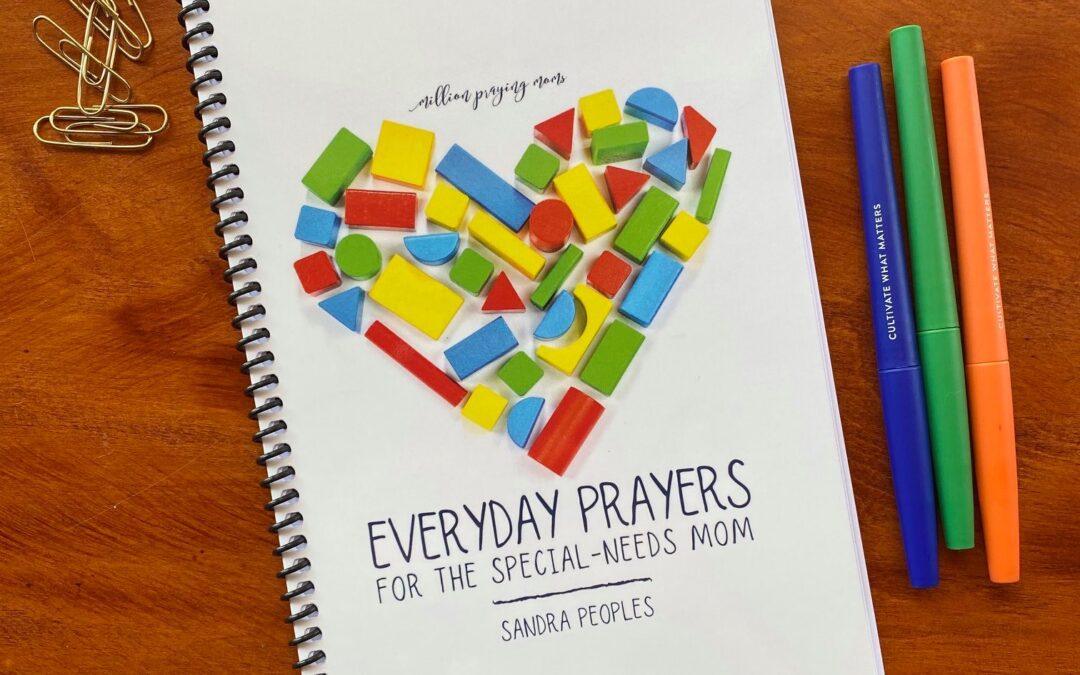
Praying scripture over your child with special needs is important, but we often struggle with how to do it. Today my friend Sandra Peoples explains the resource she created to help us. You can even enter a drawing to win a free copy. 

When my son James was a baby, I searched Scripture for just the right verse to pray over his life. As I would rock and feed him at 2:00 am, I wanted to whisper a verse that he would remember as he grew. One that would be true of him when he was two, twenty-two, and forty-two. After reading and praying, I finally picked a verse.

“And Jesus increased in wisdom and in stature and in favor with God and man.” -Luke 2:52

That is exactly what I wanted for him—to grow smarter, stronger, and for God and others to show him favor.

When he was diagnosed with autism in 2010 at age three, this verse became even more important. The truth was he wasn’t growing smarter or stronger. At that point he was losing communication skills and was well below average for weight and height. Others weren’t showing him favor—he was excluded from friends’ birthday parties and kept to himself around others. 

As we struggled with our new role as special-needs parents, juggled doctors, drove to therapies, tried new diets, and learned acronyms, I continued to pray: “God, I’m begging you—help him to grow smarter and stronger. Show favor on him. Cause others to include him, be patient with him, and love him.” Night after night. Again and again.

And over the last ten years, I’ve seen my prayer being answered. He is learning. He is growing. And overall, people are patient and kind with him. So I will continue to pray this verse over James. To ask God for more. To remind myself of what He’s done in our lives. To give Him all honor and glory.

Sometimes it can be hard to know how to go about praying for your child with special needs. It can feel overwhelming to list out every worry we have for them and their futures. Or, we can feel like our prayers aren’t effective. They aren’t being answered the way we wished they were. (If you can relate to that, check out the podcast episode I did a couple weeks ago, An Invitation to Those Who Have Stopped Praying.)

That’s why I love praying Scripture over James (and his big brother David too). I say back to God the words He has said to us. God says His Words won’t return void, they won’t be ineffective. So I can have confidence that praying Scripture aligns with God’s purpose for James and my entire family. 

Here are some of my favorite passages to pray:

  • “For you formed my inward parts; you knitted me together in my mother’s womb. I praise you, for I am fearfully and wonderfully made. Wonderful are your works; my soul knows it very well.” Psalm 139:13 & 14
  • “May the God of hope fill you with all joy and peace in believing, so that by the power of the Holy Spirit you may abound in hope.” Romans 15:13
  • “The lines have fallen for me in pleasant places; indeed I have a beautiful inheritance.” Psalm 16:6
  • “But he said to me, ‘My grace is sufficient for you, for my power is made perfect in weakness.’ Therefore I will boast all the more gladly of my weaknesses, so that the power of Christ may rest upon me.” 2 Corinthians 12:8-10

I think praying Scripture over your child with special needs is so important that I partnered with Million Praying Moms to create a prayer journal for moms of children with special needs. It includes twenty focus verses, prayers that go along with each verse, and reflection questions, plus there’s space for you to write what’s on your heart as you pray for your children.

You can order your copy today for $10 + $5 shipping by emailing me at sandra@sandrapeoples.com and letting me know how many copies you want, if you want an invoice via PayPal or Venmo, and your address! Or you can enter to win a giveaway copy just for Different Dream readers by leaving a comment below by midnight on Friday, November 20, 2020.

Praying Scripture over our children doesn’t just matter in their lives—it changes us as well! Grow closer to God as you lift up what’s on your heart in prayer. He answers His children and works out His plan for their good!

Do you like what you see at DifferentDream.com? You can receive more great content by subscribing to the quarterly Different Dream newsletter and signing up for the daily RSS feed delivered to your email inbox. You can sign up for the first in the pop up box and the second at the bottom of this page.

By

Sandra Peoples is a special needs mom and sibling. She and her family live outside of Houston, TX where she serves her church as the director of special needs ministry. She’s the author of Unexpected Blessings: The Joys and Possibilities of Life in a Special-Needs Family and the host of the podcast, Self Care and Soul Care for the Caregiver. You can connect with her at sandrapeoples.com.

Author Jolene Philo

Archives

Categories

Related Posts

Basic Love Language Concepts to Ease Stress and Increase Joy in Caregiving Families

Basic Love Language Concepts to Ease Stress and Increase Joy in Caregiving Families

Basic Love Language Concepts to Ease Stress and Increase Joy in Caregiving Families

Basic love language concepts are tools caregiving families can use to ease stress and increase  joy. And who doesn’t want that? Here are three basic love language concepts that can help you get less of the first and more of the second.

Basic Concept #1

Dr. Gary Chapman, with whom I co-authored Sharing Love Abundantly: The 5 Love Languages® for Parents Raising Children with Disabilities, developed his love language theory in the 1990s. He believes that humans express love in five different ways.

  • Words of Affirmation: This language uses words, spoken or written, to affirm and encourage people.
  • Quality Time: A person with this love language want your undivided attention and time.
  • Receiving Gifts: Individuals with this love language feel most loved when they receive gifts.
  • Acts of Service: People who appreciate actions more than words gravitate to this love language.
  • Physical Touch: For these people, nothing speaks love more deeply than appropriate touch.

Basic Concept #2

The second basic love language concept consists of 3 simple statements.

  • Everyone has a primary love language, and many people have a secondary one.
  • We feel most loved when others use our love language.
  • To make others feel loved, we have to know their language and learn to use it.

So how can you discover your primary language and the languages of others? By taking the short and easy love language quiz. They are included at the end of the first chapter of Sharing Love Abundantly and in online versions at the 5 Love Languages website.

Basic Concept #3

The final concept to explore is the love tank. We are all born with a love tank that requires filling for our emotional to develop and mature. Heavy doses of love spoken in our primary and secondary languages can keep our love tanks full. When our tanks are full, we’re better able to use the love languages of other people and fill their tanks.

These basic love language concepts are discussed in greater detail in the first chapter of Sharing Love Abundantly. Other chapters in the book explain strategies for determining the love languages of kids who who have conditions that make the quizzes hard to use with them. So hang tight! I’ll be blogging about those strategies as this series continues. Or you can purchase the book at your favorite bookstore or on Amazon if you want to learn about them right away.

Other posts in this series:

The Love Languages and Special Needs Families: A Good Combination

Threats to Caregiving Marriages and How to Fight Them

Fostering Communication and Connection Between Caregiving Parents

Love Is a Child’s First Language

Determining the Love Language of a Child with Special Needs or a Disability 

Ways to Speak Words of Affirmation and Quality Time to Kids with Special Needs

Speaking Healthy Physical Touch to Kids with Special Needs

Using the Love Languages with Siblings of Kids with Special Needs and Disabilities 

Extended Family Members Can Use the Love Languages to Encourage Caregiving Parents

Communicating Your Child’s Love Language to Medical Professionals

Do you like what you see at DifferentDream.com? You can receive more great content by subscribing to the monthly Different Dream newsletter and signing up for the daily RSS feed delivered to your email.

By

Jolene Philo is the author of the Different Dream series for parents of kids with special needs. She speaks at parenting and special needs conferences around the country. She’s also the creator and host of the Different Dream websiteSharing Love Abundantly With Special Needs Families: The 5 Love Languages® for Parents Raising Children with Disabilities, which she co-authored with Dr. Gary Chapman, was released in August of 2019 and is available at local bookstores, their bookstore website, and at Amazon.

Author Jolene Philo

Archives

Categories

Related Posts

Creating a Joyful 2020 Holiday Season

Creating a Joyful 2020 Holiday Season

Creating a Joyful 2020 Holiday Season

Creating a joyful 2020 holiday season during a pandemic will be challenging but not impossible. Check out guest blogger Jessica Temple’s suggestions for a memorable and happy holiday for you and your kids with special needs and disabilities.

“Holidays will be weird,” I said to my mother.

“What do you mean?” she asked.

“COVID.”

Mom hadn’t expected to go the whole year without being able to have the whole family together during any holidays. She was shocked and that got me thinking. As much as we hoped and prayed that the pandemic would be behind us, it is not. What does this mean for the holidays? How can we manage this scenario, and still create a wonderful holiday season?

The first thing to understand is that during this pandemic, our safety needs are not being met. This leads to fear that our security and well-being are at risk. Therefore the first step to creating a joyful 2020 holiday 2020 is to focus on our safety needs. After that the focus can shift to establishing a sense of normalcy, a proper perspective, and intentional mindfulness.

Creating a Joyful 2020 Holiday Season: Safety Needs

For goodness sake, please take care of yourself! This may take the form of fun activities with the family. Or engaging in self-care such as a walk, exercise, eating and sleeping well, listening to music, playing a game, or reading. The more self-care we engage in, the less stressed we are and the happier our family is. Take breaks every day. Remember that children need breaks too, so plan them into their days. Lastly, pace yourself. During the holidays allow yourself to slow down and forgive yourself if things do not go according to plan.

Creating a Joyful 2020 Holiday Season: Normalcy

Stick with the familiar as much as possible to create some sense of normalcy. Keep a comfortable routine. Cook meals similar to those of previous years. Decorate the house as usual. Practice beloved at-home traditions and rituals to make the holidays feel more normal. We are often overloaded and overwhelmed during the holidays even without the stress of COVID. So keep it simple! Try not to over-do it or make elaborate plans. Remember what is important: yourself, family and friends, love, fond memories, and good health. Focus on that rather than purchasing elaborate gifts or stressing about how to see distant family members.

Creating a Joyful 2020 Holiday Season: Perspective

We need to keep a proper perspective during the upcoming holiday season. Collaborate with your immediate family about what COVID safety measures are comfortable for you. Many children with special needs are at a higher risk for complications from the disease. We need to protect them and ourselves. This may mean no visits or setting necessary boundaries with families coming from afar. You might have a Zoom holiday or a socially distanced meal outside if you live in a warmer climate. Limitations of the pandemic mean we can’t run on automatic. We need to stop, think, plan, and adapt. Think about what you want your family to remember and hold dear 20 years in the future and be open to change. Perhaps this is a time to incorporate what you and your children love into new, fun, and manageable traditions.

Creating a Joyful 2020 Holiday Season: Mindfulness

Principles of mindfulness are key to a happy life. We can choose to focus on the joyous and the positive in each day and to create small moments of joy: snuggles with the kids, driving to see Christmas lights, playing in the snow, cooking together, watching a favorite movie, playing games, or anything that makes your family happy. We are all struggling. We cannot perform perfectly. When things don’t go as hoped, we need to practice compassion, view ourselves or our children with understanding and kindness. This can improve the moment and the season instantly. The 2020 holiday season will look different than ever before, but it may be our best one yet!

Do you like what you see at DifferentDream.com? You can receive more great content by subscribing to the monthly Different Dream newsletter and signing up for the daily RSS feed delivered to your email inbox. You can sign up for the first in the pop up box and the second at the bottom of this page.

By

Jessica Temple, PsyD, ABPP-CN, is a board-certified adult clinical neuropsychologist. She has two children who have special needs. She and her husband, Lewis, host a podcast called Thriving in The Midst of Chaos, where they talk about all aspects of special needs including getting a diagnosis and treatment, self-care, relationships, transitioning to adulthood, school, and finances. They created Thriving in The Midst of Chaos to offer support to others in the special needs world as well as to provide an easy way to find the most useful resources. They aim to share helpful resources with others, advocate for improvement, change in the special needs world, and offer a different perspective on parenting.    To find out more about how Jessica’s work can help you, contact her at fubarpod@gmail.com or @midstofchaospod on all social media platforms.  

Author Jolene Philo

Archives

Categories

Related Posts