Communication Is a Gift

Communication Is a Gift

Communication Is a Gift

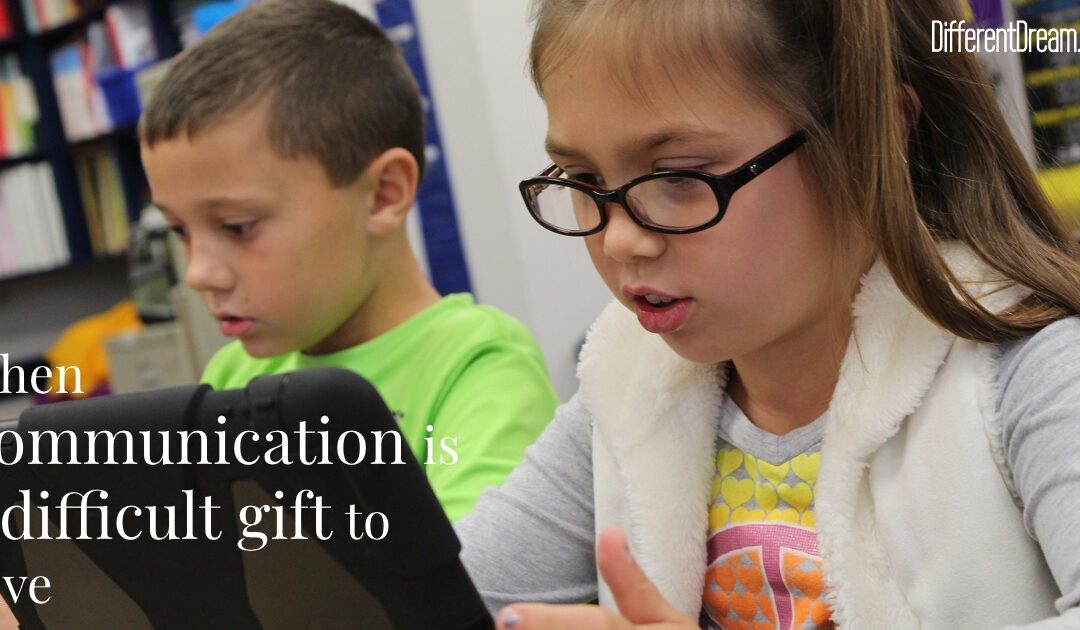
Communication is a gift for a child who is non-verbal or has delayed speech. Our youngest daughter, Ellie, recently started using a communication device at school. We felt a sense of dread as the words “communication board” and “iPad” came home.

You see, our family, including extended family, took sign language classes when our oldest daughter, Abbey, was 3. I also taught myself using signing videos and other things to give her a mode of communication. 

She loved to attempt to sign.  

She attended our local preschool disabled program, and it was clear that her verbal skills would not progress. She needed to be immersed in the world of sign language if it was going to sink in. When she was 5, she moved to a school for the hearing impaired. When she was 9, that school decided it was no longer the right fit for her given her extensive physical needs. She transitioned to a school for the severely or multiply handicapped. That school decided sign language was not appropriate for her because her cerebral palsy made it hard for her to properly sign. 

They suggested an iPad. 

The iPad went back and forth from home to school for years.  While Abbey was somewhat interested in games and matching, she refused to use it to communicate. Sometimes she would push the iPad at me and shake her head “no” or put it down on the floor! It was heartbreaking, discouraging, and a lot of money was wasted. Then during her high school transition, the team saw her eagerness to sign She is using sign language in her high school and thriving. 

The iPad is sitting in a box.   

 Now Ellie is at the starting line. I burst into tears while watching a video her teacher sent about the importance of being “all in” with the device. “We’ve already done this!” I thought. “It was so discouraging! I can’t do it again. Maybe we need to accept that she can’t communicate.” 

Her team would not give up. 

Despite COVID and all the transitions since 2019, they evaluate her and are working diligently to get her to use her iPad.  We brought it out to try when she asked for a toy.  To my surprise and delight, she needed only one verbal cue to point to the correct icons.  When I couldn’t remember how to make the iPad “talk,” she laughed and clicked the proper place. 

She loved it. 

If you are struggling with finding a way to communicate with your disabled child, I want you to know that we’ve been there. It feels hopelessness and exhausting to try something over and over to no avail. But sometimes the breakthrough is around the corner. Or it comes in an unexpected way. 

Not every child will achieve the level of communication you hoped for, but keep trying!  Their ability to communicate may be hindered, but ours is not. Keep communicating with your child no matter what their ability to communicate with you is. Keep talking, keep explaining, keep including them in the conversation. We cannot truly know what our non-verbal children understand. Communication is a gift we can give to them. 

Do you like what you see at DifferentDream.com? You can receive more great content by subscribing to the Different Dream newsletter and signing up for the daily RSS feed delivered to your email inbox. You can sign up for the first in the pop up box and the second at the bottom of this page.
By

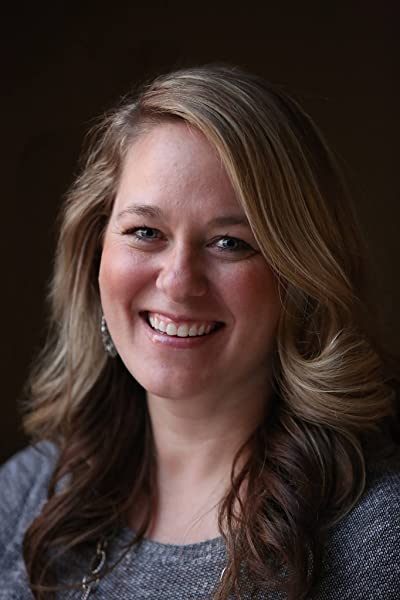
Kimberly grew up and went to college in the small town of Upland, IN. She graduated from Taylor University with a degree in Elementary Education in 2002. While at TU, she married her college sweetheart and so began their adventure! Ryan and Kimberly have four amazing kids on earth (Abigail, Jayden, Ellie, and Cooper), and a baby boy waiting for them in heaven. Their daughter Abigail (Abbey) has multiple disabilities including cerebral palsy, a seizure disorder, hearing loss, microcephaly, and oral dysphagia. She is the inspiration behind Kimberly’s desire to write. In addition to being a stay-at-home mom, Kimberly has been serving alongside her husband in full time youth ministry for almost fourteen years. She enjoys working with the senior high girls, scrapbooking, reading, and music. You can visit Kimberly at her website, Promises and Perspective.

Author Jolene Philo
Archives

Categories

Subscribe for Updates from Jolene

Related Posts

Wisdom from Caregiving Parents about the Love Languages and More

Wisdom from Caregiving Parents about the Love Languages and More

Wisdom from Caregiving Parents about the Love Languages and More

Wisdom from caregiving parents who use the love languages in their homes permeates the pages of Sharing Love Abundantly In Special Needs Families. They shared many amazing insights when I interviewed them for the book. Not all of them fit neatly into the the first 9 chapters. Even so, their wisdom had the potential to encourage parents and families, and I couldn’t bear to leave it out. As a result, Chapter 10 of Sharing Love Abundantly was born. It is replete with nuggets like these:

  • A single mom explaining why you have to make a plan about how to use the love languages.
  • A dad whose son with special needs died at age 7 encouraging parents to stop complaining about what’s wrong.
  • A special education teacher who has a daughter with disabilities showing how to use the love languages to help children re-regulate.
  • A mom of two kids with special needs reminding parents that children will do well if they can.
  • An ABA  therapist who is mom to a son with autism explaining how the love languages lower stress points.
  • A mom of 7 kids, several of whom had disabilities, describing how she learned to go through it and embrace it.
  • A dad saying that caregiving parents have to learn to learn in a tornado.
  • A couple of a 39-year-old son with special needs who has come to peace with the reality that they’re never going to be a typical family.

Intriguing thoughts, aren’t they? To get the full impact of this wisdom from caregiving parents, check out Sharing Love Abundantly in Special Needs Families. You will be amazed by what they have learned while parenting kids with special needs and disabilities.

Links to other articles in this series:

The Love Languages and Special Needs Families: A Good Combination

Basic Love Language Concepts to Ease Stress and Increase Joy in Caregiving Families

Threats to Caregiving Marriages and How To Fight Them 

Love Is a Child’s First Language

Determining the Love Language of a Child with Special Needs or a Disability 

Ways to Speak Words of Affirmation and Quality Time to Kids with Special Needs 

Ways To Speak Gifts and Acts of Service to Kids with Special Needs 

Speaking Healthy Physical Touch to Kids with Special Needs

Using the Love Languages with Siblings of Kids with Special Needs and Disabilities 

Extended Family Members Can Use the Love Languages to Encourage Caregiving Parents

Communicating Your Child’s Love Language to Medical Professionals

Communicating Your Child’s Love Language to Educators 

Do you like what you see at DifferentDream.com? You can receive more great content by subscribing to the monthly Different Dream newsletter and signing up for the daily RSS feed delivered to your email.

By

Jolene Philo is the author of the Different Dream series for parents of kids with special needs. She speaks at parenting and special needs conferences around the country. She’s also the creator and host of the Different Dream websiteSharing Love Abundantly With Special Needs Families: The 5 Love Languages® for Parents Raising Children with Disabilities, which she co-authored with Dr. Gary Chapman, was released in August of 2019 and is available at local bookstores, their bookstore website, and at Amazon.

Author Jolene Philo

Archives

Categories

Subscribe for Updates from Jolene

Related Posts

Typical Caregiver Stress or More Serious Mental Health Symptoms?

Typical Caregiver Stress or More Serious Mental Health Symptoms?

Typical Caregiver Stress or More Serious Mental Health Symptoms?

Distinguishing between typical caregiver stress or more serious mental health symptoms can be a challenge for special needs parents. Guest blogger Kristin Faith Evens provides guidance about how to tell the difference and what to do once you know the difference.

Beep, beep beep! Beep beep!

My groggy eyes darted to the red numbers on the vitals monitor. Heart rate high. Oxygen too low.

Dragging myself out from the covers, I secured the oxygen tubing under my daughter’s tiny nose. Then I gazed at Bethany Grace’s doll-like face. So beautiful yet so fragile. Crawling back into bed, I prayed for another two-hour block of sleep.

Like a zombie, I trudged through the nonstop care and rehab therapies for my daughter for months. I began to find myself sitting in a corner on the floor more days than not.

I can’t do this much longer. I’m so overwhelmed. No one can understand what I’m going through.

Wishing I Had Gone Sooner

Unfortunately, I waited sixteen months to find help for my symptoms of post-traumatic stress disorder, generalized anxiety, and severe depression. If I had sought treatment earlier, I likely wouldn’t have spiraled into serious suicidal thoughts.

Grieving the loss of a typical, healthy child is common. Experiencing stress from the added caregiving demands, expenses, and strain on relationships is expected.  But when symptoms of depression and anxiety impact you daily, going for a mental health consultation is in order.

Considering Two Types of Thoughts

Signs of Healthy Coping

  • I feel like I’m managing well.
  • My life is challenging, but I’m doing okay.
  • I have options and resources I can reach out to.
  • I enjoy talking with other people.
  • I’m sad about my loss, but things are going to get better.
  • I’m adjusting to being a special needs parent.

Signs of Potential Mental Health Condition

  • I feel so overwhelmed.
  • I find myself sad and crying a lot.
  • Nothing is ever going to get better.
  • I don’t want to be around other people.
  • It’s hard to get motivated to get out of bed.
  • Alcohol or pills help me cope.
  • I can’t handle this much longer.
  • I’m so anxious I have a hard time functioning.
  • I don’t feel like eating as much or I’m eating a lot more than usual.
  • Which thoughts do you resonate with more? If you relate to the first list, it sounds like you’re validating that your life circumstances are hard, and you’re finding healthy ways to cope.

If the second list sounds more familiar to you, consider these additional questions.

  • Are your symptoms impacting the quality of your daily life and/or your family?
  • Are you concerned or have others expressed concern about your mental wellbeing?
  • Are you wishing that you were dead or having thoughts about harming yourself?

If you think you are experiencing symptoms of depression, anxiety, or another mental health disorder, please seek professional help immediately. Don’t wait like I did.

If you are in crisis or worried about your safety, call the national suicide prevention lifeline at 800-273-TALK (8255) or go to your nearest emergency room.

Good Resources to Investigate

Whether you’re dealing with typical caregiver stress or more serious mental health symptoms, I hope you find the healing and support you need.

*The contents of this article are intended for informational purposes only and not a substitute for seeking professional mental health advice.

 Photo credit from Unsplash: Rae Angela

Do you like what you see at DifferentDream.com? You can receive more great content by subscribing to the monthly Different Dream newsletter and signing up for the daily RSS feed delivered to your email inbox. You can sign up for the first in the pop up box and the second at the bottom of this page.

By

Kristin lives with her husband, Todd, and their two children in the Nashville, TN area. As an author and mental health therapist, her greatest passion is walking with others on their journey to deeper emotional, psychological, and spiritual wholeness. As both her children have rare genetic disorders, Kristin especially loves supporting other parents of children with special needs. She hopes that you may find encouragement and support through her two websites and blogs, www.KristinFaithEvans.com and www.SpecialNeedsMomsBlog.com.

Author Jolene Philo

Archives

Categories

Subscribe for Updates from Jolene

Related Posts

Is That Everything That’s Going to Happen?

Is That Everything That’s Going to Happen?

Is That Everything That’s Going to Happen?

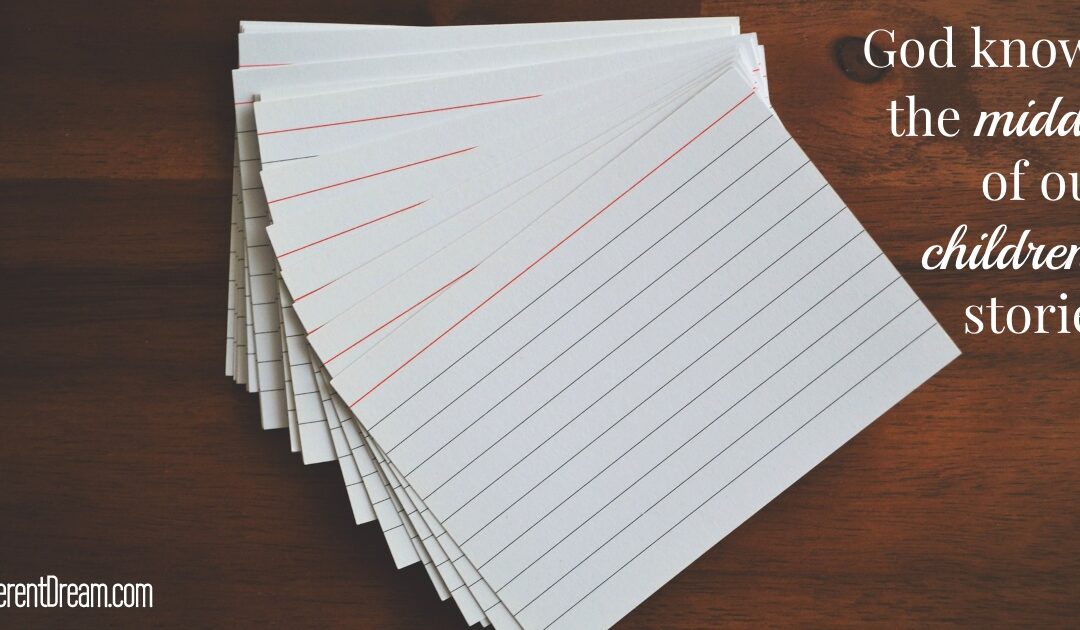
“Is that everything that’s going to happen in the next book?” The concept editor for my cozy mystery series, who happens to be my daughter, pointed to the short stack of notecards I’d set on the kitchen table.

I stared at the cards, more than a little ashamed by my lack of preparation for our appointment. We’d scheduled our meeting to hash out the plot of this book almost a year before. In the meantime, my mother’s health had taken a turn for the worse. Her struggle had ushered in a season of uncertainty and change. I was becoming all too familiar with being unprepared and unfocused.

“Well,” I said, “I know how the story starts, and I know how it’s going to end. But I have no idea about what’s happening in the middle.”

My daughter nodded. “I understand. Now give me a few minutes to read through what’s here.”

While she read, my mind wandered to a September forty earlier when my husband and I found out we were going to become parents. We spent the next 8 months getting ready for our baby’s arrival. We took childbirth classes, transformed the guest bedroom into a nursery, and bought a car suitable for a family of three. We purchased diapers and onesies and sleepers and more.

We did everything in our power to be ready for our baby’s arrival. Even so, after he was born and his life-threatening condition was diagnosed, we felt totally unprepared to be his parents. We knew only two things: our son’s life had begun and that it would end–perhaps far sooner than we hoped. As for what would happen in the middle, we had absolutely no idea.

 To read the rest of Is That Everything That’s Going to Happen? visit the Key Ministry blog for special needs parents.

Do you like what you see at DifferentDream.com? You can receive more great content by subscribing to the monthly Different Dream newsletter and signing up for the daily RSS feed delivered to your email.

By

Jolene Philo is the author of the Different Dream series for parents of kids with special needs. She speaks at parenting and special needs conferences around the country. She’s also the creator and host of the Different Dream websiteSharing Love Abundantly With Special Needs Families: The 5 Love Languages® for Parents Raising Children with Disabilities, which she co-authored with Dr. Gary Chapman, was released in August of 2019 and is available at local bookstores, their bookstore website, and at Amazon. The first book in her cozy mystery series, See Jane Run!, features people with disabilities and will be released in June of 2022.

Author Jolene Philo

Archives

Categories

Subscribe for Updates from Jolene

Related Posts

The Viewpoint of the Rock

The Viewpoint of the Rock

The Viewpoint of the Rock

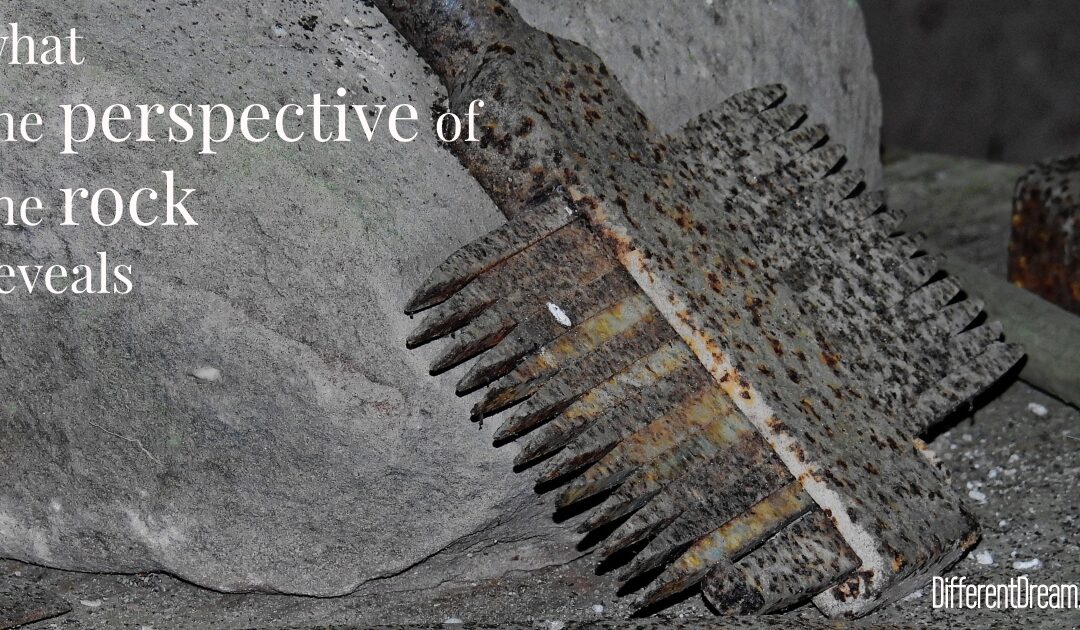
The viewpoint of the rock is one we don’t consider when watching a sculptor wield hammer and chisel. It’s a perspective guest blogger Lisa Pelissier has come to appreciate as God shapes her spirit while she cares for her children with special needs and disabilities.

When we see a beautiful stone sculpture, we marvel at the sculptor. The artist was able to take a block of stone and extract from it the image of a person or an animal. Where did the inspiration originate? Did the artist impose his own vision on the raw material? Or did the raw material somehow direct his hands to bring out the shape that was lurking beneath the surface all along?

What we rarely consider is the viewpoint of the rock.

Being attacked by a chisel and hammer is downright painful. Does the rock feel a sense of loss as huge portions of it are lobbed off and cast away? As tiny flakes of its being are chipped off by the artist? Even after the worst is over, after the incessant pounding and cracking of the chisel and hammer have ceased, there remains the sandpaper, painfully refining and polishing.

Like the sculptor, God is in the process of creating. He sees the raw material that needs to be eliminated in his creatures. He sees our tendency to sin. He sees the work of building that I have done on myself, the attempts I’ve made to build myself up. And the hammer and chisel come out.

Thwack!

This is the universal experience of the believer. God’s discipline is always worked through suffering and pain.

Thwack!

Your child has autism. Off comes the piece of me that longed for good grades, a phenomenal college experience like the one I had, a professional job, a life in ministry, all of it. Gone. In its place was the solemn notion that all my child could be was what God intended for my child. Only that.

Thwack!

Your child is dyslexic and dysgraphic. Reading is what I love best. I wanted to share a love of books with my children. My dyslexic kid is never going to love the written word like I do. I have to find another way to connect with my child. Only true, human connection counts, not a feverish love of books. If all this child has is THE book, God’s book, then it should be enough, right?

Thwack!

Your child has selective mutism. Will this child ever have friends? Will she ever give a speech? Will she ever be in a play? Will she ever speak to Grandma? My child is recovering now, praise be to God – He is refining her as well as me.

Thwack!

Your child has PANS (autoimmune encephalitis). Four years of sickness and OCD made homeschooling a nightmare. I loved homeschooling. I loved the process. It was fun. It’s not anymore, even though my PANS kid is no longer homeschooling, it’s not what it once was. Was it an idol for me? Did that piece of me, that large piece of me, really need to go? But God knows best.

In C.S. Lewis’ Voyage of the Dawn Treader, Eustace, the annoying young hellion, is turned into a dragon due to his own covetous greed and nasty temperament. Despite his own efforts to shed his dragon’s skin, it only comes off when Aslan, the great lion and Christ figure in the analogy of Narnia, reaches deep within him and painfully rips the roots of dragonishness out of his heart.

Like Eustace, I am being stripped of my sinful, dragonish, crusty exoskeleton. The first layers of rock have been removed. How much more will I lose? How badly will it hurt when I lose it? Will I, like Eustace, emerge as naked as a peeled switch, my skin stinging joyfully, exulting in the loss of the excess baggage? Will God succeed in making me into his vision for the unformed piece of stone I was? Will I be more like the Venus of Willendorf, my rough stone still apparent in a tribute to the physical body and the material world? Or will I be like the Pieta, so real it is practically alive and so infused with emotion it’s almost spiritual?

God alone knows.

For now the viewpoint of the rock must be enough for me.

May I learn to love God’s plan more than my own. It is good.


Do you like what you see at DifferentDream.com? You can receive more great content by subscribing to the monthly Different Dream newsletter and signing up for the daily RSS feed delivered to your email.

By

Lisa Pelissier lives in Oregon where she is a homeschooling mother of four (three with disabilities) and author of two middle-grade fiction novels. Lisa owns SneakerBlossom Books, offering Christian, classical homeschool Study Guides and curriculum. She also works as a freelance copy editor, an artist, and a tutor. In her spare time Lisa enjoys playing the piano and fretting about things over which she has no control. Email Lisa at sneakerblossom@yahoo.com or connect on Facebook.

Author Jolene Philo

Archives

Categories

Subscribe for Updates from Jolene

Related Posts

Church Family Means No One Gets Left Behind

Church Family Means No One Gets Left Behind

Church Family Means No One Gets Left Behind

Church family means no one gets left behind. Guest blogger Mark Arnold tweaks and applies the famous Lilo & Stitch to churches. He offers tips to children and youth ministry workers who want to be sure that children and youth with disabilities and special needs aren’t left behind as in person activities resume.

Like many children’s and youth workers, I love a good Disney movie. A well-known quote from Lilo & Stitch keeps coming to mind whenever I think about the return to in-building children’s and youth work.

“Ohana means family. Family means no one gets left behind or forgotten.”

So often, families of children with special needs or disabilities find themselves forgotten, overlooked, or not considered when plans are made. It is unsurprising that many church leaders and children’s and youth teams are excitedly opening the church doors again. Personally, I’ve been saddened to people posting on social media about how thrilled they are to no longer run Zoom sessions. For families who cannot, for all kinds of reasons, attend in-building activities, this attitude is harmful. It’s another form of exclusion.

As the pandemic eases, let’s not choose between in the building or online children’s and youth work. Let’s not create exclusion by cutting off families who were able to connect to church like never before during COVID. Instead, let’s make sure that church family means no one gets left behind or forgotten.

These 5 Cs can help with this:

1. Communicate

Ask families what they prefer, what they are able to access, what resources they need to join in. Make sure you are including them as you plan, remembering the truth of a phrase used by the disabled community: Nothing about us without us.

2. Community

Recognise that your community includes families that come to the building and families that connect from home. Structure your activities in ways that link both parts of this community together so that they can enjoy being involved wherever they are.

3. Camera

A hybrid or blended offering isn’t about providing an in-building program and broadcasting it via a static camera at the back of the room. It’s about interaction, giving families at home a chance to contribute, share and lead. It’s about having the camera moving around to see what is happening in the building. It’s about broadcasting what’s happening at home on a screen with a sound system, making it a truly interactive experience for everyone.

4. Creativity

Are you doing something crafty or creative? Drop off a bag of resources to families joining from home so that they have everything those in the church building. The resources could include craft supplies, a program, or a timetable. For those with special needs, make these items visual by including symbols and photos.

5. Check-in and Dismissal

Chatting with families as they drop off and collect their children from in-building sessions is common. Why not do the same for families connecting online? Pick up the phone or pop round for a chat rather than always dropping them an email. Ask them how the session went for them, what worked and what didn’t, what they need from you next time, how they would like to take part next time.

These tips and ideas can help you as churches open and plan for a new normal. Make sure to remember that church family means no one gets left behind or forgotten. Let’s Only then can churches ensure that families involved in the building or at participating from home feel connected and experience a sense of community.

Do you like what you see at DifferentDream.com? You can receive more great content by subscribing to the monthly Different Dream newsletter and signing up for the daily RSS feed delivered to your email inbox. You can sign up for the first in the pop up box and the second at the bottom of this page.

By

Mark Arnold is the Additional Needs Ministry Director at Urban Saints, a leading national Christian children’s and youth organization. He is co-founder of the Additional Needs Alliance, a national and international advocate for children and young people with additional needs or disabilities. Mark is a Churches for All and Living Fully Network partner, a member of the Council for Disabled Children and the European Disability Network. He writes an additional needs column for Premier Youth and Children’s Work (YCW) magazine and blogs at The Additional Needs Blogfather. He is father to James, who has autism spectrum condition, associated learning disability, and epilepsy. To find out more about how Mark’s work can help you, contact him at: marnold@urbansaints.org or @Mark_J_Arnold

Author Jolene Philo

Archives

Categories

Subscribe for Updates from Jolene

Related Posts