Selective Mutism: 4 Ways to Lift Up Your Child

Selective Mutism: 4 Ways to Lift Up Your Child

Selective Mutism: 4 Ways to Lift Up Your Child

Selective mutism is a mystery to most of the general public and to many parents. Guest blogger Lisa Pelissier sheds light on the condition in an interview with her daughter and by explaining 4 ways they support her.

She was three when she stopped talking. At first it was just adults. It wasn’t unusual, I thought, for a three-year-old to be shy with adults. But then she refused to talk to her grandmother, someone with whom she had a close relationship. This was troubling, but she was three. Everyone told us she would outgrow it. Lots of kids go through phases when they don’t talk, especially preschoolers. By the time she was five she wouldn’t talk to children outside the family. By the time she was six she wouldn’t talk to her cousins. At seven the list of people grew smaller and she refused to talk out loud to me, her mother, in public.

We knew it wasn’t just a phase. Phases don’t last four years.

What could we do? We had to make her talk.

In desperation I went on social media to ask if anyone I knew had any information about selective mutism. By this time I had a name for it. (God bless the internet!) A friend from my high school youth group responded. She had overcome selective mutism as a child. Her parents had sent her away to a special school for a year and it had worked: she came home talking. There was no way I wanted to send my child away. My friend and I kept talking. One thing led to another and she led me to a counselor who worked with art therapy. And it helped.

Step by step, our daughter recovered her speech. At eleven, she’s not done yet. She still has pockets of people with whom she is silent, people to whom she stopped speaking as a tiny child. But most of the time she speaks normally. To my delight, she agreed to be interviewed for this blog post.

Interview with my daughter:

Q: How does it feel when you talk to people?

A: Uncomfortable. I can’t comfortably speak. Sometimes it could give me more anxiety, like when I try to speak with people I don’t usually talk to.

Q: Did you pick the people you could talk to or not talk to?

A: No

Q: How did you get better?

A: I moved somewhere and new people are easier to talk to because I haven’t known them. It makes me feel weird because they’ve known me not speaking, then suddenly I talk. I don’t like a lot of attention unless I’m really close with them.

Q: Did therapy help?

A: Yes. Especially since I got prizes. It motivated me.

Q: What advice would you give a kid with selective mutism?

A: If I met someone like that I would try to help them by explaining how I got better.

Q: Would you feel sorry for them?

A: Yes, because they can’t talk to people. Life is better because I can talk to people. I’m still working on it though.

Q: How many people do you still have trouble speaking to?

A: I still can’t talk to people who knew me non-talking, like all our friends and family in California where we used to live.

What steps did we take?

  1. Break the tasks into baby steps. Pick one person. Whisper to them. Then, a different day, talk out loud with that person. Get a sticker for each victory. And a reward for a page full of stickers. Person by person, she began to reclaim her voice.
  2. Work on anxiety-reducing techniques: deep breathing, relaxation, visualization.
  3. I’m not sure this is something I’d recommend, but it worked for her… Cash! Grandma paid her to talk to her. Twenty-five cents a word at first, and then twenty-five cents for a sentence. One day she came home with about twenty bucks. It was working. (We’ll work on her mercenary little heart later.)
  4. Go new places where she doesn’t know anyone. We found that in her mind, she had not a list of people she could talk to, but a list of people she couldn’t talk to and places at which she must be silent. People she had never met could not be on a list. She could talk to them, if we reminded her before we went that they weren’t “on the list”.

If this describes your journey, you are not alone. Your child is valuable and precious and they can overcome selective mutism, not to become the person you always wanted them to be, but to become more and more the person God created them to be.

Do you like what you see at DifferentDream.com? You can receive more great content by subscribing to the monthly Different Dream newsletter and signing up for the daily RSS feed delivered to your email.
By

Lisa Pelissier lives in Oregon where she is a homeschooling mother of four (three with disabilities) and author of three middle-grade fiction novels. Lisa owns SneakerBlossom Books, offering Christian, classical homeschool Study Guides and curriculum. She also works as a freelance copy editor, an artist, and a tutor. In her spare time Lisa enjoys playing the piano and fretting about things over which she has no control. Email Lisa at sneakerblossom@yahoo.com or connect on Facebook.

Author Jolene Philo

Archives

Categories

Subscribe for Updates from Jolene

Related Posts

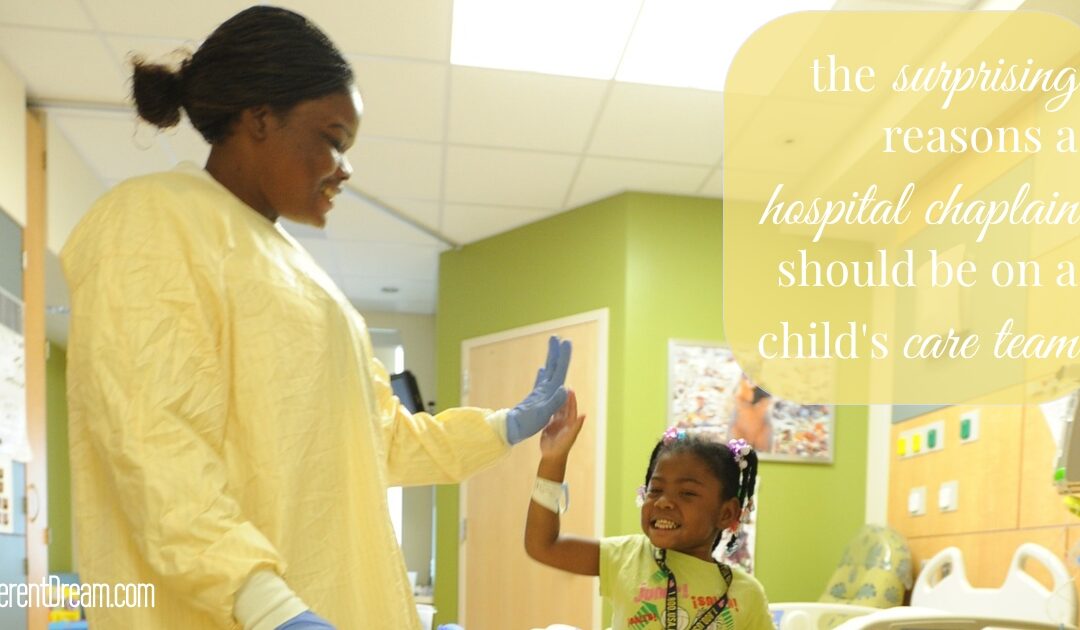
Hospital Chaplains: Who Knew They Can Do So Much?

Hospital Chaplains: Who Knew They Can Do So Much?

Hospital Chaplains: Who Knew They Can Do So Much?

Hospital chaplains provide valuable support when loved ones are dying. Guest blogger Laura Spiegel recently learned they can do much more.

When you think of hospital chaplains, what comes to mind? A bearer of bad news? An imminent turn for the worse? A symbol of death and dying? That’s what I used to think. Chaplains showed up in end-of-life situations, and I never wanted to encounter one.

I couldn’t have been more wrong.

Last week, I had the privilege of listening to a chaplain at my local children’s hospital as he “demystified” spiritual care and chaplaincy. It turns out that hospital chaplains offer interfaith care, but their role in hospitals is not confined to death and dying. In fact, a big part of the chaplain role is supporting families emotionally as we navigate changes, struggles, or tipping points that occur throughout our lives.

Hospital chaplains help us identify our own resources and strengths so that we can better cope with situations that are causing distress. For some, these situations are indeed life threatening. But for many, they are merely tipping points on a longer journey.

A new diagnosis.
A first hospitalization.
A significant change in treatment plan.

Throughout these tipping points, chaplains can help us explore shifts in identity, roles, and meaning. This often includes grieving the future “story” we’ve envisioned and beginning the process of rewriting a new narrative for our children and our families.

While many chaplains are focused on in-patient hospital encounters, some are expanding their role into outpatient centers. I can’t tell you how excited this makes me!

When my daughter was diagnosed with cystic fibrosis eight years ago, I was shaken to the core. I had naively envisioned a life for my daughter where health could be taken for granted. Where doctor’s appointments were limited to annual check-ups and benign bouts of strep. Where I could swat down stress with the knowledge that this was my second child, and this time around, I knew what I was doing.

With my daughter’s diagnosis, my identity as a woman and mother shifted. My roles as a spouse, daughter, friend, businesswoman, and caregiver collided in messy, unexpected ways. I began to question where I spent my time and with whom I spent it. I mourned the loss of the “future” I had envisioned for my family — and slowly but surely began to write a new one.

Over the years, I have been fortunate enough to partner with care teams that recognize the importance of physical and emotional health. My daughter’s quarterly appointments have allowed the space and time to explore both her and my emotional well-being. But what if a chaplain was included on the care team with the sole role of offering emotional support?

I would latch onto that in a heartbeat.

Our children’s hospital hopes to expand the role of hospital chaplains into more outpatient centers over time. When this resource hits the CF center, I can tell you this: I’m gonna come a-runnin’.

Do you like the idea of a chaplain joining your care team? Ask your doctor how hospital chaplains work in your hospital — and how you can access chaplaincy support!  

Do you like what you see at DifferentDream.com? You can receive more great content by subscribing to the monthly Different Dream newsletter and signing up for the daily RSS feed delivered to your email.

By

Laura Spiegel spent 12 years at the world’s largest biotech company, partnering with professionals and care teams to help people with special needs and disabilities lead full and happy lives. In 2013 her daughter was diagnosed with cystic fibrosis. Laura now hosts Paint Her in Color, a website that offers emotional support to parents of children with special medical, developmental, or behavioral health care needs. When she isn’t reading, writing, or soaking up time with her husband and kids, Laura can be reached at Paint Her in Color, by email at laura@paintherincolor.com, and on Facebook and Twitter.

Author Jolene Philo

Archives

Categories

Subscribe for Updates from Jolene

Related Posts

Resources for Caregiving Parents Recommended by Caregiving Parents

Resources for Caregiving Parents Recommended by Caregiving Parents

Resources for Caregiving Parents Recommended by Caregiving Parents

Resources for caregiving parents are more plentiful than they’ve ever been before. The challenge for today’s special needs families is to find them. 

That’s why Sharing Love Abundantly in Special Needs Families: The 5 Love Languages for Parents Raising Children with Disabilities has a resource list tucked in the end of the book. It’s not just any resource list. It’s a list curated by caregiving parents like you.

I asked families this final question when they were interviewed before Sharing Love Abundantly: was written: What resources do you recommend to caregiving families? 

Every response was recorded and sorted into 3 categories–print, online, and organizations.

The resources range from devotionals to parenting advice, from author websites to household tip websites, and from respite organizations to inclusive dance troupes.

After you finish the last chapter of Sharing Love Abundantly, keep flipping pages until you find the resource list. You won’t want to miss this amazing list of resources for caregiving parents!

Links to other articles in this series:

The Love Languages and Special Needs Families: A Good Combination

Basic Love Language Concepts to Ease Stress and Increase Joy in Caregiving Families

Threats to Caregiving Marriages and How To Fight Them 

Love Is a Child’s First Language

Determining the Love Language of a Child with Special Needs or a Disability 

Ways to Speak Words of Affirmation and Quality Time to Kids with Special Needs 

Ways To Speak Gifts and Acts of Service to Kids with Special Needs 

Speaking Healthy Physical Touch to Kids with Special Needs

Using the Love Languages with Siblings of Kids with Special Needs and Disabilities 

Extended Family Members Can Use the Love Languages to Encourage Caregiving Parents

Communicating Your Child’s Love Language to Medical Professionals

Communicating Your Child’s Love Language to Educators 

Wisdom from Caregiving Parents about Love Languages and More 

Do you like what you see at DifferentDream.com? You can receive more great content by subscribing to the monthly Different Dream newsletter and signing up for the daily RSS feed delivered to your email.

By

Jolene Philo is the author of the Different Dream series for parents of kids with special needs. She speaks at parenting and special needs conferences around the country. She’s also the creator and host of the Different Dream websiteSharing Love Abundantly With Special Needs Families: The 5 Love Languages® for Parents Raising Children with Disabilities, which she co-authored with Dr. Gary Chapman, was released in August of 2019 and is available at local bookstores, their bookstore website, and at Amazon. See Jane Run!, the first book in her cozy mystery series that includes people with disabilities, will be released in June of 2022.

Author Jolene Philo

Archives

Categories

Subscribe for Updates from Jolene

Related Posts

Five Read Aloud Tips for Families

Five Read Aloud Tips for Families

Five Read Aloud Tips for Families

Five read aloud tips for families is a post near and dear to my heart. As a parent, a grandparent, and a teacher I have observed the power of reading aloud to kids for more than forty years. Today I’m sharing five of my favorite read aloud strategies with you.

Between jet lag and back spasms, both the result of my first post-pandemic airplane trip, I didn’t feel well the other night. Even so, I was loathe to forego reading aloud to our grandkids, ages 3 and 6.

Reading aloud to these sweet children is one of the great delights of living in a multigenerational household. I knew that sitting beside them on the couch could make my back worse. Then again due to my travels I hadn’t read to them for over a week.

The solution was surprisingly simple–they climbed into my bed, books in hand, and we had read aloud time there. It was a rousing success, in great part because of these five read aloud tips employed by many parents.

  1. Cuddle up. Reading aloud is an opportunity to share snuggles. Children will want to be close to you so they can look at the pictures. Put them on your lap if they’re small. Drape an arm around their shoulders if they’re bigger. Not only will they benefit from physical touch, they will feel the vibrations of your voice as they listen. Such tactile experiences help children feel secure and loved.
  2. Use expression. Do more than read the story. Read it with expression. Vary the speed of your reading to match what’s happening in the story. Raise and lower your volume to create suspense or drama. Use different voices for different characters. Laugh, cry, whisper, and shout when the characters do. Doing so makes the story come alive, and it provides a model for your children about how they can read aloud expressively, too.

To read the rest of Five Read Aloud Tips for Families, visit Key Ministry’s blog for special needs parents.

Do you like what you see at DifferentDream.com? You can receive more great content by subscribing to the monthly Different Dream newsletter and signing up for the daily RSS feed delivered to your email.

By

Jolene Philo is the author of the Different Dream series for parents of kids with special needs. She speaks at parenting and special needs conferences around the country. She’s also the creator and host of the Different Dream websiteSharing Love Abundantly With Special Needs Families: The 5 Love Languages® for Parents Raising Children with Disabilities, which she co-authored with Dr. Gary Chapman, was released in August of 2019 and is available at local bookstores, their bookstore website, and at Amazon. The first book in her cozy mystery series, See Jane Run!, features people with disabilities and will be released in June of 2022.

Author Jolene Philo

Archives

Categories

Subscribe for Updates from Jolene

Related Posts

The Mountain of Special Needs Parenting

The Mountain of Special Needs Parenting

The Mountain of Special Needs Parenting

The mountain of special needs parenting is similar to Heather Johnson’s summer hike in Glacier National Park. In today’s post, she shares three Bible verses that gave her family hope and increased her faith then and now.

In August, my husband Todd and I hiked the Highline trail in Glacier National Park. As the name of the trail implies, the path cut along the side of a mountain and was so narrow near the beginning that a thick wire cable drilled into the rock served as a handrail, lest a misstep cause a trip and tumble over the edge.

Past the narrow path, the grade steepened. I wondered if we’d reach our destination. Though our lungs and legs ached, step-by-step, we made it. Viewing the contour line of far-off mountains, I thought about how far our family has come in 24 years.   

In 1997 and 1999, we adopted our three kids (six, four and nineteen months) from an orphanage on the outskirts of St. Petersburg, Russia. Our hopes were high. So was our naiveté.

Todd and I didn’t know then that all three of our kids had numerous invisible disabilities that would affect all our lives significantly and permanently.

To be honest, my goal for years was simply surviving. But by the grace of God and many loving, generous friends and professionals, we’ve made it this far. Last year, Todd and I became empty nesters.

Yesterday, Anna turned 30. She lives ten minutes from us in a cozy apartment by a creek with a resident manager on site 24/7 to provide for her needs. During the week, she packages nuts and bolts in a sheltered workshop/factory for people with disabilities. Her smile brings joy to all she meets.

Zach (28) and Nick (23) live semi-independently and function fine with helpers who provide supportive scaffolding with finances, problem-solving, judgement, and planning. They both work hard and are happy with their factory jobs.

I look back on our child-raising years and see that the mountain of special needs parenting was like our mountain climb in Glacier. Both were steep and grueling at times. Both caused ache. But God was with us, step-by-step. Sometimes when one must slow because of a narrow and difficult path, one comes to know God more intimately. That’s what happened to me. I needed something/someone stronger than myself to reach my destination and my strength came from God through prayer and His word. Three verses helped anchor me to hope and still do. Maybe these will help anchor you too.

Though he slay me, yet I will trust in him. Job 13:15 KJV

God and I have had many a wrestling match over the years. I’ve cried, screamed, and pounded the ground with my fists. I’ve doubted God is good. I’ve joined the chorus of unbelievers who ask, If God is good, why does He allow so much suffering?

 Perhaps one must wrestle with suffering to answer that question. Job did.

As for me, if suffering is what it takes to bring me closer to God’s heart, to trust God more, to love God, myself, and others more, then I think suffering is a good thing. Never pleasant. But good.

I believe God has allowed suffering in our lives to drill trust deep into our souls, securing us, keeping us from falling over the edge of ourselves.

Give thanks to the Lord, for his is good, for his steadfast love endures forever. Psalm 136:1 ESV

Every day, no matter what, we can give God thanks simply because He is good. Even more, He loves us unconditionally and unendingly forever. Who could ask for more? When life gets tough and we think we want for this or that, I remember that God is all I really want, all I really need. And yet, God gives more.

As I look back, I see how God provided perfectly for our every need—wonderful teachers, tutors, physical therapists, occupational therapists, speech & language therapists, special education teachers, reading tutors, orthopedic and ophthalmology surgeons, psychiatrists, psychologists, cardiologists, case managers, mental health therapists, and prayer warrior friends who never left us in our toughest times. In fact, some of our kids’ caregivers have become my closest friends.

The LORD is my strength and shield. I trust him with all my heart. He helps me, and my heart is filled with joy. I burst out in songs of thanksgiving. Psalm 28:7 NLT

Simply said, I never need to be strong by myself. Neither do you. Not to climb the mountain of special needs parenting. Not to help ourselves. All we need is to lean into the LORD, draw on His strength, shelter behind His shield, trust him, do the next right thing, and give thanks joyfully (sometimes through tears) for all He’s already done. What He’s already done proves what He’ll always do. Our God is our trustworthy Deliverer and Provider, faithful and true.

After all these years, our challenges haven’t changed. But God has championed our challenges and calmed our hearts. We’re at a place where we can see with fresh perspective that our God sees us, hears us, loves us, and never stops providing perfectly for us. He’s doing and will continue to do the same for you. Lean into Him, step-by-step, and breathe. For indeed, come what may, God is good. God is kind. God’s got you and your kids. Just like us. We’ll all make it together with God.

Do you like what you see at DifferentDream.com? You can receive more great content by subscribing to the monthly Different Dream newsletter and signing up for the daily RSS feed delivered to your email.

By

Heather MacLaren Johnson and her husband have three kids, all five and under when adopted from Russia. Now young adults, all need regular help with their multiple, permanent, invisible disabilities stemming from prenatal exposure to alcohol (FASD).

Heather has B.S. in Education and a doctorate in Clinical Psychology. She is the author of Grace, Truth, & Time: Facilitating Small Groups That Thrive and has published personal essays in The Wonder Years: 40 Women Over 40 on Aging, Faith, Beauty, and Strength (Kregel Publications) and Your Story Matters: Finding, Writing, and Living the Truth of Your Life (NavPress). She’s writing a memoir about her family’s journey through hidden disabilities and mental illness to encourage others to greater intimacy with God and each other through times of desolation and lament.

Heather and her husband of 27 years live with two horses, two dogs, two barn cats, and a bunch of silk plants she just dusts. Heather writes and photographs at www.truelifewithgod.com.

Author Jolene Philo

Archives

Categories

Subscribe for Updates from Jolene

Related Posts

The Holiday Season Can Be Hard for Caregiving Families

The Holiday Season Can Be Hard for Caregiving Families

The Holiday Season Can Be Hard for Caregiving Families

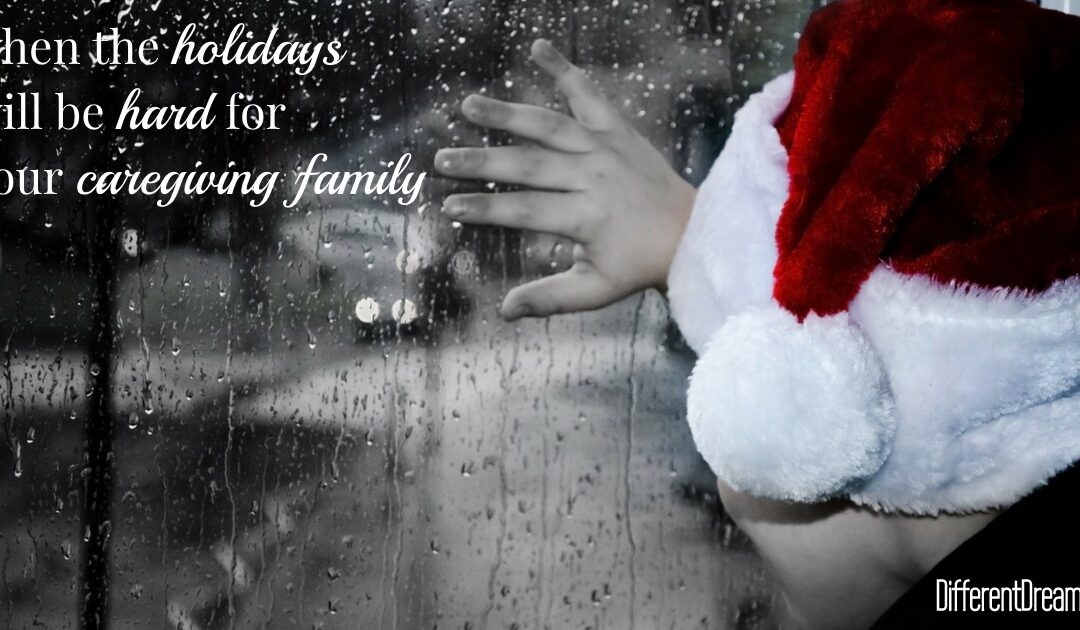
The holiday season can be hard for caregiving families. I spent Halloween, New Year’s Eve, and my birthday the hospital with our infant son. Because of his precarious health when he was young, several times we made the difficult choice to stay at home for Thanksgiving and Christmas instead of spending it with extended family.

 I didn’t like making those choices. I didn’t want to miss the holiday traditions I’d experienced growing up. On our birthdays, we chose the menu for dinner and whatever dessert we desired. Thanksgiving and Christmas were spent with either Mom’s extended family or Dad’s, the women gathering the day before to prepare feasts that culminated in the most delicious homemade pies I’ve ever eaten.

 At the beginning of each holiday when our son was hospitalized or we chose to stay home, I grieved what our young family would miss. However, as we experienced each holiday with people who weren’t part of our extended families, I found pockets of joy.

To read the rest of The Holiday Season Can Be Hard for Caregiving Families, visit the Hope Anew blog.

Do you like what you see at DifferentDream.com? You can receive more great content by subscribing to the monthly Different Dream newsletter and signing up for the daily RSS feed delivered to your email.

By

Jolene Philo is the author of the Different Dream series for parents of kids with special needs. She speaks at parenting and special needs conferences around the country. She’s also the creator and host of the Different Dream websiteSharing Love Abundantly With Special Needs Families: The 5 Love Languages® for Parents Raising Children with Disabilities, which she co-authored with Dr. Gary Chapman, was released in August of 2019 and is available at local bookstores, their bookstore website, and at Amazon.

Author Jolene Philo

Archives

Categories

Subscribe for Updates from Jolene

Related Posts