How Can I Make You Feel Safe?

How Can I Make You Feel Safe?

How Can I Make You Feel Safe?

How can I make you feel safe?

This question runs through my mind every time I enter the room in the long-term care facility where my mother lives. When I walk through her door today she is asleep in her recliner, her body listing to the left as usual.

I put my things at the foot of her bed before greeting her. “Hi Mom!”

No response.

I speak louder. “Hi Mom!”

She wakes with a start and turns toward me. She blinks. “Hi Jo!”

“How are you today?”

“Tired, Jo. I’m so very tired. I just want to sleep.”

“I brought you an ice cream bar. Are you too tired to eat it?”

“No.” She presses the button of the recliner’s remote control until she’s sitting upright. “I can eat it.”

While she devours her ice cream, I wet a paper towel. When all that remains of her treat is the wooden stick I throw it away and wipe her sticky fingers and lips.

“Why am I so tired?” she asks as I sit down to visit. “All I do is nap all day.”

She asks this question every day.
Every day I walk her through the chores she did on her parents’ farm during the Great Depression.
Her career as a serious elementary and secondary student.
Her college days.
Her early years as a teacher.
Her days as the wife of a farmer who became an extension agent.
Her return to teaching after her husband became ill.


To read the rest of How Can I Make You Feel Safe?, visit Key Ministry’s blog for parents.

Do you like what you see at DifferentDream.com? You can receive more great content by subscribing to the monthly Different Dream newsletter and signing up for the daily RSS feed delivered to your email.

By

Jolene Philo is the author of the Different Dream series for parents of kids with special needs. She speaks at parenting and special needs conferences around the country. She’s also the creator and host of the Different Dream website. Sharing Love Abundantly with Special Needs Families: The 5 Love Languages® for Parents Raising Children with Disabilities, which she co-authored with Dr. Gary Chapman, was released in August of 2019 and is available at local bookstores, their bookstore website, and at Amazon. The first book in her cozy mystery series, See Jane Run!, features people with disabilities.

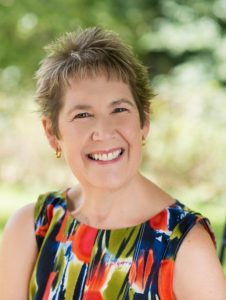
Author Jolene Philo
Archives

Categories

Subscribe for Updates from Jolene

Related Posts

A Caregiver Who Can Move Mountains

A Caregiver Who Can Move Mountains

A Caregiver Who Can Move Mountains

A caregiver who can move mountains doesn’t appear on the scene fully formed. As guest blogger Laura Spiegel learned after her daughter was diagnosed with cystic fibrosis, and as almost every parent raising a child with disabilities discovers, love and experience and challenges combine to shape us into the caregivers our kids need us to be.

I worked in healthcare for twelve years and was always drawn to the emotional parts of managing chronic illness. I partnered with doctors and nurses to help them address their patients as people first. I helped people living with chronic illness fit their daily self-care into their already busy lives.

I really thought I got it.

But on August 12, 2013, my five-week-old daughter was diagnosed with cystic fibrosis. And I quickly realized that everything I had been talking about for years was—just that. Talk.

I knew the lingo. I had empathy. But I did not get it.

I didn’t get what it was like to hate the word “disease” because it was ugly and deadly and in no way a reflection of the smiling infant in my arms.

I didn’t get what it was like to quarantine my baby from October through April for fear of germs that could leave her hospitalized.

I didn’t get what it was like to feel at war with the outside world. Where sandboxes posed bacteria risks. Where another child’s cough could fill me with dread. Where the playground, the museum, even church, were battlefields to be avoided at all costs.

A world where no matter how I much I tried to put my life into perspective and deep breathe and give thanks, I couldn’t escape the fears and “what ifs” that crept into my mind night after night after night.

Over the past nine years, I have grown stronger. I have learned to celebrate the blessings that come alongside the battles. To recognize what’s a big deal and what’s a minor bump in the road to be forgotten later.

I have learned to control what I can control. I have placed my daughter squarely at the center of her care team. I have partnered with her physicians and at times pushed them for what’s best.

I have found purpose in advocating not just for my child, but for all children living with heightened health care needs.

And I have come to respect myself for what I am today: a caregiver who can move mountains one pebble at a time.

Through it all, I have tried to hold myself and the friends and family that surround us to one key principle. My daughter has cystic fibrosis, but that alone does not define her. Defining her exclusively by her health—or attempting to center our family entirely around it—seems so limiting. Like capturing black and white alone in a world full of color.

My daughter loves player soccer, looking for ladybugs, and telling spooky stories. She also has cystic fibrosis.

And me, a caregiver who can move mountains? I’m going to paint her in color.

Do you like what you see at DifferentDream.com? You can receive more great content by subscribing to the monthly Different Dream newsletter and signing up for the daily RSS feed delivered to your email.

By

Laura Spiegel spent 12 years at the world’s largest biotech company, partnering with professionals and care teams to help people with special needs and disabilities lead full and happy lives. In 2013 her daughter was diagnosed with cystic fibrosis. Laura now hosts Paint Her in Color, a website that offers emotional support to parents of children with special medical, developmental, or behavioral health care needs. When she isn’t reading, writing, or soaking up time with her husband and kids, Laura can be reached at Paint Her in Color, by email at laura@paintherincolor.com, and on Facebook and Twitter.

Author Jolene Philo

Archives

Categories

Subscribe for Updates from Jolene

Related Posts

The Power of an Open Window

The Power of an Open Window

The Power of an Open Window

“Hi, Mom!”

At the sound of my voice, her gaze moved from the open window to me. A smile lit her face when she caught sight of the bouquet of irises in my hands. “They’re beautiful! Where did you find them?”

“They’re the first blooms from the bed at our house.”

“They’re so pretty.”

I arranged them in a vase where she could see them, and then we played Uno. When it was time for me to go she noticed them again.

“Oh, those are beautiful!” Her voice held the delight I used to hear when she called to tell me that her iris bed was blooming. “Where did you find them?”

This conversation confirmed two changes my siblings and I have witnessed in Mom lately. First, her dementia is becoming more noticeable. Second, her joy is also more noticeable. We’ve been expecting the first change ever since her diagnosis in 2008.

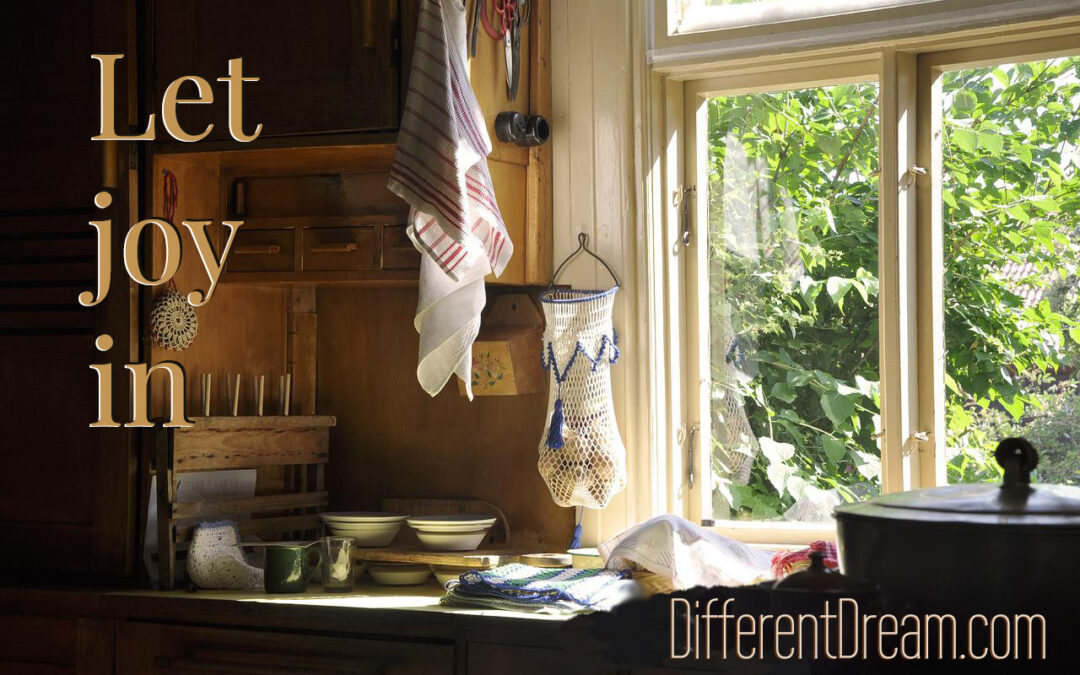
We attribute the second change to the power of an open window.

For years she insisted on having her window shades shut. But when my brother and I stayed with her during a recent hospital stay, we insisted on opening the shades. Mainly because we couldn’t stand sitting in the dark all day long. Soon she became more alert during the day and slept better at night. When she returned to her residential facility, we asked her team to add an item to her care plan.

Window shades are to remain open during the day.

The improvement in Mom’s mood has been phenomenal.

To read the rest of The Power of an Open Window visit the Key Ministry blog.

Image by agata822 from Pixabay

Do you like what you see at DifferentDream.com? You can receive more great content by subscribing to the monthly Different Dream newsletter and signing up for the daily RSS feed delivered to your email.

By

Jolene Philo is the author of the Different Dream series for parents of kids with special needs. She speaks at parenting and special needs conferences around the country. She’s also the creator and host of the Different Dream website. Sharing Love Abundantly with Special Needs Families: The 5 Love Languages® for Parents Raising Children with Disabilities, which she co-authored with Dr. Gary Chapman, was released in August of 2019 and is available at local bookstores, their bookstore website, and at Amazon. The first book in her cozy mystery series, See Jane Run!, features people with disabilities.

Author Jolene Philo

Archives

Categories

Subscribe for Updates from Jolene

Related Posts

Mindset Does Matter on This Special Needs Journey

Mindset Does Matter on This Special Needs Journey

Mindset Does Matter on This Special Needs Journey

Mindset does matter on this special needs journey. Many years after her son’s diagnosis, guest blogger Sandy Ramsey-Trayvick discovered how choosing to change her mindset allowed her and her family to live more joyfully. In this post, she guides caregiving parents through the same process.

During the earlier part of my 20+ year journey as a special needs mom, I put the dreams and hopes I’d had for my life in the back of my mind—far from view. Without realizing it, I slowly began developing a mindset about my special needs life that would later leave me feeling trapped by our family’s circumstances.

Although I knew that my family had been blessed in so many ways, the constraints, the difficulties, the weariness were all real—and, silently, I had started to resent them.

Rather than proactively brainstorming and trying new approaches that might allow for more freedom, fulfillment, or joy, I had become conditioned to just let things be. And, because everything was already so hard, trying something new—that might not work—didn’t seem worth the energy or the risk. So instead I stayed in a reactive mode, ignoring opportunities to choose differently.

Many years later the Lord gave this way of thinking a name and showed me that mindset does matter. He called it a disabled life mindset, and revealed that, because I was so focused on the things in my life that were hard or painful, I wasn’t able to see the possibilities for greater freedom, vibrancy, and joy.

God wanted me to be joyful in my circumstances so I could see His way forward despite my circumstances.

As the Lord helped me to see how this mindset was at work in my life, He made it clear that living a disabled life was not His plan for me or my family. Even in the face of the real difficulties that were present in our life as a special needs family, He revealed that we still had the power to choose our responses. He showed us that mindset does matter.

While there were certainly things we couldn’t change, how we chose to respond to the situations we faced would impact the quality of our lives more than anything else.

We had the power to choose:

    • whether we’d remain stuck in regretful inaction or move forward, inspired by hope
    • whether we’d live in defeat or with joy and gratitude.

We had to look at all the choices that were available to us, and ask questions that would help us figure out how we could make the most of our unique special needs journey.

The types of questions we’ve asked and continue to ask are:

    • What is God’s perspective/purpose/promise here?
    • What do I believe about my circumstances? What is the basis of my belief? How does it align with what God says?
    • How does my role as a special needs parent fit into who I already am?
    • What’s most important here for me and my family?
    • What choices do we have?
    • What do we need to learn?
    • What do we need to let go of?

Admittedly, changing mindsets can be hard work. But God is with us to help because He knows that mindset does matter. With Him, we can succeed at learning how to live more free, more joyful, and more fulfilling lives.

One choice at a time.

One step at a time.

Do you like what you see at DifferentDream.com? You can receive more great content by subscribing to the monthly Different Dream newsletter and signing up for the daily RSS feed delivered to your email.

By

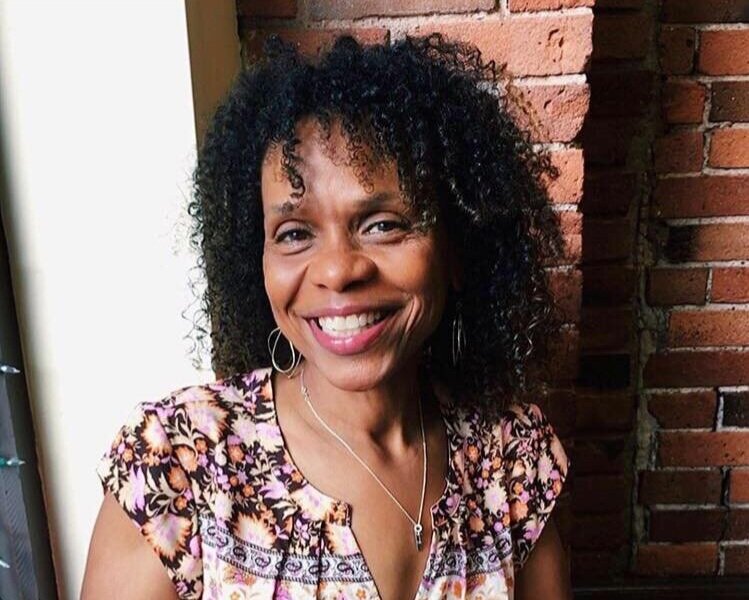
Sandy and her husband are parents to three young adult children. Their son was diagnosed with multiple disabilities 21 years ago after a devastating illness as a toddler. Following her son’s diagnosis, Sandy quit her job to become his full-time caregiver and advocate.

Sandy is currently a Certified Professional Coach. Her focus is to come alongside other special needs parents, helping them to recognize choices that will enable them to reclaim freedom, renew purpose, and reactivate joy.

You can learn more about Sandy, her work and her blog at www.UNDisabledLIVES.org. You can also reach her at Sandy@UNDisabledLIVES.org.

Author Jolene Philo

Archives

Categories

Subscribe for Updates from Jolene

Related Posts

Finding Joy in the Garden of Disability and Special Needs

Finding Joy in the Garden of Disability and Special Needs

Finding Joy in the Garden of Disability and Special Needs

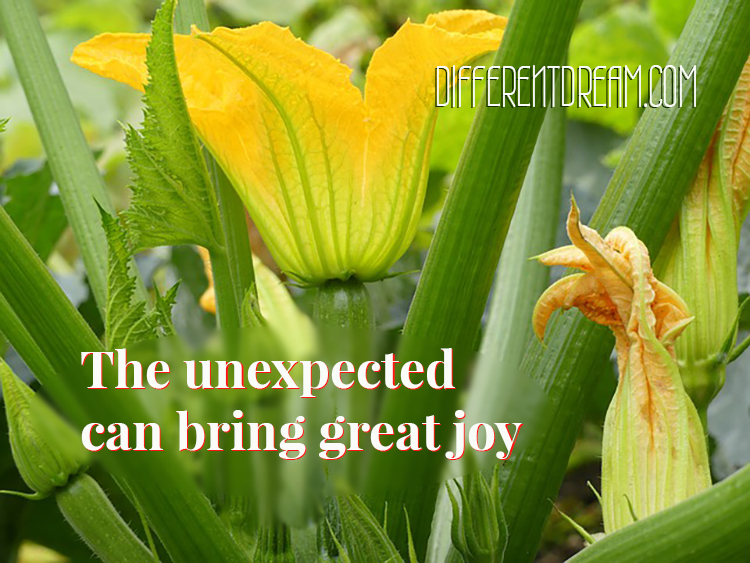
Finding joy in the garden of disability and special needs is a lot like finding zucchinis in the pumpkin patch. Both provide abundant and delicious harvests as guest blogger Heather Johnson explains in this post.

I kneel in my garden bed. It has been freshly tilled and spread with a layer of composted manure. We have an ample supply, given that we have four horses on our farm. As rust-breasted bluebirds flit to-and-from nearby nesting boxes, I’m thinking about raising vegetables, flowers, and kids with special needs for the past twenty-five years. Today, pumpkins are my main goal.

I pull soil toward me with my arms, making six large mounds, each six feet apart. I plunge twelve cream-colored teardrops into each heap of sun-kissed earth.

Finished, I stand and brush off my dirt-caked knees, grab the garden hose, and water the invisible seed wonders—seeds holding life just waiting to break through. Kind of like babies waiting for birth.

Many years ago, after planting my first pumpkins, I waited more than a week for them to peek green through the brown. When the pumpkin plants sprouted their first leaves, I noticed some didn’t look like others. Some leaves were rounded, others were angular with slightly jagged edges. Suddenly, I realized I didn’t have just pumpkins—I had zucchini. The seed pack was mixed.

I didn’t get what I expected.

I wanted a patch of large pumpkins to place along our flower garden paths in October. Not having the heart to discard tender new life, I decided to grow pumpkins and zucchini together, learning about their different growth rates, tending needs, and harvest times. Little did I know how unexpected zucchini would bring me abundant joy.

Kind of like raising our three kids with invisible disabilities.

Growing our family has been like growing my garden of unexpected. When we adopted our three kids from Russia twenty-five years ago, we didn’t know they would grow quite differently from other kids. In “seedling” form, they looked the same—no outward appearance of difference. Once they began growing, however, we realized our family “garden patch” would need different tending.

We couldn’t follow the typical growth directions of parenting books or others’ advice based on their own parenting prowess. Our “seeds” were not like other family’s “seeds”. I believed then, and I still believe now, that regardless of growth rates or harvest yields, all life is precious. All life has purpose. All life has promise.

Truth be told, tending our flower and vegetable gardens often exhausts and stretches my muscles into an ache. The same held true for raising kids with invisible disabilities. I was stretched beyond what I thought I could bear, exhausted and achy of heart sometimes. Maybe you too?

May I offer you a refreshing cup of good news?

Whether we’re tending flower and vegetable gardens or our own garden of children, harvest comes, sooner or later. Miniature harvests occur all along the way too. The first ripe raspberry, sweet juice on the tongue. The first witness of a child performing a selfless act to help a hurting other.

Then come the larger, longer growing harvests.

Our kids are not children anymore. They are 30, 28, and 24. They completed high school with special services, healed from multiple surgeries, and overcame emotional difficulties. With assistance, all found employment and enjoy living structured, productive lives. Each are kind and considerate. I love them all, with all their differing abilities, and have come to realize how they’ve tended to my soul all these years as I’ve tended to theirs.

Our unexpected family produced a harvest far more abundant than I imagined. We’ve grown love, joy, peace, patience, kindness, goodness, faithfulness, gentleness, and self-control (Galatians 5:22-23 NIV). We’ve learned we’re all precious humans needing each other’s differing abilities to bring about abundant harvest. And we anticipate each new day as a gift from God, helping others realize their precious place and purpose in this often dark and hurting world.

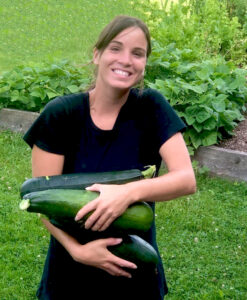
Now, back to my knees, tending to this spring’s pumpkins and zucchini. I planted them both on purpose. This year, like all years since the first unexpected planting, I’m finding joy in the garden of disability and special needs and looking forward to much blessing.

Do you like what you see at DifferentDream.com? You can receive more great content by subscribing to the monthly Different Dream newsletter and signing up for the daily RSS feed delivered to your email.

By

Heather MacLaren Johnson and her husband have three kids, all five and under when adopted from Russia. Now young adults, all need regular help with their multiple, permanent, invisible disabilities stemming from prenatal exposure to alcohol (FASD).

Heather has B.S. in Education and a doctorate in Clinical Psychology. She is the author of Grace, Truth, & Time: Facilitating Small Groups That Thrive and has published personal essays in The Wonder Years: 40 Women Over 40 on Aging, Faith, Beauty, and Strength (Kregel Publications) and Your Story Matters: Finding, Writing, and Living the Truth of Your Life (NavPress). She’s writing a memoir about her family’s journey through hidden disabilities and mental illness to encourage others to greater intimacy with God and each other through times of desolation and lament.

Heather and her husband of 27 years live with two horses, two dogs, two barn cats, and a bunch of silk plants she just dusts. Heather writes and photographs at www.truelifewithgod.com.

Author Jolene Philo

Archives

Categories

Subscribe for Updates from Jolene

Related Posts

When Caregiving Sparks Stress Instead of Joy, What Can You Do?

When Caregiving Sparks Stress Instead of Joy, What Can You Do?

When Caregiving Sparks Stress Instead of Joy, What Can You Do?

When caregiving sparks stress instead of joy, what can you do about it? That’s a question I began mulling over since I posted a survey on my website about stress and compassion fatigue in caregivers way back in 2019.

Within 2 days, the survey had been completed 500 times. Less than a month later, that number had risen to almost 1, 500. This was a full year before COVID and the pandemic reared their ugly heads. Keep that in mind while you read through the statistic below.

  • 98% of the caregivers said their duties cause extra stress in their daily lives.
  • On a scale of 1 to 10, the average stress level of parents was 6.4.
  • 91% said caregiving has affected their mental health.
  • 87% said caregiving has affected their physical health.

Further analysis can be found the Different Dream website. 

 To borrow a phrase from Marie Kondo’s book, The Life-Changing Magic of Tidying Up, the statistics show that caregiving is sparking as much stress as joy in parents raising kids with special needs. Which is why I’ve been pondering the question posed earlier: when caregiving sparks stress instead of joy, what can you do about it? 

Look for Signs of Post-Traumatic Growth

One thing we can do is remember that traumatic and stressful events can lead to positive outcomes. Researchers Richard Tedeschi and Lawrence Calhoun refer to this phenomenon as post traumatic growth.

To read the rest of When Caregiving Sparks Stress Instead of Joy, What Can You Do?, go to the Walk Right In Ministry website.

Do you like what you see at DifferentDream.com? You can receive more great content by subscribing to the monthly Different Dream newsletter and signing up for the daily RSS feed delivered to your email.

By

Jolene Philo is the author of the Different Dream series for parents of kids with special needs. She speaks at parenting and special needs conferences around the country. She’s also the creator and host of the Different Dream website. Sharing Love Abundantly with Special Needs Families: The 5 Love Languages® for Parents Raising Children with Disabilities, which she co-authored with Dr. Gary Chapman, was released in August of 2019 and is available at local bookstores, their bookstore website, and at Amazon. The first book in her cozy mystery series, See Jane Run!, features people with disabilities.

Author Jolene Philo

Archives

Categories

Subscribe for Updates from Jolene

Related Posts