We Are FOR Parents and Children

We Are FOR Parents and Children

We Are FOR Parents and Children

We are for parents and children with special needs and disabilities here at Different Dream. Therefore, I am delighted to introduce you to new guest blogger Heather Braucher. Today she begins her five part I Am FOR You series. In it she’ll share her thoughts about how God demonstrates how He is FOR every member of your special needs family and how we can show others that we are with them too.

The room was pitch black, minus the dull glow from the star stickers on the ceiling. The sound of pouring rain from the white noise app was at max volume, but it still couldn’t drown out Garrett’s tapping and Jackson’s clicking as they waited for sleep to wash over them. Every tap and click made my body tense. At this point, I was convinced that my boys would never fall asleep and this day would never end.

This was a typical bedtime experience so my brain did know the boys would inevitably fall asleep. But fatigue—be it emotional, physical or mental—did not care what my brain should know to be true. Fatigue doesn’t care how much I actually love my sweet boys and their cuddles. Fatigue pays no mind to the fact that once they fall asleep, my heart will leap a little as I peek at their peaceful faces. No.

Fatigue only wants to hijack the brain with feelings of desperation. So as I stare at the stars on the ceiling and try to remain perfectly still, my fatigue-hijacked mind struggles to keep hope that the bit of solitude I am desperately clinging for is within reach.

But then, it happens. Stillness and slow breathing. They are asleep! I made it! The day’s requests and whines have ceased. No more sibling arguments and sensory overload for mommy. And if I can keep my eyes open, I can enjoy a couple hours to myself. But as I move on to this long-awaited part of my day, like clockwork, instead of resting in my solitude my brain starts to reflect and condemn! I ask myself questions.

  • Why does it take them so long to fall asleep?
  • Will they ever grow out of this?
  • Why do they even want to cuddle with me?
  • Was I even nice to be around? I wish I didn’t get so impatient!

And then I pray, “Lord, help them not remember me like this, exhausted, irritable, and quick-tempered.”

I remember early on a veteran mom told me, “You are going to make mistakes as a parent. It is impossible not to. But thank God we can ask for HIS mercy to wash our mistakes away and HIS grace to fill in the gap.” She encouraged me to bring self-condemnation to the Lord when it came.

So every night, I bring it all to the Lord.

And you know what happens? Instead of receiving a “Yup, you’re right Heather. You could’ve done so much better,” I feel a calm in my spirit and an affirmation that flawed as I am, I have a God who sees me, knows my heart for my family, and knows my desire to love well.

The Lord helps me see that at the end of those long arduous bedtime routines, when that silence finally comes—after all the those repetitive clicks and taps—HE reminds me that no matter how much fatigue will try to hold me captive, I am FOR my children! And the same for you too mama. WE are FOR our children!

When you are weary and your lens is muddied by fatigue, remember in your heart of hearts, that fatigue can often be a side effect of great love poured out. And don’t worry, the well will never run dry!

In this next installment of this series I look forward to sharing how I work to communicate to my children that I am FOR them.

Part 1: We are FOR Parents and Children
Part 2: Mothers are FOR their Children with Disabilities and Special Needs
Part 3: Caregiving Spouses are FOR Each Other
Part 4: Caregiving Moms are FOR Other Caregiving Moms
Part 5: Jesus is FOR Caregiving Parents

Do you like what you see at DifferentDream.com? You can receive more great content by subscribing to the monthly Different Dream newsletter and signing up for the daily RSS feed delivered to your email.
By

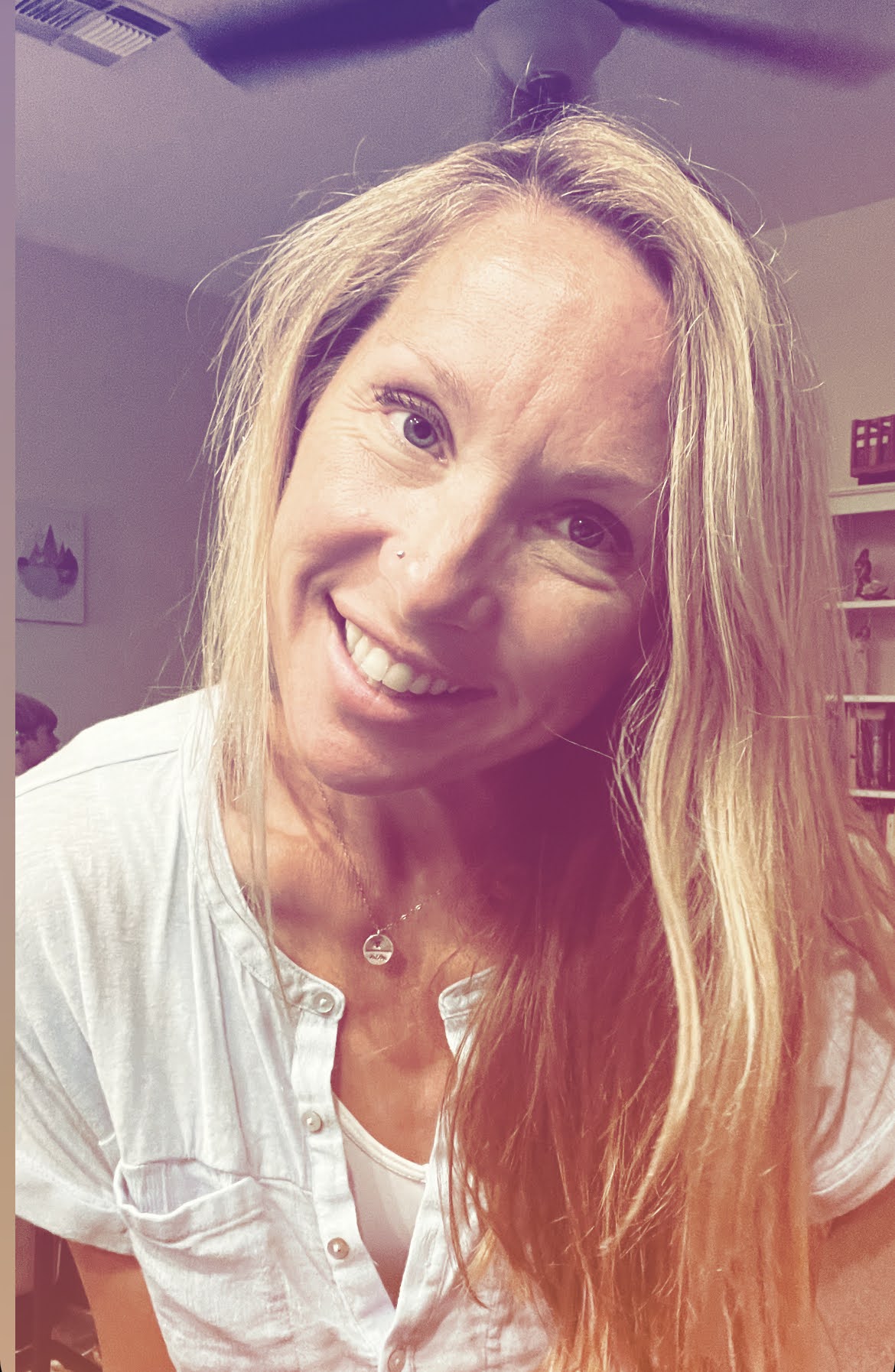
Heather Braucher is a member of the “Braucher Bunch” aka her energetic family of 5. The bunch includes her husband and their three children, all of whom are dominant and extroverted and are going to change the world (if she can keep them alive!) She has always held a passion for writing, but motherhood has given her a reason to share her experiences, heartaches, and victories with others. In her writing you will hear stories of hope as well as grief, as her family has navigated life in ministry in the US and overseas, all while discovering that 2 of her children have special needs. Her desire is to provide others with connection, understanding, encouragement and laughter, all washed with the love of Christ.

Author Jolene Philo

Archives

Categories

Subscribe for Updates from Jolene

Related Posts

Is Medicating Mental Illness the Best Plan?

Is Medicating Mental Illness the Best Plan?

Is Medicating Mental Illness the Best Plan?

Is medicating mental illness the best plan? This important question often feels like the elephant in the room. In today’s post, guest blogger Lisa Pelissier discusses both sides of an issue concerning to many parents raising kids with special needs.

Conventional western medicine is steeped in pharmaceutical tradition.

Headaches mean ibuprofen. Does your stomach hurt? Take Pepto Bismol or Tums. Or have the doctor give you something stronger. High blood pressure? Prescription. Infection? Antibiotics. Want to avoid sickness altogether? Vaccinations.

For every problem, there’s a remedy.

In the unconventional circles in which I walk, largely the homeschool world and the church, people lean toward natural remedies over drugs. Herbs. Essential oils. Amber beads. Avoiding meat. Eating only meat. Keto. Gluten-free. The GAPS diet. Chicken soup. Elderberries. The list goes on. Everyone has an answer.

But in the case of mental illness, there seem to be no good answers.

There are drugs that can treat mental illness. The battle to determine which one may work for the particular condition being treated can be daunting. Once you find something that mitigates the symptoms, there are side effects. Weight gain. Drowsiness. Rash. Muscle spasms. Patients are left to navigate which is the lesser of two evils.

What about natural remedies? Do they exist? Maybe. Some things help some people. The same things don’t help someone else. And no essential oil is going to quiet the voices in the head of someone with psychosis.

Where is the church in all this?

Often, the church insists that mental illness is a soul-sickness, not a physical one. “Just have more faith,” someone will say. Or “Confess your secret sins.” Then you’ll be freed from depression and anxiety. Maybe an exorcism will drive away the demons. Maybe the demons are attacking a person because their soul was on the wrong path in the first place. Maybe the patient deserves to be sick. I think most people, if they stop to think logically, will realize that mental illness is not the same as demon possession or demon oppression.

It shouldn’t be assumed that someone with mental illness has slipped away from the faith, has secret sins, or deserves what they got. If mental illness were merely a soul-sickness, then psych medications would not work. You can’t medicate the devil away from you. You can’t drug yourself into having faith. You can’t prescribe a remedy that sucks the secret sins out of your heart.

Psych meds do work. I’ve seen it happen to members of my immediate family. Multiple members of my immediate family.

Still there is a reluctance to try medications for what is obviously a physical ailment. Some of this hesitance is legitimate. The side effects of psych meds can be unacceptable. Sometimes the medications don’t fix the problem, or they even make things worse. Some of the unwillingness is misguided. Like worrying that you will lose your personality or become someone different if you take medications that affect your neurological system. Or worrying that people will think less of you if you take medications meant to affect your mood. (They will—but that’s because of their mistaken assumptions.) Some people are reluctant to medicate their children because they feel like it mean’s they’ve failed, or because they don’t want to admit that their children are sick, especially when, to all appearances, their children are just fine.

Should you put your child on psych medication?

Maybe.
Maybe not.

But it is definitely something to seriously consider. Let your prejudices go. Mental illness is a physical illness and a degenerative one. That is, it gets worse. If left untreated it will get worse more quickly. Statistics show that 8.4% of all U.S. adults have had a major depressive episode. In 2020 alone, 581 Americans aged 10-14 committed suicide. And 21% of all U.S. adults are living with mental illness. That’s one in five people. And less than half of those are receiving treatment.

This is not rare. Its not the patients fault. Its not the parents’ fault. Its not a reflection of a persons spiritual health.

On the contrary, constantly living with this kind of a “thorn in the side” builds both character and strength. So consider your options carefully. Love those around you. And take time to look at the mentally ill the same way you would look at cancer patients—as people fighting for their lives.

Do you like what you see at DifferentDream.com? You can receive more great content by subscribing to the monthly Different Dream newsletter and signing up for the daily RSS feed delivered to your email

By

Lisa Pelissier lives in Oregon where she is a homeschooling mother of four (three with disabilities) and author of three middle-grade fiction novels. Lisa owns SneakerBlossom Books, offering Christian, classical homeschool Study Guides and curriculum. She also works as a freelance copy editor, an artist, a substitute teacher, and a tutor. In her spare time Lisa enjoys playing the piano and fretting about things over which she has no control. Email Lisa at sneakerblossom@yahoo.com or connect on Facebook.

Author Jolene Philo

Archives

Categories

Subscribe for Updates from Jolene

Related Posts

What Will Go Wrong Next?

What Will Go Wrong Next?

What Will Go Wrong Next?

What will go wrong next?

When our family gathers around the dinner table each evening this summer, that question pops up at some point in every conversation. Here’s why we keep asking it:

  • In June I went to the doctor with throbbing varicose veins. Tests showed that surgery to close the veins a dozen or more years ago have opened again. This happens only 10% of the time.
  • Our pickup truck started acting up in early July, a week before we were go on a long anticipated family vacation. In short order, the vacation morphed into a staycation.
  • In the middle of the staycation, my husband took our son-in-law to the ER with heart attack-like symptoms. It wasn’t a heart attack, but he was in the hospital for 3 days before a diagnosis was made.
  • My husband’s rib went out of place a week later. He says he’s never been in such pain.
  • Our air conditioning system, installed last fall, has never operated correctly. We’re on a first name basis with the repair technician. He’s here again today. He’ll probably be here tomorrow.
  • My husband and I have a late August trip planned in the camper we purchased in May. The license plates still haven’t come.
  • Last night, my husband took our son-in-law to the ER with chest pains again. Not as severe as before. The cause was quickly diagnosed.

This list shows why the summer of 2022 has risen to second place in my personal hit parade of bad summers. But no matter how bad this summer gets, it won’t overtake 1982.

To read the rest of What Will Go Wrong Next? visit the special needs parenting blog at the Key Ministry website.

Do you like what you see at DifferentDream.com? You can receive more great content by subscribing to the monthly Different Dream newsletter and signing up for the daily RSS feed delivered to your email.

By

Jolene Philo is the author of the Different Dream series for parents of kids with special needs. She speaks at parenting and special needs conferences around the country. She’s also the creator and host of the Different Dream website. Sharing Love Abundantly with Special Needs Families: The 5 Love Languages® for Parents Raising Children with Disabilities, which she co-authored with Dr. Gary Chapman, was released in August of 2019 and is available at local bookstores, their bookstore website, and at Amazon. The first book in her cozy mystery series, See Jane Run!, features people with disabilities.

Author Jolene Philo

Archives

Categories

Subscribe for Updates from Jolene

Related Posts

10 Tips for a Successful Special Needs Vacation

10 Tips for a Successful Special Needs Vacation

10 Tips for a Successful Special Needs Vacation

Mark Arnold’s guest post offers 10 tips for a successful special needs vacation. He and his family tested them this summer for you to use whenever you and yours are able to get away.

So, what do we need to do to prepare our special needs children and young people for vacations overseas, in their home country, or as a staycation? These 10 tips for a successful vacation can help.

Tip #1: Allow for Processing Time

While the attraction of late vacation deals can be tempting, deciding at the last minute can be difficult. Some children and young people need processing time to prepare for a significant change, so plan as far in advance as you can.

Tip #2: List Issues Your Child May Face

Think about everything from the packing to traveling, from where you will stay and sleep to the things you will do, from the people going with you to those you might meet, from the food will eat to transportation you will take. What are the issues for your special needs child or young person? List them and think about how to reduce their impact. For example, if food’s an issue, contact the holiday provider and request a special menu. Or you take favorite food items with you.

Tip #3: Create a Social Story

A social story uses photos, symbols, and words to explain something new or complex for a child or young person with special needs. You can create one about what your child or young person needs to know, about the upcoming vacation. This gives them the tools to understand what will happen. Resources about social stories can be found at the Reachout ASC website.

Tip #4: Create a Visual Timetable

Create a daily plan. Use symbols or photos to represent each aspect of the day. Attach them using Velcro, so they can move along the timetable as the day progresses to aid understanding of what is happening now, next, and so forth. There’s a visual timetable template on the Reachout ASC website above.

Tip #5: Take Favorite Items

Take favorite toys or items your child or young person uses to feel safe and secure. Pack them in your carry-on baggage so they don’t get lost! You could also introduce a new item to take on vacation—something related to your destination. The item could be a vacation mascot and your child could have the job of looking after it.

Tip #6: Conduct a Dry Run

If you are flying and the airport you are going to isn’t far away, conduct a dry run. Most airports have special assistance for families traveling with a child or young person with special needs. It’s worth exploring what they provide. Look at where everything is. Airlines are supportive, but it’s wise ask for assistance in advance.

Tip #7: Bring Things to Do

While traveling, there will be long periods with little to do. Take activities to fill these gaps. Depending on your child’s interests, take coloring books, books to look at or read, fidget toys, Legos, a tablet to watch or listen to, or whatever helps them fill the time and relieve boredom.

Tip #8: List the Essentials

We usually remember important things like tickets, passport, money, and phones. It’s wise to also list other essentials such as medications and be sure you bring enough along. List snacks and drinks and take plenty in case you get stuck in a huge traffic jam or at the airport.

Tip #9: Involve Your Child or Young Person in Planning

If possible, seek your child or young person’s input. Ask what they’re worried about, what they want to take to feel safe, what resources help them feel in control. The more you talk about the vacation and work through any fears, the more likely the trip will be successful.

Tip #10: A Staycation is a Good Option

If the complexities of going somewhere else are too great, plan a staycation instead. You can have a wonderful time staying local and exploring what’s on offer close to home. And everyone gets to sleep in their own bed at night!

Whatever you are hoping to do for vacation, these 10 tips for a successful special needs vacation can make it less stressful and more fun.

Do you like what you see at DifferentDream.com? You can receive more great content by subscribing to the monthly Different Dream newsletter and signing up for the daily RSS feed delivered to your email.

By

Mark Arnold is the Additional Needs Ministry Director at Urban Saints, a leading national Christian children’s and youth organization. He is co-founder of the Additional Needs Alliance, a national and international advocate for children and young people with additional needs or disabilities. Mark is a Churches for All and Living Fully Network partner, a member of the Council for Disabled Children and the European Disability Network. He writes an additional needs column for Premier Youth and Children’s Work (YCW) magazine and blogs at The Additional Needs Blogfather. He is father to James, who has autism spectrum condition, associated learning disability, and epilepsy. To find out more about how Mark’s work can help you, contact him at: marnold@urbansaints.org or @Mark_J_Arnold

Author Jolene Philo

Archives

Categories

Subscribe for Updates from Jolene

Related Posts

My 4 Tips for Surviving a Special Needs Train Wreck

My 4 Tips for Surviving a Special Needs Train Wreck

My 4 Tips for Surviving a Special Needs Train Wreck

My 4 tips for surviving a special needs train wreck became part of my life decades ago. Our son, who’d had major corrective surgery at birth, was thriving.

Or so we thought.

Then he pulled away one night while I nursed him. His eyes rolled back in his head, and he quit breathing. I screamed for my husband, who improvised his own version of baby CPR.

It worked.

I ran for the phone to call for an ambulance. Minutes later we were on our way to Rapid City Regional Hospital where the problem was diagnosed. The next day a medical transport plane flew my son and me to the University of Nebraska Hospital in Omaha for more corrective surgery. The surgery was a success, his recovery slow, steady, his long term prognosis good.

Even so, I struggled.

Our son’s health setback gobsmacked me. My husband, my parents and siblings, my friends were hundreds of miles away. I was alone on my birthday. From my perspective, the situation felt unsurvivable.

Yet we survived.

Our young family (including our son who is now 40) endured several more complications that required unexpected hospital stays. Over time I developed these 4 ways to cope with the train wrecks that are part of raising a child with disabilities and special needs.

Tip #1: Note the Ways God Prepared You

Sending our baby off to surgery again was hard. Even so, I was a better prepared parent the second time around. During the stay at Rapid City Regional, my husband went home and packed my suitcase with clothes and items we knew made hospital stays easier. Also, the hospital was a familiar place.

To read the rest of My 4 Tips for Surviving a Special Needs Train Wreck, visit the Hope Anew website.

Do you like what you see at DifferentDream.com? You can receive more great content by subscribing to the monthly Different Dream newsletter and signing up for the daily RSS feed delivered to your email.

Image by dae jeung kim from Pixabay

By

Jolene Philo is the author of the Different Dream series for parents of kids with special needs. She speaks at parenting and special needs conferences around the country. She’s also the creator and host of the Different Dream website. Sharing Love Abundantly with Special Needs Families: The 5 Love Languages® for Parents Raising Children with Disabilities, which she co-authored with Dr. Gary Chapman, was released in August of 2019 and is available at local bookstores, their bookstore website, and at Amazon. The first book in her cozy mystery series, See Jane Run!, features people with disabilities.

Author Jolene Philo

Archives

Categories

Subscribe for Updates from Jolene

Related Posts

What a Difference a Decade Makes!

What a Difference a Decade Makes!

What a Difference a Decade Makes!

“What a difference a decade makes!” is the joyful cry of guest blogger Janae Copeland as her daughter, born with EA/TEF, turns eleven. Janae shares both the joys and challenges her family experienced when their daughter was born and invites readers to join in this birthday celebration.

“The first two years will be the hardest,” my daughter’s pediatrician said quietly, while looking out the window of my hospital room on the labor and delivery floor. He was watching the helicopter ascend above the trees and head west, as it carried our daughter to the place that could save her. I don’t remember much for several hours after that, mostly due to the combination of drugs I was given to relieve that physical pain of an emergency c-section, and I’m sure, others to ward off any emotional responses to the events of the past few hours.

On August 3, 2022 we reach the eleventh anniversary of that painful day.

Several moments from those first two years––and the several after––are seared in my mind as clearly as the moment they occurred. Countless others have faded with the passing of time. Memories become sewn together in swaths, quilt-like in nature, blurring timelines and sequences, but covering that whole time period with a shadow of fear, uncertainty and single-minded anxieties. Plans made and events held to preserve “normalcy” for our other two kids and ourselves continued to the greatest degree we could muster, although many of those memories seem to have gotten sucked into the mental abyss along with the others. Perhaps I was too tired to monitor my psyche for precise sorting?

Now, when my thoughts of these early years come, they generally fall into one of two camps:

How in the world did we make it through that?

or

Did all that really happen?

Recently, while spending some time with our closest friends, they asked about that day, filling in gaps of the events of the time between getting the phone call that she had been born and their arrival at the hospital. It occurred to me about ten minutes into the conversation that my daughter was looking at me with wide-eyed wonder. Sometimes I forget that she doesn’t have a consciousness of her early days. Much like the huge scar just below her shoulder blade, hidden to her due to its location, and even (unintentionally) to everyone else beyond the bathing suit days of summer, she has an underlying understanding without a fully developed context.

So, what is our reality, a decade later?

In a literal sense, she’s sitting across the room from me, foil in her hair, allowing her chosen blue highlights process on her “curtain bangs”. She just finished a bag of popcorn––I repeat, popcorn–without a drink in hand and without her dad and me holding our breath, watching for the inevitable chaos to ensue. She’s sending Amazon links via text, making sure we know some of her birthday wishes. Her first year of middle school lurks around the corner, with all the newness that brings. In other words, normal stuff! Stuff that I probably never would have been able to believe would one day be her reality.

As her mom, I am filled with gratitude, humility, and hope.

Gratitude that she continues to thrive and maintain her health. I am equally humbled as I relish in God’s grace on our family. I’m all too aware of the parents who are sitting in hospitals right now, with kids of all ages facing what seem to be insurmountable challenges. Even more humbling, some parents are looking at empty cushions where their child should be. Lastly, I have lasting hope, rooted in faith, that any challenges coming our way will be surmounted and that strength and wisdom will be provided when we need it.

He has never forsaken us and His plans for her are more perfect than we could even dream. If you are at the beginning of your journey, please know that prayers are being prayed on your behalf, prayers that you will find yourself down the road living the most beautiful, ordinary life possible. Prayers that in ten years or so, you too will be saying, “What a difference a decade makes!”

Do you like what you see at DifferentDream.com? You can receive more great content by subscribing to the monthly Different Dream newsletter and signing up for the daily RSS feed delivered to your email.

Image by Jackie Matthews from Pixabay

By

Janae Copeland is a wife and mother of 3 daughters. She lives in Jacksonville, NC where she is a K-5 music educator. She became a Different Dream mom when her oldest daughter, Jayda, was born in 2002 with hydrocephalus and cerebral palsy. Nine years later, her daughter Clark was born with EA/TEF and right microtia/atresia. Janae is grateful to have been entrusted with the care all 3 of her special daughters and seeks out opportunities to help other young mothers who may need support as they begin these same journeys with their own blessings from God.

Author Jolene Philo

Archives

Categories

Subscribe for Updates from Jolene

Related Posts