Creating Unique, Disability-Friendly Christmas Traditions

Creating Unique, Disability-Friendly Christmas Traditions

Creating Unique, Disability-Friendly Christmas Traditions

Creating unique, disability-friendly traditions may feel like one more task to add to your holiday to do list. These ideas from guest blogger Kristin are anything but one more thing. In fact, her ideas will simplify some of what you’re already doing and give you permission to let other things go.

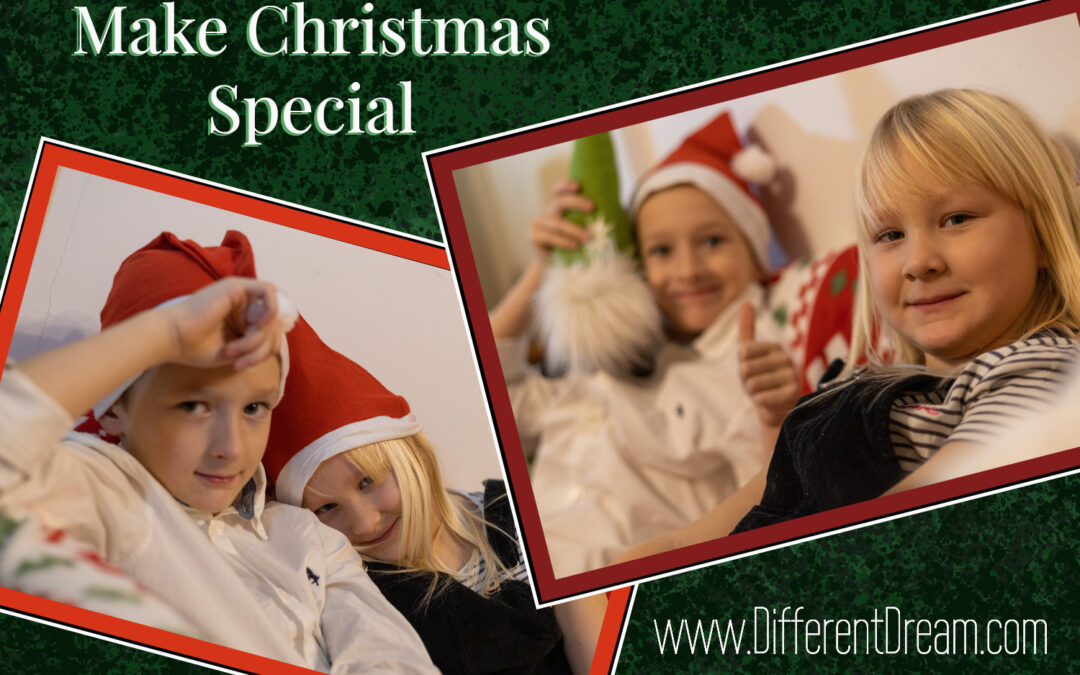
It can be easy to feel pressure from family, friends, or work to participate in typical holiday activities. But usual Christmas traditions and gatherings can be challenging for families with special needs. Taking a child with medical needs or developmental disabilities to loud, large, or crowded places can be difficult. Just leaving the house can cause more stress than enjoyment. If this sounds like your family, consider modifying usual activities and making new Christmas traditions and memories unique to your family’s needs.

Evaluate Holiday Plans

Start by reflecting on these seven questions as you create your family’s best holiday experience:

    1. What kinds of activities does your family enjoy together?
    2. What kinds of activities does your family not enjoy?
    3. What types of social situations or outings work well for your family?
    4. What types of social situations or outings do not work well for your family?
    5. What expectations or pressures from family and friends might you be trying to fulfill that might not be best for your family?
    6. What could you do differently this year that would decrease stress and create more enjoyment for your family?
    7. What’s one new special tradition you can start that will be unique for your family?

Modify Typical Holiday Activities

Here are some ways for modifying and creating unique, disability-friendly Christmas traditions to fit your family:

    • In place of going to a large family gathering, invite a few family members to your home or schedule a different time to go visit family when only a couple of people will be there.
    • In lieu of going to a Christmas show or large light display at a crowded center, pile into the car, turn on Christmas music, and drive around looking at Christmas lights or go to a drive through light show.
    • Instead of going out to eat, decorate your table and order carry out. Or have a fondue or pancake party.
    • If opening a lot of presents on Christmas morning causes stress for your child, open a few presents at a time throughout the day.
    • If getting pictures made at the mall with Santa scares or upsets your child, take pictures in a private setting in which your child feels more comfortable with a Christmas toy or decoration they like.
    • In place of going to a party, invite one family over for a fun night.
    • If making Christmas cookies or other traditional goodies usually ends in a meltdown, have your child help with only one step of the process.

It might feel like your child or family is missing out. But what you all are likely going to remember most is how the holiday made you feel. Creating unique, disability-friendly Christmas traditions may look different from those of other families, and that’s okay. What’s most important is that you enjoy the holiday together, however that might look for your family.

Do you like what you see at DifferentDream.com? You can receive more great content by subscribing to the monthly Different Dream newsletter and signing up for the daily RSS feed delivered to your email.

Embedded Photos by Richard Stachmann on Unsplash

By

Kristin lives with her husband, Todd, and their two children in the Nashville, TN area. She is an author, speaker, mental health counselor, and a mom of two children with rare genetic disorders and complex needs. Her greatest passion is teaming up with her husband to empower other parents of children with disabilities, mental health disorders, and medical complications. She hopes that you may find encouragement and support on their website www.DisabilityParenting.com

Author Jolene Philo

Archives

Categories

Subscribe for Updates from Jolene

Related Posts

Surrendering our Children with Disabilities to God

Surrendering our Children with Disabilities to God

Surrendering our Children with Disabilities to God

Surrendering our children with disabilities to God can be challenging. It’s also crucial to future spiritual development in us and our children. Guest blogger Kelly Simpson explains what’s involved in our surrender and how it can draw us closer to God.

Having a child with special needs or a disability often feels like a heavy load. I’ll be honest—it feels like a burden when I try to make it through on my own energy and my own will. You can try for years and still feel drained or worn out, filled with doubts and questions like these:

    • What is life supposed to look like now?
    • Will this particular opportunity that we have been waiting for even be an option for us now?
    • I have been working so hard for… How will we make it now?
    • Will our dreams be put on hold because of this condition?
    • How does this diagnosis affect the plans I had for my own life?

You may be past the “why me?” or “why us?” phase but still deal with ever-present anxiety. To you I want to kindly ask a question:

If you think you have it all under control, why is anxiety still a huge presence?

The answer could be that we never really have full control and we were never meant to.

Matthew 11:28-29 says, “Come to me, all you who are weary and burdened, and I will give you rest. Take my yoke upon you and learn from me, for I am gentle and humble in heart, and you will find rest for your souls.”

When I surrender to the Maker of the stars, I give Him full control and I receive His true peace.

Matthew 11:29 says that I can also find rest in God. For me, some things have been easy to hand over. I’ve held onto others tightly for years. Once I let go, I wonder why I held on so long. He created the whole world just by speaking and can provide me with peace and rest.

Not surrendering our children with disabilities to God may look like:

    • Replaying thoughts and questions over and over until they become all you can think or talk about
    • Refusing to pray at all or consciously choosing to not pray about certain things

Surrendering our children with disabilities to God may look and feel like:

    • Verbally or mentally handing a situation over to God because you know you have no control of the situation or other people
    • A heavy load lifted off your heart
    • Realizing that God doesn’t promise to make life easier due to surrender, but he does promise to always be at your side
    • A change in outlook even though circumstances don’t change
    • A sense of peace

Recipients of peace:

    • Know they need Jesus during every second of their day
    • Know Jesus will provide for their needs
    • Could feel blessed and know they are along for the ride or journey God has designed for them

Paige Ferrari says this in a devotion she wrote for Grand Canyon University:

Peace is knowing that the Lord of the universe is by your side and resting in that. It’s not just knowing, but it is also living it out. Peace is sitting in comfort and knowing that God is next to your side no matter what. Peace is something that you can’t attain physically because the world is almost always going to be a rocky place.

As Ferrari explains, those who know his peace still live in comfort.

Whatever you’re going through—whether it’s caring for a child with particular needs or wondering if you’ll ever be a parent, I challenge you to surrender every detail and circumstance so that you may live in God’s peace and rest.

Do you like what you see at DifferentDream.com? You can receive more great content by subscribing to the monthly Different Dream newsletter and signing up for the daily RSS feed delivered to your email.

Photo by Cindy Tang on Unsplash

By

Kelly has lived her whole life in Kentucky. She and her husband, Jeremy, have an almost-four-year-old son, who, born during a deployment, was diagnosed with tracheoesophageal fistula (EA/TEF). She has always felt a calling to serve others and is living the dream as an Army wife, middle school teacher, and now, as an encourager to those who are living a dream different than they had planned.

Author Jolene Philo

Archives

Categories

Subscribe for Updates from Jolene

Related Posts

Practicing Gratitude in Hard Seasons

Practicing Gratitude in Hard Seasons

Practicing Gratitude in Hard Seasons

Practicing gratitude in hard seasons can be, well, hard.

That less-than-astounding conclusion seems obvious, but I don’t think about such things when life is good. Only when challenges slap me upside the head do I return to practicing gratitude in hard seasons.

Such has been the case this November, a month that catches me by surprise every single year.

One minute the trees are a blaze of color as I get ready for Halloween trick-or-treaters. The next minute the trees are bare, and I’m scrambling to put together a grocery list for our Thanksgiving feast.

This year the surprise was particularly jarring because of the hard season I’ve already alluded to. Word came in early October that my uncle—who supported my father throughout his struggle with multiple sclerosis and was a constant presence in my childhood—had entered hospice care. A few weeks later, he was gone. I was in bed with a pinched nerve when the news of his death arrived. The realization that I couldn’t attend his funeral and honor his life crushed my soul.

I was about to tumble into a pit of depression—a condition that has rarely reared its ugly head in my life—when God brought to mind a practice my husband and I first used decades ago while caring for our son with special needs. More recently, it proved useful while caring for my mother during her final years of life.

It’s an easy practice yet powerful, though it requires intentionality to reap its full benefits. So what exactly have I been doing to keep from tumbling into that nasty pit?

To read the rest of Practicing Gratitude in Hard Seasons follow this link to Key Ministry’s blog for parents.

Do you like what you see at DifferentDream.com? You can receive more great content by subscribing to the monthly Different Dream newsletter and signing up for the daily RSS feed delivered to your email.

Photo by Kelly Sikkema on Unsplash

By

Jolene Philo is the author of several books for the caregiving community. She speaks at parenting and special needs conferences around the country. Sharing Love Abundantly With Special Needs Families: The 5 Love Languages® for Parents Raising Children with Disabilities, which she co-authored with Dr. Gary Chapman, was released in August of 2019 and is available at local bookstores, their bookstore website, and Amazon. See Jane Dance!, the third book in the West River cozy mystery series, which features characters affected by disability, was released in October of 2023.

Author Jolene Philo

Archives

Categories

Subscribe for Updates from Jolene

Related Posts

Therapy is Not a Child’s Love Language.

Therapy is Not a Child’s Love Language.

Therapy is Not a Child’s Love Language.

Therapy is not a child’s love language. Guest blogger Heather Braucher discovered this during a therapy-intense season in the lives of her sons with special needs. In today’s post, she describes how a more laid-back season helped her identify the love languages of all her children

When we returned to the US from living overseas, we were in a state of great need. We needed rest and respite. We needed time to process all that had taken place and time to figure out what to do next. With new and significant medical diagnoses driving our return to the US, I made it my main priority to identify the special needs of my children and leave no stone unturned to meet them.

However, the pandemic began simultaneous to the launching of my mama-bear efforts. Therapies became virtual only. The shutdown directly impacted my ability to meet the needs of my boys and I took it personally.

I felt like my attempts to love them well were being threatened.

This only fueled the fire within me. When things started to open back up and return to “normal,” I went full speed ahead. I felt called to a season of provision and sacrifice. That season was necessary and it was fulfilled.

But it took everything I had to do so.

Hours in the car, driving to doctor’s appointments, therapy sessions, and private school. Endless hours on the computer filing reimbursements and claims to insurance companies. Applying for scholarships and grants. My mind was consumed by these concerns even when we weren’t at an appointment or a therapy session.

My desire to “love my boys well” by meeting their needs kept me going even when those sacrifices and efforts took a great toll on us all. In hindsight, I believe it was absolutely worth it, but I also feel like I missed out on other aspects of our mother and child relationships.

It became important for me to allow our lives to consist of seasons.

This is something I am still embracing. I am learning that there is a time and place for seasons, for allowing finite statements that are less permanent and for providing room for everyone to change and grow.

I sensed a change in seasons when summer came, and we slowed down on therapy sessions due to conflicting travel schedules and the therapists being out of town. Though that was the justification, I battled the thought that I was not loving my boys well without regular therapy sessions.

The difference between love and therapy got blurry. Until I saw what my kids had learned in therapies showing up in daily life.

Growth
Development
Flexibility
Reasoning
Connection

They were generalizing social skills and tools they had learned without any prompts from a therapist. Their previous interventions, communication, and medicinal support were providing stability.

These moments provided me with the assurance that I, as their mama, had answered the call. My children were learning, growing, and maturing. The efforts were not in vain.

These moments also assured me that the current time I was spending with them was just as valuable as therapy. This unexpected season of rest from intensive medical care allowed for spending more time getting to know them beyond their special conditions. It felt like we were in the first years of my sons’ lives again, discovering their unique personalities with every interaction.

In the foreword of Sharing Love Abundantly in Special Needs Families by Gary Chapman and Jolene Philo, Jolene said, “I spent years learning about my son’s disabilities, but knowledge about his conditions was not the language of love.”

I resonated so much with that statement, because in this new season I was learning the love language of my special needs children. I was identifying what makes them feel whole and connected when it comes to their relationship and interactions with us. And I was learning that therapy is not a child’s love language.

In Sharing Love Abundantly in Special Needs Families, Philo shares that “Children with special needs require frequent assurance of their parent’s unconditional love to keep their tanks full.”

Chapman continues with, “When children feel loved and their love tanks are full, they will be more receptive to parental guidance in all areas of life.”

I am so grateful for this renewed awareness and opportunity to focus on making deposits into their love tanks. Why? Because, before diagnosis, a special needs parent’s life is filled with concern and worry. They have a gut feeling that something is off. Their child has needs that they cannot meet. They are observing, comparing, researching, and desperately waiting for the greatly anticipated opportunity to get in with the doctor or specialist.

If you had told me four years ago that I would be living in a post-diagnosis and post-intervention season, I would not have believed you. This season does not mean that all is fixed and all is solved when it comes to caring for our sons with special needs. It has allowed my mind to continue studying my children, just in a different way.

I am learning their love languages and how to meet them. Coincidentally, I have three children and all three of them have Words of Affirmation as their main love language*. That’s a lot of love that I missed out on while focusing on their tangible needs only.

I do not share that out of guilt or condemnation. On the contrary—I am excited to pour love out on them in this specific way in this season and beyond!

You do not have to wait for a season to identify and meet your special needs child’s love language. In Sharing Love Abundantly, Chapman and Philo teach us how to discover and speak our children’s love languages wherever they are in their developmental journey!

*The Five Love Languages are Words of Affirmation, Physical Touch, Quality Time, Acts of Service, and Receiving Gifts. You can identify your love language and the love language of those in your life here.

Do you like what you see at DifferentDream.com? You can receive more great content by subscribing to the monthly Different Dream newsletter and signing up for the daily RSS feed delivered to your email.

By

Heather Braucher is a member of the “Braucher Bunch” aka her energetic family of 5. The bunch includes her husband and their three children, all of whom are dominant and extroverted and are going to change the world (if she can keep them alive!) She has always held a passion for writing, but motherhood has given her a reason to share her experiences, heartaches, and victories with others. In her writing you will hear stories of hope as well as grief, as her family has navigated life in ministry in the US and overseas, all while discovering that 2 of her children have special needs. Her desire is to provide others with connection, understanding, encouragement and laughter, all washed with the love of Christ.

Author Jolene Philo

Archives

Categories

Subscribe for Updates from Jolene

Related Posts

Every Season Has Its Challenges and Joys

Every Season Has Its Challenges and Joys

Every Season Has Its Challenges and Joys

Every season has its challenges and joys.

God has been injecting that truth into my heart with particular intensity this week.

I wish he would stop.

He began this exercise in my character development with a pain in my left side and lower back. It was a familiar issue that usually clears up after 1 or 2 visits to the chiropractor. This time, the pain has gotten worse.

I’ve been hobbling around the house like an old person, counting the hours until my doctor’s appointment tomorrow. Then I remembered that I am getting older.

Now, I’m fine with the perks of this season of life. Being old enough to retire and pursue my own interests. Paying 80 bucks for a lifetime pass that gets us into national parks for free. Having coffee with friends when I want.

But age-related hip pain? I am not fine with that, and I let God know loud and clear. At which point he injected a dose of truth into my dissatisfied heart.

Every season has its challenges and joys.

I tested the truth by taking a trip down memory lane.

The first stop was the birth of our son. This was a season of joy, followed by a special needs diagnosis, and interspersed with challenges inherent to his condition. These continued throughout his early childhood.

Through them all God brought just the right specialists, new medicines he could tolerate appeared on the market, and friends gathered round to bear us up.

To read the rest of Every Season Has Its Challenges and Joys, visit the Hope Anew website.

Do you like what you see at DifferentDream.com? You can receive more great content by subscribing to the monthly Different Dream newsletter and signing up for the daily RSS feed delivered to your email


By

Jolene Philo is the author of several books for the caregiving community. She speaks at parenting and special needs conferences around the country. Sharing Love Abundantly With Special Needs Families: The 5 Love Languages® for Parents Raising Children with Disabilities, which she co-authored with Dr. Gary Chapman, was released in August of 2019 and is available at local bookstores, their bookstore website, and Amazon. See Jane Dance!, the third book in the West River cozy mystery series, which features characters affected by disability, was released in October of 2023.

Author Jolene Philo

Archives

Categories

Subscribe for Updates from Jolene

Related Posts

Making an Autumn Sensory Fidget Box

Making an Autumn Sensory Fidget Box

Making an Autumn Sensory Fidget Box

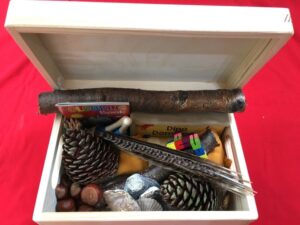
Making an autumn sensory fidget box is easier than it may sound. Guest blogger Mark Arnold is here with ideas, pictures, and step-by-step guidance to help you and your kids create a delightful activity for this beautiful season of the year.

Autumn is a fabulous time of the year, with its many changes and many treasures to look for and find! Our family has been making a sensory fidget box, and I thought you would like to make one too.

There are loads of nature items things to add to your fidget box. I’ll show you what we’ve put in ours so far, as well as some ‘extras’ that we included.

Pinecones: We live near some pine woods so we’ve gathered these lovely cones for our box. They are wonderful to feel and explore with our fingers.

Wooden Batons: We cut these tactile, wooden batons from fallen branches in the woods. They are smooth with little rough bits too!

Conkers (also known as Buckeyes): We walked an avenue of horse chestnut trees. It was worth it to get these smooth conkers. They are great to hold and rotate in the palm of the hand! Be sure to supervise their use as they can be a choke hazard.

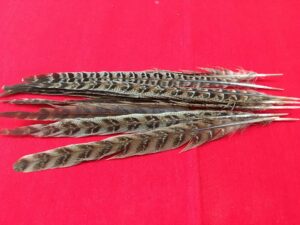
Feathers: There are plenty of pheasant feathers near where we live, and lots of others to find too. We washed them first so they are nice and clean. They are great sensory items to stroke with.

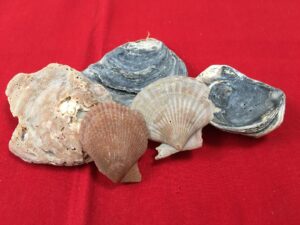
Shells: We also live near the sea (we’re very lucky), so we picked up some nice seashells to add to the fidget box. Again, we washed them first. Shells are tactile and sensory, very calming to feel.

Pebbles and Stones: The weight of pebbles and stones can be sensory. The experience can be enhanced by popping them in the fridge to cool down!

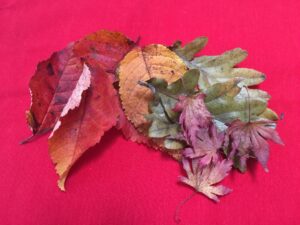
Scrunchy Autumn Leaves: Fallen autumn leaves are beautiful to look at and scrunchy to feel! If you like, stick them to a piece of paper to keep them longer.

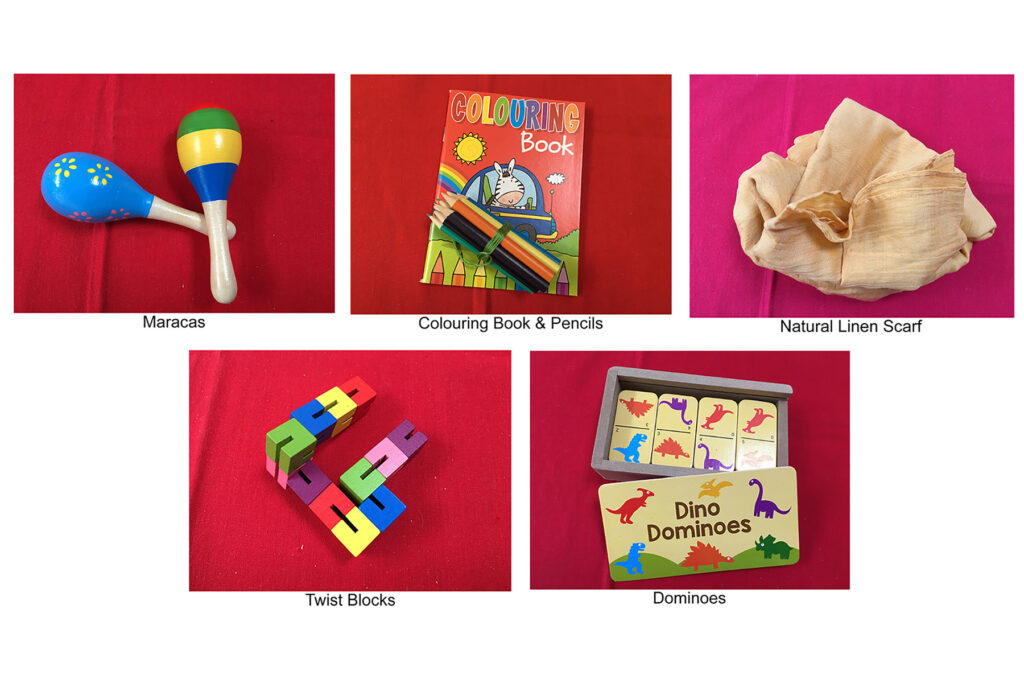
Purchased Items: We bought a few items for our fidget box that are in keeping with the natural feel. For us, that means no plastic. Here are some of them:

Finally, you need a nice wooden box to put everything in. We found one to paint and decorate to make it look special.

Creating your own autumn sensory fidget box is lots of fun. You’ll enjoy exploring and collecting, putting it together, and using the fidget box throughout the winter…until you can make one for spring!

© Mark Arnold/The Additional Needs Blogfather

Do you like what you see at DifferentDream.com? You can receive more great content by subscribing to the monthly Different Dream newsletter and signing up for the daily RSS feed delivered to your email.

Images courtesy of Mark Arnold


By

Mark Arnold is the Additional Needs Ministry Director at Urban Saints, a leading national Christian children’s and youth organization. He is co-founder of the Additional Needs Alliance, a national and international advocate for children and young people with additional needs or disabilities. Mark is a Churches for All and Living Fully Network partner, a member of the Council for Disabled Children and the European Disability Network. He writes an additional needs column for Premier Youth and Children’s Work (YCW) magazine and blogs at The Additional Needs Blogfather. He is father to James, who has autism spectrum condition, associated learning disability, and epilepsy. To find out more about how Mark’s work can help you, contact him at: marnold@urbansaints.org or @Mark_J_Arnold

Author Jolene Philo

Archives

Categories

Subscribe for Updates from Jolene

Related Posts