Can Churches Help Families Raising Children with Disabilities Stay Together?

Can Churches Help Families Raising Children with Disabilities Stay Together?

Can Churches Help Families Raising Children with Disabilities Stay Together?

Can churches help families raising children with disabilities stay together? Guest blogger Mark Arnold, who hails from the United Kingdom, answers that question by telling the story of how the church stepped in to support a family whose respite care ended during summer vacation when they needed it most.

Psychology Today reports that “the rate of divorce in families with a child with disabilities may be as high as 87%. The divorce rate in families with a child with autism is about 80%.” While these alarming figures are at the top end of those cited in the article, the general consensus seems to be that the rates are considerably higher for families of children with special needs than for the rest of the population.

The pressures of parenting a child with special needs of any age are very real. A significant decrease in government support offered to families in United Kingdom during the last few years, largely as a result of covid, means that families have to cope on their own without much help. Many couples have found it to be too much.

So is there hope? Is there a role for the church in filling some of the gaps that have been left as secular services have stopped? Can churches help families raising children with disabilities stay together? I believe the answer to these questions is yes.

A family I know found themselves beginning the summer holidays with no respite provision available. Their two children with conditions that require constant care and supervision so they asked their church if it could help. It stepped up magnificently. Here are some of the things they did.

  1. Food. Church members started doing what churches do in a crisis. They cooked! Lots of food was brought round to the family so that they didn’t have to think about preparing meals all the time.
  2. Childcare. A couple of people came at least once a week to look after the children. The parents used the break go out for a walk, get a coffee, watch a movie together.
  3. Respite breaks. The same team also occasionally took the children out to a theme park for the day. The parents were able to plan day long adventures out or to catch up on sleep—whatever they preferred.
  4. Home-improvement workday. The pressures of work, daily household chores, and caring for children meant the house and yard had been uncared for. The church arranged a workday, coinciding with the children’s trip to a theme park and the parents’ day out. During that day the church work crew decorated the house, completed a few outstanding repair jobs, tidied up the yard, and more.
  5. Small group fellowship. The parents were given support so they could attend their church small group and be spiritually nourished and to socialize, knowing their children were well cared for at home.

What the church did showed the family they were not forgotten, that they were loved and valued, that their church family cared about them and wanted to serve them. It made a huge difference to this family. Other churches can follow their example and respond in love to bless families that are struggling. By doing so, churches will play a part in reversing some of the divorce figures related to families caring for children with special needs.

So can churches help families raising children with disabilities stay together? My answer is yes!

Do you like what you see at DifferentDream.com? You can receive more great content by subscribing to the monthly Different Dream newsletter and signing up for the daily RSS feed delivered to your email.

Image credit: Zoriana Stakhniv via Unsplash

By

Mark Arnold is the Additional Needs Ministry Director at Urban Saints, a leading national Christian children’s and youth organization. He is co-founder of the Additional Needs Alliance, a national and international advocate for children and young people with additional needs or disabilities. Mark is a Churches for All and Living Fully Network partner, a member of the Council for Disabled Children and the European Disability Network. He writes an additional needs column for Premier Youth and Children’s Work (YCW) magazine and blogs at The Additional Needs Blogfather. He is father to James, who has autism spectrum condition, associated learning disability, and epilepsy. To find out more about how Mark’s work can help you, contact him at: marnold@urbansaints.org or @Mark_J_Arnold

Author Jolene Philo

Archives

Categories

Subscribe for Updates from Jolene

Related Posts

A Little Boy, a Little Wheelchair, and a Big Lesson about Servanthood

A Little Boy, a Little Wheelchair, and a Big Lesson about Servanthood

A Little Boy, a Little Wheelchair, and a Big Lesson about Servanthood

A Little Boy, a Little Wheelchair, and a Big Lesson about Servanthood by guest blogger Steve Harris addresses the servanthood aspect of caring for children with disabilities and special needs with honesty and compassion. May it bring honor to servant-hearted dads as Father’s Day approaches.

I’ll never forget the day my son, Matthew, then about three, got his first wheelchair. Shiny new and sparkling candy-apple red, it looked, well, so “cute.” Like a toy, actually. It wasn’t, of course. My little boy was paralyzed from the waist down since birth by spina bifida. This wheelchair was going to get him places! My wife and I would no longer have to carry him everywhere. He was excited. We were excited. I loved that chair!

Until I didn’t.

Over the next years, Matthew got a ton of use out of that little wheelchair. We took it everywhere—on countless walks, to his school, the mall, local playgrounds, church. That chair became a huge part of his life—and ours.

What wasn’t to love?

It wasn’t easy to lug it around, for one thing. Our car trunk was roomy but we still had to break it down to transport it. Remove the wheels, footrests, and head cushion. Every time. Multiple times each trip. If we faced stairs, it meant carrying Matthew and the chair for short distances. Needed maintenance was another thing. Flat tires. Worn breaks.

None of that was cute.

I’ll be honest. I got tired of that chair. I knew it was an indispensable part of my son’s life. It wasn’t going away. (Over the next four decades of his life it would only get replaced by bigger—and heavier—chairs.) But I struggled with all of that. Selfish? Yes. Human? I think so.

What we’re dealing with here is caregiving.

Coming in all shapes and sizes, it’s a daily reality for millions of people. (Recent stats say about 1 in every 5 adults in our country is a caregiver). Caregiving is hard, demanding, draining, and physically difficult. Caregiving as a parent of a child who is disabled and has special needs is unique to say the least.

What we’re really talking about is servanthood.

Choosing to meet the needs of others at the expense of our own. Servanthood is also very hard. It goes against our nature. Faced with a choice between selfishness or servanthood, servanthood often loses.

Following Jesus, the Ultimate Servant, means saying “yes” to servanthood!

Matthew 20:28 tells us He came “…not…to be served, but to serve.” Philippians 2:7 says that He took “the very nature of a servant.” To follow His example—and our only hope to do that is by connecting to His Spirit and power—takes us on a completely different path than the world offers.

Servanthood won’t be easy.

A little boy, a big chair, and a big lesson about servanthood taught me that. It won’t make your “wheelchairs” any lighter either. Why do it? Because servanthood is a choice worth making and a path worth taking, bringing us to places of personal peace and fulfillment the world can’t touch.

Let’s give it a try.

Do you like what you see at DifferentDream.com? You can receive more great content by subscribing to the monthly Different Dream newsletter and signing up for the daily RSS feed delivered to your email.

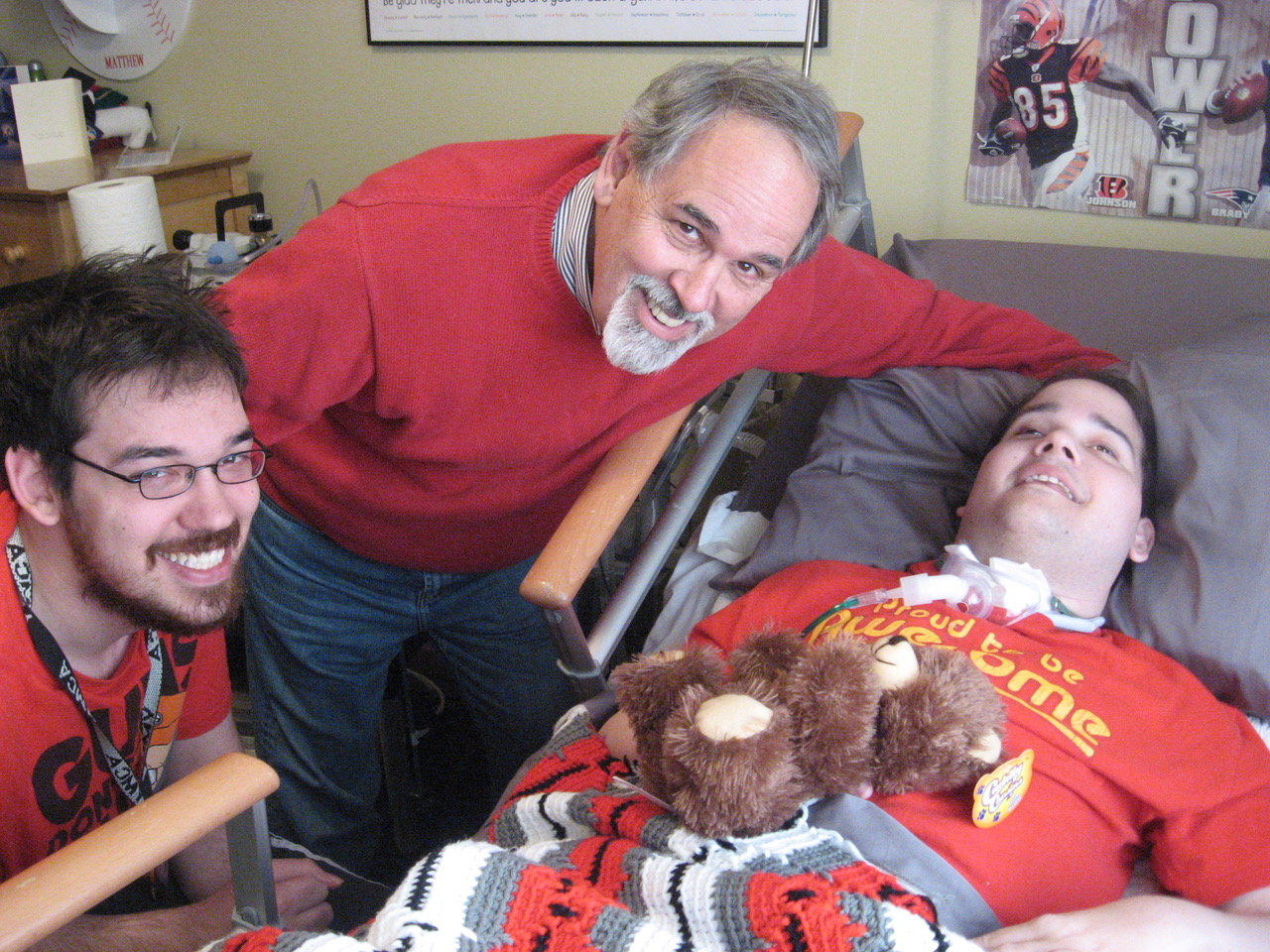
Steve Harris and sons

By

Steve Harris—www.steveharrisauthor.com—recently published “Dads Like Us: A Survival Guide for Fathers Raising a Child with Disabilities.” He lives with his wife, Sue, in Lanesboro, Minnesota. Reach him at steveharrisDLU@gmail.com.

Author Jolene Philo

Archives

Categories

Subscribe for Updates from Jolene

Related Posts

Whole in the Sight of God

Whole in the Sight of God

Whole in the Sight of God

“Whole in the Sight of God” is one of many songs written by musician and today’s guest blogger, Steve Siler. In this post, he explains not only the how and why behind the song’s creation, but also his personal connection to those with disabilities and special needs.

I remember it like it was yesterday.

We all have those memories; those moments in our life where time stood still and everything crystallized. For me it was when the ultrasound technician said, “I hate to be the one to tell you this.”

That was the moment my wife and I discovered that the child she was carrying had something called Spina Bifida. In an instant we were transported into the world of special needs. Issues and concerns that had been virtually invisible to us up to then were suddenly in the forefront of every waking moment.

It’s kind of like when you get a new car. You’ve never realized how many (fill in your model here) there are on the road until you have one. Then suddenly it seems like they’re everywhere.

And those empty handicapped parking spaces in a crowded parking lot that used to be so annoying—well, they don’t seem quite as annoying anymore.

How do You Write a Song for someone with a Disability?

A few days after I learned that my son was going to be born with a chronic condition that would affect his entire life, I did what any songwriter would do.

I went into a writer’s room at Starsong, where I was a staff writer at the time, and processed what I was feeling by writing a song.

To call it a room is being generous. It was more like a converted closet. Monochromatic beige walls and exposed plumbing were the only visual highlights.

Click here to read the rest of Whole in the Sight of God at the Music for the Soul website.

Do you like what you see at DifferentDream.com? You can receive more great content by subscribing to the monthly Different Dream newsletter and signing up for the daily RSS feed delivered to your email.

By

Steve Siler is founder and director of Music for the Soul a multi-award-winning not-for-profit ministry using songs and stories to bring the healing and hope of Jesus to people in deep pain. Siler is a Dove Award winning songwriter, music producer, author, and speaker. He is co-host of the Music for the Soul Podcast: Where Music, Hope, and Healing Come Together! He and his wife Meredith have two children and three grandchildren.

Author Jolene Philo

Archives

Categories

Subscribe for Updates from Jolene

Related Posts

Mending Broken Hearts

Mending Broken Hearts

Mending Broken Hearts

Mending broken hearts is all too familiar to guest blogger Kelly Denham. She and her husband’s hearts are still mending after a medical mistake left their son TJ irrevocably injured and later resulted in the decision she wrote about in today’s post.

On February 26, 2018, my husband and I stood in TJ’s hospital room and watched as nurses removed our 21-year-old son’s life support. As you can imagine, it had been an agonizing decision. Parents are supposed to protect their children and keep them from harm. We were choosing to remove the very thing our son needed to live.

TJ’s injury was caused by a medical mistake. We had spent five years in and out of hospitals and rehab centers, and we had seen too much. We had learned that we couldn’t always trust medical staff. If you followed TJ’s Caring Bridge or read his story in my book, Trapped Within, you know that God, in His goodness, provided a trustworthy Christian doctor, Dr. P, the last few days of TJ’s life to gently guide and walk with us through that hard decision. 

But what many of you don’t know is that after TJ’s death, guilt and doubt began to creep in. Questions like, “Would his condition have improved if we had waited longer?” began to gnaw at my husband and me.

In the spring of the following year, our adopted grandson Aiden had chosen to play soccer. Watching him play sports is one of the joys of my life. On this Saturday morning, I arrived at the field ready to be his cheering squad. As I sat on the sidelines waiting for the game to begin, I looked up and was surprised to see Dr. P walking toward me. His son was on Aiden’s team!

Dr. P sat down beside me. We exchanged pleasantries and visited for a while. Unable to control myself any longer, I quickly blurted out the question I had been wrestling with for a year. “Did we make the right decision, Dr. P? He was going to die, right? I mean, even if we had kept him on life support, he still would’ve died?”

“Yes,” he answered. “He was going to die. You made the right decision.”

I sighed deeply. It felt like a weight had been lifted off my shoulders. Dr. P’s reassurance was exactly what I needed to hear to begin moving forward and enjoy life again.

Some may believe that Aiden and Dr. P’s son being on the same team was just a coincidence. That’s not what I believe. On the contrary, I believe the meeting was a divine appointment orchestrated by God to mend a mother’s broken heart and save her from being crushed in spirit.

What about you? Are you experiencing affliction? The Lord doesn’t promise to prevent His children from suffering. He doesn’t promise to remove affliction while in the midst of it. He doesn’t even promise to prevent the very worst outcome.

What God does promise us though is that He will answer us when we call on Him. He will be with us in trouble, and He will deliver us and honor us.

We are secure in the Lord’s arms, so call upon the Lord, dear weary one. He’s in the business of mending broken hearts. His presence will give you the strength to endure any affliction.

“The Lord is close to the brokenhearted

and saves those who are crushed in spirit.”

Psalm 34:18

“He will call on me, and I will answer him;

I will be with him in trouble.

I will deliver him and honor him.”

Psalm 91:15


In loving memory of TJ Denham

July 16, 1996 – February 27, 2018

Do you like what you see at DifferentDream.com? You can receive more great content by subscribing to the monthly Different Dream newsletter and signing up for the daily RSS feed delivered to your email.

Photo by frank mckenna on Unsplash

By

Kelly Denham lived through unspeakable tragedy by learning to hold fast to God’s promises and find comfort in His unfailing love. She is an author, speaker, and advocate for the voiceless. Kelly has four daughters, one son, and thirteen grandchildren. She lives in Atlanta, Georgia with her husband and their adopted grandson. She also directs the special needs ministry at First Baptist Atlanta.

Author Jolene Philo

Archives

Categories

Subscribe for Updates from Jolene

Related Posts

How to Build a Thriving Marriage as You Care for Children with Special Needs

How to Build a Thriving Marriage as You Care for Children with Special Needs

How to Build a Thriving Marriage as You Care for Children with Special Needs

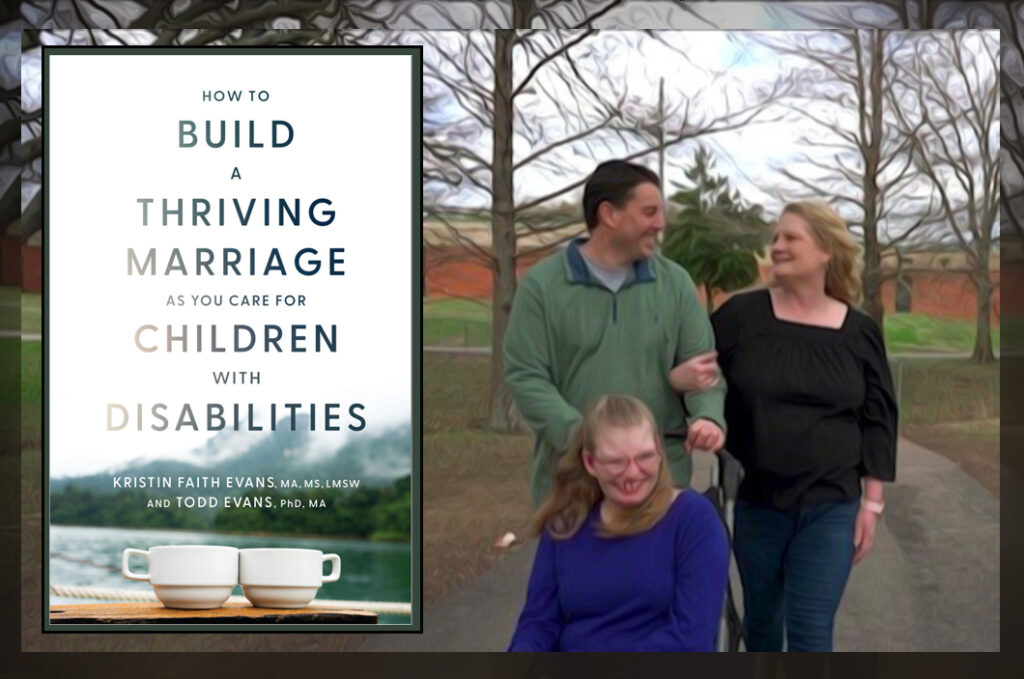
Todd and Kristin Evans know that tending to marriage while raising a child with disabilities can be challenging. About 12 years ago after their medically fragile daughter arrived, they decided to give their marriage one more shot before admitting defeat. In their new book How to Build a Thriving Marriage as You Care for Children with Disabilities, they invite parents to join them on a journey toward wholeness in marriage, parenting, and faith.

Early in our marriage, we discovered building a strong marriage can be difficult. But when our medically complex daughter was born, we began to face even more obstacles to staying connected. We learned the hard way that when special needs parents are not intentional, their marriage may be headed toward disaster. We’re sharing three challenges you may also be experiencing and simple ways you can grow a thriving marriage while parenting your child with special needs.

  1. Commit to a check-in time every day.

As special needs parents, you likely have more to discuss and more serious decisions to make than the average couple. Intense conversations about your child’s needs can easily push out time to engage in more intimate conversations.

Research shows when special needs parents set a consistent ten-minute check-in time every day, their marriages grow stronger. To ensure you have time to connect on a deeper level, agree on a specific time each day that you can set aside all distractions to focus one another. This might be talking on the phone or video chatting over lunch or after the kids are in bed. When you both commit to honoring this time, you will begin to feel more cared for and look forward to those moments. Guard this time and make it a priority.

  1. Regularly manage stress individually and as a couple.

As special needs parents, you likely experience intense daily stress. When your bodies remain in a chronic state of stress, your emotional and mental health can suffer, you can begin to experience physical symptoms, your marriage relationship can become strained, and your physical intimacy may drastically decrease.

In writing our new book, How to Build a Thriving Marriage as You Care for Children with Disabilities (Baker Books), we learned that regularly managing your own stress in healthy ways and supporting your spouse in coping with their stress can greatly improve your marriage. Individually practicing deep breathing, progressive muscle relaxation exercises, and physical activity are very effective ways to reduce your stress levels.

These are some simple ways we destress together that might help you as well:

  • Find a quiet place outdoors to hold hands listening to your surroundings, even if for just five minutes.
  • Go for a walk.
  • Watch a funny show, tickle one another, or swing on a playground.
  • Give your spouse a neck or foot massage.
  • Take a hot, scented bath or shower.
  1. Intentionally build an outside support network.

Caring for your child can easily isolate you and make it difficult to find support and respite. It may feel impossible to find time alone or get out of the house together. Yet, receiving both emotional and practical support can greatly decrease your stress levels and strengthen your marriage. We encourage you to keep searching for different resources. Here are some ideas for finding support:

  • Find local churches with a disability ministry, caregiver support group, or respite program.
  • Contact your state respite coalition
  • Call local college nursing or special education departments for potential caregivers.
  • Talk with other special needs parents about swapping child care

We encourage you to take the first step to strengthening your marriage by choosing one of these ideas and trying it with your spouse today. You’ll find many more ideas in our new book How to Build a Thriving Marriage as You Care for Children with Disabilities, which we hope will help you as well.

Do you like what you see at DifferentDream.com? You can receive more great content by subscribing to the monthly Different Dream newsletter and signing up for the daily RSS feed delivered to your email.

References

Jake Johnson and Fred P. Piercy, “Exploring Partner Intimacy Among Couples Raising Children on the Autism Spectrum: A Grounded Theory Investigation,” Journal of Marital and Family Therapy 43, no. 4 (October 2017): 644-61, https://doi.org/10.1111/jmft.12247.

Linda M. Raffaele Mendez, Karen Berkman, Gary Y. H. Lam, and Charisse Dawkins, “Fostering Resilience Among Couples Coparenting a Young Child with Autism: An Evaluation of Together We are Stronger,” The American Journal of Family Therapy 47, no. 3 (2019): 165-82, doi:https://doi.org/10.1080/01926187.2019.1624225.

By

Kristin Faith Evans, MA, MS, LMSW and Todd Evans, PhD, MA

Dr. Todd and Kristin Evans are award-winning authors, speakers, and parents of two children with complex needs. Their new book, How to Build a Thriving Marriage as You Care for Children with Disabilities releases in May 2024 by Baker Books. They both earned their MA in Christian Formation and Ministries at Wheaton College in Illinois and have served together in full-time ministry in church, camping, and retreat settings. Todd received his PhD from Vanderbilt University’s School of Engineering and currently manages his own business, and Kristin earned her MSW from the University of Tennessee and is a Licensed Master Social Worker experienced in couples, child and family, substance abuse, and crisis counseling. Connect with Todd and Kristin and learn more about their ministry and free resources at www.DisabilityParenting.com.

Author Jolene Philo

Archives

Categories

Subscribe for Updates from Jolene

Related Posts

When Parents of Kids with Disabilities Get Ahead of Themselves

When Parents of Kids with Disabilities Get Ahead of Themselves

When Parents of Kids with Disabilities Get Ahead of Themselves

When parents of kids with disabilities get ahead of themselves—and let me be clear, I’m speaking from personal experience here—they remind me of Jodi, a kindergartener I taught long, long ago. 

She was the daughter of a family friend, and I’d known her since she was three. She was a bright, curious, articulate, organized, and driven preschooler. Before she set foot in my classroom, I knew she would be hard to keep up with once she got there.

The first day of school, I showed Jodi where to put her lunch box and tried to lead her into the classroom. She planted her little feet and looked me in the eye.

“What happens first today?” she asked.

“You put your school supplies in your desk.” I replied.

“Then what?”

“We’ll say the pledge.”

She waved my answer away. “No, not that. What are we learning first?”

“Oh,” I said. “Reading.”

“What happens during reading?”

I gave her my Cliff Notes version after which she asked, “Then what?”

“Recess,” I said.

“And after that?”

“Math.”

“What’s math?”At this point I put a stop to her grilling by saying, “Jodi, you’re getting ahead of yourself. You need to trust me to explain what comes next when the time is right. Now find your desk and unpack your school supplies.”

Grim-faced, she went to her desk and did as I’d asked. By the end of the day, she had experienced everything she’d wanted to know before school began. Her parents later told me she had an emotional meltdown after school and fell asleep during supper. Which goes to show that bright, curious, articulate, organized, and driven five-year-olds are still just five years old.

A few years later, our son was born and diagnosed with EA/TEF. Immediately after receiving the diagnosis, I prayed, “God,” I asked, “what happens next?”

He answered when the diagnosing doctor said our son should be life-flighted to a university hospital almost a thousand miles away for immediate surgery. In the intervening two days, I aimed a barrage of questions at God.

Click here to read the rest of When Parents of Kids with Disabilities Get Ahead of Themselves at the Key Ministry blog for parents.

Do you like what you see at DifferentDream.com? You can receive more great content by subscribing to the monthly Different Dream newsletter and signing up for the daily RSS feed delivered to your email.

Photo by Edi Libedinsky on Unsplash

By

Jolene Philo is the author of several books for the caregiving community. She speaks at parenting and special needs conferences around the country. Sharing Love Abundantly With Special Needs Families: The 5 Love Languages® for Parents Raising Children with Disabilities, which she co-authored with Dr. Gary Chapman, was released in August of 2019 and is available at local bookstores, their bookstore website, and Amazon. See Jane Dance!, the third book in the West River cozy mystery series, which features characters affected by disability, was released in October of 2023.

Author Jolene Philo

Archives

Categories

Subscribe for Updates from Jolene

Related Posts