Winter Fun Tips for Kids with Special Needs

Winter Fun Tips for Kids with Special Needs

Winter Fun Tips for Kids with Special Needs

Winter + snow = fun for kids. And this winter, guest blogger Kimberly Drew has four tips for parents who want their kids with special needs to experience winter. She uses the four tips below to make cold weather more tolerable for Abigail, her daughter who lives with cerebral palsy, a seizure disorder, hearing loss, microcephaly, and oral dysphagia.

4 Winter Fun Trips for Kids with Special Needs

There’s something almost Norman Rockwell-ish (oh yes, that’s a word…I promise…I think) about seeing your kids all bundled up outside in snow gear and carelessly immersing themselves in the snow. I love it. I love the laughing, the running, the playing, and the snowball fights. I don’t even mind the clean-up.  Getting everyone dry, warm, and with a cup of hot chocolate brings back memories of my childhood and my mom that truly fill my heart.

These last couple of winters, I’ve been making more of an effort to give our daughter with multiple disabilities those same kinds of moments. I have very methodically chosen the word moments here because for Abbey, a few moments of freezing temperatures are all her body can handle. I know you love your child with disabilities as much as I love mine, and so you totally get this. It’s worth it! I know it seems like a lot of trouble to get your child completely bundled up for just a few minutes, but the joy that it brings them makes it worth all the effort. I’d like to give you a few thoughts on making moments with your child this winter.

  1. Appropriate Winter Gear. To start with, make sure you have the appropriate weather gear for your child. If you don’t have an older child for hand-me downs, check out your local consignment shop. I consider it a great investment, because I keep them in the trunk of my car all winter. In the case of an accident or car trouble, I know I have winter gear to keep Abbey safe and warm while we wait for help. I buy boys’ gear so that my younger ones will get use of them when she grows out of them. If you don’t have younger ones, you can take them back to the consignment shop where you got them, or pass them onto a friend.
  2. Get Out Your Camera. Once you have appropriate weather gear, get out your camera! Even though Abbey’s all bundled up and tends to look away from the camera, going back through those photos with her is a lot of fun. It’s good for me too…to see her doing what all the other kids do. I know it was only for a few moments, but we’re saving the photos for a lifetime of enjoyment.
  3. Make Simple Adaptations. Now that you’re bundled and camera ready, it’s time to play! We bring a towel outside and fold it into quarters for Abbey to sit on as an extra barrier between her knees and the snow. Don’t feel you’re confined to the usual sled and snowman…Abbey loves to swing, and so we put her on her swing. We also save the short sled ride for the end since bringing her up the hill is a killer!
  4. Remember the Hot Chocolate: If at all possible, never, EVER, leave out the “hot” chocolate. Abbey gets hers in a mug like her brother only it’s extra cool and comes with her straw. She loves it!

Don’t get snowed in this winter! Make the most of your moments.

Winter Fun at Your House

What tips would you add to Kimberly’s list? What activities make winter fun for your child with special needs? Leave a comment.

Do you like what you see at DifferentDream.com? You can receive more great content by subscribing to the quarterly Different Dream newsletter and signing up for the daily RSS feed delivered to your email inbox. You can sign up for the first in the pop up box and the second at the bottom of this page.
By

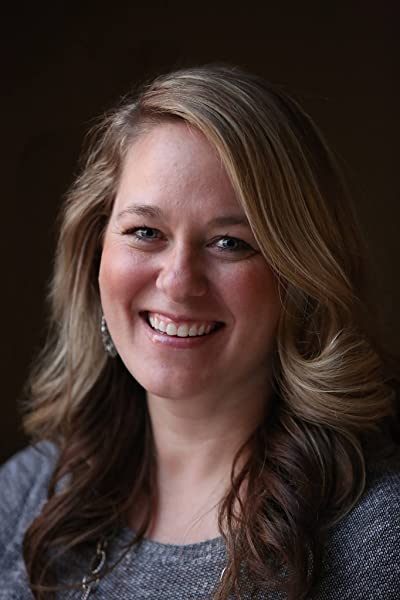
Kimberly grew up and went to college in the small town of Upland, IN. She graduated from Taylor University with a degree in Elementary Education in 2002. While at TU, she married her college sweetheart and so began their adventure! Ryan and Kimberly have four amazing kids on earth (Abigail, Jayden, Ellie, and Cooper), and a baby boy waiting for them in heaven. Their daughter Abigail (Abbey) has multiple disabilities including cerebral palsy, a seizure disorder, hearing loss, microcephaly, and oral dysphagia. She is the inspiration behind Kimberly’s desire to write. In addition to being a stay-at-home mom, Kimberly has been serving alongside her husband in full time youth ministry for almost fourteen years. She enjoys working with the senior high girls, scrapbooking, reading, and music. You can visit Kimberly at her website, Promises and Perspective.

Author Jolene Philo
Archives

Categories

Subscribe for Updates from Jolene

Related Posts
Parenting Stepchildren with Special Needs

Parenting Stepchildren with Special Needs

Parenting Stepchildren with Special Needs

Parenting stepchildren isn’t easy. Stepparents have been getting a bad rap since Cinderella’s story first hit the press. But Donna Thompson’s post at her blog The Caregiver’s Living Room shines a different light on the subject of parenting stepchildren with special needs.

Parenting Stepchildren Interview

In her post Caring for Step-Children, Donna shares a stepparent interview first published at BLOOM, an online magazine for special needs families. (BLOOM is published in Canada, and it’s worth a look. It’s loaded with resources and a variety of perspectives about parenting kids with special needs.) In the interview, Louise Kinross, the creator of BLOOM, talks with Canadian Olympic rower, Silken Laumann.

Silken Laumann Parenting Experience

In the interview, Silken talks about her own blended family. The family includes her husband’s daughter Kilee, who experiences autism and sometimes displays challenging behaviors. She is very transparent about the challenges of being Kilee’s stepparent. In the interview, she identifies the challenges of the first few months of the transition, how her discipline strategies had to change, how they avoided making family life all about Kilee, how she’s come to see beyond her stepdaughter’s special needs, and how she’s learned to slow down and see more positives in everyday life.

The entire interview is worth a read at Caring for Step-Children. While you’re at Donna’s site, take a look around. She addresses many aspects of caregiving in her different posts—thought-provoking stuff.

What Parenting Challenges Have You Experienced?

What about you readers who are stepparents to children with special needs? What are your greatest challenges? How do you deal with them? What supports would make life easier?

On the other hand, what joys are part of your parenting experience? What have you learned from your stepchild? How has your perception of kids with special needs changed? Your comments and stories can help people understand how to help and encourage you. Thanks in advance!

Do you like what you see at DifferentDream.com? You can receive more great content by subscribing to the quarterly Different Dream newsletter and signing up for the daily RSS feed delivered to your email inbox. You can sign up for the first in the pop-up box and the second at the bottom of this page.

By

Jolene Philo is the author of several books for the caregiving community. She speaks at parenting and special needs conferences around the country. Sharing Love Abundantly With Special Needs Families: The 5 Love Languages® for Parents Raising Children with Disabilities, which she co-authored with Dr. Gary Chapman, was released in August of 2019 and is available at local bookstores, their bookstore website, and Amazon. See Jane Dance!, the third book in the West River cozy mystery series, which features characters affected by disability, was released in October of 2023.

Author Jolene Philo

Archives

Categories

Subscribe for Updates from Jolene

Related Posts

5 Digital Tools for Children with Special Needs

5 Digital Tools for Children with Special Needs

5 Digital Tools for Children with Special Needs

Digital tools and apps are exploding all over the electronic world. A post at Reading Rockets, an organization dedicated to teaching young children to read and supporting struggling readers, recommended 5 websites with digital tools for children with special needs that improve their reading skills.

Digital Tools Incorporate Universal Design for Learning Principles

The recommended websites incorporate Universal Design for Learning (UDL) principles. The post says that UDL principles create “learning environments that meet the needs of all types of learners—closed captioning for the hearing impaired, read-aloud capabilities for the visually impaired, for example.”

Why is universal design important to kids struggling with reading? According to the post, “children benefit enormously from the types of learning experiences that engage them on a variety of levels such as: seeing, hearing, speaking, singing, and movement.”

5 Websites with Digital Tools for Children with Special Needs

  1. UDL Tech Toolkit Wiki is packed with learning tools to aid children with handwriting issues.
  2. CAST’s UDL Book Builder helps children create and publish their own books, and it reads them back!
  3. Signed Stories allows visitors to view stories told in sign language, with subtitles and an audio option.
  4. The Mother Goose Book Club features children’s nursery rhymes sung aloud by fun characters.
  5. TapToTalk is a free app for kids with limited speech capabilities. It’s featured at Common Sense Media website.

What Digital Tools and Websites Do You Recommend?

These 5 resources are excellent, but there must be others on the web. What digital tools and websites have you and your children discovered to help them learn to read? Leave a comment to share them with the rest of us, whether or not they follow universal design for learning principles.

Do you like what you see at DifferentDream.com? You can receive more great content by subscribing to the quarterly Different Dream newsletter and signing up for the daily RSS feed delivered to your email inbox. You can sign up for the first in the pop-up box and the second at the bottom of this page.

By

Jolene Philo is the author of several books for the caregiving community. She speaks at parenting and special needs conferences around the country. Sharing Love Abundantly With Special Needs Families: The 5 Love Languages® for Parents Raising Children with Disabilities, which she co-authored with Dr. Gary Chapman, was released in August of 2019 and is available at local bookstores, their bookstore website, and Amazon. See Jane Dance!, the third book in the West River cozy mystery series, which features characters affected by disability, was released in October of 2023.

Author Jolene Philo

Archives

Categories

Subscribe for Updates from Jolene

Related Posts

Alphabet Soup Is Hard to Swallow

Alphabet Soup Is Hard to Swallow

Alphabet Soup Is Hard to Swallow

EA/TEF Makes Everything Hard to Swallow

Alphabet soup isn’t hard to swallow. Not for most people anyway. But when a pediatrician says your newborn baby has esophageal atresia and tracheoesophageal fistula (EA/TEF), the diagnosis is a hard one for parents to digest. And for the baby, this particular alphabet soup can be deadly.

Alphabet Soup: EA/TEF Style

My husband and I learned of our son’s diagnosis about seven hours after he was born in 1982. From the outside our baby appeared to be perfectly formed. But the doctor explained he had what was then called a tracheoesophageal fistula (now esophageal atresia is added at the front). “We call it TEF for short,” the doctor explained. “The top of his esophagus comes down from his throat and forms a blind pouch. The bottom comes up from his stomach and hooks into his trachea.”

The doctor explained that the diagnosis was fatal but could be corrected with immediate surgery. So our ten-hour-old baby was life-flighted to a hospital 730 miles for surgery. He wasn’t even a day old when the pediatric surgeon called to report that the operation was a success, and our baby was doing well.

Alphabet Soup: Murphy’s Law Style

For three years after our son’s birth, he was a Murphy’s Law kind of kid. If any post-op complication could happen, it did. If any bad virus was going around, he got it. If a reason to throw up could be found, he found it. Our lives were a blur of doctor’s appointments, hospital tests, surgeries, sleep deprivation. The experience was isolating. The sense of isolation haunted me for years, long after the corrective surgeries ended, and our little boy became a healthy child and then a healthy teen.

To read the rest of this post, please go to the Not Alone website.

Do you like what you see at DifferentDream.com? You can receive more great content by subscribing to the quarterly Different Dream newsletter and signing up for the daily RSS feed delivered to your email inbox. You can sign up for the first in the pop-up box and the second at the bottom of this page.


By

Jolene Philo is the author of several books for the caregiving community. She speaks at parenting and special needs conferences around the country. Sharing Love Abundantly With Special Needs Families: The 5 Love Languages® for Parents Raising Children with Disabilities, which she co-authored with Dr. Gary Chapman, was released in August of 2019 and is available at local bookstores, their bookstore website, and Amazon. See Jane Dance!, the third book in the West River cozy mystery series, which features characters affected by disability, was released in October of 2023.

Author Jolene Philo

Archives

Categories

Subscribe for Updates from Jolene

Related Posts

Safe Harbor for Special Needs Parents

Safe Harbor for Special Needs Parents

Safe Harbor for Special Needs Parents

Safe harbor can be a hard place to find for parents raising kids with special needs. In the poem below, guest blogger Stephanie Ballard describes her search for safety and her gratitude for what she learned along the way.

In Need of Safe Harbor

I sat on a hill looking out at the endless blue waves on a recent trip to Lake Michigan. I wondered where the water met its end. “I cannot remember the last time I had quiet time to myself to simply think,” I told my friend while rubbing my hands over the silky white sand. I feel at peace here, watching the waves roll in with a steady assurance. Life has changed since my son Braeden was born with multiple health issues. Sometimes I am so tired that I wonder where I will continue to get strength for the battles that lie ahead. I can only hope that my source of comfort and hope is as endless as the water that helped to ease my fears and uncertainties that day. Either way…I am forever changed since he came into my life. I am also surprisingly grateful.

Safe Harbor

What happened to that woman,
Carefree and naïve?
Who said good things will always come,
To those that just believe.
Her quiet…calm assurance,
Left no room for defeat,
With faith that was unwavering,
Endless and complete.
Providence had given her,
The strength to face a trial,
She faced each day with courage,
Taking time to stop and smile.

And then the storm clouds hovered,
The thunder rolled her way,
Adversity had found her,
The billowing clouds turned to grey.
A few brief words would bring the news,
No one should have to hear,
Something was wrong with her child,
Can there be a greater fear?

The lightning flashed,
The storm grew strong,
The walls began to shake,
“Oh Lord,” she said, “this storm’s too strong;
I believe my heart might break.”
The rain poured down on window sills,
Branches swayed like a sailor at sea,
The woman held her child close,
Saying, “Please do not take him from me.”
Some wondered if her faith was weak,
While some said, “keep believing.”
But people don’t always have answers,
And some words aren’t worth receiving.
And then she heard a whisper,
As the whipping winds seemed to demand,
The faith that she barely clutched onto,
This was NOT the life she had planned!
“My child I know of your heartache,
For this storm has been fierce and demanding,
You wonder if you have any strength left at all,
But do you not see…you’re still standing?
I didn’t expect your unwavering strength,
For I know that you don’t understand,
I just ask for an arm held high;
Please reach out for my hand!”
People will say many things,
(As people are so prone)
But any storm you face in life,
“You’ll never face alone”.

What happened to that woman?
Who stood against the storm?
While wind, and rain, raged harsh and long,
Against her fragile form,
What happened to that woman?
With little left to give?
God opened up her heart one day,
And taught her how to live.

~Stephanie Ballard

What’s Your Safe Harbor?

Have you found your way to safe harbor? Are you still looking? Leave a comment about your search.

If you enjoyed Steph’s poem, you might like some of her other guest posts: Teachers in Room 16, Thank You! and How I’d Like to Write Your Story.

Do you like what you see at DifferentDream.com? You can receive more great content by subscribing to the quarterly Different Dream newsletter and signing up for the daily RSS feed delivered to your email inbox. You can sign up for the first in the pop up box and the second at the bottom of this page.


By

Stephanie Ballard is the mother of two sons, her youngest son, Braeden, was born with Kabuki Syndrome and congenital heart defects. Her oldest son, Colin is in the military. She enjoys writing poetry and life lessons about her journey in life.

Author Jolene Philo

Archives

Categories

Subscribe for Updates from Jolene

Related Posts

Free Font for People with Dyslexia

Free Font for People with Dyslexia

Free Font for People with Dyslexia

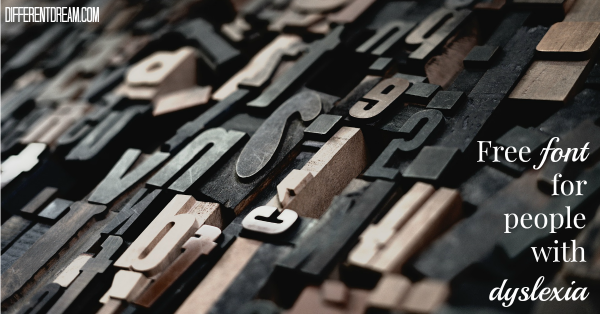
Dyslexia is a developmental reading disorder that occurs when the brain doesn’t recognize and process certain symbols. I taught many children with dyslexia, and they worked hard to make sense of letters that seemed to float off the page as they read. I constantly searched for tools and strategies to support their determined efforts to master written language.

Dyslexia Free Font

Donna Thomson, who blogs at The Caregiver’s Livingroom, recently provided a link to a free downloadable font for people with dyslexia. It’s registered with Creative Commons, which means that “as long as you visibly give credit, you can use this on your ebook, ebook reader, actual physical books, web sites” and so on.

The link at dafont.com has examples of the font in regular, bold, italic, and italic-bold print. In addition to the upper and lower case alphabet, the creator made weighted versions of a large variety of symbols. There’s also quiet a collection of letters with accent marks for foreign languages or perhaps phonetic symbols…I’m not sure which since my last brush with either category was way back in college.

Dyslexia Weighted Font

How does the font help people with dyslexia? According to the note from the author, it’s a “font created to help dyslexic readers. Bottom heavy and unique character shapes help prevent letters and numbers from being confused.” It makes sense that weighting would help anchor letters in place for readers with dyslexia, but the site contained no studies about its effectiveness. But since the font is a free download, it’s certainly worth a try.

Dyslexia and You

Do you have a child with dyslexia? What strategies and tools make a difference for your child? Or are you dyslexic? If so, how do you cope with your condition? What helped you learn to read when you were young? Leave a comment to share your story and resources. Thanks.

photo credit: www.freedigitalphotos.net

Do you like what you see at DifferentDream.com? You can receive more great content by subscribing to the quarterly Different Dream newsletter and signing up for the daily RSS feed delivered to your email inbox. You can sign up for the first in the pop-up box and the second at the bottom of this page.

By

Jolene Philo is the author of several books for the caregiving community. She speaks at parenting and special needs conferences around the country. Sharing Love Abundantly With Special Needs Families: The 5 Love Languages® for Parents Raising Children with Disabilities, which she co-authored with Dr. Gary Chapman, was released in August of 2019 and is available at local bookstores, their bookstore website, and Amazon. See Jane Dance!, the third book in the West River cozy mystery series, which features characters affected by disability, was released in October of 2023.

Author Jolene Philo

Archives

Categories

Subscribe for Updates from Jolene

Related Posts