Top 10 Reasons I Love Being a Special Needs Parent

Top 10 Reasons I Love Being a Special Needs Parent

Top 10 Reasons I Love Being a Special Needs Parent

Special needs parenting has its positives and negatives. In her last post, guest blogger Ellen Stumbo talked about the challenges that are part of parenting a child with special needs. Today she’s back to share what she loves about being the parent of her daughters, Nina who has cerebral palsy and Nicole who lives with Down syndrome.

Top Ten Reasons I Love Being a Special Needs Parent

I love being a special needs parent. Oh, it has been hard, and there have been challenges, but I love my children and I have learned invaluable lessons along the way. These truths have changed me, and I am thankful for the changes. So here are the top ten reasons I love being a special needs parent.

  1. Giving and receiving pure, strong, real unconditional love, with no strings attached.
  2. Knowing that who we are not doesn’t matter, it only matters that we are.
  3. Understanding that success is not found in outward performance, but in accomplishing even the small tasks.
  4. Learning every day what really matters in life, what it means to be human, what it means to be loved and accepted simply for being.
  5. Getting to witness the determination to reach new milestones, and the effort, strength, and grit it requires.
  6. Courage is part of my life as I watch my children with special needs face their challenges head-on.
  7. The extra measure of joy I live with as my children teach me how to celebrate life.
  8. I have become a person with more compassion, acceptance, and humility.
  9. My view of brokenness has changed, and I am more aware of the emotional and spiritual brokenness we all experience.
  10. I have met some of the finest people because of my children. They have become my closest friends, my confidants. When people say, “Special needs parents are special people,” I agree, they are remarkable. Their children have made them remarkable.

What Would You Add to the List?

If you would like to add to Ellen’s list, leave your suggestions in the comment box below.

Do you like what you see at DifferentDream.com? You can receive more great content by subscribing to the quarterly Different Dream newsletter and signing up for the daily RSS feed delivered to your email inbox. You can sign up for the first in the pop-up box and the second at the bottom of this page.

www.freedigitalphotos.net

By

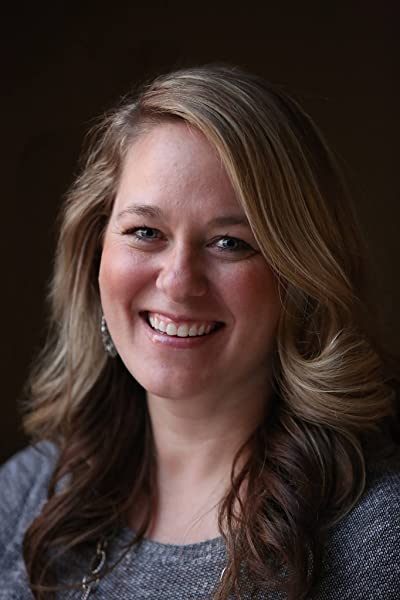
Ellen Stumbo is a writer and speaker and the mother of three girls, two with disabilities. To read more of Ellen’s writing, visit her blog at www.EllenStumbo.com.  She can also be found on Twitter and Facebook.

Author Jolene Philo

Archives

Categories

Subscribe for Updates from Jolene

Related Posts
7 Communication Skill Development Tips for Non-Verbal Kids

7 Communication Skill Development Tips for Non-Verbal Kids

7 Communication Skill Development Tips for Non-Verbal Kids

Communication skills. How can parents encourage them in kids with special needs who are non-verbal? A post at Austisable offers answers for parents asking that question.

Communication Skill Development Ideas for Parents

The folks at Autisable asked speech experts to share their best tips for parents, and they came up with these seven suggestions. Although they are made with an eye towards kids with autism, they have value for kids with a variety of special needs.

  1. Encourage play and social interaction. Try different games to find ones your child enjoys, playful activities that promote social interaction. Sit in front of your child and close to eye level so your child to see and hear you.
  2. Imitate your child. Mimicking your child encourages vocalization and interaction. Also imitate how your child is playing, but only if the behavior is positive!
  3. Focus on nonverbal communication. Gestures and eye contact build a foundation for language. So use your body and your face when talking and exaggerate your gestures. Also, respond to your child’s gestures.
  4. Leave “space” for your child to talk. When your child doesn’t answer immediately, don’t fill the silence with talk. Instead wait (teachers call this wait time) for your child to compose thoughts and answer. Respond promptly when she speaks, including a response to their gestures and body movement.
  5. Simplify your language. This makes it easier for your child to understand and to imitate your speech. Try using phrases with one more word than your child uses.
  6. Follow your child’s interests. Narrate what your child is doing using simple language. Talking about what your child enjoys helps her develop vocabulary in that area.
  7. Consider assistive devices and visual supports. Assistive technologies and visual supports can foster speech development rather than replace it. Look for apps and devices with lots of visual supports.

Communication Skill Development Ideas You Like

How do you encourage communication for your child? What strategies have you discovered on your own or learned from speech therapists? Leave a comment.

Do you like what you see at DifferentDream.com? You can receive more great content by subscribing to the quarterly Different Dream newsletter and signing up for the daily RSS feed delivered to your email inbox. You can sign up for the first in the pop-up box and the second at the bottom of this page.

Photo credit: www.freedigitalphotos.net

By

Jolene Philo is the author of several books for the caregiving community. She speaks at parenting and special needs conferences around the country. Sharing Love Abundantly With Special Needs Families: The 5 Love Languages® for Parents Raising Children with Disabilities, which she co-authored with Dr. Gary Chapman, was released in August of 2019 and is available at local bookstores, their bookstore website, and Amazon. See Jane Sing!, the second book in the West River cozy mystery series, which features characters affected by disability, was released in November of 2022.

Author Jolene Philo

Archives

Categories

Subscribe for Updates from Jolene

Related Posts

Have Allergies, Will Travel: 10 Ways to Make It Easier

Have Allergies, Will Travel: 10 Ways to Make It Easier

Have Allergies, Will Travel: 10 Ways to Make It Easier

Our son had been in NICU only a few days when we began to suspect he was allergic to milk. What led to the suspicion? Whenever the breast milk I’d pumped had to be supplemented with formula, his breathing grew wheezy, he ran a fever, and was fussy. The trend continued—not an easy one to resolve during the early months when he was tube fed and my breast milk was a precious commodity—for years.

When he was 1, we found a soy formula he could tolerate so I could stop pumping. (My husband rolled his eyes as I danced around the room saying, “Free at last! I’m free at last!” on that great day.) By age 2, we discovered a formula for toddlers that didn’t upset his digestive system. Eventually, he transitioned to condensed milk, and by the time he started kindergarten, he was able to drink milk from a carton.

Food Allergies and Travel Challenges

Travel in the years before he outgrew the allergy was, to put it mildly, a challenge. We traveled a lot back then, mostly to doctor appointments far, far away. (That’s what happens when you live in a remote area more than 120 miles from the nearest regional hospital and 750 miles from the nearest children’s hospital.) Over the years, I learned some tricks to make travel easier. Tricks I resurrected a year and a half ago when I was diagnosed with a dairy allergy. Yup, like son, like mother.

With food allergies becoming increasingly common in kids with special needs, more parents have to travel with kids. Whether the allergy is gluten, casein, dairy, eggs, nuts, or corn, these tricks, which worked for my son in the olden days and for me these days, can make travel easier for other families, too.

To read the rest of this article, go to the Not Alone website.

Do you like what you see at DifferentDream.com? You can receive more great content by subscribing to the quarterly Different Dream newsletter and signing up for the daily RSS feed delivered to your email inbox. You can sign up for the first in the pop-up box and the second at the bottom of this page.

Photo credit: www.freedigitalphotos.net

By

Jolene Philo is the author of several books for the caregiving community. She speaks at parenting and special needs conferences around the country. Sharing Love Abundantly With Special Needs Families: The 5 Love Languages® for Parents Raising Children with Disabilities, which she co-authored with Dr. Gary Chapman, was released in August of 2019 and is available at local bookstores, their bookstore website, and Amazon. See Jane Sing!, the second book in the West River cozy mystery series, which features characters affected by disability, was released in November of 2022.

Author Jolene Philo

Archives

Categories

Subscribe for Updates from Jolene

Related Posts

Back to School, Coffee, and a Little Nostalgia

Back to School, Coffee, and a Little Nostalgia

Back to School, Coffee, and a Little Nostalgia

Back to school days are almost upon us as August fades into September. Guest blogger Kimberly Drew loved going back to school when she was a kid. But now that she’s mom to a child with special needs, she’s learned how to help her daughter, Abbey, transition back to school. Maybe her ideas will make life easier at your house, too.

Back to School, Coffee, and a Little Nostalgia

I don’t know about you, by my calendar beings in September with the beginning of a new school year. There’s this scene in the movie You’ve Got Mail where they talk about a bouquet of perfectly sharpened pencils. I love that scene because I adore new school supplies! There’s a chance it’s completely psychological, but I think a backpack full of them has a very particular smell to it. I absolutely love it and it takes me back to an easier time of life.

Back to School for Me

My mom always took first day of school photos on the front step, and then we were off. My biggest fear back then was whether or not my little sister and I could run across the field fast enough to catch the bus—proof that we have been chronically, almost-running-late since we were kids! If I close my eyes, I can see my sister’s waist-long braids flapping around, and it makes me laugh.

Back to School for My Daughter

The first couple of months of school for children with disabilities might not come with as much enthusiasm and excitement as it did for me as a child. There are new classrooms, new classmates, different seating arrangements, and classroom décor. The work and routine are dependent on the teaching style of your classroom teacher and the grade level your child is in. The hype is quickly overshadowed by all the specific challenges that our kids have to deal with.

Back to School Routine

Still, there are always ways to take the edge off. I know I’ve said it before, and I will probably mention it a hundred more times. There is nothing more soothing for your child than to wake up to, come home to, and go to bed to than ROUTINE, ROUTINE, ROUTINE. Their brains are working so hard to process sensory information all day long, control impulses, and maintain attention spans. The established routine gives their brain a break from it all. The predictability of routine gives them a sense of security and peace of mind.

Back to School Breaks for Kids

With all of that said, be assured that I’m not suggesting you color block every fifteen minutes of your child’s day, because they WILL become addicted to whatever routine you establish. You need to have blocks of time where there is nothing that’s expected so that you have the freedom to run to the store unexpectedly, take a phone call, or just plain live a semi-normal life. But I am saying that your child will greatly benefit from established routines. All of our kids do, even if they don’t have a disability.

Back to School Breaks for Parents

At almost 34 years of age, I find my new favorite first day of school tradition is being the one taking the pictures on the front step. When the bus pulls away I make a cup of coffee that I actually get to drink hot instead of re-warmed in the microwave. I sit back and think about my old bus stop, my little sister, and pray for all of my kids to have as great a childhood school experience as I did.

Your Back to School Experience?

How do you respond to sending the kids back to school? How do your kids respond? What do you do to make the transition easier for all of you? Leave a comment in the box below.

Do you like what you see at DifferentDream.com? You can receive more great content by subscribing to the quarterly Different Dream newsletter and signing up for the daily RSS feed delivered to your email inbox. You can sign up for the first in the pop-up box and the second at the bottom of this page.

Photo credit: www.freedigitalphotos.net

By

Kimberly grew up and went to college in the small town of Upland, IN. She graduated from Taylor University with a degree in Elementary Education in 2002. While at TU, she married her college sweetheart and so began their adventure! Ryan and Kimberly have four amazing kids on earth (Abigail, Jayden, Ellie, and Cooper), and a baby boy waiting for them in heaven. Their daughter Abigail (Abbey) has multiple disabilities including cerebral palsy, a seizure disorder, hearing loss, microcephaly, and oral dysphagia. She is the inspiration behind Kimberly’s desire to write. In addition to being a stay-at-home mom, Kimberly has been serving alongside her husband in full time youth ministry for almost fourteen years. She enjoys working with the senior high girls, scrapbooking, reading, and music. You can visit Kimberly at her website, Promises and Perspective.

Author Jolene Philo

Archives

Categories

Subscribe for Updates from Jolene

Related Posts

Special Needs Grocery Shopping & Delivery Service

Special Needs Grocery Shopping & Delivery Service

Special Needs Grocery Shopping & Delivery Service

A grocery shopping and delivery service for special needs families. Talk about an example of identifying a need and filling it in the Chicago area. But wait, there’s more!

Grocery Delivery Done by Young Man with Special Needs

The young man who delivers the groceries also lives with his own special needs. He experiences autism, and his mother came up with the idea of creating the grocery shopping service to provide meaningful work in line with his abilities and interests.

Special Needs Home Run

This story is one of those where a picture video is worth a thousand words, so here it is:

Thanks to the Chicago Tribune for the video record of this ultimate example of a win, win in the special needs community.

Other Special Needs Services or Employment Opportunities?

Do you know of other “homegrown” services for families caring for loved ones with special needs? Or of innovative employment opportunities for adults with special needs? Give them a shout out in the comment box below.

Do you like what you see at DifferentDream.com? You can receive more great content by subscribing to the quarterly Different Dream newsletter and signing up for the daily RSS feed delivered to your email inbox. You can sign up for the first in the pop-up box and the second at the bottom of this page.

Photo credit: www.freedigitalphotos.net

By

Jolene Philo is the author of several books for the caregiving community. She speaks at parenting and special needs conferences around the country. Sharing Love Abundantly With Special Needs Families: The 5 Love Languages® for Parents Raising Children with Disabilities, which she co-authored with Dr. Gary Chapman, was released in August of 2019 and is available at local bookstores, their bookstore website, and Amazon. See Jane Sing!, the second book in the West River cozy mystery series, which features characters affected by disability, was released in November of 2022.

Author Jolene Philo

Archives

Categories

Subscribe for Updates from Jolene

Related Posts

Self-Advocacy for Kids with Special Needs

Self-Advocacy for Kids with Special Needs

Self-Advocacy for Kids with Special Needs

Self-advocacy in kids with special needs is a skill parents need to foster. But we often overlook doing so for several reasons. We’re in the habit of advocating for them. Our identity is wrapped up in our advocacy efforts and it’s hard to release that bit of ourselves. We’re worried they won’t be able to advocate effectively on their own.

Self-Advocacy: How to Teach It to Kids

An article at Chicago Parent by Liz DeCarlo addresses the issue head on. She interviewed Leanne Roth, director of employment and advocacy for SouthStar who said, “It gives them the power to have some control over their lives, with support and to the best of their ability….Everyone involved has grown more independent and that’s because of what we do in self-advocacy.”

Self-Advocacy: 5 Tips to Foster It In Children with Special Needs

Roth offers these 5 tips to foster self-advocacy in kids with special needs:

  1. Listen to your kids when they tell you what they want to do.
  2. Ask why your child wants to do what he or she wants to do.
  3. Give them responsibility. Ask questions like “How can I help you” and “What are you doing about this?” instead of automatically taking over and doing things for them.
  4. Start small. Gradually release responsibility to them instead of all at once.
  5. Be prepared for bumps. Realize that everything won’t work perfectly the first time. Be ready to try it again.

To read the entire article which provides a lot of practical examples and advice, go to Teaching Kids with Special Needs to Self-Advocate.

How Do You Foster Self-Advocacy in Your Kids?

Are you teaching your child to self-advocate? Do you have more tips than those listed above? Leave a comment to share your good ideas with the rest of us.

Do you like what you see at DifferentDream.com? You can receive more great content by subscribing to the quarterly Different Dream newsletter and signing up for the daily RSS feed delivered to your email inbox. You can sign up for the first in the pop-up box and the second at the bottom of this page.

Photo Credit: www.freedigitalphotos.net

By

Jolene Philo is the author of several books for the caregiving community. She speaks at parenting and special needs conferences around the country. Sharing Love Abundantly With Special Needs Families: The 5 Love Languages® for Parents Raising Children with Disabilities, which she co-authored with Dr. Gary Chapman, was released in August of 2019 and is available at local bookstores, their bookstore website, and Amazon. See Jane Sing!, the second book in the West River cozy mystery series, which features characters affected by disability, was released in November of 2022.

Author Jolene Philo

Archives

Categories

Subscribe for Updates from Jolene

Related Posts