The Spiritual Art of Raising Children with Disabilities

The Spiritual Art of Raising Children with Disabilities

The Spiritual Art of Raising Children with Disabilities

Different Dream readers, you’re in for a treat. I’m pleased to welcome Kathleen Bolduc, my friend, fellow Not Alone guest blogger, and author. She’s the mother of a 29-year-old son with autism. She’s also a spiritual director in Oxford, Ohio, and the author of several books on faith and disability. Today is the last day of her blog tour in conjunction with the release of her new book, The Spiritual Art of Raising Children with Disabilities. As part of the tour, Kathleen is sharing an excerpt from the book.

The spiritual art of raising children with disabilities

In the Garden

In simple humility, let our gardener, God, landscape you with the Word,
making a salvation-garden of your life.
James 1:21 (The Message)

This morning I bring my Bible, journal, and cup of tea into the garden. A light mist hangs over the fields across the road, and I am surprised to see tender green shoots of corn forming rows where yesterday there was nothing but dirt. All around me, Dame’s Rocket thrusts purple and white spires toward the skies like holy hands reaching toward heaven. Boxwood shimmers greenly in the breeze, and a yellow weed at the fence line bursts into flame as a sunbeam peeks through the clouds.

The words of Psalm 63, my reading this morning, reverberate through my mind. “O God, thou art my God, I seek thee, my soul thirsts for thee; my flesh faints for thee, as in a dry and weary land where no water is.”

In the sanctuary of this garden the desert landscape of my heart—that dry and dusty place where worry and anxiety about my son, Joel, who has autism, sometimes threaten to overwhelm me—turns to an oasis of green, flowing with streams of living water. Prayer rises up within me as praise.

No wonder poets and songwriters often refer to the garden as a metaphor for prayer.

And yet, gardens are not always lush and beautiful. Think of the garden in the midst of drought. Parched plants wilt. Green leaves turn to brown. What was abounding in exuberance just weeks before suddenly sags under the weight of cloudless skies with no promise of rain in sight. Nothing will revive the drought-stricken garden like a soft, gentle, soaking rain.

It is no different for the gardens of our hearts. Sometimes, in the words of my son Joel at the end of a major melt-down, “We need Jesus!”

As the mother of a son with autism, I was first drawn more deeply into prayer because of an intense thirst for God’s presence. I was desert-thirsty, parched for the living waters Jesus promises in John 4:14: “. . . but whoever drinks of the water that I shall give him will never thirst; the water that I shall give him will become in him a spring of water welling up to eternal life.”

The more I spend time with God the more the garden of my heart blooms with an unquenchable love for the things of the Spirit. I need God’s presence just as my garden needs the rain.

Take some time to be quiet and meet with God. Listen to what rises up from within. Have a conversation with God. You may have questions to ask him. Ask, expecting to receive an answer. Tell Him what’s on your heart. Be honest with Him. Bare your vulnerable places. And then, once you’ve emptied your heart, simply listen. He has much to say to you.

Lord, I thank you and praise you for your living waters.
Open me up, Lord. Open me up to your thirst-quenching presence.
Water me, Lord. Water me.

  • Where do you most often meet God? Nature? Bible study? Service? Worship? Journaling?
  • How might you establish a pattern of going there to pray on a consistent basis?
  • In what way do you most often pray? Do you feel “pot-bound”? Might God be calling you to a new prayer avenue?
  • What kind of prayer will help you more often to be aware of Jesus’ presence with you?

Excerpted from The Spiritual Art of Raising Children with Disabilities (Judson Press, 2014)
Used with permission.

Do you like what you see at DifferentDream.com? You can receive more great content by subscribing to the quarterly Different Dream newsletter and signing up for the daily RSS feed delivered to your email inbox. You can sign up for the first in the pop-up box and the second at the bottom of this page.

By

Jolene Philo is the author of the Different Dream series for parents of kids with special needs. She speaks at parenting and special needs conferences around the country. She’s also the creator and host of the Different Dream website. Sharing Love Abundantly With Special Needs Families: The 5 Love Languages® for Parents Raising Children with Disabilities, which she co-authored with Dr. Gary Chapman, was released in August of 2019 and is available at local bookstores, their bookstore website, and at Amazon.

Author Jolene Philo

Archives

Categories

Subscribe for Updates from Jolene

Related Posts

Happy Mother’s Day, Special Needs Moms!

Happy Mother’s Day, Special Needs Moms!

Happy Mother’s Day, Special Needs Moms!

Mother’s Day will be here soon. It’s a day of joy and celebration, but for moms of kids with special needs, it is often bittersweet. Our joy in our children’s progress is often tinged with lost dreams and small worries. Guest blogger Stephanie Ballard puts our feelings into words into a poem about memories of time spent with her young son conquering obstacles at the playground and how raising a child with special needs can draw mothers closer to God.

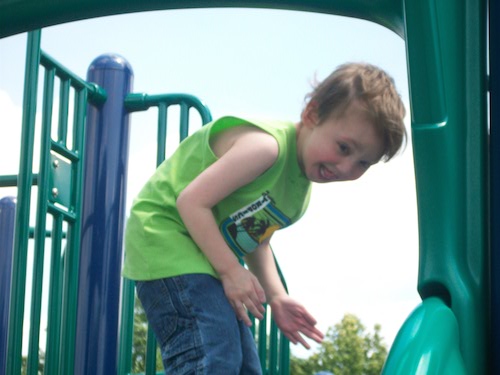
As winter’s hand faded away from the landscape, I found myself relishing the fresh afternoon sunshine while watching my son climb up the play structure at our local park. He is nearly 10, and he often struggles to find the strength in his weak hands to climb the ladder successfully. I watch other kids half his size climb the same ladder with ease, and for a moment, I am sad for him.

”Watch me, Mommy,” he yells when he reaches the top, and I smile in his direction with pride. I can appreciate these normal childhood moments, as his heart condition is a constant concern, and his energy level isn’t always that of a regular child. I remember when we brought him to this park for the first time. He was nearly 3, and I followed him around the play structure nervously, worrying that he might fall and get hurt. Since the time he was an infant, fragile, blue and weak…I have been a worried mother.

”Let him go,” my husband suggested that day so many years ago, “Let him be a kid.” And as the years passed by, I did grow more comfortable watching him venture out independently. But the worried mother will always remain. I find acceptance in this, while trying to retain a healthy balance.

I wonder sometimes if God watches us, as if we were  little children on a playground. We venture out into the world and strive to stand on our own 2 feet, while the trials of life attempt to vehemently knock us down. It is indeed these trials that strive to rob us of the essential things we need to move through life successfully. The virtues like faith, hope, and endurance can be difficult to maintain in times of uncertainty. I wonder if God is carefully keeping tabs from the sidelines, murmuring words of wisdom and encouragement. Perhaps he knows at some point we will fall, but he also knows that we will get back up with a renewed confidence and hope. I watched my son Braeden struggle and fall many times in the last nine and half years, not only on the playground, but in life. A new diagnosis, a surgery, an unexplained illness: these were all trials that made us stumble and falter. With time and reflection, (and a lot of prayer) we are still standing today. He is always there.

Playground

Running on the playground
My son took quite a fall.
He pulled himself up carefully
And then began to call…
Mommy…Mommy…Mommy
I’m hurt…I’m hurt…I’m hurt…
I run to him, he’s on the ground
His face covered in dirt.
I find him with his hands outstretched
His eyes are filled with tears,
I scoop him up and hug him as
I try to soothe his fears.

“It’s okay,” I tell him
(As mothers tend to do)
Now let’s go get you cleaned up
And get a Bandaid too.
I do not reprimand him
For leaving Mommy’s sight
I simply hold him in my arms
And whisper…”It’s all right.”

And then the thought occurred to me
That God must feel this way
When his own child is hurting
He whispers, “You okay”?
In a world where things do go wrong
In a world of struggle and hurt
I sometimes find…I’m on the ground
All covered up in dirt.
“But I can get up by myself,”
I say with just a sigh
“I’m strong enough to stand myself.”
I will not even cry.
And so I brush off all the dust
And stand, to my great boast
Why must we fall to realize
What really matters most?

And so I watch each step with care.
Can I avoid a fall?
But living life so carefully
Is not living at all.
I do not have the answers
(I may not understand)
But this I know for certain
He’s there to take my hand.
The playground of life lies before me
At times it’s hard to see
That open arms are waiting
To love and comfort me.
If I should fall tomorrow,
If I should fall today,
The one who holds eternity
He still says, “You okay”?

What Have You Learned?

Oops, I forgot to issue a tissue warning with Stephanie’s poem. Does it make you think of lessons you’ve learned while raising a child with special needs? Please share them in the comment box, or share your Mother’s Day plans. Happy Mother’s Day to all of you!

Do you like what you see at DifferentDream.com? You can receive more great content by subscribing to the quarterly Different Dream newsletter and signing up for the daily RSS feed delivered to your email inbox. You can sign up for the first in the pop up box and the second at the bottom of this page.

By

Stephanie Ballard is the mother of two sons, her youngest son, Braeden, was born with Kabuki Syndrome and congenital heart defects. Her oldest son, Colin is in the military. She enjoys writing poetry and life lessons about her journey in life.

Author Jolene Philo

Archives

Categories

Subscribe for Updates from Jolene

Related Posts

6 Attributes of an Effective Special Needs Advocate

6 Attributes of an Effective Special Needs Advocate

6 Attributes of an Effective Special Needs Advocate

 Photo Credit: acambaro at Star Stock

If you’re the parent of a child with special needs, you are already an advocate. And you want to be the best advocate you can be…for the good of your child. TCPalm.com ran an excellent article by Samantha Kayser that listed several attributes of effective special needs advocates and how to develop those attributes.

6 Attributes of an Effective Special Needs Advocate

Kayser listed these attributes suggested by Evelyn Duah. Duah is the administrator a local medical day care center for children newborn to 20 years of age and is passionate about parents advocating for their children.

  1. Get organized. Create an organized medical file and save every piece of paper pertaining to a child’s disabilities, services, needs, and more. Make copies monthly and scan new documents into the computer.
  2. Get educated. Research your rights, therapies, and more. Be willing to learn, ask questions, and keep asking questions until you understand.
  3. Educate others. Respond patiently with the appropriate information when people say hurtful things or respond in ignorance.
  4. Be persistent. Don’t give up when you can’t get an appointment. Instead of getting angry, keep restating your need in a nice way.
  5. Look for solutions. Instead of talking poorly about a doctor or the insurance company, focus on finding solutions.
  6. Take care of yourself. Take some time to care for yourself; otherwise you’ll quickly burn out and be unable to care for your child. Find time each day, even if it’s only 5 minutes, to focus on your own needs.

Pretty good list, don’t you think? 

How Have You Become an Effective Special Needs Advocate?

What have you learned about being an effective special needs advocate? What practices do you use on a regular basis? Leave a comment.

Do you like what you see at DifferentDream.com? You can receive more great content by subscribing to the quarterly Different Dream newsletter and signing up for the daily RSS feed delivered to your email inbox. You can sign up for the first in the pop-up box and the second at the bottom of this page.

By

Jolene Philo is the author of the Different Dream series for parents of kids with special needs. She speaks at parenting and special needs conferences around the country. She’s also the creator and host of the Different Dream website. Sharing Love Abundantly With Special Needs Families: The 5 Love Languages® for Parents Raising Children with Disabilities, which she co-authored with Dr. Gary Chapman, was released in August of 2019 and is available at local bookstores, their bookstore website, and at Amazon.

Author Jolene Philo

Archives

Categories

Subscribe for Updates from Jolene

Related Posts

Housework + Special Needs = Lower Expectations

Housework + Special Needs = Lower Expectations

Housework + Special Needs = Lower Expectations

 Photo Credit: varandah at www.freedigitalphotos.net

Guest blogger Kimberly Drew recently nursed her family through a bout of stomach flu. She’s here to explain what she learned about maintaining realistic expectations while caring for sick kids with special needs and managing housework.

Housework + Special Needs = Lower Expectations

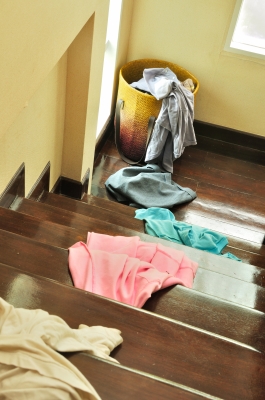
There isn’t anything fun about having sick child. We have recently endured two rounds of the stomach bug in our house. All five of us got it in varying degrees. Gross! Our daughter Abbey cannot communicate the need to throw up, or get to the bathroom, or do anything to care for herself. It’s so upsetting and frustrating and messy. It’s times like these when everything else goes to the back burner as you care for your child. The dishes, the phone calls, e-mails, and laundry just start piling up and you don’t even care.

You are in survival mode.

You have to make sure that your child has what they need. When the immediate crisis subsides, you try to get things back in order. I don’t know about you, but for me, it takes about two weeks to recover from one week like that. I wish I could say I’m one of those people who jumps right in and tackles the whole house. I will do the immediate disinfecting that needs to happen and then kind of close doors and pretend the mess isn’t there. After washing all the sheets and towels, I wave a magic wand and the rest of the pile is suddenly invisible. It’s so convenient to just shut the door to the basement and ignore the pile. Email and phone calls are sort of the same. Finally, in a moment of exasperation, I will put on my favorite CD and work like a mad woman until everything is caught up.

The chaos is under control…for now.

What does any of that have to do with parenting a child with special needs? Everything. The reality is you just can’t do it all. Because every day of your life is this kind of assessment of what must be done now and what can wait. If life assigned heads of triage, parents of kids with special needs would get the job. Assigning things to their level of importance is part of the daily grind for most parents, but parents of children with special needs know it all too well. Health and well-being get admitted immediately, and laundry gets a bed in the hallway. Accepting that some things will take a back seat to the care of your child is hard for Type A personalities. I tell people that I’m a Type A stuck in a B- life. In a rough week I hover at D.

It’s true.

Over the years I’ve been forced to let go of things that used to drive me crazy. Sometimes you need to clean and cook, and sometimes you need to give your children cereal for dinner and put them to bed early so that you can watch TV. It’s okay not to have it all together. The sooner you can release the expectations you have on yourself, the sooner you will relax. It won’t be this way forever. In a week, or a few days, you’ll feel something inside nagging at you. You’ll find Lady Antebellum on your iPod and get out the Windex and paper towels. But if you’re not there today, it’s okay.

Take it one day at a time.

Have You Lowered Expectations?

Have you learned to relax your expectations about housework? What have you been forced to let go? What life circumstances taught you to do it? Leave a comment in the box.

Do you like what you see at DifferentDream.com? You can receive more great content by subscribing to the quarterly Different Dream newsletter and signing up for the daily RSS feed delivered to your email inbox. You can sign up for the first in the pop up box and the second at the bottom of this page.

By

Kimberly grew up and went to college in the small town of Upland, IN. She graduated from Taylor University with a degree in Elementary Education in 2002. While at TU, she married her college sweetheart and so began their adventure! Ryan and Kimberly have four amazing kids on earth (Abigail, Jayden, Ellie, and Cooper), and a baby boy waiting for them in heaven. Their daughter Abigail (Abbey) has multiple disabilities including cerebral palsy, a seizure disorder, hearing loss, microcephaly, and oral dysphagia. She is the inspiration behind Kimberly’s desire to write. In addition to being a stay-at-home mom, Kimberly has been serving alongside her husband in full time youth ministry for almost fourteen years. She enjoys working with the senior high girls, scrapbooking, reading, and music. You can visit Kimberly at her website, Promises and Perspective.

Author Jolene Philo

Archives

Categories

Subscribe for Updates from Jolene

Related Posts

3 Summer Transition Tips for Kids with Special Needs

3 Summer Transition Tips for Kids with Special Needs

3 Summer Transition Tips for Kids with Special Needs

Photo Credit: photostock at www.freedigitalphotos.net

Spring has been slow to arrive and stick around this year. But the calendar says spring is here and that summer–and summer vacation for the kids–will be here before long. The change the school year routine to summer’s more laid back rhythms can be a difficult transition for kids with special needs. Guest blogger Liz Matheis is here with 3 summer transition tips to make the season more fun for everyone.

Prepare for Change:
3 Summer Transition Tips

It’s only spring time, but summer break is impending, and it’s time to think about what your child will be doing and how to handle the transition. For many parents and children, this transition causes anxiety and meltdowns over trivial things that normally wouldn’t be a tantrum trigger.

So, how do you prepare your child for the change in schedule that has been going strong for 10 out of 12 months of the year? Or better yet, how do you prepare your child for any upcoming transition, whether it be a change in who will greet your child from the bus after school, to a business trip that will leave your child with grandma for a few days? Read on!

Summer Transition Tip #1: Give Notice, But Not Too Much Notice

Prior to mommyhood, I would have said give your child plenty of notice so that he or she can process and accept. However, post-mommyhood, I know that’s not a good idea. It makes anxiety breed and multiply quickly. The questions become many and the anger becomes intense. So, I stopped giving my children notice. Instead, now I give 1-2 days notice alongside a schedule of what’s to come.

Summer Transition Tip #2: Create a Visual Schedule

By schedule I mean, create a calendar showing the upcoming transition with a countdown, especially if it’s a positively anticipated transition such as a family vacation. An upcoming pleasant trip or relative coming to visit is exciting but can also result in the experience of anxiety and agitation as there will be a change in where family members are sleeping and the daily flow of the day.

For an upcoming event where your child is nervous about the change, create a list of events, with pictures and words, that will show the series of events that will take place. For example, if grandpa is going to pick up Johnny for his occupational therapy session instead of mommy, place a picture of grandpa and Johnny on a piece of paper with the time and OT with Miss Carrie on the refrigerator.

Summer Transition Tip #3: Take a Field Trip

In anticipation of attending a camp following the end of the school year, or attending a new school, take a visit! Yes, pack a backpack with a sandwich and a drink and take a ride over to the new school or camp. Have a picnic in the field, on a bench or on the playground. Do this a few times prior to the transition to help your child begin to develop a positive association with the camp or a new school.

To take it to the next level, ask your camp director or principal if there are students and/or parents with whom you could connect and even plan for a play date prior to the start of camp or school. Your child will then have the name of at least one new friend to say hello to on the first day of camp or school. Do the same with camp counselors or teachers. Plan a visit a few days prior to the first day and stop by to say hello. Walk through the halls or fields so that the new environment is no longer all that brand new.

Change can be a frightening and unpredictable place to be when you don’t know what to expect. Using these strategies may help you and your child pass through a change with a little less anxiety and anticipation!

What Summer Transition Tips Work for Your Kids with Special Needs?

Do you have some tricks up your sleeve to the transition to summer easier at your house? What has worked in the past? What new idea are you planning to try this summer? Leave a comment below to share your ideas. Happy summer!

Do you like what you see at DifferentDream.com? You can receive more great content by subscribing to the quarterly Different Dream newsletter and signing up for the daily RSS feed delivered to your email inbox. You can sign up for the first in the pop up box and the second at the bottom of this page.

By

Dr. Liz Matheis is a clinical psychologist and school psychologist in Parsippany, NJ. She offers support, assessments, and advocacy for children who are managing Autism Spectrum Disorders, ADHD, learning disabilities, and behavioral difficulties, as well as their families. She is also a contributor to several popular magazines. Visit www.psychedconsult.com for more information.

Author Jolene Philo

Archives

Categories

Subscribe for Updates from Jolene

Related Posts

Top 10 Similarities Between Flight Delays and Special Needs Parenting

Top 10 Similarities Between Flight Delays and Special Needs Parenting

Top 10 Similarities Between Flight Delays and Special Needs Parenting

Photo Source: Stuart Miles at www.freedigitalphotos.net

About a month ago, I was at Ronald Reagan National Airport waiting to board the airplane after a wonderful weekend at McLean Bible Church’s Accessibility Summit. But instead of announcing it was time to board, an airline official announced the flight had been canceled because of inability to assemble a flight crew.

A few minutes later, the other passengers and I were lined up in front of the customer service desk. I was not at all pleased to discover that a) the next available flights weren’t until Monday, b) the airline would pay for hotel rooms but not for food or any other expenses caused by the delay, and c) I was experiencing emotions very similar to those that accompanied the arrival of our medically fragile son.

With 17 hours until the rescheduled flight’s take off, I had P-L-E-N-T-Y of time to think about the similarities between flight delays and parenting a child with special needs. Here are my top ten:

10.  Unexpected expenses pop up all the time and everywhere.

9.    Sleep deprivation is an integral part of each circumstance.

8.    In both cases, it’s wise to pray first, speak second, and then pray some more.

7.   Parents and passengers learn very quickly that are not in control.

6.   Flexibility is essential, not optional.

5.   Both parents and passengers learn to bite their tongues.

4.   Once the dust settles and their tongues have healed, parents and passengers need to advocate for better treatment. (My letter of complaint went out later that week. I’ll keep you posted on how that goes.)

3.   Both situations are rife with rudeness and unexpected grace.

2.   They are both cauldrons in which deep and lasting friendships form.

1.   Two crucial elements can transform these potential negatives into positives: a sense of humor and a spirit of forgiveness.

Now, parents of kids with special needs, what would you add to the list? Leave a comment!

Do you like what you see at DifferentDream.com? You can receive more great content by subscribing to the quarterly Different Dream newsletter and signing up for the daily RSS feed delivered to your email inbox. You can sign up for the first in the pop-up box and the second at the bottom of this page.

By

Jolene Philo is the author of the Different Dream series for parents of kids with special needs. She speaks at parenting and special needs conferences around the country. She’s also the creator and host of the Different Dream website. Sharing Love Abundantly With Special Needs Families: The 5 Love Languages® for Parents Raising Children with Disabilities, which she co-authored with Dr. Gary Chapman, was released in August of 2019 and is available at local bookstores, their bookstore website, and at Amazon. The first book in her cozy mystery series, See Jane Run!, features people with disabilities and will be released in June of 2022.

Author Jolene Philo

Archives

Categories

Subscribe for Updates from Jolene

Related Posts