Autism Journey: One Dad’s Reflection

Autism Journey: One Dad’s Reflection

Autism Journey: One Dad’s Reflection

 Photo Credit: Sira Anamwong at freedigitalphotos.net

With Father’s Day arriving in a few days, I’m pleased to introduce today’s guest blogger, Tim Dahlin. We have known his family for more than two decades and watched their story unfold. Tim’s story is a touching reminder of how special needs changes and enriches the parenting journey.

Autism Journey: One Dad’s Reflection

I am a dad of a son with autism. Now no longer the baby we brought home from the hospital or the little child we could lead along, Jonathan is an 18-year-old and 6 feet tall! And it has been a journey. Recalling that journey brings back many happy memories: memories of hiking together in the Grand Tetons, scaling Harney Peak in the Black Hills, and canoeing down the St. Croix River. I remember being called into the back yard by my son where the telescope was focused on the Orion nebula and the binoculars on the Andromeda galaxy. I remember listening when Jonathan identified the pitch of the bell that went off in our car and realizing that it was not a crazy idea to try him with piano lessons after all.

Autism Journey: Not Without Pain

Our autism journey has not been without pain. I remember together with my wife packing suitcases and crates as we prepared to move back from South America to the States and realizing that the course of our lives was being irreversibly altered.

I remember sitting in church on a Sunday morning and, as we were singing “[God] gives and He takes away” and being so moved that I went running out of the auditorium.

I remember standing by my wife and being unable to fix her pain as our dreams were shattered and the future became an unknown.

But I also remember when life seemed to come unglued and a few brothers and sisters in Christ came alongside us and ministered to us.

I remember those individuals who have reached out to Jonathan and who have become his friends.

I remember coming to the realization that, far from being a source of shame, being Jonathan’s dad is a high honor and privilege indeed.

And I remember God pouring joy into my life by the bucketful.

Autism Journey: Lessons Learned Along the Way

What have I learned on this autism journey? I have learned that clouds come in dozens of forms and I have observed myriad ways that water swirls around in a creek. I have together wondered with Jonathan whether King Hezekiah was tall or short.   I have learned that behind a puzzling exterior, that at times seems impenetrable, is a world to be discovered.

I have learned that love has many languages. I have learned that God sometimes remarkably answers prayer and that when our strength runs out, God’s grace takes over. I have learned that parenting a special needs child can make a marriage deeper and sweeter. I have learned that we need those with disabilities among us in the body of Christ, the church, and that welcoming an individual with challenges has the potential for opening up fresh channels through which God’s grace may flow.

Autism Journey: No One Is Indispensable

There are times when I am tempted to leave Jonathan home from church. Well, you know, he might say or do something embarrassing. But I try not to do so for not to include him would somehow make a statement that his presence is dispensable. Dispensable, that is a horrid word, isn’t it, when we are referring to one who is made in God’s image? Embracing and welcoming any human life may very well bring pain and inconvenience along the way. That may be especially true when we are dealing with a person with a disability. But not to welcome that person or to keep that person at a safe distance will rob us of joys we might not otherwise know. How much I would have missed were it not for Jonathan!

Your Autism Journey Reflections?

Okay, Dads, now that we heard from Tim, it’s your turn to reflect upon your autism journey or whatever special needs parenting journey you’re on. You can share your story in the comment box. Happy Father’s Day!

Do you like what you see at DifferentDream.com? You can receive more great content by subscribing to the quarterly Different Dream newsletter and signing up for the daily RSS feed delivered to your email inbox. You can sign up for the first in the pop up box and the second at the bottom of this page.
By

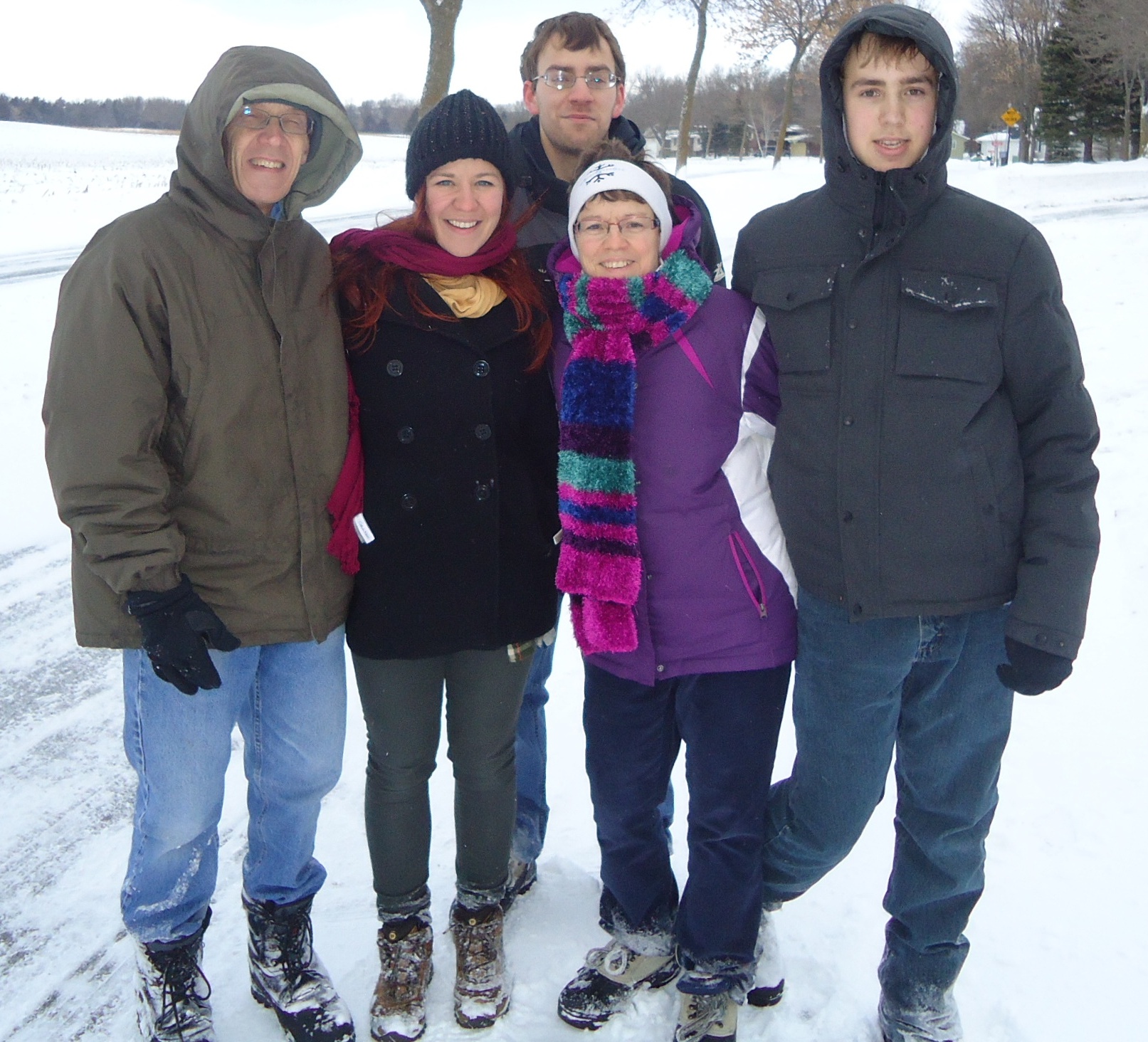
Tim Dahlin and his wife Carolyn are missionaries with ReachGlobal. Tim works with an online school based in Costa Rica training leaders for churches in nineteen Spanish-speaking countries. Tim and Carolyn are currently living in Fairmont, Minnesota, where they work with a Hispanic congregation. They lived and served for a number of years in Venezuela, where their three children, Joel, Karin, and Jonathan were born. Jonathan is an avid reader and loves music. He played tuba in the band and the piano. He recently graduated from high school, and his senior piano recital was incorporated into his graduation party.

Author Jolene Philo

Archives

Categories

Subscribe for Updates from Jolene

Related Posts

5 Marriage Tips for Parents of Kids with Special Needs

5 Marriage Tips for Parents of Kids with Special Needs

5 Marriage Tips for Parents of Kids with Special Needs

 Photo Credit: Salvatore Vuono at www.freedigitalphotos.net

How can parents of kids with special needs adequately care for both their children and their spouses? That’s a crucial and difficult question, one DifferentDream.com showcases periodically. A Washington Post article by Mari-Jane Williams does a good job of outlining the challenges raising kids with special needs brings to a marriage. It also offers parents 5 ways to care for their marriages.

Marriage Challenges for Parents of Kids with Special Needs

Williams lists the following challenges parents face:

  • exhaustion
  • worry and anxiety
  • advocacy
  • financial demands
  • time demands

Any of those strike a chord with you?

5 Ways for Care for Marriage

The author then suggests these 5 ways parents can care for their marriages:

  1. Do not just become “parent-partners.” Talk about more than your kids. Connect about other topics, too.
  2. Embrace your differences with your partner. Parents have different expectations and grieve differently, too. Don’t just tolerate your spouse’s differences, embrace them.
  3. Be proactive when marital resentments build. Talk about problems sooner than later before you become angry.
  4. Get creative when it comes to romance. If date nights away aren’t doable, look for creative ways to be romantic at home.
  5. Appreciate each other’s efforts. Share responsibilities and give credit for each other’s efforts to make you feel more like a team.

To read everything Williams has to say, click on over to her article, How to Take Care of your Marriage When You Have a Child with Special Needs. You might also want to read these previous DifferentDream.com posts about marriage:

What’s Your Best Advice?

What have you and your spouse done to care for your marriage? Leave a comment to share your wisdom.

Do you like what you see at DifferentDream.com? You can receive more great content by subscribing to the quarterly Different Dream newsletter and signing up for the daily RSS feed delivered to your email inbox. You can sign up for the first in the pop-up box and the second at the bottom of this page.

By

Kimberly grew up and went to college in the small town of Upland, IN. She graduated from Taylor University with a degree in Elementary Education in 2002. While at TU, she married her college sweetheart and so began their adventure! Ryan and Kimberly have four amazing kids on earth (Abigail, Jayden, Ellie, and Cooper), and a baby boy waiting for them in heaven. Their daughter Abigail (Abbey) has multiple disabilities including cerebral palsy, a seizure disorder, hearing loss, microcephaly, and oral dysphagia. She is the inspiration behind Kimberly’s desire to write. In addition to being a stay-at-home mom, Kimberly has been serving alongside her husband in full time youth ministry for almost fourteen years. She enjoys working with the senior high girls, scrapbooking, reading, and music. You can visit Kimberly at her website, Promises and Perspective.

Author Jolene Philo

Archives

Categories

Subscribe for Updates from Jolene

Related Posts

12 Fun Summer Activities for Kids with Special Needs

12 Fun Summer Activities for Kids with Special Needs

12 Fun Summer Activities for Kids with Special Needs

 Photo Source: Naypong at www.freedigitalphotos.net

After a long winter and a chilly spring, kids and parents are looking forward to summer with extra enthusiasm. But summer’s lack of structure can be a challenge for parents raising kids with special needs. To make a fun summer more likely for the whole family, guest blogger Sylvia Phillips is here with an even dozen of fun activities to try.

Twelve  Fun Summer Activities for Kids with Special Needs

The day that school is over is fast approaching and some of you might be wondering how you will fill your special little someone’s time for the whole summer. Many of our special children thrive on the routine of the school year. The more relaxed schedule of summer and lack of meaningful activities can be a real challenge for everyone. But don’t worry because with a little research and careful planning you can create a special summer routine that your child will thrive on this summer. Here are some ideas for starters!

  1. Does your child like to read? Why not have her join your local public library reading program? There is usually a fun party scheduled to close out the program.
  2. Is bowling a favorite activity for your special someone? Many bowling alleys around the country participate in the Kids Bowl Free program. Check to see if there are any participating in your neighborhood.
  3. Schedule in a weekly date for a visit to your local playground. Make it even more fun by packing a picnic lunch.
  4. Invite the neighborhood kids over for a backyard arts and crafts session or host a backyard Olympics event. The other moms will love you and so will their kids. Your child just might make some new friends as an added bonus.
  5. A day trip to your local science, art, and/or children’s museum is sure to be a hit for any child.
  6. What summer is complete without at least one trip to the beach?
  7. Local public pools sometimes offer free swimming lessons to school-aged kids during the summer!
  8. Visit  a nearby state nark and go for a nature hike. If you’re lucky your state may have a program similar to New York’s Access Pass. This pass allows for free entrance into any New York state park for people with disabilities and the car they are riding in.
  9. Is your child energetic and athletic? Your local YMCA is sure to offer some fun activities that your child will love.
  10. Does your child like the school year routine so much that doing summer school at home might be a comfort to him? Barnes and Noble book stores have all kinds of workbooks that can help you keep your child learning all summer long.
  11. If your child could benefit from a 12 month school program, check with your school district about eligibility.
  12. Last but not least, is your child up for summer camp? Many states offer day and overnight camps for individuals with special needs. Some are specific to certain disabilities. Some are not. Several camp options are listed below.
  • The Epilepsy Foundation of Rochester, Syracuse, and Binghamton offers Camp Eagr for people ages 8 to 25 who have seizure disorders. Medical personnel are on site 24 hours a day!
  • I personally love the Wellness Gifts Retreats in Bath, New York. Hickory Hill Campground sets aside one weekend a month in the summer for a retreat for special families. The whole family can attend and each family is assigned a trained helper for their special needs member. There are speakers and fun events planned for the whole family.
  • Let’s not forget Joni and Friends Family Retreats held at campgrounds in several regions throughout the United States. There are even some international retreats held in other countries.

What Are Your Favorite Summer Activities?

Thank you, Sylvia for your list of summer activities for kids with special needs and for the links, too. And how about the readers out there? What would you add to the list? Leave your suggestions in the comment box, along with links.

Do you like what you see at DifferentDream.com? You can receive more great content by subscribing to the quarterly Different Dream newsletter and signing up for the daily RSS feed delivered to your email inbox. You can sign up for the first in the pop up box and the second at the bottom of this page.

By

Author Jolene Philo

Archives

Categories

Subscribe for Updates from Jolene

Related Posts

Technology: Good for Kids with Special Needs and Parents

Technology: Good for Kids with Special Needs and Parents

Technology: Good for Kids with Special Needs and Parents

Photo Credit: Photo Credit: http://flic.kr

Technology is changing faster than we can keep up with it. New gadgets come on the market almost daily. Guest blogger Sarah Gray is here with an overview of tech products that can enhance the lives of kids with special needs and their families.

Technology: Good for Kids with Special Needs and Parents

Today’s parents live in an age of technological wonder and can use this to their advantage. It has become a little easier to monitor children’s health and wellness, ensuring that they sleep properly and stay on schedule. Technology has also changed the possibilities to entertain and stay active with children.

Video Infant Monitors

Whether you put your special needs child down for a nap or it’s time for bed, you can end up spending a majority of your evening physically checking in on your infant. Video monitors allow parents to watch over their children from the comfort of their own bed or couch. Technology has also progressed to monitoring your child’s breathing and heart rate. If you’re worried about your child getting out of their crib or you just want to see them play, video monitors are ideal for checking out their antics.

Pillows

Nursing pillows, such as the Mombo Comfort & Harmony nursing pillow, are ideal to better position and support your child during feedings. These nursing pillows have come a long way from the typical pillow that you might remember. For example, the Mombo nursing pillow comes with a vibrating option that also allows for you to soothe and comfort your baby.

Tablets

Educational toys have expanded for today’s children. Tablets, smartphones, and notebooks are educational toys that can introduce your child to the world of technology. You’ll also find instructional games that help with cognitive development. Many of the tablets also have access to movies and streaming live shows.

Books

Whether you select a book from the library or favorite bookstore, you can introduce reading as an integral part of a child’s life. However, technology has also changed how parents read, with the introduction of eReaders and eBooks. Downloading and searching for various stories can be simple and done with a click of the button. You can also view these various tales with bright and colorful illustrations.

Smartphone Apps

When it comes to scheduling and staying on task, it’s easy to miss important appointments and events. However, smartphone apps like Remember the Milk are optimal for the parent who needs to schedule every minute of their busy day. The phones also have various alarms and ring tones, so you don’t miss an engagement. The smartphone apps are also excellent for consulting and assessing whether a childhood ailment or injury is serious. While it’s not a substitute for someone in the medical field, you’ll find the apps to help alleviate fears and concerns.

Tracking Devices

GPS trackers can be synced to a cell phone via the internet and placed in a backpack. This grants a parent the opportunity to safely keep an eye on their child at all times. This is especially helpful when children become more independent and possibly engage in outside activities. High-tech gear has become an important part of parenting today.

Whether your special needs children are infants or teens, you’ll find many of the above tools to make parenting easier. Many of the technological gadgets today can also be used to educate, entertain, and aid in your child’s growth and development.

Your Favorite Tech Products?

Have you discovered apps, gadgets, and websites to make life better for your kids with special needs? Share them in the comment box. Thanks!

Do you like what you see at DifferentDream.com? You can receive more great content by subscribing to the quarterly Different Dream newsletter and signing up for the daily RSS feed delivered to your email inbox. You can sign up for the first in the pop up box and the second at the bottom of this page.

By

Author Jolene Philo

Archives

Categories

Subscribe for Updates from Jolene

Related Posts

6 Ways to Ease Clinic Visits for Kids with Special Needs

6 Ways to Ease Clinic Visits for Kids with Special Needs

6 Ways to Ease Clinic Visits for Kids with Special Needs

– Photo Credit: jeinny at Star Stock

Clinic visits can be tough on kids. When the kids with special needs have painful and scary memories of medical professional and procedures, a trip can be especially difficult. A post by Andi, who blogs about life with her daughter with cerebral palsy and her son with Down syndrome at Bringing in the Sunshine, offers tips to reduce the trauma and maximize clinic visits.

6 Ways to Ease Clinic Visits

  1. Take another adult. Andi says the presence of another adult is crucial, though that person doesn’t have to be your spouse. Sometimes, someone with a little more distance thinks of questions a person close to the situation might overlook.
  2. Take a notebook and pen. Because taking pen and paper notes is quicker than trusting your memory and going home to type notes on the computer.
  3. Take video. Not video while you are there, but video of your child that documents behavior, physical regression, or whatever concerns you want to discuss with the doctor.
  4. Take photos. For reasons similar to those for taking video. Pictures taken from several different angles can give doctors a more complete idea of what’s happening with your child.
  5. Let your child talk and answer questions as much as possible. Parents who are used to speaking on behalf of very young children have to learn to let their children speak for themselves. Sometimes kids will reveal something to the doctor that they haven’t mentioned to parents.
  6. Take snacks. Because clinic visits, especially to teaching hospitals, can drag on and on and on.

Andi’s post fleshes out each item in the list more completely, so check out her post, Six Tips for Maximizing a Specialty Pediatric Clinic Visit. I hope you have time to camp out at her site for a while because she has some great stuff there.

Your Clinic Visit Tips?

Does your child with special needs have frequent clinic visits? What tips make the visits go smoothly and reduce stress for your child? Leave your ideas in the comment box.

Do you like what you see at DifferentDream.com? You can receive more great content by subscribing to the quarterly Different Dream newsletter and signing up for the daily RSS feed delivered to your email inbox. You can sign up for the first in the pop-up box and the second at the bottom of this page.

By

Jolene Philo is the author of the Different Dream series for parents of kids with special needs. She speaks at parenting and special needs conferences around the country. She’s also the creator and host of the Different Dream website. Sharing Love Abundantly With Special Needs Families: The 5 Love Languages® for Parents Raising Children with Disabilities, which she co-authored with Dr. Gary Chapman, was released in August of 2019 and is available at local bookstores, their bookstore website, and at Amazon.

Author Jolene Philo

Archives

Categories

Subscribe for Updates from Jolene

Related Posts

12 Things Special Needs Parents Need to Do

12 Things Special Needs Parents Need to Do

12 Things Special Needs Parents Need to Do

Today’s guest blogger Kerith Stull is mom to a daughter with special needs. So she knows special needs parents have plenty to do. Still, she thinks there are certain things special needs parents need to do, no matter how busy they are. Here are a dozen items that need to be on every special needs parent’s to do list.

12 Things Special Needs Parents Need to Do

My 18-year-old daughter, Brielle, has moderate cerebral palsy. If you’re a special needs mom like me, I’ve probably been where you are. There are things I wish I knew to do along the way.

#1: Grieve

Cry, scream, get violent (safely), and get over it. If you need help to get through a dark period, talk to family, friends, or seek professional help.

#2: Collect Information

Do your research. Talk to doctors, family, friends, and strangers. Some will offer insight and advice, often unsolicited. They may not always be right, but listen anyway. Write everything down so it helps you think, remember, and separate out your feelings.

#3: Gather your Tribe

Ask family and friends to come by your side. Some may scare away, but most will be eager to be there for you. Cultivate friendships for your child as well. Your child needs friends and you need to know your child has friends.

#4: Love On Your Family

They need your love and you need to love them. Make your husband and your marriage a priority. Be a team and give attention generously. Pay attention to your other children, let them have their own identity, and love on them independently from any other chaos.

#5: Take Care of You

Attend to your body, mind, and spirit. Ditch the bad habits. Rest when you can. Always keep some energy in reserves. Keep your mind active and alert. Believe in something bigger than you are.

#6: Attend to Your Finances and Legal Matters

Spend money wisely. You may be providing for your child’s needs for their entire lifetime. Your child’s ability to eventually receive government funding may be compromised if your child has any money in their name. Invest in life and disability insurance. Write a will and create a special needs trust.

#7: Be an Advocate

Gather information. Formulate a solution or plan. Be assertive. Make it happen. This might mean you become a bit of a watchdog, rattle a few cages, or make some compromises. Pick your battles carefully.

#8: Find Activities for Your Child

They provide social opportunities, learning experiences, and therapeutic benefits. They will also give you an opportunity to interact with other special needs parents and recognize your own joys and blessings. Find a hobby just for yourself as well.

#9: Do Not Baby Your Child

The more you baby your child and encourage interests below their age level, the less your child will grow. You might want to keep doing things for your child to ease their burdens. Don’t. Give your child chores and keep adding responsibilities so they learn life skills.

#10: Plan Ahead

Have a written plan for your child’s daily care, plans for the future, and anything someone else might need to know to take your place. At least three months before your child’s 18th birthday, start the guardianship process and apply for disability income. Plan for your child’s future 25 and 50 years from now, including living arrangements, routine, job, volunteer work, and activities. Start getting those things lined up now.

#11: Keep a Positive Spirit

Things are going to get better. There will also be seasons when things are much worse. Both are transient. Don’t sweat the small stuff. There will be messy, frustrating days. Appreciate the small successes. You’re gonna screw things up. Learn from your mistakes, pick yourself up, and try again.

#12: Find Your Purpose

Figure it out, even if it seems like something small. Part of your purpose is surely about paying it forward. Find someone who is where you were and be the sort of friend you wish you had at that point in your parenting journey.


What Do You Think Special Needs Parents Need to Do?

What do you think of Kerith’s list? Which items on the list are you going to work on? What would you add to the list? Leave a comment and then check out the links below to connect with Kerith at her website and beyond!

Do you like what you see at DifferentDream.com? You can receive more great content by subscribing to the quarterly Different Dream newsletter and signing up for the daily RSS feed delivered to your email inbox. You can sign up for the first in the pop-up box and the second at the bottom of this page.

By

Kerith Stull earned a Masters Degree in communication and worked in marketing before becoming a stay-at-home mother when her children were little. She has been married to her high school sweetheart for the last 24 years and is a recent semi-empty-nester since her 20-year-old daughter moved out to go to college. Kerith blogs about special needs parenting issues at Brielle and Me: Our Journey with CMV and CP with her uniquely positive perspective. You can also find her on Facebook, Twitter, and Pinterest. She recently published a book, Brielle and Me: Our Journey with Cytomegalovirus and Cerebral Palsy, about her experiences with their 18-year-old special needs daughter and their family’s journey of hope, determination, love, and faith.

Author Jolene Philo

Archives

Categories

Subscribe for Updates from Jolene

Related Posts