How I Became an Aspergers Advocate for Teens

How I Became an Aspergers Advocate for Teens

How I Became an Aspergers Advocate for Teens

 Photo Via Flickr – by Kentucky National Guard Public Affairs Office

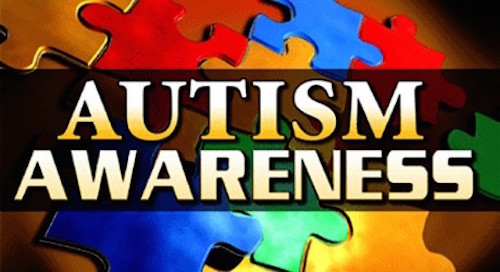
Different Dream is pleased to welcome today’s guest blogger, Kathleen Carter. She’s here to explain how she became an Asperger’s advocate for teens around the country. Her story is fascinating, encouraging, and convicting as her perseverance and creativity on her road to advocacy puts many of us to shame. See what you think.

How I Became an Aspergers Advocate for Teens

I remember being in elementary school when I realized that I was different from my classmates. I was paired up with another student, and I just couldn’t figure out how to get him to understand me. Frustrated, I began wringing my hands—a motion I used to do often because it would calm me—which led him and his friend to make fun of me.

As I got older, I learned more about my Aspergers. And though it has taken me a while to reach this conclusion, today I don’t think having Asperger’s is a bad thing. Not at all. In fact, in recent years, I’ve developed a sense of pride when it comes to my AS. I know that it makes me different from some other kids, but it also gives me something in common with the other wonderful people on the autism spectrum.

I wanted to help other kids with Aspergers to feel the same pride that I did while also educating my peers about it, but I wasn’t sure how to get started. Through trial and error, I figured it out. If you’re a teen with Aspergers, I highly encourage you to follow in my footsteps. It’s important that everyone on the autism spectrum know what they can achieve. Here’s how I became an Aspergers advocate:

I became an Aspergers advocate by becoming more independent.

When I started high school, my mom thought it was time for me to learn skills that would make me more independent. In this article from Autism Aspergers Digest, the writer provides tips for teaching independence skills and touches on the positive results that come with those skills. For example, in addition to learning the skill, the child with Aspergers gets a confidence boost from being able to do the new task and also has a great sense of wellbeing because they’re learning to take care of themselves in all aspects of life.

My mom and I placed a big focus on cooking. We went through many of her best recipes and now I can make each one. As I conquered those challenges, it made me think about what else I could achieve, and that gave me the spark I needed to create a plan for becoming an Asperger’s advocate.

I started swimming to become an Aspergers advocate.

Building self-esteem has always been a problem for me. Bad experiences with bullies in elementary and middle school really took their toll. That is, until I started swimming. Swimming became a part of my life when I started high school. I started it as a way to become more physically healthy—it’s actually a great form of exercise, in general, for people on the autism spectrum. As this article shows, people with autism can see many benefits when they swim—improved health, better attention spans, improved social skills, and so on.

And while I did certainly get more fit, the real bonus was the boost in confidence it gave. It turned out to be something I was good at and enjoyed. It also gave me a chance to work on interacting with people my age. As I got more comfortable around them, I began to realize that if I worked hard I could get better at communicating with my peers and adults. Without swimming, I don’t think I would have had the confidence to move forward with my plan to become an advocate.

I became an Aspergers advocate by working with an occupational therapist.

As I mentioned above, I’ve always had difficulty communicating with my peers. Especially in elementary and middle school, I’d be so desperate for my classmates to like me that I would experience extreme anxiety whenever I was in social situations. To help me become a better communicator, I worked with an occupational therapist. The Asperger/Autism Network explains how occupational therapy (OT) benefits people on the autism spectrum. Essentially, OT helps develop every day skills—in work, leisure, school, etc. My therapist and I worked on developing my communication skills in different settings. It has helped me immensely as I’ve started to speak to people more and more about what it’s like to be a teen with Aspergers.

Of course, each of these steps points to one achievement—building my confidence. Without that boost, I don’t think I’d be doing what I’m doing today. And I’m incredibly grateful to my parents and everyone else who has helped me make this happen. I love telling people about what it’s like to have Aspergers, and I hope I can keep doing it for a long time to come.

Leave a Comment for Kathleen

Did Kathleen’s story impress you? Feel free to leave a comment to encourage her or a question generated by her story. And of course, your ideas about how to become a special needs advocate are always welcome. Thanks!

Do you like what you see at DifferentDream.com? You can receive more great content by subscribing to the quarterly Different Dream newsletter and signing up for the daily RSS feed delivered to your email inbox. You can sign up for the first in the pop up box and the second at the bottom of this page.

 

By

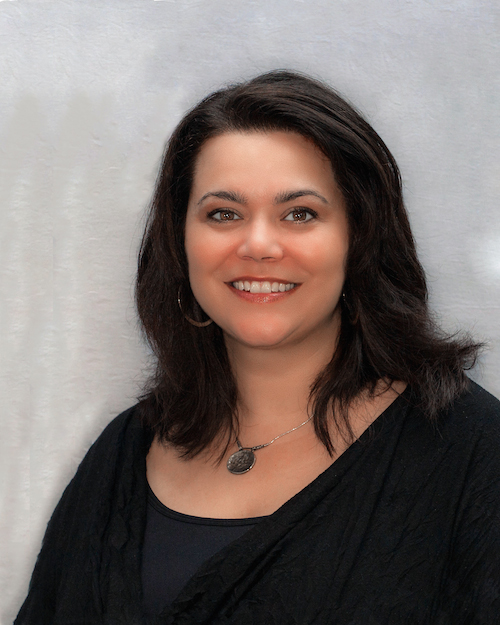
Kathleen Carter is a teen living with Asperger’s Syndrome. She enjoys educating her peers and others about AS. She does so by writing proudly about how her life differs from other people her age. She is so grateful to have the opportunity to write for EducatorLabs.

Author Jolene Philo

Archives

Categories

Subscribe for Updates from Jolene

Related Posts
What’s It Like to Be a Special Needs Grandparent?

What’s It Like to Be a Special Needs Grandparent?

What’s It Like to Be a Special Needs Grandparent?

DifferentDream.com’s series about grandparenting kids with special needs continues with a second guest post from Kerith Stull, who contributed last week’s installment also. The post below was written by Kerith and her mother,  Manthia Zaccaria, about being grandmother to Brielle, Kerith’s daughter with special needs.

What’s It Like to Be a Special Needs Grandparent?

What is it like to be a special needs grandparent?

It is an entire range of complicated emotions. Emotions felt not only for my grandchild, but also for my own child who bore my grandchild. It is…
…hard
…wonderful
…sad
…joyful
…emotional
…trying
…difficult
….rewarding
….so many things

I am a special needs grandparent because my granddaughter is special.

The term “special” really defines her because that is what she is to me….very, very special. Life would be so empty without her.

Would I wish my granddaughter hadn’t been born? Never. Would I wish she were different? Never. This is who she is. And who she is helped make me, her grandfather, her parents, and her sister who we all are.

Before I was a special needs grandparent,

I grew up in in the 1940’s, an era when disabled people were rarely seen. And if they were seen, they were ignored. Not due to something they did, but rather because we did not know how to react or interact with them.

I, too, was guilty of this, and for that, I am truly sorry.

We were ignorant and didn’t know any better. But, most importantly, we now should know how to interact and should do and be better.

I understand my special needs grandchild.

I have been a very fortunate special needs grandparent. Early on, my daughter was able to explain and show me in detail what my granddaughter’s condition was and what she could and could not do. Over the years, I went to many therapy sessions with many different therapists. I’ve attended an IEP meeting. I’ve been to a few doctor’s appointments.

Because of my daughter’s willingness to include me, I have a very good understanding of her condition and can interact with her appropriately. I also know what my daughter goes through, so I can support her in ways she needs me most.

Advice from a special needs grandparent.

I’ve learned through the years that there are a few important things a special needs grandparent (or any grandparent) can do:

  • Balance being a parent and a grandparent. We sometimes find ourselves torn between trying to do what is best for our grandchild and what is best for our children. Sometimes we just want to say “Move over and I will take over”. Wrong! Know when it’s time to be a parent, time to be a grandparent, and time to be a friend.
  • Ask permission to offer advice to your children and ask it gently. You might say, “I have a thought on this and, if you would like me to share it with you, I will.” If they say yes, tell them what you have on your mind and let that be the end of it. Always respect them and their decisions.

 What I need as a special needs grandparent.

Frankly, I don’t have a lot of unmet “needs” as a special needs grandparent. Maybe because I have always accepted and loved who my granddaughter is plus I have a really good relationship with my daughter. But here are two things I know most grandparents need:

  • It is so important to be included and feel I have a role to play. I like being included in my daughter’s life including everything about my grandchildren. When she includes me in family activities, including those for my special needs granddaughter, I feel connected. When she asks me my opinion, I don’t expect her to always take my advice, but it certainly makes me feel appreciated to be asked. I want to help and try to offer that, but I know sometimes I can’t be and do what they need and that’s OK, too.
  • I need others to understand and appreciate my granddaughter. When I meet someone new and tell them about myself and my family, I always tell them about my granddaughter the same way I tell them about my other grandchildren. If they have questions, I try to present myself as being open to their questions and answer them as accurately as I can.

This special needs grandparent has worries.

I don’t have any concerns for my granddaughter because she is so well taken care of by her parents that I don’t have to worry about her. She is happy, active, and loved. Perhaps I worry for her when we are all gone, but I can’t do much about that.

If I have any really true concern, it is always for my daughter. I know what effort she has put forth to accomplish everything for my granddaughter. I admire and respect her so much. But, I know it is constant and not easy. I worry for her and my son-in-law, for their happiness and peace in life.

I have always felt the hand of God on my shoulder, guiding and sustaining me at times when I really needed Him. He helps ease my worries.

How can a special needs grandparent help?

There is plenty a special needs grandparent can do. They can (and should)…
….examine your own unique situation
…analyze what is needed
…step up to the plate
…be accepting
…be respectful
…be supportive
and above all…
…be loving to both to your grandchild and your child. I’m never sure who needs our support more.

A few more things…

Be sensitive and on the alert at all times to situations and frustrations that can occur. We need to know when to back off and when to be there.

We need to be there not only emotionally, but physically. Maybe your child and his or her spouse need a night out. Maybe your grandchild needs a special treat or one-on-one time with you. Be there for them.

Ask your child to empower you. If your child has taught you well, you’ll know what to do for your grandchild and for your child. Just follow your heart.

Part 1: Different Dream’s Special Needs Grandparenting Series Begins
Part 2: Special Needs Grandparenting 101
Part 3: Special Needs Grandparenting–The First Word Is Never the Last Word
Part 4: The Special Needs Grandparenting Tug of War
Part 5: Special Needs Grandparents Are Part of the Village
Part 6: What’s It Like to Be a Special Needs Grandparent?
Part 7: From a Special Needs Grandpa

Do you like what you see at DifferentDream.com? You can receive more great content by subscribing to the quarterly Different Dream newsletter and signing up for the daily RSS feed delivered to your email inbox. You can sign up for the first in the pop up box and the second at the bottom of this page.

By

Thia Zaccaria graduated from Cazenovia College, was a homemaker, and worked for her husband’s consulting business until they retired in 1992. She currently lives with her husband in the Atlanta area close to her daughter, Kerith Stull, and her family including her 19-year-old special needs granddaughter, Brielle.

Author Jolene Philo

Archives

Categories

Subscribe for Updates from Jolene

Related Posts

Special Needs Grandparents Are Part of the Village

Special Needs Grandparents Are Part of the Village

Special Needs Grandparents Are Part of the Village

The special needs grandparenting series is back with installment number five. Today, Different Dream is happy to welcome guest blogger Kerith Stull. She previously blogged about 12 Things Special Needs Parents Need to Do. In this post she shares what she’s learned about how to involve special needs grandparents in the lives of their grandkids who have disabilities or other conditions.

Special Needs Grandparents Are Part of the Village

The saying “It takes a village to raise a child” is even more poignant when raising special needs children. The needs of our children as well as our needs can be so much greater. That’s certainly been our experience over the years as we’ve raised our two daughters, now ages 21 and 19.

Grandparents can add so much to your special needs child’s experience.

  • They understand you and your story.
  • They are fully invested in you and your child.
  • They can simply love on your child.
  • They can spoil your child.
  • They can give you some respite.

How to Help Special Needs Grandparents

  • Let them grieve, too. They need space to grieve for the loss of the “typical” grandparenting experience and for watching their own child (you) go through the pain of being a special needs parent. Don’t underestimate their pain.
  • Understand their perspective may be very different based on the decade and culture they grew up in. Simply put, times have changed, but maybe they haven’t had a chance to catch up. Give them a chance to learn and shift their thinking. Be patient and give them a little extra forgiveness.
  • Involve them in your family’s everyday life, not just the special need child’s life. Share the other details of your lives because there is more to life than your special needs child.
  • Make sure they understand your child’s diagnosis and needs. They may need to read about it, hear about, and talk about it many times. Give them plenty of time to digest that information.
  • Give them the tools they need to care for your child. This means the knowledge, skills, and equipment. Teach them and let them practice. Perhaps you should have some duplicate equipment at their house as well as toys and feeding items.
  • Accept their offers of help, even if it isn’t quite what you need. If you continually turn their offers away, they will probably stop offering. And ask for the specific help you need and want!
  • Let them do it their way. Assuming it doesn’t put your child at risk, differences in care giving and interacting with your child are ok and may even benefit your child.
  • Bring them to events (therapy, doctor appointments, activities, school events, IEP meetings, etc.). Experiencing all of what you experience will really provide them with insights into your lives.
  • Encourage them to spend individual time with your other children. Encourage them to talk to your other children about their sibling experiences. Your other children might need an understanding ear to share worries, frustrations, and questions.
  • Encourage the special needs grandparents to talk with their friends about their experiences with your children. They need support from their friends, too.

If the Special Needs Grandparents Live Far Away

We’ve never lived closer than over three hours away from our kids’ grandparents since the first years of our marriage (25 years ago). We’ve done the best we could over the years to keep them connected to our children, but it’s certainly been a challenge. My parents recently moved to our area and it has been the start of a whole new life for all of us. Connecting when special needs grandparents who live far away can be a challenge, but here are some ideas:

  • Exchange letters, drawings, or art by snail mail. My parents did this almost weekly when they lived far away.
  • Send photographs often (by email or mail). Doesn’t everyone love to see candid pictures?
  • Talk using the speaker phone. That way, you can help them connect in a way your child can understand.
  • Use video chatting. Don’t wait for a special event. Video chat just for the fun of it! Try doing it at activities so they can see your child in action.
  • Videotape the special needs grandparents telling stories or reading books and share them with your child often. My girls loved when my mother did this and it is now a precious heirloom they might be able to show their children.
  • Visit in person when possible. You might find that meeting somewhere halfway between where you live for vacation might make it more convenient and affordable.
  • Lean on them by sharing details of your life. They will always be your parents and would probably love to be there just to support you.
  • Ask them to point out developmental changes when they do see your child. It always surprised me when they pointed out big changes in our special needs daughter in between visits. It might just be the encouragement you need to hear.

If There Aren’t Any Special Needs Grandparents

Grandparents may be missing from your child’s life because of death or relationship strife. Here are some ideas to still include them and find a surrogate grandparent:

  • Share stories, photographs, and video of the special needs grandparents, even if they never met your child. We lost my husband’s mother in 2001 when our youngest was only five years old. We aren’t sure what she remembers about her grandmother. We often watch home videos and have many pictures of her in our digital picture frame.
  • We continue to talk about her and remind them of how much she loved them.
  • Find grandparent figures for your child at church, in the community, or through other connections. They don’t have to be old!
  • If the special needs grandparents don’t want to be involved, let it go. I realize this is easier said than done. However, there are some things you can change and this might not be one of them.

Final Thought: The Dollar and Cents of Special Needs Grandparents

Helping your family financially might be something your parents offer to do for you. They may offer regular financial help, one time gifts, or a special fund outlined in their wills.  Make sure you and the special needs grandparents understand the consequences of financial gifts to you and your special needs child. Be sure that “gift” doesn’t prevent your child from getting government funding. You may want to consult an accountant, lawyer, or financial planner.

How do YOU involve the special needs grandparents with your child? Leave a comment!

Part 1: Different Dream’s Special Needs Grandparenting Series Begins
Part 2: Special Needs Grandparenting 101
Part 3: Special Needs Grandparenting–The First Word Is Never the Last Word
Part 4: The Special Needs Grandparenting Tug of War
Part 5: Special Needs Grandparents Are Part of the Village
Part 6: What’s It Like to Be a Special Needs Grandparent?
Part 7: From a Special Needs Grandpa

Do you like what you see at DifferentDream.com? You can receive more great content by subscribing to the quarterly Different Dream newsletter and signing up for the daily RSS feed delivered to your email inbox. You can sign up for the first in the pop up box and the second at the bottom of this page.

By

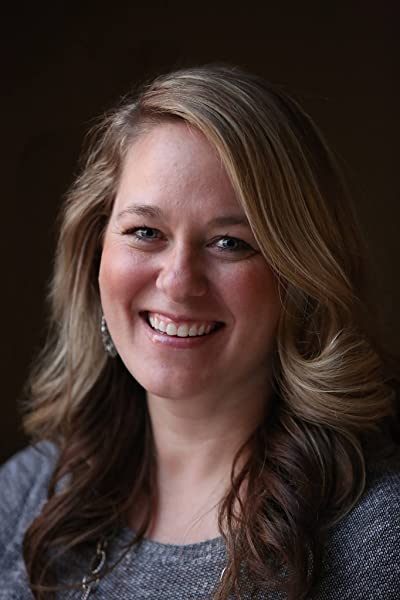
Kerith Stull earned a Master’s Degree in communication and worked in marketing before becoming a stay-at-home mother when her children were little. She has been married to her high school sweetheart for the last 24 years and is a recent semi-empty-nester since her 20-year-old daughter moved out to go to college. Kerith blogs about special needs parenting issues at Brielle and Me with her uniquely positive perspective. You can also find her on Facebook, Twitter, and Pinterest. She recently published a book, Brielle and Me: Our Journey with Cytomegalovirus and Cerebral Palsy, about her experiences with their 18-year-old special needs daughter and their family’s journey of hope, determination, love, and faith.

Author Jolene Philo

Archives

Categories

Subscribe for Updates from Jolene

Related Posts

Special Needs and Puberty: Dealing with Misconceptions

Special Needs and Puberty: Dealing with Misconceptions

Special Needs and Puberty: Dealing with Misconceptions

Guest blogger Kimberly Drew and her husband are sailing through uncharted waters as their daughter Abbey nears puberty. They have encountered unsolicited and often discouraging advice based on their misconceptions about special needs and puberty.

Special Needs and Puberty: Dealing with Misconceptions

As our children with special needs enter puberty, we can no longer deny the fact that their bodies are changing. Abbey is my first child, so I haven’t experienced this before as a parent.

Special Needs and Puberty: Misconception #1

However, my husband and I have been working with junior and senior high students for almost eighteen years. We’ve watched it happen hundreds of times! Not once, have I pulled aside a mother and said, “I’m so sorry that your daughter is getting breasts.”

You may laugh at that, but you have no idea how many people have said something along these lines to me about my daughter with special needs. I try to handle these moments with grace, but it’s not easy. As parents, we have to stand up for our children. It’s okay to tell family members and friends that their comments are either hurtful or not helpful.

Most people celebrate that their children are becoming young men and women. That should not be any different for parents of children who are disabled. I sometimes want to scream, “She’s alive!! Her very life, and every milestone she reaches is an absolute miracle. If she is becoming a woman, it’s because she has literally defied the laws of medicine.”

Special Needs and Puberty: Misconception #2

I think people see Abbey’s physical changes and feel sorry that Ryan and I are going to have to take care of her as she gets older. I understand why they dread thinking about her starting her period. A part of me dreads it too. But I don’t need people to feel bad for me. I need them to be my biggest fans and greatest supporters. If they feel the need to say something, then they should tell Ryan and I that we are doing a great job and they know we can make it through this transition!

Special Needs and Puberty: Misconception #3

There are also going to be a lot of awkward moments as our children become adults, and we have to be ready to deal with them appropriately. The parent of a disabled adult recently told me that I had “no idea how hard it’s going to get.” This individual went on to say that she felt bad for me.

Think of it this way. If you get diagnosed with cancer, I hope you don’t surround yourself with cancer survivors who tell you how awful it’s going to be. Not a chance! You should find team members who will be in your corner to cheer you on and say, “God has you in his hands! You can beat this!”

The same is true for anything we go through that is difficult. I would never say that this road of parenting a child with multiple disabilities is not the hardest thing I’ve ever done. But it’s also my greatest accomplishment and reward. I need people around me who understand that and celebrate it with me. I don’t need Debbie Downers. Neither do you! If there are people in your life who aren’t on your team of supporters, then I suggest you distance yourself from them as I have.

Do you like what you see at DifferentDream.com? You can receive more great content by subscribing to the quarterly Different Dream newsletter and signing up for the daily RSS feed delivered to your email inbox. You can sign up for the first in the pop up box and the second at the bottom of this page.

By

Kimberly grew up and went to college in the small town of Upland, IN. She graduated from Taylor University with a degree in Elementary Education in 2002. While at TU, she married her college sweetheart and so began their adventure! Ryan and Kimberly have four amazing kids on earth (Abigail, Jayden, Ellie, and Cooper), and a baby boy waiting for them in heaven. Their daughter Abigail (Abbey) has multiple disabilities including cerebral palsy, a seizure disorder, hearing loss, microcephaly, and oral dysphagia. She is the inspiration behind Kimberly’s  desire to write. In addition to being a stay at home mom, Kimberly has been serving alongside her husband in full time youth ministry for almost fourteen years. She enjoys working with the senior high girls, scrapbooking, reading, and music. You can visit Kimberly at her website, Promises and Perspective.

Author Jolene Philo

Archives

Categories

Subscribe for Updates from Jolene

Related Posts

Happy 25th, Americans with Disabilities Act

Happy 25th, Americans with Disabilities Act

Happy 25th, Americans with Disabilities Act

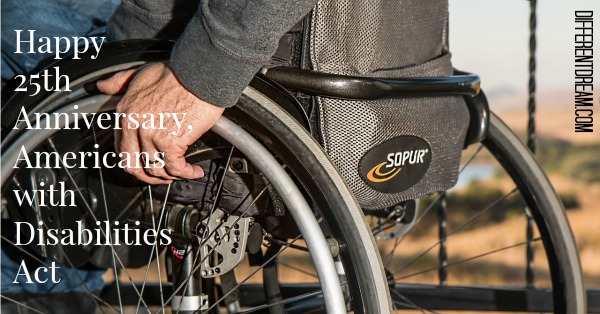
The Americans with Disabilities Act (ADA) turns 25 tomorrow. Government and civil rights organizations around the country will be celebrating the passage of legislation that did much to guarantee the rights and opportunities of the disabled.

What Is the Americans with Disabilities Act?

According to the government’s ADA website, “The Americans with Disabilities Act (ADA) was signed into law on July 26, 1990, by President George H.W. Bush. The ADA is one of America’s most comprehensive pieces of civil rights legislation that prohibits discrimination and guarantees that people with disabilities have the same opportunities as everyone else to participate in the mainstream of American life — to enjoy employment opportunities, to purchase goods and services, and to participate in State and local government programs and services. Modeled after the Civil Rights Act of 1964, which prohibits discrimination on the basis of race, color, religion, sex, or national origin – and Section 504 of the Rehabilitation Act of 1973 — the ADA is an “equal opportunity” law for people with disabilities.”

How the Americans with Disabilities Act Changed Life for Families

The Americans with Disabilities Act wasn’t around when multiple sclerosis landed my dad in a wheelchair around 1960. Most of the stores in our town were off limits to him. He couldn’t maneuver his wheelchair into the post office, the library, our church, his children’s schools, the doctor’s office, or the hospital. Because the sidewalks on our block ended with curbs, he had to use driveways to cross the street.

By the time the ADA was passed in 1990, Dad was bed-ridden in a nursing home. But whenever I saw–and still see today–public venues that are accessible to people with disabilities, I think of how wonderful the ADA is and how much Dad would have gloried in it. Every cutaway curb most people take for granted, he would have considered a miracle. A gift. A small delight to savor. A reason to be grateful.

Celebrating the Americans with Disabilities Act

ADA celebrations will be going strong tomorrow. You can check out the ADA Legacy Project website to find a celebration near where you live and join the fun if you like. Or, if you can’t make it, take a walk outside with someone who has a disability. Do a happy dance each time you see an accessible building, a cutaway curb, or a person with disabilities employed and doing meaningful work. At the same time, make a list of physical and attitudinal barriers that deny equal rights and opportunities to people with disabilities. Come Monday, get to work using the ADA to break down those remaining barriers one at a time. So much remains to be done!

How Has the ADA Changed Life for Your Family?

Has the ADA made a difference for your family? Leave a comment about it in the box below!

Do you like what you see at DifferentDream.com? You can receive more great content by subscribing to the quarterly Different Dream newsletter and signing up for the daily RSS feed delivered to your email inbox. You can sign up for the first in the pop up box and the second at the bottom of this page.

By

Jolene Philo is the author of the Different Dream series for parents of kids with special needs. She speaks at parenting and special needs conferences around the country. She’s also the creator and host of the Different Dream website. Sharing Love Abundantly With Special Needs Families: The 5 Love Languages® for Parents Raising Children with Disabilities, which she co-authored with Dr. Gary Chapman, was released in August of 2019 and is available at local bookstores, their bookstore website, and at Amazon.

Author Jolene Philo

Archives

Categories

Subscribe for Updates from Jolene

Related Posts

The Special Needs Grandparenting Tug of War

The Special Needs Grandparenting Tug of War

The Special Needs Grandparenting Tug of War

I will never forget the day my mother and mother-in-law played their first round of grandma tug-of-war. With our two-week-old son as the rope.

The competition was held at my parents’ home.

We stayed there for a few weeks after our baby was dismissed from NICU before taking him to the remote corner of South Dakota where we lived 90 miles from the nearest hospital. My husband’s mother, who lived in Alaska and had scheduled a June visit to meet the baby at our house, changed her ticket and first laid eyes on her grandson at my parents’ home instead.

The special needs grandparenting tug-of-war was on.

Both grandmas had spent considerable time fretting over and praying for their grandson. First, when they heard he’d been life-flighted 750 miles for the surgery that saved his life. Then, for three weeks as he recovered in NICU. By the time they met our little shaver, their I-just-want-to-snuggle-that-sweet-little-baby instincts were in high gear.

The special needs grandparenting tug-of-war commenced.

“When my babies were fussy,” my mother advised, “I used to wrap them tight and hold them close. Like this.” She took fussy little Allen from my arms, wrapped him tight, and held him close.

“When my boys fussed,” my mother-in-law countered, “I took off the blankets, and sometimes their clothes, and jiggled them.” She took Allen from my mother and demonstrated. “Like this.”

Thankfully, the tug-of-war ended without casualties.

To read the rest of this post, visit SpecialNeedsParenting.net.

Part 1: Different Dream’s Special Needs Grandparenting Series Begins
Part 2: Special Needs Grandparenting 101
Part 3: Special Needs Grandparenting–The First Word Is Never the Last Word
Part 4: The Special Needs Grandparenting Tug of War
Part 5: Special Needs Grandparents Are Part of the Village
Part 6: What’s It Like to Be a Special Needs Grandparent?
Part 7: From a Special Needs Grandpa

Do you like what you see at DifferentDream.com? You can receive more great content by subscribing to the quarterly Different Dream newsletter and signing up for the daily RSS feed delivered to your email inbox. You can sign up for the first in the pop up box and the second at the bottom of this page.

By

Jolene Philo is the author of the Different Dream series for parents of kids with special needs. She speaks at parenting and special needs conferences around the country. She’s also the creator and host of the Different Dream website. Sharing Love Abundantly With Special Needs Families: The 5 Love Languages® for Parents Raising Children with Disabilities, which she co-authored with Dr. Gary Chapman, was released in August of 2019 and is available at local bookstores, their bookstore website, and at Amazon.

Author Jolene Philo

Archives

Categories

Subscribe for Updates from Jolene

Related Posts