Parents raising kids with disabilities and special needs will appreciate the Caring for the Caretaker resource compiled by Laurie McLean.
How To Create a Special Needs Advent Celebration
How To Create a Special Needs Advent Celebration
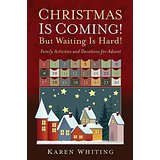
Welcome to guest blogger Karen Whiting, author of Christmas Is Coming, but Waiting Is Hard, a book about celebrating Advent with kids. She’s here with some ideas about how to create a special needs advent celebration for kids who have special needs.
How To Create a Special Needs Advent Celebration
Christmas can mean over-stimulation and sensory overdose for a special needs child. Keeping things simple can be more meaningful and less stressful. But, as a parent you want to be sure your child understands the importance of the birth of Jesus. That boils down to making choices that focus on Jesus without overdoing it.
Advent can be an ADVENTure that’s simple, fun, and focused. Try these ideas to make it manageable:
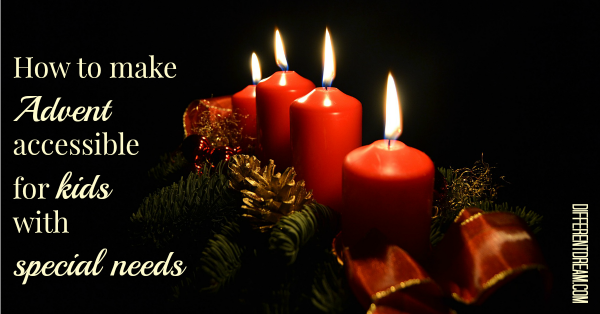
- Use an Advent wreath or simply decorate one large candle to light each day of Advent. The four candles represent four different themes.
Candle 1: The prophecy candle represents HOPE.
Candle 2: The Bethlehem candle represents LOVE.
Candle 3: The Shepherd candle represents JOY.
Candle 4: The Angel candle represents PEACE. - Choose to make it a routine with a time to light the candle each day.
- Repeat the same verse for a few days, or for an entire week, such as the message of peace the angles sang out at Christmas for the angel candle (Luke 2:14).
- Choose one song for each week of Advent and sing it while the candle is lit.
- Find a short, simple Christmas book that tells the story of the birth of Christ. Read this often before Christmas or with lighting the candle.
- Use an Advent book, but choose just the activities, readings, or scriptures that your child can enjoy. You don’t have to do everything. Focus on what few things will be doable.
A few ideas to keep the season simple:
- Take short five minutes breaks each day to de-stress and relax.
- Choose one way to help your child focus on being generous. It might be giving a toy to a needy child, making a gift for a family member, or working on one character trait as a gift for Jesus.
- Keep wrapping simple with gift bags or even pillowcases.
- Give promise notes of time or gifts in the New Year if there’s no time or money to do all the desired shopping before Christmas.
- Don’t stress about putting up every decoration you own. Put up the most meaningful ones and start rotating what other ones to use each year.
- Save a few educational gifts for New Year’s Day. It can be a simple way to start the New Year and a time children can focus on learning toys. Christmas Day already has enough sensory gifts to open, so moving a few to a later date can keep things easier and allow time to enjoy individual gifts more.
Do you like what you see at jolenephilo.com/? You can receive more great content by subscribing to the quarterly Different Dream newsletter and signing up for the daily RSS feed delivered to your email inbox. You can sign up for the first in the pop up box and the second at the bottom of this page.

By
Karen Whiting is an international speaker, former television host, and the author of twenty-two books. She grew up with a special needs brother and now enjoys time with her grandchildren, including a few who have special needs. Her advent book Christmas Is Coming, but Waiting Is Hard shares a daily journey to Christmas with lots of activities to choose from to focus on Jesus.
Author Jolene Philo

Subscribe for Updates from Jolene
Related Posts

Caring for the Caretaker Is Essential
read more

Making Marriage a Priority While Raising Kids with Special Needs
Making marriage a priority is crucial for parents raising kids with disabilities and special needs–for the good of everyone in the family.

Making Summer Magical for Kids with Special Needs
Making summer magical for kids with special needs requires creativity and a sprinkling of pixie dust which is easier than you may think.