Special Needs Mom, You Can Say No

Special Needs Mom, You Can Say No

Special Needs Mom, You Can Say No

Special Needs Mom, you can say no. That’s a lesson guest blogger Sheri Dacon learned learned the hard way after her son was diagnosed with autism almost a decade ago. Today, she’s sharing so you don’t have to learn it the hard way.

Special Needs Moms, You Can Say No

When my son was diagnosed with autism nine years ago, I determined to do everything in my power to fight it. I wanted knowledge, information, and insight so I could help him succeed, no matter the cost.

The school district put me in touch with a local advocate, a woman who also had an autistic son.

I called her one night, hopes set high.

An hour later I was on the verge of a panic attack.

There was simply too much information. She gave me opinions and ideas, multiple anecdotes of what had and hadn’t worked for her son. She rattled on about diet and supplements, chelation and heavy metals, vaccines and conspiracy theories.

When she started in on the dangers of plastic, I almost stopped breathing.

“Clearly I’m was doing everything wrong,” I thought – from feeding my child red food coloring, to allowing him to eat bread, to serving it up on a plastic plate.

The woman was well meaning. I have no doubt she intended to help.

But her words frightened and paralyzed me.

For those beginning the special needs journey

I’m much further along on the journey now, and I have indeed made some changes. But I had to start by eating that elephant one bite at a time, not all at once!

So this post is for those of you in the early stages.

  • Maybe you’ve just received a diagnosis.
  • Maybe you’re a couple of years in and completely stressed out.
  • Maybe you’re like I was – determined to “do it all” because your child deserves every opportunity.

I’ve been down that road and I want to offer this suggestion: Special needs mom, you can say no.

When I was a younger woman, I felt I needed to be a good mother, a good citizen, a good Christian, a good wife, a good cook, a good housekeeper, and so on. I said yes to everything.

I volunteered at my kids’ schools. I sang in the church choir and on the praise team. I worked Vacation Bible School. I taught Kindermusik classes. I cleaned my home on a schedule. I cooked “from-scratch” meals every night. I clipped coupons and shopped frugally. I planted my own garden and flower beds with vegetables, herbs, annuals and perennials. I scrapbooked every precious moment of my children’s lives. I kept myself thin and in shape.

I did it all.

Then I discovered my child had autism and I planned to use similar strategies in my attempt to fight it.

Can you see where this is going?

It’s Okay to Say No

At age 40, I crashed and burned. My body and my soul simply refused to go on. I knew I could no longer live this way and I began to say no out of absolute necessity.

Please hear this, parents. Don’t do what I did. Don’t let it go on that long.

I’m giving you permission today to let go and say no.

  • It’s okay to say no to that gluten-free, casein-free diet right now.
  • It’s okay to say no to that new therapy your friend raves about.
  • It’s okay to say no to reading another book about autism and just read a novel instead.
  • It’s okay to stay home from church this Sunday because you’re exhausted.
  • It’s okay to step down from your volunteer position and focus on your own needs.
  • It’s okay to turn down a playdate that stresses you out.

You can’t do it all.

And raising a child with special needs is hard work. It’s a soapbox I climb upon frequently, but it bears repeating: you can’t take care of your child if you aren’t taking care of yourself.

And that means – more often than you might think – saying no. Even to good things.

How to Say No

Want to know what I said no to?

  • I said no to special diets. I have four kids, not just one, and when my son was diagnosed, I was on a strict budget. The idea of going completely gluten and casein free overwhelmed me. So I cut out high fructose corn syrup instead. Then food colorings. And so on. Nine years later, we still aren’t gluten and casein free – but that’s okay for us!
  • I said no to volunteering. No more room mom or PTA duties, no more leading Vacation Bible School or singing in the church choir. Even though I enjoyed those things, I knew they weren’t something I could do at the time.
  • I said no to therapies. We tried lots of things. But at one point, we had to quit therapy because the weekly drive through heavy traffic was too stressful. I knew that my child having a panic-stricken mom might negate all the good that therapy was doing.
  • I said no to certain family or friend get-togethers. I learned to recognize when my child got overwhelmed (or when I did), and that meant staying home and possibly disappointing people.

Please hear me: I understand how you want to do everything in your power for your child. But I also know how stressful it is to live in a human body and not be able to accomplish everything you think you ought to. I know the toll that raising a special needs child takes on the family.

So this week, take some time for you. And remember, special needs mom, you can say no.

Do you like what you see at DifferentDream.com? You can receive more great content by subscribing to the quarterly Different Dream newsletter and signing up for the daily RSS feed delivered to your email inbox. You can sign up for the first in the pop up box and the second at the bottom of this page.

By

You can learn more about Sheri by visiting her website at sheridacon.com.

Author Jolene Philo

Archives

Categories

Subscribe for Updates from Jolene

Related Posts

The Importance of Rest for Caregivers

The Importance of Rest for Caregivers

The Importance of Rest for Caregivers

“How are you?” I ask as I enter Mom’s room.

It’s the same question I ask on each visit, and her answer is the same one she always gives. “Tired,” she says. “I’m so tired.”

I look at her with her blue eyes half-shut, wisps of unbrushed white hair, and exhausted expression. She is tired.

She is always tired.

And for good reason. From age 30 to 68, she furthered her education, taught school, and raised 3 kids while caring for an invalid husband. My memories of her are of a woman in constant motion from dawn until after supper when she would lay down on the couch while listening to her children’s endless bickering as they did dishes. Even when school was out for Christmas vacation or for the summer, she stayed busy sewing our clothes, supervising our 4-H projects, tending her garden, canning and freezing produce.

She never quit.

She rarely rested. She seldom took a vacation. Not after her kids were grown and on their own. Not after her husband went to the nursing home. Not after she retired. Not after her husband died.

Eventually, she paid the price for her lack of rest.

She was almost 80 when her mind and body began to fail her in 2008. Since then, she spends a few hours of each day in a chair reading or working crossword puzzles. But she spends most of each day in bed, sleeping or napping, soaking up the rest she eschewed for most of her life as she faithfully cared for others.

As a caregiver myself, I try to follow her example of faithful steadfastness. With one notable exception. In watching my mother fail, I have come to understand the importance of rest for caregivers. Taking time to rest not only improves the quality of life in the here and now, but also can potentially improve the quality of life as we grow older. Here are 3 simple ways I’ve learned to rest while caregiving.

  1. Take a mental break. As an introvert, I rest best when I’m alone. So as a caregiver, I’ve found ways to be alone in a crowd. One way is to volunteer to run shopping errands while someone else holds down the fort at home. I’m alone while driving to the stores. At the store, I’m surrounded by people, but they are people who demand nothing of me. I’m in charge of no one and get the mental break I need. It. Is. Wonderful.
  2. Take a story break. During childhood, my favorite part of school was when the teacher read aloud to us after lunch. I put my head on my desk, closed my eyes, and let her voice carry me into story land. Now, as an adult, I can enter that story land through the magic of audiobooks. I load stories onto my phone for free using The Bridges service available through our public library. Sometimes, I get audio CDs from the library, also for free. And there are plenty of other audiobook services available for a monthly subscription fee. I listen to books while cleaning and cooking and doing so is great motivation to complete tasks I try to avoid otherwise.
  3. Take an exercise break. Even if it’s only 5 minutes, find a way to exercise every day. Get up a few minutes before the rest of the family to exercise. Park on the far side of the parking lot to walk a little more. Take the stairs instead of the elevator. Buy a kids’ yoga video and do it with your kids. Be creative and stay active. Research shows that exercise, the best way to keep your body strong, is also the most effective way to maintain your brain as you get older.

The importance of rest for caregivers can’t be overstated. With a little planning, you can  add rest to your day through these 3 practices without adding more items on your to do list.

How Do You Add Rest to Your Day?

Have you discovered the importance of rest for caregivers? If so, leave a comment about how you add rest to your day in the comment box. Thanks!

Do you like what you see at DifferentDream.com? You can receive more great content by subscribing to the quarterly Different Dream newsletter and signing up for the daily RSS feed delivered to your email inbox. You can sign up for the first in the pop up box and the second at the bottom of this page.

By

Jolene Philo is a published author, speaker, wife, and mother of a son with special needs.

Author Jolene Philo

Archives

Categories

Subscribe for Updates from Jolene

Related Posts

6 Tips to Gear Up for a Special Needs School Year

6 Tips to Gear Up for a Special Needs School Year

6 Tips to Gear Up for a Special Needs School Year

 Gearing up for a special needs school year is the last thing parents (or kids) want to think about in the middle of July. But as guest blogger Barb Dittrich has learned, the secret to a smooth transition from vacation to school is to start early. She’s with us today to share 6 tips she implements before the start of a new special needs school year.

6 Tips to Gear Up for a Special Needs School Year

We all wish the summer days would never end. A change of routine almost always means extra struggle for families with exceptional kids. Still, there are many things we can do to make the school year transition better for everyone.

Tip #1: Involve the Entire Family

If your family is anything like ours, there are multiple health issues, multiple emotional issues, varying personal expectations, jobs, and activities that play into the entire dynamic. In order for there to be any semblance of harmony in our home, everyone’s needs and issues must be laid out on the table. This likely requires a family meeting where all of these things are brought to the forefront and put on paper.

Tip #2: Get a Calendar Out for the Whole Darn Family

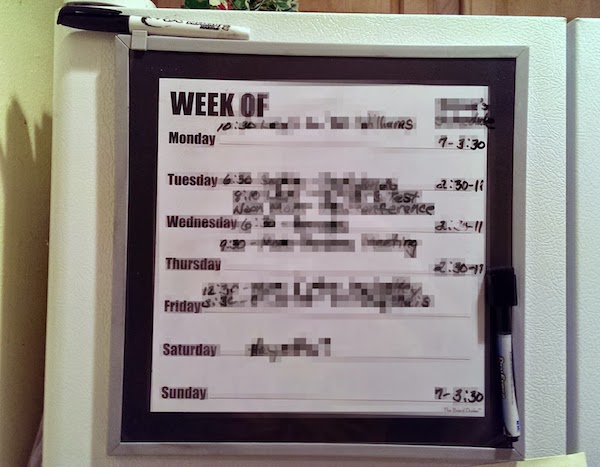
Is there anything worse than scheduling conflicts within your own household? Once the dates are laid out, get things on a calendar. For instance, I have one child who needs physical therapy while she’s juggling school and a job. I also have another child who needs visits to multiple other specialists. With yet another child who thrives on activity and needs extra help with homework, as well as a husband who likes to play, organization is a must. We even have chores to get worked into all of this busyness. Thankfully, a dry-erase one-week board on our refrigerator helps bring that week’s essentials front-and-center. This supplements our monthly calendar.

Tip #3: Be Informed

You must know what your family needs to survive and thrive. Are there accommodations that must be in place for your child to succeed this school year? Is there a better therapy schedule that needs to be adopted? Did that extracurricular activity cause more stress to the family than benefit last year? What are your rights if things don’t improve with the school district this year? Tapping into awesome resources like caregiving apps or the Wrightslaw website can be a real lifesaver!

Tip #4: Make Wise Purchases

You only have limited resources. After you have determined your priorities and educated yourself, explore what items you can access for the best value. That doesn’t always mean the cheapest price. Check with other parents to get insights on iPad cases, noise-blocking headphones or other adaptive equipment. In addition, look into medical equipment lending organizations or local charities that offer grants to help pay for some of this year’s serious necessities.

Tip #5: Practice!

While the notion of visiting a classroom and walking a schedule ahead of time may seem obvious to some, there are other things that you can do to practice for the new school year. Getting back into the rhythm of waking and bedtime at appropriate hours for the school year is helpful the month before. Practicing the routine for getting ready in the morning is helpful. Guiding instructors through the practice of what works for your child is useful as well. In The Don’t Freak Out Guide to Parenting Kids with Asperger’s, Sharon Fuentes makes a great case for sitting down with your challenged child ahead of the school year to complete a “One Pager” for the new teachers. With the amount of mind-numbing information in your child’s IEP, it will bless both your child and their instructors if you can put on one page what adjustments or accommodations will be needed to help your child have a successful year in school.  For example, does specific seating help? Is a check-in/check-out system help your child with their day?  As much as possible or age-appropriate, your child should drive what’s on this “one pager.” This gives them practice at advocating for themselves. And by the way, this brilliant idea is useful for any family with a child who has special needs, a disability, or a chronic illness.

Tip #6: Be on Medical Solid Ground

As much as possible, start the school year with a regular rhythm of medications, treatments and therapy in place. Make certain all of your important doctor’s visits and medical procedures under your belt. Having been there several times before, I can tell you that it makes the start to the school year extremely challenging when your child has to be out any time for the first month class is in session. Those first few weeks can literally set the tone for the entire school year.

While so many of us are still trying to fit in vacations, adventures and trips, turning our thoughts toward these preparations can make for a much smoother transition to a new special needs school year for us and our children in the weeks ahead.

How Do You Prepare for a Special Needs School Year?

What do you do to ease the transition to a new school year for your kids? Leave your tips in the comment box.

Do you like what you see at DifferentDream.com? You can receive more great content by subscribing to the quarterly Different Dream newsletter and signing up for the daily RSS feed delivered to your email inbox. You can sign up for the first in the pop up box and the second at the bottom of this page.

By

The mother of three children, all of whom have a variety of chronic illnesses or special needs, Barbara Dittrich founded SNAPPIN’ MINISTRIES (Special Needs Parents Network) in 2002 and currently serves as its Executive Director.  The organization she leads was one of three finalists for WORLD MAGAZINE’S Hope Award for Effective Compassion in October of 2009, in conjunction with the American Bible Society.  With a unique vision for serving parents of children with chronic illness, disability, or special needs, she has led the SNAPPIN’ MINISTRIES team in developing an innovative parent mentor curriculum.  She lives with her husband of 20+ years in Wisconsin, and writes and speaks nationwide.

Author Jolene Philo

Archives

Categories

Subscribe for Updates from Jolene

Related Posts

Broken Brain, Fortified Faith: Shining the Spotlight on Schizophrenia

Broken Brain, Fortified Faith: Shining the Spotlight on Schizophrenia

Broken Brain, Fortified Faith: Shining the Spotlight on Schizophrenia

Mental illness resources have become more plentiful in the past few years. Today’s post highlights Broken Brain, Fortified Faith: Lessons of Hope Through a Child’s Mental Illness. The book was written by Virginia Pillars, the mother of a young woman who began exhibiting symptoms in her late teens and early 20s.

I had the honor of reading an advance copy and wrote the following endorsement:

Virginia Pillars tells the story of her adult daughter s descent into schizophrenia with unflinching honesty in Broken Brain, Fortified Faith. But Pillars does more than tell how family, friends, and mental health professionals rallied around one young woman, providing the treatment and support her daughter needed to regain her mental health and learn to manage her condition. The author also educates readers about how the disease affects the brain, how it is treated, and what people must do financially and legally to protect loved ones until they recover from the disease. Best of all, Pillars shares her thoughts, doubts, and faith struggles, as well as the comfort and strength she found as she prayed for her daughter and saw those prayers answered in unexpected ways. Broken Brain, Fortified Faith is an approachable and highly readable book for anyone who wants to learn more about schizophrenia and how to support those dealing with it. I highly recommend it.

But you don’t have to take my word for it. Broken Brain, Fortified Faith has received several honors since its release in September of 2016. In April, it received the Catholic Writers’ Guild Seal of Approval. Then, in May, it won the Blue Ridge Writers’ Conference Selah Award in the memoir category.

What makes this book a powerful and valuable resource is Pillar’s unflinching recounting of the challenges her family faced while trying to find effective treatment. In addition to strong story telling, Pillars uses the research she conducted while searching for treatment to effectively explain this disease and the therapies used to control it. Woven into every page is the story of how her faith sustained and motivated her to advocate for her daughter and find hope in overwhelming circumstances.

If you’re looking for encouragement, plain talk, and information about schizophrenia, I encourage you to purchase the paperback or Kindle edition of Broken Brain, Fortified Faith.

By

Jolene Philo is a published author, speaker, wife, and mother of a son with special needs.

Author Jolene Philo

Archives

Categories

Subscribe for Updates from Jolene

Related Posts

Accepting Help and Letting Go: The Dilemma of a Special Needs Parent

Accepting Help and Letting Go: The Dilemma of a Special Needs Parent

Accepting Help and Letting Go: The Dilemma of a Special Needs Parent

Accepting help and letting go are hard pills for parents of kids with special needs to swallow. As her daughter nears her 20th birthday, guest blogger Karen Jackson reflects upon what she’s learned about accepting help and letting go. Her struggle is a universal one, so expect to see yourself in what Karen has to say.

Accepting Help and Letting Go

Accepting Help

Accepting help. It has never been my strong suit. I am pretty sure that I know the best way to care for my daughter and what works well for her. Yet, it is not only a blessing to have caregiving help for Samantha. It is also good for her to have others in her life to push her towards independence and provide new ideas and experiences.

Parents of children with special needs are fiercely strong advocates, used to doing whatever it takes for kids. We are often hyper-vigilant, and we function on less sleep that most. We balance family, work, therapy, numerous medical appointments, and medications. We have been doing this for years and years and years!

So when someone offers to help in any form–whether it be a short respite, or long term in home care–we are simultaneously ecstatic and cautious. How could anyone know our children or care for them like we do? How do we step away to get a short break or more permanent support?

Six years ago, we received notification that we would soon be getting waiver services from the state. I stood in the shower, contemplating what it would mean to our family to have consistent help in our home. I cried, relieved that after 13 years of caring for a child with severe disability, the state finally recognized we needed help.

Waiver services changed my life. But along with that help, so needed and much appreciated, came the realization that I would need to give up some control, let go of constant vigilance, and accept the support of others. It was not, then or now, an easy process.

Even now, I make mistakes and can be overly protective. Sometimes, I forget that Samantha’s current in-home caregiver is very capable. Or that Samantha is almost 20 years old and needs time with friends, experiences that do not include her mother.

Letting Go

Letting go. All parents, regardless of a child’s abilities, need to let go as their children move towards independence. For the parent of a child with special needs, especially of kids who are non-verbal or need specialized care, this challenge is particularly difficult. Both parents and caregivers need to demonstrate patience.

Recently, a professional caregiver mentioned a parent who was resistant to letting her child go on outings, be alone with the caregiver, or let the child out of her sight. Consequently, the child would not respond to the new caregiver in any way, always deferring to the parent. The caregiver wanted to know, “What do I do?”.

My advice to the caregiver was to start small. To begin by taking short, specific outings with an end time in mind. To communicate about details and understand that the parent had to know these details for many years. To take photos of your outing, if possible and send them by phone, reassuring the parent that all is well.

My advice for parents is to start small, also. To spend some time outside the home without your child. To take a walk. To get coffee with a friend. To give the caregiver time to bond and learn about how to best care for your child.

This summer, my husband and I will be married 25 years-a significant anniversary, especially considering the challenges we have faced. We are planning a trip in the fall to  go away for a full week to celebrate. This will be the first time I have been away from Samantha for more than a few days. I am nervous but also realize that we have the supports in place to make it happen. Samantha is old enough to handle having me away for a week, whether or not I am ready.

Building up to a long trip away has taken me a very long time. A short time ago, I was the parent who was afraid to let her daughter out of her sight for a minute, sure I was the only person who knew what was best for her.

Accepting help and letting go. It is a tough lesson for many parents of children with special needs. So be patient and show grace. Give others the chance to be a blessing to you and your child, trusting that in the end God is looking out for us all.

Do you like what you see at DifferentDream.com? You can receive more great content by subscribing to the quarterly Different Dream newsletter and signing up for the daily RSS feed delivered to your email inbox. You can sign up for the first in the pop up box and the second at the bottom of this page.

By

Karen Jackson is the Executive Director of Faith Inclusion Network (FIN) of Hampton Roads where she lives with her husband and three children in Norfolk, VA. She is also the author of Loving Samantha. You can connect with Karen at the Faith Inclusion Network page.

Author Jolene Philo

Archives

Categories

Subscribe for Updates from Jolene

Related Posts

6 Special Needs Tent Camping Tips

6 Special Needs Tent Camping Tips

6 Special Needs Tent Camping Tips

Special needs tent camping may sound impossible, but guest blogger Trish Shaeffer encourages families to give it a try. Today, she shares her 6 best special needs tent camping tips with Different Dream readers.

Summer is here, and I often get asked if having special needs kids keeps us from going on vacation. My answer?

Absolutely not!

We still do family vacations regardless of our twins with special needs. Even camping! And I’m not talking RV camping. I’m talking tent camping, which is a great way to save money and have a fun and memorable family vacation. In fact, a camping trip was our first-ever family vacation, and it was a dry run for an actual big vacation. So how did we do it?

Special Needs Tent Camping Tip 1: Make a Trial Run

We stayed at the camp site for a weekend to try it out: it went well and the kids loved it. The only thing we overdid was packing too much stuff. But now I know exactly what to bring next time.

Special Needs Tent Camping Tip 2: Consider Your Child’s Needs

We keep our sons’ needs in mind when planning a vacation and choosing a camping spot. For example, for places with larger crowds we bring along noise-cancelling headphones or take a break during the day away from noise and people. We also keep in mind how long we are out and about on vacation.

Special Needs Tent Camping Tip 3: Bring Necessary Equipment

When we go camping, we need a tent site with electricity for Alex’s nebulizer and other medical equipment. He also sleeps on a cozy air mattress because of his cerebral palsy.

Special Needs Tent Camping Tip 4: Find the Perfect Campground

For great family-friendly camping spots, check online through the your state’s Department of Conservation and Natural Resources website. It should have information on accessibility. At the Pennsylvania website, we located a camping spot that was handicap-friendly, and it didn’t cost any extra. We were even fairly close to the lake front.

Special Needs Tent Camping Tip 5: Look for Accessible Activities

Having a kid in a wheelchair makes going on vacation a real planning deal because we have to make sure travel destinations are handicap accessible. Luckily, many places do offer handicap accessible actives. Even beaches have handicap ramps down to the ocean.

One of the things you have to remember when planning a family vacation is simply to ask if you are not sure. Most people are understanding and friendly and will help you with accommodations. Some restaurants even offer a menu for people with food allergies.

Special Needs Tent Camping Tip 6: Be Creative

There are many other details to keep in mind–from keeping your kids in their tents and not going astray, to how to take your special needs child fishing in a wheelchair. All you need to do is be creative with your planning and brave enough to try a family adventure somewhere you have always wanted to go. Be adventurous and have fun!

Your Special Needs Tent Camping Tips?

Have you gone camping with kids who have special needs? What tips did you discover along the way? Leave them in the comment box if you like!

Do you like what you see at DifferentDream.com? You can receive more great content by subscribing to the quarterly Different Dream newsletter and signing up for the daily RSS feed delivered to your email inbox. You can sign up for the first in the pop up box and the second at the bottom of this page.

By

Trish Shaeffer mom of 3 active boys, a 9-year-old and 5-year-old twins who were born 2 months early and have special needs. She’s a peer supporter for Parent to Parent and volunteers with the United Cerebral Palsy Network, Special Olympics, and the United Way. She’s also an equine volunteer at Leg Up Farm. She’s married to her best friend and biggest supporter, Chris Shaeffer.

Author Jolene Philo

Archives

Categories

Subscribe for Updates from Jolene

Related Posts