How the Christmas Story is a Special Needs Story

How the Christmas Story is a Special Needs Story

How the Christmas Story is a Special Needs Story

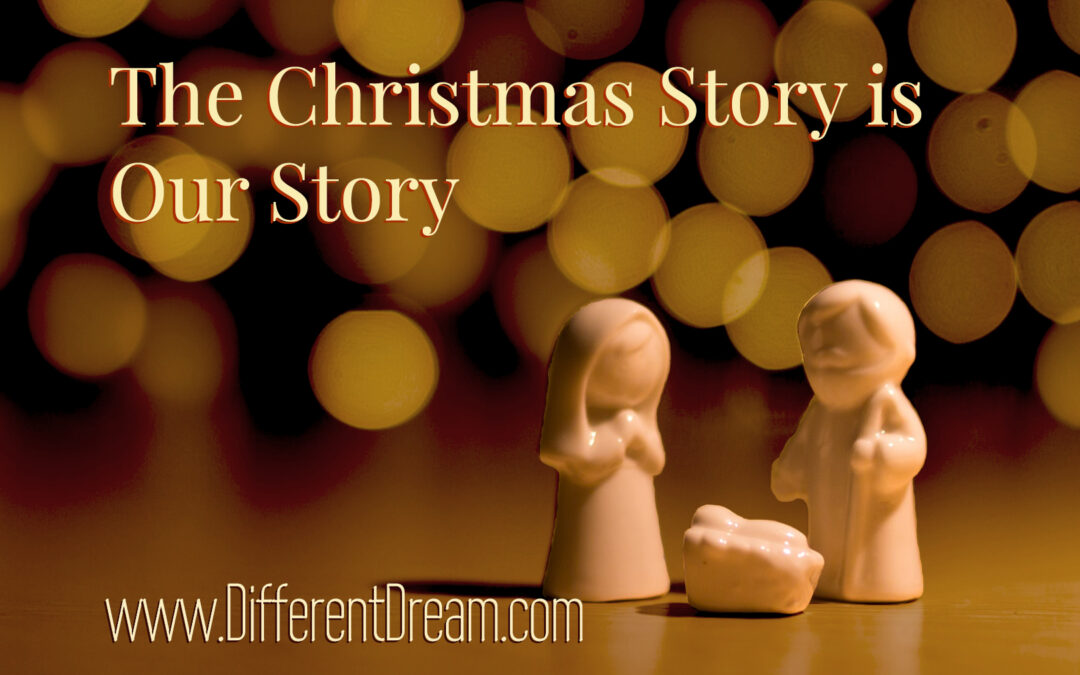
How the Christmas story is a special needs story is something guest blogger Mark Arnold is thinking about this time of year. What he has to say will help you see how Emmanuel, God with us, is with caregiving families in a deep and meaningful way.

Every year we hear the Christmas story of Mary and Joseph heading to Bethlehem, of the innkeeper, angels, shepherds, wise men, and of course the baby Jesus. Have you ever looked at it as a metaphor for special needs families? Here’s a look at how this story parallels the story of parents of children with special needs or disabilities.

Unexpected news

Mary is visited by the angel Gabriel who tells her that she will have a very special child. This surprised Mary. She was ‘greatly troubled at his words’ before she accepted his message and said, May it be to me as you have said.” (Luke 1:26-38)

For the families of children with special needs, unexpected news can arrive during a pre-natal scan. It can be troubling, devastating even. Not every parent accepts the news as Mary did. For some who learn their child will not survive or will be significantly disabled, parents grieve all that their child might have been.

A different location

Mary and Joseph traveled to Bethlehem for the census. Joseph, belonging to the house and line of David, had to register with Mary in Bethlehem, the town of David. (Luke 2:1-5)

Places where a baby with pre-birth concerns can be delivered may be limited. This might require a journey to an unfamiliar town. Though the trip won’t involve a ride on a donkey, it may still be a difficult journey.

Unexpected kindness

Mary needed somewhere safe to give birth to her baby in Bethlehem. Although there are no rooms available for them to stay in the inn, the innkeeper allowed them to use the stable, and the newborn baby was placed in the animals’ manger. (Luke 2:6-7)

Families of children born with special needs or a disability often mention one person who brought a cup of tea and a kind word during an overwhelming medical crisis. A simple act of kindness transformed their profoundly challenging situation into something a little more bearable.

Strangers

A bunch of shepherds turned up shortly after Mary gave birth. Goodness knows what she thought about this, exhausted as she was. Still Luke’s Gospel says that “Mary treasured up all these things and pondered them in her heart.” (Luke 2:8-20) Later, wise men or Magi from the East brought gifts and wanted to see the baby. (Matthew 2:1-12)

Families like ours get used to the arrival of strangers with impressive lists of medical and social care credentials, professionals involved in the care and support of the child and their family. We also ponder the support and care the professionals provide and wonder what the future holds for our child.

Hateful people

Mary and Joseph were warned that Jesus was in danger and fled to Egypt. King Herod ordered the death of all boys under two years old in the Bethlehem area, but was too late to catch Jesus and his family. (Matthew 2:13-18)

There are people today who do not understand or accept children with special needs or disabilities. They do and say hateful things. Some believe babies with special needs or disabilities should be euthanized. Families who encounter these views find them hurtful.

Home

Mary, Joseph, and Jesus eventually returned and set up a home in Nazareth near Galilee. It was Jesus’ earthly home during most of his life. (Matthew 2:19-23)

Many families of children born with special needs or disabilities wait a long time to bring their child home. Some never make it. Those who do come home to a different future than originally envisaged. Still it is a future that can be wonderful.

Seeing how the Christmas story is a special needs story can help us live more fully knowing that Jesus, God with us, and his parents experienced the challenges, and struggles we and other families face each day.

Do you like what you see at DifferentDream.com? You can receive more great content by subscribing to the monthly Different Dream newsletter and signing up for the daily RSS feed delivered to your email.

Photo by Gareth Harper on Unsplash

By

Mark Arnold is the Additional Needs Ministry Director at Urban Saints, a leading national Christian children’s and youth organization. He is co-founder of the Additional Needs Alliance, a national and international advocate for children and young people with additional needs or disabilities. Mark is a Churches for All and Living Fully Network partner, a member of the Council for Disabled Children and the European Disability Network. He writes an additional needs column for Premier Youth and Children’s Work (YCW) magazine and blogs at The Additional Needs Blogfather. He is father to James, who has autism spectrum condition, associated learning disability, and epilepsy. To find out more about how Mark’s work can help you, contact him at: marnold@urbansaints.org or @Mark_J_Arnold

Author Jolene Philo

Archives

Categories

Subscribe for Updates from Jolene

Related Posts

Why Is Expressing Gratitude Especially Important for Families with Disabilities?

Why Is Expressing Gratitude Especially Important for Families with Disabilities?

Why Is Expressing Gratitude Especially Important for Families with Disabilities?

Why is expressing gratitude especially important for families with disabilities? Guest blogger Kristin Faith Evans shares three compelling reasons that can lead you to true expressions of gratitude as the holiday season draws near.

It’s that time of year. The chilly air mixes with autumn scents and rustling fallen leaves. The holidays are quickly approaching, bringing with them all of their memories and emotional implications. During this season, many people talk about the blessings for which they’re most thankful. But the holidays can be challenging and elicit painful emotions for some families. So why is expressing gratitude especially important for families when disabilities in what can be a difficult season? Here are three reasons that are important in our family.

Reason #1: Gratitude makes us more resilient

Studies show that when caregivers practice daily gratitude, they report a higher quality of life and better health outcomes. Focusing on ways that we are thankful can give us a more balanced perspective on our circumstances. Expressing gratitude opens our eyes to appreciate different aspects of our lives that we can miss when we’re focused on our difficulties and loss.

Regularly practicing gratitude can also improve our mental health. Taking time to reflect on our blessings and giving thanks helps lower our stress levels and increases our hope and joy.

Try this: Each day, write down one thing for which you are grateful.

Reason #2: Expressing gratitude deepens our faith

Sometimes it can be difficult to identify something for which we are thankful. During painful seasons of loss and grief, anger can build, and we can feel disconnected from God. Choosing something very simple to thank God for can help us see other ways we can express prayers of gratitude.

Try this: When you’re having difficulty identifying something specific to thank God for, recite the verses written below.

  • “It is good to give thanks to the Lord, to sing praises to your name, O Most High” (Psalm 92:1).
  • “Oh give thanks to the Lord, for he is good, for his steadfast love endures forever!” (Psalm 107:1).
  • “I will give thanks to the Lord with my whole heart; I will recount all of your wonderful deeds” (Psalm 9:1).
  • “Therefore, as you received Christ Jesus the Lord, so walk in him, rooted and built up in him and established in the faith, just as you were taught, abounding in thanksgiving” (Colossians 2:6).
  • “Give thanks in all circumstances; for this is the will of God in Christ Jesus for you” (1 Thessalonians 5:18).

Reason #3: Expressing gratitude strengthens our relationships and family functioning

Studies show that expressing gratitude to others, especially to our significant others, can greatly improve our relationships. Telling someone why you appreciate them and thanking them for something that they have done can increase connection and forgiveness. In times of stress, these stronger relationships help hold the family together giving everyone more support.

Try this: Attach a piece of poster board or a large sheet of paper to your kitchen wall or fridge. Encourage family members and friends to write down someone or something for which they are thankful each day.

What’s one way that you express gratitude? Share your ideas in the comments section.

Do you like what you see at DifferentDream.com? You can receive more great content by subscribing to the monthly Different Dream newsletter and signing up for the daily RSS feed delivered to your email.

All Scripture references are from the ESV translation.
Photo by Marcos Paulo Prado on Unsplash

By

Kristin lives with her husband, Todd, and their two children in the Nashville, TN area. She is an author, speaker, mental health counselor, and a mom of two children with rare genetic disorders and complex needs. Her greatest passion is teaming up with her husband to empower other parents of children with disabilities, mental health disorders, and medical complications. She hopes that you may find encouragement and support on their website www.DisabilityParenting.com.

Author Jolene Philo

Archives

Categories

Subscribe for Updates from Jolene

Related Posts

Alternative Halloween Ideas for Kids with Special Needs

Alternative Halloween Ideas for Kids with Special Needs

Alternative Halloween Ideas for Kids with Special Needs

Alternative Halloween ideas for kids with special needs are implemented more now than in the past. In the interest of spreading alternative Halloween love, guest blogger Mark Arnold shares 10 simple, sensible ideas.

While Halloween can be a fun time of year for many children, for many children with special needs it can be a confusing, anxiety-inducing, terrifying time. It doesn’t have to be like that if we have alternatives in place so they can safely join in the fun. Here are 10 helpful alternative Halloween ideas you can easily implement for kids with special needs.

          1. Prepare a visual timetable in advance so kids with special needs and disabilities know what is going to happen. This will help them to be less anxious about the holiday.
          2. Prime friendly neighbors who are known to your children. For example, ask the neighbors to have their outdoor lights on and a bucket of sweets or snacks ready for the children to enjoy safely. Prepare the children to sing their favorite song as a thank you.
          3. Go for an autumn walk in the countryside or a park. Collect pinecones, pick blackberries, kick through the fallen leaves, or look up at the stars. Bring flashlights along on the walk and have hot chocolate and cookies ready for when you get back home.
          4. Provide headphones for children sensitivity to loud noise so unexpected noises are less of a problem.
          5. Choose alternative bright and light outfits. Make Halloween more about the dressing up than wearing terrifying costumes. There are plenty of non-scary, positive options to choose from.
          6. Host an alternative party, a counter-cultural celebration of things that are bright, light, colorful, and good. This offers more variety for dressing up and is equally fun without the scares.
          7. Choose sugar-free sweets or healthy snacks with a Halloween theme.
          8. Have an autumn indoor picnic. Spread out blankets and enjoy a feast together. If the weather is good, have an autumn barbecue with good outdoor lighting.
          9. Think about who is being left out and invite them to your light party, autumn picnic, or barbecue.
          10. Ask your kids how they are feeling. Have activities ready for those who are struggling so they can have fun in a different way. Things like carving pumpkins, making pumpkin mini-pies, a bubble machine, apple bobbing, and roasting marshmallows. Also create safe space kids can access if they need a rest. Fill it with cozy blankets and cushions and provide soft lighting.


        1. I hope these Alternative Halloween ideas for kids with special needs help make the holiday a great success!Do you like what you see at DifferentDream.com? You can receive more great content by subscribing to the monthly Different Dream newsletter and signing up for the daily RSS feed delivered to your email.
          Image by Mayur Gadge from Pixabay

By

Mark Arnold is the Additional Needs Ministry Director at Urban Saints, a leading national Christian children’s and youth organization. He is co-founder of the Additional Needs Alliance, a national and international advocate for children and young people with additional needs or disabilities. Mark is a Churches for All and Living Fully Network partner, a member of the Council for Disabled Children and the European Disability Network. He writes an additional needs column for Premier Youth and Children’s Work (YCW) magazine and blogs at The Additional Needs Blogfather. He is father to James, who has autism spectrum condition, associated learning disability, and epilepsy. To find out more about how Mark’s work can help you, contact him at: marnold@urbansaints.org or @Mark_J_Arnold

Author Jolene Philo

Archives

Categories

Subscribe for Updates from Jolene

Related Posts

10 Tips for a Successful Special Needs Vacation

10 Tips for a Successful Special Needs Vacation

10 Tips for a Successful Special Needs Vacation

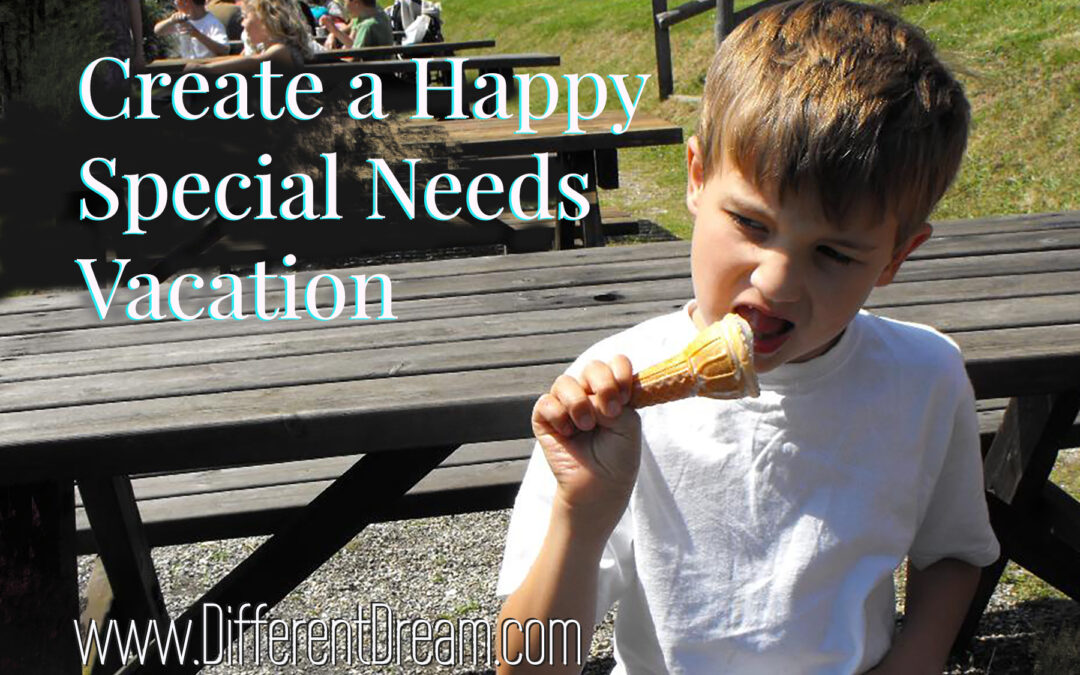
Mark Arnold’s guest post offers 10 tips for a successful special needs vacation. He and his family tested them this summer for you to use whenever you and yours are able to get away.

So, what do we need to do to prepare our special needs children and young people for vacations overseas, in their home country, or as a staycation? These 10 tips for a successful vacation can help.

Tip #1: Allow for Processing Time

While the attraction of late vacation deals can be tempting, deciding at the last minute can be difficult. Some children and young people need processing time to prepare for a significant change, so plan as far in advance as you can.

Tip #2: List Issues Your Child May Face

Think about everything from the packing to traveling, from where you will stay and sleep to the things you will do, from the people going with you to those you might meet, from the food will eat to transportation you will take. What are the issues for your special needs child or young person? List them and think about how to reduce their impact. For example, if food’s an issue, contact the holiday provider and request a special menu. Or you take favorite food items with you.

Tip #3: Create a Social Story

A social story uses photos, symbols, and words to explain something new or complex for a child or young person with special needs. You can create one about what your child or young person needs to know, about the upcoming vacation. This gives them the tools to understand what will happen. Resources about social stories can be found at the Reachout ASC website.

Tip #4: Create a Visual Timetable

Create a daily plan. Use symbols or photos to represent each aspect of the day. Attach them using Velcro, so they can move along the timetable as the day progresses to aid understanding of what is happening now, next, and so forth. There’s a visual timetable template on the Reachout ASC website above.

Tip #5: Take Favorite Items

Take favorite toys or items your child or young person uses to feel safe and secure. Pack them in your carry-on baggage so they don’t get lost! You could also introduce a new item to take on vacation—something related to your destination. The item could be a vacation mascot and your child could have the job of looking after it.

Tip #6: Conduct a Dry Run

If you are flying and the airport you are going to isn’t far away, conduct a dry run. Most airports have special assistance for families traveling with a child or young person with special needs. It’s worth exploring what they provide. Look at where everything is. Airlines are supportive, but it’s wise ask for assistance in advance.

Tip #7: Bring Things to Do

While traveling, there will be long periods with little to do. Take activities to fill these gaps. Depending on your child’s interests, take coloring books, books to look at or read, fidget toys, Legos, a tablet to watch or listen to, or whatever helps them fill the time and relieve boredom.

Tip #8: List the Essentials

We usually remember important things like tickets, passport, money, and phones. It’s wise to also list other essentials such as medications and be sure you bring enough along. List snacks and drinks and take plenty in case you get stuck in a huge traffic jam or at the airport.

Tip #9: Involve Your Child or Young Person in Planning

If possible, seek your child or young person’s input. Ask what they’re worried about, what they want to take to feel safe, what resources help them feel in control. The more you talk about the vacation and work through any fears, the more likely the trip will be successful.

Tip #10: A Staycation is a Good Option

If the complexities of going somewhere else are too great, plan a staycation instead. You can have a wonderful time staying local and exploring what’s on offer close to home. And everyone gets to sleep in their own bed at night!

Whatever you are hoping to do for vacation, these 10 tips for a successful special needs vacation can make it less stressful and more fun.

Do you like what you see at DifferentDream.com? You can receive more great content by subscribing to the monthly Different Dream newsletter and signing up for the daily RSS feed delivered to your email.

By

Mark Arnold is the Additional Needs Ministry Director at Urban Saints, a leading national Christian children’s and youth organization. He is co-founder of the Additional Needs Alliance, a national and international advocate for children and young people with additional needs or disabilities. Mark is a Churches for All and Living Fully Network partner, a member of the Council for Disabled Children and the European Disability Network. He writes an additional needs column for Premier Youth and Children’s Work (YCW) magazine and blogs at The Additional Needs Blogfather. He is father to James, who has autism spectrum condition, associated learning disability, and epilepsy. To find out more about how Mark’s work can help you, contact him at: marnold@urbansaints.org or @Mark_J_Arnold

Author Jolene Philo

Archives

Categories

Subscribe for Updates from Jolene

Related Posts

The Holiday Season Can Be Hard for Caregiving Families

The Holiday Season Can Be Hard for Caregiving Families

The Holiday Season Can Be Hard for Caregiving Families

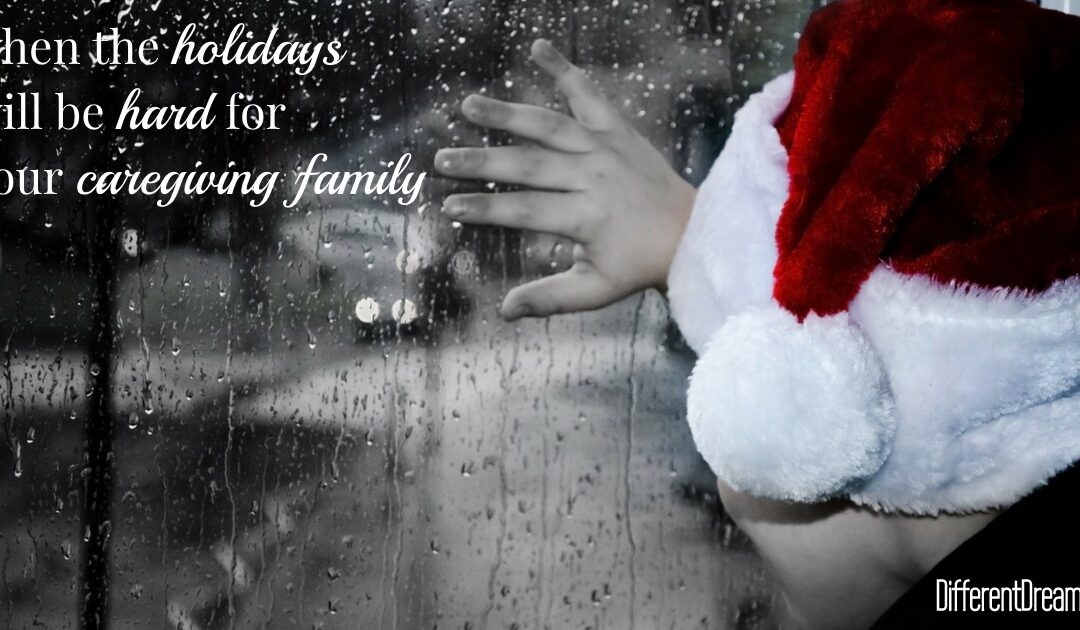
The holiday season can be hard for caregiving families. I spent Halloween, New Year’s Eve, and my birthday the hospital with our infant son. Because of his precarious health when he was young, several times we made the difficult choice to stay at home for Thanksgiving and Christmas instead of spending it with extended family.

 I didn’t like making those choices. I didn’t want to miss the holiday traditions I’d experienced growing up. On our birthdays, we chose the menu for dinner and whatever dessert we desired. Thanksgiving and Christmas were spent with either Mom’s extended family or Dad’s, the women gathering the day before to prepare feasts that culminated in the most delicious homemade pies I’ve ever eaten.

 At the beginning of each holiday when our son was hospitalized or we chose to stay home, I grieved what our young family would miss. However, as we experienced each holiday with people who weren’t part of our extended families, I found pockets of joy.

To read the rest of The Holiday Season Can Be Hard for Caregiving Families, visit the Hope Anew blog.

Do you like what you see at DifferentDream.com? You can receive more great content by subscribing to the monthly Different Dream newsletter and signing up for the daily RSS feed delivered to your email.

By

Jolene Philo is the author of the Different Dream series for parents of kids with special needs. She speaks at parenting and special needs conferences around the country. She’s also the creator and host of the Different Dream websiteSharing Love Abundantly With Special Needs Families: The 5 Love Languages® for Parents Raising Children with Disabilities, which she co-authored with Dr. Gary Chapman, was released in August of 2019 and is available at local bookstores, their bookstore website, and at Amazon.

Author Jolene Philo

Archives

Categories

Subscribe for Updates from Jolene

Related Posts

Making Every Day a Great Mother’s Day, Part 1

Making Every Day a Great Mother’s Day, Part 1

Making Every Day a Great Mother’s Day, Part 1

Making every day a great Mother’s Day seems like a long reach for many parents raising kids with special needs and disabilities. For guest blogger Heather Johnson, it’s a perspective born of loss, grief and love. In today’s post, she tells the origin story of her perspective. Next week, she’ll be back with tips for making every day a great Mother’s Day at your house.

I called my mom on Mother’s Day morning, 2002. She thanked me for sending her favorite flowers—red carnations. We chatted excitedly about her upcoming move from Ohio to Wisconsin. In just a few short weeks, she would be within five minutes of our family. We hadn’t been closer than a whole day’s drive for 45 years. Soon, she’d be able to walk with her grandkids, whom she’d only seen a handful of times, to the park across the street from her house. She’d push them on swings and scoop them up in her arms at the end of the slide.

A whole new chapter of life was about to begin for my mom and me. We needed that. She worked her tail off raising us three kids. Now I was up to my neck and beyond trying to raise our three, all adopted from Russia with a myriad of disabilities stemming from fetal exposure to alcohol (FASD). After so many losses in both our lives, we were looking for some close-by comfort and support from each other.

Before saying goodbye, Mom thanked me again for the carnations and added her often repeated philosophy—“Flowers should be for the living, not for the dead.” We laughed, said “I love you!” and hung up.

The next morning, I received a call. Mom was dead. Heart attack.

Turns out, our dreams didn’t turn out. She never moved to Wisconsin.

Our youngest of three was three when Mom died. I had significant needs at the time. Being a mom is hard. Add to that mothering kids with special needs. Add to that mothering three kids with special needs.

Are you a mother who suffers from exhaustion? Are you grieving never-ending losses—dying dreams needing to be replanted with different dreams? Are you depressed or anxious? I get that. My kids are grown up, but they will never grow out of their special needs. It’s essential for moms like us to attend to our own needs in order to attend to those of our kids. Here’s an illustration:

Every time I fly, the flight attendant gives specific instructions about oxygen masks. “Place your own mask on before helping your child.” Why? Because if parents pass out from lack of oxygen, they won’t be able to care for their children. The same is true with special needs parenting. If we don’t take care of ourselves first, we run the risk of burnout and becoming unable to care optimally for our kids with disabilities. We need our own on-going “oxygen masks” so we can care for our kids on this long-haul journey of special needs. That’s why I’ll return next week to talk about some of the oxygen masks that I use to honor my mother by making every day a great Mother’s Day for myself and my family.

Part 2

Do you like what you see at DifferentDream.com? You can receive more great content by subscribing to the monthly Different Dream newsletter and signing up for the daily RSS feed delivered to your email.

By

Heather MacLaren Johnson and her husband have three kids, all five and under when adopted from Russia. Now 29, 27, and 22, all need regular help with their multiple, permanent, invisible disabilities stemming from prenatal exposure to alcohol (FASD).

Heather has B.S. in Education and a doctorate in Clinical Psychology. She is the author of Grace, Truth, & Time: Facilitating Small Groups That Thrive and has published personal essays in The Wonder Years: 40 Women Over 40 on Aging, Faith, Beauty, and Strength (Kregel Publications) and Your Story Matters: Finding, Writing, and Living the Truth of Your Life (NavPress). She’s writing a memoir about her family’s journey through hidden disabilities and mental illness to encourage others to greater intimacy with God and each other through times of desolation and lament.

Heather and her husband of 27 years live with two horses, two dogs, two barn cats, and a bunch of silk plants she just dusts. Heather writes and photographs at www.truelifewithgod.com.

Author Jolene Philo

Archives

Categories

Subscribe for Updates from Jolene

Related Posts