A Valentine’s Day Love Story

A Valentine’s Day Love Story

A Valentine’s Day Love Story

A Valentine’s Day love story, if present day culture is to be believed, is all about candlelit dinners, chocolates, diamonds, and declarations of undying devotion. This Valentine’s Day love story is about loving a little boy who lives with anxiety, ADHD, and high-functioning autism just as he is.

“Grammy,” said our 8-year-old grandson Tad when he entered our kitchen. “Someone did something terrible in the bathroom. Come see.”

His little sister followed us into the bathroom where thick rivulets of hand soap ran down the mirror above the sink. The sister denied having had anything to do with it. Another look at the miserable expression on my grandson’s face, and I sent her out of the room.

“Did you do this, Tad?”

“Yes,” he said with tears in his eyes.

“Why did you lie?”

He began to cry. “Because I didn’t want you to get mad at me. Are you mad at me Grammy?”

“I’m not mad at you, Tad.” I hugged him. He hugged back. “Just disappointed. Mostly because you lied, and it’s hard to trust someone who lies. You know that, right?”

He nodded.

“Let’s clean this up together.”

We talked while mopping hand soap off of the counter, the faucet, the sides of the vanity cabinet, and the wall.

“What made you do it?” I asked.

“My mind quit working, and I couldn’t stop.”

“Did you know what you were doing was wrong?”

His lip trembled. “Yes, but the naughty part of me took over.”

I took a few seconds to decide what to say. “Everybody, even grownups, has to fight against choosing naughty things. The only human who chose the right way every time was Jesus. He did it because he was completely human and also completely God. You’re not Jesus and neither am I. We’re humans who choose to be naughty sometimes, and Jesus still loves us.”

To read the rest of A Valentine’s Day Love Story, visit the Hope Anew website.

Do you like what you see at DifferentDream.com? You can receive more great content by subscribing to the monthly Different Dream newsletter and signing up for the daily RSS feed delivered to your email.

Photo by Victoria Aleksandrova on Unsplash

By

Jolene Philo is the author of several books for the caregiving community. She speaks at parenting and special needs conferences around the country. Sharing Love Abundantly With Special Needs Families: The 5 Love Languages® for Parents Raising Children with Disabilities, which she co-authored with Dr. Gary Chapman, was released in August of 2019 and is available at local bookstores, their bookstore website, and Amazon. See Jane Dance!, the third book in the West River cozy mystery series, which features characters affected by disability, was released in October of 2023.

Author Jolene Philo

Archives

Categories

Subscribe for Updates from Jolene

Related Posts

An Unexpected Christmas Gift

An Unexpected Christmas Gift

An Unexpected Christmas Gift

An unexpected Christmas gift was given to guest blogger Sandy Ramsey-Trayvick and her family more than 2 decades ago. Today she shares her reaction to the gift shortly after it was given and how she views it now.

My son Myles got sick on December 10, 1999. My family had attended a Christmas party four days before. I have memories and pictures from that party of my son giggling with excitement as he raced back and forth across the room, practicing his newly developing walking skills. He was healthy and happy. Our family was excited and looking forward to enjoying the holiday season. But our little boy suddenly became very ill. Instead of planning for Christmas, my husband and I found ourselves in the emergency room receiving the news that our 13-month-old had contracted strep pneumococcal meningitis and was in a coma.

I remember sitting next to his hospital bed in the pediatric intensive care unit signing the photo Christmas cards that featured my three little ones all dressed up in their holiday best. Sending photo cards of my kids to family and friends had become one of my holiday traditions. This particular year, as I signed each card, I prayed for God to awaken my baby boy in time for Christmas. I pleaded with the Lord but His answer was no. The Christmas of 1999 was the saddest I’ve experienced.

I asked the Lord for just one gift and didn’t receive it.

There have been a lot of Christmases since then and, thankfully, my son has been awake and at home for all of them. Through that long illness and the special needs journey that has followed, the Lord has blessed our family with gifts I hadn’t thought to ask for as I sat in that hospital room all those years ago.

God began revealing His first gift to us shortly after Myles was hospitalized.

Prior to that long hospital stay, my husband and I held inaccurate ideas about God and His ways. In the midst of some of our most difficult circumstances with Myles, God gave us the gift of truly getting to know Him. We experienced Him as Teacher, Comforter, Protector, Advocate, and Waymaker. Prior to that hospital experience, we had heard about God and His ways, but He gave us the gift of knowing and seeing Him for ourselves. In the almost 25 years since my son’s initial illness, we’ve continued to know God more intimately as we’ve walked with Him through both joyful and painful experiences.

Through this special needs journey, the Lord has also given me the gift of knowing my true identity.

Becoming a special needs mom challenged all the ways I saw myself. My old chosen identity had been tied primarily to my performance and accomplishments—but it didn’t fit with my new life as a special needs mom. As I struggled for a sense of significance in this role, the Lord walked me through His Word to teach me who He says I am. He taught me that my significance—my worth and value—have always been in Christ. I didn’t need to choose an identity because He had already chosen one for me, one that would remain unchanged by new roles or unforeseen circumstances.

As I reflect back over the past two decades and more, I’m relishing an unexpected Christmas gift of remembrance—the ability to look back and recall all that God has done in and through my family’s special needs life. He has continued to give.

Do you like what you see at DifferentDream.com? You can receive more great content by subscribing to the monthly Different Dream newsletter and signing up for the daily RSS feed delivered to your email.

Photo by Igor Omilaev on Unsplash

By

Sandy and her husband are parents to three young adult children. Their son was diagnosed with multiple disabilities 24 years ago after a devastating illness as a toddler. Following her son’s diagnosis, Sandy quit her job to become his full-time caregiver and advocate.

Sandy is currently a Certified Professional Coach. Her focus is to empower special needs parents who are feeling weary by helping them to renew their hope and strength and reactivate their joy.

You can learn more about Sandy and her work at www.UNDisabledLIVES.org. You can also reach her at Sandy@UNDisabledLIVES.org.

Author Jolene Philo

Archives

Categories

Subscribe for Updates from Jolene

Related Posts

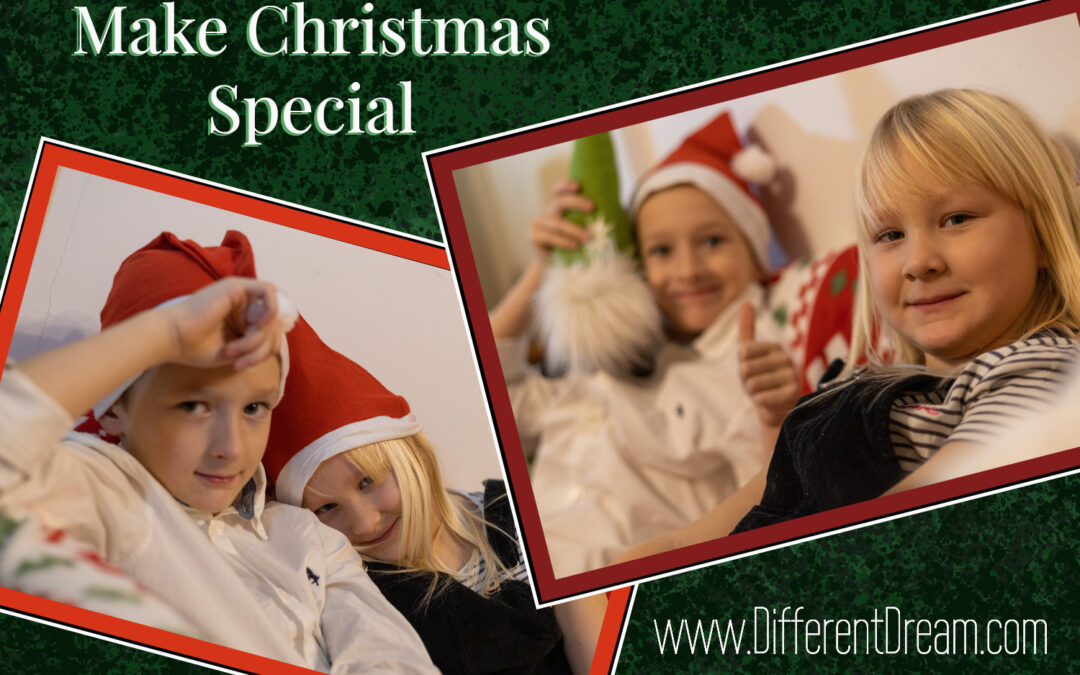
Creating Unique, Disability-Friendly Christmas Traditions

Creating Unique, Disability-Friendly Christmas Traditions

Creating Unique, Disability-Friendly Christmas Traditions

Creating unique, disability-friendly traditions may feel like one more task to add to your holiday to do list. These ideas from guest blogger Kristin are anything but one more thing. In fact, her ideas will simplify some of what you’re already doing and give you permission to let other things go.

It can be easy to feel pressure from family, friends, or work to participate in typical holiday activities. But usual Christmas traditions and gatherings can be challenging for families with special needs. Taking a child with medical needs or developmental disabilities to loud, large, or crowded places can be difficult. Just leaving the house can cause more stress than enjoyment. If this sounds like your family, consider modifying usual activities and making new Christmas traditions and memories unique to your family’s needs.

Evaluate Holiday Plans

Start by reflecting on these seven questions as you create your family’s best holiday experience:

    1. What kinds of activities does your family enjoy together?
    2. What kinds of activities does your family not enjoy?
    3. What types of social situations or outings work well for your family?
    4. What types of social situations or outings do not work well for your family?
    5. What expectations or pressures from family and friends might you be trying to fulfill that might not be best for your family?
    6. What could you do differently this year that would decrease stress and create more enjoyment for your family?
    7. What’s one new special tradition you can start that will be unique for your family?

Modify Typical Holiday Activities

Here are some ways for modifying and creating unique, disability-friendly Christmas traditions to fit your family:

    • In place of going to a large family gathering, invite a few family members to your home or schedule a different time to go visit family when only a couple of people will be there.
    • In lieu of going to a Christmas show or large light display at a crowded center, pile into the car, turn on Christmas music, and drive around looking at Christmas lights or go to a drive through light show.
    • Instead of going out to eat, decorate your table and order carry out. Or have a fondue or pancake party.
    • If opening a lot of presents on Christmas morning causes stress for your child, open a few presents at a time throughout the day.
    • If getting pictures made at the mall with Santa scares or upsets your child, take pictures in a private setting in which your child feels more comfortable with a Christmas toy or decoration they like.
    • In place of going to a party, invite one family over for a fun night.
    • If making Christmas cookies or other traditional goodies usually ends in a meltdown, have your child help with only one step of the process.

It might feel like your child or family is missing out. But what you all are likely going to remember most is how the holiday made you feel. Creating unique, disability-friendly Christmas traditions may look different from those of other families, and that’s okay. What’s most important is that you enjoy the holiday together, however that might look for your family.

Do you like what you see at DifferentDream.com? You can receive more great content by subscribing to the monthly Different Dream newsletter and signing up for the daily RSS feed delivered to your email.

Embedded Photos by Richard Stachmann on Unsplash

By

Kristin lives with her husband, Todd, and their two children in the Nashville, TN area. She is an author, speaker, mental health counselor, and a mom of two children with rare genetic disorders and complex needs. Her greatest passion is teaming up with her husband to empower other parents of children with disabilities, mental health disorders, and medical complications. She hopes that you may find encouragement and support on their website www.DisabilityParenting.com

Author Jolene Philo

Archives

Categories

Subscribe for Updates from Jolene

Related Posts

Making an Autumn Sensory Fidget Box

Making an Autumn Sensory Fidget Box

Making an Autumn Sensory Fidget Box

Making an autumn sensory fidget box is easier than it may sound. Guest blogger Mark Arnold is here with ideas, pictures, and step-by-step guidance to help you and your kids create a delightful activity for this beautiful season of the year.

Autumn is a fabulous time of the year, with its many changes and many treasures to look for and find! Our family has been making a sensory fidget box, and I thought you would like to make one too.

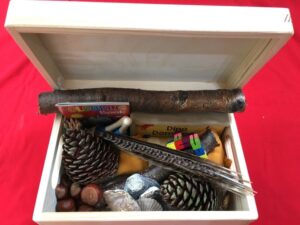
There are loads of nature items things to add to your fidget box. I’ll show you what we’ve put in ours so far, as well as some ‘extras’ that we included.

Pinecones: We live near some pine woods so we’ve gathered these lovely cones for our box. They are wonderful to feel and explore with our fingers.

Wooden Batons: We cut these tactile, wooden batons from fallen branches in the woods. They are smooth with little rough bits too!

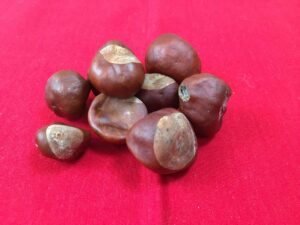
Conkers (also known as Buckeyes): We walked an avenue of horse chestnut trees. It was worth it to get these smooth conkers. They are great to hold and rotate in the palm of the hand! Be sure to supervise their use as they can be a choke hazard.

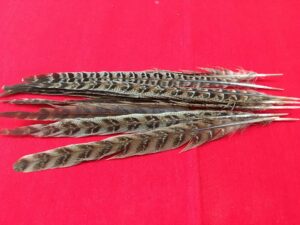
Feathers: There are plenty of pheasant feathers near where we live, and lots of others to find too. We washed them first so they are nice and clean. They are great sensory items to stroke with.

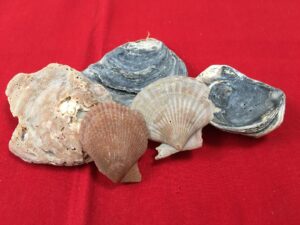
Shells: We also live near the sea (we’re very lucky), so we picked up some nice seashells to add to the fidget box. Again, we washed them first. Shells are tactile and sensory, very calming to feel.

Pebbles and Stones: The weight of pebbles and stones can be sensory. The experience can be enhanced by popping them in the fridge to cool down!

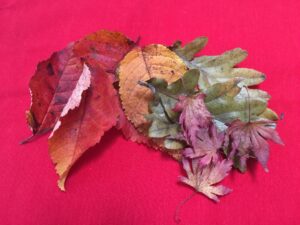
Scrunchy Autumn Leaves: Fallen autumn leaves are beautiful to look at and scrunchy to feel! If you like, stick them to a piece of paper to keep them longer.

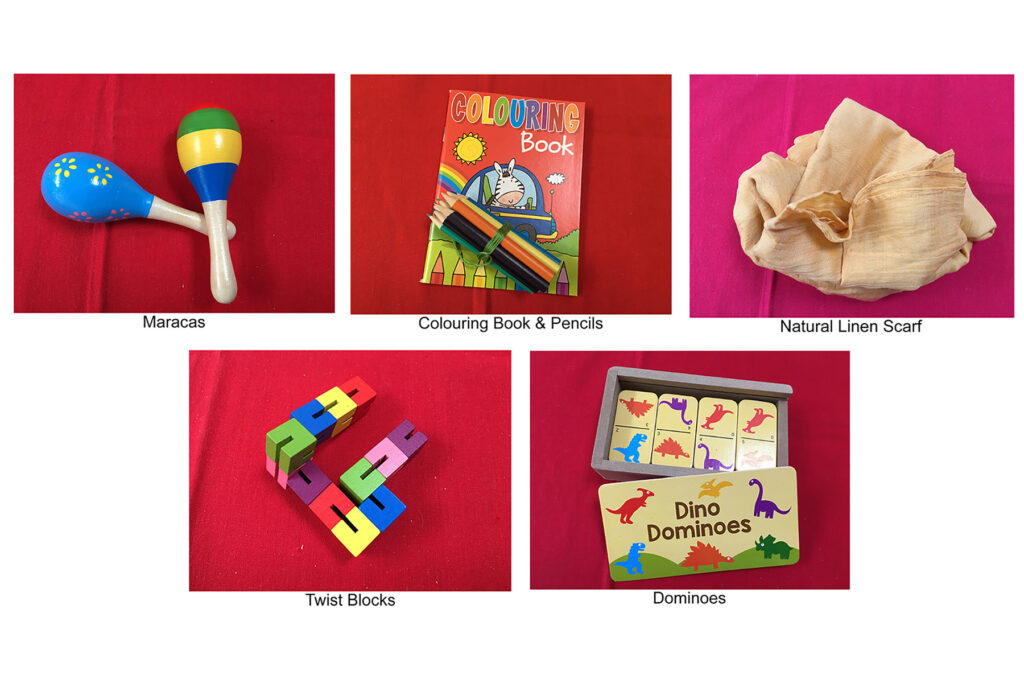
Purchased Items: We bought a few items for our fidget box that are in keeping with the natural feel. For us, that means no plastic. Here are some of them:

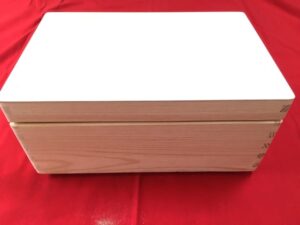
Finally, you need a nice wooden box to put everything in. We found one to paint and decorate to make it look special.

Creating your own autumn sensory fidget box is lots of fun. You’ll enjoy exploring and collecting, putting it together, and using the fidget box throughout the winter…until you can make one for spring!

© Mark Arnold/The Additional Needs Blogfather

Do you like what you see at DifferentDream.com? You can receive more great content by subscribing to the monthly Different Dream newsletter and signing up for the daily RSS feed delivered to your email.

Images courtesy of Mark Arnold


By

Mark Arnold is the Additional Needs Ministry Director at Urban Saints, a leading national Christian children’s and youth organization. He is co-founder of the Additional Needs Alliance, a national and international advocate for children and young people with additional needs or disabilities. Mark is a Churches for All and Living Fully Network partner, a member of the Council for Disabled Children and the European Disability Network. He writes an additional needs column for Premier Youth and Children’s Work (YCW) magazine and blogs at The Additional Needs Blogfather. He is father to James, who has autism spectrum condition, associated learning disability, and epilepsy. To find out more about how Mark’s work can help you, contact him at: marnold@urbansaints.org or @Mark_J_Arnold

Author Jolene Philo

Archives

Categories

Subscribe for Updates from Jolene

Related Posts

The Invasion of the Red Dye 40 Brain Snatchers

The Invasion of the Red Dye 40 Brain Snatchers

The Invasion of the Red Dye 40 Brain Snatchers

The invasion of the Red Dye 40 brain snatchers wreaked havoc at Lisa Pelissier’s house not too long ago. In this post, written after she snatched her brain back, she shares how artificial dyes can affect children with certain disabilities and special needs. She also offers tips on how to lessen the problems these dyes cause.

My brain has been off for the last couple weeks. I’ve been depressed. Anxious. Paranoid. I’ve been having panic attacks. I blamed it on overeating when my in-laws were in town. (They took us out to dinner several times and it was delicious!) I blamed it on eating sugar—I don’t usually eat much of it, but we had ice cream in the house… and the rest is history. I blamed it on chocolate, which I usually only eat once a week, but had splurged and eaten it for three days.

Then I figured it out.

I read the label on the back of some potato chips that I had been doling out to myself in small portions for the past two weeks. My pale yellow potato chips had Red 40 in them.

Our family had fallen victim to the invasion of the Red Dye 40 brain snatchers.

I do not react well to Red 40. If I eat it, I get really angry. It usually happens the day after I eat the exquisite, mouthwatering, scrumptious Nacho Cheese Doritos. When I eat that fine ambrosia, symptoms ensue. Usually I’m careful, but not this time. After all, who would think there was Red 40 in sour cream and onion chips? I had eaten them every day for two weeks.

According to the Cleveland Clinic, side effects from Red 40 can include hyperactivity and other ADHD symptoms, irritability, depression, hives, asthma, sneezing and other allergy symptoms, skin irritation, and migraines. The New York Post says that Red 40 can be a factor in gut diseases as well. My daughter who has ADHD gets worsening symptoms, including restless leg syndrome, if she eats it.

In fact, Red 40 is banned in most of Europe.

Other food dyes can potentially be harmful as well, including Red 3, Yellow 5 & 6, Blue 1, and others. A study from 2012 reveals that many food dyes are potential carcinogens or contain them. The authors of the study recommend that “all of the currently used dyes should be removed from the food supply and replaced, if at all, by safer colorings.”

It is difficult to say no to processed foods, especially in a culture where food is used as for celebration, reward, and comfort. How do you say no when your child’s team wins, and the reward is a sugary treat full of food dyes? How do you say no when your child is at a birthday party and there is a pink cake? How do you say no when…. Nacho Cheese Doritos? I mean, come on!

But then I consider the alternative.

My kids live with autism, ADHD, and mental health disorders, so saying no is important.

Is pink cake worth more than a quiet, calm state of mind?
Is that sugary reward worth more than a good night’s sleep?
Are Nacho Cheese Doritos (sob!) worth more than feeling peaceful instead of paranoid?

Saying no is important. But there are other ways to respond than with a hard, dictatorial “No!” Here are my tips for avoiding the invasion of the Red Dye 40 brain snatchers.

1) Make sure nothing you put in your pantry on a regular basis includes Red 40 or other artificial food dyes. This includes medications, to the degree that you are able. This way, you avoid accidentally exacerbating any symptoms your child already has.

2) Be mindful of what your child is consuming at parties and celebrations. Keep portions under control. Have one red-velvet cupcake, not one red-velvet cupcake, a cup of red fruit punch, and some red licorice. Thoughtful consumption can still feel like a celebration without ingesting too much of a harmful chemical.

3) Watch for symptoms after consumption of foods containing Red 40 and other artificial food dyes. If symptoms are mild, manageable, and fade quickly, then maybe the splurge was worth it. If symptoms are extreme, out of control, or persist for days, you might want to avoid Red 40 altogether.

4) Look for food options with natural food colorings. Companies, even mainstream manufacturers, have been moving toward using natural food colorings instead of artificial dyes. You can even purchase food coloring made from natural ingredients. The colors are not as vibrant as those made with artificial dyes, but the switch is worth it.

How does Red 40 affect your children? What replacements have you found for popular red foods and drinks? Post in the comments below.

Do you like what you see at DifferentDream.com? You can receive more great content by subscribing to the monthly Different Dream newsletter and signing up for the daily RSS feed delivered to your email.

Photo by Fernanda Rodríguez on Unsplash

Lisa Pelissier

By

Lisa Pelissier lives in Oregon where she is a homeschooling mother of four (three with disabilities) and author of four middle-grade fiction novels as well as a YA fantasy novel. Lisa owns SneakerBlossom Books, offering Christian, classical homeschool Study Guides and curriculum. She blogs at Eleventh Willow, offering encouragement for Christians parenting the mentally ill. She also works as a freelance copy editor, an artist, and a substitute teacher. In her spare time Lisa enjoys playing the piano and fretting about things over which she has no control. 

Author Jolene Philo

Archives

Categories

Subscribe for Updates from Jolene

Related Posts

What Does a Happy Birthday Look Like?

What Does a Happy Birthday Look Like?

What Does a Happy Birthday Look Like?

What does it look like for a child or adult with a disability or special need? Guest blogger Mark Arnold answers that question today in this story about how he and his family created a happy birthday for their son, Mark. He hopes it will spur on families who want to keep their loved one with additional needs at the center of the birthday celebration.

James’ birthday was the other day. Birthdays are an occasion to look forward to for most people, but it’s not a day he particularly recognizes. Due to his additional needs, James doesn’t really get birthdays. But that didn’t mean that we would let the day just slip by unnoticed!

We planned a day for James to remember
A day filled with his favorite things.
A day that would bring him joy and delight, thrills and excitement.
A special day.
The happiest of days.
The best of birthdays.
And the plan worked!

So what does a happy birthday look like? For Mark it looked like this:

Operation Birthday Card

One of James’ favorite things when his birthday comes around is receiving and opening lots of cards. Last year we appealed to social media and received over 80 birthday cards through the post. This year our target was 100 cards, and we smashed it! Over 150 cards came from across the world with contributions from Brownie and Guide groups too! James was thrilled and spent a happy birthday morning opening cards, looking at each one, and giving instructions as to where they were to be placed!

Farm Shop Trip

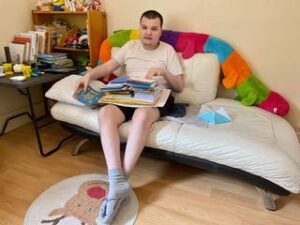
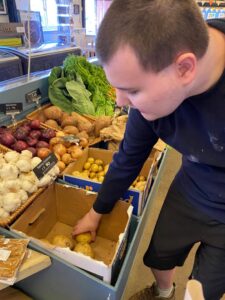
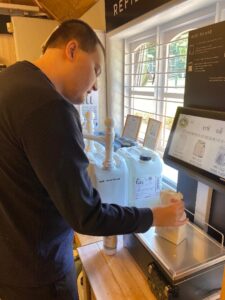
James’ favorite place in the whole world is Pamphill Farm Shop near Wimborne in Dorset. He loves to shop there, and the staff members are inclusive. They remember his name and accommodate his needs, like his need to line up the entire stock of iced gingerbread!

James had a lovely time there on the afternoon of his birthday. We followed it up with a visit to the café at Compton Abbas airfield, a little grass airstrip near Shaftestbury, Dorset. Two of James’ favorite places in one day!

Birthday Tea and Cake!
A trip out to James’ favorite places usually ends with a visit to the fish and chip shop on the way home. James has several ‘favorites’ to choose from, sometimes fish cakes, but on this day chicken nuggets and chips.

A birthday must have cake, and as James likes chocolate it had to be a full-on chocolate fest cake—with a candle to blow out of course!

Time to Relax

After such a busy day, it was time to chill out and relax on the sofa to watch TV and think about what a wonderful birthday it had been. Even though James didn’t know it was his birthday, we couldn’t treat it like any other day. We wanted James to have great memories, to experience our love, to know we care enough to make his day extra special. It worked. On this very best of birthdays, James smiled the whole day through.

So what does a happy birthday look like for people with disabilities and special needs? It looks like being surrounded by whom and what they love best.

Do you like what you see at DifferentDream.com? You can receive more great content by subscribing to the monthly Different Dream newsletter and signing up for the daily RSS feed delivered to your email.

Image by Pexels from Pixabay

By

Mark Arnold is the Additional Needs Ministry Director at Urban Saints, a leading national Christian children’s and youth organization. He is co-founder of the Additional Needs Alliance, a national and international advocate for children and young people with additional needs or disabilities. Mark is a Churches for All and Living Fully Network partner, a member of the Council for Disabled Children and the European Disability Network. He writes an additional needs column for Premier Youth and Children’s Work (YCW) magazine and blogs at The Additional Needs Blogfather. He is father to James, who has autism spectrum condition, associated learning disability, and epilepsy. To find out more about how Mark’s work can help you, contact him at: marnold@urbansaints.org or @Mark_J_Arnold

Author Jolene Philo

Archives

Categories

Subscribe for Updates from Jolene

Related Posts