When Special Needs Parenting Guilt Tries to Steal Your Joy

When Special Needs Parenting Guilt Tries to Steal Your Joy

When Special Needs Parenting Guilt Tries to Steal Your Joy

When special needs parenting guilt tries to steal your joy, how do you react? New guest blogger Lisa Brown is here with a story of what her teenage son has been teaching her about how to answer that question.

I pushed for more until my son finally pushed back.

Over the years, I have often wondered if other parents raising a child with a disability battle guilt like I do. I find that when it comes to setting expectations for my son, it subsequently leads to questioning myself with: just how much is enough . . . or too little? Throw in the stress of balancing everything in life between work, countless doctor appointments, therapies, IEP meetings, prescriptions, surgeries, & hospitalizations (whether planned or completely unexpected).

Expectations can be a slippery slope. Both parents have to compromise when goal-setting for their child. One parent pushes too hard in certain situations while the other seems lenient, and vice versa as they change.

Where’s the balance? Am I a bad parent for expecting too much, or for not expecting enough? My brain tells me one thing: we need to push so that they meet their fullest potential, even when it’s hard. The responsibility is on our shoulders. Yet, in some situations my heart tells me I am asking too much, and I don’t want to push him to a breaking point where he is miserable.

Last year when my son started high school, we knew it would be a challenging year. He had been in all mainstream classes throughout elementary, under special education qualifications for Other Health Impairments: Apert Syndrome, ADHD, and learning disabilities. (You can read more about our family and our journey here.) He had all the accommodations in place, but into the second six weeks he complained of how hard everything was and would say “I can’t do it.”

When I hear those words, my go-to fix-it is to tackle it with relentless encouragement, accompanied with the phrase,Yes, it’s hard but you have to try.”

His teenage rebuttal was, “You don’t understand. You’re not the one dealing with it.”

For the record, the fact that he was 15 loomed in my head. Was this just an attitude because he is 15? Was it just because this was the first year of high school, and he was dealing with adjustment? Is it really time to change his placement in classes? He had some good knowledge, so what if we made the wrong choice, all because he was being a little oppositional?

By the end of the second six weeks, an unexpected medical event happened, and he had his first clonic-tonic seizure in the car after I had picked him up from school at dismissal. After a three-day stay at the hospital, a previous MRI showed scarring tissue on his brain from one of his numerous surgeries, so he started seizure medication. This was a curveball we didnt expect.

After everything settled down, we met with the school and decided that his two core classes, Algebra and ELA, were too fast-paced for him to keep up, even with accommodations in place. After my husband and I had long discussions and agreed that he needed more help, he began Resource classes for the two subjects. I am happy to say that things improved.

Its easy to get wrapped up in trying to look ahead when thinking of your child’s future. Are we doing enough? Getting enough therapies? What if I miss something? What will his/her life look like in 3 days, 3 months, or 3 years?

Theres nothing wrong with looking toward the big picture so you can set goals for your child. But what I found calming and reassuring was to reflect. I took note of the little accomplishments, which were truly monumental, and the hard times that God led us through. I allowed myself to celebrate them without feeling like I was being complacent. Re-evaluating and accepting the fact that goals may have to change can be a reprieve for the whole family. Expectations may change from currently working on, to this year, to . . . not yet, or maybe, not ever—let’s shift our focus to a different goal.

Our children encompass resilience. We can learn from them just as much as they learn from us.

When special needs parenting guilt tries to steal your joy, the struggle can be consuming.

But the battle isnt ours.

Releasing control at the feet of Jesus and trusting His will can be freeing. Proverbs 3:5-6 (ESV) can help you do so.

Trust in the Lord with all your heart,

and do not lean on your understanding.

In all your ways acknowledge him,

and he will make straight your paths.

Give yourself some grace, Mamma.

Give yourself some grace, Dad.

Give your child some grace, too.

Don’t let self-blame or guilt steal your joy. Instead . . .

Rejoice always, pray without ceasing,

give thanks in all circumstances;

for this is the will of God in Christ Jesus for you.

I Thessalonians 5:16-18 (ESV)

I believe that we are the lucky ones by getting a peek at God’s unconditional love so that we can share it with the world. When special needs parenting guilt tries to steal your joy, celebrate those baby steps. If I completed a marathon, I know I certainly would!

Do you like what you see at DifferentDream.com? You can receive more great content by subscribing to the monthly Different Dream newsletter and signing up for the daily RSS feed delivered to your email.

Photo by Max Bender on Unsplash
By

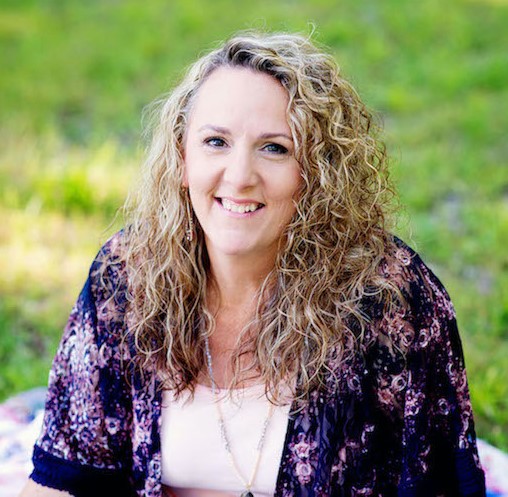
Lisa D. Brown, author of Changing Faces – A Journey of Hope and Perseverance, is a native of Texas, where she lives with her husband, two sons, three dogs, and ten chickens. She taught elementary special education for sixteen years and now works part time in accounting. Lisa began blogging to share progress with family and friends after her oldest son’s multiple surgeries. She extended her writing focus to encourage and inspire other families raising children with disabilities. Besides writing, Lisa serves as a ladies’ ministry leader and disciple maker in her church. She enjoys reading, gardening, crocheting, and watching true crime docuseries.  

Author Jolene Philo

Archives

Categories

Subscribe for Updates from Jolene

Related Posts

Why Is Expressing Gratitude Especially Important for Families with Disabilities?

Why Is Expressing Gratitude Especially Important for Families with Disabilities?

Why Is Expressing Gratitude Especially Important for Families with Disabilities?

Why is expressing gratitude especially important for families with disabilities? Guest blogger Kristin Faith Evans shares three compelling reasons that can lead you to true expressions of gratitude as the holiday season draws near.

It’s that time of year. The chilly air mixes with autumn scents and rustling fallen leaves. The holidays are quickly approaching, bringing with them all of their memories and emotional implications. During this season, many people talk about the blessings for which they’re most thankful. But the holidays can be challenging and elicit painful emotions for some families. So why is expressing gratitude especially important for families when disabilities in what can be a difficult season? Here are three reasons that are important in our family.

Reason #1: Gratitude makes us more resilient

Studies show that when caregivers practice daily gratitude, they report a higher quality of life and better health outcomes. Focusing on ways that we are thankful can give us a more balanced perspective on our circumstances. Expressing gratitude opens our eyes to appreciate different aspects of our lives that we can miss when we’re focused on our difficulties and loss.

Regularly practicing gratitude can also improve our mental health. Taking time to reflect on our blessings and giving thanks helps lower our stress levels and increases our hope and joy.

Try this: Each day, write down one thing for which you are grateful.

Reason #2: Expressing gratitude deepens our faith

Sometimes it can be difficult to identify something for which we are thankful. During painful seasons of loss and grief, anger can build, and we can feel disconnected from God. Choosing something very simple to thank God for can help us see other ways we can express prayers of gratitude.

Try this: When you’re having difficulty identifying something specific to thank God for, recite the verses written below.

  • “It is good to give thanks to the Lord, to sing praises to your name, O Most High” (Psalm 92:1).
  • “Oh give thanks to the Lord, for he is good, for his steadfast love endures forever!” (Psalm 107:1).
  • “I will give thanks to the Lord with my whole heart; I will recount all of your wonderful deeds” (Psalm 9:1).
  • “Therefore, as you received Christ Jesus the Lord, so walk in him, rooted and built up in him and established in the faith, just as you were taught, abounding in thanksgiving” (Colossians 2:6).
  • “Give thanks in all circumstances; for this is the will of God in Christ Jesus for you” (1 Thessalonians 5:18).

Reason #3: Expressing gratitude strengthens our relationships and family functioning

Studies show that expressing gratitude to others, especially to our significant others, can greatly improve our relationships. Telling someone why you appreciate them and thanking them for something that they have done can increase connection and forgiveness. In times of stress, these stronger relationships help hold the family together giving everyone more support.

Try this: Attach a piece of poster board or a large sheet of paper to your kitchen wall or fridge. Encourage family members and friends to write down someone or something for which they are thankful each day.

What’s one way that you express gratitude? Share your ideas in the comments section.

Do you like what you see at DifferentDream.com? You can receive more great content by subscribing to the monthly Different Dream newsletter and signing up for the daily RSS feed delivered to your email.

All Scripture references are from the ESV translation.
Photo by Marcos Paulo Prado on Unsplash

By

Kristin lives with her husband, Todd, and their two children in the Nashville, TN area. She is an author, speaker, mental health counselor, and a mom of two children with rare genetic disorders and complex needs. Her greatest passion is teaming up with her husband to empower other parents of children with disabilities, mental health disorders, and medical complications. She hopes that you may find encouragement and support on their website www.DisabilityParenting.com.

Author Jolene Philo

Archives

Categories

Subscribe for Updates from Jolene

Related Posts

How to Organically Enter into Life with a Caregiving Family

How to Organically Enter into Life with a Caregiving Family

How to Organically Enter into Life with a Caregiving Family

How to organically enter into life with a caregiving family has been on my mind since September when my dear Aunt Donna died. Since then memories of how she, her husband Jim, and their four children embraced our family after my dad was diagnosed with multiple sclerosis in 1959 have simultaneously caused and comforted my grief for the woman who loved our family well.

In honor of Aunt Donna, who taught me how to organically enter into life with a caregiving family, I’m sharing some of the ways she did so and changed our lives for the better.

Daycare: Donna watched her first child and my brother, both one-year-olds, and four-year-old me while Mom taught school. This was a godsend for Mom as she taught school while attending night classes, cared for Dad, and took my older sister to first grade. My aunt eased Mom’s burdens and made me and my brother feel secure and loved.

Substitute Teacher: Aunt Donna substitute taught in the elementary building I attended. The sight of her in the hall and sometimes in my classroom always rendered me speechless. I couldn’t reconcile her presence at school. She never pushed me to acknowledge our family bond. Instead she waved or winked and treated me like everyone else. This simple act made me feel safe.

Sunday Afternoon Visits: Donna, Jim, and their kids came over a couple Sunday afternoons a month. The adults played cards. The kids played together. At some point Mom and Donna gave each kid an apple and sent us to the living room to watch The Wonderful World of Disney. Because Sunday visits to their home, with steps and small bathroom Dad couldn’t negotiate, were out of the question, they made themselves accessible to us instead.

To read the rest of How To Organically Enter into Life with a Caregiving Family, visit the Key Ministry blog for parents.

By

Jolene Philo is the author of several books for the caregiving community. She speaks at parenting and special needs conferences around the country.  Sharing Love Abundantly With Special Needs Families: The 5 Love Languages® for Parents Raising Children with Disabilities, which she co-authored with Dr. Gary Chapman, was released in August of 2019 and is available at local bookstores, their bookstore website, and Amazon. See Jane Sing!, the second book in the West River cozy mystery series, which features characters affected by disability, will be released in November of 2022.

Author Jolene Philo

Archives

Categories

Subscribe for Updates from Jolene

Related Posts

How To Cope During a Rough Caregiving Season

How To Cope During a Rough Caregiving Season

How To Cope During a Rough Caregiving Season

How to cope during a rough caregiving season. What? Who wants to write about that topic when doing so usually comes from hard experience? That’s the case for guest blogger Lisa Pelissier who describes what’s been happening at her house and what’s helping her cope these days.

It’s been a rough season.

My husband’s health has collapsed and he can’t work more than a few hours a week.

My son with high-functioning autism can’t sleep and has been depressed and anxious.

We had Covid this summer, but not all at once. First the girls succumbed, which meant 2+ weeks of quarantine. A month later I got it. Another 2 weeks of quarantine.

And my youngest got diagnosed with autism. Which really doesn’t change anything. She’s still exactly who she was before the diagnosis. The only difference is that I feel more tired.

Just what I needed.

People ask me how I’m coping, and it’s easy to answer that question with a “Hanging in there,” or “Doing okay.” But that focuses on the Im part of the question. I think a more helpful question for me to ask myself pertains to the how part.

How do you hold it together when things are falling apart?
How do you cope when everything seems to go wrong all at once?

Here are my answers about how to cope during a rough caregiving season:

Cry when you need to. It’s not a bad thing. Instead of stuffing grief under a sleek layer of artificiality, just cry. You’ll feel better.

Regain perspective. This isn’t the first time things have been this bad. We got through it before and we’ll get through it this time. It’s only hard because we’re looking at it from the midst of it. Looking back, we may decide this wasn’t so bad after all

Identify Blessings. It’s not all bad. The A/C works, my favorite blessing of the summer. The cars are holding up for the time being. Our kid with PANS seems to be in remission and doing well. We have a loving church family and a great homeschool group. And the neighbors have 23 cats, so we can always find something soft to snuggle. Identify the blessings in your life and enjoy them.

Maintain Friendships. I have several friends who are also in the midst of rough seasons. While I wouldn’t wish their troubles on them, it’s helpful that God decreed their troubles to occur at the same time as my own. We can’t solve one another’s problems, but we can commiserate and even joke together in the trenches.

Trust God’s Providence. There is a temptation to ask, “Why is God doing this to me?” Don’t give in to it. A few years ago I was suffering an excruciating pain disorder. But the clear comfort of God enfolded me. I never doubted for a moment that God was doing something for me, not to me. And He is the same now. His refining hand is like a sculptor carving a stone into something beautiful. It stinks when He’s lobbing off huge chunks of rock to get what He wants out of the raw material that is you, but you can trust Him. He has a plan and a purpose.

Consider it all joy, my brethren, when you encounter various trials,
knowing that the testing of your faith produces endurance.
And let endurance have its perfect result,
so that you may be perfect and complete, lacking in nothing.”
James 1:2-4

Do you like what you see at DifferentDream.com? You can receive more great content by subscribing to the monthly Different Dream newsletter and signing up for the daily RSS feed delivered to your email.

By

Lisa Pelissier lives in Oregon where she is a homeschooling mother of four (three with disabilities) and author of three middle-grade fiction novels as well as a YA fantasy novel. Lisa owns SneakerBlossom Books, offering Christian, classical homeschool Study Guides and curriculum. She also works as a freelance copy editor, an artist, a substitute teacher, and a tutor. In her spare time Lisa enjoys playing the piano and fretting about things over which she has no control. Email Lisa at sneakerblossom@yahoo.com or connect on Facebook.

Author Jolene Philo

Archives

Categories

Subscribe for Updates from Jolene

Related Posts

The Beauty of Disability

The Beauty of Disability

The Beauty of Disability

Our pastor was introducing a new sermon series about beauty when these four words, which I had never strung together before, which I did not want to string together, took up residence in my brain. My response was swift and prickly.

The beauty of disability? Why would I consider such a thing?

Several images flashed by in rapid succession:

  • My father lying in a hospital bed, his once strong body ravaged by multiple sclerosis.
  • My 2-day-old son splayed in a NICU isolette, his abdomen marred by post-surgical incisions.
  • My elderly mother leaning sideways in her recliner at the long-term care facility where she lives.

My eyes welled with tears. My heart ached for the pain and loss experienced by people I love dearly. Where was the beauty in their disabilities?

I fought for control and turned my attention back to the pastor as he read Genesis 1:27.

And God created man in His own image, in the image of God He created him; male and female He created them. (NASB)

The pastor explained how God revealed his beauty in the act of creation. Also, because all humans are created in God’s image, we bear the image of His beauty even as our hearts long for the fullness of it.

Wait a minute!

I believe that God’s creation reveals his beauty.
I believe that all humans are made in God’s image.
I believe that all humans includes those with disabilities.
I believe that those with disabilities reveal God’s beauty.

Click here to read the rest of The Beauty of Disability at the Key Ministry website.


Do you like what you see at DifferentDream.com? You can receive more great content by subscribing to the monthly Different Dream newsletter and signing up for the daily RSS feed delivered to your email.

By

Jolene Philo is the author of the Different Dream series for parents of kids with special needs. She speaks at parenting and special needs conferences around the country. She’s also the creator and host of the Different Dream website. Sharing Love Abundantly with Special Needs Families: The 5 Love Languages® for Parents Raising Children with Disabilities, which she co-authored with Dr. Gary Chapman, was released in August of 2019 and is available at local bookstores, their bookstore website, and at Amazon. The first book in her cozy mystery series, See Jane Run!, features people with disabilities.

Author Jolene Philo

Archives

Categories

Subscribe for Updates from Jolene

Related Posts

A Course on Self-Compassion Showed Me that I Am Enough

A Course on Self-Compassion Showed Me that I Am Enough

A Course on Self-Compassion Showed Me that I Am Enough

A course on self-compassion showed guest blogger Laura Spiegel that she was doing enough for her daughter who lives with special needs. In this post, she describes how the course helped her come to that conclusion.

I recently finished a course on self-compassion. Pioneered by Dr. Kristin Neff nearly twenty years ago, self-compassion is the practice of giving ourselves the same kindness and care we’d give to a good friend. If you’re like me, it’s not overly difficult to extend a hug or words of empathy and understanding to a friend who is struggling. But to extend that same olive branch to myself? That’s sometimes asking too much.

I’m not big on meditation. My mind wanders and I get overly focused on my loud breathing. Same thing with verbalized mantras. I’ll start with one and then flit to another and then wonder what everyone else is thinking about. Before I know it, I’ve made myself a giant dish of ice cream while stalking Facebook. Something tells me I’m doing it wrong . . .

Not long ago, a new practice took me by surprise. The course instructor told us to break out a pencil and paper and write a few sentences from the viewpoint of the “compassionate self.” In other words, if I were to speak to myself as I would a good friend, what would I say? Twenty minutes later, I didn’t want to stop!

Here are a few snippets from my first letter to myself:

Youve been feeling the last couple of days like you arent doing enough. Being enough. I wish you could see what I see!

I see a woman who is carving a path for herself. A woman who is present for her children and an advocate for them.

I see a woman who is learning to care for herself. Who is exploring new joys and learning new things, but also backing away when they dont spark joy.

I see a woman who has maintained an exercise routine for almost a year. Did you ever think you could do that? Your body is stronger and your mind clearer because of it. Keep it up!

I know you worry about not doing enough with your time. Thats a distraction from whats important—and from the path you know you need to be on. Say goodbye” to those worries. Picture them as a dandelion and blow them away.

Finally, just know that only good mothers worry that theyre not good mothers. All of your friends struggle with this too. The anger, the yelling, the vacillation between leniency and strictness, friendship, respect, tenderness, and lesson-teaching . . . Listen to your intuition. It will tell you what you need to do. How you need to be.

Think about what you ultimately want to instill in your kids. Confidence. The ability to navigate stressful situations and solve problems. Kindness for themselves and for others. And full-on knowledge that they are loved. Lead with these goals in mind, and the right words and actions will come to you.

Where in the world did these words come from? When I first put the pencil to the page, I didn’t plan to write about my worries that I’m not enough. But clearly, they were surrounding me. Suffocating me. And I needed a good friend to extend some words of empathy.

After I wrote that first letter, I treated myself to a pretty sketchbook. These days, I try to spend early mornings on the porch with a cup of coffee and my writing. Some letters are little more than a few affirmations that I am doing my best—and that women and mothers everywhere are struggling with many of the same things that I am. Other days, I veer all over the place. I try not to think about my words too much. I just let them flow.

Occasionally, if I need a pick-me-up during the day, I flip to a random page and read a few sentences I wrote during the course on self-compassion. And I know with the deepest sense of certainty that I am loved.

Do you like what you see at DifferentDream.com? You can receive more great content by subscribing to the monthly Different Dream newsletter and signing up for the daily RSS feed delivered to your email.

By

Laura Spiegel spent 12 years at the world’s largest biotech company, partnering with professionals and care teams to help people with special needs and disabilities lead full and happy lives. In 2013 her daughter was diagnosed with cystic fibrosis. Laura now hosts Paint Her in Color, a website that offers emotional support to parents of children with special medical, developmental, or behavioral health care needs. When she isn’t reading, writing, or soaking up time with her husband and kids, Laura can be reached at Paint Her in Color, by email at laura@paintherincolor.com, and on Facebook and Twitter.

Author Jolene Philo

Archives

Categories

Subscribe for Updates from Jolene

Related Posts