The Sharing Love Abundantly Online Study is Coming Your Way

The Sharing Love Abundantly Online Study is Coming Your Way

The Sharing Love Abundantly Online Study is Coming Your Way

The Sharing Love Abundantly online study for caregiving families is set to kick off January 2021 with a bang! Registration for this free, 4 week study is already underway with the help of my friends at Key Ministry.

We’ll meet on Zoom for an hour every Thursday in January at 11 AM Central Standard Time.

During the first half of each session we’ll dig into the book, discussing ways to use the love languages with every person in a caregiving family–spouses, kids with special needs, typical siblings. We’ll also examine how the love languages can help extended family members, medical professionals, and educators support our families effectively.

Each week special guests will join us for the second half of each meeting. The guests are family members who shared their experiences in Sharing Love Abundantly in Special Needs Families. Here’s who will be joining us:

January 7: Joe and Cindi Ferrini
January 14: Matt and Ginny Mooney
January 21: Colleen Swindoll-Thompson
January 28: Stephen “Doc” Hunsley

I can’t wait for you to meet these friends, listen to their wisdom, ask your questions, laugh together, and maybe even cry together.

The study is free, but you will need a copy of Sharing Love Abundantly in Special Needs Families to participate fully. You also need to register beforehand by visiting this link. After you register, you’ll receive an email with more details.

If you have any questions about the Sharing Love Abundantly online study, you can leave a comment below or click the contact link at the top of the page. I’ll get back to you as soon as possible.

Do you like what you see at DifferentDream.com? You can receive more great content by subscribing to the monthly Different Dream newsletter and signing up for the daily RSS feed delivered to your email inbox. You can sign up for the first in the pop up box and the second at the bottom of this page.

By

Jolene Philo is the author of the Different Dream series for parents of kids with special needs. She speaks at parenting and special needs conferences around the country. She’s also the creator and host of the Different Dream websiteSharing Love Abundantly With Special Needs Families: The 5 Love Languages® for Parents Raising Children with Disabilities, which she co-authored with Dr. Gary Chapman, was released in August of 2019 and is available at local bookstores, their bookstore website, and at Amazon.

Author Jolene Philo

Archives

Categories

Related Posts

The Dread of the Unknown

The Dread of the Unknown

The Dread of the Unknown

The dread of the unknown grabbed hold of our grandson when he was three. He was playing in the living room when a sun came out from behind a cloud, striping the floor with light and dark.

“Grammy, what’s that?” he asked, pointing at the dark bit.

“It’s called a shadow.”

“What’s a shad-e-ow?” He got the “shad” part right, but pronounced the “ow” like the end of radio.

“It’s what objects and people make when they stand in the sun. The light can’t get through so it forms a dark outline–a shadow.”

“I don’t like shad-e-ows. Make them go away.”

In that moment, a fear was born.

No matter what we said.
No matter that we showed him how shadows come and go without harm.
No matter how often we showed him it didn’t hurt to stomp on someone’s shadow.
No matter how many times we grabbed at shadows and couldn’t catch them.

His fear of shadows was real. It was debilitating. It ruled his days for almost a year. And then it slipped away, as silent and insubstantial as a shad-e-ow.

My grandson’s dread of the unknown wasn’t much different than what I experienced after our medically fragile baby was born. I spent the first year of his life in the grips of fear.

What if he died? He didn’t.
What if he got sick again? He did get sick. A lot. And then he got better.
What if I couldn’t pump enough breast milk for him? Somehow, there was always enough.

No matter the good things that happened.
No matter how often my fears didn’t come true.
No matter how many times our baby fought off illness.
No matter how many times we had just enough and no more.
My fear was real. It was debilitating. It ruled my days for my baby’s first year of life. While my grandson’s fear slipped away almost unnoticed, my fear for my baby departed kicking and screaming, lurking in corners eager for a chance to return.

The dread of the unknown, I now realize, is part and parcel of parenting a child with special needs and disabilities. The decisions, the diagnoses, the outcomes, the timelines are different for our kids. Our parenting journey contains many unknowns. It can be hard. It can also be unsettling. But we can’t let the dread of the unknown magnify the hard bits of parenting our children and block out the joy and delight of their lives. Instead we must understand the distinction between fear and faith.

Fear is the dread of things unknown, the terror of things unseen.

Faith is the assurance of things hoped for, the conviction of things unseen. (Hebrews 11:1)

Fear is grounded in what we don’t know about parenting our kids.
Faith is grounded in the hope of one wants to be known.

The dread of the unknown may be part and parcel of raising our kids, but we can loosen its grip by looking to the Savior who came to earth to be seen. The one who lives in the light and not the shadows. The one who loves you and your child with an everlasting love that casts out fear. The one who is ever and always the hope of all who seek to know him.

Do you like what you see at DifferentDream.com? You can receive more great content by subscribing to the monthly Different Dream newsletter and signing up for the daily RSS feed delivered to your email.

By

Jolene Philo is the author of the Different Dream series for parents of kids with special needs. She speaks at parenting and special needs conferences around the country. She’s also the creator and host of the Different Dream websiteSharing Love Abundantly With Special Needs Families: The 5 Love Languages® for Parents Raising Children with Disabilities, which she co-authored with Dr. Gary Chapman, was released in August of 2019 and is available at local bookstores, their bookstore website, and at Amazon.

Author Jolene Philo

Archives

Categories

Related Posts

Ways We Hold to Hope Through the Loss and Grief of Disabilities

Ways We Hold to Hope Through the Loss and Grief of Disabilities

Ways We Hold to Hope Through the Loss and Grief of Disabilities

Ways we hold to hope as we parent children with disabilities become stronger through practice. Guest blogger Heather Johnson writes about 4 ways she and her husband have learned to hold to hope even as they support their adult children.

In 1997, a 6-year-old girl stood on the threshold of the room where Todd and I sat waiting, hearts beating wild with anticipation. She wore a red velvet dress with matching bow in her brown hair. Next to her stood a boy wearing a pink Lion King sweatshirt. We learned he would turn 4 the next day.

A woman, gray haired pulled back in a bun, leaned low and whispered to Anna in Russian while pointing to me, “There’s your mama.”

Anna smiled wide and broke loose. She dashed across the massive oriental rug and jumped into my arms squealing, “Mama! Mama! I’ve waited so long for you!” I had no words other than, “I love you so much!” spoken in my newly learned Russian.

Sergei, whom we renamed Zachary, also ran across the room and hopped onto Todd’s lap. After a brief hug, Zach jumped back to the floor and began bouncing all around on a big red ball with a handle.

This was bliss.

The four of us left the Russian orphanage that day for a whole new life far, far away. Todd’s and my years of grieving infertility were over. Finally, we had a family. Finally, we had an opportunity, birthed through grief, to turn loss into new life.

In 1999, Todd and I returned to the same orphanage and brought Nicholas home with us. He was 19 months-old with chubby cheeks and towhead hair. He weighed only 15 pounds, couldn’t stand, couldn’t hold a sippy cup. 

Within two years, Todd and I had heart-birthed three kids and became an over-the-moon, happy family of five. Shortly thereafter though, grief came knocking again, and again, and again—a most unwelcome and demanding intruder.

Discovering Disabilities

When our kids came into our lives, we didn’t know we were beginning a life-long journey through the often-scary territory of permanent disabilities. They all had the expected developmental delays, most dissipating with time and loving care. But we began noticing subtle signs of significant, persistent problems. We started seeking professional assessment. 

Within our first three years as a family, all our kids received multiple diagnoses, all falling under the umbrella of Fetal Alcohol Spectrum Disorder (FASD).

(Click on the link and read the list of impairments, most of which affect all our kids, most of which are invisible.) 

Every new diagnosis stretched us thin as we began juggling visits with 11 different specialists on a regular basis.

Living with Loss and Grief

Our family is far from bleak! We enjoy our lives together and are grateful for our many gifts, including close proximity. We play and laugh, hike and travel. Still, discovering our kids’ disabilities led us into close acquaintance with the common stages of grief.

We grieved when our kids grieved the impact of their invisible disabilities. Anna lamented aloud, “I wish I looked like I had Down Syndrome because then people could see I have disabilities.” 

We grieved with all our kids when their peers passed them developmentally and faded away from their lives.

We grieved when we moved Anna into a group home because, even though we’re a forever family, our home can’t be her forever home. There’s that constant nag of our mortality.

Todd and I have spent much of our living thinking about our dying. We’ve made arrangements so all our kids will have their basic needs of food, shelter, and safety met, as well as financial management and continued therapies.

So here we are today. Anna, Zach, and Nick are now 29, 27, and 22. Todd’s 66. I’m 61.

We’ve all been through many turbulent times. We’ve been sad, mad, and scared. Sometimes, we still are. We’ve felt isolated. Sometimes we still do. I’ve asked myself too many times to count, “What if we’d done this? Or that?” Sometimes, I still wonder. 

Growing through grief isn’t a linear progression. The stages are actually quite fluid. They’re a back-and-forth, up-and-down, swirling whirlpool of emotions that often take us by surprise because we think we’ve moved on from the neatly defined categories. But then they bubble up again, begin swirling again, threaten to pull us under again and again. But we keep going.

Ways We Hold to Hope 

It’s necessary to grapple with loss and grief if we want to hold hope—to live and not just survive. Here are five constants that have helped us survive and thrive in our lives. I hope they might help you, too:

First, it’s okay, even good, to give yourself permission. Look at your losses/your kids’ losses and honestly assess how you feel. No sugar-coated, Christian platitudes. What bubbles up? Is there grief needing a voice, an ear, a heart, a shoulder? Trust your gut. Don’t judge or compare. Grieving losses is key. 

Second, it’s ok, even good, to wrestle with God. Cry your grief. Scream your grief. Question. Voice your frustrations. Wrestling is connecting and we are hard-wired for connection. Staying connected with God is key.

Third, it’s okay, even good, to be vulnerable with others. True, being vulnerable might mean losing relationship. But don’t let those losses stop you from seeking caring connection. Seek and find those who can listen, empathize, encourage and can be vulnerable with you, as well. Being and staying connected with caring, vulnerable others is key. 

Fourth, give thanks for something in everything, in everyone, every day, no matter the grief. Gratitude grounds us and elevates us, especially when grieving. Giving thanks is key.

Last and best, hold God to His promises. God’s promises are the keys to abundant life.

I gave this promise to all three of our kids before I knew all we’d go through.

“For I know the plans I have for you,” declares the Lord, “plans to prosper you and not to harm you, plans to give you hope and a future.” Jeremiah 29:11 NIV

Perhaps the greatest part of God’s promise to prosper us is to walk with us through desolation, being our consolation.

After all we’ve been through as a family, I’ve come to think there’s a holy healing when we come to the end of ourselves—when we finally find, after all our wrestling, the great gain inside every bit of loss in the ways we hold to hope.

Grief might just be the best gateway to glory.

Do you like what you see at DifferentDream.com? You can receive more great content by subscribing to the monthly Different Dream newsletter and signing up for the daily RSS feed delivered to your email inbox. You can sign up for the first in the pop up box and the second at the bottom of this page.
By

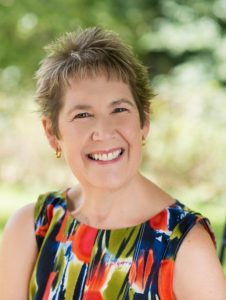
Heather MacLaren Johnson and her husband have three kids, all five and under when adopted from Russia. Now 29, 27, and 22, all need regular help with their multiple, permanent, invisible disabilities stemming from prenatal exposure to alcohol (FASD).

Heather has B.S. in Education and a doctorate in Clinical Psychology. She is the author of Grace, Truth, & Time: Facilitating Small Groups That Thrive and has published personal essays in The Wonder Years: 40 Women Over 40 on Aging, Faith, Beauty, and Strength (Kregel Publications) and Your Story Matters: Finding, Writing, and Living the Truth of Your Life (NavPress). She’s writing a memoir about her family’s journey through hidden disabilities and mental illness to encourage others to greater intimacy with God and each other through times of desolation and lament.

Heather and her husband of 27 years live with two horses, two dogs, two barn cats, and a bunch of silk plants she just dusts. Heather writes and photographs at www.truelifewithgod.com.

Author Jolene Philo

Archives

Categories

Related Posts

Threats to Caregiving Marriages and How to Fight Them

Threats to Caregiving Marriages and How to Fight Them

Threats to Caregiving Marriages and How to Fight Them

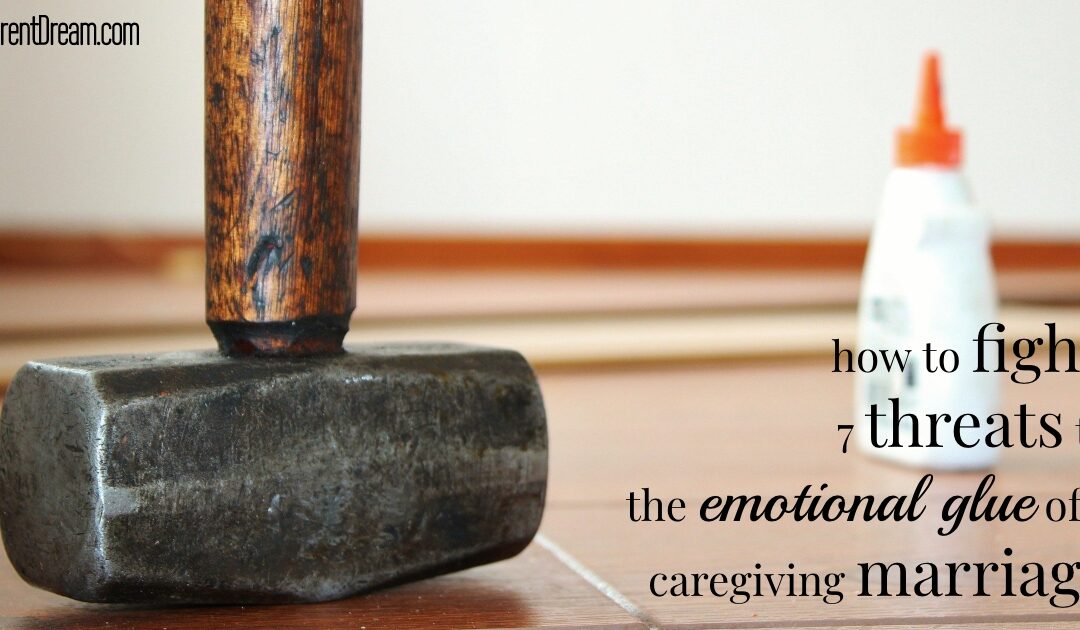
Threats to caregiving marriages can loosen the emotional glue that keeps couples together. The second chapter of Sharing Love Abundantly in Special Needs Families: The 5 Love Languages® for Parents Raising Children with Disabilities discusses seven threats that are unique to caregiving spouses and partners. Here’s a quick run down of what’s on the list.

  1. Time constraints. As in the time required to care for our kids doesn’t leave much time for connecting with a spouse.
  2. Financial strains. Medical bills. Doctor appointments. Therapy sessions. Adaptive equipment. Who has money left over for date nights or babysitters?
  3. Guilt and grief. Parents love their kids with special needs. Even so, they grieve the loss of the child they thought they would have and may feel guilty about their grief.
  4. Isolation. Medical conditions, behavioral issues, and crazy schedules make staying home with kids easier than going out with friends. The more we say “no” to invitations, the fewer invitations are extended. We end up isolated together and overly dependent on one another.
  5. Geographic separation during treatment. My husband stayed home and work while our son and I spent much of his first 3 months at a hospital 750 miles away. It’s an all-too-common scenario for caregiving spouses.
  6. Worry about the future. We worry that our kids may die young. And we worry about who will care for them if they outlive us. That’s a lot of worry.
  7. Lack of support. While extended family, friends, and church family have good intentions, they often have no clue of how to support us. We don’t have time or energy to educate them, so they support us less and less. It’s a vicious circle.

What a depressing list of threats to caregiving marriages! Dr. Chapman and I wrote Sharing Love Abundantly in Special Needs Families to encourage you as you invest in your relationship. Chapter 2 ends with a look at the Hebrew word hesed. Hesed is a merciful, intentional love that intervenes on behalf of loved ones and comes to their rescue. The next two installments of this series are all about how parents can use the love languages to practice hesed with a spouse or partner. You can also Or you can purchase the book at your favorite bookstore or on Amazon if you want to learn about how to fight these threats to caregiving marriages before then.

Other posts in this series:

The Love Languages and Special Needs Families: A Good Combination

Basic Love Language Concepts to Ease Stress and Increase Joy in Caregiving Families

Fostering Communication and Connection Between Caregiving Parents

Love Is a Child’s First Language

Determining the Love Language of a Child with Special Needs or a Disability 

Ways to Speak Words of Affirmation and Quality Time to Kids with Special Needs

Speaking Healthy Physical Touch to Kids with Special Needs

Using the Love Languages with Siblings of Kids with Special Needs and Disabilities 

Extended Family Members Can Use the Love Languages to Encourage Caregiving Parents

Communicating Your Child’s Love Language to Medical Professionals

Communicating Your Child’s Love Language to Educators 

Do you like what you see at DifferentDream.com? You can receive more great content by subscribing to the monthly Different Dream newsletter and signing up for the daily RSS feed delivered to your email.

By

Jolene Philo is the author of the Different Dream series for parents of kids with special needs. She speaks at parenting and special needs conferences around the country. She’s also the creator and host of the Different Dream websiteSharing Love Abundantly With Special Needs Families: The 5 Love Languages® for Parents Raising Children with Disabilities, which she co-authored with Dr. Gary Chapman, was released in August of 2019 and is available at local bookstores, their bookstore website, and at Amazon.

Author Jolene Philo

Archives

Categories

Related Posts

Home for the Holidays 2020

Home for the Holidays 2020

Home for the Holidays 2020

Home for the Holidays 2020 has an unusual meaning. What Dr. Seuss wrote in The Grinch Who Stole Christmas is true.

Christmas will always be as long as we stand heart to heart and hand in hand.

2020 that’s taken much from us, yet caused us to rethink priorities and be grateful for family, friends, and making memories with each other. These ideas for special needs families can create joyful, fun, and happy memories during this unique home for the holidays Christmas season!

Home-Based Fun

Every year, we bake and decorate cookies any way we want. Then we have a “backwards dinner” and eat them before our meal! We also make crafts, ornaments, and read Christmas books together. This year we are adding candy-making, a tradition from my late Gran-Gran. 

More home-based ideas:

  • Christmas cards: Send homemade cards to senior living facilities, far away family members, or soldiers overseas.
  • Cookie bake: Bake cookies for a local charity or a family in need.
  • Christmas Caroling: Go door-to-door as a family and stand 6 feet away from neighbors while singing carols at the top of your lungs.
  • Crafting Search online for easy, simple Christmas crafts.

Drive-Through Delights

We live in the south where there are many quaint country towns notorious for their holiday markets, art shows, and extravaganzas. This year, we will search online and read the guidelines for mask use and social distancing beforehand. 

More drive-through ideas:

  • Laser Light Shows: These can be great options for children with sensory challenges who don’t like loud noises. They can remail safe in their quiet car looking out at the fun. 
  • Christmas Lights: Finding the best Christmas light display in town is fun and free. You can map out your route, pack cookies and hot cocoa, and crank up the Christmas music. There’s something about lights against a star-filled sky that’s refreshing, peaceful, and hopeful. Check out Christmas Designers Virtual Light Tours.
  • Nativity Scenes: These displays remind of why we celebrate Christmas and can help us to recognize His blessings of hope, especially in 2020. “For I know the plans I have for you,” declares the Lord, “plans to prosper you and not to harm you, plans to give you hope and a future.’” Jeremiah 29:11

Virtual Events

Our family recently took virtual walking tours past historical monuments and locations, saw a German Christmas market, and watched the Rockefeller Christmas Tree go up. Children can see the world from the comfort of home without loud crowds and noise. The Explore Travel + Leisure’s website is offering Virtual European Christmas Markets.

More virtual ideas include hosting a cookie decorating contest, an ugly sweater contest , or gathering online to eat holiday dinners together, a virtual ugly sweater contest. 

Make Home for the Holidays, 2020 Meaningful

Remember what’s important this Christmas. Make it a point to enjoy being with each other. To spread joy, and kindness. To remember why this season is special, even as we stay home for the holidays.

Today in the town of David a Savior has been born to you; 
he is the Messiah, the Lord.
Luke 2:11

Do you like what you see at DifferentDream.com? You can receive more great content by subscribing to the quarterly Different Dream newsletter and signing up for the daily RSS feed delivered to your email inbox. You can sign up for the first in the pop up box and the second at the bottom of this page.

By

Marnie Witters was a technical writer and editor for more than 20 years until she resigned to homeschool her sons when they were young. When they went back to public school, she began to write. Recently she began teaching writing for a virtual school in the Atlanta, Georgia area. She’s been married for 20 years, serves in an amazing church, loves to garden, and enjoys spending time with her family. 

Author Jolene Philo

Archives

Categories

Related Posts

Building Is a Slow Process

Building Is a Slow Process

Building Is a Slow Process

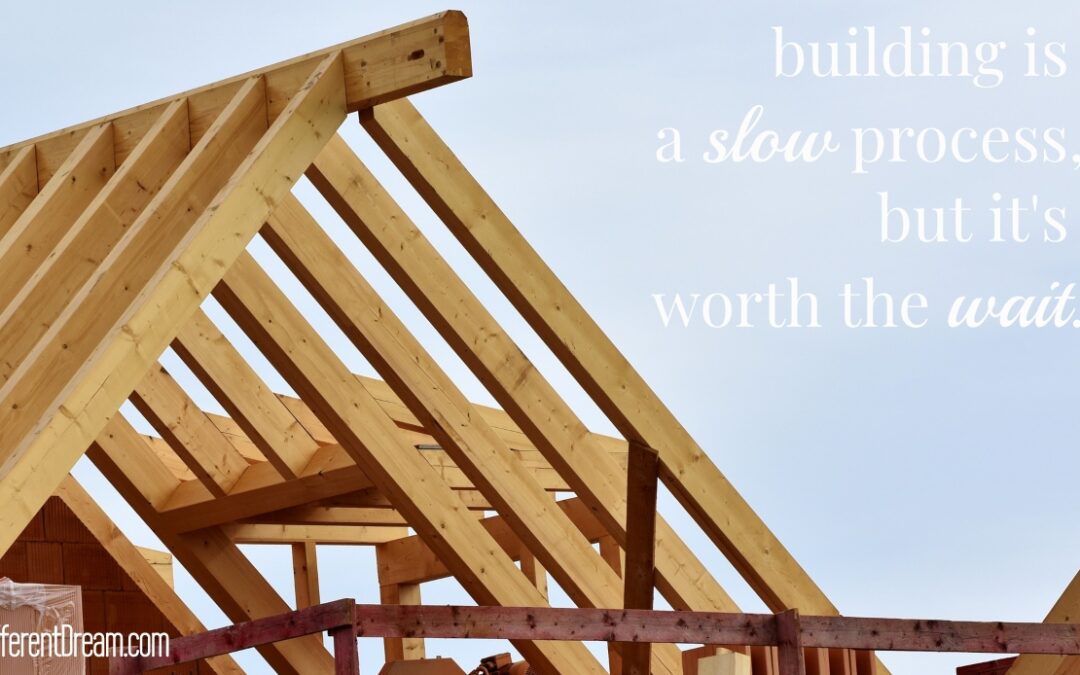
Building is a slow process.

God has been hammering that truth home since we signed the loan papers for a construction project which will turn our one family dwelling into a duplex.

“When will the addition be completed?” the loan officer asked as we signed the papers in April of 2020. At the drive up window. Because of the pandemic shutdown.

“We’re hoping for September.” My husband spoke into the microphone, and I nodded in agreement.

Silly us.

When the projected completion date arrived, the only work that had been done were the footings and the foundation walls. Despite having gutted and remodeled the kitchen, dining room, and living room of our previous home, my husband and I had forgotten that building is a slow process. So far during this remodel and addition, illness—the excavator’s emergency appendectomy and the truss builder’s bout with COVID— have contributed to the delays, as did a widespread, destructive windstorm that shut down parts of our state for weeks and drove up lumber prices.

Sigh.

To us, this project feels like it’s going nowhere. My husband and I suspect it may not be done before winter, and we’re requesting a building permit extension. We think it will be granted because the city inspectors know that building is a slow process. I was just coming to grips with our adjusted timeline when our church began a new sermon series it began as it reopened its doors after the pandemic shutdown.

To read the rest of Building Is a Slow Process visit Key Ministry’s blog for special needs parents.

Do you like what you see at DifferentDream.com? You can receive more great content by subscribing to the monthly Different Dream newsletter and signing up for the daily RSS feed delivered to your email inbox. You can sign up for the first in the pop up box and the second at the bottom of this page.

By

Jolene Philo is the author of the Different Dream series for parents of kids with special needs. She speaks at parenting and special needs conferences around the country. She’s also the creator and host of the Different Dream websiteSharing Love Abundantly With Special Needs Families: The 5 Love Languages® for Parents Raising Children with Disabilities, which she co-authored with Dr. Gary Chapman, was released in August of 2019 and is available at local bookstores, their bookstore website, and at Amazon.

Author Jolene Philo

Archives

Categories

Related Posts