Anxiety in a Post-Covid World

Anxiety in a Post-Covid World

Anxiety in a Post-Covid World

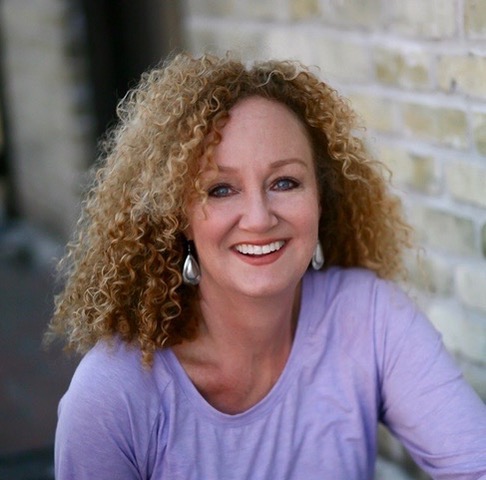
Anxiety in a post-Covid world is the latest new reality in over a year of new realities. Clinical psychologist Liz Matheis is here today with 3 strategies to tame your anxiety as you and your family begins the process of re-entry.

Hooray, hooray! The end of the pandemic is coming!

Wait. Is it a hooray?

In one breath, you may feel relieved that life is returning to normal. But in the same breath you wonder what is normal 14 months after a pandemic that suddenly and drastically changed our lives.

Fourteen months ago, anxiety about a virus that we had never seen before entered our lives. Before we knew it, it was deemed a global pandemic.  I remember where I was exactly and who I was with when I first heard that news. It was mind blowing and overwhelming.

This virus was far more than just a flu. Our anxiety became intense and constant as it created fierce symptoms and many didn’t survive.

For many of us, that anxiety has actually not yet settled. We carry a residual level of worry. We’ve adopted functional rituals such as disinfecting surfaces, washing doorknobs, washing our hands and wearing masks.  We ask questions such as: “Does that restaurant have outdoor seating? Are those tables too close? Did that person just touch the door handle? Are my kids safe to go to school? What if I’m carrying the virus and pass it on to my parents/elderly relatives?” The list goes on and on.

In the next few months, we will be transitioning from isolating to socializing. Many of us haven’t spoken to another person in close proximity for a long while. During the pandemic our conversations were shorter and at a distance, whether it be a driveway, lawn or a street. What’s been the topic of those conversations? The pandemic.

This transition will mean shifting our mindset from “it’s not safe to be around other people,” to “It’s okay to be around other people again.”  We need to give ourselves permission to re-integrate back into the world and to deal with our anxiety in a post-Covid world. These 3 strategies can help us do that.

Acknowledge Your Fears

Letting go of fears about the COVID-19 virus won’t be easy. These thoughts have grown over 14 months so changing them will take some time. Be patient with yourself. Acknowledge your fears often. Write them down. Speak with a therapist about them. Rather than allowing them to consume you, recognize that they exist. Give them credence but avoid letting them hold you back.

Identify Your Preferences

Begin to think about your preferences regarding re-entry. You may wish to socialize with other families where the parents have been vaccinated and their kids have had limited interaction with other kids. Whatever your preferences, you may wish to have a conversation with others prior to socializing or play dates. How will we greet each other? Can we hug, or should we fist pump or wave?

You’re going to be creating the “do’s and don’ts” of meeting with other people and find your clan who is on the same page with you. 

Ease In

We are best able to adjust to change when we can take baby steps. Therefore you should identify how you would like to ease into socializing. For example, you may want to socialize outside as the warm weather is approaching with a limited number of people. Once you have greater data about the virus and feel a bit more comfortable, you may want to increase the number of people you are willing to gather with and expand your parameters.

Create a “hierarchy” of least anxiety provoking to most anxiety provoking situations for yourself and the parameters around them. For example, gathering with 2 other families inside my house with no masks may be very anxiety provoking so you won’t start there.

As the world begins to open up, sit down with your significant other and decide on how you would like to re-enter the post-COVID world. Think about which safety precautions you wish to continue to take and which ones you wish to let go.  There is no manual for anxiety in a post-Covid world, so whatever you decide works for you is what you should do.

Do you like what you see at DifferentDream.com? You can receive more great content by subscribing to the monthly Different Dream newsletter and signing up for the daily RSS feed delivered to your email inbox. You can sign up for the first in the pop up box and the second at the bottom of this page.

By

Dr. Liz Matheis is a clinical psychologist and school psychologist in Parsippany, NJ. She offers support, assessments, and advocacy for children who are managing Autism Spectrum Disorders, ADHD, learning disabilities, and behavioral difficulties, as well as their families. She is also a contributor to several popular magazines. Visit www.psychedconsult.com for more information.

Author Jolene Philo
Archives

Categories

Subscribe for Updates from Jolene

Related Posts

There Is No Right Way for Caregiving Parents to Feel

There Is No Right Way for Caregiving Parents to Feel

There Is No Right Way for Caregiving Parents to Feel

There is no right way for caregiving parents to feel. Those wise words from guest blogger Laura Spiegel would have comforted me after our son’s diagnosis. Today she’s here with words to encourage you to name your feelings and to experience the miracle your child is.

Someone once said that “the only constant in life is change.” How fitting for a week of unexpected news. A loved one is ill, and I’m once again reminded that health is not to be taken for granted. None of us knows what lies ahead, and our bodies, sleek machines though they be, are not infallible. They never professed themselves to be. It’s we, in our arrogance, our busyness, who simply forgot.

Many of us parents know this well. As we dream of our future families, the warm bundles of love that we’ll cradle in our arms, we don’t typically envision pressing medical needs. We pass the local children’s hospital in just that – passing – too busy navigating our playlist to give it more than a second thought. We see fundraisers on late-night TV and videos of friends-of-friends on social media and experience a sharp intake of breath. Followed by the quick relief that it’s not us. Not our children. Not the loves of our lives.

Until it is.

Eight years ago, I was entering my final trimester. I was knee-deep in pink onesies and woke in the night paralyzed by the myriad of nursery color choices. Were the purple walls good enough, or should I give myself an extra kick and make that teal happen? My husband and I landed on a name. A beautiful, classic name that honored a beloved family member and was music to our ears. Our baby’s heartbeat was normal, her growth rate expected. We joked how our second time around, nothing could throw us for a loop.

Five days after our daughter was born, the pediatrician alerted us to an abnormal blood test result. Shortly after, our little girl was diagnosed with cystic fibrosis (CF).

We.

Were.

Thrown.

For.

A.

Loop.

Our daughter is a miracle. She tells the wildest stories, and when she laughs, her face opens up like the sky. She is a gentle friend and a sometimes hell-raiser. She runs the soccer field like there’s no tomorrow, feeling bashful when she kicks the team’s first goal of the season. Before I’ve finished flipping the jigsaw pieces over, her puzzle is almost finished. She dresses in my clothing, draws whiskers on her face, and pretends to be a high-heeled cat lady who teaches gym class. Class starts at 10 PM sharp, just after bedtime.

Science and medicine have progressed big time since our daughter was born. Any day now we expect the FDA to approve a game-changing medication that has done wonders for adolescents and adults with CF. The day our daughter takes that first pill will be the third happiest day of my life. It will be the start of a new path in her healthcare journey. A hopeful path. One that marches toward the sun.

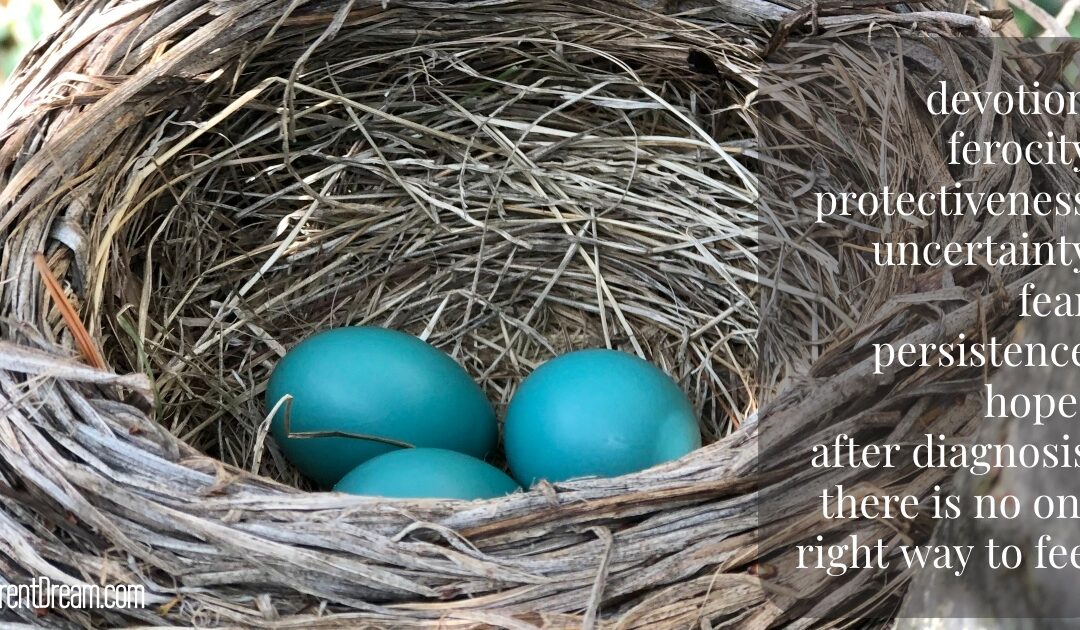
To all the moms and dads out there who are on a similar ride, know this. There is no one right way for caregiving parents to feel. Devotion, ferocity, protectiveness, uncertainty, fear, persistence, hope. All have a place on your journey, and it’s okay if your feelings are tangled up together or if they swing from one side of the universe to the next on any given day. Our bodies aren’t machines, and neither are our minds. Our emotions have their own agenda, and there is no one right way for caregiving parents to feel.

You are doing the best you can. Your heart swells with a love you never knew you could feel. You advocate with a strength you never knew you had. You hope beyond your wildest of dreams.

And that life you had envisioned once upon a time?

Sometimes, when you think of it, you’re sad. You grieve what’s not to be.

Sometimes, when you think of it, you laugh. What Pinterest world were you living in?

But mostly, when you think of it, you smile. For this life – this love – this gift — is sweeter than you’d ever imagined.

Do you like what you see at DifferentDream.com? You can receive more great content by subscribing to the monthly Different Dream newsletter and signing up for the daily RSS feed delivered to your email inbox. You can sign up for the first in the pop up box and the second at the bottom of this page.

By

Laura Spiegel spent 12 years at the world’s largest biotech company, partnering with professionals and care teams to help people with special needs and disabilities lead full and happy lives. In 2013 her daughter was diagnosed with cystic fibrosis. Laura now hosts Paint Her in Color, a website that offers emotional support to parents of children with special medical, developmental, or behavioral health care needs. When she isn’t reading, writing, or soaking up time with her husband and kids, Laura can be reached at Paint Her in Color, by email at laura@paintherincolor.com, and on Facebook and Twitter.

Author Jolene Philo

Archives

Categories

Subscribe for Updates from Jolene

Related Posts

Write Everything Down

Write Everything Down

Write Everything Down

“Write everything down,” my adult daughter said.

I stared at her, equally amazed by her wisdom and my epic fail to practice what I’ve been preaching for more than a decade. When I spoke at special needs and disability conferences—pre-pandemic of course—parents would ask how to be effective advocates for their kids. My top 3 tidbits of advice were always:

  1. Let people in.
  2. Don’t take no for an answer.
  3. Write everything down.

How had I forgotten my own best advice this spring while advocating on my mother’s behalf? I’m blaming my oversight partly on the pandemic (it’s about time it was good for something), and partly on my inability to see that effective special needs advocacy practices are equally effective while advocating for the elderly.

I tore myself away from staring in amazement at my daughter—when did she become so wise?—and went into my office where I began to write everything down as she had advised. That was about 2 weeks after Mom’s health issues began, and the timeline of events was still clear in my mind. At the time this post was written, the timeline had stretched to 4 weeks and counting. If my daughter hadn’t said to write everything down when she did, the increasing number of events would have become muddled and my recording of them inaccurate. Not good.

Because effective special needs advocacy practices can be applied effectively during elder care advocacy, and vice versa, let’s see how the other two tidbits of advice can work for both populations.

To read the rest of Write Everything Down, visit the Hope Anew blog.

Do you like what you see at DifferentDream.com? You can receive more great content by subscribing to the monthly Different Dream newsletter and signing up for the daily RSS feed delivered to your email.

By

Jolene Philo is the author of the Different Dream series for parents of kids with special needs. She speaks at parenting and special needs conferences around the country. She’s also the creator and host of the Different Dream websiteSharing Love Abundantly With Special Needs Families: The 5 Love Languages® for Parents Raising Children with Disabilities, which she co-authored with Dr. Gary Chapman, was released in August of 2019 and is available at local bookstores, their bookstore website, and at Amazon.

Author Jolene Philo

Archives

Categories

Subscribe for Updates from Jolene

Related Posts

Making Every Day a Great Mother’s Day, Part 2

Making Every Day a Great Mother’s Day, Part 2

Making Every Day a Great Mother’s Day, Part 2

Making every day a great Mother’s Day is a priority for guest blogger and mom of 3 kids with special needs, Heather Johnson. In her previous post she shared the deep loss that led to her new perspective. Today, she’s here with ideas she’s discovered that go a long way toward making every day a great mother’s day.

 Today is the day after Mother’s Day, 2021. Tomorrow, May 12, 2021 is the nineteenth anniversary of my mom’s passing on Mother’s Day in 2002. She was 65. I’m nearly 62. The older I get, the more Mother’s Day has become an historical marker reminding me that it’s my job to mother myself well, not only for me but for my kids, even now that they’re grown. The following practices have helped me survive and thrive, especially when exhausted physically, rubbed raw emotionally, and wondering spiritually what the future will hold for our kids with special needs.

Physical Health

I eat a healthy diet 90% of the time and eat whatever want 10% of the time. Remember, rigidity isn’t healthy! Besides, who can live without a daily dose of chocolate? (I always have a hidden stash of Dove chocolates and savor one every day which keeps my sweet tooth at bay.)

I exercise daily with a combination of aerobics, stretching, and strengthening/toning. Finding something enjoyable is most sustainable. For me, it’s speed-walking 2 miles a day (30 minutes), doing some sort of yoga at home (20 minutes) and working all muscle groups with free weights (10 minutes). I break it up into three sessions and often multi-task. One great combination is listening to an audiobook while walking.

Mental Health

As a former mental health therapist, I’ve counseled people about the connection between thinking, feeling and behaving. I practice (and I do mean practice) what I teach. First, I practice checking my feelings (glad, sad, mad or scared) without self-judgment. I examine and sometimes challenge the thinking that causes those feelings, and choosing helpful behaviors.

Second, I practice reminding myself that I can only control myself. Others are in charge of themselves. I practice recognizing what I can and cannot do and learn to let go of what I can’t change.

Third, if you ever get to a point where depressive/anxiety symptoms are chronic and all other attempts at healthy lifestyle don’t help, seek professional help. I have been in therapy off and on throughout my adult life and also have taken medication. It’s ok to do what you need to do to improve and sustain your mental health.

Spiritual Health

Our souls need care, too. What centers you, brings you balance, brings you peace that lasts? For me, it’s my relationship with God. I find guidance and comfort in God’s word—the Bible. I read passages with promises regularly and hold them tightly as the lifeline they are. God never promises an easy life, but God does promise a fulfilling life when we trust him and walk in his ways.

So, what about you? What can you do about your physical, mental, and spiritual health to start making every day a great Mother’s Day? I suggest you start small and easy. Write down your goals (weekly, monthly, annually). Mark your progress. Celebrate every success, no matter how small. If you fail, that’s okay. Get back on track. Stay positive. You can do it! Progress is key, not perfection. Do it for yourself and for your kids. Life is a long-haul so make the journey as enjoyable and healthy as possible.

Now, how about a little piece of Dove chocolate?

Part 1

Do you like what you see at DifferentDream.com? You can receive more great content by subscribing to the monthly Different Dream newsletter and signing up for the daily RSS feed delivered to your email.


By

Heather MacLaren Johnson and her husband have three kids, all five and under when adopted from Russia. Now 29, 27, and 22, all need regular help with their multiple, permanent, invisible disabilities stemming from prenatal exposure to alcohol (FASD).

Heather has B.S. in Education and a doctorate in Clinical Psychology. She is the author of Grace, Truth, & Time: Facilitating Small Groups That Thrive and has published personal essays in The Wonder Years: 40 Women Over 40 on Aging, Faith, Beauty, and Strength (Kregel Publications) and Your Story Matters: Finding, Writing, and Living the Truth of Your Life (NavPress). She’s writing a memoir about her family’s journey through hidden disabilities and mental illness to encourage others to greater intimacy with God and each other through times of desolation and lament.

Heather and her husband of 27 years live with two horses, two dogs, two barn cats, and a bunch of silk plants she just dusts. Heather writes and photographs at www.truelifewithgod.com.

Author Jolene Philo

Archives

Categories

Subscribe for Updates from Jolene

Related Posts

Ways To Speak Gifts and Acts of Service to Kids with Special Needs

Ways To Speak Gifts and Acts of Service to Kids with Special Needs

Ways To Speak Gifts and Acts of Service to Kids with Special Needs

Ways to speak gifts and acts of service to kids with special needs are plentiful. All you need are these ingredients mentioned in the previous post in this series about using the 5 love languages in special needs families:

  1. Determine the child’s love language. To learn more about how to do so, check out this post.  
  2. Brush up on a couple child development concepts. These two posts in the series offer a quick review: Love Is a Child’s First Language and Sharing Love Abundantly in Special Needs Families: The 5 Love Languages® for Parents Raising Children with Disabilties. 

Chapter 6 of Sharing Love Abundantly has oodles of stories from parents raising kids with disabilities and special needs about how they speak gifts and acts fo service in their families. Plus the end of the chapter lists more ideas, all of them field-tested by special needs families. Here are some ideas to get you started.

Gifts

  • Trip to the thrift store to hunt for treasures.
  • Found or scrounged objects like a feather or cardboard boxes.
  • Color a picture and give it to your child.
  • Mail a package to your child when you’re out of town.
  • Grocery store treats like string cheese, yogurt, granola, or candy.
  • Make a special meal or dessert.

Acts of Service

  • Teach your child how to self-advocate.
  • Complete one of your child’s chores on a particularly hard day.
  • Take your child to library story time, sporting events, or church activities.
  • Create a birthday activity tradition (rather than a birthday meal) for a child with a feeding tube.
  • Role play social skills such as making introductions or saying please, thank you, and excuse me.

These are just a smattering of the love language ideas found in Sharing Love Abundantly. The next post in this series will feature ideas about how to adapt Physical Touch for kids with special needs, along with some safety precautions. It’s one you won’t want to miss!

Other articles in this series:

The Love Languages and Special Needs Families: A Good Combination

Basic Love Language Concepts to Ease Stress and Increase Joy in Caregiving Families

Threats to Caregiving Marriages and How To Fight Them 

Love Is a Child’s First Language

Determining the Love Language of a Child with Special Needs or a Disability 

Ways to Speak Words of Affirmation and Quality Time to Kids with Special Needs 

Speaking Healthy Physical Touch to Kids with Special Needs

Using the Love Languages with Siblings of Kids with Special Needs and Disabilities 

Extended Family Members Can Use the Love Languages to Encourage Caregiving Parents

Communicating Your Child’s Love Language to Medical Professionals

Communicating Your Child’s Love Language to Educators 

Do you like what you see at DifferentDream.com? You can receive more great content by subscribing to the monthly Different Dream newsletter and signing up for the daily RSS feed delivered to your email.

By

Jolene Philo is the author of the Different Dream series for parents of kids with special needs. She speaks at parenting and special needs conferences around the country. She’s also the creator and host of the Different Dream websiteSharing Love Abundantly With Special Needs Families: The 5 Love Languages® for Parents Raising Children with Disabilities, which she co-authored with Dr. Gary Chapman, was released in August of 2019 and is available at local bookstores, their bookstore website, and at Amazon.

Author Jolene Philo

Archives

Categories

Related Posts

Making Every Day a Great Mother’s Day, Part 1

Making Every Day a Great Mother’s Day, Part 1

Making Every Day a Great Mother’s Day, Part 1

Making every day a great Mother’s Day seems like a long reach for many parents raising kids with special needs and disabilities. For guest blogger Heather Johnson, it’s a perspective born of loss, grief and love. In today’s post, she tells the origin story of her perspective. Next week, she’ll be back with tips for making every day a great Mother’s Day at your house.

I called my mom on Mother’s Day morning, 2002. She thanked me for sending her favorite flowers—red carnations. We chatted excitedly about her upcoming move from Ohio to Wisconsin. In just a few short weeks, she would be within five minutes of our family. We hadn’t been closer than a whole day’s drive for 45 years. Soon, she’d be able to walk with her grandkids, whom she’d only seen a handful of times, to the park across the street from her house. She’d push them on swings and scoop them up in her arms at the end of the slide.

A whole new chapter of life was about to begin for my mom and me. We needed that. She worked her tail off raising us three kids. Now I was up to my neck and beyond trying to raise our three, all adopted from Russia with a myriad of disabilities stemming from fetal exposure to alcohol (FASD). After so many losses in both our lives, we were looking for some close-by comfort and support from each other.

Before saying goodbye, Mom thanked me again for the carnations and added her often repeated philosophy—“Flowers should be for the living, not for the dead.” We laughed, said “I love you!” and hung up.

The next morning, I received a call. Mom was dead. Heart attack.

Turns out, our dreams didn’t turn out. She never moved to Wisconsin.

Our youngest of three was three when Mom died. I had significant needs at the time. Being a mom is hard. Add to that mothering kids with special needs. Add to that mothering three kids with special needs.

Are you a mother who suffers from exhaustion? Are you grieving never-ending losses—dying dreams needing to be replanted with different dreams? Are you depressed or anxious? I get that. My kids are grown up, but they will never grow out of their special needs. It’s essential for moms like us to attend to our own needs in order to attend to those of our kids. Here’s an illustration:

Every time I fly, the flight attendant gives specific instructions about oxygen masks. “Place your own mask on before helping your child.” Why? Because if parents pass out from lack of oxygen, they won’t be able to care for their children. The same is true with special needs parenting. If we don’t take care of ourselves first, we run the risk of burnout and becoming unable to care optimally for our kids with disabilities. We need our own on-going “oxygen masks” so we can care for our kids on this long-haul journey of special needs. That’s why I’ll return next week to talk about some of the oxygen masks that I use to honor my mother by making every day a great Mother’s Day for myself and my family.

Part 2

Do you like what you see at DifferentDream.com? You can receive more great content by subscribing to the monthly Different Dream newsletter and signing up for the daily RSS feed delivered to your email.

By

Heather MacLaren Johnson and her husband have three kids, all five and under when adopted from Russia. Now 29, 27, and 22, all need regular help with their multiple, permanent, invisible disabilities stemming from prenatal exposure to alcohol (FASD).

Heather has B.S. in Education and a doctorate in Clinical Psychology. She is the author of Grace, Truth, & Time: Facilitating Small Groups That Thrive and has published personal essays in The Wonder Years: 40 Women Over 40 on Aging, Faith, Beauty, and Strength (Kregel Publications) and Your Story Matters: Finding, Writing, and Living the Truth of Your Life (NavPress). She’s writing a memoir about her family’s journey through hidden disabilities and mental illness to encourage others to greater intimacy with God and each other through times of desolation and lament.

Heather and her husband of 27 years live with two horses, two dogs, two barn cats, and a bunch of silk plants she just dusts. Heather writes and photographs at www.truelifewithgod.com.

Author Jolene Philo

Archives

Categories

Subscribe for Updates from Jolene

Related Posts