Mask Mandates

Mask Mandates

Mask Mandates

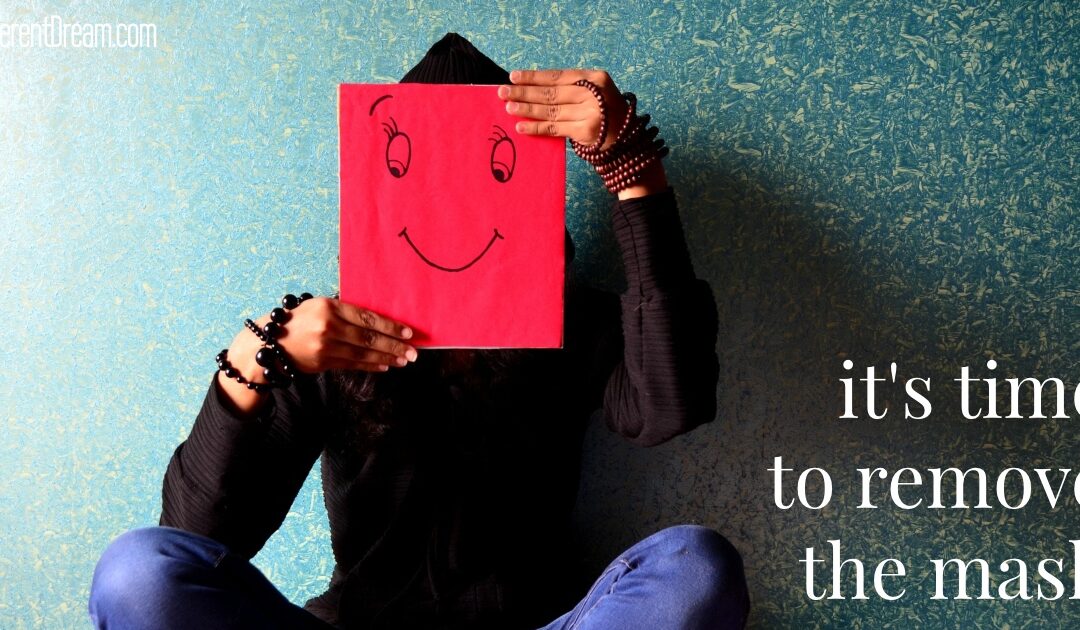
Mask mandates has been tough, but for the special needs community, it’s nothing new. Today guest blogger Stephanie Ballard writes about a different kind of mask mandate she’s decided it’s time for her to end.

 “I’m sorry but I don’t feel safe taking care of Braden any longer.” I gasped when I received that text from my sister just about a year ago.

She had been my son’s respite worker for five years. Sleep overs, weekend visits and the occasional run to the emergency room were part of our normal. 

Her text sent me into a panic. “How will I be able to do this alone?”Braden has kabuki syndrome, along with half a heart, known as hypoplastic left heart syndrome. His recent diagnosis of autism explains, but doesn’t help improve his chaotic behavior and ongoing rage that seems to come with no cause.

The same week as the text from my sister, Braden’s special needs school called with the message, “We are sorry to inform you the school will be closed again.” The news came without warning.

It’s been a year since my sister’s text and the message from the school. Braeden’s hanging in there. Mask mandates have been hard on him. This past Monday before school, he squawked, “No mask. No mask. I no breathe.”

Later, I cupped the Sponge Bob mask over his face while the bus driver pressed the thermometer up to his forehead. Braden has not gotten used to the morning drill, his new normal.

The yellow bus pulled away and melted into the distance. I sipped my second cup of coffee and pondered about the mask mandate. It reminded me of the mask I, and other parents of kids with special needs, have been wearing for years. This past March was the two year anniversary of removing that kind of mask mandate. 

It started out with a text.“Hey honey when you ask me ‘Will you have me just as I am?’ I will always say ‘of course.’”

I texted back to Scott, my boyfriend. “I’m so lucky to have you in my life.”

“Can you repeat that 100 times before I see you today.”

“Yes.”

“I will always be an audience of one for you, Stephanie.”

Scott knows what masks look like. His son, died Evan had a lethal heart disease and spent his whole life technically in pediatric hospice and palliative care.

This morning Scott and I talked about the last year of pandemic and the mask mandate.

“If only we could share our stories about new normals and mask mandates and social distancing within the special needs community,” he said.

“Yeah, we’ve been living with those mandates for years. Wouldn’t it be great if we could tell some of those experiences on how to survive and even blossom?”

“Let’s just not wait too long.”

We talked more about our hope in a new normal and future for us. We talked about divorce, death, and sick kids–things we both know so well–knowing that one day Scott will help me with the “death-of-a-child normal.”

I’m not sure how that’ll work out, but I’m willing to go the distance. I’m getting better at navigating new normals instead of saying “I can’t do that any longer” like my sister did.

“Now, let’s just do away with mask mandates when we’re together.” I said.

Do you like what you see at DifferentDream.com? You can receive more great content by subscribing to the monthly Different Dream newsletter and signing up for the daily RSS feed delivered to your email.
By

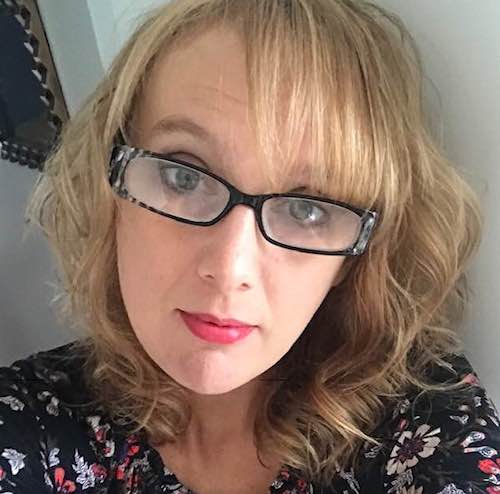
Stephanie Ballard is the mother of two sons, her youngest son, Braeden, was born with Kabuki Syndrome and congenital heart defects. Her oldest son, Colin is in the military. She enjoys writing poetry and life lessons about her journey in life.

Author Jolene Philo
Archives

Categories

Subscribe for Updates from Jolene

Related Posts

Expectation Versus Reality TV

Expectation Versus Reality TV

Expectation Versus Reality TV

Expectation versus reality TV came into focus for guest blogger Trish Shaeffer during the pandemic. She found the gap between the portrayal of individuals with disabilities on television and what life is like for them to be wide and unrealistic. What she saw resulted in several questions she’s sharing today.

While stuck at home more for the last year due to Covid-19, I caught up on a lot of TV. As I scrolled through countless options for scripted and reality shows, questions began to form in my mind.

Why aren’t there reality shows about parents with special needs kids?
Why aren’t there reality shows about people living with disabilities?

In today’s world people are fighting for change and protesting for the rights of many individuals. But it seems that the disabled population had been forgotten and put into the background of rights, understanding, and love.

Are they not people too?When did disability rights become a touchy subject?
Why does it seem the world has forgotten about them?
Why is there a stigma about how we title people with disabilities?

I did a poll online to get a better understanding of how and why people have different opinions on how to address the issue. I got feedback. For sure. It turned into a heated debate. My question at the end of the poll was this simple. Why don’t we give people with disabilities their own individuality?

Why don’t we begin by addressing adults with disabilities by their name?
Once we know their names, why don’t we ask the person how to address them?
Why don’t we ask a child or the child’s parents their names, address the child by name, and ask the parent or child how they prefer to be addressed?
It is that simple.

I keep going back to my original question about the lack of reality shows about someone living with a disability or about parents raising a child with a disability. If there was such a show, maybe the stigma about those with disabilities would stop.

Maybe the world would understand how to address a person with disabilities.
Maybe those shows would increase compassion and love toward the disabled community.
Maybe people wouldn’t feel awkward when they encounter a person in a wheelchair because they will know how to start a conversation.
Maybe parents of typical kids will understand the daily struggles of special needs parents instead of judging and staring.
The possibilities are endless.

Being a special needs parent is full of ups and downs. It is hard but full of reward as well. Being a person disabilities is also full of ups and downs. Success and struggles. It’s a world no one will truly understand unless they live it. But, a show about it will open doors, possibilities, compassion, and give people and insight. My son would benefit from seeing someone like him overcome or deal with a disability. Some one he could relate to.

So I ask you as the reader, would you like expectation versus reality TV to come into focus for you?
Would you like to see a reality show about being a special needs parent?
What about a show about someone living with a disability?

Let’s end the stigma about the disability community.

Let’s spread love, acceptance, and understanding.
Let’s talk about disability rights.
Let’s end the expectation versus reality TV disconnect.
Let’s use reality television to do it.
Come on TLC or Discovery!
Let’s make a show happen!

Do you like what you see at DifferentDream.com? You can receive more great content by subscribing to the monthly Different Dream newsletter and signing up for the daily RSS feed delivered to your email inbox. You can sign up for the first in the pop up box and the second at the bottom of this page.

By

Trish Shaeffer is the mom of 3 active boys with special needs. She’s a peer supporter for Parent to Parent and volunteers with the United Cerebral Palsy Network, Special Olympics, and the United Way. She’s also an equine volunteer at Leg Up Farm. She’s married to her best friend and biggest supporter, Chris Schaeffer.

Author Jolene Philo

Archives

Categories

Subscribe for Updates from Jolene

Related Posts

Speaking Healthy Physical Touch to Kids with Special Needs

Speaking Healthy Physical Touch to Kids with Special Needs

Speaking Healthy Physical Touch to Kids with Special Needs

Speaking healthy physical touch to kids with special needs deserves its own post in this series for three reasons. First, this subject comes with a caution. Physical touch is not always loving in our broken world. As parents of vulnerable children, we must directly teach them the difference between good and bad touch. We must also protect them by inviting only trusted people into our kids’ worlds, watch over them diligently, and keep the doors open at all times.

The second reason is that many children with disabilities and special needs deal with sensory processing disorder (SPD). SPD falls into 2 categories.

  1. Sensory seekers are under-sensitive to sensory input and look for more stimulation. A sensory seeking child doesn’t want just a hug. He wants a bear hug.
  2. Sensory avoiders experience sensory input intensely. They avoid loud noises, strange textures, bright lights, unusual flavors and more.

The third reason is that speaking physical touch to our kids with disabilities has a broader scope that you might think. The book, Sharing Love Abundantly in Special Needs Families: The 5 Love Languages® for Parents Raising Kids with Disabilities upon which this series is based, provides a plethora of surprising ways of speaking healthy physical touch to kids. Here are a few favorites:

  • Putting hands on a child’s shoulders during conversation to help her focus on what’s important and ignore distractions.
  • A foot or hand rub.
  • High fives, fist bumps, and handshakes.
  • Hold hands when praying before meals and at bedtime.
  • A basket of fidget toys to use during homework or church services.
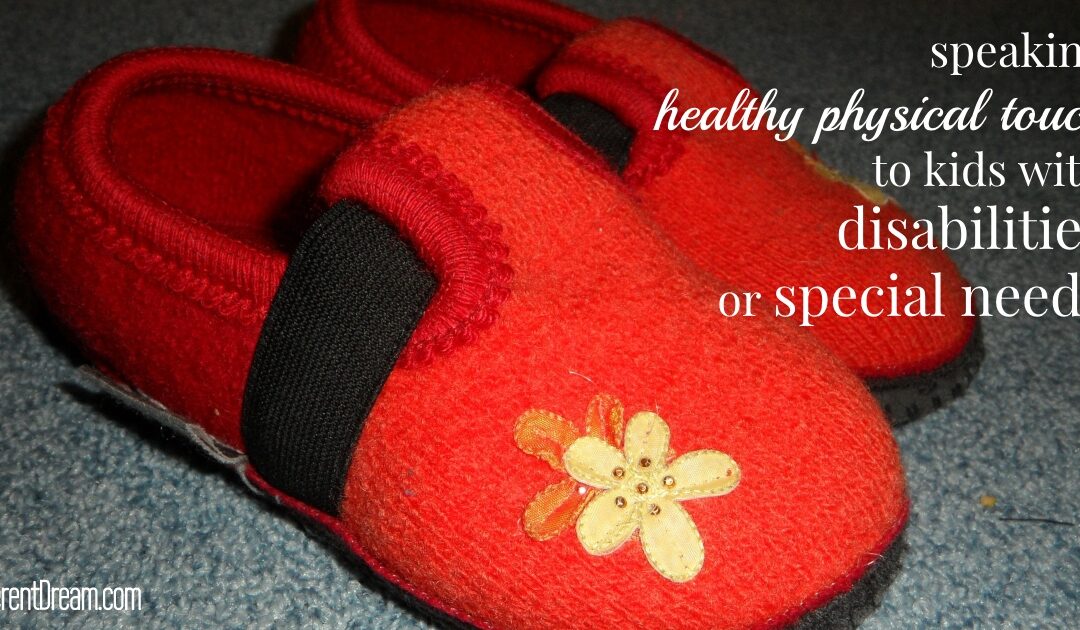
  • Gifts like a fuzzy slippers, chew toys, and clothes without tags.
  • Holding a child close after administering discipline.

More ideas for speaking healthy physical touch to kids with disabilities and special needs and stories about the caregiving families who use them can be found in chapter 6 of Sharing Love Abundantly in Special Needs Families: The 5 Love Languages® for Parents Raising Kids with Disabilities.

Stop by in June for the next post in the series. It’s about how to use the love languages with typical siblings in caregiving families.

Other articles in this series:

Do you like what you see at DifferentDream.com? You can receive more great content by subscribing to the monthly Different Dream newsletter and signing up for the daily RSS feed delivered to your email.

By

Jolene Philo is the author of the Different Dream series for parents of kids with special needs. She speaks at parenting and special needs conferences around the country. She’s also the creator and host of the Different Dream websiteSharing Love Abundantly With Special Needs Families: The 5 Love Languages® for Parents Raising Children with Disabilities, which she co-authored with Dr. Gary Chapman, was released in August of 2019 and is available at local bookstores, their bookstore website, and at Amazon.

Author Jolene Philo

Archives

Categories

Subscribe for Updates from Jolene

Related Posts

The Unkind Aftermath of the Pandemic

The Unkind Aftermath of the Pandemic

The Unkind Aftermath of the Pandemic

The unkind aftermath of the pandemic has become increasingly obvious on a personal level even as Covid cases and deaths fall. So far the improved statistics have had little effect on the aftermath our family is dealing with as our mother’s health declines.

Mom is 92. 

She’s lived in an assisted living memory care facility since 2015. She survived the pandemic without getting Covid. She endured a year without indoor visits from her family. She had no side effects from her vaccine. She was delighted when regular visits from her kids began in March of 2021. Soon after we began seeing the unkind aftermath of the pandemic as Mom’s health began to decline. 

Let me be clear.

Mom’s health issues are most likely not related to the pandemic. However, the blame for the difficulty we’ve experienced while trying to address her increased care needs is definitely related to the unkind aftermath of the pandemic.

  1. Rapid staff turnover. Mom’s facility and many others can’t hold onto direct care staff and nurses. To solve the issue they rely on temp agencies to cover shifts. The care provided by temporary staff is often quite good, but they aren’t there long or often enough to get to know clients’ names, much less develop relationships. 
  2. Poor communication. This rapid turnover results in poor communication. Calling to check on Mom’s status is hard when a direct care staff member doesn’t know who you’re talking about. When nurses leave, which happened where Mom lives just as her health issues began, there’s no one to do charting, no one to follow through on medication changes, no one who’s qualified to report to the doctor, and no one to assess care needs and update care plans. There’s also no one qualified to send a patient’s notes and records so other facilities can determine if someone qualifies for their level of care.
  3. Limited access. Elder care facilities aren’t embracing the no masks necessary indoors for vaccinated adults. Considering the death rate for Covid among the elderly, their caution is completely warranted. It also adds to the challenge of finding a new place for Mom to live. We rejected a facility right down the street because they only allow outdoor visits because Mom can’t do outdoor visits right now. Two facilities that do allow visits aren’t giving tours because the visits are limited to family members of residents. One facility allowed us to meet with the administrator in her office. At the other facility, we had to meet in the parking lot. We have to choose Mom’s new home sight unseen.

For those whose families are vaccinated and healthy, the unkind aftermath of the pandemic can be easy to ignore. For families caring for children with disabilities and special needs, for those who love adults with compromised health, and for those supporting the elderly through their last years, the aftermath continues to define and limit their lives.

Your kindness has the power to make a difference in those families.

Get vaccinated.
Wear a mask when around people who aren’t vaccinated.
Wash your hands.
Stay home when you’re sick.

The quality of Mom’s final years depends upon your small and significant acts of kindness.

Please.
Be kind.
For Mom’s sake.
Please.

By

Jolene Philo is the author of the Different Dream series for parents of kids with special needs. She speaks at parenting and special needs conferences around the country. She’s also the creator and host of the Different Dream websiteSharing Love Abundantly With Special Needs Families: The 5 Love Languages® for Parents Raising Children with Disabilities, which she co-authored with Dr. Gary Chapman, was released in August of 2019 and is available at local bookstores, their bookstore website, and at Amazon.

Author Jolene Philo

Archives

Categories

Subscribe for Updates from Jolene

Related Posts

Taking Time for Yourself

Taking Time for Yourself

Taking Time for Yourself

TakIng time for yourself is a hard sell. As summer approaches, guest blogger Kimberly Drew is selling the idea to herself because she has no other choice. Check out the pep talk she gives herself daily as she comes to grips with her own health needs and limitations.

I’m about at the end of my rope and am anxiously counting down the days until summer vacation. At the same time, I know that summer is a break in the routine that my girls thrive in. The demands on my energy and physical body are high over the summer. I’m also anticipating a surgery that will keep me from lifting for a minimum of 6 weeks. This will be hard for our family, but I know I have to take care of myself if I’m going to take care of my girls.

What I do now to care for me impacts their future. Putting “me first” is not in my nature. I was taught that to love others like Christ did means being a servant with a “me last” attitude. Yet here I am changing gears. Maybe you too need to care for yourself. Caregivers are often the last ones to take time for themselves, but our neglect of self-care shows up in one negative way or another. We have to make time to take care of ourselves regardless of all the things we need to do. I’m giving myself pep talks as in the days leading up to my surgery! Maybe you need encouragement, too, as you think about taking time for yourself.

Take to take time to care of yourself. It’s important to do so. Your family needs you emotionally, spiritually, physically, and mentally. You may be suffering because you pour yourself out day after day. But nothing is built into your lifestyle so you can be poured into. You need to take some time for yourself.

Take time to connect your soul to God. Prayers offered up in a rush or out of desperation are okay, but a quiet heart with a mind focused on the Lord is better. He fills in the gaps that nothing else can when you spend some time with Him each day. (Matthew 11:28) 

Take time to rest. Naps are okay when your body or mind are in need of healing. (Proverbs 3:24) 

Take time to nourish your body. Fast food on the way home from a long day of appointments isn’t nourishment! Caffeine to get by isn’t replenishment. Give your body what it needs to take care of itself. (Daniel 1:12-15)

Take time for your marriage. Marriages left alone are like an unpruned and uncared for plant…they don’t produce the beauty and life that they should. (Ephesians 5:21-32)

Take time to unplug. Choose a time each day to unplug the TV, the tablet, the phone, and computer. You’re already balancing so many things, why not get rid of things that steal your attention and waste your time. (Luke 10:38-42)

Take time to enjoy nature. Build time into your week to walk with a friend. The weather is turning around. You’ll be amazed at what 30 minutes of fresh air and sunshine outdoors can do for your mental health. When you walk with a friend it builds into your heart at the same time. It’s a win, win! (Psalm 19:1-6)

Taking time for yourself is essential if your desire is to take the best care of your child you possibly can. If doing so means printing out this post and taping it to your bathroom mirror, so be it!

Do you like what you see at DifferentDream.com? You can receive more great content by subscribing to the Different Dream newsletter and signing up for the daily RSS feed delivered to your email inbox. You can sign up for the first in the pop up box and the second at the bottom of this page

By

Kimberly grew up and went to college in the small town of Upland, IN. She graduated from Taylor University with a degree in Elementary Education in 2002. While at TU, she married her college sweetheart and so began their adventure! Ryan and Kimberly have four amazing kids on earth (Abigail, Jayden, Ellie, and Cooper), and a baby boy waiting for them in heaven. Their daughter Abigail (Abbey) has multiple disabilities including cerebral palsy, a seizure disorder, hearing loss, microcephaly, and oral dysphagia. She is the inspiration behind Kimberly’s  desire to write. In addition to being a stay at home mom, Kimberly has been serving alongside her husband in full time youth ministry for almost fourteen years. She enjoys working with the senior high girls, scrapbooking, reading, and music. You can visit Kimberly at her website, Promises and Perspective.

Author Jolene Philo

Archives

Categories

Subscribe for Updates from Jolene

Related Posts

6 Caregiving Advocacy Tips I’m Learning All Over Again

6 Caregiving Advocacy Tips I’m Learning All Over Again

6 Caregiving Advocacy Tips I’m Learning All Over Again

The 6 caregiving advocacy tips I’m learning all over again come with compliments from my mom. She’s 92 and still teaching me life lessons by the bucketful. She’s experienced some health challenges over the past few months, so we (my older sister, younger brother, and me) to advocate on her behalf.

This isn’t my first advocacy rodeo. My husband and I were thrust in to that role in 1982 when our firstborn was diagnosed with a life-threatening birth defect. We were his voice and his caregivers for 4 intense and sometimes terrifying years until his health stabilized. During those years we gradually discovered 6 caregiving advocacy tips. They worked on his behalf then, and they’re working on Mom’s behalf now. Which goes to show, as I’ve said before, that caregiving is caregiving is caregiving.

Tip #1

Write everything down. From the beginning of whatever health issue you’re dealing with. A sentence or 2 may be all you need, along with the date, to keep track of what’s happening. How your loved one feels. Vitals. Conversations with medical personnel. Voice mails left. Record everything, preferably in an electronic format so it’s easy to copy, send, update, and resend as needed.

Tip #2

Be a squeaky wheel. One advantage to writing things down is that you know when someone hasn’t returned your call or email after a day or two. Or an hour or two, depending on the urgency of the situation. Because you have it written down, you know when it’s time to become a squeaky wheel. In other words, call again after a reasonable amount of time. “Reasonable” could be a day or two after someone promised to get back to you. Sooner only if the situation is urgent. If your second call or email doesn’t garner a response, become an even squeaker wheel with daily calls or emails. During all of this, keep recording everything.

The rest of 6 Caregiving Advocacy Tips I’m Learning All Over Again can be found at the Key Ministry blog for parents. 

By

Jolene Philo is the author of the Different Dream series for parents of kids with special needs. She speaks at parenting and special needs conferences around the country. She’s also the creator and host of the Different Dream websiteSharing Love Abundantly With Special Needs Families: The 5 Love Languages® for Parents Raising Children with Disabilities, which she co-authored with Dr. Gary Chapman, was released in August of 2019 and is available at local bookstores, their bookstore website, and at Amazon.

Author Jolene Philo

Archives

Categories

Subscribe for Updates from Jolene

Related Posts