Autism Therapy the Pinkalicious Way, Pt. 2

Autism Therapy the Pinkalicious Way, Pt. 2

Autism Therapy the Pinkalicious Way, Pt. 2

Welcome back to Part 2 in Guest blogger Amy Stout’s series about a unique autism therapy she created for her daughter. Today’s post explains how she created a very pink, very creative, and very successful feeding therapy session.

The Pinkalicious (Feeding) Party, Part 2

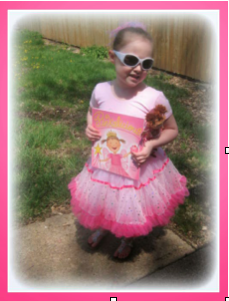
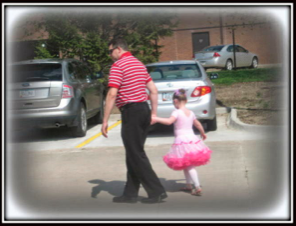
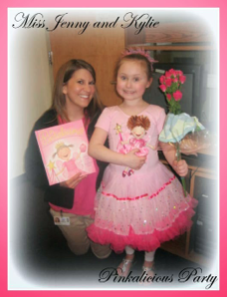
On the day of the party, Kylie wore her best pink dress. She also brought her Pinkalicious book and her washable Pinkalicious doll. We even invited Daddy to take time off work to come with us to the party. When he arrived, he brought pink roses for “Kylie-licious.”

Autism Feeding therapy 2

We took a quick picture of Kylie with Pinkalicious, her Pinkalicious book and Miss Jenny. Then the party began!
Autism feeding therapy 3

Autism Therapy the Pinkalicious Way

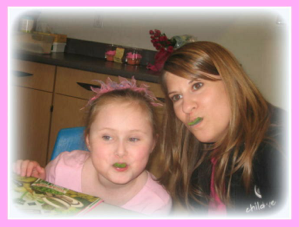
There is a mirror on the wall, and they looked at themselves eating green peppers. Yes, I just said green peppers! They followed along in the Pinkalicious book…
autism feeding therapy 4

And she liked it!!

Next, they tried watermelon. Watermelon was super cool because it had both pink and green on it. She was a little unsure about the texture, but she did it!

autism feeding therapy 6

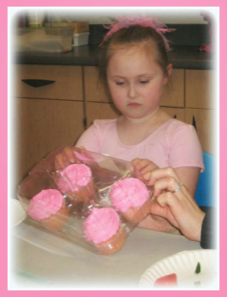
They tried strawberries and strawberry ice cream, but the next food was the one Kylie had been waiting for. We are getting ready to try pink cupcakes! Keep in mind, that Kylie wouldn’t even go near cake or frosting before.
autism feeding therapy 8

Even though they looked yummy, she still was afraid to actually touch them. So, she used her tongue instead. This is a coping technique.
autism therapy 9

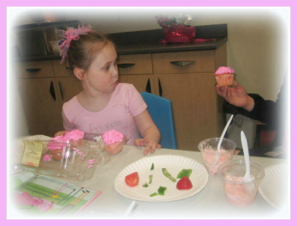
Then, Jenny showed her that you can TOUCH the cupcake. (I love the look of awe on her face) Kylie decided to try it too. Touching was too much, so she used her green pepper to dip it into the frosting!


autism therapy 11

autism feeding therapy 10

Kylie then looked into the mirror and discovered that her tongue had a pink hue. So she declared that she was turning pink and needed to eat some green food. It was her idea!

Can we say progress?

Pinkalicious Autism Therapy a Success

They ended the party with drinking pink lemonade from a silly straw.  Kylie loves silly straws.

Autism therapy 12

It was such a successful therapy day. And, yes, I know that mommy isn’t featured in any of these photos, but you did experience our world through my eyes!

Autism therapy 13

More Autism Therapy and Feeding Issue Books

There are many other books that you could use for an event such as this to assist with feeding issues.  Here are a few that we enjoy!

These books are very helpful for understanding feeding issues:

Other Autism Therapy Resources

My daughter chews on these all the time when she becomes overwhelmed, anxious or just needs deep joint pressure. They are amazing and keep her from chewing on non-edible objects and clothing. There are many scents and styles available…

And finally, an encouraging book for parents, Chicken Soup for the Soul: Raising Kids on the Spectrum

Your Suggestions about Autism Therapy

Now that you’ve read about Amy’s creative autism therapy idea, it’s time to share yours…anything you’ve come up with that made a different for your child with special needs. 

Autism Therapy the Pinkalicious Way, Part 1

Do you like what you see at DifferentDream.com? You can receive more great content by subscribing to the quarterly Different Dream newsletter and signing up for the daily RSS feed delivered to your email inbox. You can sign up for the first in the pop up box and the second at the bottom of this page.

By

Amy Stout is a wife, mother, and free-lance writer. You can visit her website at His Treasured Princess.

Author Jolene Philo

Archives

Categories

Subscribe for Updates from Jolene

Related Posts

Autism Therapy the Pinkalicious Way, Pt. 1

Autism Therapy the Pinkalicious Way, Pt. 1

Autism Therapy the Pinkalicious Way, Pt. 1

Guest blogger Amy Stout is here today and tomorrow to share one of her family’s recent adventures with Kylie, their daughter who experiences autism. She’s here with the story of a very pink, very creative, and very successful adventure in autism therapy. Today, she explains why and how the party came to be. Tomorrow, she’ll be back with a report on how it went.

The Pinkalicious (Feeding) Party, Part 1

Kylie is now eight years old and experiences autism. One of the things that goes along with that diagnoses for Kylie is significant sensory issues which also create feeding issues. Feeding issues can be sensory, psychological, emotional, or physical.

And, let me share a personal note here…feeding issues are hard! They are a continuous, multiple times a day battle. On most days, Kylie has to be hand fed because she doesn’t want to touch food. She has an extremely limited diet, usually only 5–7 select foods that she will eat. If she adds a food, she will usually reject a former favorite. It takes months, even years for her to feel comfortable enough to be able to sit at the table with an unfamiliar food, smell, or texture. Often she will crawl under the table and shout “It’s fake! It’s fake!” or she will go to another floor of the house to escape the foreign item.

Autism Therapy and Feeding Issues

This is one area that is quite frustrating for parents and caregivers as:

  1. We eat 3x a day and usually more.
  2. The medical community doesn’t address this issue unless a child looks significantly malnourished. With autism, children tend to look very healthy but only because the foods they tolerate are unhealthy and cause them to gain weight. This can be just as serious as undernourishment since kids need certain vitamins, minerals, and nutrients for proper brain development.

Feeding is also difficult because so much of our every day world revolves around food. Holidays and other things too are all about food–birthday parties, classroom parties, summer fun, restaurants, family outings, state fairs, movie theaters, picnics, theme parks, and Vacation Bible School. Take food out of the equation, and things become quite difficult. Just imagine Thanksgiving day with a child who wants nothing to do with the typical Thanksgiving Day feast!

While the medical community does not offer parents much hope, the therapy community does. But often the techniques go directly against everything you ever learned about etiquette, manners, and healthy eating. For example, to boost my daughter’s metabolism and help her start to feel hunger, we often give her a snack size candy bar before a meal. This is a huge no-no for a typical child, but it works for our unique child. Also, we encourage her to touch her food, blow bubbles through her straw into a drink, chew on ice, play with her food–ever try painting with colored pudding?–and many other typical taboos that usually encompass the label of good manners. Now, imagine training a child care provider or grandparent on these techniques. Imagine the stares of shock from the parents sitting in the next booth to you in a restaurant. It can be quite difficult and you must develop thick skin to accommodate all the opinions out there!

Pinkalicious Autism Therapy

We are fortunate that Kylie has an unusual attachment to books. During the time of this story, she had just been introduced to the book Pinkalicious by Victoria Kann.

For those of you who are unfamiliar with the story, it’s about a little girl who LOVES pink. One day, it is raining so her mom suggests they make cupcakes. Pinkalicious thinks pink cupcakes with pink frosting would be divine! As they are working, she eats a couple of cupcakes. When her picky eater brother turns down his cupcake, she eats it for him. After dinner, her parents allow her to eat another cupcake but Pinkalicious still wants more. The next morning, Pinkalicious wakes up to find that her skin has turned pink!

Pinkalicious is thrilled that she looks so beautiful and tells everyone her new name is Pinkerbelle. After a bath does not wash off the pink, her mom takes her to the doctor where the she is diagnosed with Pinkititis. Pinkalicious is unfazed. The doctor then tells her that for the next week, she can eat NO PINK FOOD and, to return to normal, she must eat a steady diet of green food. That night, Pinkalicious pretends to eat her green food, but when everyone is asleep, she sneaks into the kitchen and eats another pink cupcake. The next morning, she has turned RED! Pinkalicious is horrified! Red is most certainly NOT PINK!  She wants to be herself again so she begins to eat green foods. Before long, she’s back to her wonderful self.

For some reason, Kylie really connected to this book.  She took it with her everywhere and started to declare that pink was her favorite color. As parents, we loved it as it has wonderful illustrations of food, especially green foods. So, I talked to Kylie’s feeding therapist and asked her if she would consider doing something “out of the box” and make our next feeding session a Pinkalicious Party. Kylie really dislikes feeding therapy and asks us hopefully every week if her therapist is out sick. So we would build it up so Kylie would have a level of excitement about the session.  Kylie’s therapist, Jenny, agreed to the idea and we set to making plans.

Pinkalicious Will Be Back

Amy, Kylie, and Pinkalicious will be back with their report about the Pinkalicious (Feeding) Party. Until then, enjoy this preview of Kylie all dressed up and ready to go.

Autsim Therapy Pinkalicious 1

Autism Therapy the Pinkalicious Way, Part 2

Do you like what you see at DifferentDream.com? You can receive more great content by subscribing to the quarterly Different Dream newsletter and signing up for the daily RSS feed delivered to your email inbox. You can sign up for the first in the pop up box and the second at the bottom of this page.

By

Amy Stout is a wife, mother, and free-lance writer. You can visit her website at His Treasured Princess.

Author Jolene Philo

Archives

Categories

Subscribe for Updates from Jolene

Related Posts

Special Needs Hidden Treasures

Special Needs Hidden Treasures

Special Needs Hidden Treasures

Photo Credit: Stuart Miles at www.freedigitalphotos.net

After 13 years in the same place, guest blogger Maggi Gale and her husband are in the midst of an unexpected move. They are sorting through items stored in their loft (called an attic in the States) for 13 years. In the process, Maggi discovered some special needs hidden treasures to pass along to you.

Special Needs Hidden Treasures

July has found us up the loft, in shock over all the belongings we’d left there 13 years ago and subsequently forgotten! Now, through situations beyond our control, it’s time to sort through, condense, and discard, our not necessarily unwanted, but definitely unneeded possessions. Everything from homemade ceramic pots to childhood photos have all come up for scrutiny and added to the trash or treasure piles.

Hidden Treasures in the Loft

At first I was completely overwhelmed by the task. How could we possibly get rid of that book? I’ve had it since primary school! And these baby clothes! She was so cute in that! Practically speaking however, how could we keep it when we live overseas and the loft is no longer available to us? And hang on, if we haven’t used it for 13 years, looks like we don’t actually NEED it now.

But as I’ve realized that some things are treasures–just someone else’s treasure rather than mine–and then taken them to the charity shop, a feeling of liberty has begun to replace the overwhelmed one.

Hidden Treasures in our Faith

The truth is, we are not defined by our possessions. Yes, our possessions can say a lot about us and reflect our values, tastes and even experiences. But there’s a better and more eternal reference point for identity than the loft.

For we are his workmanship, created in Christ Jesus for good works, which God prepared beforehand, that we should walk in them. Ephesians 2:10

The special needs parent has a multitude of good works to perform every day, which according to this verse, God has prepared beforehand. Most of those good works are just as hidden to the world as our belongings were for those 13 years in the loft. And as Christians, these good works we’re doing can be part of the process of His workmanship in us.

Hidden Treasures in God’s Hands

So as we sort through our things, I’m keeping in mind that I am who I am because that is what God says. He knows who He made me to be. And special needs parenting has been a modelling tool in the hands of the ultimate Potter!

What Are Your Special Needs Hidden Treasures?

Have you discovered some special needs hidden treasures on your parenting journey? You’re invited to share them in the comment box if you like.

Do you like what you see at DifferentDream.com? You can receive more great content by subscribing to the quarterly Different Dream newsletter and signing up for the daily RSS feed delivered to your email inbox. You can sign up for the first in the pop up box and the second at the bottom of this page.

By

Maggi is a wife and mother of two daughters. She is a primary school teacher, having worked in Africa for 14 years before moving to the Middle East. Her passions are her animals and art. Her youngest daughter was born with tracheoesophageal fistula (TEF). This birth condition was to be the start of an arduous journey, impacting the whole family for several years. Through writing, she hopes to turn her experiences into encouragement for others on similar paths.

Author Jolene Philo

Archives

Categories

Subscribe for Updates from Jolene

Related Posts

Special Needs Parent Guilt: Let’s Talk About It

Special Needs Parent Guilt: Let’s Talk About It

Special Needs Parent Guilt: Let’s Talk About It

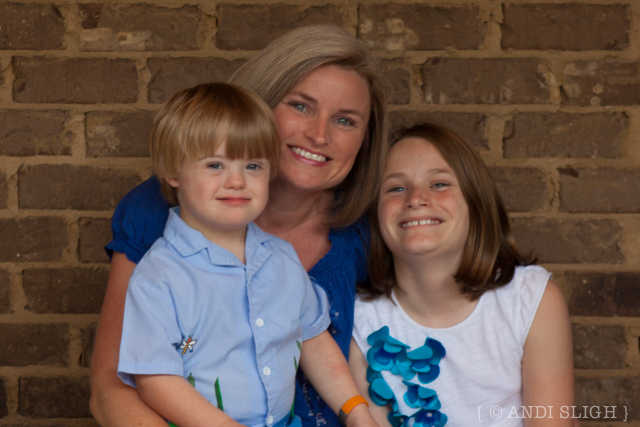
Andi Sligh from Bringing in the Sunshine is today’s guest blogger. She’s here to talk about a subject many of us fight daily: special needs parent guilt. She offers six tips for combating its whispers when they rears their ugly heads.

Special Needs Parent Guilt: Let’s Talk About It

Eleven years ago, when my daughter, Sarah Kate, was born ten weeks premature, I blamed myself. A year later, when she was diagnosed with spastic diplegia cerebral palsy, I blamed myself. Six years after that, when my son, Nathan, was born with Down syndrome, I blamed myself.

I’m not blaming myself anymore.

It’s not because I don’t think I could have done things differently, and it’s not because I’ve found someone else to blame. Things could have gone differently, resulting in different outcomes, but they didn’t, and our life as a family with two children with special needs (and no typical ones) is enough.

Assigning blame is fruitless.

All of those times that I wished I’d done this or that (or not done this thing or another) accomplished only one thing: pain and anguish for me, the mother of these wonderful, perfect children. A mom in pain is a mom who can’t give her best to her children.

Those fleeting moments when I wondered if the ob/gyn on call should have done something differently, or when I contemplated whether or not those brand-new full-body scanners at the airport were safe when I was (unknowingly) a few days pregnant? A waste of energy and more pain and anguish for me.

Don’t feel guilty about causing your child’s disability.

In today’s medically advanced world, we live with a false sense of security, especially when we are young(ish) adults who’ve never faced tragedy or incurable illness. We believe that if we do the right things we’ll be okay, and our kids will be okay. It’s not always true, and often there’s no reason why.

Speaking of doing the right things … you’re doing them.

The days when you work on the activities that the therapist recommended, and the days that you toss the worksheets aside and let your kid binge on TV or ice cream instead – you’re doing the right thing. The days you push your kid to do more, and the days when you let him slack off because you just can’t deal – you’re doing the right thing.

Don’t feel guilty about not being a 24/7/365 therapist.

Sarah Kate had major orthopedic surgery in the spring, and she still isn’t fully rehabbed. We are using an extensive home program as a supplement to her office therapy visits. One recent Sunday afternoon, we tried to get her to ride her bike. I went with her first, but capitulated when I saw fear and tears. A short while later, my husband – the “tough” one – tried again. He had only marginally more success.

After a few minutes, he came back inside and said something so simple yet so profound: “We need to let this go and have her work with the therapist instead. She just isn’t going to be able to do it for us.” I knew instantly that he was right. Our job as her parents is to guide and comfort her and catch her if she falls. Taking on the role of full-time therapists, as well, doesn’t always work.

If you’re feeling guilty today, stop.

Whatever you’re doing, and whatever you did, is okay. Take a deep breath and just love your child, and that will be enough.

How Do You Stop Special Needs Parent Guilt in Its Tracks?

Andi offers some excellent advice. But perhaps you’ve discovered some other ways to keep it at bay. Leave a comment if you do. You can also connect with Andi online to keep up with her family and their adventures.

Do you like what you see at DifferentDream.com? You can receive more great content by subscribing to the quarterly Different Dream newsletter and signing up for the daily RSS feed delivered to your email inbox. You can sign up for the first in the pop up box and the second at the bottom of this page.

By

Andi Sligh is an ordinary mom living an extraordinary life on the gulf coast of Alabama with a daughter with cerebral palsy, a son with Down syndrome, an adventurous husband, a wild Westie, a rescued Schnoodle, a camera, and a worn out pair of running shoes. She blogs it all at Bringing the Sunshine, tweets a little @AndiSligh and recently published There’s Sunshine Behind the Clouds: Surviving the Early Years as a Special Needs Mom, a free ebook for parents at the beginning of their special needs journey.

Author Jolene Philo

Archives

Categories

Subscribe for Updates from Jolene

Related Posts

Paper Clouds Apparel: A Special Needs Company

Paper Clouds Apparel: A Special Needs Company

Paper Clouds Apparel: A Special Needs Company

Today’s post comes from Robert Thornton. He’s here to share the story of how his company, Paper Clouds Apparel (PCA) came into being. I hope you’re as impressed by Thornton’s commitment to the special needs community as I am.

Paper Clouds Apparel: A Special Needs Company

Paper Clouds Apparel (PCA) all started back home when I was visiting my parents and spied a drawing on the fridge. When I asked Mom, a bus driver for children with special needs, about the drawing, she stated that a girl on her bus route draws on the ride to school and gives her artwork to my mother upon arriving at school. I spent that night mesmerized by this drawing, and the next morning I awoke thinking how cool that art would look on a shirt.

Paper Clouds Apparel Provides Jobs and Donations

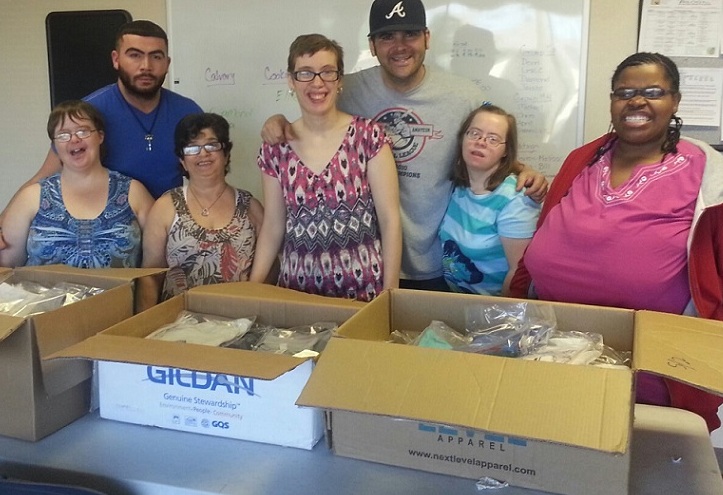
That idea began a seven year journey to get Paper Clouds Apparel to the place where it is now. PCA takes art created by those with special needs, transfers it to our shirts, bags and hats and then sells those on our website www.papercloudsapparel.com. Every two weeks we feature a different special needs cause and donate 50% of the proceeds to that cause. In addition to the donation, PCA hires adults with special needs to fold and package all our shirts.

Paper Clouds Apparel Changes Lives

The journey hasn’t always easy. But when we receive letter from parents about how employment changed their child in a positive way, the long nights working 90 hours a week at two jobs to get the business started are totally worth it. We believe our business can change the world for those with special needs. We can give our artists and workers a huge self esteem boost and sense of pride seeing their art on our shirts being purchased by people.

Paper Clouds Apparel Needs Your Help

We raise funding for a lot of special needs causes that have had their funding cut dramatically by the government. Recent studies say anywhere from 80-93% of adults with special needs are unemployed. Our company creates jobs for hard working individuals with special needs. To make that happen, our mission needs to reach the masses. Could you help share our story? Please like us on Facebook, follow us on Twitter at @PaperCloudsPCA or place an order at our website.  Thank you so much!

Do you like what you see at DifferentDream.com? You can receive more great content by subscribing to the quarterly Different Dream newsletter and signing up for the daily RSS feed delivered to your email inbox. You can sign up for the first in the pop up box and the second at the bottom of this page.

By

Robert Thornton is the Founder and CEO of Paper Clouds Apparel.

Author Jolene Philo

Archives

Categories

Subscribe for Updates from Jolene

Related Posts

Back to School: 8 Tips for a Smooth Transition

Back to School: 8 Tips for a Smooth Transition

Back to School: 8 Tips for a Smooth Transition

Back to school ads. They’re appearing earlier and earlier in the summer. Early enough to create turf wars between back to school and the Fourth of July industries. While early July is way too soon to think about going back to school, the same can not be said for the end of July in many parts of the country. Like my part of the country where the school year begins on August 14.

Yes, you read that right. August 14. Only 3 weeks away.

Just enough time for parents in our local school district to take some steps to make the new school year transition easier for their kids with special needs. The back to school transition tips listed below were first implemented by parents who entrusted their children with special needs to my care during my 25 years as a teacher. Now, it’s my pleasure to pass them along to you.

Back to School Tip #1

Start early. Contact the school office of your child’s building several weeks before the new year begins to make sure everything is in place so your child’s IEP can be implemented as written: teachers, associates, equipment, modifications, etc. If your child is moving to new room or building, set up a time to take a tour with your child. If your child will have new teachers, set up a time to stop by to meet them.

Back to School Tip #2

Help others get to know your child. Create a book about your child for your child’s teachers. You’ll find more information about what to put in the book at DifferentDream.com, along with downloadable forms, and page descriptions. You can drop the notebook off when you stop by to meet the teachers, a few weeks before school starts so they have time to look it over and call if questions arise.

To read the remaining back to school transition tips, visit the Not Alone website.

Do you like what you see at DifferentDream.com? You can receive more great content by subscribing to the quarterly Different Dream newsletter and signing up for the daily RSS feed delivered to your email inbox. You can sign up for the first in the pop up box and the second at the bottom of this page.

By

Jolene Philo is the author of the Different Dream series for parents of kids with special needs. She speaks at parenting and special needs conferences around the country. She’s also the creator and host of the Different Dream website. Sharing Love Abundantly With Special Needs Families: The 5 Love Languages® for Parents Raising Children with Disabilities, which she co-authored with Dr. Gary Chapman, was released in August of 2019 and is available at local bookstores, their bookstore website, and at Amazon.

Author Jolene Philo

Archives

Categories

Subscribe for Updates from Jolene

Related Posts