Fostering Friendships for Kids with Special Needs, Pt. 2

Fostering Friendships for Kids with Special Needs, Pt. 2

Fostering Friendships for Kids with Special Needs, Pt. 2

Guest blogger Kimberly Drew is at Different Dream to finish up her series about fostering friendships for kids with special needs. In Part 1, she shared her thoughts on the importance of fostering friendships for kids with special needs. Today she offers six tips about how to intentionally encourage friendships between kids with special needs and their typical peers.

6 Ways to Teach Kids to Play with Your Child with Special Needs

In an effort to help create friendships with my daughter Abbey, I have been thinking about things I could have done differently to teach other children how to play with her when they were young. I wish I had taken these steps to advocate for her socially, and pray that you will benefit from this list.

  1. Communicate your heart’s desire with your friends who have children who are in your child’s peer group. If your close friends love you, as I’m sure they do, they want to know what’s in your heart and on your mind when it comes to your child. Be open about how isolating and difficult it can be to raise your child. Share with them your dreams for friendship and social interaction, and let them be a part of the team to make those dreams reality. Their children and families will get just as much out of it (and maybe even more) as yours will.
  2. Take the time to teach your friends about your child’s special nuances. You know how to handle your child’s drool or rough play, but that doesn’t mean that other adults do. Just because they love you and your child doesn’t mean they know what to do when your child is suddenly throwing a fit or having a melt-down. If they are prepared and fully informed, it will make it easier for their children to interact with your child, too. Teach them how to talk to your child. If your child uses a device, or sign language, or has certain key phrases they say when they want something, share those with your adult friends. If they can learn to communicate with your child appropriately, then they can model that for their children.
  3. Have your friends practice by role playing with their children. This is one of the best ways to teach young children how to handle themselves in new situations. Just like we teach our children what to do if a stranger tries to talk to them, we can teach them how to respond when a disabled child tries to grab them or hugs too hard. Offer to come over without your child to do this with them if they need help.
  4. Give other children some things they can say to your child. If your child is non-verbal, you have to help them learn how to have a “conversation” with your child when they are the only one talking. If your child can speak, tell them what they love to talk about.
  5. Set up play dates where your child can do something he or she loves and excels at. If your child loves movies, plan a movie night. Spend a few minutes before just socializing and practicing those skills that they role-played with their parents. If your child loves to paint, get out the supplies and paint together.
  6. Keep it short at first. An hour together is a great start and those times can build as the children grow more comfortable with each other.

Remember that the goal is to create lifelong friends and advocates for your child. We all need friends, and so does your child! It’s worth the work!

How Do You Foster Friendships for Kids with Special Needs?

Kim offered some great suggestions to foster friendships for kids with special needs. If you’ve discovered some great ways to promote friendships, share them in the comment box. We’d love to hear from you.

Do you like what you see at DifferentDream.com? You can receive more great content by subscribing to the quarterly Different Dream newsletter and signing up for the daily RSS feed delivered to your email inbox. You can sign up for the first in the pop up box and the second at the bottom of this page.
Part 1

By

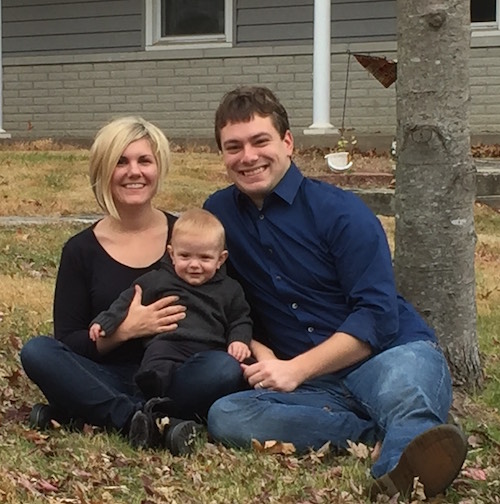
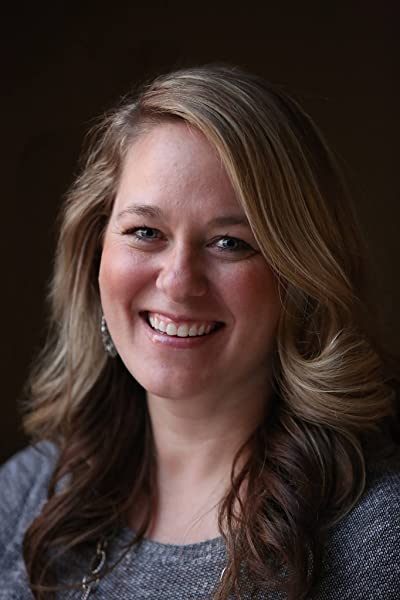
Kimberly grew up and went to college in the small town of Upland, IN. She graduated from Taylor University with a degree in Elementary Education in 2002. While at TU, she married her college sweetheart and so began their adventure! Ryan and Kimberly have four amazing kids on earth (Abigail, Jayden, Ellie, and Cooper), and a baby boy waiting for them in heaven. Their daughter Abigail (Abbey) has multiple disabilities including cerebral palsy, a seizure disorder, hearing loss, microcephaly, and oral dysphagia. She is the inspiration behind Kimberly’s  desire to write. In addition to being a stay at home mom, Kimberly has been serving alongside her husband in full time youth ministry for almost fourteen years. She enjoys working with the senior high girls, scrapbooking, reading, and music. You can visit Kimberly at her website, Promises and Perspective.

Author Jolene Philo

Archives

Categories

Subscribe for Updates from Jolene

Related Posts

Fostering Friendships for Kids with Special Needs, Pt. 1

Fostering Friendships for Kids with Special Needs, Pt. 1

Fostering Friendships for Kids with Special Needs, Pt. 1

Abbey, daughter of guest blogger Kimberly Drew, is growing up. Kimberly’s been doing the normal mom business of replaying the movie of her daughter’s life and wondering what she could have done differently. Her chief regret is that she didn’t intentionally encourage friendships between Abbey and her typical peers. Here are her thoughts on the importance of fostering friendships for kids with special needs. She’ll be back in a few weeks with specific ideas about how to do it.

Being Your Child’s Best Friend is Okay but Being her Only Friend Is Not

My daughter Abbey and I are sometimes inseparable. At social gatherings, she is right by my side. I adore having her as my little sidekick. However, as she is getting older I am starting to reflect on the earlier years of her life. Now I wish I could go back in time and do things differently. Since I can’t, I’ll pass on what I learned about fostering friendships for kids with special needs.

I wish I had communicated to the world that just because Abbey doesn’t talk and is mentally disabled, doesn’t mean she doesn’t have feelings.

Someone asked me if I needed her to have friends for her or for myself…and I wasn’t sure how to answer that. She seems perfectly content to have me as her best friend in life. But what if it does matter to her? She can’t communicate that, and she certainly understands way more than I think she does. Isn’t it my job to speak for her? I should have considered that just because Abbey can’t communicate that she wants friends, or to play with other children, doesn’t mean she doesn’t feel that way.

I wish I had spoken up to my friends when they planned birthday parties, or play dates that didn’t include Abbey and me.

There were times when my feelings were hurt that we felt left out, but instead of saying something I just accepted that I didn’t want to force Abbey onto anyone. I told myself it wasn’t fair to ask a little child to do something they weren’t comfortable with. I couldn’t have been more wrong. I have fantastic friends who would have, and are, navigating these waters with me. I know they would have responded in love, and we could have worked it out together. The pain and loss of missed memories and little girl experiences was unnecessary. We could have had those too.

I wish I had made more of an effort to build friendships with other girls her age instead of expecting it to happen.

When children are young, they are more flexible and extremely easy to teach. As four and six-year-olds, this would have been the perfect time to have some of my friends with little girls over to learn how to play with Abbey. Let’s face it, playing with someone who is disabled does not come naturally to most adults or children. But it is a skill that can be learned. If these little girls had been given a chance to learn how to play with Abbey, they would have eventually fallen completely in love with her. She really is the sweetest thing. Instead, it is still awkward among her peer group and I am pretty much Abbeys only “girl” friend. I hate that.

I believe friendship is worth the work and can be taught.

Even as adults we have to work at our friendships sometimes. That’s what makes them stronger! We should expect nothing less for our children. They deserve to grow up with loving and loyal friends too.

How About You?

What are your thoughts about fostering friendships for kids with special needs? Leave them in the comment box.

Do you like what you see at DifferentDream.com? You can receive more great content by subscribing to the quarterly Different Dream newsletter and signing up for the daily RSS feed delivered to your email inbox. You can sign up for the first in the pop up box and the second at the bottom of this page.

By

Kimberly grew up and went to college in the small town of Upland, IN. She graduated from Taylor University with a degree in Elementary Education in 2002. While at TU, she married her college sweetheart and so began their adventure! Ryan and Kimberly have four amazing kids on earth (Abigail, Jayden, Ellie, and Cooper), and a baby boy waiting for them in heaven. Their daughter Abigail (Abbey) has multiple disabilities including cerebral palsy, a seizure disorder, hearing loss, microcephaly, and oral dysphagia. She is the inspiration behind Kimberly’s  desire to write. In addition to being a stay at home mom, Kimberly has been serving alongside her husband in full time youth ministry for almost fourteen years. She enjoys working with the senior high girls, scrapbooking, reading, and music. You can visit Kimberly at her website, Promises and Perspective.

Author Jolene Philo

Archives

Categories

Subscribe for Updates from Jolene

Related Posts

10 Positive Ways to Advocate at School

10 Positive Ways to Advocate at School

10 Positive Ways to Advocate at School

Advocacy at school.

For many in the special needs community, that phrase conjures images of parents breathing fire while toting armloads of files and folders into an IEP meeting or annual review.

Not a pretty picture.

And, if the truth be told from my vantage point as a former teacher, it’s not the most effective way to advocate at school either. During my 25 years in public education, the parents who did the most good for their children were those who took President Theodore Roosevelt’s advice to heart.

They spoke softly and carried a big stick.

For special education parent advocates who are Christians, the big stick part involves research and understanding of special education law. (Wrights Law is a great place to begin that research.) For those same believing advocates, the speaking softly component involves cultivating fruitful relationships with school personnel. Here are ten ways I saw parents advocate at school positively and fruitfully on behalf of their kids.

  1. Pray for those involved in your child’s life at school. Your prayers make a huge difference in the lives if educators. For ideas about how and why to pray, check out the post Mid-September Is a Good Time to Pray.
  2. Volunteer. Sign up to be a room parent or to supervise class parties for younger kids or as a chaperone for older ones. Or volunteer to use a special skill to make life easier for your child’s teachers. The best volunteer I ever had was a mom who was a court reporter. She came once a week to type and format my students’ stories into the computer. The kids were thrilled to have professional looking writing samples, and I was thrilled to have time to devote to other teaching tasks.

To read the rest of this post visit the Not Alone website at specialneedsparenting.net.

Do you like what you see at DifferentDream.com? You can receive more great content by subscribing to the quarterly Different Dream newsletter and signing up for the daily RSS feed delivered to your email inbox. You can sign up for the first in the pop up box and the second at the bottom of this page.


By

Jolene Philo is the author of the Different Dream series for parents of kids with special needs. She speaks at parenting and special needs conferences around the country. She’s also the creator and host of the Different Dream website. Sharing Love Abundantly With Special Needs Families: The 5 Love Languages® for Parents Raising Children with Disabilities, which she co-authored with Dr. Gary Chapman, was released in August of 2019 and is available at local bookstores, their bookstore website, and at Amazon.

Author Jolene Philo

Archives

Categories

Subscribe for Updates from Jolene

Related Posts

Special Needs Sharing: Caring or Complaining?

Special Needs Sharing: Caring or Complaining?

Special Needs Sharing: Caring or Complaining?

How do you respond when a good friend who knows about your caregiving duties asks, “How are you doing?” Do you tell the truth, or do you hold back for fear of being branded a complainer?  In today’s post, guest blogger Kathy Guzzo relates what she’s learned about special needs sharing as the parent of an adult child with special needs and as she manages her own chronic health issues.

Special Needs Sharing: Caring or Complaining?

Recently a close friend shared the struggles she was going through while finding services for her special needs adult son. I listened intently, trying to empathize with the emotional and physical toll she was experiencing due to phone calls, appointments, paperwork, and others not following through. I was grateful she felt comfortable opening up to me, so I was quite surprised when a few hours later I received an email from her apologizing for complaining about her life when she knows I’m in the midst of my own major issues.

I thought about her email, realizing I had done the exact same thing to others–shared what’s happening in my life, only to later apologize for burdening them. After that I began thinking about special needs sharing versus complaining and just how different the two are.

Special Needs Sharing isn’t Complaining

Special needs sharing is heartfelt reality without envy; it allows us to divide and distribute our burdens. Sharing stems from an attitude of humility that says life is tough at times, but God is good all the time. Sharing, even in the midst of pain, helps with the process of accepting the struggles in our lives, while touching the hearts of others.

In contrast, complaining causes or is a direct result of jealousy, envy, comparing, or finding fault. Complaining stems from an attitude of pride that says life isn’t fair…I don’t deserve this. Complaining, even in awful situations, turns others away.

The saying “A joy shared is a joy doubled; A sorrow shared is a sorrow halved” is very true. We can’t truly rejoice with one another when the positive happens if we haven’t shared struggles along the way.

It’s Not My Problems versus Your Problems

For those of us who suffer from a chronic illness or are caretakers for a loved one, our lives aren’t a competition. It’s not my struggles versus your struggles. We each have mountains we’re climbing, battles to fight, and hurdles to jump over in this race. But neither race is more important. Because whether it’s emotional or physical, pain is pain. My pain won’t be the same as yours, but that doesn’t make your pain any less real for you.

Sharing our lives is an opportunity for blessings that God allows us in order climb, fight and jump together. Many times one of us slips on a rock, gets shot down, or trips on a hurdle and needs help getting back in the race. That type of support doesn’t come from complaining. It comes from sharing. We aren’t keeping track of who has more bad things happen, or who seems to be coasting along because God’s told us that in this life we will have troubles (John 16:33). But God also said two are better than one (Ecclesiastes 4:8-12).

Special Needs Sharing Allows Blessings

Sharing is not a pity party. It’s a release of burdens, allowing someone else to support, encourage, and pray with us so we can rejoice when we take a couple steps up the mountain, win a small battle, or jump a high hurdle. Listening to someone share his or her ups and downs is an honor, something we shouldn’t take for granted or abuse. It’s our responsibility to handle it with care, respect, and grace, just as we expect them to handle anything we share. So go ahead and share with one another without guilt because as my granddaughter learned in preschool, sharing is caring.

How Do You Handle Special Needs Sharing?

What’s your take on special needs sharing? How do you determine the difference between caring and complaining? Leave a comment.

Do you like what you see at DifferentDream.com? You can receive more great content by subscribing to the quarterly Different Dream newsletter and signing up for the daily RSS feed delivered to your email inbox. You can sign up for the first in the pop up box and the second at the bottom of this page.

By

Kathy Guzzo and her husband live in Northern Illinois and have 4 adult children. One of her daughters was diagnosed with lupus and Epstein Barr Replication as a young adult. Another began struggling with depression and OCD in her mid-twenties. She understands the need for her daughters to be able to make their own decisions regarding their health, but the nurturer in her sometimes has a hard time letting go. She desires to direct others to the peace and hope that God has abundantly available for them.

Author Jolene Philo

Archives

Categories

Subscribe for Updates from Jolene

Related Posts

Mid-September Is a Good Time to Pray

Mid-September Is a Good Time to Pray

Mid-September Is a Good Time to Pray

Mid-September.

The time of the year when the bloom is off the new school year rose. Lovely summer tans begin to fade. New shoes get scuffed. Spiffy school clothes lose their sizing in the wash. Haircuts go scruffy. The first wave of viruses rips through the classroom. Kids, who have been on their best behavior for days and weeks, begin to crack under the strain, and their true personalities begin to show.

Mid-September.

The time of year when every devoted teacher’s heart is increasingly tied up in knots. Because teachers begin to glimpse who their students are. They formulate an idea of what their students need. And the teachers who care–the ones who pour every ounce of their talents and skill and experience and training into their children–know that they can’t give their students everything they need and deserve. They know that despite their best efforts, they will fall far short.

That’s what mid-September is for teachers.

I know because I was a public school teacher for 25 years. Every year, in mid-September, I hit the wall.  Every year, I thought the wall would be impenetrable. It never was, though some years getting through the wall was harder than others. Every year, I was convinced I would utterly fail the students God had entrusted to my care. That never happened, though some years my partnership with students was more effective than others. And every year, shortly after mid-September, I began to understand why penetrating the wall and forming a successful partnership with students was easier or harder.

To read the rest of this post about how to pray for teachers and students, visit the Not Alone website at specialneedsparenting.net.

Do you like what you see at DifferentDream.com? You can receive more great content by subscribing to the quarterly Different Dream newsletter and signing up for the daily RSS feed delivered to your email inbox. You can sign up for the first in the pop up box and the second at the bottom of this page.

By

Jolene Philo is the author of the Different Dream series for parents of kids with special needs. She speaks at parenting and special needs conferences around the country. She’s also the creator and host of the Different Dream website. Sharing Love Abundantly With Special Needs Families: The 5 Love Languages® for Parents Raising Children with Disabilities, which she co-authored with Dr. Gary Chapman, was released in August of 2019 and is available at local bookstores, their bookstore website, and at Amazon.

Author Jolene Philo

Archives

Categories

Subscribe for Updates from Jolene

Related Posts

3 Strategies for Good Communication After an IEP Meeting

3 Strategies for Good Communication After an IEP Meeting

3 Strategies for Good Communication After an IEP Meeting

Welcome to DifferentDream.com, a website for parents of kids with special needs. Today’s post is the fourth and last in a series based on wisdom shared at last spring’s Accessibility Summit. One of the workshops at the Summit, Advocacy: Critical Conversations with Collaborative Outcomes, featured a blue ribbon panel of educators and parents: Ann Hines, principal at Rosa Lee Carter Elementary School; Barbara Tresness from the CHAT Collective; Linda Starnes, Parent Advocate; and Brendon Wolfe, principal of the S. John Davis Career Center. The educators ended their round table discussion with these three tips for fostering good communication after an IEP meeting is over.

  1. Talk about what communication looks like. Administrators should talk to parents about what communication looks like to parents and what it looks like to the administrators. That way both parties know what the other party expects.
  2. Parents should ask teachers how to contact them. Do they prefer email, phone, text, or paper and pencil notes? Use that means to make sure the teacher has been educated about specific medical, feeding, and toileting conditions. And remember, teachers love to get happy notes from parents now and then.
  3. When communication breaks down, go through the proper channels. If communication breaks down with the teacher, talk to the teacher first to try to resolve the issue. If that doesn’t work, contact the special education contact person. If the outcome of that meeting is unsatisfactory, talk to the administrator in your child’s building. Continue going up the ladder until communication issues have been resolved. And remember to be as respectful as possible at every meeting.

How Do You Foster Good Communication after an IEP Meeting?

How do you maintain good communication after an IEP meeting is over? What works and what doesn’t work? Leave your ideas in the comment box if you like.

Part One: 7 Ways to Advocate Before an IEP Meeting
Part Two: 4 Special Needs Obstacles to Avoid at School
Part Three: 10 Ways to Advocate at a Difficult IEP Meeting
Part Four: 3 Strategies for Good Communication after an IEP Meeting

Do you like what you see at DifferentDream.com? You can receive more great content by subscribing to the quarterly Different Dream newsletter and signing up for the daily RSS feed delivered to your email inbox. You can sign up for the first in the pop up box and the second at the bottom of this page.

By

Jolene Philo is the author of the Different Dream series for parents of kids with special needs. She speaks at parenting and special needs conferences around the country. She’s also the creator and host of the Different Dream website. Sharing Love Abundantly With Special Needs Families: The 5 Love Languages® for Parents Raising Children with Disabilities, which she co-authored with Dr. Gary Chapman, was released in August of 2019 and is available at local bookstores, their bookstore website, and at Amazon.

Author Jolene Philo

Archives

Categories

Subscribe for Updates from Jolene

Related Posts