Homework Survival Guide: Special Needs Edition

Homework Survival Guide: Special Needs Edition

Homework Survival Guide: Special Needs Edition

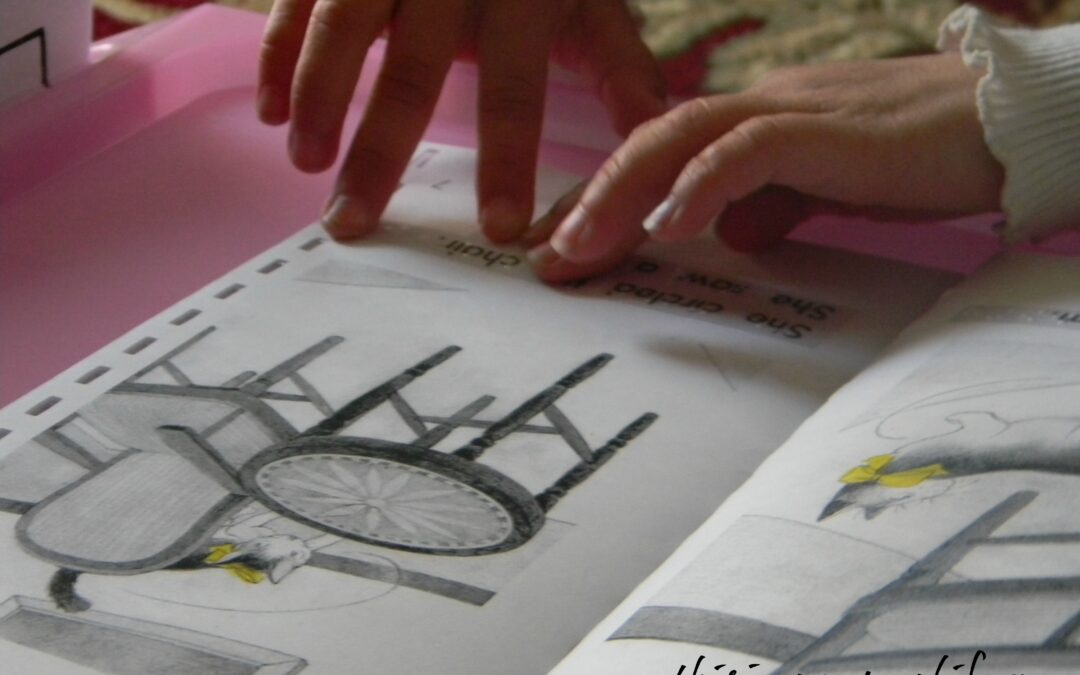
Homework can be a challenge for kids with special needs and their parents. But never fear, guest blogger Rachel Cordeiro is here with her Homework Survival Guide’s six tips to make study time easier for child and parent.

Homework Survival Guide: Special Needs Edition

Survival Tip #1: Preparation

During this past school year homework was a struggle for my daughter.  I’m not sure who began to dread it more—Cami or me!   Without fail, it was days with the most difficult start to homework that the Braille writer would become jammed while loading the paper into it. This caused an already stressful situation to escalate, and I knew something needed to change. My solution?  I decided to load the paper into the Braille writer ahead of time, which cut out a lot of unnecessary stress.  It was a small step that made a big difference.

I do realize some steps involved in the homework routine may help to reinforce a necessary skill, but sometimes you have to pick your battles (and I was tired of the jammed paper winning!).  You will have to decide what is best for your child.  Take a step back to consider which steps in your child’s homework cause unneeded stress, then prepare as necessary for the smoothest transition into homework time.

Survival Tip #2: Communication

As I already mentioned, Cami had a difficult year and we both cried many tears over the homework load.  My advice?  Communicate often with the teachers.  Be honest about any problems you are encountering during homework, and make sure they are aware of how long it took your child to complete the assigned work. Remember, as your child’s advocate, it’s important to let the teacher know how much your child can or can’t handle.

Survival Tip #3: Adaptation

Last year in science, Cami’s class had to learn the physical states of water.  There was a study sheet containing pages of facts with pictures, but the information was overwhelming for her, and she couldn’t see the illustrations. After reading it through to her several times, she was having trouble remembering it all, so I put the paper aside and tried a different approach (boiled water on the stove to illustrate water vapor, placed ice cubes in a glass of water to illustrate condensation, etc. ) to illustrate the different changes in matter.

Because Cami retains knowledge best when it’s something she has experienced, she was able to remember the different states of water much better. I made sure to send  a note explaining what we had done in place of the written assignment, and her teachers accepted that (this falls right in line with communication as well).

Survival Tip #4: Concentration

Create a homework environment most appropriate for your child.  Where exactly that will be may differs from child to child as long as it enables him to focus on his work. The key is to set aside a time and place dedicated to homework and be consistent in implementing that as part of the homework routine.

Survival Tip #5: Motivation

There are days when I wish I had the magic formula for motivating Cami to do homework. Other times I think I’ve discovered the greatest motivator for her, only to have it last for one week.  Motivate by keeping things fresh. Make it as fun and enjoyable as possible and be flexible in your approach.  The key I have found to motivating? Focus on motivation for that particular day and use a different approach tomorrow if needed.

Survival Tip #6: Relaxation

After your child has completed their homework assignment it’s a good idea to reward them for their hard work and effort.  Choose a reward that you deem appropriate for them and something they can look forward to each day (this works as great motivator as well!).  For Cami, her reward is to play with whatever she chooses, allowing her to enjoy much needed down time and relaxation.  And don’t forget yourself…now that the homework for the day has been completed it’s time for you to relax as well….at least until tomorrow!

What Tips Would You Add to Rachel’s Survival Guide?

Did reading Rachel’s survival guide bring your favorite homework survival tips to mind? If so, share them below. Or leave a comment about which of Rachel’s tips makes life easier for you.

Do you like what you see at DifferentDream.com? You can receive more great content by subscribing to the quarterly Different Dream newsletter and signing up for the daily RSS feed delivered to your email inbox. You can sign up for the first in the pop-up box and the second at the bottom of this page.

By

Author Jolene Philo

Archives

Categories

Subscribe for Updates from Jolene

Related Posts

Julie Keon’s Advice for Parents, Part 2

Julie Keon’s Advice for Parents, Part 2

Julie Keon’s Advice for Parents, Part 2

Julie Keon, author of the essay, What I Would Tell You, is back today. In yesterday’s post you learned Tim and Julie Keon’s special needs parenting story. Today, she explains how life changed after the essay went viral and she started her blog, www.whatiwouldtellyou.com.

Julie, what’s the history of your What I Would Tell You essay? When it went viral, how did your life change?

The essay What I Would Tell You felt like some sort of divine intervention. I saw the mother in the waiting lounge at our children’s hospital in late June of 2011 and I was so profoundly touched when our eyes met that the moment I was out of the building, I started to weep. The words of the essay started flowing into my mind. I could not wait to get home to write it all down. Hours later, I ran upstairs and opened a journal and scribbled the entire essay out in a matter of 30 minutes. I then posted it as a “Note” on Facebook. Within 24 hours, I was receiving messages from all over the world. My friend, who is also the father of a child with special needs, urged me to allow him to create a website as a home base for the essay so that more people could access it. The website was born and I started the blog portion of it in September of 2011.

What encouragement do you have for parents raising kids with a special needs diagnoses…other than your wise words in What I Would Tell You?

That’s a tough question, as I think the essay covers everything. Perhaps, I would encourage them to have faith whether that be through their religious, spiritual, or universal beliefs. I hate to admit it, but I am starting to really surrender to the possibility that there really are no mistakes and that we all have a journey and purpose to live out even if that journey or experience makes absolutely no sense to our limited human mind. Having faith in something greater can be very comforting when things start to get really overwhelming.

What can churches, schools, friends, family, and the medical community do to better support parents of kids with special needs?

I think that there needs to be a genuine understanding that the parents really DO KNOW BEST when it comes to their children. There is a whole lot of talk about this, but I am not certain how many professionals really believe it. I think that when any individual or group makes an effort to ask questions and attempt to understand the real day-to-day experience of the family, then naturally they will offer support that is both effective and useful. Support must be given under the terms of the recipient as opposed to the giver assuming what the recipient needs…..if that makes sense.

What do you want to say that’s not been asked?

I would just like to say thank you for interviewing me, Jolene, and for the wonderful work that you do! I would also add that I am working hard on a book that I hope will be helpful to those who read it eventually. Thank you to everyone who has read and supported What I Would Tell You.

What Would You Like to Tell Julie?

Julie, you are most welcome. The pleasure was all mine! And when your book comes out, please send an update. I’d love to post a review and help publicize it.

How about the rest of you? What would you like to say to Julie? Leave a comment with your own thoughts and experiences or just to say thank you. And if haven’t yet ready Julie Keon’s essay, What I Would Tell You, please stop by her website to read it!

Julie Keon’s Advice for Parents, Part 1

Do you like what you see at DifferentDream.com? You can receive more great content by subscribing to the quarterly Different Dream newsletter and signing up for the daily RSS feed delivered to your email inbox. You can sign up for the first in the pop-up box and the second at the bottom of this page.

By

Jolene Philo is the author of several books for the caregiving community. She speaks at parenting and special needs conferences around the country. Sharing Love Abundantly with Special Needs Families: The 5 Love Languages® for Parents Raising Children with Disabilities, which she co-authored with Dr. Gary Chapman, was released in August of 2019 and is available at local bookstores, their bookstore website, and Amazon. See Jane Dance!, the third book in the West River cozy mystery series, which features characters affected by disability, was released in October of 2023.

Author Jolene Philo

Archives

Categories

Subscribe for Updates from Jolene

Related Posts

Julie Keon’s Advice for Parents, Part 1

Julie Keon’s Advice for Parents, Part 1

Julie Keon’s Advice for Parents, Part 1

Julie Keon is the author of What I Would Tell You, an essay she wrote for parents new to the world of special needs. The essay went viral, so Julie created a blog, www.whatiwouldtellyou.com, to reach out those touched by her story. Today, she shares about her and her husband’s experience as parents of Meredith, age eight and a half. Tomorrow, she’ll be back with the story of how What I Would Tell You went viral.

Julie is one busy woman, as she’s a doula (birth and postpartum), prenatal educator, breastfeeding counselor, artist, newspaper columnist, blogger, and writer. She also creates and facilitates workshops and private sessions for women who have experienced a traumatic or difficult birth. Her husband Tim is a network specialist and works at an atomic energy plant.

Julie, would you share your special needs journey with DifferentDream.com readers?

Meredith was born on December 5, 2003, after a full-term pregnancy and a normal labor. Sadly, she aspirated at the time of birth resulting in an abrupt lack of oxygen and consequently a profound brain injury. We unexpectedly and suddenly became parents of a child with special needs and medical fragility. She is and will always be our only child.

How has parenting Meredith changed you and your husband?

Becoming parents of Meredith has enriched our lives and expanded our minds and spirits in ways that I am not sure we could have experienced otherwise. It has not been an easy journey, and dealing with the grief and joy and all of the trials and tribulations that have made up the last eight years has been the greatest experience of our lives. I have taken this as an opportunity to grow as a person as opposed to becoming bitter and burdened or crushed by life not going in the direction I had anticipated or planned.

How has your family been most encouraged and supported since Meredith’s birth?

We moved back to the small town where I was born and raised when Meredith was just nine months old. Being in this environment surrounded by people who know my extended family has been a blessing. Community support and, of course, the support we receive from local agencies and government funding has made it possible to continue to care for Meredith at home. We also learned (eventually!) how to ask for help and accept support from others.

What Would You Like to Tell Julie?

Well, that’s Julie’s story so far. As was mentioned before, she’ll be back tomorrow to tell about her original essay going viral and how that changed life for their family. Until then, you can read What I Would Tell You and leave a comment about how her advice resonates with you.

Julie Keon’s Advice for Parents, Part 2

Do you like what you see at DifferentDream.com? You can receive more great content by subscribing to the quarterly Different Dream newsletter and signing up for the daily RSS feed delivered to your email inbox. You can sign up for the first in the pop-up box and the second at the bottom of this page.

By

Jolene Philo is the author of several books for the caregiving community. She speaks at parenting and special needs conferences around the country. Sharing Love Abundantly with Special Needs Families: The 5 Love Languages® for Parents Raising Children with Disabilities, which she co-authored with Dr. Gary Chapman, was released in August of 2019 and is available at local bookstores, their bookstore website, and Amazon. See Jane Dance!, the third book in the West River cozy mystery series, which features characters affected by disability, was released in October of 2023.

Author Jolene Philo

Archives

Categories

Subscribe for Updates from Jolene

Related Posts

Behavior Management Tips for Parents of Kids with Special Needs

Behavior Management Tips for Parents of Kids with Special Needs

Behavior Management Tips for Parents of Kids with Special Needs

Behavior management tips for kids with special needs. We can’t get enough of ’em. Because kids’ behaviors morph as their bodies and minds constantly grow and change. So I was really pleased to find a post full of behavior management tips at Raising Kvell, a Jewish parenting site that includes posts about parenting kids with special needs.

Meet Behavioral Expert Melissa Lander
Melissa Lander is a stay-at-home mother of 3. She is the founder of RaisingGems a community of parents sharing Gems about the trials and tribulations of raising kids. (Every day a parenting gem contributed by a reader is posted. Very encouraging and fun.) Her son Reuben is six years old and was diagnosed with autism three years ago. In those years, she’s learned a lot about managing the behavior of a child with special needs.

Melissa’s Four Behavior Management Tips
Melissa’s tips are in line with what I learned about managing behaviors of students with special needs. They are:

1. Be Positive
2. Give Your Child a Head’s Up
3. Beware: It Might Be You
4. Never, EVER Give In

Simple concepts, really, but they require backbone and follow through to be successful. To learn more about how to develop the backbone and follow through required, read the entire post where Melissa explains each behavior management tip at www.kveller.com.

What Behavior Management Tips Make Life Easier at Your House?
The behavioral tips in Melissa’s post are excellent, but raising kids—both those with special needs and those who are typical—requires a very big bag of tricks tips. If you’ve discovered some behavior management strategies over the years, please leave a comment about what works at your house. Or if you’re dealing with a particularly stubborn behavior right now, leave a question. Maybe another reader will have an idea that will help. But whatever you do, never EVER give in!

Do you like what you see at DifferentDream.com? You can receive more great content by subscribing to the quarterly Different Dream newsletter and signing up for the daily RSS feed delivered to your email inbox. You can sign up for the first in the pop-up box and the second at the bottom of this page.

By

Jolene Philo is the author of several books for the caregiving community. She speaks at parenting and special needs conferences around the country. Sharing Love Abundantly with Special Needs Families: The 5 Love Languages® for Parents Raising Children with Disabilities, which she co-authored with Dr. Gary Chapman, was released in August of 2019 and is available at local bookstores, their bookstore website, and Amazon. See Jane Dance!, the third book in the West River cozy mystery series, which features characters affected by disability, was released in October of 2023.

Author Jolene Philo

Archives

Categories

Subscribe for Updates from Jolene

Related Posts

Support for Parents of Adults with Special Needs, Pt. 2

Support for Parents of Adults with Special Needs, Pt. 2

Support for Parents of Adults with Special Needs, Pt. 2

Parents of adults with special needs, like all parents, appreciate encouragement from friends and family. Yesterday, Kathy Guzzo, guest blogger and parent of an adult child who lives with lupus, shared her top ten list of practical ways to encourage and support parents of adult children with special needs. Today, she’s back with suggestions about how to use words to encourage parents, including what not to say.

Parents of Adults with Special Needs: What Not to Say

  • Everything’s going to be okay.
  • Cheer up.
  • Don’t worry so much.
  • You need to be strong.
  • I know how you feel.
  • You need to eat.
  • You look awful
  • You look exhausted.
  • Call if you need something—Chances are they never will.
  • You can only do so much—A parent feels she can never do enough and doesn’t need to be reminded.

Finally, don’t offer advice of any kind, unless someone asks for your thoughts or input.

Parents of Adults with Special Needs: What to Say

  • I care about you.
  • Tell me one specific area I can pray about.
  • It’s okay to cry, to feel sad or even angry.
  • I admire how you’re handling this.
  • You’re a great parent.
  • I have no idea how you feel, but I’m available to listen.
  • Can I get you something you’ve been hungry for, a special treat?
  • Whatever happens, I’m here for you.
  • You will get through this.

Most of the above items seem like common sense. But believe me, it’s not only kids that say the darndest things. Adults can be extremely thoughtless in what they say.

Parents of Adults with Special Needs Need Supportive Friends

Having an adult child who’s ill can be extremely lonely and emotional as a parent learns to adjust and accept the new role in a child’s life. When my heart is heavy as a result of my daughter’s health issues, what helps me most is a simple reminder from a friend that they are praying for me and they care. Through my experience I’ve learned that the most important thing anyone can do for a friend or family member is to be their friend. Try to put yourself in their place and then the follow the golden rule by doing for them what you’d like them to do for you if the situation was reversed. When that happens, everyone involved is blessed beyond measure.

Supportive Words for Parents

How do people use words to encourage you while you care for your child with special needs. Leave a comment with ideas of what to say and what not to say, whether your child with special needs is an adult or any age.

Support for Parents of Adults with Special Needs, Part 1

Do you like what you see at DifferentDream.com? You can receive more great content by subscribing to the quarterly Different Dream newsletter and signing up for the daily RSS feed delivered to your email inbox. You can sign up for the first in the pop-up box and the second at the bottom of this page.

By

Kathy Guzzo and her husband live in Northern Illinois and have 4 adult children. One of her daughters was diagnosed with lupus and Epstein Barr Replication as a young adult. Another began struggling with depression and OCD in her mid-twenties. She understands the need for her daughters to be able to make their own decisions regarding their health, but the nurturer in her sometimes has a hard time letting go. She desires to direct others to the peace and hope that God has abundantly available for them.

Author Jolene Philo

Archives

Categories

Subscribe for Updates from Jolene

Related Posts

Support for Parents of Adults with Special Needs, Pt. 1

Support for Parents of Adults with Special Needs, Pt. 1

Support for Parents of Adults with Special Needs, Pt. 1

Parents of kids with special needs, even when those children become adults, need support from friends and family. Kathy Guzzo, guest blogger and parent of an adult child who lives with lupus, is here today and tomorrow with suggestions of ways to support parents and families. Read on and I think you’ll agree many of these suggestions apply to all special needs families, no matter what age their kids.

When a child is ill, regardless of their age, parents shift into caretaker mode. Nothing is more important at that time than doing what we can care for our child. The daily responsibilities and small tasks may cross our mind, and we wonder how they will get done, but if we want to keep our sanity, we know we must just let them go. This is where friends and family can be a huge help even if the child happens to be an adult. However, their needs are a little different. And if the adult child lives in another state and/or is married things become even more complicated.

Even though our adult daughter has been hospitalized and needed extended care at home several times, I never really thought about what others could do during those times. Then a friend’s son became seriously ill. Although he was married and not living at home, she needed to be with him as much as possible. I really wanted to help her, to support her, but I wasn’t sure what to do.  That’s when I looked back to my personal experience and asked myself what others could’ve done to lighten my load and brighten my day. In the past few months, I’ve written them down and even put some into practice. In each case I felt great knowing their lives were a little brighter and less stressful.

Top 10 Things To Do for A Friend Whose Adult Child Is Ill

  1. Think specifically about what will help, uplift, and be appreciated by your friend. For example, don’t offer to do their laundry if you know they are extremely particular about how it’s folded and/or ironed.
  2. Bring a home cooked meal. Don’t ask when to bring a meal. Tell them you’re bringing dinner. You could even take it a step further and organize freezer meals for others to prepare that you take all at once. That way they doesn’t feel they need to ‘entertain’ when a meal is dropped off.
  3. Think of small things they may not think of at the onset of a serious illness. At the emergency room I wanted to be available without intruding, so when I realized my friend had forgotten her own medications at home and their dog needed to be let out, I volunteered and continued to let her dog out when necessary. Other small things are checking the mail, putting the trash out or bringing in the cans, even checking the expiration date on milk.
  4. Clean the bathroom and kitchen. Many people are uncomfortable having a friend clean their entire house, however if you remind them how nice it would be to come home to a clean bathroom and kitchen, they may agree. Or give them a specific time that you will come over to help them clean, fold laundry, etc. Cleaning together also is a great time to have a real heart to heart with your friend in a relaxed setting.
  5. Flowers are always a nice surprise. Either already on the table when she returns home, dropped off as a surprise, or delivered to where she’s staying if she’s away.
  6. Send encouraging notes. Or send Bible verses or cards via text, email or mail. If you mail a card, consider including a gift card for restaurants.
  7. Respect the family’s privacy. Don’t feel you should visit either at home or in the hospital. Parents wants to spend as much time as possible with their children and many times visitors take more of an emotional toll than the illness itself. Respect their desire to be with family only. Also, offer to be the contact person for other friends by sending out updates via text or email.
  8. Create goodie bags. Occasionally put together bags of chocolate, pretzels, puzzle book, magazine, notepad, pen, fun Kleenex, small gift cards for coffee or sandwiches, etc. These can be dropped off at her home, the hospital, or even mailed.
  9. Be available to listen. Sometimes just talking helps them organize all that’s been happening.
  10. Pray for families and watch for opportunities to serve them.

What’s on Your Top Ten List?

Kathy’s list made me think of a few ways to support parents to add to the list. If you have more ideas, leave a comment. And come back tomorrow for Part 2, when Kathy talks about supporting parents by knowing what not to say.

Do you like what you see at DifferentDream.com? You can receive more great content by subscribing to the quarterly Different Dream newsletter and signing up for the daily RSS feed delivered to your email inbox. You can sign up for the first in the pop-up box and the second at the bottom of this page.

By

Kathy Guzzo and her husband live in Northern Illinois and have 4 adult children. One of her daughters was diagnosed with lupus and Epstein Barr Replication as a young adult. Another began struggling with depression and OCD in her mid-twenties. She understands the need for her daughters to be able to make their own decisions regarding their health, but the nurturer in her sometimes has a hard time letting go. She desires to direct others to the peace and hope that God has abundantly available for them.

Author Jolene Philo

Archives

Categories

Subscribe for Updates from Jolene

Related Posts