What if Denying Self-Care Is an Injustice to You and Your Family?

What if Denying Self-Care Is an Injustice to You and Your Family?

What if Denying Self-Care Is an Injustice to You and Your Family?

What if denying self-care is an injustice to you and your family? Guest blogger Sandy Ramsey-Trayvick poses that question in today’s post. Her thought process is both convicting and empowering.

As special needs parents, many of us have advocated for our children educationally and medically to ensure the services or treatments they need to grow, heal, and thrive. 

As the mom of a son with special needs, I’ve been playing the role of advocate for over 20 years and have been pretty successful in gaining access to services my son might have otherwise not received. He, his classmates, and schoolmates have benefited because strong advocacy can affect real change. We can all attest to that.

I wonder what would happen if we advocated for ourselves as passionately as we advocate for our kids. In not doing so, how have we been deprived of the things we need to grow, heal, and thrive?

There is so much being shared about self/soul care these days.  The need for both, and ideas for how to address both, are well documented.  And yet these are still areas where special needs parents, especially moms, continue to struggle.

Why is that?  

The answer might lie in the mindset we need to adopt before we can prioritize self and soul care? Because advocacy is a response to a perceived injustice, What if denying self-care is an injustice to you and your family? With this perspective, would you then be more willing to advocate for your self and soul care?  Perhaps then we, as special needs parents, would be willing to:  

  • Look and advocate for solutions that make self-care possible.
  • Stand up against the voices that tell us we don’t need to care for our physical, spiritual and emotional health.
  • Advocate against the supermom/dad syndrome that drives so many of us to have unhealthy expectations of ourselves. Advocate for the truth that both we and our families fail to thrive when we don’t care for our own well-being.

With so many other things to do, it can often seem easier than not to let our own needs slide. In my case, the Lord Himself had to reveal that my mindset about self-care needed to change. Prior to His revelation, I’d never considered that sacrificing my own care did not line up with God’s desires for me. According to His exact words, the choices I was making to neglect consistent self-care were rooted in a disabled life mindset. He wanted me to make better choices for my well-being.

That’s so like God, isn’t it?  He doesn’t want anything to prevent us from fulfilling His good plans for our lives. He’s given us His Holy Spirit, the Advocate to help us. He’s willing to help us if we want to make better choices. But He won’t force us. So ask yourself these questions:

  • What if denying self-care is an injustice to you and your family?
  • What are some of the areas in which your self and soul could use an advocate?  
  • If you’re not sure, ask the LORD and His Advocate will guide you.

Do you like what you see at DifferentDream.com? You can receive more great content by subscribing to the monthly Different Dream newsletter and signing up for the daily RSS feed delivered to your email.
By

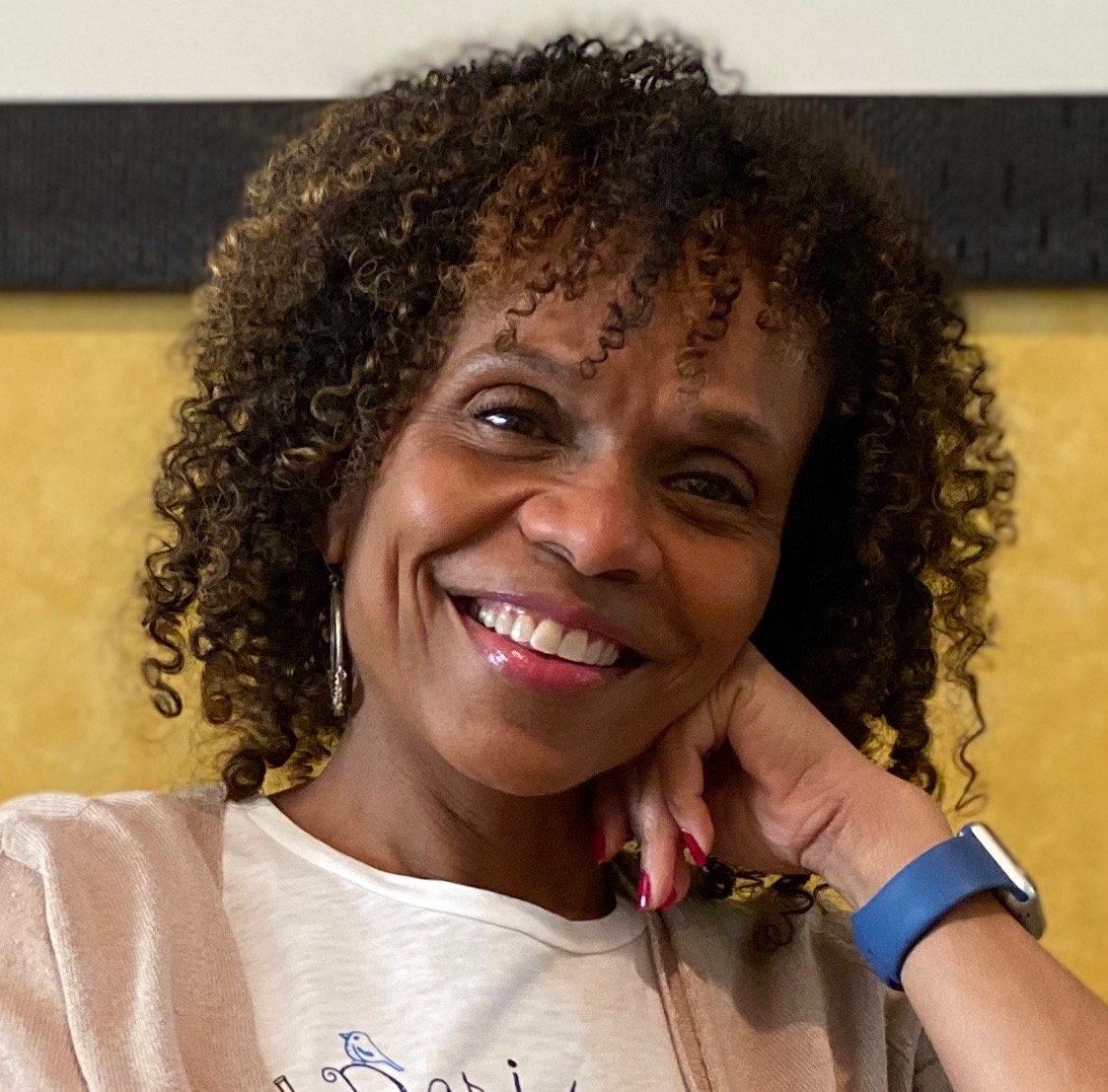
Sandy is wife to Terry, mom to 3 young adult children, a Bible study teacher, an encourager to those who are weary, a fitness enthusiast, a lover of books, and a certified professional coach. She and her husband are also marriage mentors. Twenty years ago, after her son was diagnosed with multiple disabilities, Sandy became his full time caregiver and advocate. She knows that living in the world of special needs or disabilities can lead to a “disabled life” mindset that focuses on limitations and settles for less life, less joy, less fulfillment. She coaches parents of children with special needs to help them see their circumstances from a perspective of hope, purpose, and opportunity. She helps them choose actions that create a life for themselves and their families that is joyful, fulfilling and fruitful. You can learn more about Sandy, her work, and her blog at www.UNDisabledLIVES.org.

Author Jolene Philo
Archives

Categories

Related Posts

Uncertainty and Lack of Control: What’s a Caregiver to Do?

Uncertainty and Lack of Control: What’s a Caregiver to Do?

Uncertainty and Lack of Control: What’s a Caregiver to Do?

“I can’t.” I sat in my office one morning a few weeks ago and sobbed as my daughter rubbed my back. “I just can’t.”

Only one of the vehicles needed for our family of 4 adults and 2 kids was in working order.
The washing machine quit.
The drywall crew working on our 5-months-behind-schedule home addition had delivered more bad news.

“I just can’t.” I sobbed.

“You don’t have to do a thing,” my daughter reassured me.

Which was good. Because really and truly, I couldn’t. 12 months of pandemic life combined with 12 months of the addition construction encroaching further into our limited living space had reduced me to a blithering puddle of snot and tears.

“Are you feeling better?” my daughter asked an hour or so after my breakdown.

“No,” I said, “and I may never feel better again.”

“That’s okay,” she replied. “You don’t have to.”

It took me the better part of the morning to regain my equilibrium and the better part the day before I could reflect on the despair that had engulfed me. The last time I had felt so hopeless, I realized, had been almost 39 years ago when our son had been 2 months old. Though the circumstances were completely different and separated by almost 4 decades, the reasons for my despair were the same: uncertainty and lack of control.

39 years ago, my 2-month-old son and I were being flown to a hospital over 700 miles by Life Flight. He needed life-saving surgery to correct complications caused by the life-saving surgery he’d had at birth. Tears streamed down my face as I peppered the doctor on board with questions. “Why did this happen? How will they fix it? What more could go wrong?”

To read the rest of this post about uncertainty and lack of control visit Key Ministry’s blog for special needs parents.

Do you like what you see at DifferentDream.com? You can receive more great content by subscribing to the monthly Different Dream newsletter and signing up for the daily RSS feed delivered to your email.

By

Jolene Philo is the author of the Different Dream series for parents of kids with special needs. She speaks at parenting and special needs conferences around the country. She’s also the creator and host of the Different Dream websiteSharing Love Abundantly With Special Needs Families: The 5 Love Languages® for Parents Raising Children with Disabilities, which she co-authored with Dr. Gary Chapman, was released in August of 2019 and is available at local bookstores, their bookstore website, and at Amazon.

Author Jolene Philo

Archives

Categories

Related Posts

Aligning Priorities as Caregiving Demands Change

Aligning Priorities as Caregiving Demands Change

Aligning Priorities as Caregiving Demands Change

Aligning priorities as caregiving demands change became part of my world in February. That’s when the residential facility where my mother lives reinstated room visits. Wahoo!

After a year of staying home all day every day, I dedicated a half day a week to running errands for and visiting Mom. Since then her health has slowly declined and the visits have become more frequent. She’s 92, and I think the trend’s going to continue. 

What I’ve discovered in the past few months is this: the process of aligning priorities as caregiving demands change is almost identical for parents of kids with disabilities and adult children caring for elderly parents. 

It’s a daily reality.
It’s a continual process.
It’s a schedule buster.
It’s a flexibility booster.
It’s a character builder.
It’s a daily exercise of grace toward the loved ones we care for and for ourselves.

As a caregiver, you know what I’m talking about. Here’s how aligning priorities as caregiving demands change have impacted my life lately:

  • Culver runs. Mom loves Heath concrete mixers made with their frozen vanilla custard so I schedule enough time to pick one up before visits. 
  • Amazon search. Tooth brushing is hard for Mom, so I ordered her some kidney-shaped basins (also known as emesis basins) used by hospitals. That way the workers at her care center can bring the basin, her toothbrush, and a glass of water to her while she’s sitting in her easy chair. Me too, after she finishes her Culver’s ice cream.
  • Asking for help. For example, when scheduling group Zoom meetings, I ask for a volunteer who can lead the meeting in my absence if something comes up for Mom. Knowing that the show can go on without me brings great peace of mind and gives someone else a chance to gain skills.
  • Saying no. I belong to several committees and planning boards that advocate for people with disabilities. Normally, I volunteer to do my share of the work. This spring I’m saying no because other committee members can do that work in this season when only my siblings and I can provide what Mom needs.
  • Hiring another VA. My current part time VA, who keeps the Different Dream website bright and shiny, is amazing and wonderful. She recently took a full time job and doesn’t have time to assist with social media posting and some website cleanup. So I hired a second part time VA who is being trained by the other one. Now there are 2 people who know the ins and outs of Different Different. More peace of mind. Ahhh!
  • Expanding childhood trauma education.  Because I’ve scaled back in other areas, this has become a priority, second only to Mom’s needs as the pandemic has increased interest in and requests for childhood trauma training. A small college asked me to develop a class for their online master’s in education program. My virtual online classes for educators scheduled for June are already full. Schools are booking inservice trainings for next year. My siblings and I are good at tag teaming when one of us has an unbreakable work commitment. Again, great peace of mind.
  • Fewer Different Dream posts. Because of changing priorities and because the website has a huge stock of exceptional content, the website is now posting only 1 or 2 posts a week. Some are from me and some are from guest bloggers. 

Are you in a season ofaligning priorities as caregiving demands change for your child or elderly loved one? What do your new priorities? How did you determine them? If you would like to write a guest post about your experience with changing priorities  (or any other caregiving topic), you’re invited to check out the guest blogger guidelines and learn how to contact Different Dream here. I’d love to hear from you!

 Do you like what you see at DifferentDream.com? You can receive more great content by subscribing to the monthly Different Dream newsletter and signing up for the daily RSS feed delivered to your email inbox. You can sign up for the first in the pop up box and the second at the bottom of this page.

By

Jolene Philo is the author of the Different Dream series for parents of kids with special needs. She speaks at parenting and special needs conferences around the country. She’s also the creator and host of the Different Dream websiteSharing Love Abundantly With Special Needs Families: The 5 Love Languages® for Parents Raising Children with Disabilities, which she co-authored with Dr. Gary Chapman, was released in August of 2019 and is available at local bookstores, their bookstore website, and at Amazon.

Author Jolene Philo

Archives

Categories

Related Posts

EA/TEF Repair Is One Chapter in Your Child’s Life

EA/TEF Repair Is One Chapter in Your Child’s Life

EA/TEF Repair Is One Chapter in Your Child’s Life

EA/TEF repair is one chapter in your child’s life, says guest blogger Cori Welch. She wants you to take heart when the first chapter is where you are. She also shares what she wishes she’d known while living through the first chapter of her daughter’s life. 

Room C4B-41 was cramped, filled with at the least 10 medical professionals. The surgeon, a man I would later thank God for every night, stepped forward. 

“Reese is a kid that we see only once every 10 years or so.” 

He went on to explain to me that she was not only born with duodenal atresia and a single kidney, which had been discovered two weeks before she was born. She also had a birth defect combination called esophageal atresia and tracheoesophageal fistula type C. Luckily, since we knew about the “double bubble,” Reese was already near Nationwide Children’s Hospital ready for action. 

I remember thinking, “I don’t feel so lucky, Doc.”

Reese would go on to stay at the hospital for 114 days. She had 4 surgeries in that time with no major complications other than her gastric tube site expanding and morphine withdrawal. She will be 3 in April of 2021, and I can’t imagine life without her. She had her g-tube surgically closed in September 2020, which we are hoping is her final operation. 

Here’s what I know now that I wish I’d known in 2018:

  1. Breathe. 
  2. You didn’t do this to your child.
  3. Counseling is very beneficial.
  4. Learn as you go, not all at once. 
  5. “It’s a marathon, not a race.” – Dr. Thakkar
  6. Give it to God.

After Reese was born, we really counted on Ronald McDonald House Charities, neonatal intensive care unit (NICU) parent night, other NICU parents, family, and friends. A special memory is of the RMCH and 31 Bags throwing a baby shower for all the NICU moms. I gave birth 4 days before my own baby shower, so it meant the world to be able to feel normal. 2 final pieces of advice: Be your child’s advocate. Little ones don’t have a voice yet, so you have to speak for them. Also know that EA/TEF repair is one chapter in your child’s life and in your own. When it’s done, the next chapter is waiting, and it’s going to be amazing.

Do you like what you see at DifferentDream.com? You can receive more great content by subscribing to the monthly Different Dream newsletter and signing up for the daily RSS feed delivered to your email.

By

Cori Welch is a part time CPhT, and “Mom Mom” to Reese Welch. Cori and her husband, Dustin, along with Reese, reside in southeastern Ohio. They enjoy walks in their historic town, movie nights, and the company of their cats, Pepper and Angus. Cori loves talking about Reese’s Journey and all the milestones she’s accomplished. 

Author Jolene Philo

Archives

Categories

Related Posts

Connecting the EA/TEF Community: Indie’s Story

Connecting the EA/TEF Community: Indie’s Story

Connecting the EA/TEF Community: Indie’s Story

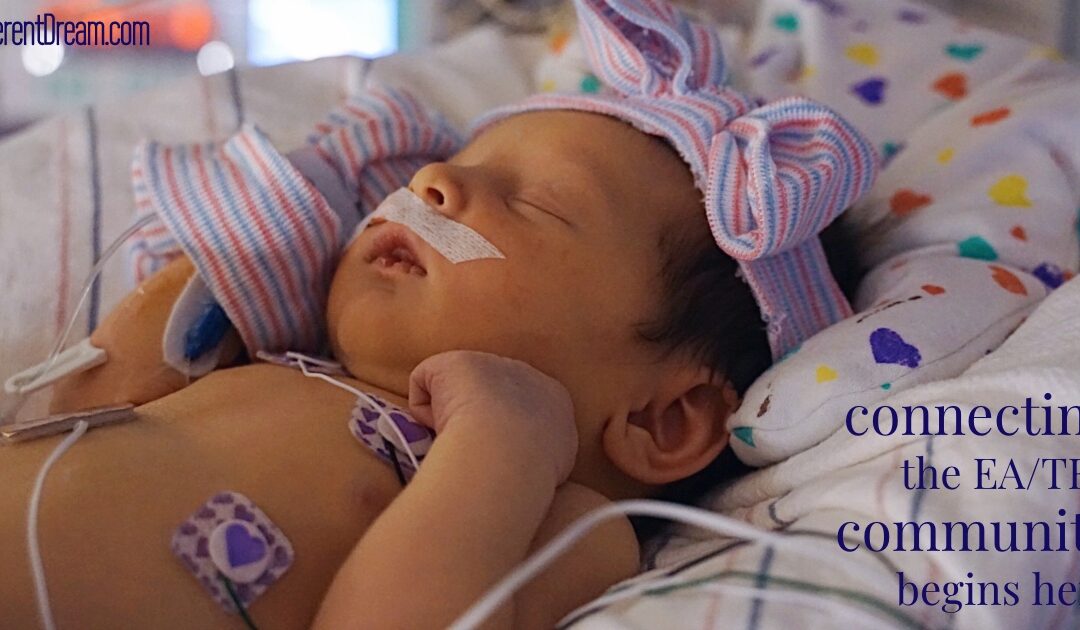
Connecting the EA/TEF Community is one of the goals of EA/TEF Awareness Month. Doing so is the passion of Liz Eidelman, our first 2021 guest blogger. I’m delighted to introduce readers to her and to her delightfully adorable daughter, Indie.

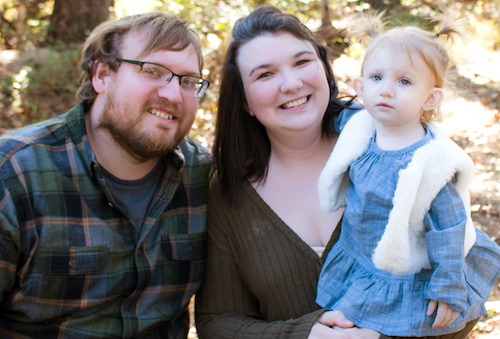
I am so happy to be sharing Indie’s story in honor of EA/TEF Awareness Month. After a relatively uncomplicated pregnancy, our daughter was born on March 1st 2019 and immediately we knew something wasn’t right. It was a swift diagnosis and a whirlwind few days where we eagerly awaited her repair surgery and our ‘marching orders’ for moving forward. As first time parents, my husband Stephen and I were naturally terrified. I didn’t know what to expect for her future, and to a certain extent, I still feel that way sometimes. Indie stayed in the NICU for three weeks and was readmitted to the hospital two weeks later due to scar tissue causing a stricture at the repair site in her esophagus. This was a low point for us, without a doubt. The fear of the unknown was at an all-time high, wondering if constant trips to the hospital was our new normal… desperate to find answers and information about this rare condition that we hadn’t heard of. It was now occupying all of our lives.

My mother sent me an article about a little girl whose EA/TEF was being monitored by a specialized clinic at Columbia NY Presbyterian Hospital, right in our neck of the woods. This was the first child I had ever seen on the internet who was thriving despite her condition. My desire to connect with literally anyone who could relate had me throwing all caution to the wind and before I knew it, I had found this girl’s mom on Facebook and boldly sent her a message. When she responded, I broke down in tears. This was my first friend in the EA/TEF community. I’ll never forget the day we finally met her in person. 

Fast forward to 7 months old.  A laryngeal cleft was diagnosed, adding to the complexity of Indie’s EA/TEF. In the interim, we had joined the clinic in New York and I was actively using my blog’s platform and the power of social media to connect with many other EA/TEF families. In nearly two years of Indie’s life, I’ve come to realize that the first thing parents do after their child receives a diagnosis is to start googling… and apparently one of the first articles to come up is Indie’s birth story on my blog. You have no idea how many messages I have gotten from the NICU. Upwards of 50 moms and dads have reached out to me blindly, the same way that I had done mere months before. Suddenly I was connecting the EA/TEF community in ways I hadn’t anticipated.

Having these connections has made Indie’s journey an easier one for me as a new mom. Whether in the flesh or online-only, the friends we’ve made who share this unique bond have brought so much joy to our lives. We feel so blessed to know that Indie is thriving.

Navigating the complexities of her anatomic differences has been much easier than I thought it would be a few weeks after leaving the NICU. If you are raising a child with special needs, I cannot stress enough the importance of finding a friend or two (or fifty!)  in the same boat, even if it means you need to initiate the conversation and hope for the best – because in the end, I can assure you it will be worth your while. Watching these children grow and conquer is nothing short of amazing… and connecting the EA/TEF community is something I will continue to strive for – because a tight and vocal community will ultimately lead to more answers and solutions for these miraculous people.

“I get by with a little help from my friends.” – Joe Cocker

Do you like what you see at DifferentDream.com? You can receive more great content by subscribing to the monthly Different Dream newsletter and signing up for the daily RSS feed delivered to your email inbox. You can sign up for the first in the pop up box and the second at the bottom of this page.

By

Liz Eidelman is a life + style blogger from New Jersey, who’s social media presence focuses on fun, affordable fashion and the experiences that go along with the outfits. After giving birth to a daughter with special needs, Liz has made an effort to use her digital voice to spread awareness to her daughter’s condition. Completing Liz’s family is her husband Stephen, and two dogs Percy and Zoey. Liz has appeared on the Rachael Ray Show as a Maternity Style Expert, and was previously a theatre actress performing in professional musicals around the country. Follow her @lizeidelman on instagram, or by subscribing to her blog, www.lizeidelman.com

Author Jolene Philo

Archives

Categories

Related Posts

Hygge Is Good for Caregiving Parents

Hygge Is Good for Caregiving Parents

Hygge Is Good for Caregiving Parents

Hygge is good for caregiving parents. So says guest blogger Mark Arnold who is here today to explain what hygge is, cite some impressive research, and encourage caregivers to add it to their lives this winter.

Hygge is a Scandinavian word for the cozy, comfortable conviviality that leads to wellness and contentment. Several studies show that people in the arctic circle have a mindset that helps combat the long, polar night. A bit of hygge might come in handy for parents of children with special or additional needs.

Kari Leibowitz, a health psychologist, conducted research in the Norwegian city of Tromsø, located 200 miles north of the arctic circle. In the depths of winter, it gets only a faint glow of indirect sunlight for a couple of hours a day. Despite this, Tromsø’s citizens don’t struggle with low mood or seasonally affective disorder (SAD) as might be expected. In fact, Leibowitz found that the general mental health in the city was in excellent shape.
Leibowitz created the Wintertime Mindset Scale to see whether a more positive outlook could explain the resilience of Tromsø’s residents. She asked them how much they agreed or disagreed with statements including:

  • There are many things to enjoy about the winter
  • I love the cosiness of the winter months
  • Winter brings many wonderful seasonal changes
  • Winter is boring
  • Winter is a limiting time of year
  • There are many things to dislike about winter

Those that favored the first three statements fared better in the adverse winter conditions than those who favored the last three. Many respondents commented that they didn’t understand why people would not enjoy winter, with all of the possibilities of winter walks and skiing, and snuggling under blankets with a warm drink in the candlelight!

What does this research into Scandinavian positivity teach us about why hygge is good for caregiving parents? 

Well, we all know it’s easy to be dominated by negative feelings, fears for the future, the mental and physical exhaustion we experience. But if wet rain ourselves to find the positives, to look for the opportunities to learn and adapt, perhaps we can find our own hygge too. We can discover ways to cope during our own times of winter, those dark days where it all seems too much. The more we try it, the better we get at it!
Our aim isn’t to sugar-coat, deny the difficulties we face, or hide from them any more than the citizens of Tromsø can pretend that the sun is still rising. However, by growing our own capacity to control our responses to challenges we may develop hidden reserves of strength and resilience to help us face each day.

Hot chocolate anyone?

Do you like what you see at DifferentDream.com? You can receive more great content by subscribing to the monthly Different Dream newsletter and signing up for the daily RSS feed delivered to your email inbox. You can sign up for the first in the pop up box and the second at the bottom of this page.

By

Mark Arnold is the Additional Needs Ministry Director at Urban Saints, a leading national Christian children’s and youth organization. He is co-founder of the Additional Needs Alliance, a national and international advocate for children and young people with additional needs or disabilities. Mark is a Churches for All and Living Fully Network partner, a member of the Council for Disabled Children and the European Disability Network. He writes an additional needs column for Premier Youth and Children’s Work (YCW) magazine and blogs at The Additional Needs Blogfather. He is father to James, who has autism spectrum condition, associated learning disability, and epilepsy. To find out more about how Mark’s work can help you, contact him at: marnold@urbansaints.org or @Mark_J_Arnold.

Author Jolene Philo

Archives

Categories

Related Posts